
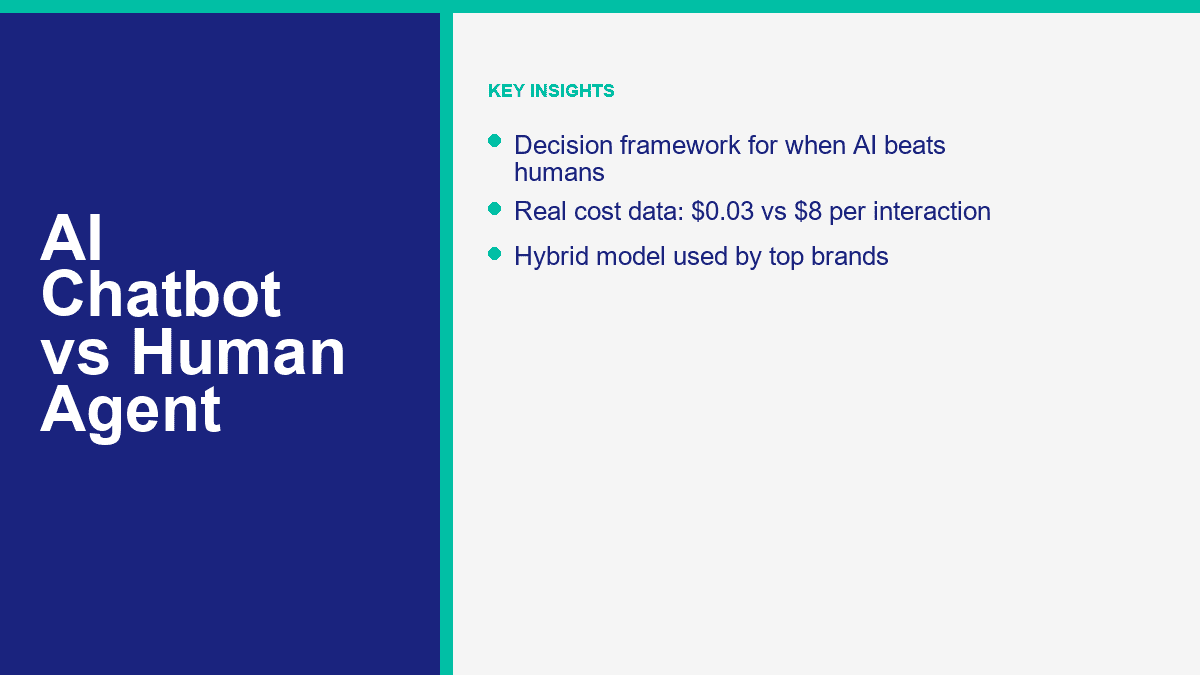
বেশিরভাগ সমর্থন নেতাদের এখনও ভুল বিতর্কে ঠেলে দেওয়া হচ্ছে। ২০২৬ সালে আসল প্রশ্ন হল এআই কি মানুষের চেয়ে ভালো? এটি হল কোন কথোপকথনগুলোর জন্য মানব সময় প্রয়োজন, কোনগুলি অবিলম্বে স্বয়ংক্রিয় করা উচিত, এবং কোথায় হস্তান্তর ঘটতে হবে আগে গ্রাহক বিরক্ত হয়।.
এই পার্থক্য গুরুত্বপূর্ণ কারণ এআই সেবার ভিত্তি পরিবর্তন করেছে। গ্রাহকরা এখন তাত্ক্ষণিক প্রথম প্রতিক্রিয়া আশা করেন কারণ তারা জানেন যে স্বয়ংক্রিয়তা বিদ্যমান। তারা এখনও বিচার, নিশ্চয়তা এবং দায়িত্ব আশা করেন যখন সমস্যা জটিল, ব্যয়বহুল, বা আবেগময় হয়। যদি আপনি সবকিছু মানুষের কাছে পাঠান, আপনি অতিরিক্ত খরচ করেন। যদি আপনি সবকিছু এআই-তে পাঠান, আপনি অর্থ সাশ্রয় করেন যতক্ষণ না বিশ্বস্ততা কমে যায়।.
আমি ১০ এপ্রিল, ২০২৬ তারিখে এই নিবন্ধের জন্য সংখ্যাগুলোর জন্য পাবলিক প্রাইসিং পেজ এবং বেঞ্চমার্ক রিপোর্ট পরীক্ষা করেছি। যেখানে একটি সংখ্যা একটি বিক্রেতার কাছ থেকে আসে যেমন হাবস্পট, ইন্টারকম, বা জেনডেস্ক, এটি একটি পরিকল্পনার বেঞ্চমার্ক হিসেবে বিবেচনা করুন, গ্যারান্টি নয়। যেখানে সংখ্যাগুলি বিস্তৃত বেঞ্চমার্ক যেমন বিএলএস বা লাইভচ্যাট থেকে আসে, সেগুলি ভিত্তি মডেলিংয়ের জন্য আরও ভালো। যদি আপনি এখনও এই প্রকল্পের নির্মাণ দিকটি প্রয়োজন, এখানে শেষ করার পরে এই গ্রাহক সেবা চ্যাটবট সেটআপ গাইডটি শুরু করুন। এই অংশটি অপারেটিং সিদ্ধান্ত সম্পর্কে, বোতাম ক্লিকের টিউটোরিয়াল নয়।.
আমার নিয়মটি সহজ। AI-কে গতি, ধারাবাহিকতা এবং পুনরাবৃত্তি মালিকানা নিতে হবে। মানুষের বিচার, ব্যতিক্রম পরিচালনা এবং বিশ্বাস মেরামতের মালিকানা নিতে হবে। এই নিবন্ধের বাকি সবকিছু হল সেই ধারণার পিছনের স্প্রেডশিট এবং রাউটিং লজিক।.
২০২৬ সালে মানব সহায়তার খরচ কেন বেতন লাইনের চেয়ে বেশি
সহায়তার ক্ষেত্রে সবচেয়ে সহজ বাজেটিং ভুল হল বেতনকে পুরো খরচ হিসেবে বিবেচনা করা। এটি নয়। একটি মানবিক মিথস্ক্রিয়া বেতন overhead, টুল খরচ, সময়সূচী ফাঁক, সমাপ্তি কাজ, কিউ ব্যবস্থাপনা এবং মৌলিক সত্য যে লাইভ সহায়তা একটি পরিষেবা প্রতিশ্রুতি তৈরি করে যা আপনাকে রক্ষা করতে হবে, তা বহন করে।.
মার্কিন যুক্তরাষ্ট্রের শ্রম পরিসংখ্যান ব্যুরো বর্তমানে গ্রাহক পরিষেবা প্রতিনিধিদের জন্য মধ্যম বেতন তালিকাভুক্ত করেছে $20.59 প্রতি ঘণ্টা. পরিকল্পনার গণনার জন্য, এটি এখনও খুব কম কারণ ব্যবসা শুধুমাত্র বেতন দেয় না। একটি সংরক্ষণশীল যোগ করুন 30% কর, সফটওয়্যার, তত্ত্বাবধান এবং অপারেটিং ওভারহেডের জন্য, এবং লোডেড ঘণ্টার খরচ প্রায় $26.77. এটি একটি যুক্তিসঙ্গত মার্কিন ভিত্তি এবং আপনার নিজস্ব লোডেড স্থানীয় বেতন স্যুইপ করার সময় ইউকে দলের জন্য একটি কার্যকর সূত্র। যদি আপনার দল আরও সিনিয়র, বহুভাষী, নিয়ন্ত্রিত বা ২৪ ঘণ্টা কাজ করে, তবে আপনার প্রকৃত সংখ্যা বেশি হবে।.
LiveChat-এর বর্তমান গ্রাহক পরিষেবা বেঞ্চমার্ক সেই ঘণ্টার সংখ্যাকে মিথস্ক্রিয়া খরচে রূপান্তর করতে সহায়তা করে। রিপোর্টটি দেখায় একটি গড় প্রতি এজেন্ট প্রতি দিনে ৮৪.১ চ্যাট, একটি গড় ৮ মিনিট এবং ২৫ সেকেন্ড প্রতি চ্যাট, গড় কিউ অপেক্ষার সময় ৪ মিনিট এবং ১৮ সেকেন্ড, এবং একটি কিউ ড্রপআউট হার 27.4%. এগুলি উপকারী কারণ এগুলি মানব খরচ গণনা করার দুটি ভিন্ন উপায় দেখায়, এবং উভয়ই গুরুত্বপূর্ণ।.
| মানব সহায়তা খরচ মডেল | গণনা কিভাবে কাজ করে | প্রতি চ্যাটের আনুমানিক খরচ | এটি কী ধারণ করে |
|---|---|---|---|
| ভলিউম-ভিত্তিক ফ্লোর | $26.77 লোডেড ঘণ্টা খরচ x 8-ঘণ্টার শিফট / 84.1 চ্যাট | $2.55 শ্রম, প্রায় $2.58 একটি $49 টিম সিট বরাদ্দ সহ | একজন ব্যস্ত এজেন্ট অনেক চ্যাট পরিচালনা করছে স্বাভাবিক সমান্তরালতার সাথে |
| সময়-ভিত্তিক কঠোর মডেল | 8 মিনিট 25 সেকেন্ড x লোডেড ঘণ্টা খরচ, প্লাস 20% র্যাপ-আপ বাফার | প্রায় $4.54 সফটওয়্যার বরাদ্দ সহ | কঠিন চ্যাটের জন্য আরও বাস্তবসম্মত, চ্যাটের পরে কাজ এবং কম সমান্তরালতা |
| জটিল মানব মামলা | 15-মিনিটের সমস্যা x লোডেড ঘণ্টা খরচ, প্লাস 20% র্যাপ-আপ বাফার | $8.06 সম্পর্কে পুনঃসংযোগ বা ব্যবস্থাপক পর্যালোচনার আগে | বিলিং বিরোধ, অ্যাকাউন্ট সমস্যা, উত্থাপন, বা কাস্টম সমস্যা সমাধান |
এটাই আসল খরচের গল্প। এমনকি একটি সরল লাইভ-চ্যাট কথোপকথন সাধারণত মধ্য-$2s এবং মধ্য-$4s এর মধ্যে কোথাও চলে আসে যখন মামলা জটিল হয়ে যায়। একবার আপনি একটি ফেরত ব্যতিক্রম, রাগান্বিত গ্রাহক, বা নীতি অতিক্রম করলে, মানব খরচ দ্রুত বাড়তে থাকে। সমস্যা হল যে মানবরা কিছু বিমূর্তভাবে ব্যয়বহুল নয়। সমস্যা হল যে অনেক দল এমন কাজের জন্য মানব হার পরিশোধ করছে যা মানব বিচার প্রয়োজন নয়।.
একটি দ্বিতীয় বিলও বেতন লাইনের পিছনে লুকিয়ে আছে: কভারেজ। আপনি যখন লাইভ সমর্থন অফার করেন, গ্রাহকরা আশা করেন যে কেউ সেখানে থাকবে। যদি আপনার সাইট, মেসেঞ্জার ইনবক্স, বা অ্যাপ চ্যাট সাহায্যের প্রতিশ্রুতি দেয় কিন্তু মানুষকে অপেক্ষা করতে ছেড়ে দেয়, তবে কিউটি পণ্য অভিজ্ঞতার একটি অংশ হয়ে যায়। তাই মানব সমর্থন খরচ কেবল শ্রম খরচ নয়। এটি প্রত্যাশা ব্যবস্থাপনা খরচ।.
যেখানে AI চ্যাটবটগুলি মানব এজেন্টদের তুলনায় ভালো
আমি মনে করি না বটগুলি সর্বত্র মানবদের পরাজিত করে। তারা কিছু বিভাগে মানবদের অবশ্যই পরাজিত করে, এবং অন্যথায় মনে করা পরিকল্পনাকে আরও খারাপ করে তোলে।.
AI Wins on Instant First Response and 24/7 Coverage
A bot replies at 2 p.m., 2 a.m., weekends, holidays, and during lunch breaks. A human agent replies when someone is staffed, available, and not already handling two other threads. Zendesk’s CX Trends 2026 report says 74% of consumers now expect 24/7 service because AI exists. That one number changes the whole service design problem. Customers are no longer benchmarking you only against other businesses in your category. They are benchmarking you against the fact that machines can answer immediately.
AI Wins on Repetition, Consistency, and Policy Recall
Hours, shipping windows, booking links, store locations, return policies, billing dates, password reset instructions, and standard eligibility questions are exactly the kind of work bots should own. A trained bot does not get tired, forget the policy, or improvise a risky answer because the queue is long. If your knowledge base is clean, the bot will usually be more consistent than a stressed human agent on the same question.
AI Wins on Spike Handling
Humans are linear. Volume spikes break them. Bots are much better at absorbing sudden surges from a promotion, outage, holiday, or campaign because the marginal cost of one more routine conversation is tiny compared with staffing another shift. That matters more than most leaders admit because support demand does not arrive smoothly. It arrives in bursts.
AI Wins on Cost Per Routine Resolution
বর্তমান পাবলিক মূল্য মডেলগুলি ফাঁকটি বেশ স্পষ্ট করে তোলে।. MessengerBot Pro প্রতি 30 দিনে $49.99। বর্তমান পাবলিক মূল্য অনুযায়ী। 1,200 প্রতি মাসে বট-হ্যান্ডেল করা কথোপকথনের জন্য, সফটওয়্যারের খরচ একা প্রায় $0.04 প্রতি কথোপকথন।. পর্যালোচনা এবং টিউনিংয়ের জন্য প্রতি মাসে চার ঘণ্টা যোগ করুন একই লোডেড মানব হার অনুযায়ী, এবং কার্যকর খরচ এখনও প্রায় $0.20 প্রতি AI-সমাধানকৃত কথোপকথন। একটি নির্দিষ্ট ফি SMB সেটআপে।.
আউটকাম-ভিত্তিক AI বেশি ব্যয়বহুল, তবে এখনও সাধারণত পুনরাবৃত্তিমূলক কাজের জন্য একজন মানুষের চেয়ে সস্তা। HubSpot ঘোষণা করেছে এপ্রিল 2, 2026। that Customer Agent moves to ১TP4T0.৫০ প্রতি সমাধানকৃত কথোপকথনের জন্য এতে এপ্রিল ১৪, ২০২৬. Intercom prices Fin at $0.99 per successful outcome. Those are not microscopic numbers, but they still compare well against human support once your human cost per interaction is sitting in the $2.58 to $4.54 range.
AI Wins Only When the Source Material Is Good
This is the honest catch. AI is not magical. It wins when the question is common, the answer exists in approved content, the tone is predictable, and the business can define a clean escalation rule. If those conditions are not true, the bot stops looking smart very quickly.
| Query type | Why AI usually wins | Main watch-out |
|---|---|---|
| Order status and delivery questions | Fast, repetitive, rules-based, often after hours | Needs accurate backend data, not guesses |
| Booking, appointment, and scheduling questions | Structured flows reduce back-and-forth | Escalate exceptions and reschedules quickly |
| Pricing and plan basics | Instant answers keep buying intent warm | Do not let the bot invent discounts or custom terms |
| FAQ and policy retrieval | Consistency is usually better than human recall | Bad source content creates bad answers |
| Intent routing and data capture | AI can collect order numbers, emails, screenshots, or issue type before handoff | Do not ask customers to repeat the same information later |
One more thing worth saying clearly: serious support automation is not a সাইন আপ প্রয়োজন নেই category. That language belongs to consumer AI demos, not production customer service. Real support bots need saved context, permissions, routing rules, and reporting. The products that offer real business value also require real setup.
Where Human Agents Still Outperform AI in Ways That Matter
Humans still earn their keep where the answer is not just factual, but situational.
Humans Handle Ambiguity Better
A person can spot that the customer is really asking two questions at once, or that the visible issue is not the real issue. Bots are improving, but they still struggle when context is incomplete, contradictory, or buried inside a long explanation. Humans are better at sorting that out without sounding mechanical.
Humans Repair Trust Better
When an order is late, a payment failed twice, a subscription renewed unexpectedly, or a customer is angry in a very human way, the goal is no longer only resolution. The goal is recovery. That is where empathy, accountability, and discretion matter. Customers do not want a bot telling them it understands their frustration when the business just caused the frustration.
Humans Own Exceptions and Judgment Calls
Refund exceptions, goodwill credits, policy overrides, account-security decisions, fraud concerns, medical or legal edge cases, and high-ticket consultative sales still belong with people. AI can tee up those cases, collect the facts, and route them correctly. It should not be the final authority unless the business is genuinely comfortable with the downside risk.
Humans Close Revenue-Critical Conversations Better
If the issue is really a pre-sale objection, product fit conversation, or retention save attempt, a strong human agent still has an edge. The difference is not just empathy. It is adaptive judgment. A person can hear hesitation, reframe value, adjust tone, or decide when silence is better than another message. That is not where I would chase maximum automation.
- Send to a human first when the conversation is high-risk, high-value, emotionally loaded, or policy-sensitive.
- Send to AI first when the issue is common, low-risk, reversible, and answerable from approved content.
- Use AI plus human handoff when the customer needs speed first and judgment second.
That middle category is where most teams live now. The mistake is forcing yourself to choose one side for every ticket.
A Practical Routing Framework for Sending the Right Queries to AI or Humans
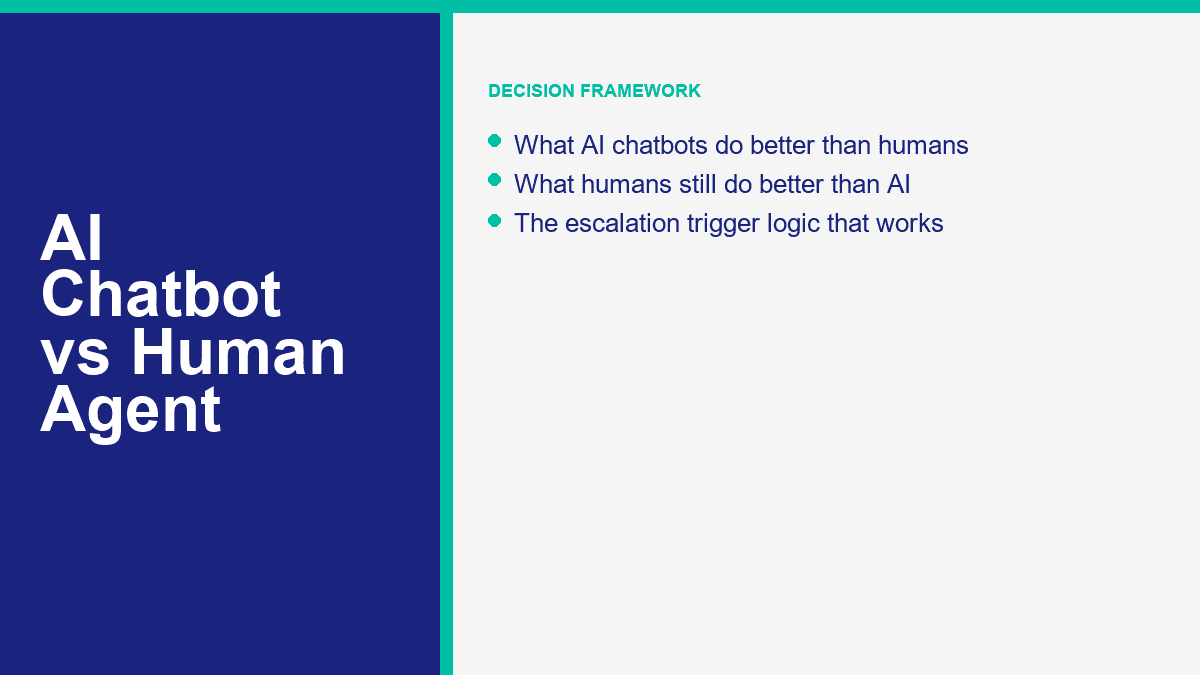
The cleanest decision framework I know uses four filters: frequency, risk, emotion, এবং revenue impact. If a query is frequent, low-risk, low-emotion, and low-revenue-risk, AI should own it. As soon as risk, emotion, or revenue stakes rise, the case should move toward a human.
| Conversation type | Best owner | কেন | Escalate when |
|---|---|---|---|
| Store hours, service areas, policy lookups, shipping basics | এআই | High frequency and low risk | The customer asks for an exception or the answer is missing |
| Order status, appointment confirmation, subscription date checks | এআই | Fast retrieval matters more than human tone | Backend data is unclear, delayed, or disputed |
| Quote requests, lead qualification, product-fit questions | AI first, human second | AI can gather context and keep response time near zero | Budget, urgency, or product complexity rises |
| Refund requests, billing disputes, cancellations, complaints | Human | Emotion and discretion matter more than speed | Immediately if sentiment is negative or repeat contact is detected |
| Security, fraud, regulated advice, medical or legal edge cases | Human | Risk is too high for generic automation | Immediately, with AI limited to intake only |
| Outage updates or incident messaging | AI first, human on edge cases | AI can broadcast the known status quickly | The customer needs compensation, exception handling, or case review |
If you want the short version, here it is: AI should own the front door, not the entire building. Let it classify intent, answer what is known, and collect what the human needs next. Then let the person take over when the conversation becomes expensive, risky, or emotionally charged.
This is also where a lot of teams confuse two separate questions. One question is who should answer first. The other is which channel should the customer use. Those are not the same. If you are still sorting out the channel side, this chatbot vs live chat comparison goes deeper on website chat, labor economics, and channel fit.
Per-Interaction Cost Math for Human-Only, AI-First, and Hybrid Support
Support leaders do not need more vague ROI language. They need per-interaction math they can defend in a budget meeting. Here is a simple model using public benchmark data and current public pricing.
পরিস্থিতি: a team handles 1,200 inbound support conversations per month. We will use the lower human live-chat benchmark of $2.58 per interaction as the busy-queue floor, and the stricter benchmark of $4.54 per interaction as the more conservative planning number. For the bot model, we will use MessengerBot Pro at $49.99 per 30 days and add 4 hours per month of human review and tuning at the same loaded rate.
Loaded human hourly cost = median wage x overhead multiplier
Human cost per chat = loaded hourly cost x handling time or shift economics
AI cost per resolved conversation = platform cost + review labor
Hybrid monthly cost = AI layer cost + human escalations cost
| Model | Monthly cost using $2.58 human benchmark | Monthly cost using $4.54 human benchmark | What the model assumes |
|---|---|---|---|
| Human-only support | $3,096.00 | $5,448.00 | All 1,200 conversations handled by people |
| AI layer only | $157.07 | $157.07 | $49.99 plan plus about 4 review hours at $26.77 per hour |
| Hybrid at 65% AI resolution | $1,240.67 | $2,063.87 | 780 conversations resolved by AI, 420 escalated to humans |
That hybrid model is the important one. At a 65% AI resolution rate, monthly cost falls by about 59.9% against the lower human benchmark and about 62.1% against the stricter benchmark. That is the kind of saving that gets attention because it does not require replacing the whole team. It only requires sending the wrong work away from the team.
The bot-side economics get even clearer when you isolate the AI-resolved conversations. In this model, the bot layer costs about $157.07 per month. If it fully resolves 780 conversations, that is about $0.20 প্রতি AI-সমাধানকৃত কথোপকথন।. Put that next to $2.58, $4.54, অথবা $8.06 for the human models and the budget argument becomes straightforward.
Now layer in enterprise-style outcome pricing. If you ran those same 780 AI resolutions through HubSpot at $0.50 each, the variable AI bill would be $390. Through Intercom Fin at $0.99 per successful outcome, it would be $772.20. Those numbers are higher than a fixed-fee SMB stack, but they still compare well against a human agent handling the same routine traffic.
The caution is just as important as the savings. Do not count a partial handoff as a full automation win. If AI collects the order number but the human still does all the work, you saved time, not a full interaction. That is still worth money, but it is not the same line item.
What Customer Satisfaction Data Really Says About Bots and Humans
This is the part where lazy articles pick a side. Real data is more nuanced.
LiveChat’s benchmark page shows average human-chat satisfaction at 64.2% and chatbot satisfaction at 64.7%. That does না prove bots are universally better. It does prove something useful: on the right kind of question, customers do not automatically resent automation. Speed and clarity can matter more than whether a human typed the answer.
Now look at consumer preference research. Pega’s 2026 consumer study found that 66% of respondents prefer human-led support, 77% say they often or always achieve better outcomes with humans, and only 2% want to interact exclusively with generative AI chatbots. Gladly’s 2026 research makes the gap even sharper. It reported that 59% prefer AI as a first stop for support, but 57% expect a clear path to a human within five AI exchanges and 54% will walk away after 10 minutes of getting nowhere.
Put those findings next to Zendesk’s number that 86% of consumers say responsiveness and accurate resolution strongly influence whether they buy, and the pattern is hard to miss. Customers want AI for speed. They still want humans for confidence. What they hate is the trapped middle state where the bot is slow, vague, repetitive, or blocks escalation.
| Data point | What it actually means |
|---|---|
| LiveChat: chatbot CSAT slightly above human CSAT | Routine conversations can score well when the bot is fast and accurate |
| Pega: 66% prefer human-led support | People still want a person involved when the stakes rise |
| Gladly: 59% prefer AI as a first stop | Customers accept automation when it reduces waiting |
| Gladly: 57% want a human path within five exchanges | Escalation speed matters almost as much as first-response speed |
| Zendesk: 74% expect 24/7 service because AI exists | AI raised the baseline, even for teams that still rely on humans |
If you want the honest summary, here it is. Customers do not prefer chatbots or humans in the abstract. They prefer the right mode for the job. They like bots for simple, time-sensitive, repetitive work. They like humans for complex, emotional, or expensive conversations. The best service design accepts that instead of trying to prove one side morally superior.
Why the Strongest Support Teams Run a Hybrid Model Instead of Going All-In on AI
The hybrid model is not a compromise. It is the mature operating model.
Look at the public resolution claims from the companies shipping serious support AI. HubSpot says Customer Agent resolves about 65% of conversations across more than 8,000 activated customers. Intercom says Fin resolves an average of 67% of customer queries across more than 7,000 paying customers. Zendesk markets 80%+ automation potential for AI agents in the right conditions. Even in the most optimistic framing, none of those numbers say humans disappear. They say humans stop doing the wrong work.
The best hybrid support systems usually follow the same pattern:
- AI handles the first 30 seconds. It greets, identifies intent, and gives the customer a clear starting path instead of a blank text box.
- AI resolves the known lane. It answers from approved content, retrieves simple account details, and handles repetitive tasks fast.
- AI captures context before handoff. Order number, email, plan, device, screenshot, timeline, and issue type are collected once.
- Humans take the expensive lane. Complaints, exceptions, save attempts, high-value leads, and risky cases move to an agent.
- Humans inherit the full thread. The customer does not restart the story, which protects both CSAT and handle time.
That is the model top brands and mature support teams keep converging on because it aligns with both the cost math and the customer data. AI owns speed. Humans own outcomes that need judgment. The handoff is the product.
Another reason hybrid wins is that it protects you from hype-driven overreach. AI capability is rising fast, but support quality still depends on governance, content, routing, and escalation discipline. A hybrid model lets you expand safely. An AI-only model encourages you to chase deflection before you have earned it.
The Mistakes That Make Replacing Humans With AI Backfire
Most failed AI support rollouts are not caused by bad models. They are caused by bad operating decisions.
Replacing the Human Escape Hatch
If the customer cannot reach a person when the issue goes off-script, the bot starts feeling like a barricade. That is exactly what the Gladly data warns about. People will tolerate AI. They will not tolerate being trapped by it.
Measuring Deflection Instead of Resolution
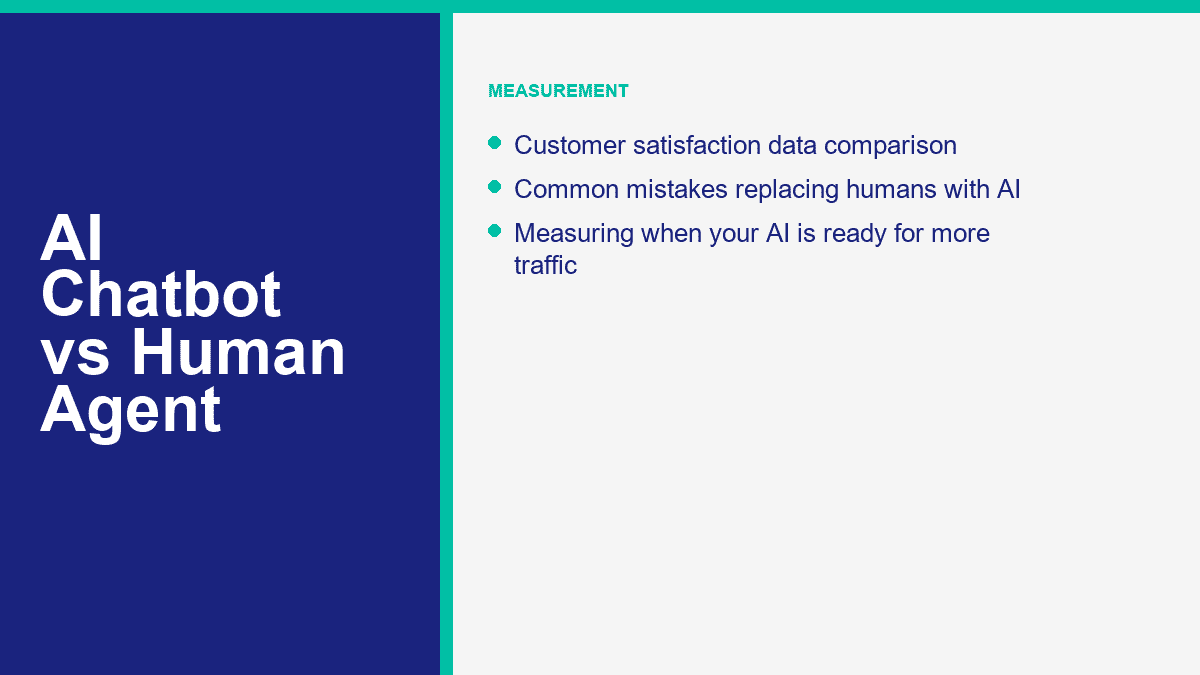
A deflected conversation is not automatically a solved conversation. If the customer comes back two hours later, opens email after failing in chat, or calls because the bot stalled them out, your savings were imaginary. Track repeat contact and reopen rate, not just how many conversations the bot touched.
Training the Bot on Weak Content
If your FAQ is vague, outdated, or contradictory, the AI layer will reflect that. Most bad bot experiences are knowledge problems wearing an AI costume. Before you buy more automation, clean up the answers you are automating.
Believing the Vendor Best Case Is Your Day-One Reality
When a vendor says 65%, 67%, or 80% automation potential, that is not your forecast until your own data proves it. Treat those figures as planning ceilings, not guaranteed launch numbers. A realistic first target for most teams is not perfection. It is getting the obvious repetitive traffic off the human queue cleanly.
Forgetting That Cost Cutting Can Damage Perception
Klarna is the cautionary example everyone in this space noticed. On February 27, 2024, the company said its AI assistant was handling about two-thirds of customer service chats and doing the work of roughly 700 full-time agents. উপর May 8, 2025, Bloomberg reported CEO Sebastian Siemiatkowski was shifting back toward giving customers the option to speak with a real person, saying the company had gone too far on cost focus. The lesson is not that AI failed. The lesson is that efficiency and customer preference are not the same KPI.
My pre-launch checklist is boring on purpose, and that is why it works:
- Give customers an obvious human option before they need to beg for it.
- Use real historical questions, not imagined ones, to train the first version.
- Write hard escalation rules for refunds, complaints, repeat failures, and risk-sensitive topics.
- Test the handoff on mobile and after hours, not just during a perfect desktop demo.
- Review failed bot conversations every week for the first month.
- Expand automation one intent family at a time instead of trying to automate the whole desk at once.
The Metrics That Tell You When Your AI Can Safely Take More Traffic
The wrong expansion signal is conversation volume. The right signal is trustworthy resolution at acceptable satisfaction.
If your AI is answering more messages but causing more repeat contact, more transfer complaints, or more silent abandonment, it is not ready for more traffic. It is just busy. What you want is evidence that the bot can own a given intent category with stable quality.
| মেট্রিক | What good looks like | এটি কেন গুরুত্বপূর্ণ |
|---|---|---|
| Resolution rate by intent | Stable and rising on a specific query family | Shows where AI is genuinely solving, not just replying |
| Repeat-contact rate within 7 days | Flat or falling after automation expands | Catches fake deflection |
| Bot CSAT vs human baseline | Within a few points on routine intents | Protects customer experience while scaling AI share |
| Escalation speed | Fast handoff when sentiment or risk turns negative | Prevents AI from becoming a dead end |
| Human assist rate | Low on routine issues, intentionally high on sensitive ones | Keeps routing honest |
| No-answer or fallback rate | Falling over time as content improves | Shows where the knowledge base is still weak |
My practical rule for expansion is straightforward:
- Pick one intent family, such as order status or appointment changes.
- Let AI take first response and full resolution on that one family only.
- Review every failed conversation weekly until fallback patterns are clear.
- Expand only after repeat contact stays controlled and CSAT holds close to the human baseline.
- Move the next repetitive intent over, not the hardest one.
That is slower than the grand AI replacement story, but it is how real support operations avoid self-inflicted churn.
How to Start the Hybrid Model Without Building a Giant Support Program
If you want the fastest practical win, do not start by trying to automate every edge case. Start with the top 10 repetitive questions, one clean human handoff path, and one dashboard that shows resolution rate, repeat contact, and transfer reasons. That is enough to learn whether AI should take 20%, 40%, or 65% of your queue. If Messenger or web chat is part of that rollout, মেসেঞ্জারবটের মূল্য তালিকা দেখুন and start with the smallest tier that gives you real routing, forms, and escalation control. Good support AI is not the bot with the biggest claim. It is the bot that knows when to stop and hand the conversation to the right person.
প্রায়শই জিজ্ঞাসিত প্রশ্ন
এআই চ্যাটবট কি মানব এজেন্টের চেয়ে ভালো?
They are better for different jobs. AI chatbots are better at instant replies, repetitive FAQs, after-hours coverage, and low-cost triage. Human agents are still better at exceptions, complaints, emotional conversations, policy judgment, and high-value sales or retention work. The strongest setup is usually hybrid, not one or the other.
কাস্টমার সার্ভিসের কত শতাংশ আসলে AI পরিচালনা করতে পারে?
For most teams, a realistic mature range is around 40% to 70% of routine support traffic, depending on content quality, channel mix, and how repetitive the queue really is. Public vendor benchmarks in 2026 cluster around the mid-60% range for strong deployments. That is a useful planning benchmark, not a launch guarantee.
গ্রাহকরা কি AI চ্যাটবট বা মানুষের প্রতি বেশি আগ্রহী?
Customers usually prefer AI for speed on simple tasks and humans for complex or sensitive issues. The best reading of current data is that people accept bots as a first stop, but still want a fast, obvious path to a human when the issue becomes difficult or emotional.
মানুষকে AI চ্যাটবট দ্বারা প্রতিস্থাপন করে আমি কতটা সঞ্চয় করতে পারি?
It depends on your true human cost per interaction and how much of the queue is genuinely repetitive. In the model used in this article, moving to a hybrid system with 65% AI resolution reduced monthly support cost by about 60% while keeping humans on the remaining 35% of traffic. The exact number changes by wage level, software stack, and handle time, but the labor savings can be substantial very quickly.
কখন একটি চ্যাটবটকে মানুষের কাছে উন্নীত করা উচিত?
A chatbot should escalate when the customer is upset, the answer is unclear, the issue involves a refund or billing dispute, the case is high-risk or regulated, the customer explicitly asks for a person, or the bot has already failed once. Escalation should happen early enough that the customer sees AI as useful triage, not a barrier.



 বাংলা
বাংলা  English
  Tagalog
  简体中文
简体中文  العربية
  हिन्दी
  Português do Brasil
  Español de México
  Français
  香港中文
香港中文  繁體中文
繁體中文  Nederlands
  Deutsch
  Bahasa Indonesia
  日本語
日本語  한국어
한국어  Polski
  Русский
  Español
  Tiếng Việt