
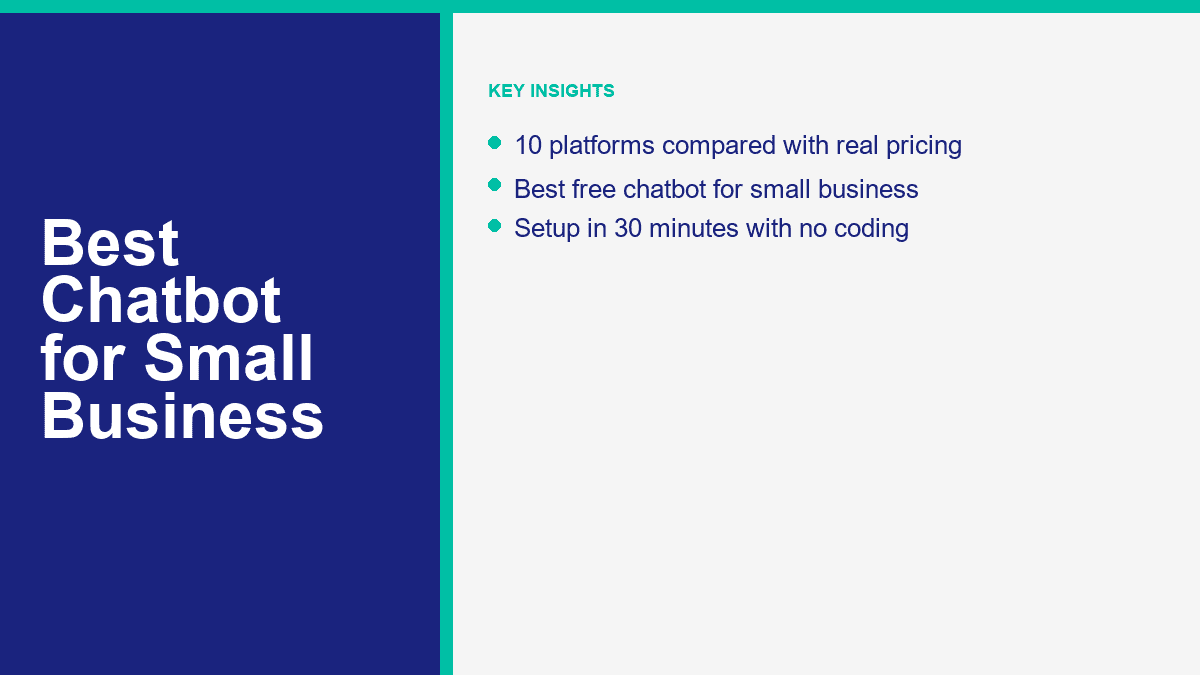
Die Auswahl eines Chatbots für ein kleines Unternehmen ist im Jahr 2026 schwieriger, als es die meisten Zusammenfassungsbeiträge vermuten lassen. Sie wählen nicht nur ein Widget aus, das Fragen beantwortet. Sie wählen ein Preismodell, eine Kanalstrategie, einen Übergabeprozess und in vielen Fällen die Software aus, die entscheidet, ob ein Lead außerhalb der Geschäftszeiten erfasst oder ignoriert wird.
Deshalb habe ich diese Tools nicht nach Hype eingestuft. Ich habe sie für Unternehmen mit einem Jahresumsatz von etwa $10 Millionen eingestuft, bei denen die einfache Einrichtung, vorhersehbare Kosten und eine schnelle Amortisation wichtiger sind als Unternehmensbuzzwords. Die Preis- und Planinformationen unten wurden am 10. April 2026 mit offiziellen öffentlichen Produktseiten und Hilfedokumentationen überprüft. Eine schnelle Realitätserklärung, bevor wir beginnen: Keine der ernsthaften Plattformen hier ist wirklich “keine Anmeldung erforderlich.” Dieser Satz gehört immer noch zu den Verbraucherdemos für KI. Echte Geschäftschatbots benötigen Kanalberechtigungen, gespeicherte Gespräche, Routingregeln und Berichterstattung.
Wenn Ihr Hauptproblem die Supportkosten sind und nicht nur die Lead-Erfassung, lesen Sie unseren Leitfaden zur KI-Kundenbetreuung dies hier. Dieser Artikel konzentriert sich auf die gesamte Kaufentscheidung für kleine Unternehmen: was diese Chatbots kosten, wie schnell sie einsatzbereit sind, wo sie passen und welcher tatsächlich den besten ROI liefert.
Warum kleine Unternehmen 2026 einen Chatbot benötigen
Die einfache Antwort ist Arbeit. Jedes kleine Team hat denselben Stapel wiederkehrender Fragen: Geschäftszeiten, Versandfenster, Buchungslinks, Bestellstatus, Preise, Servicegebiete, Rückerstattungsregeln und “ist jemand verfügbar?” Nachrichten, die genau in dem Moment gesendet werden, in dem niemand am Schreibtisch ist. Leute einzustellen, um diese Antworten neu zu tippen, ist teuer. Sie zu ignorieren, ist schlimmer.
Die Kostenlücke ist es, die die Rentabilität von Chatbots jetzt so offensichtlich macht. Eine von einem Menschen bearbeitete Support-Interaktion kann leicht im Bereich von $3 bis $12 landen, wenn man Löhne, Gemeinkosten und Unterbrechungskosten berücksichtigt. Ein Chatbot löst nicht jedes Gespräch, aber selbst ein bescheidener Bot, der die erste Schicht von 200 wiederkehrenden Nachrichten pro Monat bearbeitet, kann mehrere Stunden Personalzeit sparen und verpasste Verkäufe nach Feierabend verhindern.
| Monatliche wiederkehrende Gespräche | Wenn ein Mitarbeiter sie zu $25/Stunde und 10 Minuten pro Stück bearbeitet | Wenn ein Chatbot sie in einem $49 Monatsplan abfängt | Praktische Erkenntnis |
|---|---|---|---|
| 50 | Etwa $208 an Arbeitskosten | $49 plus Einrichtungszeit | Der Bot bezahlt sich bereits selbst, wenn die Fragen einfach sind |
| 100 | Etwa $417 an Arbeitskosten | $49 plus einige Übergabearbeiten | Jetzt ist der ROI offensichtlich, selbst bei teilweiser Automatisierung |
| 300 | Etwa $1.250 in Arbeitskosten | $49 bis $150, abhängig von Werkzeug und Nutzung | Das größere Risiko besteht darin, das falsche Preismodell auszuwählen, nicht darin, einen Bot zu verwenden |
Der zweite Grund sind die Erwartungen der Kunden. Käufern ist es egal, dass Ihr Team klein ist. Wenn sie um 20:40 Uhr über Ihre Website, Facebook-Seite, Instagram-DMs oder WhatsApp eine Nachricht senden, erwarten sie dennoch eine nützliche Antwort. Sie benötigen kein perfektes KI-Gespräch. Sie brauchen einen sofortigen nächsten Schritt: das Angebotsformular, den Buchungslink, die Geschäftsrichtlinie, die Produktantwort oder die richtige menschliche Übergabe.
Der dritte Grund ist die Kanalverbreitung. Viele kleine Unternehmen betreiben nicht mehr nur einen Posteingang. Sie haben ein Website-Chat-Widget, Messenger, Instagram, E-Mail, manchmal WhatsApp und vielleicht auch einen E-Commerce-Hilfekanal. Ein Bot funktioniert am besten als erste Antwortschicht in diesem Durcheinander. Er kauft Zeit, kennzeichnet Absichten, erfasst Details und gibt Ihrem Team eine sauberere Übergabe anstelle eines kalten Nachrichtenstrangs ohne Kontext.
Worauf man bei einem Chatbot für kleine Unternehmen achten sollte
Der größte Fehler, den kleine Unternehmen machen, ist, zuerst nach “AI-Qualität” zu suchen und alles andere an zweiter Stelle zu setzen. AI-Qualität ist wichtig, aber sie ist nicht der erste Filter. Der Kanal passt. Wenn die meisten Ihrer Gespräche auf Facebook beginnen, wird eine Messenger-first-Plattform fast immer einen schöneren Website-Bot übertreffen. Wenn Ihre Website den Großteil des Supports und des Lead-Volumens abwickelt, ist ein Social-First-Bot-Builder das falsche Werkzeug, egal wie gut die Demo aussieht.
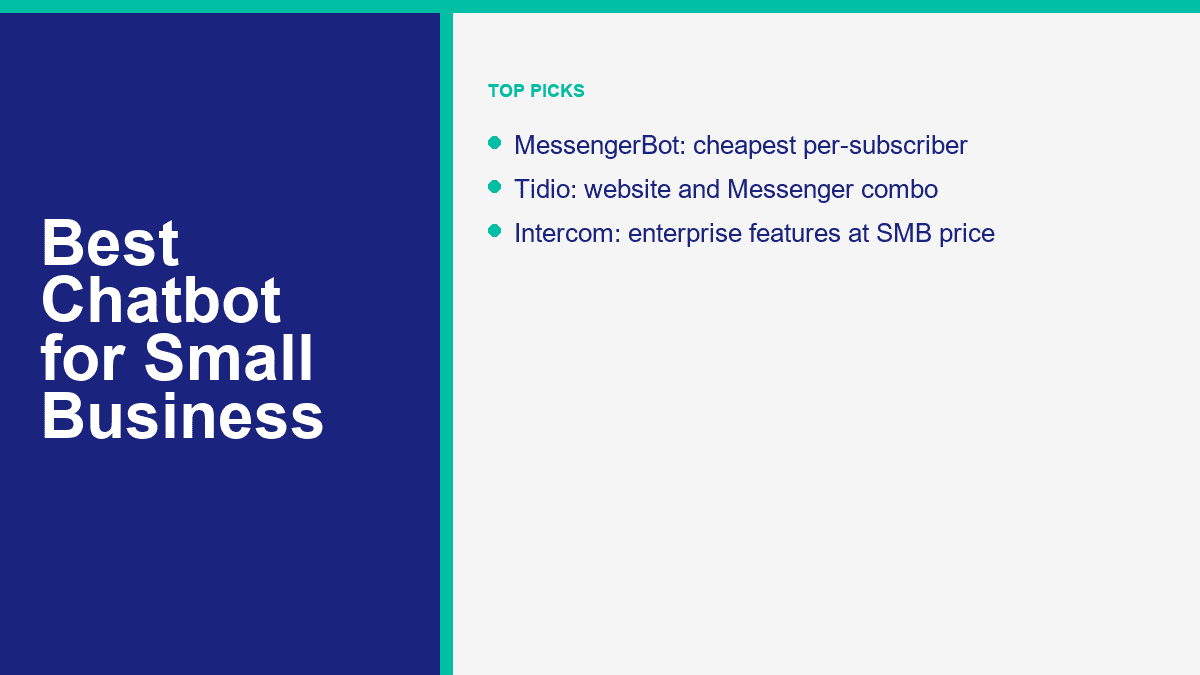
Hier sind die fünf Filter, die am wichtigsten sind, bevor Sie etwas ausgeben:
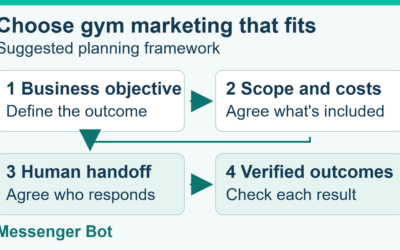
- Einfachheit der Einrichtung: Kann ein nicht-technischer Eigentümer in weniger als einer Stunde einen nützlichen ersten Flow erstellen, oder benötigen Sie ein sechs Schritte umfassendes Onboarding-Projekt, bevor der Bot eine echte Frage beantwortet?
- Preislogik: Eine pauschale monatliche Preisgestaltung ist am einfachsten zu budgetieren. Preisgestaltung pro Platz, pro Kontakt, pro Gespräch und pro Ergebnis kann funktionieren, aber nur, wenn Sie den Auslöser verstehen, bevor das Wachstum einsetzt.
- Integrationen: Überprüfen Sie mindestens Ihr CRM, Ihre Buchungssoftware, Ihre E-Commerce-Plattform, Google Sheets und welche Messaging-Kanäle tatsächlich Einnahmen generieren.
- AI-Qualität und Übergabe: Ein intelligenter Bot, der niemals eskaliert, ist schlimmer als ein einfacher Bot mit klaren Übergaberegeln. Genauigkeit und Zurückhaltung sind wichtiger als Persönlichkeit.
- Wartungsaufwand: Der beste Chatbot ist nicht der mit den meisten Funktionen. Es ist der, den Ihr Team auch in drei Monaten noch aktualisieren wird.
Die Preisgestaltung ist der Bereich, in dem die meisten SMB-Käufer auf die Nase fallen. Einige Tools erscheinen günstig, bis die aktiven Kontakte ansteigen. Andere bleiben erschwinglich, bis Sie Sitze, KI-Guthaben oder fortschrittliches Routing hinzufügen. Und einige sind ehrlich, aber einfach nicht für Budgets unterhalb des Unternehmenssektors ausgelegt. Deshalb trennt die folgende Tabelle den Einstiegspreis vom ROI. Der Listenpreis allein reicht nicht aus.
Wenn Sie diese Geschäftsbots auch mit allgemeinen KI-Assistenten wie ChatGPT, Claude und Gemini vergleichen möchten, lesen Sie unseren Vergleich von Chatbots. Dieser Artikel beantwortet eine andere Frage. Dieser hier befasst sich speziell damit, was ein kleines Unternehmen starten, sich leisten und rechtfertigen kann.
Die 10 besten Chatbots für kleine Unternehmen, bewertet
Dieses Ranking ist auf kleine Unternehmen in den USA und Großbritannien ausgerichtet, die praktischen ROI schätzen und nicht die Theateraufführung von Unternehmensfunktionen. Ein niedriger eingestuftes Tool kann dennoch die richtige Antwort sein, wenn der Anwendungsfall genau zu Ihrem Unternehmen passt. Drift ist ein gutes Beispiel. Es steht insgesamt niedrig, kann aber dennoch effektiv für eine B2B-Website sein, deren einziges Ziel die Erstellung von Pipelines ist.
| Rang | Plattform | Öffentlicher Einstiegspreis | Kostenloses Angebot oder Testversion | Beste Passform | Einrichtung | ROI lesen |
|---|---|---|---|---|---|---|
| 1 | MessengerBot.app | Premium $19,99 pro 30 Tage | Kostenlose Testversion | Facebook Messenger-first Unternehmen | Einfach | Bester Festpreis-ROI, wenn Facebook ein echter Verkaufs- oder Supportkanal ist |
| 2 | Tidio | Starter $24,17 pro Monat; Lyro AI-Kontingent separat | Kostenloser Plan und 50 kostenlose Lyro-Gespräche | Website-Chat plus KI-Support | Einfach | Bester KI-bereiter Support-Stack für eine typische SMB-Website |
| 3 | ManyChat | Essentiell $17 pro Monat | Kostenloser Plan | Instagram-, Messenger- und soziale DM-Automatisierung | Sehr einfach | Bester Weg von kostenlos zu bezahlt für sozial orientierte Unternehmen |
| 4 | Freshchat | Wachstum $19 pro Agent und Monat, jährlich abgerechnet | Kostenloser Plan für bis zu 10 Agenten | Budget-Omni-Channel-Support | Einfach | Starker Wert, wenn Sie Website, E-Mail und Messaging an einem Ort benötigen |
| 5 | HubSpot Chatbot | Kostenlos; Starter $15 pro Benutzer und Monat | Kostenlose Tools und Testversionen | CRM-zentrierte Vertriebs- und Serviceteams | Medium | Ausgezeichnet, wenn Sie bereits in HubSpot leben, schwächer, wenn nicht |
| 6 | Landbot | Starter $45 pro Monat | Sandbox kostenloser Plan | Website-Leadsqualifizierung und konversationale Formulare | Medium | Gute Rendite für Web-Trichter, weniger überzeugend für serviceorientierte KMUs |
| 7 | Chatfuel | Business $69 pro Monat | 7-tägiges kostenloses Testangebot | KI-gesteuerte soziale und Messaging-Automatisierung | Einfach | Leistungsstark, aber die aktuellen Preise sind für kleinere Geschäfte schwerer zu rechtfertigen |
| 8 | Botsify | Persönlich $49 pro Monat | Keine nennenswerte kostenlose Stufe aufgeführt | Multikanal-KI-Agenten-Experimente | Medium | Flexible Kanäle, aber die Kreditberechnung muss genauer überwacht werden |
| 9 | Intercom | Essentiell $29 pro Platz und Monat, jährlich abgerechnet, plus Fin-Nutzung | 14-tägige kostenlose Testversion | Hochvolumen-Support-Teams | Medium | Ausgezeichnetes Produkt, normalerweise überteuert für ein echtes kleines Unternehmensbudget |
| 10 | Drift | Benutzerdefinierte Preisgestaltung | No free tier | B2B website pipeline and meeting booking | Medium | Useful for revenue teams, poor value for most general SMB chatbot use |
Pricing notes checked on April 10, 2026: ManyChat moved to a new pricing model on March 2, 2026 for newer accounts, so older accounts may still see legacy billing. HubSpot has announced a Breeze Customer Agent pricing change effective April 14, 2026, but as of April 10, 2026 the agent still uses HubSpot Credits. That kind of nuance is exactly why “real pricing” matters more than old screenshots.
MessengerBot.app Is the Best Overall ROI Pick for Facebook-Centric Small Businesses
MessengerBot takes the top spot because it solves a very specific small-business problem better than most competitors: how to automate Facebook conversations without buying a bloated support suite or getting trapped in contact-based billing too early. The public pricing is refreshingly clear. Premium is $19.99 per 30 days on the current offer, Pro is $49.99, and Agency is $299.99. For a local business, coach, clinic, retailer, or service company using Facebook as a real lead and support channel, that is easy math.
The feature stack is deeper than the entry price suggests. The public pricing page lists a visual flow builder, website chat, forms, Google Sheets sync, JSON API plus Zapier, comment automation, ecommerce tools, email and SMS features, and Instagram options on higher tiers. That is why MessengerBot wins on ROI, not just price. You can launch a useful Messenger workflow fast and expand later without changing platforms. If Facebook Page messages are part of how you sell or support customers, MessengerBot-Preise anzeigen before you overcomplicate the decision.
Tidio Is the Best Small-Business AI Chatbot for Website Support
Tidio ranks second because it is the cleanest answer for businesses whose website is the real front door. The pricing is modular but still understandable: a free plan, Starter at $24.17 per month, Growth from $49.17, and Lyro AI with the first 50 conversations free before you move into a paid quota. That makes it easy to test before you commit serious spend.
Where Tidio earns its place is balance. You get website chat, live support, ticketing, and AI in one system without jumping straight to Intercom-style costs. It also supports Messenger, Instagram, WhatsApp, and email, which matters if your team does not want four separate inboxes. The main caution is layered pricing. Tidio stays attractive if you budget both the support workspace and the AI layer together. If you only look at the cheapest plan name, you will underestimate your real monthly spend.
ManyChat Still Owns the Best Free-to-Paid Path for Social DMs
ManyChat remains one of the easiest platforms to recommend to a business owner who wants results fast and does not want to feel like they are learning software for software’s sake. On ManyChat’s new March 2026 pricing model, the free plan includes up to 25 active contacts and basic automations. Essential starts at $17 per month, Pro at $39, Business at $99, and Advanced at $199 for new-account pricing. That structure makes the platform much easier to understand than the older “pay as your contacts grow and figure it out later” reputation it used to carry.
The reason ManyChat is not ranked above MessengerBot is channel fit. It is broader and very polished, especially for Instagram, TikTok, Telegram, and creator-style automations. But if your real business runs through Facebook Page messages, MessengerBot is the tighter fit and the cleaner value. ManyChat wins when social DM automation is spread across channels. It is also still the strongest true free starting point in this category.
Freshchat Is the Budget Omnichannel Option Most SMBs Should Shortlist
Freshchat is easy to underrate because it does not dominate the conversation the way Tidio, HubSpot, or Intercom do. But the pricing is strong for small businesses: free for up to 10 agents, Growth at $19 per agent per month billed annually, Pro at $49, and Enterprise at $79. Freddy AI Agent starts with the first 500 sessions included, then shifts to paid session packs. That is a workable entry point if you need real support operations, not just a marketing bot.
Freshchat is especially good for small teams that need website chat, email, Facebook, Instagram, and WhatsApp support in one place but are not ready for enterprise pricing. The reason it sits behind Tidio is ease of first-time AI deployment. Tidio feels simpler for the average owner. Freshchat is stronger once you know you need a more serious omnichannel support setup and you want to keep costs under control.
HubSpot Chatbot Makes the Most Sense If Your CRM Already Lives There
HubSpot’s service stack is attractive because the entry points look friendly: free tools at $0, Starter at $15 per seat per month, Professional at $100, and Enterprise at $150. The important detail is that the AI-heavy layer is not really a starter-plan feature. Breeze Customer Agent is tied to higher tiers and, as of April 10, 2026, still uses HubSpot Credits. HubSpot has announced a move to $0.50 per resolved conversation starting April 14, 2026, which may make the math cleaner, but that is not the live pricing yet.
That nuance is why HubSpot lands in the middle. If you already run sales, marketing, and service inside HubSpot, the chatbot can be a very smart buy because the customer context is already there. If you are not on HubSpot yet, you are not choosing a chatbot. You are choosing a CRM ecosystem. For the right business, that is great. For a simple local-business setup, it can be more system than you need.
Landbot Is Strong for Website Lead Qualification, Not Everyday Support Deflection
Landbot is a good example of a platform that looks expensive until you understand the job it is built for. The Sandbox plan gives you a real free starting point. Starter is $45 per month, includes 500 chats and 100 AI chats, and is explicitly positioned for individuals and small businesses wanting bots on websites and Facebook Messenger. That is enough to test serious lead qualification without a custom build.
Where Landbot shines is conversational forms, lead routing, booking flows, and web experiences that need more polish than a standard support widget. Where it is weaker is routine small-business support. If you mainly need “where is my order,” “what are your hours,” or “book me for Friday,” a simpler support or Messenger tool often gets you live faster for less money. Landbot is better when design and lead flow matter more than help-desk depth.
Chatfuel Still Has Power, but Its Current Price Pushes It Down the List
Chatfuel used to win a lot of comparisons because it was easy to understand and reasonably priced for Facebook automation. In April 2026, the official pricing page is much simpler but also harder on the wallet for small businesses: one Business plan at $69 per month after a 7-day free trial. The plan includes one WhatsApp number, one website widget, Instagram and TikTok automations, 1,000 conversations per month, five team seats, and an AI assistant.
That is not bad software. It is just no longer an obvious budget play. Chatfuel still makes sense if you want AI-assisted messaging, multiple social channels, and a straightforward setup without enterprise sales friction. But for a five-person business comparing raw ROI, MessengerBot, ManyChat, Tidio, and even Freshchat all have easier starting economics.
Botsify Gives You Channel Flexibility, but the Credit Model Needs Watching
Botsify’s official pricing page is surprisingly direct right now: Personal plan at $49 per month, two AI agents, 6,000 credits, document and web search integration, scheduling, and support for Messenger, SMS, website, WhatsApp, Instagram, Telegram, and Slack. That is a broad channel list for the money, and it makes Botsify worth a look if you want to experiment across several surfaces without stitching tools together.
The catch is that Botsify feels more like an AI agent builder than a plug-and-play SMB chatbot. The product markets strong ROI, but I would not use vendor ROI claims as my planning model. I would use credits, channels, and expected monthly message volume. For a technically comfortable small team, Botsify is flexible. For a local owner who just wants a reliable website or Messenger bot by this afternoon, it is not the first tool I would hand them.
Intercom Is Excellent Software, but Most Small Businesses Will Not Like the Bill
Intercom is one of the strongest products in this list, and also one of the easiest to overbuy. Essential starts at $29 per seat per month billed annually, Advanced at $85, Expert at $132, and Fin AI Agent is billed separately at $0.99 per resolved outcome. For a mature support operation, that is unusually transparent. You can model the AI layer before finance asks what happened.
For a typical small business, though, transparent does not mean cheap. Once you add seats and actual Fin usage, Intercom quickly stops competing with SMB-friendly tools and starts competing with internal headcount math. If your company has a real support org, a help center, routing rules, and enough ticket volume to justify premium software, Intercom deserves a test. If you just need a business chatbot that handles common questions and catches leads, it is usually more product and more price than you need.
Drift Is a Revenue Tool First, Which Is Why It Lands Last for General SMB Use
Drift, now under Salesloft, still matters. It uses AI chat to engage site visitors, qualify leads, and move buyers toward booked meetings. That is useful. The reason it sits at the bottom here is not product quality. It is category fit. Drift is built for B2B revenue teams whose website exists to generate pipeline, not for a broad mix of local service businesses, ecommerce shops, clinics, and small teams trying to automate support plus sales conversations together.
The other problem is pricing opacity. Drift does not offer meaningful public entry pricing for this use case, which immediately makes it harder for a small business to compare against tools with clear monthly numbers. If your website is a high-value B2B sales machine, Drift can still be a contender. If you are looking for the best small-business chatbot overall, it is not where I would start.
The Best Free Small Business Chatbot
The best free small-business chatbot in 2026 is ManyChat, with one important qualifier: it is the best free option when social messaging is the point. Its free plan gives you up to 25 active contacts and basic automations, which is enough for a solo business or early-stage team to test Messenger, Instagram, or other DM flows without spending anything.
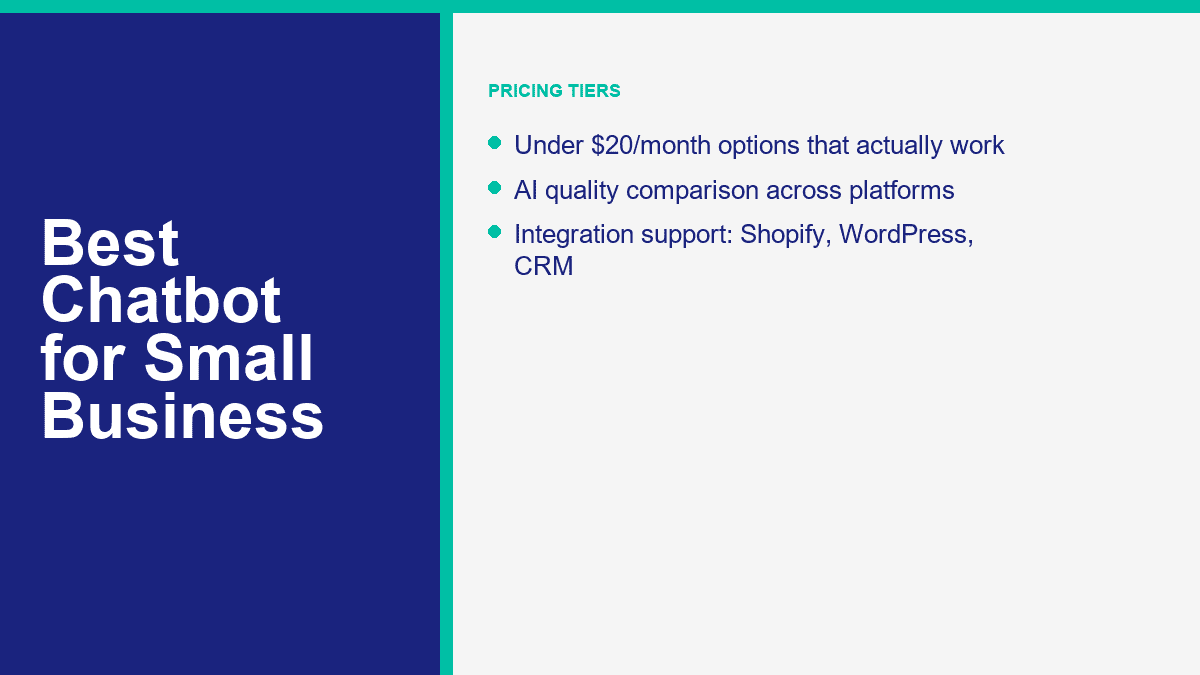
If your business is more support-heavy than social-heavy, Freshchat deserves an honorable mention because its free tier supports up to 10 agents and gives you a real website-and-email support base. But for pure chatbot experimentation with actual automation value, ManyChat still has the best free path. That also makes it the easiest platform to recommend to businesses that want proof before they commit budget.
The Best Chatbot for Under $20 per Month
The best chatbot for under $20 per month is MessengerBot.app if Facebook Messenger is part of your real sales or support workflow. Premium at $19.99 per 30 days is not just cheap. It is cheap in a useful way. You still get a visual builder, website chat, forms, automation, and integration options that can replace a lot of manual inbox work.
There are two good alternatives in this bracket. ManyChat Essential starts at $17 per month and is excellent for social DMs. Freshchat Growth starts at $19 per agent per month billed annually and works well for support teams. But if you want the cleanest under-$20 ROI for a small business using Facebook as a live customer channel, MessengerBot is the stronger buy.
The Best AI Chatbot for Small Business
The best AI chatbot for a typical small business in 2026 is Tidio. Not because it has the flashiest marketing, but because it combines AI, live chat, ticketing, and multichannel support in a package that an actual small team can launch and manage. The first 50 Lyro AI conversations being free also makes testing low-risk.
That said, “best AI chatbot” changes fast when the primary channel changes. If Facebook is your home base, MessengerBot is often the smarter operational choice. If you already run on HubSpot, Breeze becomes more compelling. If your company has an established support desk and real volume, Intercom’s Fin is stronger than most SMBs actually need. The right way to read this category is not “which AI sounds smartest?” It is “which AI improves response quality without introducing a billing surprise?”
How to Launch Your First Chatbot in 30 Minutes
The fastest successful chatbot launch is not a masterpiece. It is a narrow, useful system that answers the top questions, captures the right details, and hands off to a human when the conversation stops being routine. If you try to automate your whole business in version one, you will waste a day building branches nobody asked for.
- Pull your top five real questions. Open your inbox, comments, email, or support queue and write down the questions customers already ask every week. Do not invent use cases. Use the boring, repetitive ones first.
- Choose one channel for the first launch. Pick the channel that already produces business value: website chat, Facebook Messenger, Instagram DMs, or WhatsApp. One good channel beats four half-configured ones.
- Build a welcome flow with 3 to 5 useful choices. Good options are pricing, booking, order help, business hours, and talk to a person. Bad options are vague prompts that make the customer do all the work.
- Write short answers, not brochure copy. A chatbot should give the next answer or next action in two or three short blocks. It should not dump a full policy page unless that is genuinely the fastest route.
- Add one obvious human handoff path. This is where many bots fail. Customers need a clean path to a person for refunds, complaints, unusual requests, or anything urgent.
- Connect one practical integration. That might be Google Sheets, your booking calendar, your CRM, or your ecommerce order system. One useful integration creates more value than ten disconnected features.
- Test it on a phone before you go live. Chatbots that look neat on desktop often feel clumsy on mobile. Check button order, message length, and where the handoff actually lands.
If you are building on Facebook, the shortest path is to start with your Messenger workflow and keep the first version boring on purpose. For the deeper Facebook setup, branching, and automation logic, read our Messenger business guide. It covers the channel-specific setup details this article intentionally skips.
A practical first chatbot for a small business usually handles one of these jobs well:
- Book appointments or demos after hours
- Answer the top five support questions instantly
- Route quote requests to the right service or rep
- Collect order details before a human takes over
- Qualify website visitors before sending them to sales
The expensive trap is adding too much personality and not enough utility. Customers do not care whether your bot sounds clever. They care whether it gives them the booking link, confirms the service area, shows the return policy, or gets a human involved without making them repeat the same story twice.
Where Most Small Businesses Should Start This Week
If your company is still answering the same questions by hand, do not wait for the perfect AI roadmap. Start with one narrow chatbot workflow and make it earn its keep. For Facebook-first businesses, that usually means building a Messenger flow that covers FAQs, one lead path, and one human handoff. Compare the live plan limits in MessengerBot-Preise anzeigen, then use the smallest setup that solves a real inbox problem this month.
Häufig gestellte Fragen
Was ist der beste Chatbot für ein kleines Unternehmen?
Der beste Chatbot für ein kleines Unternehmen im Jahr 2026 ist MessengerBot.app, wenn Facebook Messenger Teil Ihrer Strategie zur Gewinnung von Leads oder zur Unterstützung ist. Es kombiniert vorhersehbare Preise, einfache Einrichtung und die Funktionen, die die meisten kleinen Teams tatsächlich nutzen. Wenn Ihr Unternehmen zuerst auf Website-Support ausgerichtet ist, ist Tidio die stärkste Alternative. Wenn Sie einen kostenlosen sozialen Ausgangspunkt wünschen, ist ManyChat immer noch der einfachste Ort, um zu beginnen.
Wie viel sollte ein kleines Unternehmen für einen Chatbot bezahlen?
Die meisten kleinen Unternehmen sollten erwarten, zwischen etwa $20 und $100 pro Monat für eine ernsthafte Chatbot-Installation auszugeben. MessengerBot beginnt bei $19,99 für 30 Tage, ManyChat beginnt bei $17 pro Monat in seinem neuen Einstiegsplan, Tidio beginnt bei $24,17 pro Monat vor bezahlter KI-Nutzung, und Freshchat beginnt bei $19 pro Agent und Monat, jährlich abgerechnet. Die Kosten steigen schnell, wenn Sie Sitze, KI-Ergebnisse oder ein hohes Kontaktvolumen hinzufügen.
Kann ich einen kostenlosen Chatbot für mein kleines Unternehmen nutzen?
Ja, aber kostenlos funktioniert am besten als Testfeld, nicht als dauerhafte Strategie. ManyChat bietet den besten kostenlosen Automatisierungsweg für soziale DMs, und Freshchat hat eine praktische kostenlose Support-Stufe. Kostenlose Pläne sind nützlich, um Abläufe zu testen, die Nachfrage zu validieren und den Kanal zu lernen. Sobald der Bot Teil der Umsatz- oder Support-Operationen wird, wachsen die meisten Unternehmen schnell über die Grenzen hinaus.
Welcher Chatbot ist am einfachsten für Anfänger?
ManyChat ist in der Regel der einfachste Chatbot für Anfänger, da die Einarbeitung reibungslos verläuft und der kostenlose Plan nutzbar ist. MessengerBot ist ebenfalls anfängerfreundlich, wenn Ihr Unternehmen speziell auf Facebook Messenger ausgerichtet ist. Tidio ist die einfachste Option für Anfänger im Bereich Website-Support, da es Live-Chat und KI kombiniert, ohne eine steile Einarbeitungszeit zu erfordern.
Profitieren kleine Unternehmen wirklich von Chatbots?
Ja. Kleine Unternehmen profitieren, wenn ein Chatbot repetitive Arbeiten reduziert, Leads außerhalb der Geschäftszeiten erfasst, die Reaktionszeit verkürzt und Kunden zum richtigen nächsten Schritt leitet. Die besten Ergebnisse kommen normalerweise aus engen Anwendungsfällen wie FAQs, Buchungen, Angebotserfassung und Erstlinienunterstützung. Ein Chatbot muss nicht das Personal ersetzen, um eine Rendite zu erzielen. Er muss nur genügend wiederholte Arbeiten entfernen, um Zeit zu sparen und verpasste Einnahmen zu verhindern.

 Deutsch
  English
  Tagalog
  简体中文
简体中文  العربية
  हिन्दी
  Português do Brasil
  Español de México
  Français
  বাংলা
বাংলা  香港中文
香港中文  繁體中文
繁體中文  Nederlands
  Bahasa Indonesia
  日本語
日本語  한국어
한국어  Polski
  Русский
  Español
  Tiếng Việt