

Belangrijke punten
- Stel een pragmatische lijst van b2b-verkooptools samen, te beginnen met een CRM als de enige bron van waarheid, en voeg vervolgens marketingautomatisering, prospectie, outreach en conversatievastlegging toe voor meetbare pijplijngroei.
- Prioriteer integraties en ROI: voer een prijsvergelijking van b2b-verkooptools uit en gebruik een checklist voor b2b-verkooptools om leveranciers te scoren op ABM, CPQ, AI-verrijking en analytics.
- Kies platforms op basis van GTM-beweging: HubSpot of Pipedrive voor snelheid, Salesforce of Dynamics voor enterprise-schaal—gebruik een gerichte vergelijking van b2b-verkoopsoftware om te beslissen.
- Gebruik verkoopbetrokkenheidstools en b2b-verkoopautomatiseringstools om de 3-3-3-regel operationeel te maken: 3-seconden haken, 3-minuten kwalificatie en 3 gerichte follow-ups om connectiepercentages te verhogen.
- Laag ABM en intentieplatforms met verrijking (ZoomInfo/Clearbit) en verkoopbetrokkenheid om hoogwaardig accounts te prioriteren en conversie te verbeteren met b2b-accountgebaseerde verkooptools.
- Benut conversatiemarketing (chatbots, Messenger Bot) om intentie vast te leggen, leads te kwalificeren, demo's in te plannen en de tijd tot de eerste vergadering te verkorten voor inside sales en SDR's.
- Optimaliseer de pijplijn met b2b-verkoopanalytische tools en forecasting: handhaaf kwalificatiepoorten, lead scoring en wekelijkse forecasting-rollups om de toolgedreven groei te meten.
- Begin lean en test: voer een lean stack (CRM + prospectie + outreach + conversatie) uit voor startups, en schaal vervolgens naar enterprise b2b-verkooptools naarmate processen en integraties volwassen worden.
Het vinden van de beste b2b verkooptools gaat minder om het najagen van functies en meer om het samenstellen van een pragmatische stack die deals bevordert—deze gids doorloopt een samengestelde lijst van b2b verkooptools, van de voorspellingen voor de beste b2b verkooptools in 2026 tot praktische adviezen voor het vergelijken van b2b verkoopsoftware. Je zult zien welke beste verkooptools voor b2b-teams de leadgeneratie, prospectie en outreach aandrijven (beste leadgeneratietools voor b2b, b2b prospectietools, beste b2b outreach-tools), hoe b2b verkoopondersteuningstools en verkoopbetrokkenheidstools voor b2b passen binnen de 4 C's van marketing en de 3-3-3 regel in verkoop, en welke b2b CRM-tools het beste dienen voor inside sales, SDR's en enterprise workflows. Onderweg zullen we de beste b2b SaaS verkooptools vergelijken, b2b verkoopautomatiseringstools benadrukken, AI-gestuurde b2b verkoopintelligentie-tools en de beste b2b pipeline managementtools voor pipeline-optimalisatie, en je wijzen op praktische, kostenbewuste opties—van b2b verkooptools voor startups tot enterprise b2b verkooptools—zodat je tools kunt kiezen voor ROI, integraties en resultaten in de echte wereld (inclusief beste b2b verkooptools reddit en gratis opties).
Wat zijn goede B2B marketingtools?
Good B2B marketing tools are a combination of platforms that cover demand generation, account-based marketing, CRM, automation, analytics, content, and conversational engagement. Below I present a practical, category-based approach to building a b2b sales tools list that balances immediate pipeline impact with long-term revenue operations. Start with a CRM as the single source of truth, layer in marketing automation and ABM for account prioritization, add prospecting and outreach for pipeline creation, then close gaps with conversational tools and analytics so you can measure ROI and optimize continuously.
Best b2b sales tools — marketing stack for demand gen (b2b sales tools list, best lead generation tools for b2b)
For demand generation I prioritize tools that deliver predictable lead flow and integrate with CRM and revenue ops. A lean, high-impact stack looks like:
- CRM & account management (b2b CRM tools best): HubSpot or Salesforce to centralize contacts, deal stages, and attribution.
- Lead generation & prospecting (best lead generation tools for b2b, b2b prospecting tools): LinkedIn Sales Navigator for intent-driven outreach plus Apollo or ZoomInfo for enriched contact data.
- Marketing automation & nurture (b2b sales automation tools): HubSpot Marketing Hub, Marketo or Pardot for behavioral scoring and lifecycle campaigns that hand qualified accounts to SDRs.
- ABM & account scoring (b2b account-based selling tools): Demandbase, 6sense of Terminus om intent-signalen te layeren en site/advertentie-ervaringen voor doelaccounts te personaliseren.
- Outreach & engagement (beste b2b outreach tools, sales engagement tools voor b2b): Outreach of SalesLoft voor cadences; Lemlist of Mailshake voor gepersonaliseerde cold email-sequenties.
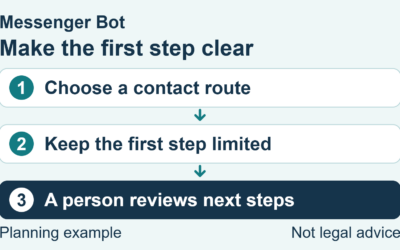
- Conversational marketing (beste b2b inside sales tools): Ik gebruik Messenger Bot om intentie vast te leggen, leads te kwalificeren via geautomatiseerde workflows, demo's te plannen en gekwalificeerde gesprekken in real-time naar vertegenwoordigers te routeren.
- Content & SEO (b2b sales tools voor marketingafstemming): Semrush of Ahrefs om intentie-zoekwoorden te vinden en content te creëren die inbound leadgeneratie stimuleert.
- Analytics & pipeline-optimalisatie (b2b sales analytics tools, beste b2b pipeline management tools): GA4 voor site-evenementen en Looker/Tableau voor uniforme omzetdashboards die forecasting en b2b sales forecasting tools voeden.
Wanneer ik deze stack bouw, controleer ik eerst de integraties van b2b sales tools—CRM's, marketingautomatisering, prospecting-databases en conversatieplatforms moeten synchroniseren—vervolgens voer ik een prijsvergelijking voor b2b sales tools uit om de totale eigendomskosten te schatten. Voor startups benadruk ik tools met lage frictie en snelle ROI (beste b2b sales tools voor startups); voor enterprise-use cases geef ik prioriteit aan schaalbaarheid en beveiliging (enterprise b2b sales tools). Gebruik een checklist voor functies—integraties, ABM-ondersteuning, analytics, AI-capaciteiten, demo-planning en contractbeheer—om te beslissen welke tool je als volgende moet adopteren.
How these tools map to outcomes and immediate actions (best sales tools for b2b teams, best tools for b2b lead nurturing)
Map each tool to a clear outcome to avoid tool sprawl:
- Acquire: LinkedIn Ads + Semrush + outreach platforms = predictable MQLs (best prospecting tools for sales).
- Engage: Marketing automation + personalized ABM creatives = higher account touch quality (best account based marketing and sales tools).
- Qualify: Messenger Bot workflows and sales engagement tools for b2b accelerate lead qualification and demo scheduling (best tools for b2b demo scheduling).
- Close: CRM-driven playbooks, enablement content and Calendly/Chili Piper routing reduce friction and shorten sales cycles (best tools for b2b appointment setting).
- Scale: AI-powered enrichment (b2b sales intelligence tools, b2b sales tools with AI) and pipeline acceleration tools drive higher lead-to-opportunity conversion and better b2b sales tools for ROI tracking.
Practical tip: assemble a concise b2b sales tools list focused on one outcome at a time—lead generation, lead nurturing, or pipeline acceleration—then measure lift using sales metrics and tie tool spend to pipeline movement. For tactical how-tos and setup, see my guides on best software for sales reps and pipeline management explained to align tools with your 3-3-3 follow-up cadence and revenue goals (beste tools voor verkoopmedewerkers, pipeline management uitgelegd).

What are the 4 C’s of B2B marketing?
Customer Wants & Needs
Customer Wants & Needs — focus on buyer problems, outcomes and buying committees rather than product features. In B2B that means mapping stakeholders, use cases, procurement criteria and success metrics (ROI, TCO, time-to-value). Tactics: develop buyer personas, run discovery interviews, use intent data to detect needs early (e.g., Demandbase/6sense signals), and create solution-focused content for each stage. Measure with conversion rates by account, win-rate lift on targeted segments, and churn reduction. For practical persona templates and CRM-aligned playbooks see HubSpot resources (HubSpot).
Kosten
Cost — reframes price as total cost of ownership and value delivered. B2B buyers compare lifecycle cost, implementation effort, support and integration risk; messaging should emphasize ROI, payback period and risk mitigation. Tactics: publish ROI calculators, case-study value maps, and pricing tiers that reflect startup vs enterprise needs. Track deal velocity, average contract value, and pricing-sensitivity tests to quantify impact. Use b2b sales tools pricing comparison and a b2b sales tools features checklist when evaluating platforms so cost messaging matches real TCO.
I use these principles when I design workflows in Messenger Bot: automated qualification scripts that capture buyer pain, prompts that surface procurement constraints (so sellers can address TCO early), and multilingual responses that reduce friction for global committees. That operationalizes the 4 C’s—aligning conversational marketing and b2b sales enablement tools to improve lead quality and speed to value.
Tools that support Customer and Cost objectives (b2b sales enablement tools, b2b sales intelligence tools, b2b sales automation tools): CRM (HubSpot, Salesforce), enrichment (ZoomInfo/Clearbit), marketing automation (HubSpot/Marketo), and ROI-dashboarding via Looker/Tableau. For sales-specific tool guidance see my practical rundowns on beste software voor verkoopmedewerkers and sales metrics tracking (voorbeelden van verkoopstatistieken).
Which platform is best for B2B sales?
There isn’t a one-size-fits-all answer: the best b2b sales tools depend on GTM motion, scale, integrations and whether you prioritize speed-to-value or long-term scalability. In practice I evaluate platforms across categories—enterprise CRM & revenue cloud, growth CRM/all-in-one, sales engagement stacks, b2b eCommerce, ABM/intent platforms, and conversational capture—and match them to outcomes (pipeline creation, deal velocity, self-serve revenue, account penetration). That approach lets me build a pragmatic b2b sales tools list and run a focused b2b sales software comparison to choose the tools that move revenue fastest.
Comparing platforms: b2b sales software comparison and top b2b sales tools 2026 (best b2b SaaS sales tools, enterprise b2b sales tools)
When I compare platforms I score them on five dimensions: integrations, ABM capability, automation & AI, analytics & forecasting, and TCO. Typical category leaders and when I pick them:
- Enterprise CRM + Revenue Cloud (Salesforce, Dynamics) — chosen for complex quote-to-cash, CPQ and heavy integrations; ideal for enterprise b2b sales tools where security and customization matter. Evaluate implementation effort and run a b2b sales tools pricing comparison against long-term ROI.
- Growth CRM / All-in-One (HubSpot) — chosen for rapid onboarding, built-in marketing-sales alignment and lower admin overhead; great for startups and mid-market teams as part of a best b2b SaaS sales tools strategy.
- Sales Engagement Stack (Outreach, SalesLoft) — essential for SDRs and inside sales; combines cadences, analytics and personalization to scale outbound and support account-based selling plays.
- B2B eCommerce / Self-Serve (Shopify Plus, BigCommerce, Adobe Commerce) — for product-led and distribution models where self-serve ordering and catalog/contract pricing reduce friction and accelerate revenue.
- ABM & Intent (6sense, Demandbase, Terminus) — prioritized when target accounts and buying committees drive pipeline; these feed account scores into the sales stack and improve rep prioritization.
- Conversational Capture (Drift, Intercom, Messenger Bot) — real-time qualification, multilingual responses, demo scheduling and SMS sequences shorten time-to-first-meeting and feed high-intent leads into CRM and sales engagement tools.
For 2026 I expect top b2b sales tools 2026 trends to emphasize AI-driven lead scoring, tighter b2b sales tools integrations, and pipeline acceleration features. To operationalize comparisons I use a b2b sales tools features checklist and score each vendor on integration depth, ABM support, demo scheduling, contract management, AI enrichment, and analytics. For practical setup and sales tool selection I reference guidance on beste software voor verkoopmedewerkers en de SaaS for sales guide to align platform choice with team processes.

What are the top 5 CRM tools?
1) Salesforce Sales Cloud — Best for enterprise B2B CRM and complex revenue operations
Why: Deep customization, native CPQ, advanced forecasting, enterprise security and an extensive partner ecosystem make Salesforce the default when you need full quote‑to‑cash and complex integrations. Key capabilities include account & opportunity management, workflow automation, API‑first integrations and AI insights. Best for large sales orgs and enterprise b2b sales tools where scale and security matter. Considerations: longer implementation and higher TCO—include this in any b2b sales tools pricing comparison. (Source: Salesforce)
2) HubSpot CRM + Sales Hub — Best for fast time-to-value and SMB/mid-market alignment
Why: Unified marketing + sales + service data, easy automation and built‑in ABM features speed onboarding for scaling teams. Key capabilities: contact & pipeline management, sequences, meeting scheduling and built‑in marketing automation. Best for startups and scaling teams that prioritize inbound and rapid ROI. Considerations: may need add‑ons at enterprise scale; always verify b2b sales tools integrations.
3) Microsoft Dynamics 365 Sales — Best for organizations invested in the Microsoft ecosystem
Why: Native integration with Microsoft 365, Power Platform and Azure enables robust reporting and identity/security controls. Key capabilities: relationship analytics, AI‑assisted selling and CPQ. Best for enterprises using Microsoft stack and regulated industries.
4) Zoho CRM — Best for cost-conscious teams seeking flexibility
Why: Competitive pricing, modular suite (Zoho One), solid automation and omnichannel messaging. Key capabilities: pipeline management, automation, multichannel engagement and AI assistant. Best for small‑to‑mid businesses and startups evaluating b2b sales tools for startups. Considerations: check integration depth for complex revenue ops.
5) Pipedrive — Best for high‑velocity sales teams and pipeline‑first workflows
Why: Visual, pipeline‑first UI and straightforward automation focused on sales productivity. Key capabilities: visual pipelines, activity reminders, email sync and integrations with enrichment tools. Best for SDRs and inside sales teams optimizing pipeline conversion and b2b sales productivity tools.
How to pick among these top CRM tools (practical checklist)
Choosing the right b2b CRM tools best for your stack means matching platform strengths to outcomes and operational constraints. I evaluate vendors against a concise checklist and run a b2b sales software comparison before committing:
- Outcome fit: define whether you need pipeline creation, ABM, enterprise CPQ, self‑serve commerce or revenue ops visibility (best b2b sales tools for ROI).
- Integrations: confirm b2b sales tools integrations with marketing automation, enrichment (ZoomInfo/Clearbit), ERP and sales engagement platforms.
- Scale vs speed: prefer HubSpot or Pipedrive for rapid time‑to‑value; choose Salesforce or Dynamics for long‑term scale and complex needs.
- Feature checklist: CPQ, ABM support, API depth, AI lead scoring, demo scheduling, contract management and forecasting (use a b2b sales tools features checklist).
- Cost & ROI: perform a b2b sales tools pricing comparison including implementation, training and ops overhead; pilot when possible.
- Measurement: ensure the CRM feeds into b2b sales analytics tools and forecasting models so you can quantify pipeline lift and conversion improvements.
For practical vendor selection and sales‑rep tooling guidance I map requirements to role (SDR, AE, CS) and consult implementation playbooks—see our practical rundowns on beste software voor verkoopmedewerkers en de voorbeelden van verkoopstatistieken to align CRM choice with measurable KPIs.
Wat is de 3-3-3-regel in verkoop?
Definition and core framework
The 3-3-3 rule in sales is a simple timing framework reps use to structure outreach and follow-up: capture attention quickly, build interest soon after, and persist with a short, consistent follow-up cadence to maximize contact and conversion.
- First 3 seconds — Grab attention: Your subject line, opening sentence, or first impression must be relevant, specific and benefit-driven. For cold email or LinkedIn outreach, lead with a clear value trigger (e.g., a concrete metric, mutual connection, or account-specific insight) to overcome short attention spans. Best practice: use personalized signals (company, role, recent event) and avoid generic openers; A/B test subject lines and opening hooks to improve open rates.
- First 3 minutes — Build interest and qualify: Once you have attention, quickly establish credibility and relevance. In a call, demo intro or initial reply thread, present one concise value statement, a single supporting proof point (case study metric or relevant customer), and a clear next step (15‑minute call, demo, or trial). The goal in this window is to create enough interest to progress the conversation without overwhelming prospects—use a discovery question to surface fit and buying intent.
- First 3 follow-ups — Persistent, measured follow-up: The 3-3-3 concept is often operationalized as three targeted follow attempts after the initial message (e.g., Day 1, Day 3, Day 7), each escalating value or channel (email → call → LinkedIn → voicemail). Keep follow-ups short, add new value each time (research insight, ROI calc, relevant content), and include a low-friction CTA (calendar link for demo scheduling). Use sales engagement tools to automate cadences while personalizing touches.
Applying the 3-3-3 rule with tools and measurement
I apply the 3-3-3 cadence by combining conversational capture, sales engagement, and analytics so every touch is measurable and value-driven. For the 3‑second hook I test subject lines and first-sentence hooks using email sequences in sales engagement platforms; for the 3‑minute qualification I route live conversations into CRM playbooks; and for the 3 follow-ups I use automated cadences that escalate channels while inserting account-specific insights to avoid generic messaging.
- Tools I use for each phase:
- Hook & outreach: LinkedIn Sales Navigator and personalized sequences in Outreach or SalesLoft (sales engagement tools for b2b) to optimize open/reply rates.
- Qualification & demo scheduling: conversational capture (I use Messenger Bot to qualify leads, schedule demos and capture multilingual intent) integrated with Calendly/Chili Piper patterns for low-friction meeting booking (best tools for b2b demo scheduling, best tools for b2b appointment setting).
- Follow-up & automation: automated cadences and enrichment via ZoomInfo/Clearbit (b2b sales intelligence tools, b2b sales automation tools) so each follow-up adds new signal or proof point.
- Metingen en optimalisatie:
- Track opens, replies, meeting conversions and pipeline-influenced metrics using b2b sales analytics tools and CRM reports—tie cadences to b2b sales forecasting tools and revenue ops dashboards to measure lift.
- Use A/B testing on hooks, timing (3 days vs 7 days cadence variants) and channel sequences to find the best-performing mix for your GTM motion; record results in a b2b sales tools features checklist when evaluating new vendors.
- Monitor lead quality and velocity: measure time-to-first-meeting, meeting-to-opportunity conversion and win rates segmented by cadence to confirm ROI (best b2b sales tools for ROI).
Practical cadence example I run: Email 1 with a 3‑second hook + 1‑sentence proof and calendar CTA; follow with a Messenger Bot flow that qualifies basic fit and offers multilingual scheduling; Email 2 (48–72 hours) with a relevant case study or ROI snippet; Email 3 (1 week) with a short value-add and final CTA. For operational playbooks and SDR tooling guidance see my practical rundowns on beste tools voor verkoopmedewerkers and pipeline workflows in pipeline management uitgelegd.

What are the 4 types of B2B?
Producers, Resellers, Governments & Institutions
Producers (manufacturers, OEMs, service providers) buy raw materials, components or services to create finished goods or embed into offerings. Procurement decisions are driven by cost of goods, supplier reliability, technical specs and total cost of ownership (TCO). Selling to producers requires technical content, samples/testing support, contract management and ERP integrations—so prioritize enterprise b2b sales tools for contract management, b2b sales intelligence tools and b2b sales forecasting tools to support long lead times and complex deals.
Resellers (distributors, wholesalers, VARs) purchase to resell or bundle products downstream. Their priorities are margin, catalog/contract pricing, channel enablement and inventory/fulfillment. Effective reseller GTM needs channel sales tools, best b2b tools for channel sales, channel-friendly CRM features and commerce/OMS integrations. Track partner metrics with b2b sales analytics tools to measure channel ROI.
Governments & public sector buyers follow rules-driven, compliance-heavy procurement with RFPs and buying committees evaluating TCO, security and supplier diversity. Targeting this segment requires proposal automation, audit-ready contract features and a b2b sales tools features checklist that emphasizes compliance. Forecast long procurement cycles with b2b sales forecasting tools and account planning playbooks.
Institutions & nonprofits (education, healthcare, NGOs) often prioritize outcomes, budgets/grants and long-term vendor relationships. Selling here benefits from tailored case studies, grant-aware pricing and robust customer success tooling. Use b2b sales tools for data enrichment and conversational channels to streamline demos and onboarding.
Choosing best sales tools for b2b teams by business type (b2b sales tools for startups, best b2b sales tools for enterprise)
I map tool selection to buyer type and GTM motion so the stack solves real problems instead of creating noise. A practical b2b sales tools list for each buyer type looks like this:
- Producers: CRM + CPQ + ERP integrations, contract management and forecasting—enterprise b2b sales tools and b2b sales automation tools to manage long cycles and complex quotes.
- Resellers: Channel enablement platforms, catalog/price management, and partner portals—best tools for b2b deal management and channel sales.
- Governments: Proposal automation, compliance tracking and secure CRM instances—use a b2b sales tools features checklist focused on audit trails and security.
- Institutions: Customer success platforms, grant-aware billing and conversational capture for demo scheduling—best tools for b2b customer success and demo scheduling.
For startups I prioritize low-friction, cost-effective options (best b2b sales tools for startups, best b2b SaaS sales tools) that deliver quick ROI: CRM + prospecting + outreach + conversational capture. For enterprise GTMs I prioritize scalability, security and deep integrations (enterprise b2b sales tools, b2b sales tools integrations) and run a thorough b2b sales tools pricing comparison and b2b sales software comparison before committing.
Operational checklist I follow when selecting tools:
- Map tools to outcomes (lead gen, nurture, pipeline acceleration, channel sales).
- Require CRM-first integrations (b2b CRM tools best) and verify enrichment/data flows (b2b sales intelligence tools).
- Use a pilot for one buyer type or motion, measure with b2b sales analytics tools and iterate.
- Keep a lean core: CRM + marketing automation + outreach + conversational + analytics, then expand by use case.
For role-specific playbooks and tooling guidance I document handoffs and cadences in alignment with pipeline practices—see practical guides like beste software voor verkoopmedewerkers and use account planning templates similar to those in our accountplanning in verkoop resource to align tools with buyer type and measurable KPIs.
Best b2b sales tools reddit and free resources roundup
I monitor communities like Best b2b sales tools reddit to surface crowd-tested recommendations and free resources; those threads are useful for shortlisting tools, spotting hidden costs, and finding real-world reviews. Below I synthesize the most recommended, free-friendly b2b sales tools and where to start testing them so you can build a pragmatic b2b sales tools list that balances cost, integrations and measurable ROI.
B2B prospecting tools and best prospecting tools for sales — b2b prospecting tools, best b2b outreach tools, best tools for b2b cold emailing
Clear answers: The best b2b prospecting tools combine high-quality contact data, intent signals and outreach workflows. For raw data and enrichment I rely on ZoomInfo or Clearbit; for LinkedIn prospecting I use Sales Navigator; for cold-email sequencing I pair an outreach platform with an enrichment source (Outreach or SalesLoft + ZoomInfo). For low-cost or free experimentation try Apollo (free tier) for prospect lists and Lemlist for personalized cold email testing.
- What to prioritize: data accuracy, CRM sync (b2b sales tools integrations), deliverability features for cold email, and ABM-friendly account matching (b2b account-based selling tools).
- Common stack I build: enrichment (ZoomInfo/Clearbit) → outreach (SalesLoft/Outreach or Lemlist/Mailshake for smaller teams) → conversational capture (Messenger Bot) → CRM (HubSpot/Salesforce).
- Metrics that matter: contact-to-meeting rate, reply rate, deliverability, and pipeline influenced (use b2b sales analytics tools to track these).
- Free/resource tip: test prospecting cadence and copy in Lemlist or Mailshake before committing to enterprise outreach tools; review community threads on Best b2b sales tools reddit for deliverability and template feedback.
For practical guidance on rep tooling and free/AI-powered options I document recommended stacks and setup patterns in my guide on beste tools voor verkoopmedewerkers, which outlines low-cost alternatives, AI-assisted workflows and role-specific recommendations.
B2B sales pipeline optimization and revenue ops — best b2b pipeline management tools, b2b sales forecasting tools, b2b sales pipeline optimization tools
Clear answers: The best b2b pipeline management tools give you visibility, predictable forecasting and automated hygiene. Use a CRM as your canonical pipeline, add a pipeline management layer for stage definitions and forecasting, and instrument analytics to tie activities to outcomes. For pipeline optimization I prioritize conversion rate by stage, sales velocity, and weighted pipeline coverage metrics.
- Core stack for pipeline acceleration: CRM (Salesforce/HubSpot) + sales engagement (Outreach/SalesLoft) + pipeline dashboards (Looker/Tableau or built-in CRM analytics) + conversational capture (to reduce time-to-first-meeting).
- Key tactics: enforce activity minimums, standardize qualification criteria, implement lead scoring (best tools for b2b lead scoring), and automate follow-ups with sales automation tools to prevent stagnation.
- Forecasting tools: connect CRM to forecasting models and b2b sales forecasting tools, run weekly rollups and use scenario-based coverage metrics to validate pipeline health.
- Measure ROI: tie tool spend to pipeline movement and conversion (best b2b sales tools for ROI) and run a b2b sales tools pricing comparison to weigh TCO vs lift.
If you need a practical playbook, my pipeline playbooks and KPI templates walk through stage definitions, qualification gates and the 3‑3‑3 follow‑up cadence—see the pipeline management explained resource and sales metrics guide for step‑by‑step implementation (pipeline management uitgelegd, voorbeelden van verkoopstatistieken).
Finally, when you evaluate vendors run a structured b2b sales software comparison and use a b2b sales tools features checklist to score integration depth, ABM support, AI enrichment and forecasting capabilities; for follow-up automation options review the choosing-a-sales-follow-up-app guide to prevent lost leads and optimize after-sale events (choosing a sales follow-up app).


 Nederlands
  English
  Tagalog
  简体中文
简体中文  العربية
  हिन्दी
  Português do Brasil
  Español de México
  Français
  বাংলা
বাংলা  香港中文
香港中文  繁體中文
繁體中文  Deutsch
  Bahasa Indonesia
  日本語
日本語  한국어
한국어  Polski
  Русский
  Español
  Tiếng Việt