

Zoeken ai chatbot gpt gratis in 2026 en je krijgt drie verschillende markten samengevoegd in één resultaatpagina: de officiële gratis versie van ChatGPT, GPT-stijl alternatieven die genoeg op elkaar lijken om het te vervangen, en willekeurige wrappers die de afkorting lenen maar nauwelijks standhouden onder echt gebruik. Die kloof is waar de meeste mensen tijd verspillen.
Ik heb de huidige openbare prijs pagina's, helpdocumenten en productnotities van OpenAI, Google, Anthropic, Microsoft, Perplexity en DeepSeek gecontroleerd op 12 april 2026. De korte versie is simpel: gratis AI chat is nu echt nuttig, maar de beste gratis optie hangt af van of je een veelzijdige assistent, een betere schrijver, een bronondersteund onderzoekstool, een laagdrempelige back-up tabblad, of het goedkoopste serieuze model wilt dat je zonder wrok kunt blijven gebruiken.
Als je de bredere nul-dollar shortlist wilt na dit, begin dan met onze samenvatting van de beste gratis AI-chatbots. Als je echte vraag meer over gelijkenis dan prijs gaat, is de scherpere metgezel om te lezen onze AI zoals ChatGPT vergelijking. Deze pagina blijft opzettelijk smaller: gratis GPT-stijl assistenten die normale mensen nu kunnen gebruiken zonder bedrogen te worden door vage marketing of nep “onbeperkte GPT” claims.
Wat “AI Chatbot GPT Gratis” Eigenlijk Betekent in 2026
Hier is het deel dat de meeste gratis-AI-overzichten nog steeds samenvoegen: wanneer mensen deze zin zoeken, stellen ze meestal niet één vraag. Ze stellen vier vragen.
| Wat de zoekopdracht meestal betekent | Wat de gebruiker eigenlijk wil | Beste startpunt | Hoofdval |
|---|---|---|---|
| Gratis ChatGPT | Het officiële OpenAI-product met een echte $0-tier | ChatGPT Gratis | De sterkste tools zijn beperkt en intensief gebruik bereikt snel de limieten |
| Gratis AI zoals ChatGPT | Een gepolijste assistent die dichtbij genoeg voelt om de gewoonte te vervangen | Gemini, Claude, DeepSeek, Copilot | Elk van hen is beter dan ChatGPT alleen in specifieke gebieden |
| Gratis AI met bronnen | Huidige antwoorden die gecontroleerd kunnen worden in plaats van blind vertrouwd | Perplexity, Copilot, ChatGPT Zoek | Onderzoeksgerichte tools zijn vaak zwakker in langvormig schrijven |
| Geen registratie vereist | Een gastmodus die nu werkt, zonder accountproblemen | ChatGPT gastmodus, Copilot gastmodus, uitgelogde Gemini of Perplexity | Saved chats, uploads, image tools, and personalization often disappear |
| Free chatbot for my website or page | A bot that talks to customers, not just to me | A business-platform comparison, not another consumer AI tab | Personal AI assistants and customer-facing bots are different products |
That last row matters more than most people expect. A lot of small-business owners search for a free AI chatbot, test ChatGPT or Claude for ten minutes, and then assume they have also evaluated customer-service automation. They have not. A personal AI assistant helps die think, write, summarize, and research. A business chatbot needs routing, handoff, channel permissions, forms, analytics, and some kind of operating logic for customer conversations.
So before you compare tools, get honest about the job. If the AI is helping die write or research, consumer assistants are the right category. If the AI needs to answer leads or customers on channels you already own, the better next click is usually a platform comparison or a tutorials page, not another free-personal-AI roundup.
The second thing to get honest about is what gratis means now. In this market, free usually lands in one of three buckets:
- Real free tier: The product stays usable at $0 if you stay within published or semi-published limits.
- Guest mode: You can try the product without logging in, but the good features only appear after account setup.
- Freemium teaser: The homepage feels generous, but heavy use quickly reveals message caps, file limits, or premium-model walls.
That distinction sounds minor until you build a habit around the wrong tool. Five excellent prompts can still be less useful than fifty decent ones if you need AI every day. That is why I rank these tools by how much work you can actually get done before the free layer starts dictating your behavior.
Best Free GPT-Style AI Chatbots Compared as of April 12, 2026
The table below is current op 12 april 2026. I am ranking practical value, not just model prestige. A tool that is smarter on paper still drops if the free version becomes irritating after a short burst of use.
| Hulpmiddel | What you really get for free | Sign-up needed? | Beste gebruiksscenario | First hard limit you will notice | Upgrade path |
|---|---|---|---|---|---|
| ChatGPT | Limited access to flagship GPT-5.3, limited messages and uploads, limited and slower image generation, limited deep research, limited memory and context, limited Codex | No for guest mode in supported regions; yes for the fuller free experience | Best all-purpose free assistant | Uploads, longer threads, and stronger tools hit limits quickly | Free, Go, Plus, and Pro tiers |
| Gemini | Basic access to Pro 3.1, changing daily limits on Thinking, 32K context, 5 Deep Research reports per month, 20 image generations per day on the basic plan | Some signed-out use exists, but full free value needs sign-in | Best free Google-centric assistant | Signed-out mode removes files, image generation, Gems, and history | Google AI Pro and Google AI Ultra |
| Claude | Web, desktop, iOS, Android chat; writing and editing; text and image analysis; code and data visualization; web search; artifacts | Ja | Best free writing and reasoning assistant | Session-based limits reset every five hours | Pro, Max 5x, and Max 20x |
| Perplexity | Practically unlimited basic searches, 5 Pro Searches per day, 3 file uploads, Collections, Threads, and Discover | No for basic use; yes for the best free-account value | Best free sourced research assistant | You burn through Pro Searches fast on heavy research days | Pro and Max |
| Copilot | Basic AI chat with real-time web answers for free; sign-in unlocks history, image creation, longer conversations, voice, and other features | No for basic use; yes for the better version | Best free low-friction backup tab | The good extras mostly start after sign-in | Higher limits through Microsoft 365 subscriptions |
| DeepSeek | Free access on web and app, with web search, Deep-Think mode, file upload, and cross-platform history sync in the app | Yes for the app; web access is free | Best free value play for coding and experimentation | Polish and trust feel behind the top consumer apps | Still free on app and web; API is usage-based |
If you only want one answer, the all-purpose order is still ChatGPT first, Gemini second, en Claude third, but that ranking only holds if your workload is mixed. The moment you narrow the job, the winners change. Perplexity beats everyone on source visibility. Claude beats everyone on careful rewriting. Gemini beats everyone when files and Google services are central. Copilot wins on low-friction convenience. DeepSeek wins on raw value for people who do not mind a slightly rougher product surface.
That is also why broad “best free AI” rankings get sloppy. There is no single free winner that dominates writing, research, phone use, privacy posture, and upgrade sanity all at once. The smarter move is usually to keep one general assistant and one specialist, not to force one tool to carry every job badly.
ChatGPT Free Still Sets the Baseline for Everyday AI
ChatGPT remains the default recommendation because it is still the safest free assistant when you do not know exactly what you need yet. The current pricing page says the free tier includes limited access to flagship model GPT-5.3, plus limited messages, limited uploads, limited and slower image generation, limited deep research, limited memory and context, and limited Codex access. OpenAI also lists web, iOS, and Android access on the free plan.
That sounds like a lot of “limited,” and it is. But the product still matters because the free tier covers more types of work than most competitors do in one place. You can ask quick questions, rewrite paragraphs, plan projects, summarize notes, get web-grounded answers, analyze light files, generate the occasional image, and keep everything in one familiar workflow.
The 2026 shift that matters most is structural, not just technical. ChatGPT is no longer a simple free-versus-Plus product. OpenAI now puts a Go tier between Free and Plus, which tells you something important about the market: vendors know the gap between “useful enough to get hooked” and “worth $20 a month” has become a real buying decision.
OpenAI also still gives logged-out access in supported regions. The help center says you can try ChatGPT before creating an account at chatgpt.com. But the same help docs say logged-out use only allows one conversation at a time, and you cannot save chats unless you log in. That makes guest mode useful for quick checks and weak for serious daily work.
Where ChatGPT still wins is rhythm. It handles the widest mix of everyday tasks without forcing you to think too much about the mode, the model, or the category. It is the least fussy assistant in the mainstream free market. You do not have to decide whether you are doing writing, research, files, or voice every time you open it. You just start.
Where it loses is pressure. Ask for deeper file work, chain together longer threads, lean on the stronger tools repeatedly, or use it at busy times, and the free version starts reminding you exactly where the paywall lives. That does not make it a bad free product. It makes it the clearest example of a freemium tool that is genuinely useful but not truly generous under heavy use.
If your main reason for shopping is fit rather than price, the better next read is our ChatGPT alternatives buyer guide. If your question is specifically “what feels closest to ChatGPT without being OpenAI,” go back to the AI zoals ChatGPT vergelijking you saw earlier.
My practical take is simple. Start with free ChatGPT if you want one tab that can survive a messy day of mixed work. Leave it when one specific pain becomes recurring, not because a ranking table told you another model is smarter in the abstract.
Gemini Free Gives You the Clearest Published Limits
Google is unusually explicit about what the free layer includes, which is one reason Gemini is easy to recommend in 2026. The Gemini Apps help center currently says the basic plan gives users 32 thousand tokens of context, basic access to Pro 3.1, a fast model with general access, and 5 Deep Research reports per month. It also lists 20 image generations per day on the basic plan, plus 20 audio overviews per day.
That clarity matters. Most vendors still hide behind phrases like “limits apply” or “access may vary.” Google still warns that limits can change frequently, especially on the reasoning-oriented modes, but at least it gives users a better sense of what free means before they start relying on the tool.
Gemini is especially strong when your work already sits inside Google. If your prompts start with a PDF in Drive, a half-written doc, a research note, a spreadsheet, a Chrome tab, or an Android phone camera, Gemini often feels more useful than ChatGPT because the surrounding environment is already built by the same company.
That is also why signed-out Gemini matters less than people expect. Google’s own help pages say you can use some Gemini features without signing in, but the same pages are clear about what disappears when you stay signed out. No past chats. No personalized responses. No connected Google services. No image generation. No Gems. No file upload. On Android, the Gemini mobile app itself requires sign-in.
So yes, Gemini has a real free story. But the good free story is the signed-in version, not the guest version. If your non-negotiable filter is “no sign up required,” Gemini is not the clean winner. If your real filter is “free AI that does well with docs and Google workflows,” it is one of the best answers on the market.
Google’s paid ladder is also useful context. The company’s public plan messaging still positions Google AI Pro at $19.99 per month en Google AI Ultra at $249.99 per month. That tells you exactly where Google thinks the free tier stops being enough: heavier reasoning, higher usage, and power-user video or agent features.
The honest downside is product churn. Google renames plans, bundles features, and shifts labels often enough that casual users can lose track of what they are actually paying for. That does not make Gemini worse. It just means the product is slightly harder to summarize cleanly than ChatGPT or Claude.
If your day revolves around Gmail, Docs, Drive, Search, Android, and browser-first work, Gemini deserves more respect than it gets in generic free-AI lists. It is not just a ChatGPT alternative. It is the free tool that benefits most from already owning a big chunk of your digital life.
Claude Free Is the Best Free Writer’s Chatbot
Claude is the tool I would hand to someone who cares more about answer quality than tool sprawl. Anthropic’s pricing page says the free plan includes chat on web, iOS, Android, and desktop, plus writing and editing, text and image analysis, code generation, data visualization, web search, and desktop extensions. Anthropic’s help docs also confirm that artifacts are available on the free plan.
In practice, Claude still has the cleanest writing tone in this whole category. It is not always the flashiest assistant and it is not always the broadest. But if the job is turning rough language into clean language, building a thoughtful outline from messy notes, reviewing a document without sounding rushed, or analyzing a screenshot or PDF carefully, Claude remains excellent.
The catch is not hidden. Anthropic’s help center says the free plan uses a session-based limit that resets every five hours. That model feels fine when you work in bursts. It feels tight when you use Claude heavily for long document sessions or repeated follow-ups.
That five-hour rhythm is the difference between liking Claude and depending on Claude. For occasional or medium-duty use, the free tier feels polished and generous enough to matter. For all-day use, the limit becomes visible much sooner than most people expect. That is exactly why Claude wins so many first impressions and still pushes plenty of serious users into Pro later.
Anthropic’s current consumer ladder is straightforward: Pro at $20 monthly of $17 per month billed annually, dan Max 5x at $100 en Max 20x at $200. The size of that jump tells you how Anthropic sees the product. Claude is happy to give you a very good free taste, but the company is clearly pricing for users who treat the product like real daily infrastructure.
That is why Claude is not the safest one-tool recommendation for everyone, but it is the best free answer for a specific kind of user: writers, editors, researchers working from notes, marketers refining copy, founders cleaning investor drafts, and anyone who notices when an AI answer sounds thin or sloppy.
If ChatGPT feels broad but occasionally generic, Claude often feels narrower but more deliberate. That is a trade most heavy writers will happily make.
Perplexity, Copilot, and DeepSeek Win Specific Jobs Better Than the Default Pick
This is the part where generic rankings usually fail. If you choose by job instead of brand gravity, three tools become much more interesting: Perplexity for research, Copilot for low-friction everyday help, and DeepSeek for value-driven serious use.
Perplexity Is Still the Best Free Research Chatbot With Sources
Perplexity’s free-account offer is one of the clearest in the category. The help center says free accounts get five Pro Searches per day, three file uploads, Collections, Threads, and Discover. It also says the product can be used without signing in, but you need an account if you want Pro Search, uploads, and saved threads.
That matters because Perplexity is not winning by personality. It is winning by verification speed. When you ask a buying question, a travel question, a product comparison, or a recent-news question, it gives you an answer with citations on-screen instead of making you reverse-engineer where the model probably got the idea.
The file story is practical too. Perplexity says free users get three uploads and supports text, PDFs, images, audio, and video, with a 40 MB file limit. That is more useful than it sounds for paper summaries, quick document checks, earnings-call transcripts, lecture notes, and lightweight competitive research.
Its paid ladder is very clear as well. Perplexity’s help docs say plans start at $20 per month or $200 per year for Pro, en $200 per month or $2,000 per year for Max. That is not cheap once you climb, but it also makes the free tier easier to judge honestly. You are not using a mystery product. You are using the sample version of a research-first tool that knows its value.
Where Perplexity still loses is pure drafting flow. It is better at “show me what is true and where it came from” than “help me slowly shape a long piece of writing until it sounds right.” That is why I often pair it with Claude or ChatGPT instead of replacing them with it.
Copilot Is the Smartest Free Backup Tab for Most People
Copilot is underrated because it is easy to take for granted. Microsoft’s support pages are direct: sign-in is not required for basic use, but signing in with a personal account unlocks chat history, image creation, longer conversations, voice interactions, and other Copilot features.
That alone makes Copilot one of the easiest free backups to recommend. If you need a quick web-grounded answer and do not want to think too hard about tiers, models, or settings, it opens fast and usually does the boring job well.
Microsoft has also pushed more serious features into the free layer than people realize. The company’s Deep Research support page says Deep Research is available in all supported regions and languages, though you must sign in to use it, and Microsoft 365 Personal, Family, and Premium subscribers get higher limits. Its Voice support page also says Copilot Voice is not limited, but those same subscribers get priority access when capacity is tight.
In other words, Copilot is no longer just the tab you open if you happen to use Windows. It is a legitimate free AI companion for real-time web answers, quick summaries, lightweight planning, and everyday work support, especially if your digital life already touches Outlook, Edge, OneDrive, Word, or Excel.
Where it still feels weaker than ChatGPT or Claude is personality and depth. It is more useful than inspiring. That is fine. A lot of people do not need another AI to inspire them. They need one that answers quickly, browses well, and does not get in the way.
DeepSeek Is the Best Free Value Play if You Can Tolerate a Rougher Product
DeepSeek matters because it keeps reminding the market how much free access can still exist when a company decides to compete aggressively. The official site currently advertises free access to DeepSeek-V3.2 on web, app, and API-related product surfaces. The app launch note says the mobile app is 100% free, with no ads and no in-app purchases, and highlights web search, Deep-Think mode, file upload, and text extraction.
That is already enough to make it relevant, but the API side is what explains the product’s reputation among power users. DeepSeek’s API docs say DeepSeek-V3.2 uses a 128K context length and prices input around $0.28 per 1M tokens on cache miss with output around $0.42 per 1M tokens. Even if you never touch the API, that pricing posture tells you what kind of company DeepSeek is trying to be.
In day-to-day use, DeepSeek feels like a strong budget workhorse. It can absolutely handle broad reasoning, coding help, quick drafting, and general Q&A without feeling fake-free or crippled. It just does not feel as polished as ChatGPT, Gemini, or Claude. The interface and trust surface still feel more utilitarian than premium.
That does not disqualify it. It simply defines the user it fits best: someone who values output and price-to-performance more than ecosystem polish. Developers, analysts, and heavy experimenters often fit that profile better than casual users do.
If your decision is mostly about getting the most capable free AI without instantly being squeezed into a $20 monthly habit, DeepSeek belongs on the shortlist.
No-Sign-Up vs Free-Account AI Chat: What Changes After Login
If your non-negotiable filter is geen aanmelding vereist, you are not shopping in the same category as most people comparing free GPT-style assistants. The strongest free tools almost all work better once you sign in. Guest access still exists, but it is usually preview mode, not full mode.
ChatGPT is the clearest example. OpenAI’s help center says you can try ChatGPT before creating an account in supported countries, but while logged out you can only have one conversation at a time, and you cannot save chats unless you log in. OpenAI also says signed-out users can still control whether chats help train the model from the web settings menu, which is useful, but it does not turn guest mode into a full working environment.
Gemini is even more explicit about what signed-out use removes. Google’s help docs say some signed-out use is available, but no past chats, no personalized responses, no connected Google services, no image generation, no Gems, and no file upload. If those are the features you actually wanted, the signed-out version is not the real product.
Copilot is probably the cleanest guest option among the mainstream tools because Microsoft keeps the split simple. Basic use works without sign-in. Sign in, and you get history, image creation, longer conversations, voice, and the fuller Copilot feature set. That makes Copilot ideal for people who want a fast answer first and a deeper setup later.
Perplexity is usable without an account, but Perplexity itself says you need to sign in if you want Pro Search, file uploads, and saved threads. That means signed-out Perplexity is fine for spot checks and weak for repeatable research workflows.
DeepSeek belongs in a slightly different lane. Its free story is strong, but its app pitch is not “guest mode first.” It is “free serious product.” If you are optimizing for zero friction above all else, Copilot and ChatGPT guest mode usually get there faster.
The short rule is simple:
- Use guest mode for quick questions, rough rewrites, disposable chats, and category sampling.
- Use a free account if you care about files, saved history, longer threads, mobile continuity, personalization, or repeated daily use.
If your priority is still anonymous or low-friction access after reading that, the better next click is our roundup of gratis AI-chat zonder aanmelding. That article goes deeper on the guest-mode edge cases and the weaker but more anonymous tools that do not belong at the top of this page.
How to Pick the Right Free GPT Chatbot in 15 Minutes
The fastest way to choose badly is to ask every AI for a poem and declare a winner. A real test takes fifteen minutes and shows you whether the tool is useful after the homepage charm wears off.
- Run one current-facts prompt. Ask for a recent comparison, policy answer, product spec check, or plan breakdown. This shows whether the tool handles freshness well or just sounds confident.
- Run one rewrite prompt. Paste a rough email, paragraph, or landing-page section. This reveals tone quality fast. Claude usually shines here. ChatGPT and Gemini are usually solid. Perplexity is not built for this first.
- Run one file test. Upload a short PDF, doc, or note file if the tool supports it. This tells you whether the free layer is truly useful or just pretending to be multimodal.
- Run one follow-up without restating context. Ask “make that shorter,” “compare that to Gemini,” or “turn that into bullet points.” This tests thread continuity instead of one-turn polish.
- Run one mobile or guest-mode check. If you plan to use the tool on a phone or before logging in, test it there now. The product often changes more than the homepage suggests.
- Notice what feels boring in the good way. The best daily AI is rarely the most dramatic. It is the one that keeps getting the job done without forcing you to think about its pricing page.
If you want the fastest practical recommendations after that test, use this shortlist:
- Pick ChatGPT if you want one free tool that can survive a mixed day of writing, Q&A, light files, and quick research.
- Pick Gemini if your prompts start with docs, Drive files, Gmail context, or Android-first workflows.
- Pick Claude if you mostly care about writing quality, thoughtful edits, and cleaner long-form answers.
- Pick Perplexity if the answer is useless unless you can verify where it came from.
- Pick Copilot if you want the least annoying free backup tab with real-time web answers.
- Kies DeepSeek if you care most about free value, coding strength, and not being pushed into a pricey consumer subscription too quickly.
You can also split workloads instead of paying immediately. A lot of smart users now keep a two-tool stack: ChatGPT or Claude for drafting, and Perplexity for sourcing. Or Gemini for document work, and Copilot for quick web-grounded answers. Free tiers break down fastest when you ask one app to do every job.
If your decision is mostly phone-first rather than browser-first, our best chatbot app breakdown is a better next read than another generic free-AI list.
Free AI Chatbot Red Flags: Limits, Privacy, and Fake GPT Sites
The easiest way to waste money in this category is to trust the wrong free promise. Some “free GPT” sites are just wrappers around weaker models. Some are ad-heavy shells. Some are legitimate demos with tiny caps. A few are simply trying to collect logins or traffic off the back of a popular acronym.
These are the red flags I would take seriously:
- “Unlimited GPT-5 for free” with no clear company identity. Serious vendors do not talk like that anymore.
- A fake urgency wall before any real use. If you need a card, a countdown timer, and three upsell screens before one message, you are not looking at a real free tier.
- No explanation of limits. Even when vendors are vague, legitimate products still describe the broad tradeoff.
- Missing privacy and data settings. If you cannot find who owns the product or how your prompts are handled, leave.
- App-store clones with fuzzy developer names. Download the official app, not a wrapper pretending to be the official one.
Privacy is the second big trap. Free consumer AI tools are excellent for drafting, quick planning, public-information questions, and low-stakes analysis. They are not a smart place for customer records, contracts, internal strategy docs, or anything you would not want retained or reviewed later.
OpenAI’s help docs say signed-out ChatGPT users can decide whether chats help improve the model, and signed-in users can also control training through Data Controls. Google’s signed-out Gemini docs make clear that Google may still collect usage and technical data for service and safety purposes, even when that use is not tied to a specific Google Account. Perplexity’s help center says uploaded files stay private and are used to customize responses, and deleting a thread deletes the attached file context. Microsoft’s Copilot support says image and conversation activity can be opted out of model-training use, while still giving you the feature. Those are all useful controls, but none of them should be mistaken for “paste anything, it is basically a private vault.”
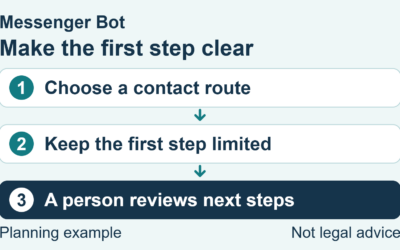
The last red flag is category confusion. If your real need is customer-facing automation, personal AI assistants are the wrong shopping lane. You should not compare ChatGPT, Claude, Gemini, or Copilot only against each other if the job is answering leads on Messenger, Instagram, or your website. That is where a platform comparison starts making more sense than another consumer-AI ranking.
If your actual need is a bot that talks to customers rather than another AI tab that talks to you, compare our chatbot platform comparison, dan Bekijk de prijzen van MessengerBot en Bekijk Onze Tutorials. That is the cleaner path once free personal AI stops matching the job you really have.
AI Chatbot GPT Free FAQ: Real Questions Before You Choose
Wat is de beste gratis AI-chatbot als ik maar één tool wil?
ChatGPT is nog steeds het veiligste één-tool antwoord voor de meeste mensen omdat de gratis versie de breedste mix van alledaags werk dekt: snel schrijven, plannen, lichte bestanden, zoeken en algemeen probleemoplossend. Als je werk meer documentgericht is, kan Gemini een betere keuze zijn. Als de kwaliteit van het schrijven het belangrijkst is, kan Claude de betere keuze zijn.
Is ChatGPT nog steeds gratis te gebruiken in april 2026?
Ja. OpenAI biedt nog steeds een echte gratis ChatGPT-laag aan, en de huidige prijspagina zegt dat gratis gebruikers beperkte toegang krijgen tot GPT-5.3 plus beperkte berichten, uploads, afbeeldingsgeneratie, diepgaand onderzoek, geheugen, context en Codex. Je kunt ook ChatGPT uitproberen voordat je een account aanmaakt in ondersteunde regio's, maar het gebruik zonder in te loggen is beperkter dan de gratis laag voor ingelogde gebruikers.
Welke gratis AI is beter dan ChatGPT voor onderzoek?
Perplexity is de betere gratis onderzoekstool wanneer bronzichtbaarheid het belangrijkst is. Gratis accounts krijgen vijf Pro-zoekopdrachten per dag en drie bestandsuploads, en het product is gebouwd rond het duidelijk tonen van citaten. ChatGPT is nog steeds sterker als een veelzijdige assistent, maar Perplexity is meestal beter wanneer het antwoord alleen belangrijk is als je het kunt verifiëren.
Kan ik een gratis GPT-achtige chatbot gebruiken zonder me aan te melden?
Ja, maar de ervaring is meestal een verkorte versie van het echte gratis product. ChatGPT, Copilot, Gemini en Perplexity staan allemaal een soort gebruik zonder inloggen toe, maar geschiedenis, uploads, afbeeldingshulpmiddelen, personalisatie en sterkere modi verdwijnen vaak totdat je een account aanmaakt. Als toegang zonder aanmelding belangrijker is dan wat dan ook, moet de gastmodus worden beschouwd als een gemakslaag, niet de definitieve evaluatie.
Wanneer moet ik stoppen met het gebruik van gratis AI en betalen voor een abonnement?
Upgrade when the free limits are already changing how you work. That usually means you are hitting upload caps, losing access mid-session, needing better file handling, wanting more reliable research depth, or asking the tool to help with work important enough that the paid tier’s higher limits become cheaper than the time you are wasting around the free ceiling.


 Nederlands
  English
  Tagalog
  简体中文
简体中文  العربية
  हिन्दी
  Português do Brasil
  Español de México
  Français
  বাংলা
বাংলা  香港中文
香港中文  繁體中文
繁體中文  Deutsch
  Bahasa Indonesia
  日本語
日本語  한국어
한국어  Polski
  Русский
  Español
  Tiếng Việt