
Effective real estate lead generation is about more than attracting potential buyers and sellers. A brokerage also needs a clear way to capture permission, understand the first question, respond promptly, and give the right team member enough context to continue. Referrals, open houses, listing portals, social media, and paid campaigns can all create demand, but the experience after the first inquiry determines whether a useful conversation can begin.
This guide focuses on the operating workflow rather than a promise of lead volume or a guaranteed conversion rate. It shows how a brokerage can organize intake, qualification, routing, follow-up, and measurement while keeping a human responsible for advice, pricing, offers, documents, and any decision that affects a customer.
Start With the Lead Journey, Not a Tool
Before choosing software, map the path a new inquiry should take. A person may ask about a listing, request a showing, wonder whether a neighborhood fits a budget, ask about selling, or send a short message that needs clarification. Each case needs a useful first response and a clear owner. If the team cannot describe the next step on paper, an automated flow will only make the confusion happen faster.
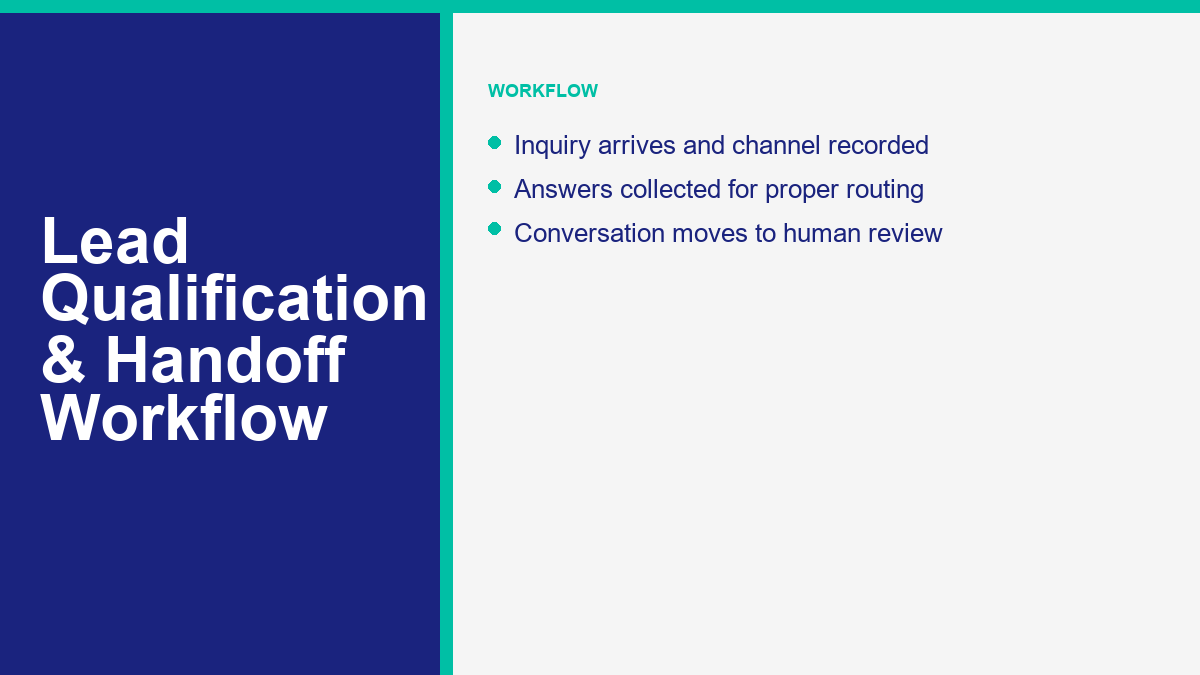
Write down five stages: arrival, acknowledgement, qualification, assignment, and human follow-up. Arrival records the channel and the time. Acknowledgement confirms that the message reached the team without pretending that an agent has already reviewed it. Qualification collects only the context needed for routing. Assignment places the conversation with a person or queue. Human follow-up answers the actual question and confirms what will happen next.
Define What Counts as a Useful Inquiry
A useful inquiry is not necessarily a long form submission. A short question about a listing can be valuable when it reaches the correct agent quickly. A vague “is this available?” message may need one clarifying question rather than a large questionnaire. Agree on a small set of signals: buying, selling, renting, investing, property type, preferred area, timing, and the best permitted follow-up channel. Keep the signals understandable to the customer and easy for staff to interpret.
Separate an inquiry from a qualification decision. The system can collect context and suggest a route, but an agent should decide whether the person is ready for a showing, valuation conversation, document review, or another next step. This distinction protects the customer experience and prevents an automated label from becoming an unsupported business judgment.
Connect Capture, Qualification, and Response
Real estate teams often receive conversations from several sources at once. Referrals and open houses can bring high-trust inquiries but still need consistent follow-up. Paid campaigns can create more conversations but require careful budget and response ownership. Social posts may prompt questions that do not fit a standard listing form. A shared workflow lets the team handle each source without forcing every person into the same script.
Use a Short, Polite Intake
The first automated step should explain why a question is being asked and make it easy to continue or request a person. A practical sequence might ask:
- Are you looking to buy, sell, rent, or learn about options?
- Which property type or area is most relevant?
- What timing would make the conversation useful?
- Would you prefer a call, email, or message follow-up?
- Is there anything the agent should know before replying?
Do not require a customer to answer every question before receiving help. Offer a “talk with a person” option at each meaningful stage. Avoid collecting bank details, identity documents, account passwords, or sensitive financial information in an initial chat. If a customer volunteers sensitive information, the human team should follow its approved handling and retention policy rather than asking the automation to interpret it.
Build an Immediate Acknowledgement
An acknowledgement should set an honest expectation: the message arrived, a few details can help route it, and a team member will review the conversation. It should not imply that a property is available, that an application is approved, or that an agent has made a recommendation. A simple response can reduce uncertainty while preserving the distinction between an automated first step and professional advice.
Use different acknowledgements for a listing question, a seller request, and a general information request. The differences do not need to be complicated. Naming the likely next step—such as “we will connect this with a listing specialist”—is more helpful than adding a long paragraph about the software.
Design a Response-Time Workflow
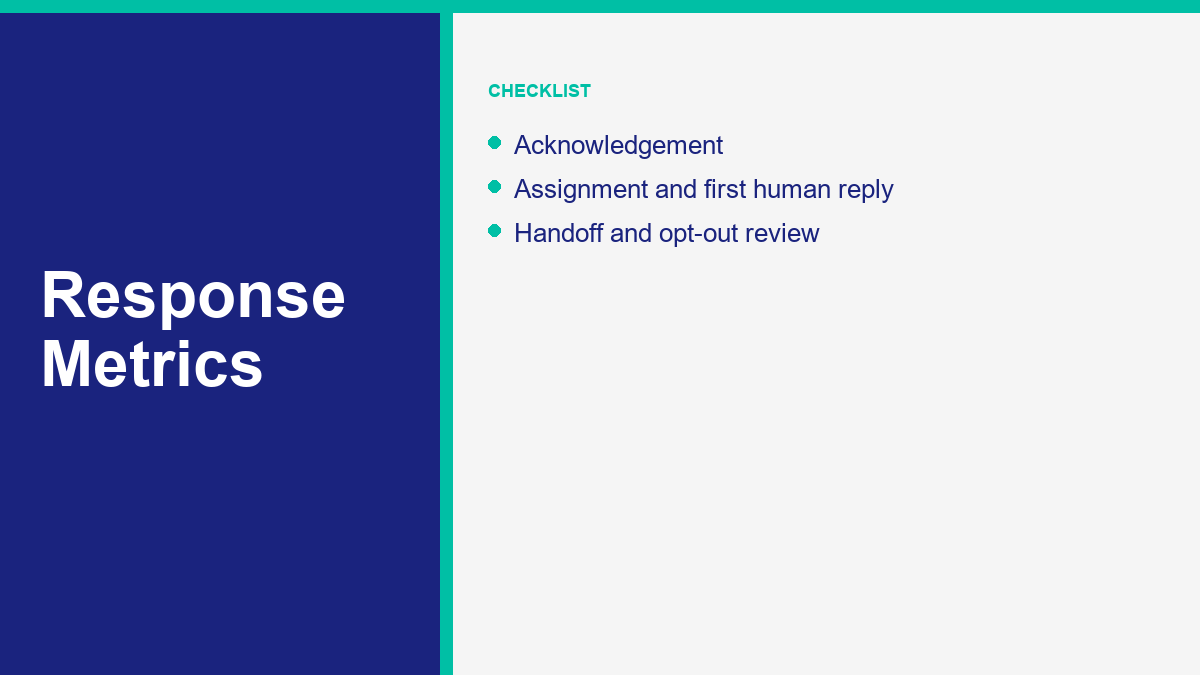
Fast acknowledgement is useful because an unanswered conversation is difficult for a team to triage later. The goal is not to replace a person with a timer. The goal is to make the first response reliable while the team decides who should own the conversation. Record the arrival time, the first acknowledgement time, the assignment time, and the first human reply time. Those four moments show where the workflow actually slows down.
Create Response Windows
Set a normal response window that the team can keep. During business hours, a new inquiry might move from acknowledgement to assignment quickly. Outside that window, the message can explain when a person will review it and offer a useful self-service answer. Do not promise a response time that the team cannot support every day. If a delay occurs, a human should be able to update the customer rather than allowing an automated sequence to continue indefinitely.
Keep the First Reply Focused
The first human reply should answer the question that was actually asked. If the person asked about a showing, acknowledge the property and ask the smallest question needed to coordinate. If the person asked about selling, route the conversation to the appropriate specialist. Avoid sending a generic brochure before the team understands the customer’s intent. A focused reply is easier to measure and more likely to lead to a comfortable next step.
Bot de mensagens can support this workflow by organizing first responses and routing cues around a team’s approved conversation process. The responsible agent still reviews the context and owns the customer-facing decision. Teams can Navegue por nossos Tutoriais for examples of planning a conversation flow before connecting it to a live business process.
Route Conversations and Protect the Human Handoff
Routing rules should be easy to explain. A seller inquiry can go to a listing or valuation queue. A showing request can go to the person responsible for scheduling. A question about a specific community can go to the team member who knows that area. When the rule is uncertain, route to a general human queue rather than making a confident guess.
Give Agents the Right Context
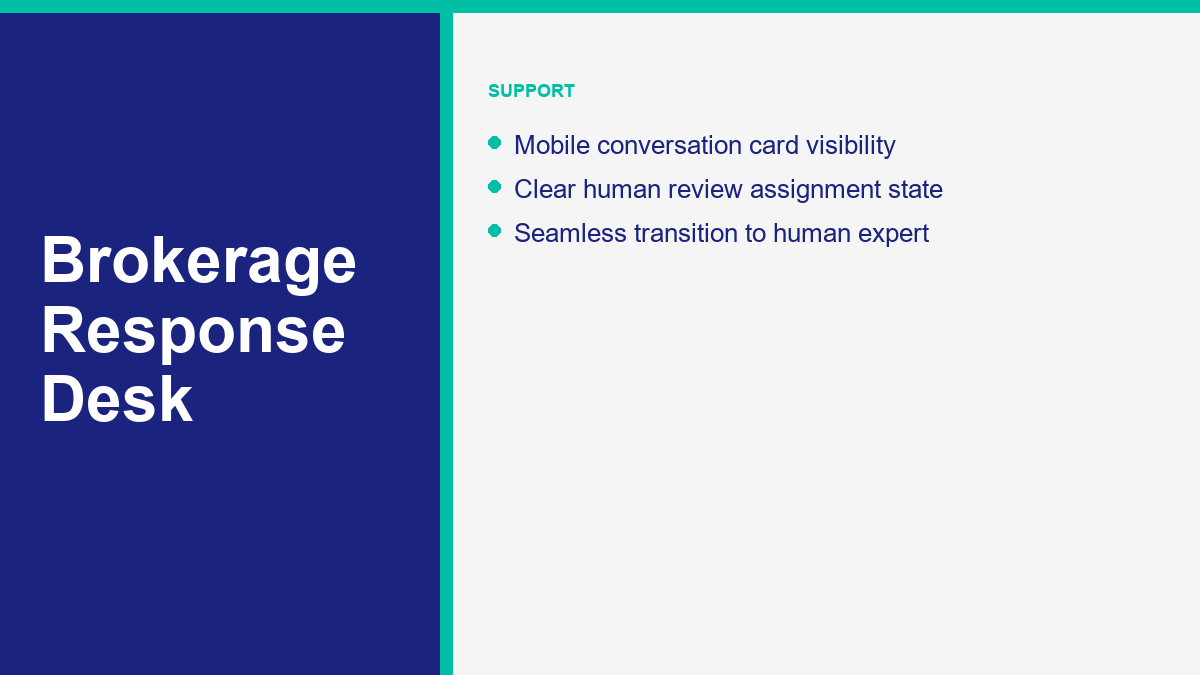
A handoff is useful when the agent can see the customer’s original question, the answers already provided, the requested property or area, the timing, and any explicit preference about follow-up. It is not useful when the agent receives an opaque score or a long transcript with no summary. Keep the handoff concise and let the agent inspect the original conversation when needed.
Make ownership visible. Every open inquiry should have a queue, a person, or an explicit human-review state. When an agent takes over, the automated flow should stop asking duplicate questions. If the customer changes direction, allow the agent to correct the route. A reversible route is safer than a rigid sequence that keeps running after the conversation has moved on.
Handle Sensitive Requests With Care
Questions about financing, legal documents, fair-housing obligations, identity, access, or a complaint should move to an appropriate human owner. A general chatbot should not give a definitive legal or financial answer. It can acknowledge the request, explain that a qualified person will review it, and preserve the customer’s choice about follow-up. This keeps lead generation useful without turning an intake flow into an unapproved advisory service.
Privacy, Consent, and Safety Boundaries
Lead generation works best when customers understand what will happen with their information. Tell people why a detail is needed, how a person will use it, and how to request human help. Provide a clear way to stop automated follow-up. Avoid dark patterns that make a customer answer unnecessary questions or continue a channel they no longer want.
Use the minimum information required for the next step. An initial inquiry usually does not need a Social Security number, a bank account, a password, or a full identity document. Do not ask a customer to paste sensitive documents into a general message thread. Establish a separate approved process for any later verification, and do not make the automated flow sound like that process is already in place if it has not been reviewed.
Review permissions for every connected channel and document who can see a conversation. Staff should know how to correct an assignment, remove an accidental sensitive note from the working view, and escalate a privacy concern. Retention rules should be explicit rather than assumed. A useful lead workflow protects trust at the same time it helps a team respond.
Measure the Workflow Without Chasing Vanity Numbers
A brokerage can learn more from a small, reliable measurement set than from a dashboard full of unexplained totals. Track conversation volume by source, acknowledgement time, human-assignment time, first human reply time, intake completion, handoff completion, and customer-requested stop events. Compare those measures by channel and time window. Keep the definitions stable so the team can tell whether a change actually improved the process.
Separate activity from outcome. More messages do not automatically mean better opportunities. A high completion rate may mean the questions are clear, but it does not prove that every conversation is a qualified buyer or seller. A lower volume with faster, more complete human follow-up may be a healthier result. Review a sample of conversations with the team and note whether the route, reply, and next step were appropriate.
Use a Simple Review Cadence
Review operational measures weekly while a workflow is new. Look for unanswered conversations, duplicate questions, incorrect routes, and handoffs that lack context. Review customer feedback and opt-out behavior alongside response time. When a pattern appears, change one part of the workflow, record the date, and compare a later window rather than claiming an immediate win.
For search and content planning, keep this lead-generation article distinct from the homepage’s broad “message bot” owner and the existing property-management marketing page. A supporting article should earn its own audience through useful real-estate workflow detail, not compete with an unrelated page by repeating the same broad claims.
Adapt the Workflow to Common Real-Estate Scenarios
A single intake path can support several real-estate scenarios when the opening question makes the customer’s intent clear. For a listing inquiry, confirm the property or area and offer the next scheduling step. For a seller inquiry, ask whether the person wants a valuation conversation or general preparation guidance before routing the message. For a rental or investment question, route to the team that handles that type of request instead of assuming that the same script applies.
Open-house follow-up needs a different rhythm from a cold paid campaign. An attendee may already know the property and simply need a next step. A campaign inquiry may need context about the property type, timing, and preferred communication channel before an agent calls. Referrals deserve a warm acknowledgement that respects the person who made the introduction. The workflow can vary the first questions while keeping the same ownership, privacy, and human-review boundaries.
Make Handoffs Useful on Mobile
Many real-estate inquiries arrive while a customer or agent is on a phone. Keep questions short, use clear response options, and avoid forcing a person to re-enter information that is already visible in the conversation. On the team side, show the most important context first: the original request, the property or area, the timing, and the next recommended action. A handoff that works on a large desktop but hides the customer’s question on a phone creates a new delay.
Test the flow with realistic short messages, incomplete answers, spelling variations, and a request to speak with a person. Confirm that the customer can stop, change direction, or ask a different question without being trapped in the original branch. A practical test set is more valuable than a polished demo that only follows the happy path.
Keep a dated change note for every workflow adjustment so agents can explain what changed when a customer asks for help.
This record also makes later training and troubleshooting faster for the whole brokerage team.
Implementation Checklist for Property Teams
Use this checklist to move from an idea to a reviewable workflow:
- List the channels that create real-estate inquiries and record their current owners.
- Write the acknowledgement that customers will see and remove promises the team cannot keep.
- Choose four or five qualification questions that support routing without collecting unnecessary sensitive data.
- Define the human queue for each common intent and a safe fallback when the intent is unclear.
- Set a realistic response window for business hours and after-hours inquiries.
- Give agents the original question, collected context, and a clear handoff state.
- Document how the team handles privacy requests, complaints, financial questions, and identity concerns.
- Choose stable measures for acknowledgement, assignment, human reply, handoff, and opt-out behavior.
- Review sample conversations weekly and make one controlled change at a time.
- Record the workflow owner, backup owner, and rollback step before enabling any new automation.
Teams that build around clear ownership and respectful follow-up can make every inquiry easier to handle. The workflow should help an agent begin a better conversation, not pretend that software has replaced the judgment customers need.
Review Recursos do Messenger Bot to map the product’s supported workflow to your process, and use Verificar Preços Atuais only after the team understands the scope and review responsibilities.
Perguntas frequentes
What is real estate lead generation?
Real estate lead generation is the process of attracting potential buyers and sellers, capturing their contact information, and building trust to convert them into clients.
Why is response time important in real estate?
A fast response time acknowledges the inquiry immediately, keeping the prospect engaged while your team prepares a personalized human response.
How should automated systems hand off to human agents?
Systems should collect initial qualification details and route the conversation to an appropriate agent, allowing the agent to review the chat history before seamlessly taking over the communication.



 Português do Brasil
  English
  Tagalog
  简体中文
简体中文  العربية
  हिन्दी
  Español de México
  Français
  বাংলা
বাংলা  香港中文
香港中文  繁體中文
繁體中文  Nederlands
  Deutsch
  Bahasa Indonesia
  日本語
日本語  한국어
한국어  Polski
  Русский
  Español
  Tiếng Việt