
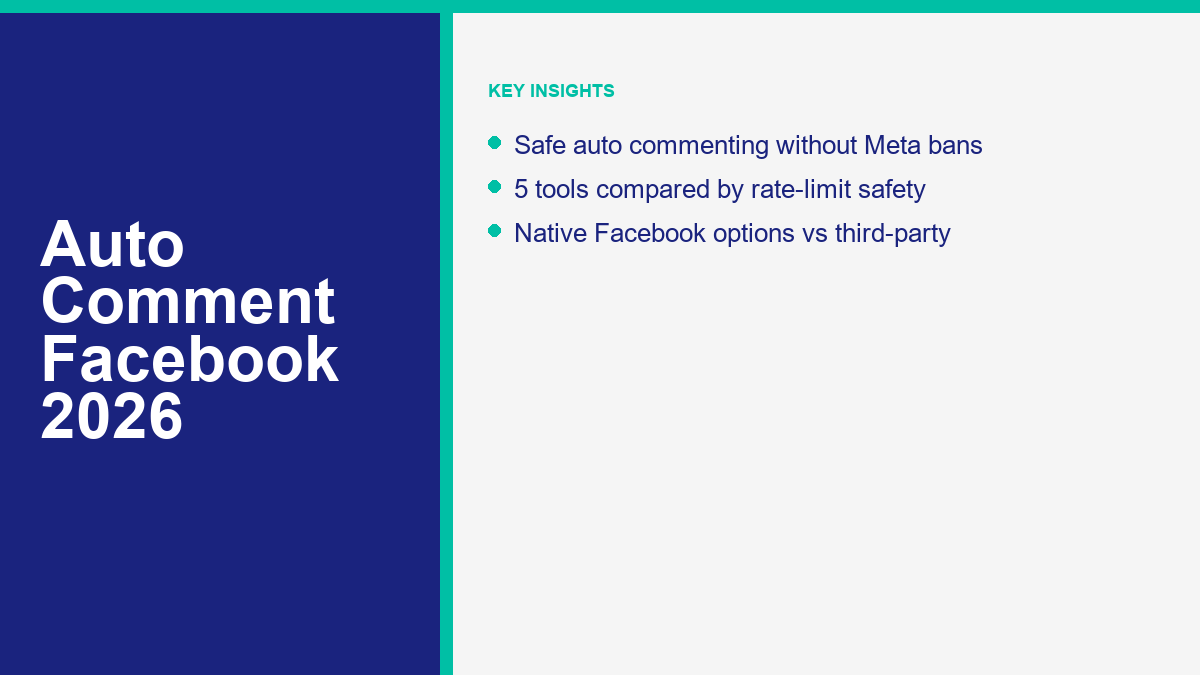
Karamihan sa mga tao na naghahanap auto comment Facebook ay hindi nagtatangkang magpatakbo ng isang spam farm. Karaniwan silang humaharap sa isang praktikal na problema: ang isang Facebook Page ay nakakakuha ng sapat na mga komento upang maging mahalaga, ngunit hindi sapat ang bandwidth ng koponan upang sagutin ang mga ito nang mabilis. Ito ay partikular na karaniwan para sa mga ecommerce brand na nagpapatakbo ng mga ad, mga ahensya na namamahala ng maraming Pages, mga lokal na negosyo na nakakatanggap ng parehong tanong sa presyo ng 40 beses sa isang linggo, at mga creator na gumagamit ng mga comment triggers upang ilipat ang mga tao sa Messenger.
Ang problema ay ang parirala Facebook comment bot ay pinagsasama-sama ang apat na napaka-magkakaibang bagay. Ang isang keyword-based na tugon sa iyong sariling post sa Page ay isang bagay. Isang tool na nagtatago ng spam at nagpo-post ng maikling tugon sa ilalim ng mga high-intent na komento ay isa pang bagay. Ang isang comment-to-Messenger workflow ay isa pang bagay na muli. At isang sketchy browser script na nag-spray ng mga komento sa mga grupo, profile, o mga post ng mga kakumpitensya ay isang ganap na ibang kategorya ng panganib. Itinuturing ng mga tao ang mga ito bilang interchangeable. Hindi ito ganon para sa Meta.
Narito ang praktikal na sagot sa 2026: ang ilang anyo ng auto comments sa Facebook ay magagamit kung mananatili sila sa loob ng mga opisyal na pahintulot ng Page, makatotohanang bilis ng tugon, at sa iyong sariling mga post o ad. Ang ilan ay nananatiling pinakamabilis na ruta patungo sa throttling, feature blocks, o nasirang reputasyon ng Page. Ang ligtas na linya ay hindi “automation o walang automation.” Ang ligtas na linya ay ano nag-a-automate ka, saan na ina-automate mo ito, at gaano ka-agresibo mo itong i-scale.
Sinuri ko ang wika ng Meta Help Center, mga pahina ng tampok ng produkto, at pampublikong pagpepresyo para sa mga tool na binanggit dito noong Abril 11, 2026. Ang mga presyo ay nakalista sa USD dahil ang artikulong ito ay nakatuon sa mga mamimili sa US at UK. Magsasabi rin ako ng tuwid kung saan nagiging madulas ang merkado: wala talagang seryosong walang kinakailangang pag-sign up tool para sa automation ng komento sa Facebook, dahil ang anumang tunay na tool ay nangangailangan ng pahintulot sa Page, access sa moderation, o access sa Messenger. Kung ang isang tool ay nangangako ng mass commenting sa Facebook nang walang mga iyon, dapat mong ipalagay na ang panganib ay tumataas, hindi bumababa.
Ano ang Talagang Ibig Sabihin ng Auto Commenting sa Facebook noong 2026 (at Sino ang Gumagamit Nito)
Sa praktis, i-automate ang mga komento sa Facebook maaaring mangahulugan ng isa sa apat na daloy ng trabaho.
- Pampublikong auto reply sa iyong sariling post o ad: may nagkomento ng “presyo” o “link” at ang iyong Pahina ay nagpo-post ng nakikitang tugon.
- Comment-to-DM automation: may nagkomento sa ilalim ng isang post, pagkatapos ay tumatanggap ng pribadong follow-up sa Messenger.
- Moderation kasama ng tinulungan na tugon: isang tool ang nagtatago ng spam, nag-flag ng mga komento sa suporta, at alinman ay nag-draft o nagpadala ng tugon.
- Outbound comment blasting: ang software ay nagpo-post ng mga komento sa iba't ibang grupo, ibang mga Pahina, o hindi kaugnay na mga thread upang makalikha ng visibility.
Only the first three belong in a serious business conversation. The fourth is where people get seduced by cheap growth promises and then act surprised when reach drops or accounts get challenged.
For a Facebook Page owner, the normal business use cases are not mysterious. A furniture brand wants to answer “Do you ship to London?” automatically. A gym wants to reply when someone comments “trial.” A real estate page wants to move “price?” comments into Messenger without making the thread unreadable. A social media manager wants ad comments triaged fast enough that the Page does not look abandoned. Those are reasonable use cases.
What has changed in 2026 is the tooling around those jobs. The better platforms now split comment automation into layers: public acknowledgement, private follow-up, moderation filters, AI drafts, and human handoff. The worst tools still market themselves like it is 2018, promising massive comment volume, impossible speed, and zero bans. That is not a buying signal. It is a warning label.
If you are new to the space, keep this framing in mind:
- Auto comment usually means a visible comment from your Page under a post.
- Auto reply comments Facebook usually means responding to someone who commented on your own post or ad.
- Comment bot is a messy market term that can describe both compliant workflow tools and very non-compliant spam tools.
The safest commercial use case is still the narrowest one: trigger a short reply on comments made on your own Page content, then move the real conversation into Messenger or to a human. Once you try to turn Facebook comments into a broadcast channel, the risk profile changes fast.
Is Auto Commenting Against Facebook’s Terms? The Honest Answer
The honest answer is sometimes, and that is why so many roundup articles on this topic are misleading. Meta clearly allows Pages to manage comments, hide spam, reply publicly, reply privately in some contexts, and use approved software that connects through official permissions. At the same time, Meta is very clear that spammy behavior, deceptive engagement, and abusive feature use can get Pages limited or disabled.
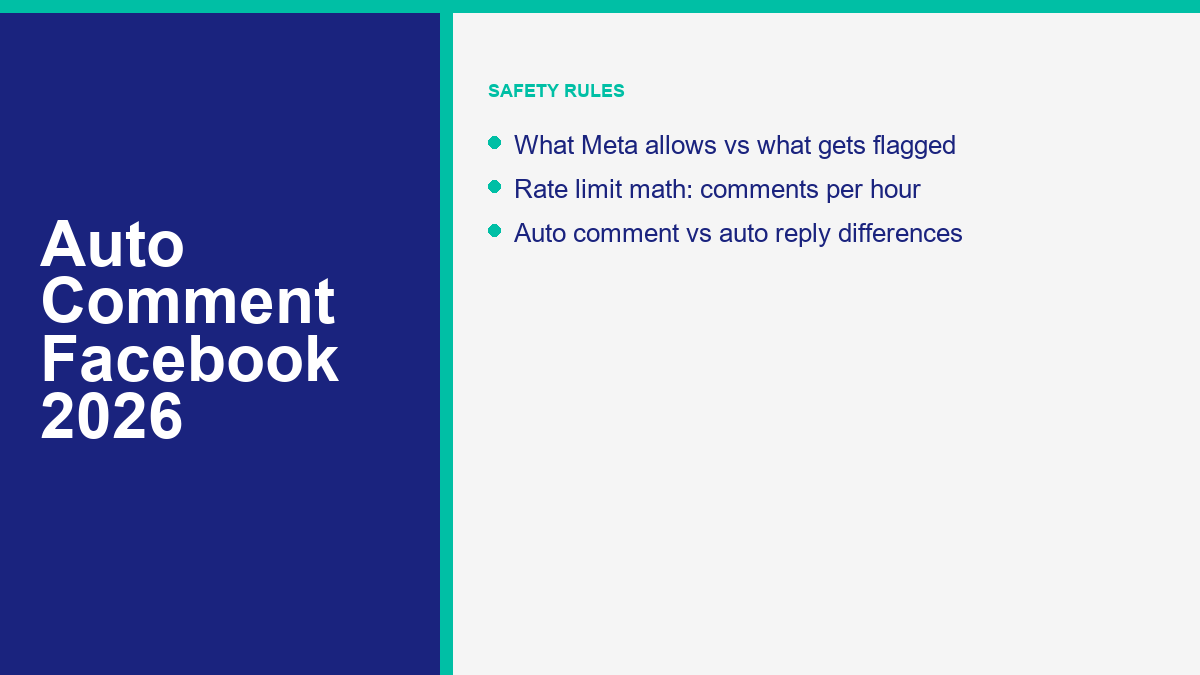
The most useful official warning is not a mysterious secret rule buried in a PDF. Meta says feature limits exist to prevent abuse and that those limits are based on “speed and quantity”. It also says it does not provide additional details on the exact limits enforced. That matters because there is no official published number like “37 public replies per hour is safe.” Anyone selling you a magic number is inventing certainty Meta itself does not publish.
Meta is also blunt about Page penalties. Its Help Center says “Pages that publish spam may be unpublished or deactivated” at na “the Like button may be disabled” on Pages it determines deceptively get likes. That language is about more than likes. It tells you how Meta thinks about manipulated engagement in general: if the behavior starts looking synthetic, deceptive, or spam-heavy, the platform is willing to punish the Page itself, not just ignore the individual comments.
There is another line too many people ignore. Meta’s Page enforcement help says using multiple accounts or accounts with fake names may result in account disablement. That matters because risky auto comments sa Facebook campaigns often expand into fake admin profiles, burner accounts, outsourced logins, shared cookies, or token-based browser tools. At that point you are no longer just automating replies. You are stacking identity risk on top of spam risk.
So is auto commenting against Facebook’s rules? Here is the usable version of the answer:
- Lower risk: using approved tools to reply to comments on your own Page posts or ads, with realistic pacing and moderation guardrails.
- Medium risk: public auto-reply systems that post too often, sound repetitive, or reply to every low-intent comment the same way.
- High risk: automating comments across other people’s posts, groups, competitor threads, or using token-based tools and browser scripts.
- Extreme risk: fake admins, fake profiles, credential sharing, bulk link comments, or any tool that promises huge volumes with no API-based setup.
The safer mindset is to treat comment automation as a customer-service layer, not a reach-hacking trick. If your real goal is vanity engagement rather than customer response, read Facebook likes automation explained first. The account-level risks overlap more than most people realize.
Native Facebook Tools That Let You Auto Comment Without Third-Party Software
Meta’s native stack is better than a lot of old blog posts admit, but it is still limited. You can do a useful amount of comment-adjacent automation inside Meta Business Suite. You just cannot turn it into an unlimited public-thread machine without leaving the native lane.
The native tools worth knowing are:
- Inbox automations: instant replies, away messages, FAQs, and keyword-driven message responses for Messenger.
- Comment moderation: hide, delete, review, and filter incoming comments on posts and ads.
- Saved replies and manual macros: useful when you want speed without full automation.
- Comment-to-message workflows: in current Page setups, Meta-linked tools are typically working with keyword-triggered flows rather than wide-open public auto-commenting.
That last point is the one people get wrong. Native Facebook does hindi give most Page owners a clean “reply automatically to every comment on every post forever” switch. What it does allow more realistically is limited, trigger-based automation tied to comments on your own Page assets. In other words, native is good for controlled engagement and poor for aggressive scale.
If your real problem is message speed rather than public-thread activity, start with Messenger auto reply setup. That is the lower-risk side of the same operational problem: people want a quick answer and your team cannot be online every minute.
Native tools are usually enough if all you want is:
- one short public acknowledgement under high-intent comments
- a private follow-up in Messenger for pricing, booking, or lead capture
- basic spam filtering and hide/delete rules
- human takeover when the thread gets sensitive
They stop being enough when you need multi-Page governance, ad-comment triage at scale, AI-generated replies, deeper analytics, or a cleaner split between support, moderation, and sales comments. That is where third-party tools start earning their keep.
One more important nuance: native tools do not remove the platform risk entirely. Meta’s own help pages make clear that rate limits are dynamic, not published, and enforcement depends on the pattern of use. Native gives you a safer lane. It does not give you immunity.
The Best Third-Party Auto Comment Tools for Facebook Pages in 2026
The best third-party tools in this category are not always the ones with the most aggressive marketing. The tools I trust more are the ones that look like moderation and customer-service software first, and “comment bot” software second. That usually means official Page connections, slower pacing options, inbox control, and a way to move from public reply to private conversation.
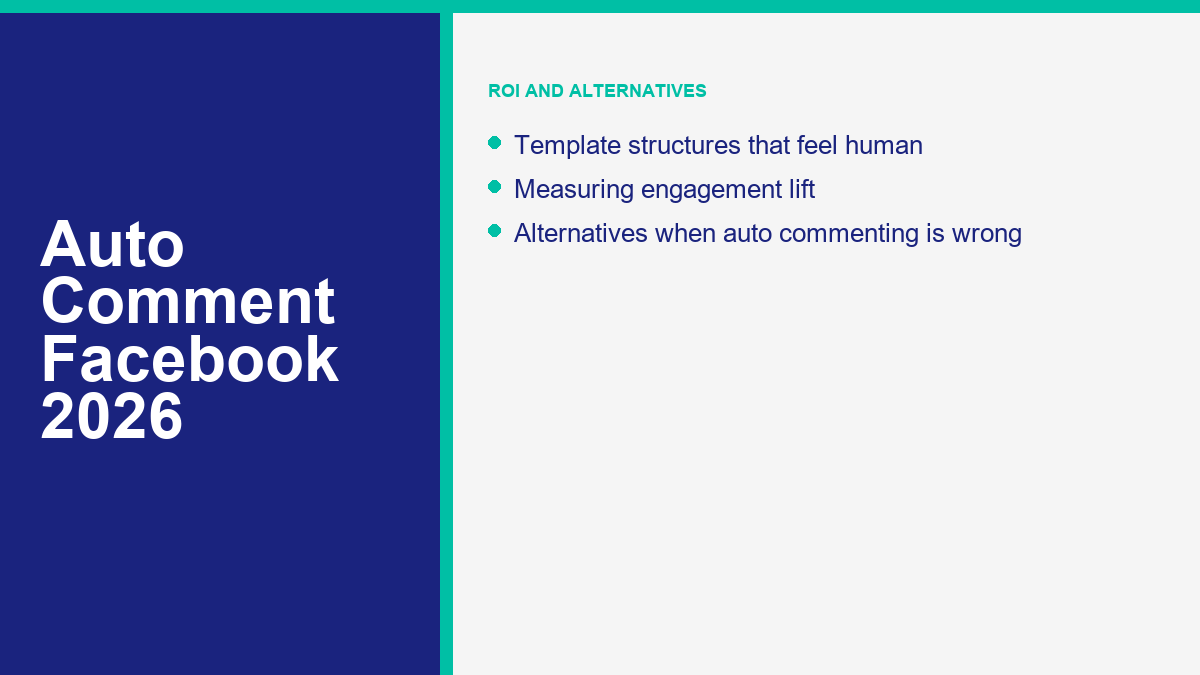
The table below compares six tools that are still relevant for Facebook comment workflows in 2026. Pricing and plan notes were checked on April 11, 2026 from public vendor pages. Where a feature is partial rather than full, I marked it that way instead of pretending every platform does the same job.
| Tool | Price | Free tier | Auto reply + auto comment combined | Rate limit safety | Ban risk profile |
|---|---|---|---|---|---|
| MessengerBot | Premium promo $19.99 per 30 days (listed from $29.99) | Trial | Oo | Katamtaman | Medium if used on owned posts only |
| ManyChat | Free, Pro from $15 per month | Oo | Partial, strongest for comment trigger plus DM | Mataas | Low to Medium |
| Chatfuel | $69 bawat buwan | 7-day trial | Oo | Katamtaman | Katamtaman |
| CommentGuard | $29 per month | 7-day trial | Oo | Mataas | Low to Medium |
| Agorapulse | Advanced from $149 per user per month for moderation rules | 30-day trial | No, more moderation and inbox than true auto-commenting | Mataas | Low |
| Respond.io | Growth from $159 per month | 7-day trial | Partial, strongest for private replies and workflows | Mataas | Low |
Important note: ManyChat’s current public pricing page still shows a $0 plan with up to 1,000 contacts, while newer 2026 help materials for some accounts describe tighter free-plan limits. Verify the limits shown inside your own account before you buy around the free tier.
MessengerBot is the budget-friendly pick if you want comment tools and a broader Messenger stack together
MessengerBot is relevant here because its pricing page explicitly includes Facebook Comment Moderation, Automation, at Reply Tools. On April 11, 2026, the public Premium offer showed a discounted $19.99 bawat 30 araw price, listed from $29.99, plus a trial path. That makes it one of the cheaper paid entry points for a Page owner who wants comment replies and a larger Messenger automation system in the same stack.
The tradeoff is that a cheaper all-in-one tool still needs disciplined use. If you use it to run sensible workflows on your own posts, it can be a practical value buy. If you use it like a mass-comment engine, the low price will not save you from Facebook’s enforcement systems. If you want to compare the live offer before committing, use Tingnan ang Presyo ng MessengerBot.
ManyChat is still the best low-risk starter for comment-triggered messaging
ManyChat remains strong when your real objective is not a public comment wall, but a comment trigger that moves the user into Messenger. That is a much safer and usually more useful pattern. Public acknowledgement plus DM is cleaner for the thread, cleaner for lead capture, and less likely to look like spam if the post starts moving quickly.
It is also the easiest tool in this list to recommend to cautious Page owners because the workflow bias is healthier. You can start free, test on a single post, and keep the public side light. If you need a full bot builder instead of a comment-only workflow, this roundup of free Facebook chatbot builders is the better comparison.
Chatfuel is powerful, but I would use it with stricter restraint than its marketing suggests
Chatfuel’s current public pricing page shows one simple $69 bawat buwan plan with a 7-araw na libreng pagsubok, and its comments-replies page explicitly says it supports instant replies on Facebook and Instagram comments. That makes it a real option for Pages that want AI-assisted handling and do not mind paying more than the entry-level tools.
My caution here is not that Chatfuel lacks features. It is that faster tools tempt sloppy deployment. If your configuration is “respond to everything instantly forever,” you can create an ugly public comment experience even if the software is good. The more power the tool gives you, the more selective your triggers should be.
CommentGuard is one of the strongest options if you care about moderation safety first
CommentGuard has become one of the more interesting 2026 choices because it positions itself as Meta-approved moderation software first, then layers in auto-replies, delayed replies, AI-generated responses, private replies, and rotation controls. Its public pricing starts at $29 per month with a 7-araw na libreng pagsubok, and the feature pages openly describe Facebook auto-comments, private replies to Messenger, delayed replies, and AI agents trained on your own knowledge base.
That is exactly the kind of product direction I trust more on a risk-heavy keyword. It is built around managing the chaos of comments, not manufacturing fake activity. For ad-heavy Pages and support-heavy Pages, that usually matters more than raw automation volume.
Agorapulse and Respond.io are safer when “comment bot” is actually the wrong label for the job
Agorapulse and Respond.io both belong in this guide because many teams searching for a Facebook comment bot do not actually need a comment bot. They need structured workflows. Agorapulse is stronger for inbox management, moderation rules, and collaborative handling. Respond.io is stronger for omnichannel messaging, private reply workflows, and routing the conversation once it leaves the public thread.
Neither would be my first choice if the brief is “post public replies everywhere.” That is why their ban-risk profile is lower. They are better when the operational goal is customer care, not visible comment volume.
Auto Comment vs Auto Reply: They Are Not the Same Thing
This distinction matters because bad buying decisions usually start here.
Auto comment means your Page posts a visible comment or reply under a Facebook post. That could be a reply to someone who commented on your ad, or a public answer under your own organic post. It affects the thread everyone can see.
Auto reply usually means a response sent in Messenger, or a triggered message after someone comments. It can also mean a draft or response inside an inbox system. The conversation continues, but it does not necessarily stay public.
Why does that matter? Because the public thread is the most sensitive layer. Public replies can look repetitive, clutter the thread, annoy real users, and create visible proof that the Page is using automation badly. Private replies are much more forgiving because they can capture intent without turning the post into a wall of canned text.
That is why a lot of better tools in 2026 are really building comment-to-message flows, not full public comment spraying. Someone comments “guide” under a post. The Page either leaves one short acknowledgement or skips the public reply entirely, then sends the actual next step in Messenger. That model is usually better for leads, better for compliance, and better for thread quality.
If your primary pain point is still delayed messaging rather than public-thread volume, go back to Messenger auto reply setup. A lot of Pages think they need auto comments when what they really need is faster DM handling.
The cleanest rule is simple:
- Gumamit ng public auto comments for quick acknowledgement or a short directional answer.
- Gumamit ng mga auto reply for detailed help, lead capture, or order support.
- Gumamit ng human replies for complaints, edge cases, pricing negotiations, and anything emotionally charged.
Once you see those as different layers, most setup decisions get easier.
How to Set Up a Safe Auto Comment Flow That Does Not Trip Rate Limits
The safest auto comment flow does not start with software. It starts with constraints. If you try to automate all comments across all posts from day one, you are building the exact pattern Meta’s systems are designed to distrust. Start small, stay event-driven, and only automate replies you would be comfortable sending manually.
- Pick one use case only. Good first choices are PRICE, LINK, BOOK, STOCK, MENU, HOURS, or QUOTE. Bad first choices are generic sales pitches under every comment.
- Limit the scope to your own Page posts and ads. Do not touch groups, competitor content, or unrelated public threads. If the workflow depends on posting outside your own assets, it is already drifting into spam territory.
- Write one short public reply and one deeper follow-up. Example: public reply says “I sent the details in Messenger.” The detailed answer, link, or lead capture happens in DM.
- Add guardrails before launch. Use one reply per person per post, exclude angry or complaint-heavy keywords from automation, add a natural delay when the tool supports it, and rotate at least three reply variants.
- Launch on a low-volume post first. Do not test the first version on the biggest ad set of the month. Use a smaller post so you can watch how Facebook displays the replies and whether users continue the conversation.
- Review the first 50 to 100 triggers manually. You are looking for duplicate replies, wrong-language answers, sarcasm misses, accidental replies to trolls, and repetitive public phrasing.
- Scale by intent, not by volume. Add one new trigger at a time. If the PRICE workflow is working, then add BOOK. Do not turn on 20 triggers at once and call it optimized.
Two setup rules matter more than anything else.
- Do not use auto commenting as an outbound tactic. It should react to inbound comments on your content, not invent visibility on other people’s content.
- Do not think in hourly quotas first. Think in thread quality, one-reply-per-person logic, and post-specific triggers. Meta’s official wording makes clear that limits depend on speed and quantity, not a public universal cap.
If you need a practical operating model, this is the one I recommend for most Pages:
- public reply only on high-intent comments
- single public reply, then DM or human handoff
- no links in every public reply
- 3 to 5 rotated templates
- daily review of hidden, deleted, or reported comments
- manual override for complaints and refunds
That is not the flashiest setup. It is the one least likely to make your Page look automated in the worst possible way.
Auto Comment Templates That Feel Human (With Variable Substitution)
Template quality matters more than most tools admit. The fastest way to make auto reply comments Facebook look fake is to use the same flat sentence on every post, for every commenter, in every context. Variable substitution helps, but only if the base message already sounds like something a competent page manager would actually say.
These templates work best when you rotate 3 to 5 versions per trigger and keep the public reply shorter than the private follow-up.
Template for lead magnet delivery
{{first_name}}, I just sent the checklist in Messenger. If it does not land, reply GUIDE again and we will resend it.Template for local service quote requests
Thanks {{first_name}}. {{business_name}} covers {{city}} and nearby areas. I have sent the quote steps in Messenger and our team usually replies within {{sla_minutes}} minutes.Template for ecommerce stock or sizing questions
{{first_name}}, I sent the {{product_name}} details in Messenger, including price and available sizes. If you want help checking out, reply HELP in the thread or DM.Template for booking-driven pages
Appreciate it, {{first_name}}. Booking details are in your Messenger inbox now. If your preferred date is {{preferred_date}}, mention it there and we will confirm availability.Template for support triage
Thanks for flagging this. Please send {{order_reference}} in Messenger and our support team will pick it up during {{support_hours}}.What makes these feel more human is not the placeholders alone. It is the structure:
- they acknowledge the person, not just the keyword
- they set the next step clearly
- they avoid over-selling in the public thread
- they sound like a page manager, not a chatbot trying to sound excited
If you want stronger performance, create separate template pools by comment intent, not by post alone. PRICE questions, booking questions, complaint questions, and “send link” comments should not share the same public response structure.
What Gets You Banned — Red Flags Meta Actually Watches For
People often ask what gets a Page banned as if there is one dramatic forbidden button. In reality, enforcement usually comes from patterns. A single automated reply on your own post is not the issue. A Page that starts behaving like a low-quality engagement machine is the issue.
These are the red flags I take most seriously:
- Posting automated comments outside your own assets. If your workflow comments in groups, on competitor posts, or across unrelated public threads, you are pushing straight into spam behavior.
- Reusing the exact same public reply everywhere. Even if the trigger is legitimate, repetitive public text makes the pattern look synthetic fast.
- Using token-based tools, browser extensions, APKs, or session-cookie hacks. If a tool avoids official Page permissions, your risk just jumped.
- Combining comment automation with fake admin accounts. Meta explicitly warns that fake-name accounts and multiple accounts can lead to disablement.
- Replying with links in every public comment. That is how Pages turn support automation into visible spam.
- Ignoring sentiment. Complaint comments, refund comments, and legal or medical questions should not hit the same canned reply as a “price?” comment.
- Using impossible speed. When vendors brag that you can answer everything instantly with no speed concerns, that is not inherently reassuring. It usually means you need to provide your own restraint.
- Hiding or deleting too aggressively. Moderation is useful. Blanket suppression of real customer complaints creates a trust problem and can leave your team blind to real issues.
This is also where the overlap with manipulative engagement becomes important. If a Page is already buying likes, using fake followers, or pushing low-quality engagement tactics, auto commenting becomes one more suspicious signal. That is another reason I linked Facebook likes automation explained earlier. These tactics rarely stay isolated.
The biggest mistake I see is treating ban risk like a software-choice problem only. It is a behavior problem. Approved tools can still be used badly. Safer tools just make it easier to stay inside reasonable behavior.
Measuring Auto Comment ROI: Engagement Lift vs Organic Decline
If you cannot measure whether comment automation is helping or quietly making the Page worse, do not scale it. Visible activity is not the same as useful activity.
The first metrics to watch are simple:
- Median first-response time: did comment response speed improve materially?
- Comment-to-DM rate: how many public comments turned into private conversations?
- Comment-to-lead rate: how many triggered replies ended in an email, booking, quote request, or purchase?
- Human takeover rate: how many threads still needed staff intervention?
- Hidden, deleted, or blocked comment volume: did moderation noise go down or up?
Then you need the metrics that catch silent damage:
- Organic reach per post: if public replies are rising but reach is sliding, the thread quality may be deteriorating.
- Meaningful follow-up comments: are real people continuing the conversation, or are they dropping after the canned reply?
- Share and click-through rate: engagement that never becomes action is usually weak engagement.
- Negative sentiment and hidden-comment ratio: if support complaints are getting filtered or mishandled, the automation is likely masking problems, not solving them.
Facebook’s own comment-ranking system favors relevance and engagement quality, not just raw volume. That is why bad automation can backfire. A post can look busy while actually training the platform that your thread is low-quality, repetitive, or commercially noisy.
The ROI test I use is blunt: if automated replies increase conversations, leads, or solved support cases without depressing organic post quality, keep going. If visible replies go up but real conversations, click-throughs, or reach go down, you have built theater, not leverage.
This is also where broader strategy matters. If you want comment automation to feed a real nurture path, connect it to the larger playbook in mga estratehiya sa marketing ng chatbot. A good comment flow is usually the front door to a bigger conversion system, not the whole system by itself.
Alternatives When Auto Commenting Is the Wrong Tool
Sometimes the right answer is not a better Facebook comment bot. It is a different workflow entirely.
If your real issue is inbox speed, build a better DM response path instead of automating the public thread more aggressively. That is exactly what Messenger auto reply setup is for.
If your real issue is lead capture and branching conversations, move up from comment automation to a full bot stack. Compare the current landscape of free Facebook chatbot builders before you commit to a single vendor.
If your real issue is moderation chaos, choose a moderation-first product like CommentGuard or Agorapulse instead of a louder comment-automation tool. Protecting the thread often improves conversion more than replying faster.
If your real issue is offer distribution, stop forcing links into public replies and route the conversion through Messenger, a form, or a proper landing page instead.
If you are deciding whether the economics work, compare your options against live plan costs on Check Current Pricing and only upgrade after you can tie comment automation to leads, booked calls, or support savings.
The short version is this: auto commenting is useful when it reduces friction inside a conversation you already earned. It is the wrong tool when you are using it to fake momentum, replace actual customer care, or brute-force attention. That is where bans, throttling, and ugly thread quality usually start.
Mga Madalas Itanong
Makati ba ang awtomatikong pagkomento sa Facebook sa 2026?
Maaaring ito, ngunit sa isang makitid na kahulugan lamang. Ang pagsagot sa mga komento sa iyong sariling mga post o ad sa Page gamit ang mga aprubadong tool ay mas ligtas kaysa sa pag-automate ng mga komento sa mga grupo, mga post ng kakumpitensya, o mga hindi kaugnay na pampublikong thread. Ang pinakamainam na pattern ay isang maikling pampublikong sagot kasama ang isang pribadong follow-up sa Messenger. Ang malawakang pag-bobomba ng komento ay nananatiling mataas ang panganib.
Ano ang pinakamahusay na tool para sa awtomatikong komento para sa mga pahina ng Facebook?
Para sa mga low-risk na workflow mula sa komento patungo sa mensahe, ang ManyChat ay isa pa ring pinakamadaling lugar upang magsimula. Para sa mga Page na nangangailangan ng maraming moderation, ang CommentGuard ay isa sa pinakamalakas na opsyon sa 2026. Para sa mga negosyo na nais ng mga tool sa komento na nakabundle sa mas malawak na Messenger stack sa mas mababang presyo ng entry, ang MessengerBot ay isang praktikal na budget pick. Ang pinakamahusay na pagpipilian ay nakasalalay sa kung kailangan mo ng pampublikong tugon, pribadong tugon, moderation, o isang buong chatbot system.
Maaari ba akong mag-auto comment sa sarili kong mga post nang hindi nababanned?
You can reduce the risk a lot by keeping automation limited to your own posts and ads, using official tool connections, replying only to high-intent comments, and avoiding repetitive link spam. That said, there is no zero-risk guarantee. Meta’s limits are dynamic and depend on behavior patterns, especially speed and quantity.
Ilang auto comments bawat oras ang ligtas sa Facebook?
Walang inilalabas na unibersal na ligtas na limitasyon sa oras ang Meta. Ang pinakamainam na diskarte ay hindi nakabatay sa dami. Gumamit ng isang sagot bawat tao bawat post, panatilihing nakabatay sa kaganapan ang automation sa iyong sariling nilalaman, at magsimula ng maingat. Sa praktika, ang karamihan sa mga maingat na operator ay pinapanatili ang pampublikong auto replies sa ilang dosenang bawat oras sa pinakababa habang sumusubok, ngunit iyon ay isang praktikal na gabay, hindi isang opisyal na numero ng Meta.
Ano ang pagkakaiba ng auto commenting at auto replying sa Facebook?
Ang awtomatikong pagkomento sa mga post ay naglalagay ng nakikitang tugon sa pampublikong thread. Ang awtomatikong pagtugon ay karaniwang nangangahulugang pagpapadala ng tugon sa Messenger o paghawak ng pag-uusap nang pribado pagkatapos may magkomento. Ang mga pampublikong awtomatikong komento ay nakakaapekto sa hitsura ng post para sa lahat. Ang mga awtomatikong tugon ay karaniwang mas mabuti para sa detalyadong tulong, pagkuha ng lead, at suporta dahil pinapanatili nilang mas malinis ang thread.



 Tagalog
  English
  简体中文
简体中文  العربية
  हिन्दी
  Português do Brasil
  Español de México
  Français
  বাংলা
বাংলা  香港中文
香港中文  繁體中文
繁體中文  Nederlands
  Deutsch
  Bahasa Indonesia
  日本語
日本語  한국어
한국어  Polski
  Русский
  Español
  Tiếng Việt