
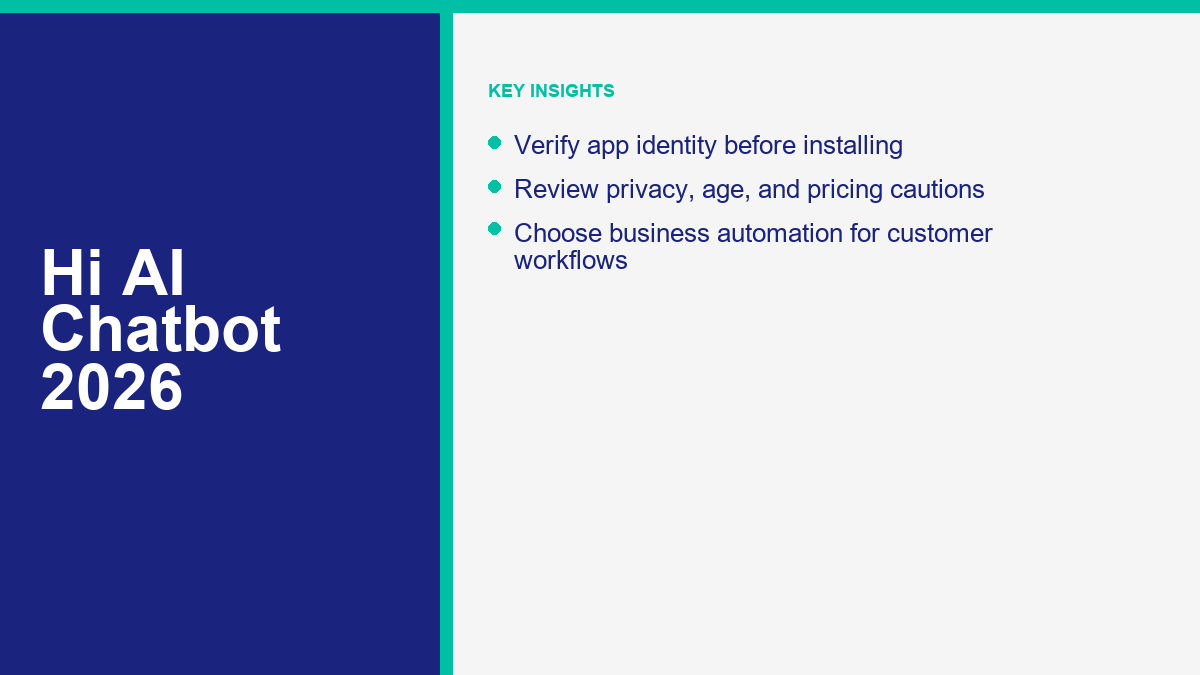
The marketplace for interactive conversational entertainment platforms has grown quickly, with character simulations and digital companions drawing steady attention from users who want creative chat rather than workplace automation. One of the most searched options in this space is the hi ai chatbot, designed to provide users with an interactive arena for unstructured dialogue, creative storytelling, and fantasy roleplay. Unlike traditional productivity-focused tools, these conversational companions are built to simulate human-like conversations, providing entertainment, light emotional support, and a sandbox for creative writing. However, as the ecosystem around digital avatars becomes more crowded, selecting the right application requires a clear understanding of its operational features, security boundaries, and the technical stability of the provider.
Users seeking to download or interact with these systems in 2026 often encounter a confusing web of developer listings, app store mismatches, and shifting publisher names. For anyone interested in exploring Hi AI, understanding the distinctions between the official web portals, mobile application store pages, and third-party web listings is essential to avoid downloading potentially modified or unsafe versions. This guide provides a comprehensive review of the active feature set, safety guidelines, terms of service agreements, and business-focused alternatives for those who need a professional communication interface instead of a roleplay companion.
This analysis is based on active documentation, terms of service agreements, and live developer listings checked directly from official channels. In an era where user privacy and secure communications are increasingly scrutinized, consumers should not rely on generic marketing copy. Understanding the backend architecture, age restrictions, and corporate entities responsible for handling user logs is essential to protecting your personal data while using conversational tools.
Understanding the Hi AI Chatbot Ecosystem and 2026 App Identity Confusion
In the rapid expansion of the digital companion market, the branding and store presence of the hi ai chatbot has generated considerable confusion among consumers and technology reviewers alike. When attempting to locate the official software on mainstream app stores, users often encounter multiple listings and developer entities that do not seem to align with the platform’s official documentation. For instance, the active Google Play Store listing displays the title “Hi Ai – Chat & Roleplay” published by an entity named “Hanwin Sky” with an update date of March 3, 2026. This app is listed with ad support and features a content rating of Everyone, making it technically accessible to all age groups on the platform.
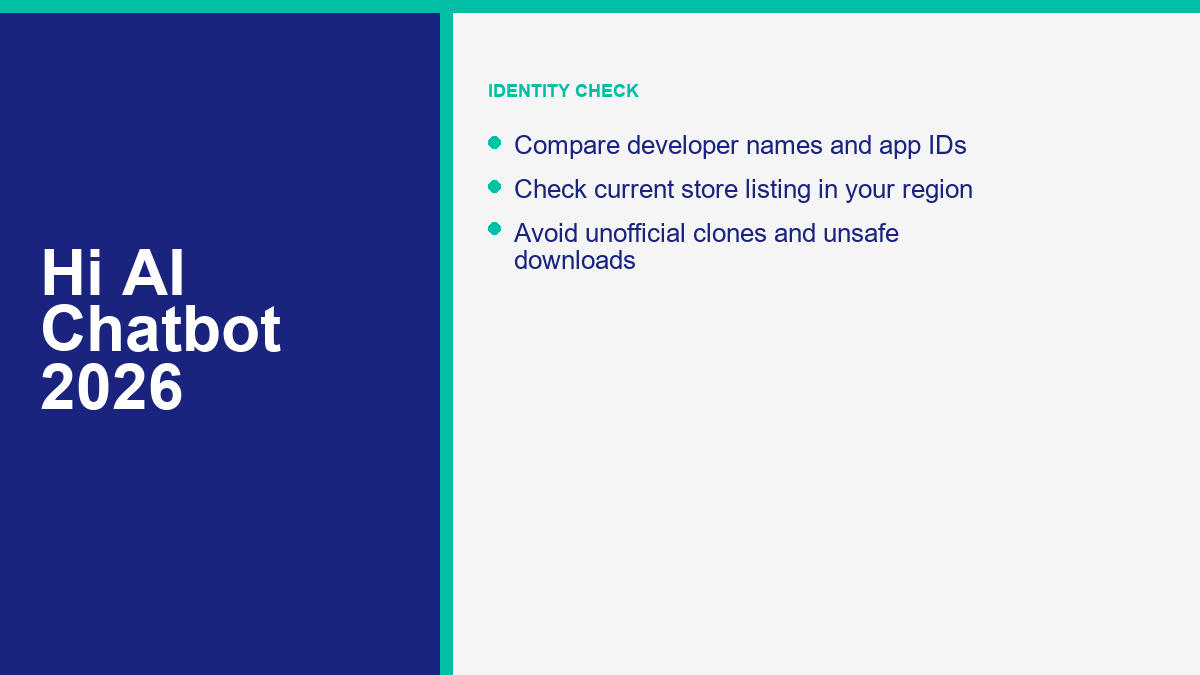
However, a closer look at the official Terms of Service document hosted by the platform operator reveals a notable discrepancy. The legal agreement references the application identifier com.baiyu.yutang on both the Apple App Store and Google Play Store. This identifier belongs to a developer profile named “baiyu” rather than “Hanwin Sky,” which is the active publisher on the Play Store listing. Furthermore, browser-based cloud streaming catalogs like now.gg host the application under the title “Hi.AI – Chat With AI Character” published by “Hi.AI Studio.” This mismatch in developer names, publisher entities, and app store IDs has led to numerous user complaints in app store reviews, with some users questioning if the current version of the application is the original software or a different build entirely.
This instability in developer branding and store presence represents a key concern for users prioritizing security and data consistency. An app-identity mismatch can sometimes indicate that a project has changed hands, that multiple shell companies are being used to manage different storefronts, or that unverified third-party developers have published clone applications to capture search traffic. For users looking to engage in Hi.AI chat, verifying the source files and downloading exclusively from links provided directly on the official website is critical to avoiding potential security risks associated with copycat applications. The lack of unified branding across platforms makes it highly challenging to verify who is maintaining the software and who has access to the user-generated logs.
Official App Verifications: Developers, App IDs, and Terms Analysis
To establish a secure connection with any digital assistant, users must perform due diligence on the app’s developer credentials, legal agreements, and age requirements. In the case of the Hi AI app, this verification process is particularly crucial due to the fragmented branding across different stores. The primary reference point for verifying the app’s legal structure is the user agreement hosted on the platform’s document servers, specifically at https://www.seeai.cc/documents/user_agreement_20230831.html. This document acts as the legal contract between the user and the operators of the service, detailing user rights, safety standards, and operational limitations.
A major area of concern discovered during a review of these terms is the age gate requirement. The official Terms of Service state that the services are strictly offered to users who are at least 18 years of age, or the legal age of majority in their jurisdiction. If a user is under the required age, they are legally unauthorized to access the platform. In contrast, the active Google Play listing under the developer “Hanwin Sky” is rated Everyone. This rating suggests to parents and app store filters that the content is suitable for all ages, which directly contradicts the legal terms established by the platform operators. This mismatch highlights the instability of the app’s metadata and the potential risks for younger users who may download the application without parental oversight. When the legal terms and the app store metrics are in complete disagreement, users cannot be certain about the enforcement of safety standards.
Furthermore, because the terms reference the App ID com.baiyu.yutang, users should inspect the application package details on their devices after installation. If the installed package name does not match the identifier referenced in the legal user agreement, it could indicate that the user has downloaded an unofficial version or that the developer has migrated the app to a new package without updating the legal terms. Keeping track of these developer credentials and comparing them against the official policy notices is the most reliable way to monitor the integrity of the software on your device. The presence of document servers on domains like seeai.cc while marketing the application under gohiai.com adds another layer of complexity that users should monitor during their safety reviews.
Interactive Capabilities: Features, Character Creation, and Access Methods
Despite the operational confusion surrounding its developer identity, the platform offers a rich array of features designed for interactive entertainment and digital companionship. The primary draw for users is the ability to engage in Hi.AI chat with thousands of unique virtual personalities. These characters are divided into various categories on the platform, including anime companions, historical figures, gaming assistants, and creative writing helpers. Users can browse these public characters on the official web portal at gohiai.com, which serves as the primary browser-based gateway for the service.
For users who want a more customized experience, the platform provides a character creation tool. This feature allows individuals to design their own virtual companions by uploading an avatar image, writing a detailed backstory, and setting specific personality parameters. Creators can write a custom greeting message that defines how the character initiates conversations, and they can specify the tone of voice, linguistic habits, and conversational boundaries. The character can then be kept private for individual use or published to the public directory for the community to explore. This high degree of customization has made the app particularly popular for creative writers looking to test character dynamics or roleplay enthusiasts seeking specific scenarios. Creating a custom profile is straightforward, though users should avoid writing descriptions that include sensitive real-world topics to prevent system moderation blocks.
Accessing these features in 2026 can be done through three main channels. First, the web application at gohiai.com offers full access to the character library, login interfaces, and creation tools directly within a standard web browser. Second, native mobile applications are available for iOS and Android devices, offering a more optimized layout and push notification support for active chats. Third, cloud streaming platforms like now.gg allow users to launch “Hi.AI – Chat With AI Character” instantly in a web browser without downloading the app files. This cloud-based option is particularly popular for users who want to test the software’s capabilities without installing an application that has inconsistent store details on their local storage. The availability of multiple access channels ensures that users can interact with their digital friends from almost any device, provided they maintain a stable internet connection.
Safety, Privacy, and Content Boundaries in AI Roleplay
When engaging with any virtual companion, safety and data privacy must be evaluated carefully, especially for users participating in Hi AI roleplay. Because these platforms encourage open-ended, emotional, and sometimes highly personal conversations, the safety of the logs and the data collection policies of the developer represent a significant privacy concern. The official Privacy Notice, hosted at https://www.seeai.cc/documents/private_policy_20230831.html, details exactly what information the service collects from its users during their interactions.
According to the privacy notice, the platform collects personal information that users provide directly, such as email addresses, user names, and password credentials. It also gathers social media login data if a user registers using an external account like Google or Apple. In addition to registration data, the service automatically tracks device information (such as operating system versions, IP addresses, and unique device identifiers), application usage statistics, location data based on the device’s settings, and requests permissions for push notifications to send reminders about active chat threads. This extensive data harvesting means that a user’s digital footprint is closely monitored while they are using the application. Furthermore, automatic data logging extends to checking browser types, click patterns, and duration parameters, creating a very detailed user profile.
Because the core use case for the app involves unstructured roleplay, users frequently share personal stories, emotional vulnerabilities, or creative text that they may want to keep private. However, the privacy policy indicates that collected data is processed to optimize the service, which may involve analyzing conversation logs to refine the underlying AI models. Furthermore, since these consumer applications are not built with end-to-end encryption, the logs of your chats are stored in a readable format on the provider’s cloud servers. If those servers are compromised in a security breach, your private conversation history could be exposed. Users must maintain strict boundaries, avoiding the sharing of real-world names, financial details, or sensitive personal histories during their sessions. Relying on anonymous credentials and fictitious scenarios is the safest path when participating in conversational simulation.
Pricing Models, Subscription Cautions, and Transparency Guidelines
Understanding the financial structure of conversational entertainment tools is another critical aspect of user safety. Many platforms in this category use a freemium monetization model, where the initial download and basic message interactions are offered for free, but advanced features are locked behind paywalls. In the case of the hi ai chatbot, the pricing structure is not transparently displayed on the main marketing website at gohiai.com, which can make it difficult for users to estimate the long-term costs of using the service.
Instead of a clear pricing grid, the application relies on in-app purchases and subscription packages that are processed through the mobile app stores. Users can buy virtual credits or premium subscription tiers to unlock unlimited daily messages, faster response times, high-priority queue access, and higher-quality AI voices. Because these options are managed within the app interface, they can change dynamically, leading to sudden adjustments in credit costs or message limits. Users are cautioned to review the subscription management page of their respective app stores before authorizing any recurring payments, as canceling automatic renewals can sometimes be complicated if the developer identity or customer support channels are unstable.
For individuals and organizations that require conversational interfaces for professional or operational tasks, this lack of pricing transparency is a major drawback. Professional systems require predictable, transparent pricing plans where costs scale logically with usage. When organizations need to deploy automated chat structures for customer-facing applications, they should seek platforms with clear pricing guidelines. For example, teams looking to manage their budgets effectively can Tingnan ang Presyo ng MessengerBot to evaluate transparent plans that align with their message volume and feature requirements, avoiding the unexpected fees and shifting credit costs associated with consumer roleplay apps.
Optimal Use Cases for Character Chat and Creative Companionship
While the privacy policies and developer mismatches require a cautious approach, the application has several legitimate, non-commercial use cases that make it a popular choice for entertainment. The primary strength of the Hi AI platform lies in creative writing and brainstorming. Novelists, scriptwriters, and roleplaying game designers can use the custom characters to test dialogue, explore character motivations, and brainstorm narrative paths in a dynamic conversational format. Chatting with an AI character designed with a specific historical or fictional background can provide creative inspiration that traditional writing templates cannot match.
Another common use case is language learning and conversational practice. Chatting with an automated character in a foreign language is an excellent, low-pressure method for students to practice sentence construction, build vocabulary, and test their comprehension skills. Because the AI is patient and available round-the-clock, learners can converse at their own pace without the anxiety of speaking with a native speaker before they feel ready. Furthermore, many users engage in Hi.AI chat for emotional support and casual companionship, finding comfort in chatting with a virtual friend about their daily experiences, hobbies, or lighthearted topics.
However, it is essential for users to maintain clear boundaries when using these tools for emotional support. The virtual characters are driven by algorithms trained to simulate empathy and responsiveness; they do not possess genuine feelings, consciousness, or professional training. Their responses should never be treated as a substitute for professional medical advice, mental health counseling, or real-world social interactions. Additionally, because these systems are optimized for creative conversation rather than factual accuracy, they are highly prone to hallucinating facts. Using them for research, technical troubleshooting, or business tasks is inefficient, as the AI will prioritize conversational flow over database-driven accuracy.
Hi AI vs Talkie and Major AI Character Competitors
When evaluating the marketplace for virtual companions, consumers often look at various AI character chat alternatives to find the platform that best fits their preferences. The most direct competitor to Hi.AI is Talkie AI, which also updated its application as of May 31, 2026. Talkie AI utilizes a unique card-collecting mechanic alongside its chat interface, allowing users to collect, customize, and trade visual character cards. This gamified approach gives Talkie AI a distinct style, whereas Hi.AI focuses more directly on standard chat categories and text-based roleplay. Talkie AI also benefits from a more consolidated corporate presence, reducing the developer-identity confusion that affects Hi.AI.
Another major alternative is Character.AI, one of the better-known options for general-purpose persona emulation. Character.AI offers a more stable platform and a large public library of community-generated characters. While Character.AI is highly versatile, it enforces stricter content filters than some entertainment-first chat users prefer. In contrast, platforms like Hi.AI are sometimes perceived as more open-ended, though this comes with increased risks around content appropriateness, especially given the mismatch between the service terms and the current Google Play content rating. Users must weigh these factors, balancing creative freedom against stability, privacy, and age-suitability concerns.
To help visualize the differences between these conversational entertainment platforms, the following table compares key operational aspects of each service:
| Plataporma | Developer Branding | Primary Feature | Age Gate (Terms) | Content Rating (Store) | Monetization Model |
|---|---|---|---|---|---|
| Hi.AI | Unstable (Hanwin Sky / baiyu / Hi.AI Studio) | Multi-category character chat and creation | 18 Years Old | Everyone (Google Play) | Freemium / In-App Purchases |
| Talkie AI | Stable (Subsidiary of established media group) | Character chat with visual card collecting | 13 Years Old (with parental consent) | Teens / Mature | Freemium / VIP Subscriptions |
| Character.AI | Stable (Backed by major tech providers) | High-fidelity persona simulation and helper bots | 13 Years Old | Teens | Freemium / Premium Tier |
This comparison highlights the importance of checking both the app store details and the legal agreements. While all three platforms cater to similar user bases, the discrepancies in Hi.AI’s developer branding and age gating require a higher level of user vigilance. Choosing the right alternative depends on whether you prioritize gamified features, conversational depth, or brand stability.
| Decision Area | Hi AI Character Chat | Business Chat Automation | Best Choice |
|---|---|---|---|
| Creative roleplay | Designed for open-ended character dialogue and personal scenarios | Too structured for entertainment-first improvisation | Hi AI or another character chat app |
| Lead capture | No reliable CRM mapping, tagging, or funnel reporting | Built around forms, tags, qualification flows, and follow-up logic | Business automation |
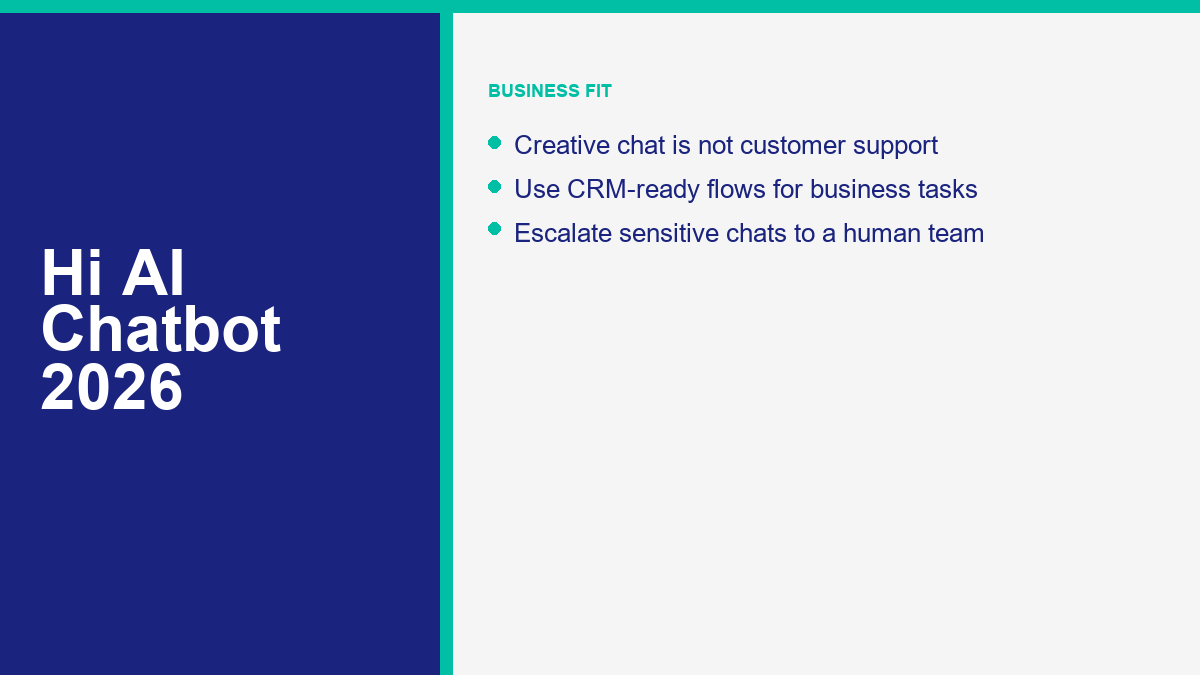
| Suporta sa customer | May hallucinate policies or give inconsistent replies | Uses approved answers, escalation paths, and human handoff rules | Business automation |
| Privacy control | Consumer app policies and identity mismatches require caution | Teams can define data handling, permissions, and retention workflows | Business automation |
Strategic Enterprise Alternatives: Shifting from Roleplay to Business Automation
For business owners, digital marketers, and customer service teams, researching the capabilities of a hi ai chatbot or other AI character chat alternatives will quickly reveal a fundamental mismatch. A platform designed for creative roleplay, romance simulation, and fictional conversations is a severe liability in a commercial environment. Businesses require absolute security, strict data privacy compliance, predictable message routing, CRM database integrations, and a guaranteed brand-safe conversational tone. A roleplay bot that hallucinates answers or engages in unstructured dialogue cannot handle customer inquiries, process orders, or qualify leads.
Instead of consumer entertainment tools, organizations must look toward professional-grade business automation platforms. A professional solution is designed from the ground up to secure user data, integrate with business APIs, and deliver accurate, structured responses. By utilizing Mga Tampok ng MessengerBot Pro, businesses can build robust automation flows that qualify leads, sync customer details directly to their CRMs, manage support tickets, and process payments securely. This structured approach ensures that every interaction is aligned with corporate compliance standards and customer trust expectations.
Furthermore, deploying automated systems in a commercial environment requires a structured implementation plan and ongoing developer support. Rather than relying on guesswork, technical administrators can access comprehensive guides, API documentation, and step-by-step implementation tutorials. To build a reliable and secure communication funnel, developers and business managers should Tingnan ang Aming Mga Tutorial, ensuring that their conversational AI deployment is stable, efficient, and fully optimized for business growth. Shifting from conversational entertainment to structured automation is the most effective way for organizations to capture the efficiency of AI without compromising their operational integrity.
Mga Madalas Itanong
What is the official developer of the Hi AI app?
The developer identity of the Hi AI app is currently inconsistent. The Google Play Store listing displays the developer as Hanwin Sky, whereas the official Terms of Service document references App ID com.baiyu.yutang, and other listings attribute the software to Hi.AI Studio. Users should verify these identifiers before downloading.
What are the age restrictions for using the Hi AI chatbot?
According to the official Hi.AI Terms of Service, the application is strictly restricted to users who are at least 18 years of age or the legal age of majority in their jurisdiction. However, there is a mismatch on the Google Play Store, where the app features a content rating of Everyone.
Does the Hi AI chatbot collect personal information?
Yes. The Hi.AI Privacy Notice outlines that the application collects personal information provided directly by users, social login data, automatic device and usage data, location details depending on device settings, and push notification permissions.
How does Hi AI compare to Talkie AI for roleplay?
Hi.AI and Talkie AI both cater to customizable AI character chat and roleplay. However, Talkie AI operates under a consolidated brand, whereas Hi.AI has notable app-identity discrepancies. Both collect user interaction logs, meaning they carry similar privacy considerations for romance and roleplay chats.
Can Hi.AI be used for business or customer service automation?
No. Hi.AI is designed for entertainment, emotional support, and creative roleplay. It lacks business features such as database integrations, structured workflow builders, and CRM synchronization. For commercial automation, businesses should use a platform like MessengerBot.
 Tagalog
  English
  简体中文
简体中文  العربية
  हिन्दी
  Português do Brasil
  Español de México
  Français
  বাংলা
বাংলা  香港中文
香港中文  繁體中文
繁體中文  Nederlands
  Deutsch
  Bahasa Indonesia
  日本語
日本語  한국어
한국어  Polski
  Русский
  Español
  Tiếng Việt