
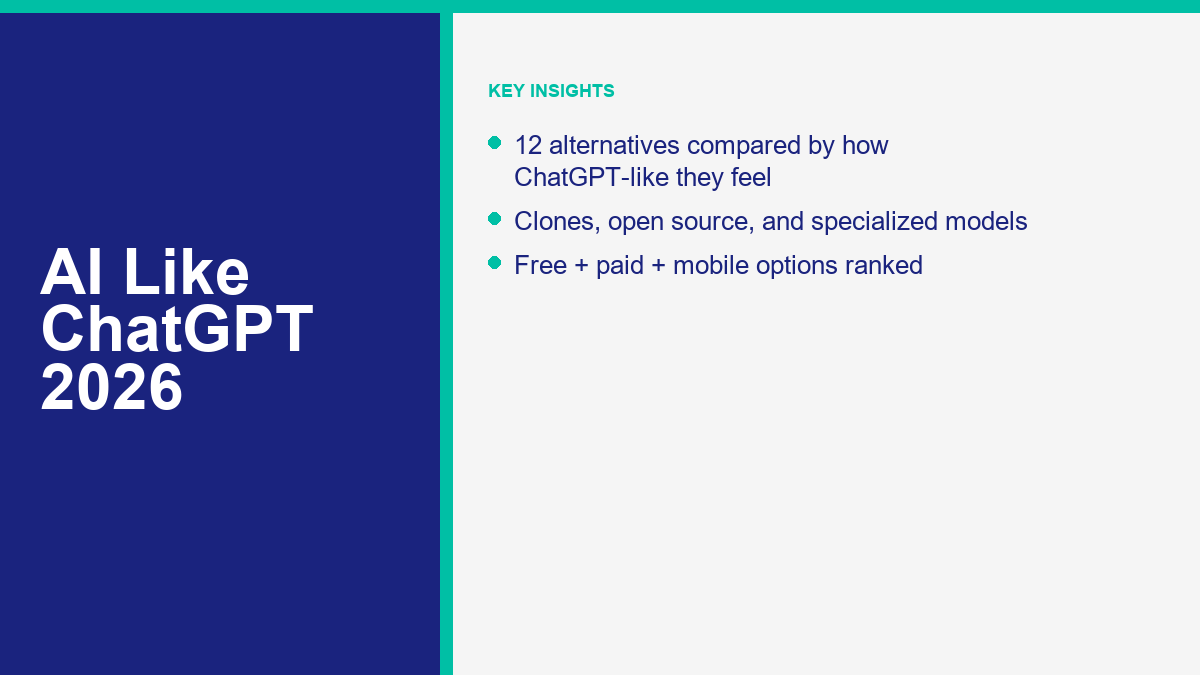
Tìm kiếm AI giống như ChatGPT không giống như tìm kiếm đối thủ tốt nhất của ChatGPT.
Hầu hết mọi người gõ vào các ứng dụng như chat gpt, chatbot như chatgpt, hoặc các trang web như chatgpt không phải đang yêu cầu một hướng dẫn mua sắm khổng lồ. Họ muốn một cái gì đó cảm thấy quen thuộc. Họ muốn cùng một hộp trò chuyện sạch sẽ, cùng một quy trình “hỏi bất cứ điều gì”, cùng một sự kết hợp giữa viết lách, brainstorming, lập trình, công việc với tệp, giọng nói và hình ảnh, nhưng không bị khóa vào OpenAI.
Đó là góc nhìn của bài viết này. Tôi đã kiểm tra các trang giá công khai, tài liệu trợ giúp và ghi chú về khả năng mô hình hoặc ứng dụng được công bố bởi các nhà cung cấp vào ngày 10 tháng 4 năm 2026. Một số công cụ này là những trợ lý theo phong cách ChatGPT thực sự. Một số là những lớp bọc dẫn bạn qua nhiều mô hình tiên tiến khác nhau. Một số là các gia đình mô hình trọng số mở mà bạn có thể chạy cục bộ. Nếu bạn muốn phiên bản thương mại hơn, “sản phẩm nào tôi nên mua thay vì ChatGPT?” của chủ đề này, hãy đọc so sánh sâu hơn về các lựa chọn thay thế ChatGPT. Bài viết này tập trung vào sự tương đồng, không phải sự cạnh tranh thuần túy.
Tại sao mọi người tìm kiếm AI giống như ChatGPT (và những gì họ thực sự muốn)
Sau khi so sánh các công cụ này bên cạnh nhau, mẫu hình là rõ ràng: mọi người hiếm khi có ý nghĩa về hiệu suất chuẩn thô khi họ yêu cầu AI giống như ChatGPT. Họ thường có nghĩa là một trong bốn điều.
Đầu tiên, họ muốn trải nghiệm ít ma sát giống nhau. ChatGPT đã làm cho giao diện trò chuyện AI hiện đại trở nên bình thường. Mở ứng dụng, gõ một câu hỏi, tải lên một tệp, trò chuyện qua lại, nhận được câu trả lời hữu ích. Các công cụ cảm thấy gần gũi với ChatGPT thường sao chép nhịp điệu đó nhiều hơn là sao chép bất kỳ điểm chuẩn nào.
Thứ hai, họ muốn chất lượng đầu ra quen thuộc. ChatGPT vẫn nằm trong làn đường “ tốt ở hầu hết mọi thứ”. Những người đọc tìm kiếm các công cụ tương tự thường muốn một mô hình có thể viết email, giải thích bảng tính, tóm tắt PDF, động não nội dung và sửa một đoạn mã mà không cần chế độ đặc biệt mỗi lần.
Thứ ba, họ muốn một phiên bản rẻ hơn hoặc miễn phí của thói quen đó. Nhiều tìm kiếm này đến từ những người đã chạm giới hạn tin nhắn, không muốn một đăng ký $20 khác, hoặc muốn một tùy chọn sao lưu khi OpenAI bị giới hạn tỷ lệ.
Thứ tư, họ muốn nhiều quyền kiểm soát hơn. Đây là nơi các mô hình mở trở nên quan trọng. Nhiều độc giả yêu cầu AI như ChatGPT thực sự đang hỏi, “Tôi có thể nhận được chất lượng kiểu ChatGPT trên máy của mình, hoặc trong một công cụ không gắn liền với một công ty nào không?”
Đó cũng là lý do tại sao bài viết này cần phải tách biệt khỏi bài viết về các lựa chọn thay thế ChatGPT hiện có. Bài viết về các lựa chọn thay thế là một so sánh thị trường rộng hơn. Bài viết này trả lời một câu hỏi hẹp hơn: cái gì khác thực sự hoạt động giống như ChatGPT khi bạn bắt đầu sử dụng nó?
Điều gì làm cho AI cảm thấy như ChatGPT: 5 đặc điểm quan trọng
Nhiều công cụ rất thông minh. Ít công cụ thực sự cảm thấy giống ChatGPT trong việc sử dụng hàng ngày. Năm đặc điểm này là quan trọng nhất.
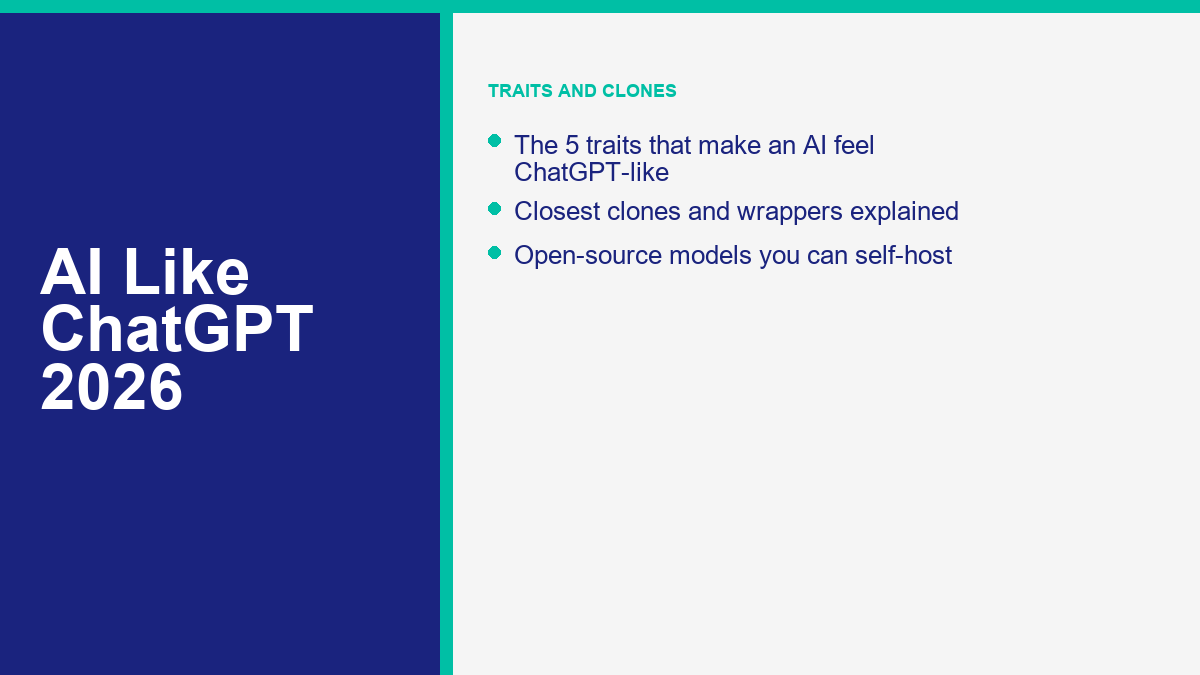
- Một quy trình trò chuyện chung sạch sẽ. Công cụ phải làm cho cuộc trò chuyện bình thường trở nên dễ dàng. Đặt câu hỏi, tinh chỉnh nó, tải lên ngữ cảnh, tiếp tục. Nếu sản phẩm cảm thấy giống như một công cụ tìm kiếm, một món đồ chơi, hoặc một trình chọn mẫu trước tiên, nó đã cảm thấy ít giống ChatGPT hơn.
- Liên tục chủ đề mạnh mẽ. ChatGPT hoạt động vì các câu hỏi tiếp theo cảm thấy tự nhiên. Những lựa chọn thay thế tốt nhất giữ ngữ cảnh đủ tốt để bạn có thể nói “làm cho nó ngắn hơn,” “so sánh với phiên bản hôm qua,” hoặc “biến điều đó thành các điểm bullet” mà không cần phải nhắc lại mọi thứ.
- Hơn cả văn bản. Vào năm 2026, ChatGPT không chỉ là một ô văn bản. Mọi người mong đợi giọng nói, tải lên tệp, hiểu hình ảnh, tìm kiếm trên web, và ít nhất một loại khả năng đa phương tiện nào đó. Các công cụ chỉ làm văn bản thuần túy cảm thấy giống như những bản sao của thế hệ trước.
- Một kế hoạch miễn phí hoặc nhập cảnh có thể sử dụng. Nếu sản phẩm cảm thấy tuyệt vời trong năm phút và sau đó sụp đổ vào một bức tường thanh toán, nó không thay thế thói quen ChatGPT rất tốt. Sự quen thuộc bao gồm sự thoải mái về giá cả.
- Một tông mặc định tinh tế. ChatGPT trở nên phổ biến vì nó nằm ở giữa: hữu ích, khá trung lập, không quá máy móc, không quá kỳ quặc. Điều đó quan trọng hơn nhiều so với những gì marketing của các mô hình thừa nhận.
This is why Perplexity can beat ChatGPT for research without feeling that similar overall, and why Character.AI can feel conversational without being a good ChatGPT substitute for work. Similarity is about the whole product, not just the model under the hood.
Closest Clones: Tools That Mirror ChatGPT’s Interface and Behavior
If your main goal is “give me something that feels familiar on day one,” start here.
Claude Is the Closest Overall Match
Claude is still the easiest answer for people who want another polished general-purpose assistant. Anthropic’s public pricing page shows a free tier, Claude Pro at $20 per month or $17 per month billed annually, and Max tiers at $100 or $200 per month. The core app is available on web, iOS, Android, and desktop, which matters because part of the ChatGPT feel is having the same assistant everywhere.
Where it is better: long-form writing, editing, careful reasoning, and dense file work. Claude usually sounds calmer and more deliberate than ChatGPT when you hand it messy notes or a big document. Where it is worse: heavy users run into session limits sooner than they expect, and Claude still feels a little less broad than ChatGPT when you want the biggest all-in-one consumer tool stack.
Gemini Feels Like ChatGPT With a Stronger Google Layer
Gemini is the other obvious answer because the product flow is so similar: open app, ask anything, attach content, use voice, keep a thread going. Google’s public plan pages show a free tier and Google AI Pro at $19.99 per month, with higher-end tiers above that. The exact named model exposed inside Gemini changes by plan and rollout, but the public pages clearly position the paid tier around Google’s stronger Pro-class models and much higher usage limits.
Where it is better: Gmail, Docs, Drive, Chrome, Android, camera-based help, and live multimodal interactions. If your digital life already runs through Google, Gemini can feel more useful than ChatGPT even when the raw chat feel is similar. Where it is worse: Google bundles and renames features often, so the product can feel slightly harder to track than ChatGPT or Claude if you just want one simple subscription.
Mistral Le Chat Is the Cheapest Polished ChatGPT-Like App
Mistral does not get as much mainstream attention in the US as Claude or Gemini, but Le Chat feels surprisingly close to the ChatGPT habit. Mistral’s official Le Chat launch notes still position most features as free, with Pro starting at $14.99 per month, plus iOS and Android apps. That lower entry price matters if you want a real assistant rather than a model playground.
Where it is better: speed, multilingual work, cleaner pricing, and a lighter feel. Le Chat is one of the fastest tools in normal everyday prompting. Where it is worse: smaller ecosystem, less mindshare, and less confidence from third-party app integrations. It feels like ChatGPT’s leaner European cousin, not the platform with the biggest consumer gravity.
DeepSeek Feels Like a Budget ChatGPT Clone That Actually Works
DeepSeek belongs in the closest-clone conversation because the interface is familiar and the pricing is unusually aggressive. DeepSeek’s official site currently offers free access to DeepSeek-V3.2 on web and app, and the API docs list DeepSeek-V3.2 at 128K context with pricing around $0.28 per 1M input tokens on cache miss and $0.42 per 1M output tokens. That is the kind of value that keeps developers and power users interested.
Where it is better: price-to-performance, coding value, and “good enough for daily work without paying flagship rates.” Where it is worse: polish, trust, and product smoothness. DeepSeek can absolutely feel ChatGPT-like, but it still feels more like a strong budget workhorse than the cleanest premium assistant.
Poe Is the Best Multi-Model Clone if You Hate Being Locked to One Vendor
Poe is different from the tools above because it is not one lab’s assistant. It is a routing layer across many models. Poe’s official pages show free daily points, paid subscriptions starting at $4.99 per month, and subscriber context lengths up to 2M tokens for supported bots. On the same platform you can jump between GPT, Claude, Gemini, DeepSeek, Qwen, image tools, video tools, and thousands of user-created bots.
Where it is better: flexibility, model sampling, and convenience. If your real complaint with ChatGPT is “I wish I could swap brains without changing apps,” Poe is excellent. Where it is worse: consistency. ChatGPT feels like one assistant. Poe feels like a control room.
You.com deserves a quick mention here too. It can feel ChatGPT-like in surface design, but in 2026 it is better thought of as an agent-and-research workspace than a direct one-to-one clone.
Better-Than-ChatGPT for Specific Tasks: When an Alternative Wins
The tools below are not always the closest clones. They still matter because they beat ChatGPT at specific jobs.
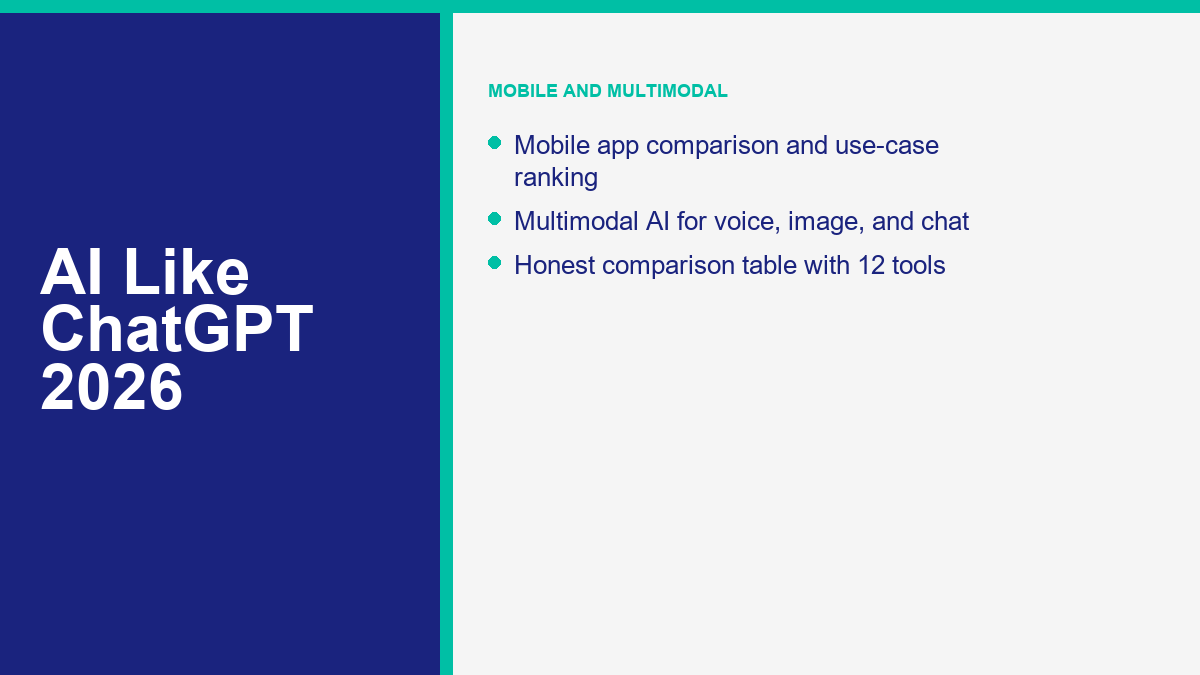
Perplexity Wins When You Need Search, Citations, and Verifiable Answers
Perplexity is less like ChatGPT in vibe, but better for live research. Official Perplexity help docs list a free tier, Pro at $20 per month or $200 per year, and Max at $200 per month or $2,000 per year. Those same help docs show the current advanced model mix inside paid plans, including Sonar, GPT-5.2, Claude Sonnet 4.6, and Gemini 3.1 Pro, with Max users getting access to even more premium models.
Where it is better: web research, citations, product comparisons, and “show me where that came from” work. Perplexity turns the open web into something you can actually audit fast. Where it is worse: pure chat feel. It is less relaxed, less assistant-like, and less elegant for long drafting than Claude or ChatGPT.
You.com Wins If You Want Search, Agents, and Model Choice in One Workspace
You.com’s current official plans page shows a free plan, Pro at $20 per month or $15 per month billed annually, and Max at $200 per month or $175 per month billed annually. The same page lists access to web, iOS, and Android, multi-model support, custom agents, and context windows up to 64K on Pro and 200K on Max.
Where it is better: agent-style workflows, live web answers, custom agents, and giving power users more knobs to turn. Where it is worse: the free tier is narrow, and the product can feel more like a productivity cockpit than a friendly everyday assistant.
Pi Wins for Natural Voice and Emotional Tone
Pi is still the most human-feeling conversational app in this group. Inflection continues to present it as a personal AI available across devices, and the iOS App Store listing shows it as a free app with live voice conversation. Pi is not trying to be a full ChatGPT replacement for work. That is exactly why it stands out.
Where it is better: reflective conversation, low-pressure idea sorting, voice-first use, and emotional tone. Where it is worse: research depth, structured work, citations, coding, and file-heavy tasks. Pi feels like an AI you talk with, not an AI you build a workday around.
Character.AI Wins for Personality, Roleplay, and Long Casual Chats
Character.AI is free to use, and its current c.ai+ page lists Plus at $9.99 per month or $94.99 per year. The paid tier promises better memory, access to the latest and best models, unlimited voice calls, and priority access. The free product is still active and still good at what it was built for: immersive conversation.
Where it is better: character-driven chats, roleplay, language practice, fandom use, and entertainment. Where it is worse: factual reliability and productivity. Character.AI can feel superficially similar to ChatGPT because the UI is still a chat app, but it is a very different tool once the work gets serious.
If your real question is not “what AI feels like ChatGPT?” but “which chatbot platform should I use for customer conversations or automation?”, skip consumer assistants and read the chatbot platform comparison. Personal AI assistants and business bot platforms solve different problems.
Open-Source Models You Can Run Locally That Match GPT-4-Class Quality
This section needs one important correction: when most people say “open-source ChatGPT alternative,” they usually mean open-weight models. That is the more accurate label for Llama, most Qwen releases, and many Mistral releases. The practical question is still the same: can you run AI like ChatGPT locally and keep control of the stack?
Llama Is Still the Safest Local Starting Point
Meta’s open source AI pages keep Llama at the center of its public open-model story, and the Llama ecosystem still has the widest compatibility across local runners, cloud hosts, and community tooling. That matters more than hype. If you want the least risky place to start a local setup, Llama is still it.
Where it is better: compatibility, community support, and broad deployment options. Where it is worse: out-of-the-box polish. Llama is a model family, not a finished ChatGPT-style product by itself.
Qwen Is the Most Interesting Open Model Family Right Now
Qwen has gotten much harder to ignore. Qwen Studio is free, the official Qwen site now points users to web, iOS, Android, macOS, and Windows apps, and recent Qwen releases include open-weight families such as Qwen3 and Qwen3.5. Qwen’s March 2026 public notes also position Qwen3.5-Omni as a native multimodal line with 256K long-context input.
Where it is better: multilingual performance, coding, agentic behavior, and open-model ambition. Where it is worse: English-market polish and pricing clarity. Qwen’s API pricing is usage-based and region-dependent on Alibaba Cloud, which is honest but harder to summarize than a flat US consumer subscription.
Mistral’s Open Models Are the Efficient Local Option
Mistral’s current models overview includes open releases such as Mistral Small 4, Mistral Large 3, Magistral Small, and smaller Ministral variants. That mix makes Mistral attractive for people who want locally runnable models that still feel modern instead of purely experimental.
Where it is better: efficiency, multilingual work, and a cleaner path for privacy-conscious teams that do not want a giant US platform by default. Where it is worse: hobbyist ecosystem depth. You can absolutely build around Mistral, but Llama still has the bigger local community footprint.
DeepSeek Open Releases Are the Value Picks if You Have the Hardware
DeepSeek is a great reminder that local quality is no longer a toy conversation. The company has open releases around its reasoning and general model lines, and the official docs keep emphasizing strong price-performance and open availability around the DeepSeek family.
Where it is better: reasoning value and developer enthusiasm. Where it is worse: hardware appetite. If you want local DeepSeek to feel frontier-class, you need more machine than most casual users expect.
HuggingChat Is the Easiest Way to Test Open Models Before You Commit to Local Setup
HuggingChat matters because it removes setup friction. Hugging Face’s docs for copying HuggingChat note that a free account works, while Pro is useful for access to some larger models, and Hugging Face Pro itself is publicly listed at $9 per month. That makes HuggingChat the easiest place to see whether you actually like open models before you start managing GPUs or local runtimes.
Where it is better: experimentation, variety, and discovering the open model world fast. Where it is worse: consistency. It is a great lab bench, not the most stable daily replacement for ChatGPT.
One practical rule saves a lot of disappointment here. Models in the 7B to 14B class can feel surprisingly good on consumer hardware when quantized well. The moment you want a local setup that consistently feels close to premium ChatGPT sessions on hard tasks, you are usually looking at larger Qwen, DeepSeek, Llama, or Mistral variants and much heavier hardware. That is why so many people start with hosted open-model sandboxes before going local.
Free AI Like ChatGPT That Actually Work Without a Subscription
The free options are better in 2026 than they were even a year ago. The catch is that “free” can mean three very different things: a real everyday free plan, a point-based sample, or an open-model playground that is free until traffic gets weird.
| Công cụ | Free reality | Best free use | Điều chính cần lưu ý |
|---|---|---|---|
| Claude | Real free tier | Writing, editing, file summaries | Usage caps arrive fast for heavy sessions |
| Song Tử | Real free tier | Google-centric everyday work | Best features sit in paid AI plans |
| DeepSeek | Free web and app access | Cheap-feeling everyday chat and coding | Less polished than top consumer apps |
| Qwen Studio | Free app and web access | Trying strong open models without paying | Polish and pricing clarity are uneven |
| HuggingChat | Free playground | Testing open-source model styles | Consistency depends on model availability |
| Poe | Free daily points | Sampling many models in one place | Premium bots burn points quickly |
If you want the short answer, the best free tools that still feel close to ChatGPT are Claude, Gemini, DeepSeek, and Qwen Studio. Claude gives the cleanest writing experience. Gemini gives the most ecosystem leverage. DeepSeek gives the best value feel. Qwen gives you a surprisingly capable free route into the open-model world.
If your real requirement is zero signup, not just zero subscription, that is a different filter. Use our guide to trò chuyện AI miễn phí không cần đăng ký for that. If you want the wider $0 market view instead, the better companion read is chatbot AI miễn phí tốt nhất.
The tools that look free but stop feeling free first are usually Poe, Perplexity, and You.com. All three are good products. All three become much more convincing once you accept that the paid tier is the real product.
Mobile Apps Like ChatGPT: Which Ones Are Worth Downloading
Some of the best ChatGPT-like alternatives are only average on desktop and excellent on phones. That is worth separating out because plenty of readers looking for apps like ChatGPT care more about the mobile experience than the browser tab.
- Claude: Worth downloading if you want serious writing, file reading, and clean answers on mobile. It still feels like the best “work brain in your pocket” option.
- Gemini: The best mobile pick if camera input, live voice, Android integration, and Google app handoffs matter to you.
- Perplexity: The best research app to keep on your phone because it turns dead moments into sourced answers fast.
- Pi: The best pure voice companion app. If you like talking through ideas rather than typing them, Pi still stands out.
- Character.AI: Worth it for personality and long casual sessions, not for serious productivity.
- Poe: Great if your phone is where you compare models and want one app instead of six.
- Mistral Le Chat: Better than its visibility suggests if you want a fast, lighter general assistant on mobile.
- Qwen and DeepSeek: Worth trying if you care about free access and open-model-adjacent capability more than absolute polish.
If I had to narrow that down to three installs for most people, I would pick Claude, Gemini, and Perplexity. Then I would add Pi only if voice matters a lot, or Poe only if model-switching matters more than a single consistent assistant personality.
Image, Voice, and Multimodal AIs That Match ChatGPT’s Capabilities
ChatGPT’s lead used to be simple chat quality. Now the comparison is broader. People expect image understanding, voice, live back-and-forth, web grounding, and some kind of file or camera support.
Gemini is the closest match on multimodal breadth. Its public support pages keep emphasizing text, voice, image, camera, and connected app workflows across Android and iPhone. If you want the “talk, show, upload, keep going” style that made ChatGPT popular, Gemini is the nearest mainstream match.
Claude is better for serious file and image reasoning than for flashy media generation. Anthropic’s product is strongest when you hand it screenshots, PDFs, notes, charts, or draft documents and want a smart answer back. It feels more like a work assistant than a creative media toy.
Perplexity is strongest when multimodal work starts with research. It is not the most cinematic app in this group, but it is excellent when the task is “use the web, sources, and the latest models to help me understand this file or topic.”
Qwen is the open-model wildcard here. Qwen’s newest public releases now span multimodal and omnimodal work in a way that makes it one of the most important open families to watch. It does not yet have the smoothest consumer brand feel in English markets, but the capability story is real.
Pi and Character.AI win on conversational voice feel, not total capability breadth. They are good at making AI feel less stiff. They are not the tools I would hand someone for image-heavy research or document work.
Poe is useful because it cheats in the smartest possible way. Instead of building one perfect multimodal stack, it gives you access to many of them inside one app. That makes Poe a strong pick for people who want one place to reach text, image, video, and voice models without committing to one vendor’s worldview.
Honest Comparison Table: 12 AIs Ranked by How Close They Feel to ChatGPT
This ranking is about familiarity, not absolute intelligence. A lower-ranked tool may still be the better product for your use case.
| Xếp hạng | Trí tuệ nhân tạo | How close it feels to ChatGPT | Verified price and availability, April 10, 2026 | Where it is better | Where it is worse |
|---|---|---|---|---|---|
| 1 | Claude | 9.5/10 | Free; Pro $20/mo or $17/mo annual; Max $100/$200 monthly; web, iOS, Android, desktop | Writing, long files, careful reasoning | Usage caps and a smaller mainstream tool stack than ChatGPT |
| 2 | Song Tử | 9.1/10 | Free; Google AI Pro $19.99/mo; web, Android, iOS; stronger Pro-class models on paid plans | Google ecosystem, camera, live multimodal help | Feature naming and rollout complexity |
| 3 | Mistral Le Chat | 8.7/10 | Free; Pro from $14.99/mo; web, iOS, Android | Speed, multilingual work, lower entry cost | Smaller ecosystem and less product gravity |
| 4 | DeepSeek | 8.4/10 | Free on web and app; API around $0.28 in and $0.42 out per 1M tokens; DeepSeek-V3.2 on web, app, API | Value, coding, price-to-performance | Polish and trust feel behind top consumer apps |
| 5 | Qwen | 8.1/10 | Qwen Studio free; apps on web, iOS, Android, macOS, Windows; API pricing varies by region and model | Multilingual, open-weight releases, coding and multimodal ambition | Less polished English-market product experience |
| 6 | Poe | 7.9/10 | Free daily points; paid plans starting at $4.99/mo; web, iOS, Android, macOS; up to 2M context on supported bots | Many models in one app | No single stable assistant personality |
| 7 | You.com | 7.6/10 | Free; Pro $20/mo or $15/mo annual; Max $200/mo or $175/mo annual; web, iOS, Android | Agents, search, custom workflows | Free plan is narrow and the product feels more like a cockpit |
| 8 | Perplexity | 7.1/10 | Free; Pro $20/mo or $200/yr; Max $200/mo or $2,000/yr; web and mobile; advanced models vary by plan | Research, citations, current answers | Search-first feel, less natural as a pure chat replacement |
| 9 | HuggingChat | 6.8/10 | Free; Hugging Face Pro $9/mo optional; web-first open-model playground | Open-source experimentation | Inconsistent daily-driver feel |
| 10 | Llama | 6.5/10 | Meta AI is free; local costs depend on hardware or host; open-model ecosystem rather than one fixed app | Control, local deployment, community support | Not a polished ChatGPT-style product by itself |
| 11 | Pi | 6.0/10 | Free; personal AI app available across devices | Voice and emotional tone | Weak for research, files, and technical work |
| 12 | Character.AI | 5.6/10 | Free; c.ai+ $9.99/mo or $94.99/yr; web, iOS, Android | Personality, roleplay, long casual chats | Factuality and work-focused usefulness |
Two notes on that table. First, I ranked by user experience familiarity, not lab prestige. Second, I did not force fake precision where vendors do not offer it. Qwen’s API pricing varies by region and model, and Google’s exact named model exposure shifts by plan and rollout. Pretending those are as static as a $20 monthly plan would be less honest, not more useful.
Which One to Pick Based on Your Use Case
If you want the fastest recommendation, use this shortlist.
- Pick Claude if you want the closest all-around replacement for ChatGPT.
- Pick Gemini if you already live in Gmail, Docs, Drive, Search, and Android.
- Pick Mistral Le Chat if you want a cheaper polished assistant with less bloat.
- Pick Perplexity if research and citations matter more than chat feel.
- Pick Poe if you want access to many frontier models in one subscription.
- Pick Qwen or Llama if local control and open-weight models are the real goal.
- Chọn DeepSeek if value and coding matter more than polish.
- Pick Pi if you want a voice-first AI companion.
- Pick Character.AI if you want personality and roleplay, not a productivity tool.
Before you pay for anything, run this five-step filter:
- Decide whether you want a clone, a specialist, or a local model. Those are different purchases.
- Run the same real prompt through three tools. Do not benchmark with a toy question. Use an actual document, actual code, or an actual work task.
- Check whether web citations matter. If yes, Perplexity jumps way up the list.
- Check whether mobile matters more than desktop. If yes, Gemini, Claude, Pi, and Perplexity pull ahead.
- Be honest about budget. Free plans are good now, but some are real everyday products and some are just sample mode.
If you want the broader market view after this, go back to the so sánh sâu hơn về các lựa chọn thay thế ChatGPT. That article is better for deciding what to buy across the whole category. This one should help you answer the narrower question first: what else actually feels like ChatGPT when you start using it?
If your real goal is not another personal AI tab but a system that handles customer conversations on channels you already own, compare the chatbot platform comparison và sau đó Xem giá cả của MessengerBot. Consumer AI chat and business messaging automation overlap less than most roundup posts make it sound.
Câu hỏi Thường gặp
AI nào giống ChatGPT nhất?
Claude is the AI that feels most like ChatGPT overall in 2026. It has the closest mix of polished chat flow, strong writing, file work, and general-purpose usefulness. Gemini is the next closest mainstream option, especially if you already use Google’s apps every day.
Có AI miễn phí nào hoạt động giống như ChatGPT không?
Có. Claude, Gemini, DeepSeek và Qwen Studio đều có các tùy chọn miễn phí mà thực sự hữu ích mà không cần đăng ký. Claude là lựa chọn miễn phí mạnh mẽ nhất cho việc viết và chất lượng trò chuyện chung, trong khi DeepSeek là tùy chọn miễn phí có giá trị tốt nhất nếu bạn quan tâm đến lập trình và hiệu quả chi phí.
Tôi có thể chạy một AI như ChatGPT trên máy tính của mình không?
Có, nhưng trải nghiệm phụ thuộc vào kích thước mô hình và phần cứng của bạn. Llama, Qwen, Mistral và DeepSeek đều có tùy chọn mô hình trọng lượng mở có thể chạy cục bộ. Các mô hình nhỏ hơn có thể hoạt động tốt trên máy tính tiêu dùng, nhưng nếu bạn muốn điều gì đó cảm giác gần giống chất lượng ChatGPT cao cấp trên các nhiệm vụ khó, bạn thường cần một GPU mạnh hơn hoặc một thiết lập lưu trữ nhẹ hơn trước.
Sự thay thế tốt nhất cho ChatGPT vào năm 2026 là gì?
If “best” means closest overall replacement, Claude is still the strongest answer. If “best” means best for research, it is Perplexity. If “best” means best for Google users, it is Gemini. If “best” means best open-weight option to run locally, Qwen and Llama are the most practical starting points.
Có ứng dụng di động nào tương tự như ChatGPT đáng để sử dụng không?
Có. Claude, Gemini, Perplexity, Pi, Poe và Mistral Le Chat đều đáng để tải xuống tùy thuộc vào mục tiêu của bạn. Gemini là tốt nhất cho trợ giúp di động đa phương thức, Claude là tốt nhất cho công việc nghiêm túc, Perplexity là tốt nhất cho nghiên cứu, và Pi là tốt nhất nếu bạn chủ yếu muốn một cuộc trò chuyện bằng giọng nói tự nhiên.


 Tiếng Việt
  English
  Tagalog
  简体中文
简体中文  العربية
  हिन्दी
  Português do Brasil
  Español de México
  Français
  বাংলা
বাংলা  香港中文
香港中文  繁體中文
繁體中文  Nederlands
  Deutsch
  Bahasa Indonesia
  日本語
日本語  한국어
한국어  Polski
  Русский
  Español