
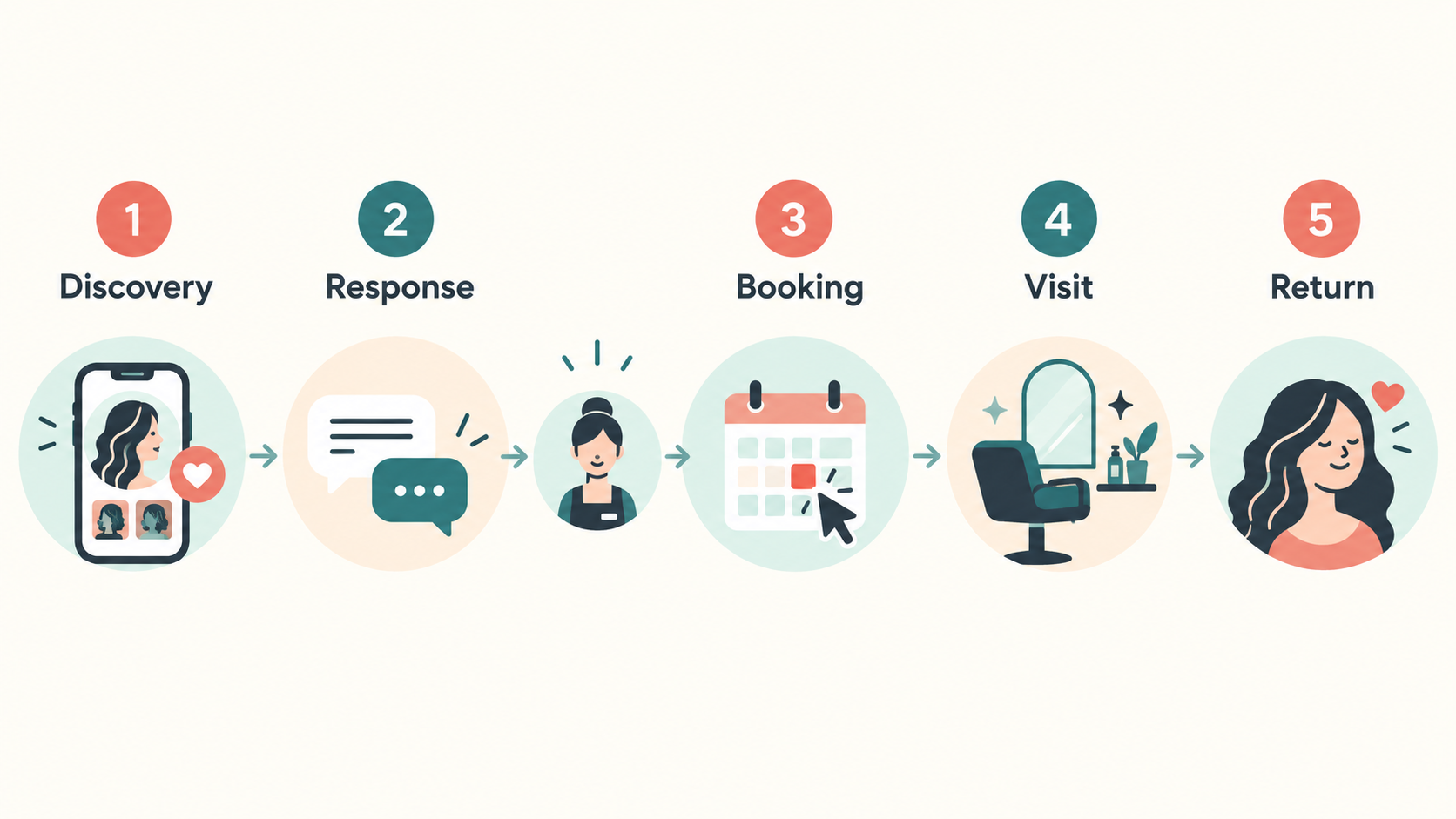
Updated September 2026 — Salon marketing works best when it connects attention to a clear next step. A person discovers a salon, checks whether the service fits, asks a question, chooses a time, receives a useful reminder, attends, and decides whether to return. Each stage has a different job. A large reach number does not prove that appointments were booked, and a busy inbox does not prove that the right customers received a helpful answer.
This guide gives independent salons, barbers, spas, studios, and beauty-service teams a practical 30-day plan. You will choose one service and one local audience, improve the discovery path, map inquiry handling, write useful content, measure reminders and rebooking, and review the evidence every week. The goal is a repeatable operating system rather than a promise of a particular ranking, revenue increase, or booking volume.
Use the plan with the booking system, calendar, staff process, and consent rules you already operate. A conversation workflow can help a team acknowledge and route questions, but it should not pretend to be a booking confirmation, replace staff judgment, or collect sensitive information that belongs in an approved business process.
What salon marketing should accomplish
Start by separating the outcomes you want to measure. An inquiry is a person asking about a service, availability, price, location, preparation, or another next step. A qualified inquiry includes enough context for the team to decide whether the request fits the service and location. A booking is a confirmed slot in the salon’s approved calendar. An attended appointment is a booking that actually happens. A repeat visit is a later appointment from the same customer or household under the business’s own privacy and reporting rules.
Keep those stages separate in your weekly sheet. If you combine them into one “lead” number, you cannot tell whether the problem is discovery, slow response, confusing booking instructions, missed attendance, or weak rebooking. Your first baseline can be simple:
- New qualified inquiries received.
- Median time to the first useful response during staffed hours.
- Bookings created from qualified inquiries.
- Attendance rate and cancellations or reschedules.
- Repeat visits within the period you choose.
Do not compare a week with a holiday, weather event, or unusually large promotion to a normal week without labeling the difference. Seasonality is part of the result, not a reason to invent a smoother trend.
Choose one service and one local audience
Broad salon marketing language becomes easier to act on when the first campaign has a narrow job. Pick one service that the team can deliver consistently and one audience that has a clear reason to care. Examples include a color consultation for people planning a change, a first-time haircut for local professionals, a manicure appointment before an event, a barber service for a recurring schedule, or a spa consultation with clear preparation instructions.
Write a one-sentence brief before creating posts or ads: “We help this audience understand and book this service trong this location, với this next step.” If the sentence needs five offers, three locations, and an unverified promise, it is too broad for a first test.
Use customer language rather than internal menu names. Review recent inquiries, search wording, appointment notes, and questions staff hear repeatedly. Avoid medical or therapeutic claims unless the business has reviewed the exact wording and the appropriate professional requirements. Beauty and wellness content can be useful without making health promises.
Build a clear local discovery path
Google’s official Business Profile guidance emphasizes accurate business information and customer-facing details. Treat the profile as a source of truth for the name, address or service area, staffed hours, contact method, and booking destination. Review holiday hours before a promotion, and make sure the booking link leads to the intended step instead of a generic home page.
On the website, give each priority service a useful page with a plain-language description, the area served, what a customer should expect, preparation notes, and a visible way to ask a question or start the approved booking process. Use original photographs only when the business has permission to publish them. A photo should clarify the service, the setting, or the preparation; it should not be decorative filler.
Make the same core details consistent across the profile, service page, contact page, and booking interface. Small differences in hours, service names, or location instructions create avoidable questions. When a change is temporary, date it in the internal operating sheet and remove the note when it expires.
Map the inquiry-to-booking response
A useful response map has five steps: acknowledge the question, identify the broad need, ask only the detail that changes the next action, direct the person to the approved booking path, and provide a human handoff when the question is unusual or sensitive. The map should be short enough for a new staff member to follow.
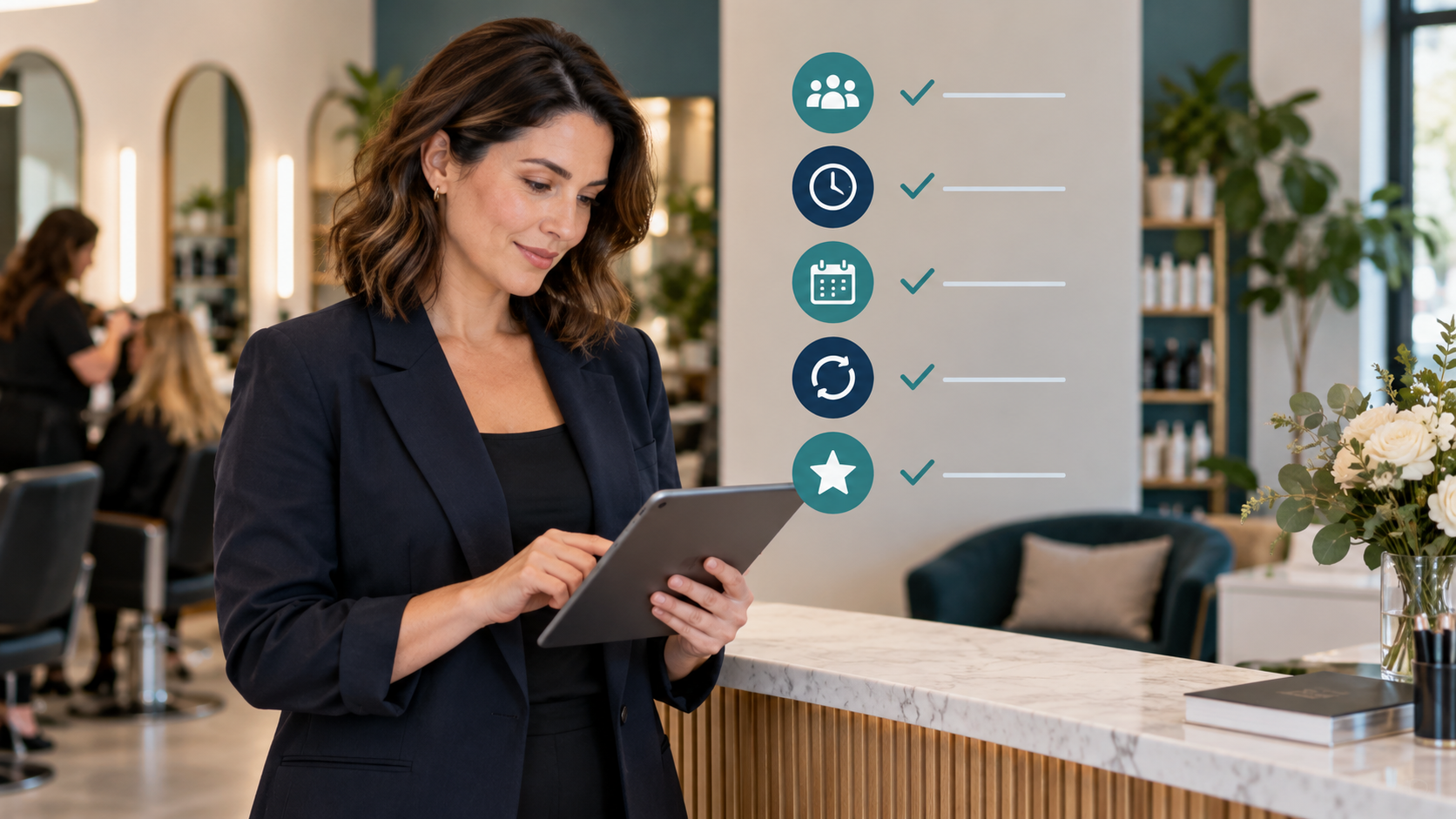
- Acknowledge: confirm that the message arrived and state when a person normally reviews it.
- Phân loại: ask for service type, preferred timing, and another non-sensitive detail only when it affects routing.
- Làm rõ: explain the next step without implying that a slot is held until the calendar confirms it.
- Route: send the customer to the approved booking page, phone line, or staff member.
- Escalate: move payment, account, privacy, complaint, accessibility, or unusual requests to the responsible person.
A conversation tool can support acknowledgement and routing, but the customer should never be trapped in repeated prompts. If the workflow does not understand the question after one clear attempt, offer the human path. Keep passwords, payment details, government identifiers, and unnecessary personal information out of routine social messages.
Write useful salon content
A content calendar is more useful when each item answers a real question or removes a booking uncertainty. Start with the questions staff answer most often: how to prepare for a service, how long a visit usually takes, which details affect a consultation, what to bring, what happens if someone needs to reschedule, and how to choose between two related services.
Before-and-after education can be helpful when the salon has permission and describes the process honestly. Explain what changed, what the customer requested, and what a future customer should ask during a consultation. Do not imply that every person will receive the same result. If a price or timing range is published, mark when it was checked and describe what can change it.
Local content should be genuinely local rather than a list of copied neighborhood names. Mention the service area, parking or arrival information, seasonal patterns, and questions the team can actually answer. A short, accurate guide is stronger than a long page padded with repeated uses of “salon marketing.”
Use a direct call to action that matches the article’s intent: review a service page, ask a preparation question, view available appointment steps, or request a human callback. Do not turn an educational page into a forced sales pitch.
Make reminders and rebooking measurable
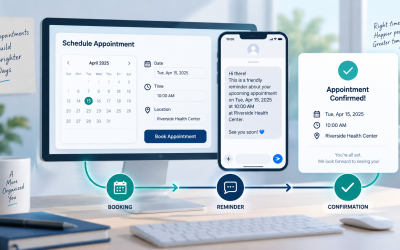
Reminders should make the date, local time, service, location, and next action obvious. The existing appointment reminder templates guide provides editable structures for confirmations, preparation notes, and reschedules. Adapt the wording to the channel and the salon’s consent process; do not assume that a template grants permission to contact every person on every channel.
Rebooking is a separate decision from sending a reminder. Track whether the customer attended, whether the staff member offered an appropriate next step, and whether the customer chose to return. A reminder can reduce confusion while still producing no repeat visit if the service, timing, or follow-up experience did not fit.
Use a small event vocabulary so the report stays understandable: inquiry_received, first_useful_response, booking_confirmed, appointment_attended, reschedule_requested, và repeat_visit. Document who records each event and what counts. Never backfill a missing booking as a conversion simply because a message was sent.
Measure speed to lead and booking quality
Response speed is a process measure, not a promise that every salon must meet the same target. Define the start time as the moment a valid inquiry enters the channel and the end time as the first useful response or confirmed handoff. An automated receipt can be recorded, but it should not be counted as a completed response if it does not answer the question or explain the next step.
The companion speed-to-lead response-time workflow explains how to separate receipt time, first human response, and first useful response. For a salon, add booking quality to the report: did the customer reach the right service, did the calendar confirm the slot, and did the person receive the preparation information needed to attend?
Review the median and the long tail. A small number of messages waiting overnight may matter more than a flattering average. Segment staffed hours, after-hours, service type, and channel. If the business changes its hours or staffing, label the change before comparing periods.
Test one channel at a time
Choose one distribution channel for the first 30-day test and give it a clear destination. Organic local content, a referral relationship, an email update to a consented list, and a modest paid test each require different evidence. Do not combine them into one “marketing” number.
For organic content, record the page, query theme, impressions, clicks, and qualified inquiries. For a referral, record the partner, referred service, and whether the visitor booked. For an email or consented message, record the audience definition, send date, replies, bookings, and unsubscribes. For paid promotion, record spend, landing page, qualified inquiries, bookings, and the period used for comparison.
Use a modest test budget only after the destination page and response path work. A promotion that creates more inquiries than the team can answer is not automatically a win. Scale the process only when the team can explain what happened to the inquiries.
Build a review and referral loop carefully
Reviews and referrals can support local discovery, but they work best when the request is timely, honest, and easy to understand. Choose the moment in the customer journey that the team can repeat, such as after the customer has had an opportunity to experience the service and resolve a problem. Explain that feedback is optional and never offer a benefit in exchange for a positive review. Keep the request separate from a private service-recovery conversation so a dissatisfied customer has a direct way to reach the team.
Use a short request that names the business and points to the correct profile or feedback page. Do not ask customers to include private details, health information, or staff information that should not be public. If a customer replies with a concern, route it to the responsible person rather than asking them to edit a public review before the issue is addressed.
Referral partnerships should be equally clear. A nearby photographer, event planner, fitness studio, or clothing shop may serve a compatible audience, but the relationship should be useful to both audiences and disclosed where appropriate. Each partner needs a defined destination and a way to identify referred inquiries without passing unnecessary personal data. Count referrals as a separate source from organic search and paid promotion.
Improve the service page before adding more traffic
Before increasing distribution, read the priority service page as a first-time visitor on a phone. Can someone understand the service, location, likely next step, and how to ask a question without zooming or searching through a menu? Are the booking hours current? Does the page explain what happens after a form or message is sent? Does the confirmation page avoid implying that an appointment exists before the calendar confirms it?
Check every button and link in a real browser. A broken booking link, an outdated phone number, or a form that silently fails can erase the value of an otherwise strong campaign. Keep a dated check in the operating sheet and assign an owner when the service, hours, staff, or booking system changes.
Do not hide important terms in a graphic. Put cancellation, preparation, location, and response-window information in readable text. Use headings that describe the customer’s question, and keep the first screen focused on the service and next action. Good layout is part of salon marketing because it determines whether a person can complete the next step.
Common salon marketing mistakes
- Chasing reach alone: impressions do not equal qualified bookings.
- Changing every offer at once: you lose the ability to learn which change mattered.
- Hiding terms: unclear cancellation, preparation, or pricing details create avoidable questions.
- Ignoring missed inquiries: a slow first response can erase the value of a strong discovery page.
- Buying low-quality links: unrelated placements add risk without helping the reader.
- Overpromising automation: a conversation workflow does not replace the calendar, staff, or human review.
- Calling every contact a lead: separate questions, qualified inquiries, bookings, attendance, and return visits.
A 30-day salon marketing checklist
Use one owner and one evidence location for each weekly decision.
| Week | Hành động | Evidence | Decision |
|---|---|---|---|
| 1 | Choose one service and audience; verify profile, service page, hours, booking path and response owner. | Baseline sheet and page links. | Is the next step clear and current? |
| 2 | Publish two useful answers and test the inquiry response map during staffed and after-hours periods. | Rendered pages, test messages and response times. | Where does context get lost? |
| 3 | Review inquiries, bookings, attendance, cancellations and reminder responses by service. | Event counts with dates and definitions. | Which step deserves one focused repair? |
| 4 | Keep, revise or stop the channel test; document the next 30-day hypothesis. | Change log and before/after comparison. | What should remain stable? |
The checklist is intentionally small. A salon can add complexity after it can explain the current funnel and maintain accurate customer-facing details.
How can a small salon start marketing with a limited budget?
Start with accurate local information, one service page, a useful answer to a recurring question, a clear response owner, and a simple weekly measurement sheet. Improve the path for people who already show intent before adding more channels. A small test is easier to learn from when the destination and follow-up are stable.
What are practical salon marketing ideas?
Useful ideas include a service-preparation guide, a seasonal availability page, a local arrival and parking guide, a consultation question list, a reschedule explanation, a staff-reviewed before-and-after story, and a rebooking checklist. Choose the idea that answers a real customer question and connect it to the next approved booking step.
How should a salon measure local search?
Track the exact page and query theme, impressions, clicks, click-through rate, and qualified inquiries for comparable periods. Keep search visibility separate from bookings and revenue. Google documentation can change, so verify current profile and search guidance before making a platform-specific claim.
Should a salon use automated conversation replies?
A carefully bounded workflow can acknowledge a message, collect a non-sensitive routing detail, and show when a person will review the request. It should not confirm a booking before the calendar does, make health or pricing promises, or request passwords and payment details. Give the customer a clear human path whenever the question is unusual or sensitive.
How do reminders support rebooking?
A reminder reduces uncertainty about an already approved appointment. Rebooking requires a separate, appropriate next-step conversation after attendance or service completion. Measure those events separately so a reminder is not credited for a later return that it did not cause.
What should a salon do in the next 30 days?
Choose one service and audience, verify the public details, write the response map, publish two useful answers, measure response and booking steps, and review the evidence weekly. Keep the plan small enough that the owner and staff can maintain it. Then make one evidence-backed change at a time.
Sources and operating notes
For current platform mechanics, review Google Business Profile Help, Google’s people-first content guidance, Google Search spam policies, và Trợ giúp Doanh nghiệp Meta. The sources explain platform guidance; they do not guarantee rankings, bookings, or revenue. Keep claims and customer-facing details under the salon’s own review process.

 Tiếng Việt
  English
  Tagalog
  简体中文
简体中文  العربية
  हिन्दी
  Português do Brasil
  Español de México
  Français
  বাংলা
বাংলা  香港中文
香港中文  繁體中文
繁體中文  Nederlands
  Deutsch
  Bahasa Indonesia
  日本語
日本語  한국어
한국어  Polski
  Русский
  Español