
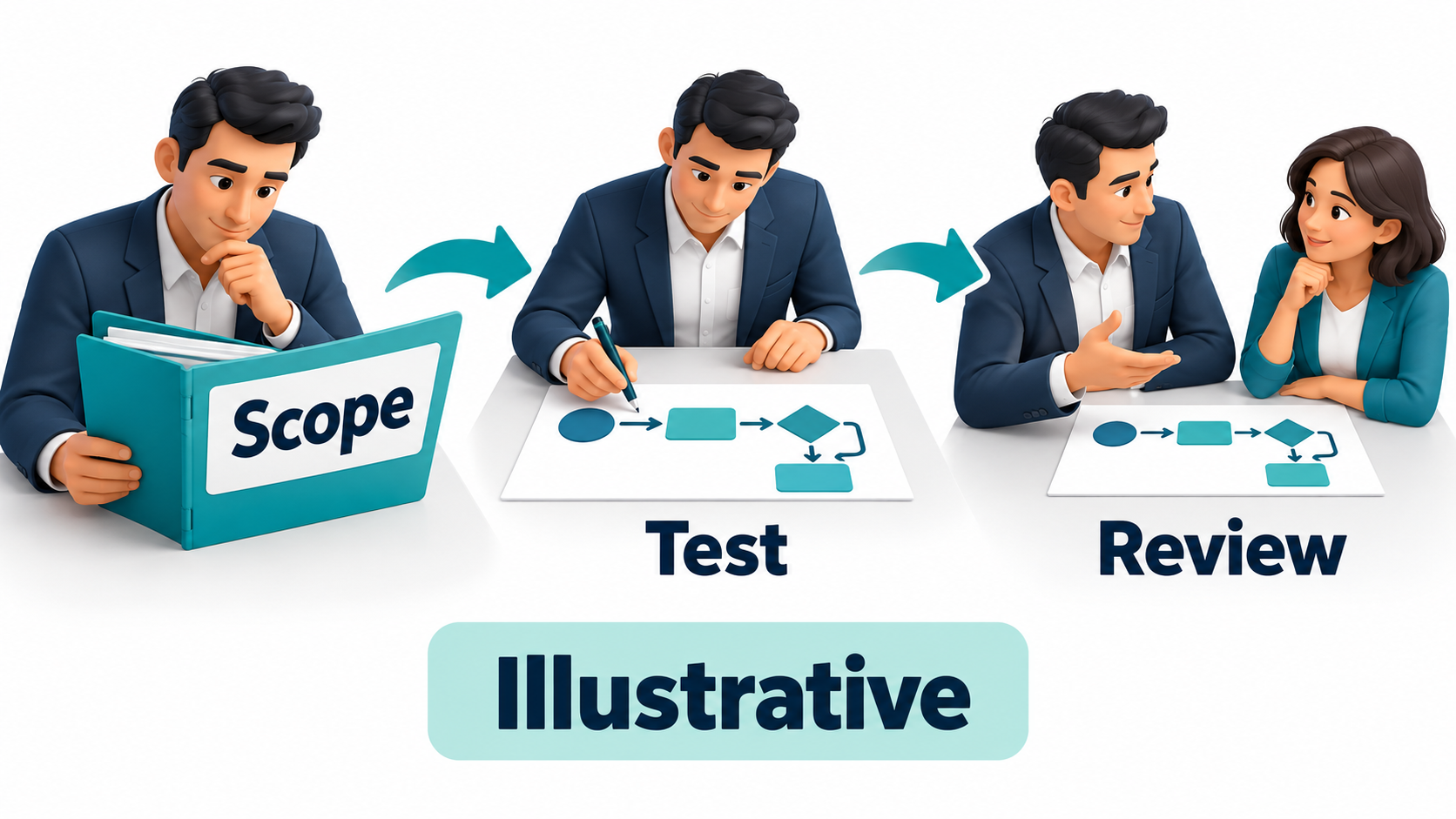
Navigating the Landscape of AI Chatbot Services in 2026
As we move further into 2026, the landscape of customer engagement continues to evolve rapidly, placing new demands on small business owners. The conversation has largely shifted from whether a business should adopt artificial intelligence to how it can be thoughtfully implemented to serve real operational needs. Today, many organizations are looking beyond standalone software and are instead exploring comprehensive AI chatbot services that can handle the heavy lifting of configuration, training, and ongoing optimization.
For a small business, time is often the most constrained resource. Evaluating the commercial scope of a vendor is not just about comparing features; it is about finding a sustainable partnership that aligns with your operational goals. Whether you are aiming to streamline basic inquiries, qualify leads, or assist with appointment scheduling, understanding the nuances of these services is critical to making an informed investment. For appointment-related scopes, review the appointment request and human-confirmation workflow before agreeing which booking steps a vendor must verify.
This guide is designed to help small business owners and decision-makers evaluate the commercial scope of AI chatbot services. We will explore how to assess vendor capabilities, establish measurement guardrails, and ensure a smooth handoff process, helping you choose a solution that genuinely supports your team.
The Distinction Between Software Tools and Managed Services
Before diving into evaluation criteria, it is helpful to distinguish between buying a software tool and investing in a service. While many platforms provide the building blocks for artificial intelligence, an AI chatbot service typically encompasses a broader scope of deliverables. This often includes strategic planning, system deployment, dialogue design, and continuous refinement based on user interactions.
If your team has the technical bandwidth and the desire to build and maintain workflows from scratch, exploring the best AI tools for business might be a suitable starting point. However, if your goal is to offload the complexities of system architecture, knowledge base management, and ongoing conversational tuning, a dedicated service model is often the more practical route. A service provider aims to bridge the gap between raw technological capability and practical business application, ensuring that the system is properly aligned with your brand voice and customer needs.
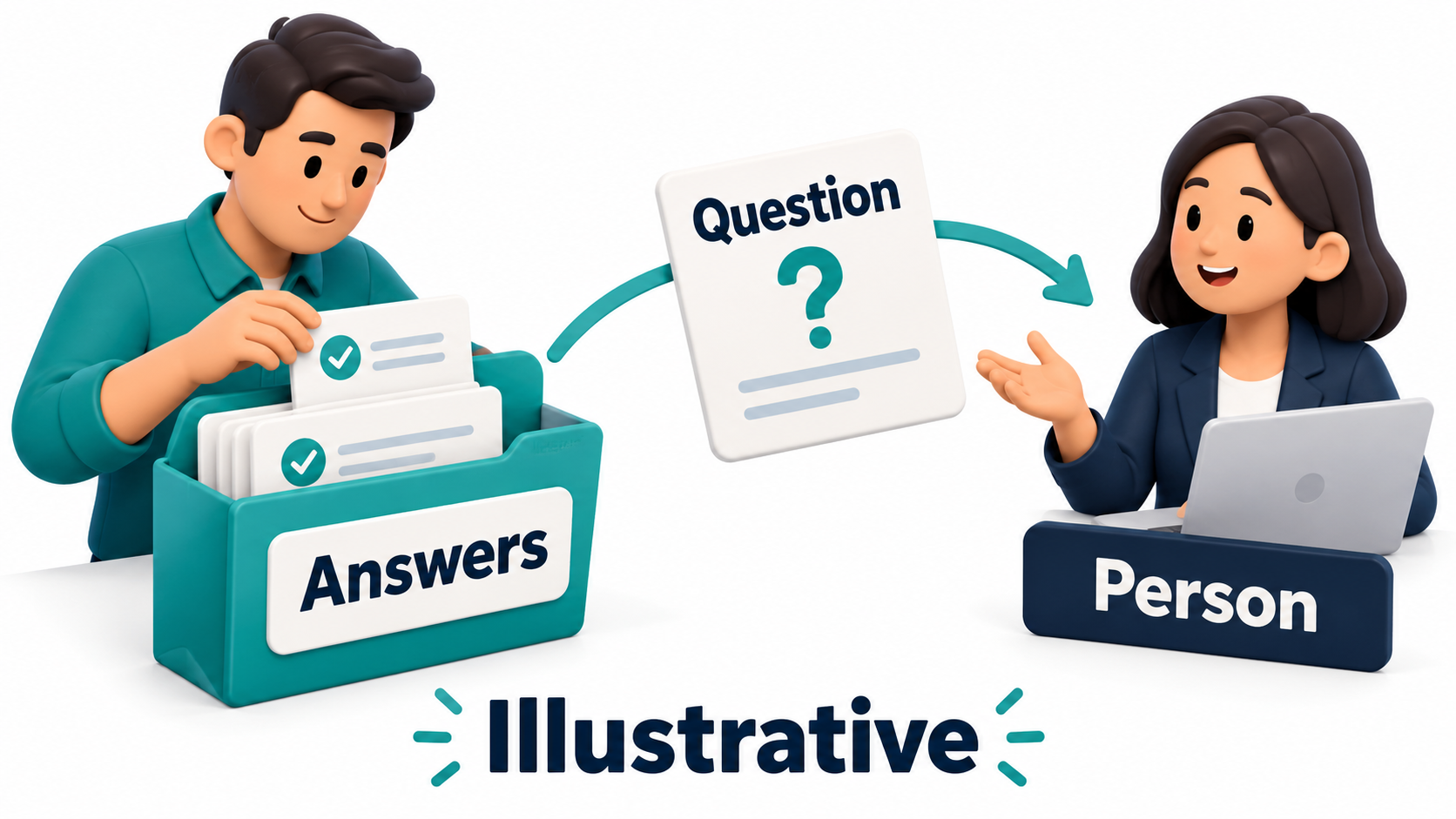
Illustrative approved-answer collection and an unfamiliar question passed to a person for review.
Assessing Your Readiness: A Respectful Fit Check
Not every small business requires a comprehensive AI chatbot service immediately. A respectful fit check involves looking closely at your current operations, inquiry volume, and the complexity of your customer interactions. Implementing an AI solution requires foundational clarity about your business processes. If your internal documentation is fragmented or your customer service policies are frequently changing, you may need to stabilize those areas before introducing automation.
Consider the following factors to determine if your business is ready for a service provider:
- Consistent Inquiry Volume: Are your human agents frequently bogged down by repetitive questions regarding operating hours, service areas, or basic policy details? A high volume of predictable inquiries is often a strong indicator that automation could provide meaningful relief.
- Process Maturity: Do you have clear, documented answers for your most common customer scenarios? AI thrives on structured, reliable information.
- Strategic Goals: Are you looking to expand your availability to handle off-hours inquiries, or are you trying to manage a surge in seasonal interest? Defining the primary goal will dictate the type of service you need.
- Team Capacity: Does your staff have the time to learn and manage a new system, or do you need a vendor who can take the lead on deployment and maintenance?
If you find that your business possesses a solid foundation of documented knowledge but lacks the time to build the conversational logic, exploring a vendor partnership is a logical next step.
Core Capabilities: What to Look for in a Service Scope
When evaluating different providers, it is crucial to understand exactly what is included in their service scope. The term “AI chatbot service” can mean anything from basic setup assistance to fully managed, continuous optimization. To avoid misunderstandings, you should ask for a clear breakdown of deliverables.
A comprehensive vendor scope typically includes several core components. While not every provider will offer the same capabilities, the following table outlines the elements you should look for and clarify during your evaluation:
| Service Component | Description of Scope | Why It Matters |
|---|---|---|
| Discovery and Knowledge Ingestion | The process of auditing your existing business materials, FAQs, and documentation to build the foundational knowledge base for the AI. | Uses your approved business information as a grounding source; request tests showing how unsupported questions and inaccurate answers are handled. |
| Thiết kế cuộc trò chuyện | Structuring the logic, tone, and flow of interactions. This includes defining how the system greets users and handles multi-step inquiries. | Creates a natural, on-brand experience that aligns with your broader chiến lược marketing chatbot hiệu quả and customer expectations. |
| System Integration | Connecting the chatbot to your existing workflows, such as your calendar for appointment scheduling or your CRM for lead generation. | Defines which connected actions are in scope. Require a demonstration of permissions, availability checks, error handling, and human confirmation before relying on an integration. |
| Escalation Pathways | Defining the rules and technical mechanisms for transferring a conversation to a human team member when the AI cannot resolve the issue. | Acts as a safety net, ensuring complex or sensitive customer issues are handled with appropriate empathy and nuance. |
| Ongoing Optimization | Regularly reviewing chat transcripts, identifying areas of misunderstanding, and updating the knowledge base to improve future accuracy. | Establishes a review cadence and a named owner for updating changed offers, policies, and answers. Confirm that updates are tested rather than assuming that a service stays current automatically. |

Illustrative vendor scope folders distinguishing included services from capabilities still needing verification.
The Vendor-Question Checklist
Choosing the right partner requires looking beyond surface-level demonstrations. During the evaluation process, ask probing questions to understand how the vendor operates, how they handle edge cases, and what level of support you can expect long-term. Consider using the following checklist during your vendor interviews:
- How do you source and update the knowledge base? Understand whether you are responsible for formatting data into specific templates or if their team can ingest your existing documentation directly. Ask how often updates can be made and what the process entails.
- What safeguards are in place against inaccurate responses? It is well-documented that AI models can occasionally produce incorrect information. Ask the vendor how they constrain the AI to only use approved business data and what mechanisms they use to detect and correct errors.
- How is the system monitored, and what does the maintenance phase look like? Clarify whether the service includes proactive monitoring of chat logs to identify trends and improve responses, or if optimization is purely reactive based on your requests.
- What are the specific parameters of the escalation process? Detail how the system recognizes frustration or complexity, and how it alerts your human team.
- How do you handle data privacy and security? While avoiding deep technical jargon, you must ensure the vendor has policies in place regarding how customer conversational data is stored, utilized, and protected.
Understanding the Implementation Phases
A successful rollout is rarely an overnight event. Thoughtful vendors generally employ a phased approach to implementation. This reduces disruption to your business and allows for adequate testing before the system is exposed to your entire customer base. While timelines can vary significantly based on the complexity of your requirements, a standard implementation often follows these sequential phases:
Phase 1: Discovery and Audit
The vendor begins by gathering your existing materials. This might involve reviewing website content, historical support tickets, training manuals, and product descriptions. The goal is to identify knowledge gaps and structure the information so the AI can retrieve it accurately.
Phase 2: Logic Design and Conversation Mapping
In this phase, the vendor designs the primary conversational pathways. They will define the system’s persona, establish the greeting protocols, and map out the steps required for specific actions, such as capturing lead information or answering common questions. This is where the theoretical capabilities are tailored to your specific use case.
Phase 3: Pilot Testing and Tuning
Before full deployment, the system should undergo a pilot phase. This might involve internal testing by your staff or a limited release to a small segment of your audience. During this period, the vendor monitors interactions closely, identifying areas where the AI struggles and refining the underlying knowledge base accordingly. This iterative tuning is critical for long-term success.
Phase 4: Full Deployment and Ongoing Optimization
Once the system meets the agreed-upon performance guardrails, it is rolled out across your primary channels. However, the implementation does not end here. A robust service includes an ongoing optimization phase, where the vendor continues to analyze transcripts, refine responses, and adapt the system as your business evolves.
The Safety Net: Human Handoff and Escalation
One of the most critical elements of evaluating an AI chatbot service is understanding its limitations. No system can handle every possible customer scenario perfectly. Therefore, the ability to seamlessly transition a conversation from the automated system to a human staff member is paramount. This concept is especially important when evaluating chatbot dịch vụ khách hàng AI, where customer frustration can escalate quickly if they feel trapped by an unhelpful system.
A well-designed escalation workflow typically involves the AI recognizing specific triggers. These triggers could be explicit, such as a user typing “speak to a representative,” or implicit, such as the system detecting repetitive questions, negative sentiment, or a topic outside its defined scope. Once a trigger is activated, the system should gracefully pause its automated responses, notify the appropriate internal team member, and provide the human agent with the full transcript of the conversation for context.
When discussing this with potential vendors, inquire about how these handoff notifications are delivered. Does the system alert your team via a unified dashboard, an email, or a direct message? Understanding this workflow ensures that your team can step in quickly and efficiently, providing the empathy and nuanced problem-solving that only a human can deliver.
Measurement Guardrails: Defining Success
To determine the value of your investment, you must establish clear measurement guardrails. It is easy to be distracted by vanity metrics, such as the total number of messages processed. However, true success is measured by the system’s impact on your operational efficiency and customer satisfaction.
Work with your vendor to define actionable metrics that align with your business goals. Common guardrails include:
- Tỷ lệ giải quyết: The percentage of inquiries that are handled entirely by the AI without requiring human intervention. This helps gauge the system’s effectiveness at deflecting routine questions.
- Tỷ lệ leo thang: The frequency with which conversations are transferred to your staff. While some escalation is expected and necessary, a rapidly increasing escalation rate may indicate that the knowledge base needs updating or that the conversation flows are confusing.
- Customer Satisfaction Scores (CSAT): Collecting feedback directly from users after their interaction with the automated system. This provides a qualitative measure of the user experience.
- Action Completion Rate: If your system is designed for a specific task, such as lead generation or appointment scheduling, track the percentage of users who successfully complete that action.
Keep in mind that these metrics can fluctuate based on seasonality, marketing campaigns, or changes in your service offerings. They should be viewed as directional indicators rather than absolute guarantees of performance.
Put acceptance criteria in the written scope
Ask a prospective vendor to turn its demonstration into a short acceptance record that your team can inspect. Use fictional customer details and one ordinary request, such as asking for an appointment time. The record should distinguish collecting a preferred time from checking availability and confirming a booking. Name who owns each step, which connected tools are required, and what staff do when a tool or team member is unavailable. Do not accept a successful sample conversation as proof that every integration or exception is covered.
Agree on these checks before evaluating the pilot:
- Approved answer: Identify the business document supporting the response and who may update it. Require a test after that document changes.
- Unknown answer: Ask a question outside the agreed information. Check that the response acknowledges the limitation and offers a usable human-review path.
- Requested action: Record the difference between an inquiry, a pending request, and a confirmed action. Verify permission and availability requirements separately.
- Handoff: Name the person or team reviewing the request, the information they need, and the fallback when they cannot respond immediately.
- Change ownership: Specify who reviews changed policies, pricing, service areas, or answers, and which tests must be repeated.
- Commercial scope: Have the quote distinguish initial setup, connected-tool work, ongoing review, staff training, and support. Request explicit inclusions and exclusions rather than assuming that a managed-service label covers them all.
Keep a record of expected behavior, the observed result, open issues, and the reviewer. A failed check should lead to a documented repair and retest, not an unsupported assurance that the system will improve later. If your team is comparing a self-managed workflow with a service, Xem Các Hướng Dẫn Của Chúng Tôi to identify the setup responsibilities you would retain.
Câu hỏi Thường gặp
How long does it typically take to deploy a managed chatbot service?
Ask the vendor for a written timeline covering discovery, approved answers, integration checks, staff training, pilot testing, and launch review. A limited FAQ scope differs from calendar booking, connected business tools, or custom escalation. Agree on acceptance tests and responsible people for each phase instead of assuming a standard number of weeks.
Can an automated chatbot service handle complex sales inquiries?
An AI-assisted service may collect initial requirements and help identify the requested next step, but consultative sales conversations still need human judgment. Ask the vendor to show how an inquiry reaches the right staff member and how availability is verified before an appointment is confirmed. Check the exact agreed scope rather than assuming that every service includes scheduling.
How much ongoing effort is required from internal staff after launch?
Ongoing internal effort depends on the service level agreement. Even with fully managed optimization, internal teams must review escalated conversations, keep business policies and pricing updated, and provide prompt feedback on edge cases that the vendor’s team encounters.
What is the difference between a software platform and a managed chatbot service?
A software platform provides the underlying tools and interface for building bots, leaving conversation design, prompt engineering, and maintenance to your team. A managed service includes professional scoping, setup, transcript auditing, and ongoing performance tuning delivered by external specialists.
How do vendors prevent AI chatbots from providing inaccurate information?
Ask vendors to demonstrate how they limit answers to approved information, handle unfamiliar questions, and pass sensitive requests to staff. Review example failures as well as successful answers. Approved documentation and transcript checks reduce risk but do not guarantee that an AI-assisted response will always be correct.
Taking the Next Step in Your Evaluation
Choosing an AI chatbot service is a strategic decision that extends far beyond evaluating a list of technical specifications. It requires a thoughtful assessment of your operational readiness, a clear understanding of the vendor’s service scope, and the establishment of robust measurement guardrails. By focusing on finding a partner who prioritizes accurate knowledge ingestion, seamless escalation workflows, and ongoing optimization, you can integrate artificial intelligence into your business in a way that genuinely enhances both the customer experience and your team’s efficiency.
As you continue your evaluation process, take the time to map out your most common customer journeys and identify where automation can provide the most relief. If you are ready to explore specific capabilities, reviewing the software foundations for customer support and understanding different Check Current Pricing structures can help you benchmark your options and make an informed decision that aligns with your long-term goals.

 Tiếng Việt
  English
  Tagalog
  简体中文
简体中文  العربية
  हिन्दी
  Português do Brasil
  Español de México
  Français
  বাংলা
বাংলা  香港中文
香港中文  繁體中文
繁體中文  Nederlands
  Deutsch
  Bahasa Indonesia
  日本語
日本語  한국어
한국어  Polski
  Русский
  Español