

Nếu bạn đến đây để tìm một bot thích facebook có thể đẩy một Trang hoặc bài viết lên 1.000 lượt thích nhanh chóng, đây là câu trả lời trung thực: thị trường đó vẫn tồn tại vào năm 2026, nhưng lợi ích thì nhỏ hơn và những bất lợi thì dễ nhận thấy hơn. Số lượng hiển thị vẫn có thể thay đổi. Câu hỏi khó hơn là giá trị của số đó là gì sau khi các quy tắc khuyến nghị hiện tại của Meta, giới hạn Trang và các hệ thống dọn dẹp tương tác giả được thực hiện.
Tôi đã kiểm tra hướng dẫn của Trung tâm Trợ giúp Meta, các trang đích mạng lưới trao đổi hiện tại và các trang giá cả công cụ tự động hóa tính đến ngày 12 tháng 4 năm 2026. Mô hình không còn tinh vi nữa. Meta vẫn cho các doanh nghiệp một lối đi rộng rãi cho việc nhắn tin, điều chỉnh bình luận, phản hồi tức thì, tin nhắn vắng mặt, lọc từ khóa và thu thập khách hàng tiềm năng. Nó vẫn ít thân thiện hơn với bất cứ điều gì trông giống như lượt thích mua, theo dõi giả mạo, hoặc tương tác phối hợp nhằm tạo ra bằng chứng xã hội thay vì kiếm được nó.
Đó là phần mà các bài viết cũ vẫn bỏ lỡ. Chúng coi “hoạt động” như chỉ có nghĩa là số trên Trang tăng lên. Trên thực tế, một chiến thuật thích chỉ xứng đáng được gọi là hữu ích nếu nó cũng giúp tăng cường tiếp cận, bình luận, theo dõi, nhấp chuột, tin nhắn hoặc doanh số. Nhiều công cụ bot đổi lượt thích vẫn vượt qua bài kiểm tra đầu tiên và thất bại ở mọi bài kiểm tra khác.
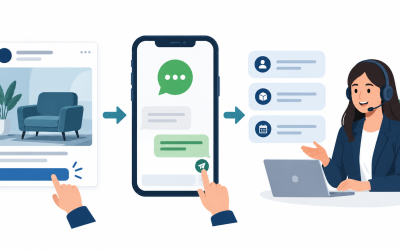
Cũng có một nguồn gây nhầm lẫn thứ hai được tích hợp vào chủ đề này. Một số người tìm kiếm công cụ bình luận giống như bot facebook không thực sự muốn những lượt thích giả. Họ muốn phản hồi nhanh hơn, xử lý bình luận tự động, hoặc một cách để chuyển sự quan tâm công khai vào Messenger mà không cần phải theo dõi từng bài đăng. Đó là một loại công cụ hoàn toàn khác. Nếu đó là mục tiêu thực sự của bạn, con đường an toàn hơn bắt đầu với tự động hóa phản hồi, quy trình làm việc trong hộp thư, và thiết lập bình luận thành tin nhắn, chứ không phải một trang web trao đổi tín dụng. Nếu bạn muốn phần xây dựng thực tiễn sau bài viết này, hãy bắt đầu với hướng dẫn tạo Bot Messenger.
Sự làm mới này chia nhỏ chủ đề thành các phần quan trọng vào năm 2026: một bot Facebook cho lượt thích thực sự có nghĩa là gì bây giờ, loại công cụ nào vẫn còn hoạt động, cách Meta phát hiện các mẫu lượt thích giả, bot giống như bình luận facebook thường có nghĩa là gì trong quy trình làm việc thực tế, cách thiết lập một lựa chọn an toàn hơn, và những tùy chọn nào vẫn đáng để bạn bỏ thời gian. Tôi sẽ không giả vờ rằng có một chiến lược autolike kỳ diệu với rủi ro bằng không. Không có.
Ý Nghĩa Thực Sự Của Bot Facebook Cho Lượt Thích Vào Năm 2026
The phrase sounds technical, but most of the time it describes one of four very ordinary systems. The first is a credit-exchange network where you like or follow other people’s content to earn points, then spend those points to get likes on your own Page or post. The second is a paid seller that gives you a tiny free sample, then pushes you toward cheap bundles. The third is a high-risk app or script that wants login details, tokens, browser automation, or repeated account access. The fourth is not a like bot at all. It is a messaging or comment automation tool that some searchers lump into the same bucket because it makes a Page look more active.
That last distinction matters a lot. A tool that auto-replies to comments, sends an instant Messenger response, or hides spam is working with attention you already earned. A facebook bot liker is trying to fake the appearance of attention. Those are different behaviors, different APIs, different policy exposure, and different business outcomes.
Meta’s own product design makes the split even clearer. Pages can turn messaging on, send instant replies, schedule away messages, reply to comments publicly or in direct message, hide comments, delete comments, block problem accounts from the Page, and add up to 1,000 blocked keywords in any language with automatic variations. Those are first-party features built to help you manage real customer attention. Meanwhile, Meta’s recommendation guidance explicitly says accounts and entities that repeatedly engage in misleading practices to build followings, such as purchasing likes, may not be widely recommended. That is not a gray hint. That is the platform boundary in plain English.
The meaning of likes also changed. Some Facebook Pages that once had a Like button now only show a Follow button. That sounds minor until you realize what it signals: Facebook is steadily pushing businesses toward ongoing audience connection and interaction, not just one-time vanity clicks. So even before you factor in risk, a lot of older “get likes fast” advice is optimizing for the wrong scoreboard.
In 2026, the phrase facebook bot liker usually points to one of these real-world intents:
- Vanity-proof intent: “My Page looks empty. I want the number to look less embarrassing.”
- Algorithm intent: “I think more likes will make Facebook push my post wider.”
- Sales intent: “I need customers to trust the Page enough to click, message, or buy.”
- Workflow intent: “I need replies, moderation, or Messenger follow-up, not fake likes.”
The first intent is the only one fake-like tools consistently serve. The second is shaky. The third is usually where they fail. The fourth is where supported automation can still help a lot.
There is also a legal and operational angle people skip over. Facebook’s own warning about free-like and free-follower apps is blunt: these services are not endorsed, you should never give them login access, Meta may limit account features for a period of time, and Meta may remove the likes or engagement you got from using them. So if a service only “works” until the platform removes what you bought or limits the account that used it, that is a weak definition of working.
That is the right starting frame for the rest of this article. A facebook bot liker is not one thing. It is a bucket of shortcuts with very different mechanics and very similar tradeoffs: easy visible movement, weak downstream value, and a growing policy gap between what is supported and what is not.
Can You Really Get 1,000 Facebook Likes Fast in 2026?
Yes, you can still get to a visible 1,000 faster than a lot of marketers want to admit. The problem is that there are at least four very different versions of “1,000 fast,” and only one of them tends to improve the rest of the Page.
If you grind an exchange network hard enough, you can still collect a few hundred likes without spending cash. If you buy a cheap package, you can get a fast spike. If you run a boosted post or Reel that already has honest traction, you can generate likes along with better comments, follows, and messages. And if you set up comment-to-message automation on a hot post, you may get fewer public likes but far more business value.
That is the trade nobody selling fake likes wants to say out loud. The speediest options usually buy the weakest signal.
| Route | Cash cost | Time cost | What you usually get | Main downside |
|---|---|---|---|---|
| Credit-exchange grind | $0 | Cao | A slow stream of low-intent likes while you keep earning points | You are trading real admin time for synthetic proof |
| Cheap sample plus paid package | $3 to $30+ | Thấp | A fast visible bump on a public post or Page | Weak retention, weak audience fit, and easy cleanup risk |
| Boosted post with real traction | $20 to $100+ | Vừa phải | Likes plus comments, follows, reach, and messages | Needs decent creative and targeting, not just budget |
| Comment-to-DM automation on a strong post | $0 to $39+ | Low to moderate | Usually fewer likes, but better leads and conversions | Requires setup and a real follow-up offer |
| Warm invites plus consistent Reels | $0 | Vừa phải | Slower, cleaner growth in likes and follows | Needs patience and better content discipline |
The fastest path to a screenshot is not the same as the fastest path to a healthier Page. That is why the 1K-fast promise still hooks people. It compresses one metric and hides the cost of every other one.
Meta’s own paid-like attribution rules tell you something useful here. A paid like is counted if it happens within one day of someone seeing your ad or within 28 days of clicking your ad. That matters because it reminds you that Meta already has a built-in lane for buying distribution. If you have a small budget, the cleanest paid route is still an ad or boosted post that earns legitimate engagement, not a third-party likes vendor pretending to be cheaper.
So can you get 1,000 likes fast? Sure. Can you get 1,000 likes fast that still help with recommendation reach, trust, and conversion quality a week later? That is the real test, and fake-like tools keep failing it.
Facebook Bot Liker: The Complete 2026 Guide
When people type facebook bot liker, the tools they find are usually not advanced bots. They are exchange systems, reseller packages, or public-URL delivery services wrapped in better branding. Here is what the current landscape looks like.
| Service type | Current public hook | What you must do | Free entry signal | Main red flag |
|---|---|---|---|---|
| Like4Like | Community exchange with real members and manual actions | Like other listings, close the pop-up manually, then confirm to earn credits | 30-credit startup bonus | The whole system depends on traded intent, not real audience fit |
| Traffup | Promote your page or post to a large user base and assign points | Sign up, add listing, spend points, keep farming or paying | Free signup, points-based model, claims 1M+ users | Likes come because people want points, not because they want your Page |
| AddMeFast | Marketplace-style likes and shares with CPC logic | Make the post public and visible, often remove restrictions, then bid with points | Free points system | The tool’s own help pages require conditions that make the manipulation obvious |
| KingdomLikes | Polished exchange network claiming real people and safe growth | Earn points by interacting or buy points for faster delivery | 50-point free trial | It is still a point economy for engagement, just with cleaner copy |
| Mitwix | Free-sample reseller with instant-delivery language | Paste a public URL and use a promo code on first order | WELCOME code for 30 free Facebook likes | The same page also talks about 50 free likes, which is a trust signal in the wrong direction |
Let’s look at the mechanics, because the mechanics tell you more than the marketing copy.
Like4Like is still a manual attention trade, not a growth engine
Like4Like’s help pages still spell out the flow in a way most vendors now hide. You log in, pick a free-credits task, open a social page, perform the action, close the pop-up manually, then click Confirm so the system awards your credits. It also still advertises a startup bonus of 30 credits. That transparency is useful because it shows exactly what you are buying when you use a facebook bot liker in this category: not automation, not demand, and not targeting. You are buying access to a crowd of other users doing the same hustle in reverse.
That can move a number. It does not mean those people care about your niche, language, location, or offer. If you run a salon in Phoenix, a legal clinic in Houston, or a DTC store selling one product to one market, this kind of activity is mostly decorative.
Traffup is cleaner on credentials and weaker on intent
Traffup deserves one narrow point in its favor: the site says it does not ask for your Facebook password or app permissions. That does reduce one security risk. But it does not solve the core problem. You still assign points so strangers will interact with your content. The reason they show up is compensation, not interest.
Its pitch is familiar for a reason. “Thousands of real users” sounds reassuring until you ask the next question: real users doing what? In this case, real users are completing tasks inside a social exchange network. That is still synthetic social proof. Cleaner credentials do not turn it into organic demand.
AddMeFast exposes the tradeoff almost by accident
AddMeFast is one of the best examples of why a service can technically work and still be the wrong move. Its support pages say Facebook posts must be public and visible to everyone, the like or share count must be visible even to logged-out users, and the post should already have at least one like or share before submission. Another help page says Pages with geographical, demographical, or age restrictions have to remove those restrictions before the Page can be submitted. Another says higher CPC gets faster delivery.
That stack of requirements is incredibly revealing. The service needs your content to be easy for strangers to verify, easy for the system to route, and easy for points to influence. That makes delivery easier. It also makes the pattern less natural and the audience less relevant.
KingdomLikes looks newer, but the economics are old
KingdomLikes is a good reminder that modern-looking design is not the same thing as modern strategy. Its current homepage pushes a 50-point free trial, claims 2,500,000+ members, and says it offers real growth with no bots. It also openly explains that faster delivery depends on more points, higher CPC, or VIP status. That is still an engagement market. The only difference is the branding is smoother than the older exchanges.
If your standard is “does this avoid obvious credential theft?” it may look acceptable. If your standard is “does this bring me people who might actually buy, book, message, or follow for the right reason?” the answer gets much weaker.
Mitwix shows how free samples are used to sell the rest of the package
Mitwix currently advertises 30 free Facebook likes with promo code WELCOME, while other parts of the same page talk about up to 50 free likes for new users. It also advertises 1,000 Facebook likes for $3. That is not unusual for this part of the market. The free offer exists to get you past hesitation, normalize the behavior, and make the paid package feel harmless.
Could a service like this make your post look less dead for a few hours or a few days? Yes. Would I use it for a Page tied to a real brand, client, or local business? No. The risk-adjusted value is just not good enough anymore.
That is the real 2026 guide to the term. A facebook bot liker today is usually a point economy, a low-cost reseller, or a polished version of the same thing. If you actually need replies, routing, or lead capture, you need a different tool class entirely. That is where the hướng dẫn ứng dụng Messenger đầy đủ becomes more useful than any autolike page.
Bot Like Comment Facebook: The Complete 2026 Guide
The phrase bot like comment facebook is messy because users mean at least three different things by it.
- Auto-like comments: a tool that automatically likes comments or reacts to them to make a thread look busy.
- Auto-comment or auto-reply: a tool that responds to comments with a public reply, private message, or both.
- Comment exchange: a network where comments or likes are swapped or purchased the same way Page likes are.
Only one of those lanes has a stable future. Meta supports Pages replying to comments publicly or in direct message. Meta supports messaging, instant replies, away messages, inbox workflows, comment hiding, deletion, and moderation. What Meta does not encourage is artificial engagement generation. That is why serious tools in this space keep leaning into moderation and reply automation while staying away from mass liking.
CommentGuard says this plainly in its support docs: it does not offer auto-like or bulk-like comments because automated liking of comments is against Meta’s Platform Terms and can be seen as artificial engagement. The same vendor also says third-party tools cannot automatically invite commenters to like your Page because Meta’s API does not expose that action. That is useful because it shows where the platform limits actually are. The allowed lane is handling conversation. The risky lane is fabricating activity.
Meta’s own Page tools line up with that reality. Pages can turn messaging on, reply privately below a public comment, send instant replies to new messages, schedule away messages, and moderate comments. If your workflow problem is “too many comments to answer by hand,” there is real help available. If your problem is “I want software to spray likes into my thread so it looks hotter than it is,” that is where safe tooling gets thin fast.
This is why the search term keeps frustrating people. They think they are shopping for one product category. In practice, they are choosing between three different outcomes:
- Cosmetic thread inflation. The post looks busier, but you learn almost nothing useful about demand.
- Supported comment handling. You answer faster, hide junk, route people into Messenger, and keep the thread usable.
- Exchange-network noise. You rent interaction from people who want credits, not your offer.
For a business Page, only the second outcome consistently compounds. Imagine a restaurant post that gets “Menu?” comments, a realtor post that gets “Price?” comments, or a local service post that gets “How do I book?” comments. A like-bot mindset tries to inflate the thread. A better mindset turns those comments into faster answers and private follow-up.
That is why the best 2026 translation of bot like comment facebook is not “find an auto-like hack.” It is “set up a comment workflow that acknowledges people fast, protects the thread from junk, and moves hot prospects into Messenger while the interest is still fresh.”
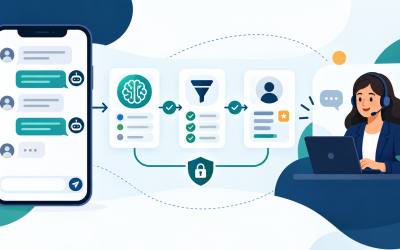
If you are shopping tools with that goal, compare actual workflow depth instead of vanity features. Can the tool handle comment moderation? Can it send a private reply? Can it sort conversations? Can it support a human takeover when the lead is real? Those questions matter more than whether it can fake the appearance of engagement.
How Facebook Detects Fake Likes, Comment Rings, and Exchange Traffic
Facebook does not need to know the brand name of every exchange site to spot manipulated engagement. The pattern itself leaves tracks.
The first track is source quality. Exchange networks attract users whose main goal is earning points, not following Pages they care about. That creates reactions without the normal neighboring actions. Real interest tends to spill into some combination of follows, profile visits, messages, shares, saves, or more comments. Fake-like traffic often lands as a clean burst and stops there.
The second track is audience mismatch. If your buyers are in one country, speak one language, and normally respond in one time zone, a sudden pile of interactions from unrelated geographies or low-fit accounts is not hard to notice. Meta has far more context than a Page admin does. If you can see the mismatch from the surface, the platform can see it more clearly.
The third track is setup behavior. Tools like AddMeFast tell you to make posts public, make the like button visible, remove Page restrictions, or increase CPC for faster delivery. Those settings help the tool function. They also flatten your normal boundaries and produce a pattern that looks more like a marketplace campaign than natural discovery.
The fourth track is account security. Facebook’s own warning about free likes and followers says the company may limit account features for a period of time if you share login information with those services, and it may remove likes or other engagement you got from them. That warning is especially important because it applies even before you get into deeper recommendation penalties. A tool can hurt you two ways: by poisoning the quality signal and by creating an account-integrity problem.
Meta also says Pages may be taken down or limited if they do not follow standards, and specifically notes that the Like button may be disabled on Pages it determines deceptively get likes. That means the fake-like risk is not limited to some mysterious algorithmic shadow penalty. There is also a direct page-level consequence on the table.
Recommendation eligibility matters even more now than it did a few years ago. Meta’s recommendations guidance says it generally does not recommend accounts or entities that repeatedly engage in misleading practices to build followings, such as purchasing likes. That one line should reset how you think about a facebook bot liker. If a tactic undercuts recommendation eligibility, it is attacking the exact distribution system most Pages depend on for new reach.
From a practical Page-owner perspective, fake-like detection usually shows up in one or more of these symptoms:
- A post gets a strange jump in likes with almost no change in comments, follows, clicks, or messages.
- Likes arrive in a tight burst, then stop dead.
- The people engaging look unrelated to the Page’s market.
- Likes fall off after a few days because low-quality accounts drop or cleanup happens.
- Your Page looks busier in public than it does in the inbox or sales pipeline.
That last point is worth sitting with. A dead inbox next to inflated post likes is usually bad social proof, not good social proof. It means the public counter and the private reality are telling different stories.
If you already suspect fake-like history on a Page, do a simple audit before you buy or build anything else. Pull the last 10 posts. Record reach, reactions, comments, follows, profile visits, link clicks, and messages. Look for posts where the reactions break away from every other metric. Then sample the commenter and liker profiles. You are not looking for one perfect fake-account signal. You are looking for a pattern.
That pattern is the entire reason these tactics are weaker in 2026. Meta has clearer rules, better moderation lanes, and more incentive than ever to distinguish real interaction from rented activity.
Step-by-Step Setup and Configuration in 2026
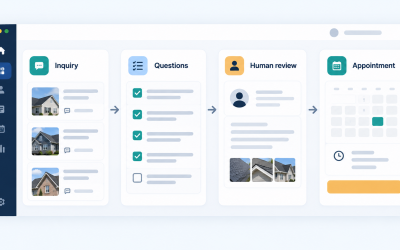
If you are expecting a section that tells you how to wire up a risky autoliker, this is where I need to be direct: there is no supported, low-risk setup for buying or manufacturing likes. The setup worth doing in 2026 is the one that helps a Page capture and manage real interest instead.
Here is the configuration stack I would build for a business Page, creator page, or local brand that wants the visible Page to feel active without wandering into fake-engagement territory.
- Turn messaging on for the Page. Facebook lets Pages switch messaging on so people can contact the Page directly, and private messages can also be used to respond to comments. If you want comments to become leads, this cannot stay off.
- Set an instant reply. Meta Business Suite lets you send an automated first response to new messages. Use it to confirm receipt, set expectations, and offer one clear next step.
- Add an away message for off-hours. If you are not staffed at night or on weekends, schedule an away message instead of letting people assume the Page is abandoned.
- Build a keyword block list. Facebook lets you block up to 1,000 keywords, phrases, or emojis on a Page and automatically hides variations. Use this for spam terms, scam words, and recurring junk offers.
- Define your public-comment rules. Decide in advance which comments get a public reply, which get a private follow-up, which get hidden, and which get deleted. This keeps the page consistent when a post starts moving.
- Track business metrics next to likes. In Meta Business Suite, monitor new likes and follows, but always pair them with reach, comments, profile visits, and messages. If only the like number grows, your system is not healthy.
- Use a compliant tool if you need scale. Tools like ManyChat, Chatfuel, CommentGuard, or MessengerBot are built around replies, inboxes, workflows, and moderation. They are not magic, but they are pointed in the right direction.
- Only boost posts that already prove interest. If a post already gets good comments or messages, paid distribution can amplify a good signal. Do not pay to rescue weak content or to imitate demand.
That may sound less exciting than “click here to get 1,000 likes,” but it is the only setup that keeps paying off after the first spike. It also gives you cleaner operational visibility. When you know which comments were hidden, which DMs converted, and which posts generated real inquiries, you can improve the Page. A fake-like tool gives you almost none of that learning.
One practical configuration rule that helps immediately: write your instant reply and private comment reply as if the person is ready to buy, not just browsing. If someone comments “Price?” or “How do I order?” the fastest win is not a decorative like. It is a short public acknowledgment and a Messenger handoff with the next step ready.
If you need an example of what that looks like in a builder, the hướng dẫn tạo Bot Messenger shows the safer path better than any credit-exchange workflow. The point is not to fake heat. The point is to catch intent while it is hot.
There is a second setup layer for Pages that run communities. Facebook lets Pages invite followers into a group they administer, with up to 1,000 manual invites per week. You can also enable automatic invites for recently engaged followers, but only for one group at a time, and you are locked into that group choice for seven days before changing it. That is a better growth flywheel than bought likes because it deepens the relationship instead of flattening it.
If you insist on testing any like-delivery service despite the risk, at least set up an audit sheet first. Record the post URL, date, delivery window, visible like gain, comment gain, follow gain, message gain, geography of responders, and day-7 retention. Most people do not do this because the results are embarrassing once written down. The visible bump looks much less impressive when nothing else moves.
Common Problems and How to Fix Them in 2026
Most people who search for a facebook bot liker do not stay happy with the result very long. The same problems keep showing up, and the fixes are usually less glamorous than the sales page suggested.
| Problem | What is usually causing it | What to do next |
|---|---|---|
| The likes arrived, but nothing else improved | You bought surface-level proof instead of attention with intent | Shift budget or time into content, boosts, and comment-to-message workflows |
| Likes disappear after a few days | Low-quality accounts, cleanup, or weak delivery retention | Stop using the source and watch a clean baseline for two to four weeks |
| The tool says your Page or post is not eligible | It needs public visibility, no restrictions, or visible counters | Take that as a warning sign, not an optimization prompt |
| Comment sections get messy or spammy | No moderation rules, no block list, no fast reply flow | Use keyword blocking, hide or delete junk, and route real questions to DM |
| You cannot see all comments | Most relevant sorting, hidden comments, moderation actions, or permissions | Check hidden-by-this-page comments and review moderation settings |
| The Page only has a Follow button | That is how some Pages now work on Facebook | Optimize for follows, messages, and repeat engagement instead of raw likes |
Let’s make those fixes more practical.
Your Page looks busy, but the inbox is quiet
This is the classic sign that you chased the wrong metric. If likes are rising and the inbox is dead, your Page is not becoming more useful to the business. Fix it by changing the call to action on your content, adding a real offer, and giving people a frictionless message path. A strong “comment INFO and I’ll send the details” workflow will usually tell you more about buyer intent in one week than a month of exchange likes.
Comments seem to vanish or look inconsistent
Sometimes this is not a bug. Facebook can hide comments based on your moderation settings. Hidden comments are still visible to the commenter and their friends but hidden for everyone else. Pages can also sort comments differently, which changes what you see first. If the thread feels off, review hidden comments, keyword filters, profanity settings, and whether someone on the team is hiding or deleting comments too aggressively.
A tool asks for login details or token-like access
Stop there. Facebook’s own help page says free-like and free-follower services are not affiliated with or endorsed by Facebook, and if you shared login information you should change your password. If you already handed over access, change the password, review active sessions, revoke unknown app connections, and audit who has Page access.
Delivery is slow unless you keep raising the bid
This is common in exchange networks because your post is competing inside the same attention market as everyone else’s. AddMeFast’s own support pages say higher CPC gets faster delivery. KingdomLikes says the same thing in different words. That is not an efficiency feature. It is a warning that you are paying or grinding harder inside a market whose output still has weak business value.
You are getting the wrong kind of commenters
If low-quality comments are cluttering the Page, use the tools Facebook already gives you. Build the keyword block list. Hide or delete obvious junk. Block repeated offenders from the Page if needed. Then set a clear public-reply pattern so real prospects get acknowledged quickly while noise stays contained.
In other words, the usual fixes have almost nothing to do with finding a better like bot. They have to do with moving away from the like-bot mindset and tightening the Page’s real engagement system.
Comparison With Alternatives: What Works Better
The right comparison in 2026 is not “Which fake-like site feels safest?” The right comparison is “Which option improves the Page in a way Meta actually supports?”
| Tùy chọn | Typical starting cost | Best use | Policy risk | Real upside |
|---|---|---|---|---|
| Exchange-network likes | $0 cash, high time cost | Pure vanity proof | Cao | Visible number moves |
| Cheap like packages | $3 to $30+ | Short-term cosmetic lift | Cao | Giao hàng nhanh |
| ManyChat Essential | $17/month for new-plan accounts, 14-day trial | Comment-to-DM, lead capture, Messenger workflows | Thấp | Turns public engagement into conversations |
| Chatfuel Business | From $23.99/month | Comments autoreply and multi-channel message automation | Thấp | Useful when Messenger, Facebook, and direct messaging matter more than vanity metrics |
| CommentGuard Starter | $29/month, 7-day free trial | Comment moderation, hidden-spam control, automated replies | Thấp | Keeps posts usable and protects ad comment sections |
| MessengerBot | Public pricing starts at $19.99 per 30 days as of April 12, 2026 | Messenger-first follow-up, comment handling, routing, and templates | Thấp | Good fit when you want the Page to generate and manage real conversations |
| Boosted Facebook content | $20 to $100+ | Scaling a post that already shows honest traction | Thấp | Reach plus cleaner signals across likes, comments, follows, and messages |
ManyChat’s current help docs are a good example of how the real automation market has shifted. For accounts on its March 2, 2026 pricing model, the free plan supports up to 25 active contacts and basic automations, the Essential plan starts at $17 per month and includes unlimited automations with up to 250 active contacts, and the Pro plan starts at $39 per month with broader channel support and AI-powered automation. None of that is selling fake popularity. It is selling better handling of actual audience activity.
CommentGuard takes the same approach from the moderation side. Its current pricing page starts at $29 per month, and its support docs openly explain why it avoids auto-like or bulk-like comment features. That is exactly the kind of restraint I want to see in a Facebook workflow tool. It means the company is building where the platform permits durable value, not where the platform is likely to slap users later.
Chatfuel now prices Facebook-focused plans from $23.99 per month and leans into comments autoreply, message automation, and direct conversion flows. That is a far better use of a monthly budget than renting 1,000 low-intent likes that never message you.
And if you are comparing the wider market instead of only Facebook-native tools, use the chatbot platform comparison so you are not mixing LLM chat products, comment-moderation tools, and Messenger builders into one confused shortlist. If you are only testing no-cost tools before committing, the chatbot AI miễn phí tốt nhất roundup is a better use of time than another free-like site.
The short version is simple. Alternatives that improve reply speed, lead capture, moderation, and follow-up usually beat fake-like tools because they create a cleaner signal and a more useful Page. Alternatives that only move the number on the surface usually end up costing you twice: once in time or money, and again in lost signal quality.
Safety, Privacy, and What to Watch Out For
This is the part where a lot of readers get more confident than they should. They assume a tool is safe if it does not ask for a password, or if it claims to use real users, or if the first 30 likes arrive without drama. That is not a strong safety test.
There are really three risk layers to watch.
Credential and account-access risk
This is the obvious one. If a free likes or followers site wants your login, wants a token, or wants browser-level control that feels too deep, treat it like a security incident waiting to happen. Meta’s own help page on free-like and free-follower sites says those services are not endorsed and warns that they can gain complete access to your account if you hand over login details. If you already did, change the password and clean up access immediately.
Page-integrity and recommendation risk
This is the part a lot of users ignore because it is less dramatic. You may not get hacked. You may just teach the Page the wrong audience, generate weak engagement patterns, and reduce how recommendable the entity looks to Facebook. That kind of damage is harder to spot, but for a real business it is often the more expensive one.
Team and client-ops risk
The moment a Page is tied to a client, a brand, or a shared team, fake-like tactics get worse. Someone has to explain the sudden low-quality engagement, disappearing likes, or off-market responders. Someone has to own the Page if Meta asks questions or applies limits. Someone has to answer why public proof went up while leads did not. On a shared Page, that “someone” is usually you.
Privacy is also worth mentioning. Real moderation tools have a defensible reason to access comments, messages, or Page content because they are helping you answer or filter them. A fake-like seller often does not need deep business data at all, which means any extra access it requests is even harder to justify.
Here is the safety checklist I would use before connecting any Facebook automation tool in 2026:
- Does the tool solve a real workflow problem beyond vanity metrics?
- Can you explain why the tool needs each permission it asks for?
- Does the tool talk openly about Meta API limits instead of promising impossible features?
- If the tool stopped working tomorrow, would your Page be healthier, unchanged, or worse off?
- Would you feel comfortable telling a client exactly how the engagement was generated?
If those questions make the tool look flimsy, it probably is. That is why I keep steering serious users away from “safe like bot” thinking and toward supported automation instead.
One more practical note: use approved access models instead of shared passwords whenever possible. Comment-moderation tools and bot builders that rely on Meta-reviewed app connections are a different risk profile from random sites that want direct account control. That difference matters more than flashy promises about instant delivery.
What Changed in 2026 and What to Expect Next
The biggest change is not that fake-like tools disappeared. It is that the gap between supported automation and unsupported engagement manipulation is easier to see now.
Meta’s side is clearer. The company is explicit about recommendations, explicit about deceptive likes, explicit about free-like and free-follower app risk, and generous about legitimate Page-management features. Businesses can message, moderate, block, hide, schedule responses, filter keywords, and use Meta Business Suite to manage real conversations at scale. That is the supported future.
The tool market shifted to match that. ManyChat changed its pricing model in March 2026 for newer accounts and now segments plans around active contacts and deeper automation rather than vague “bot” branding. Chatfuel increasingly frames its value around direct message automation, lead handling, and conversion workflows. CommentGuard leans hard into moderation, API compliance, and why it avoids auto-like features. Even MessengerBot’s public product positioning is about workflows, templates, routing, and conversation systems, not fake popularity.
Meanwhile, the exchange networks evolved mostly in presentation. They look cleaner, talk more about real users, and still depend on point economies, CPC logic, or low-cost social proof packages. In other words, the sales language modernized faster than the value proposition did.
As of April 12, 2026, the likely next step is not a sudden death of all fake-like services. It is more separation between vanity-growth offers and actual business automation. The tools that survive cleanly will be the ones that help Pages answer faster, moderate better, capture leads, and connect public engagement to private conversion paths. The tools that keep selling rented likes will keep finding buyers, but they will stay harder to defend for any Page that matters.
If you are building for a real business, the strategy is already obvious. Stop treating likes as the product. Treat them as a byproduct of useful content, strong offers, fast replies, and good message handling. That is the only version of growth that looks better six months later than it did on day one.
And if your Page still looks too quiet right now, resist the urge to solve that with fake motion. Tighten the Page setup, build one real comment workflow, boost one post that already shows honest interest, and use messaging to convert attention while it is fresh. That is slower than a cheap package in hour one. It is much faster by month three.
Need the safer path instead of rented likes? Build around replies, comment handling, and Messenger follow-up rather than synthetic popularity. Review the current plans on Xem giá cả của MessengerBot and use a workflow that creates conversations you can actually convert.
Câu hỏi Thường gặp
Facebook bot liker là gì và nó hoạt động như thế nào vào năm 2026?
Một bot thích facebook vào năm 2026 thường có nghĩa là một trong ba điều: một mạng lưới trao đổi tín dụng, một nhà cung cấp lượt thích giá rẻ, hoặc một dịch vụ tự động hóa rủi ro cố gắng tạo ra sự tương tác. Hầu hết các công cụ này không mang lại cho bạn một khán giả tốt hơn. Chúng mang lại cho bạn một con số hiển thị. Các phiên bản trông sạch sẽ hơn vẫn phụ thuộc vào hệ thống điểm, yêu cầu bài đăng công khai, hoặc các gói giao hàng giá rẻ. Chúng có thể di chuyển lượt thích, nhưng thường không cải thiện bình luận, khách hàng tiềm năng, hoặc chất lượng giới thiệu lâu dài.
Bot là gì và nó hoạt động như thế nào trên Facebook vào năm 2026?
Hầu hết mọi người sử dụng bot như bình luận facebook để mô tả hoặc là tự động hóa bình luận hoặc là sự tương tác giả trên các chuỗi bình luận. Ý nghĩa an toàn hơn là xử lý bình luận: trả lời công khai, trả lời riêng tư, chuyển giao Messenger, quản lý và kiểm soát spam. Ý nghĩa rủi ro hơn là phần mềm tự động thích hoặc tạo ra hàng loạt hoạt động bình luận để làm cho một chuỗi trông bận rộn. Vào năm 2026, danh mục công cụ bền vững là quản lý bình luận và tự động hóa trả lời, không phải là thích bình luận giả tạo.
Liệu bot thích facebook còn hoạt động và an toàn để sử dụng vào năm 2026 không?
It can still work if you define work as moving the visible number. It is not a strong safety play. Meta’s current guidance warns against misleading follow-building practices, warns users not to trust free-like and free-follower apps, and says it may remove engagement or limit features when unsafe services are involved. For a hobby page, some people still take that risk. For a business page, the trade is usually poor.
Liệu Facebook có thể phát hiện lượt thích giả, công cụ tự động thích, hoặc vòng trao đổi bình luận vào năm 2026?
Có. Facebook không cần phải xác định từng nhà cung cấp bằng tên để nhận thấy các mẫu thao tác. Nó có thể thấy những đợt bùng phát bất thường, nguồn khán giả không phù hợp, hành động hạ lưu yếu, những thay đổi về công khai đáng ngờ, và hành vi lặp đi lặp lại phù hợp với sự tương tác đã mua hoặc trao đổi. Meta cũng cho biết các thực thể thường xuyên tham gia vào các hành vi lừa dối để xây dựng lượng người theo dõi, chẳng hạn như mua lượt thích, có thể không được khuyến nghị rộng rãi.
Tôi nên sử dụng gì thay vì một bot như công cụ bình luận facebook vào năm 2026?
Sử dụng một bộ công cụ giúp bạn trả lời những mối quan tâm thực sự nhanh hơn. Đối với nhiều Trang, điều đó có nghĩa là trước tiên là Meta Business Suite, sau đó là một công cụ quy trình làm việc như ManyChat, Chatfuel, CommentGuard hoặc MessengerBot nếu khối lượng hoặc việc định tuyến khách hàng tiềm năng là hợp lý. Giải pháp chiến thắng không phải là một cách khác để giả vờ hoạt động. Đó là một cách tốt hơn để biến các bình luận và tin nhắn thành những cuộc trò chuyện hữu ích, quản lý sạch sẽ hơn và các con đường chuyển đổi thực tế.
 Tiếng Việt
  English
  Tagalog
  简体中文
简体中文  العربية
  हिन्दी
  Português do Brasil
  Español de México
  Français
  বাংলা
বাংলা  香港中文
香港中文  繁體中文
繁體中文  Nederlands
  Deutsch
  Bahasa Indonesia
  日本語
日本語  한국어
한국어  Polski
  Русский
  Español