
如果您正在购物 自动化营销软件 在2026年,最大的错误是将该类别中的每个供应商视为其他供应商的直接替代品。HubSpot、ActiveCampaign、Klaviyo、Brevo、ManyChat和MessengerBot都可以自动化营销,但它们并不处于同一层级。有些是以CRM为首的系统,有些是生命周期电子邮件引擎,还有一些是社交DM和聊天机器人层。如果你将它们进行比较,仿佛它们都做同样的工作,你要么会严重超支,要么最终拼凑出三个你根本不需要的工具。.
我查看了本指南中链接的官方定价页面和帮助文档 2026年4月13日. 这些实时数据与旧的汇总文章有足够的不同,因此在任何人开始制定候选名单之前,重置表格是值得的。HubSpot目前显示的入门促销为 每个座位每月$9,按年计费 针对新客户,专业版为 每月$800 企业版为 每月$3,600. ActiveCampaign的电子邮件计划目前起价为 每月$15 适用于入门版,, 每月$37 适用于当前折扣的Plus版,, $79 专业版,和 $145 适用于1,000个联系人级别的企业版。Klaviyo的免费计划仍然覆盖 250个活跃档案, 而其实时构建计划计算器显示 每月 $45 电子邮件的 1,001到1,500个活跃档案. Brevo仍然在低价方面占据优势,入门版为 每月$9 和标准版在 每月$18. ManyChat 现在有两个定价故事,买家需要了解:公共页面仍然显示免费和专业版,从 每月$15, 而2026年3月2日的帮助文档对于新账户显示基本版在 $17, 专业版在 $39, 和商业版在 $99. MessengerBot 的公共定价仍然简单明了,每30天 $19.99, $49.99, 和 $299.99 适用于高级版、专业版和代理商.[2][4][6][7][8][9][10][11][1]
该定价快照还解释了反对自相残杀的观点。聊天机器人平台比较是一个更狭窄的问题:哪个构建器最适合处理Messenger、Instagram、WhatsApp或网站聊天?如果这就是你唯一购买的东西,请阅读 我们对人工智能驱动的聊天机器人平台的指南. 本文涵盖了更广泛的 营销自动化平台 决策:哪个软件应该负责细分、潜在客户评分、培养序列、CRM同步、转化跟踪和多渠道编排,以及聊天机器人工具在该堆栈中的位置。.
2026年自动化营销软件的实际含义
十年前,“营销自动化”主要意味着自动回复。到2026年,这个短语涵盖了更广泛的操作系统。一个真正的 营销自动化平台 现在必须做的不仅仅是在填写表单后发送欢迎电子邮件。它通常需要跟踪来源数据,将客户档案集中在一个地方,根据行为触发正确的序列,对潜在客户进行评分或细分,协调多个渠道,并在买方准备好时将可用的上下文交给人类团队。.
这很重要,因为很多企业仍然在购买时只考虑“哪个工具发送电子邮件最便宜?”这个问题已经不再有用。真正有用的问题是: 你们的业务中哪个自动化层目前出现了问题? 如果你的团队在手动跟进中淹没,你可能需要更好的生命周期自动化。如果你的潜在客户通过Facebook Messenger和Instagram进入,而没有人能及时回复,你可能需要先建立一个对话层。如果市场营销和销售无法就什么算作合格的潜在客户达成一致,你可能需要一个具有潜在客户评分和更清晰生命周期阶段的CRM原生系统。.
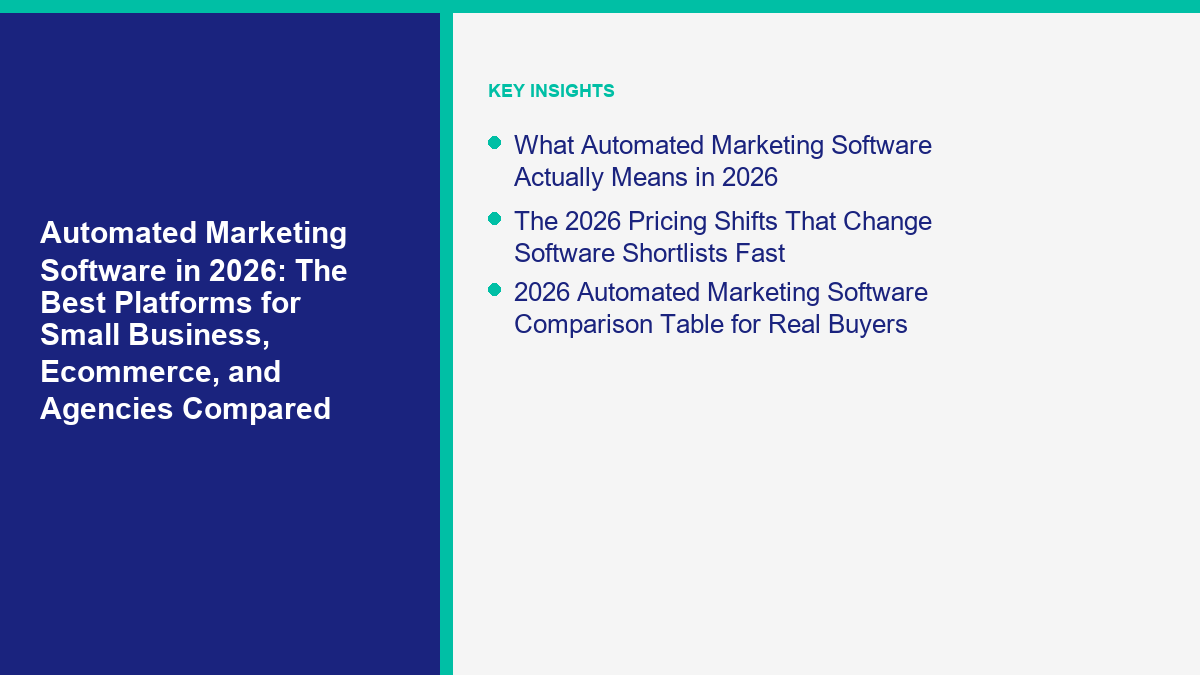
到2026年,大多数严肃的堆栈分为三个层次:
- 记录系统。. 这是联系人或客户档案应该存在的地方。HubSpot 和 ActiveCampaign 在这里比 ManyChat 或 MessengerBot 更强大,因为它们旨在管理更广泛的客户历史和生命周期状态。.
- 编排引擎。. 这是工作流层,根据行为决定谁收到哪个电子邮件、短信、任务、细分、评分或后续跟进。ActiveCampaign、HubSpot、Klaviyo 和 Brevo 都在这里发挥作用,尽管深度和定价模型各不相同。.
- 对话捕获层。. 这是潜在客户或客户通过 Messenger、Instagram、网站聊天、评论或网页小部件与您实际交流的地方。ManyChat 和 MessengerBot 在这里最强大,因为它们围绕对话入口和快速响应自动化构建。.
一旦您开始从层次上思考,糟糕的购买决策就变得更容易识别。Klaviyo 在电子商务留存方面表现出色,但如果您的主要问题是 Facebook 页面潜在客户捕获,它并不是最干净的选择。ManyChat 在社交 DM 自动化方面表现优异,但它并不能完全替代以 CRM 为重的中小企业营销自动化设置。MessengerBot 对于 Messenger、Instagram 和网站聊天来说实用且低摩擦,但它并不假装是您整个收入运营数据库。这些区别就是本指南旨在澄清的内容。.
2026 年定价变化迅速改变软件候选名单
The live prices matter, but the structure behind the prices matters just as much. Two tools with the same entry number can become wildly different purchases once you hit real usage.
HubSpot is the easiest example. The Starter promo is attractive, and for a young company that only needs forms, simple nurture, and contact capture, it can be enough. But the buying reality changes the moment you need serious automation depth, advanced reporting, and more mature campaign operations. Professional is still listed at $800 per month and Enterprise at $3,600, with required onboarding fees shown for those upper tiers. That is why HubSpot belongs on a shortlist only when the CRM context itself is valuable, not just because the Starter entry point looks friendly on the page.[2]
ActiveCampaign is showing a clearer mid-market play. Its pricing page is now framed around “autonomous marketing plans,” and the current email pricing starts at $15 for Starter, $37 for Plus on the active discount, $79 for Pro, and $145 for Enterprise at 1,000 contacts, billed annually. That is much more approachable than HubSpot for teams that want real workflow depth without moving into heavier CRM spend. The catch is that it still assumes somebody on the team will actually use the automation builder well.[4]
Klaviyo is now even more explicit about calculator-style pricing. The page is built around profile count, messaging credits, and optional add-ons such as Reviews. The free plan remains useful, but the paid comparison becomes meaningful only when you model real store volume. On April 13, 2026, the live calculator showed $45 per month for email at 1,001 to 1,500 active profiles and 15,000 emails per month before any additional messaging or Reviews spend. That is not a complaint. It is just a reminder that Klaviyo pricing is inseparable from ecommerce scale.[6]
Brevo is still the clean budget option on public pricing. Starter is $9 per month, Standard is $18, Professional is $499, and Enterprise is custom, with free access still available for early-stage users. What matters here is that marketing automation appears at Standard, not the lowest paid tier. That makes Standard the real entry point if you want small business marketing automation rather than just low-cost email sending.[7]
多聊天 is the trickiest one in this list because old and new pricing models overlap in public. The public page still says Free and Pro from $15 per month. The help docs updated in March and April 2026 say newer accounts follow a new structure: Essential at $17, Pro at $39, and Business at $99, each with active-contact limits, user caps, and Inbox seat rules. If you are comparing ManyChat to other automated marketing tools, do not assume somebody else’s screenshot matches the billing logic you will actually see inside your account.[8][9][10][11]
MessengerBot is the least ambiguous of the group. Its pricing page still shows Premium at $19.99 per 30 days, Pro at $49.99, and Agency at $299.99, with the page centered on feature depth rather than contact-band math. If you want the cleanest public price sheet in the conversational layer of this market, 查看MessengerBot定价 and compare it next to the seat-based, contact-based, and profile-based models above before you assume “cheapest” means “easiest to forecast.”[1]
2026 Automated Marketing Software Comparison Table for Real Buyers
This table is built for the buyer who has to choose software that will actually run campaigns, follow-ups, and conversations in production. I am not scoring flashiest AI claims. I am scoring where each platform fits operationally.
| 平台 | Current public pricing signal | 最佳契合 | Main channels and strengths | Main caution |
|---|---|---|---|---|
| HubSpot Marketing Hub | Free; Starter promo from $9 per seat monthly billed annually; Professional $800 per month; Enterprise $3,600 per month[2] | CRM-first small businesses, B2B teams, and operators who need marketing, sales, and service on one customer record | Email, forms, lead management, scoring, automation, campaign reporting, and strong CRM context[3] | Real marketing automation gets expensive fast once you move beyond Starter |
| ActiveCampaign | Starter $15; Plus $37 on current discount; Pro $79; Enterprise $145 at 1,000 contacts, billed annually[4] | Teams that care about workflow depth, segmentation, and lifecycle automation more than big-brand CRM polish | Email automation, site tracking, advanced workflows, CRM add-ons, and optional WhatsApp on Plus or higher[5] | Less natural than HubSpot for full RevOps alignment and less natural than ManyChat or MessengerBot for social chat entry points |
| Klaviyo | Free plan up to 250 active profiles; live calculator showed $45 per month for email at 1,001 to 1,500 profiles[6] | Ecommerce brands that win or lose on retention, repeat purchase, and customer-level revenue segmentation | Email, SMS, WhatsApp, customer hub, reviews, and commerce-focused retention workflows | Pricing scales with active profiles and channel usage, so it is rarely the cheapest option once a store grows |
| Brevo | Free; Starter $9; Standard $18; Professional $499; Enterprise custom[7] | Budget-conscious SMBs that need email, SMS, and some CRM or sales functionality without premium pricing | Email, SMS, landing pages, automation, WhatsApp, and light sales tooling | Reporting and ecommerce intelligence are not as deep as HubSpot or Klaviyo |
| 多聊天 | Public page shows Free and Pro from $15; newer-account docs show Essential $17, Pro $39, Business $99[8][9][10][11] | Creators, local brands, and agencies where social DMs are part of the growth engine | Instagram, Facebook Messenger, TikTok, WhatsApp, SMS, and email with strong social automation DNA | Not the right system of record for deeper CRM, lead scoring, or revenue attribution |
| MessengerBot | Premium $19.99 per 30 days; Pro $49.99; Agency $299.99[1] | Businesses that mainly need Facebook Messenger, Instagram, and website chat automation tied to practical lead capture | Visual flows, web chat, WooCommerce, Google Sheets, email and SMS features, Meta-first automation | Best used as the conversational layer in a broader stack, not as a full CRM replacement |
The simplest way to read that table is this: HubSpot is the full operating system, ActiveCampaign is the workflow specialist, Klaviyo is the ecommerce retention engine, Brevo is the budget all-rounder, 多聊天 is the social DM machine, and MessengerBot is the practical Meta-plus-webchat layer. The wrong purchase usually happens when a buyer falls in love with one layer and silently expects it to do all the others too.
HubSpot Is the Right Buy When CRM Context Matters More Than Cheap Automation
HubSpot keeps earning its place on these lists for one reason: when marketing, sales, and service all need to reference the same customer history, it is still one of the cleanest systems to run. That is the real reason to buy HubSpot. Not because it has a cheap Starter tier. Not because the interface is familiar. Because it reduces the number of places your team has to look before deciding what to do next.
The pricing page makes the ladder clear. Starter is inexpensive enough to test. Professional is the first serious marketing tier at $800 per month. Enterprise is priced for organizations with much broader governance needs. HubSpot also keeps leaning into lead management and scoring, which matters for teams that need to prioritize and route leads rather than just dump everyone into the same email sequence. Its lead management positioning is still very explicit about centralizing lead history and automatically prioritizing high-value prospects with scoring.[2][3]
That makes HubSpot strongest in a few specific environments:
- B2B companies with longer sales cycles. If your follow-up path involves forms, email nurture, handoff to reps, lifecycle stages, and multiple touches before close, CRM context is worth paying for.
- Service businesses with inside sales teams. If marketing is generating appointments or consultations and sales still has to qualify and close, HubSpot’s contact record matters more than a pure campaign tool.
- Operations-led teams. If your real pain is scattered data rather than lack of campaign ideas, HubSpot usually fixes the bigger problem.
Where buyers go wrong is assuming HubSpot is automatically the best small business marketing automation choice because it offers a free tier and a Starter plan. For many small teams, the first useful automation layer is not a huge CRM. It is fast lead capture, a sane nurture sequence, and a reliable way to stop dropping Messenger, Instagram, or website conversations on the floor. If that is your actual bottleneck, HubSpot can be too much system before you have enough process.
My rule is simple. Buy HubSpot when customer context and team coordination are the real differentiators. Skip it, or start lighter, when you mainly need campaign delivery and faster response automation. Plenty of businesses spend HubSpot money when what they actually needed was cleaner front-end capture plus one disciplined automation owner.
ActiveCampaign Is Still the Strongest Mid-Market Workflow Engine for Teams That Actually Use Automation
ActiveCampaign still occupies one of the most useful spots in the market. It is not as lightweight as Brevo. It is not as CRM-dominant as HubSpot. It is not as ecommerce-specific as Klaviyo. What it does exceptionally well is give operators a serious workflow engine without forcing them into top-tier enterprise pricing on day one.
The current public page is blunt: Starter is $15 per month, Plus is $37 per month on the active discount, Pro is $79, and Enterprise is $145 at 1,000 email contacts, billed annually. The product language leans hard into automation, segmentation, AI assistance, and cross-channel orchestration. If you want WhatsApp inside ActiveCampaign, the current help docs say you need Plus, Professional, or Enterprise for the add-on. That alone tells you where the product sees its value: not as a toy autoresponder, but as a real orchestration tool for teams that expect more than one trigger and more than one channel.[4][5]
ActiveCampaign is especially good when the business has a clear lead journey and somebody technical enough to map it. Think of sequences like these:
- A quote request comes in, gets tagged by service type, enters a nurture path, and triggers follow-up tasks if the lead does not book.
- An ebook lead converts into a webinar registrant, then a trial user, then a sales-qualified lead with different messaging at each stage.
- A customer visits pricing pages repeatedly, gets scored higher, receives different case studies, and is routed differently once intent crosses a threshold.
That is where ActiveCampaign earns its keep. It is a builder’s platform in the best sense. It rewards teams that want to define logic clearly and actually run lifecycle marketing deliberately. It is not the platform I would choose if the main job is comment-to-DM automation on Instagram or Facebook Messenger lead capture. You can integrate toward those workflows, but they are not the heart of the product.
This is also why ActiveCampaign pairs well with a conversational front end. If your real inbound traffic starts on Meta channels or website chat, let something like MessengerBot or ManyChat own the first conversation, then push structured data into ActiveCampaign for the nurture, tagging, and reactivation layer. That division of labor is usually cleaner than forcing one platform to do a job it was never optimized to do.
Klaviyo Is the Ecommerce Specialist, and That Is Exactly Why It Wins for Many Stores
Klaviyo is not trying to be a generic marketing automation platform for every type of business, and that focus is one reason it stays so strong. If your growth model depends on repeat purchase, cart recovery, browse abandonment, replenishment reminders, product education, customer segmentation, and revenue-based decision making, Klaviyo still feels like a product built for your actual economics instead of a general-purpose compromise.
The current pricing page reinforces that. The free plan remains real, with up to 250 active profiles, 500 emails per month, and 150 mobile message credits. But the paid side is clearly modeled around store scale. On April 13, 2026, the live calculator showed a marketing plan total of $45 per month for email at 1,001 to 1,500 active profiles, plus optional messaging costs and add-ons such as Reviews, which the page showed at $25 for 250 orders per month in the default builder state.[6]
That pricing behavior is exactly why Klaviyo is so good for ecommerce and so awkward for everyone else. If you are a Shopify or WooCommerce brand with real order volume, profile-based pricing often makes sense because customer behavior drives revenue directly. If you are a local service business, a small agency, or a B2B consultant, you may be paying for a commerce brain you are not going to use fully.
I would choose Klaviyo when at least three of these are true:
- Your revenue depends heavily on repeat purchase and retention flows.
- Your ecommerce data needs to shape marketing logic constantly.
- SMS and email need to work together with strong customer segmentation.
- You care about revenue attribution at the campaign and profile level.
- Your store team already thinks in flows like welcome, browse abandon, cart abandon, win-back, post-purchase, and VIP.
I would not choose Klaviyo first for a general service business, a local company with low contact volume, or an agency that mainly needs a flexible client automation engine across very different business models. In those cases, Brevo or ActiveCampaign is usually the more practical core platform, and a conversational tool can handle the Messenger, Instagram, or website chat side.
Brevo Remains the Best Budget-Friendly Marketing Automation Platform for Small Teams
Brevo keeps winning the same argument year after year: a lot of small businesses need automation that works, not a stack that looks impressive in a procurement meeting. That is why Brevo remains one of the most useful answers to the “what should a small team actually buy first?” question.
The current pricing structure is unusually readable. There is still a free starting point. Starter is $9 per month. Standard is $18 per month. Professional is $499. Enterprise is custom. The page also makes the feature breakpoints clearer than many competitors. Starter is about getting email and multi-channel basics live. Standard is where marketing automation, A/B testing, more advanced reporting, AI send-time optimization, tracking, and landing pages appear. Professional jumps into contact scoring, more AI features, broader channel support, and more team access.[7]
That means the practical recommendation is simple: if you genuinely want small business marketing automation, Standard is usually the first Brevo tier worth serious consideration. Starter is fine if the business mainly needs better newsletter delivery and a cleaner low-cost platform. But if the goal is automation, Standard is where the platform starts behaving like an actual automation platform.
Brevo is especially good for:
- Local businesses that need email, SMS, landing pages, and a basic automation engine without enterprise pricing.
- Agencies and freelancers that need a lower-cost stack for smaller clients who are not ready for HubSpot or Klaviyo budgets.
- SMBs with mixed channels where email, SMS, and a small CRM or sales layer need to live together without too much setup overhead.
The tradeoff is sophistication. Brevo is not where I would go first for deep B2B lead scoring and RevOps alignment. It is not where I would go first for high-end ecommerce retention intelligence either. Its strength is practical coverage at a price point smaller teams can defend. For a lot of owners, that is exactly the right answer.
ManyChat Is Still Excellent for Social DM Automation, but It Is Not Your Whole Marketing Stack
ManyChat deserves a place in any 2026 comparison because social DMs are now real revenue channels for a lot of brands, and ManyChat still understands that world better than most traditional email-first platforms do. If your funnel depends on Instagram comment triggers, story replies, Facebook Messenger automation, TikTok engagement, or WhatsApp follow-up, ManyChat is still one of the first tools worth opening.
The important nuance is pricing. ManyChat’s public pricing page still markets Free and Pro from $15 per month. Its March and April 2026 help docs say new accounts can now land on a more explicit ladder: Essential at $17 per month with up to 250 active contacts, Pro at $39 with up to 2,500 active contacts, and Business at $99 with up to 7,500 active contacts and more team capability. Those same docs are clear that the new model rolled out on 2026年3月2日 and currently applies to accounts created on or after that date, while older accounts may still see legacy billing.[8][9][10][11]
That explains why ManyChat buyers get confused. You can find a live public page saying one thing and official help docs saying another because both are true for different account cohorts. So the right way to buy ManyChat is not to argue about which screenshot is “correct.” The right way is to look at the account date, active-contact model, channel needs, and Inbox-seat math you will personally face.
Operationally, ManyChat is strongest when:
- The business gets meaningful demand from Instagram, Facebook Messenger, or creator-style social engagement.
- You need fast social lead capture, qualification, and re-engagement rather than a heavyweight CRM.
- The first job of automation is moving people from public interaction into private conversation.
- You want a polished builder for DM funnels and do not mind modeling active-contact growth carefully.
Where ManyChat is weaker is exactly where classic marketing automation platforms are stronger. It is not the cleanest place to run deeper lifecycle scoring, complex cross-department reporting, or a business-wide source of truth for customer state. That does not make it worse. It just means it should usually be judged as a conversation-driven growth layer, not as the whole stack.
Where MessengerBot Fits in a Real 2026 Marketing Automation Stack
This is the part most comparison posts get wrong. MessengerBot should not be judged as if it is trying to beat HubSpot at CRM or Klaviyo at ecommerce retention. Its job is different. MessengerBot is strongest when the business needs a practical automation layer for Facebook Messenger, Instagram, and website chat, plus the ability to collect lead data, automate responses, hand off to humans, and push that data into the rest of the stack.
The current pricing page still makes that positioning obvious. It leads with Premium, Pro, and Agency at $19.99, $49.99, and $299.99 per 30 days. It also highlights the kinds of features operators actually care about when chat is the frontline layer: visual flow building, website chat, WooCommerce integration, Google Sheets integration, JSON API and Zapier connectivity, email autoresponders, SMS tools, Instagram chatbot features, comment automation, and templated bot workflows.[1]
That makes MessengerBot a strong fit in three recurring scenarios:
- Small businesses that sell through Messenger and website chat. The first win is usually faster response, cleaner lead capture, and fewer missed inquiries outside office hours.
- Ecommerce brands that get heavy pre-purchase questions on Meta channels. Product questions, delivery concerns, offer replies, and comment-driven campaigns all benefit from a dedicated conversational layer.
- Agencies building practical client funnels. The flat public pricing and channel focus make MessengerBot easier to model than more contact-sensitive tools when the client need is specifically Messenger, Instagram, and webchat automation.
The most honest way to buy MessengerBot is to treat it as the front-end conversation and capture layer, not the whole automation brain. Let MessengerBot qualify and route leads in the channels where people actually type first. Then sync those leads into HubSpot, ActiveCampaign, Brevo, or Klaviyo for deeper nurture, CRM history, and reporting. That is usually the cleaner architecture.
If you already know the higher tier is the one that matches your workflow depth, multi-channel usage, or client load, Upgrade to MessengerBot Pro. If you are still deciding where it belongs, the more useful comparison is not “can MessengerBot replace HubSpot?” The more useful question is “does MessengerBot solve the actual moment where leads and customers first talk to us?” In many Meta-heavy businesses, the answer is yes.
The Best Automated Marketing Software by Business Type
Most buyers do not need a grand theory. They need a shorter answer that matches how the business actually makes money. Here is the practical version.
| Business type | Best core platform | Best conversation layer | Why this stack works |
|---|---|---|---|
| Local service business or lean small business | Brevo Standard or HubSpot Starter | MessengerBot | Brevo keeps email and SMS affordable; HubSpot works if CRM context matters more. MessengerBot handles Messenger, Instagram, and website chat capture cleanly. |
| Ecommerce brand | Klaviyo | MessengerBot or ManyChat | Klaviyo owns retention and customer revenue logic. ManyChat is strong for social-first brands. MessengerBot is strong if Meta and website chat are the real support and pre-sales layer. |
| Agency or multi-client operator | ActiveCampaign or HubSpot | MessengerBot or ManyChat | ActiveCampaign gives strong workflow depth for varied client journeys. HubSpot makes sense when CRM alignment is part of the service. Chat tools should be chosen by channel mix, not by habit. |
If I had to make the shortest possible recommendation list for 2026, it would look like this:
- 选择 HubSpot when you need marketing, sales, and service working from one contact record.
- Choose ActiveCampaign when you want the strongest workflow engine without jumping straight to HubSpot-level spend.
- Choose Klaviyo when ecommerce retention is the main growth lever.
- Choose Brevo when price discipline matters and you still need real automation.
- Choose ManyChat when social DMs are the growth engine.
- 选择 MessengerBot when Messenger, Instagram, and website chat are where real conversations start.
The useful nuance is that many businesses should not pick only one name from that list. They should pick one core platform and one conversation layer. That is how you avoid expecting an email tool to behave like a chatbot builder or a social DM tool to behave like a full CRM.
How to Combine Email, CRM, SMS, and Chatbot Automation Without Creating a Mess
Most automation stacks fail for boring reasons. The business buys one platform for email, another for chat, a third for SMS, and a fourth for landing pages, then forgets to decide which one owns the truth. The result is duplicate contacts, conflicting tags, mismatched nurture logic, and a sales team that stops trusting all of it.
The clean version is simpler than most people think:
- Choose one system of record. That is usually HubSpot, ActiveCampaign, Klaviyo, or Brevo. Pick one place where lead status and customer history ultimately live.
- Keep conversation capture close to the channel. Use MessengerBot or ManyChat when the real entry points are Messenger, Instagram, comments, or website chat. Do not make a CRM pretend to be a native social funnel builder if that is not its strength.
- Run nurture from the platform that handles segmentation best. Lifecycle email and SMS should usually live in one core platform, not in three partial tools at once.
- Sync fields, not chaos. Decide which tags, lead statuses, source values, and lifecycle stages actually matter. Sync only the fields sales and reporting will use.
- Write hard handoff rules. Refund disputes, pricing exceptions, enterprise inquiries, and emotionally heated conversations should not become AI improv sessions.
- Review automation failures weekly. The first month tells you where the real data and messaging gaps are.
The architecture is usually cleaner when chat qualifies and captures, and the core marketing platform nurtures, scores, and reports. That is the operating model I would recommend for most small businesses and agencies in 2026. If you need the builder-level steps for the conversation side of that setup, 浏览我们的教程. That is the right next step once you know which flows should live in chat and which should live in your main automation engine.
A 30-Day Rollout Plan for New Marketing Automation Software
The fastest way to waste money on automation is to launch everything at once. The better move is to prove one high-value journey first, then expand. This is the rollout I would use for almost any SMB or agency deployment.
Days 1 to 5: map the first journey before you buy more software
Pick one outcome that actually matters: booked consultation, qualified demo request, recovered cart, reactivated customer, or support deflection on repetitive pre-sales questions. Pull the last 30 to 60 days of real conversations and email history, then write down the top questions, objections, and conversion steps. If the team cannot do that quickly, the problem is not the automation software yet. The problem is that nobody has defined the journey clearly enough.
Days 6 to 10: choose the core platform and the conversation layer separately
This is where a lot of bad purchases happen. Decide which system owns the customer record and which system owns the first conversation. For example, a Shopify brand may choose Klaviyo as the core platform and MessengerBot as the social and website chat layer. A B2B agency may choose ActiveCampaign or HubSpot as the core engine and use chat only where website or social lead capture is genuinely leaking.
Days 11 to 18: build one production-worthy flow, not six test flows
Write one welcome path, one qualification path, one nurture path, and one handoff rule. That is enough for a first release. If you try to build every campaign idea in week two, you will create a brittle system nobody trusts. Keep the first version narrow and measurable.
Days 19 to 24: wire up reporting that can answer three blunt questions
Your dashboard only needs to answer three things at this stage: how many people entered the workflow, how many reached the intended outcome, and where people dropped out. If the software cannot tell you that in a clean way, you are still in setup mode no matter how nice the automation canvas looks.
Days 25 to 30: review failures, not vanity metrics
Open the failed conversations, abandoned forms, unsubscribes, ignored SMS replies, and unqualified leads. That is where the next improvement lives. Most automation wins do not come from writing fancier copy in week one. They come from fixing friction where the audience stalled.
This rollout is intentionally conservative. It is the one that creates real signal instead of internal excitement with no operating discipline behind it.
The Hidden Costs Buyers Miss When Comparing Marketing Automation Platforms
A lot of software comparisons are technically accurate and still useless because they only compare entry prices. Entry price is rarely the real spend driver.
The first hidden cost is volume math. Klaviyo prices around active profiles and messaging. ManyChat’s newer tiers are built around active contacts, seats, and overages. HubSpot layers contacts and higher-tier plan logic. A platform can look cheap on the homepage and become materially different once the business actually grows.[2][6][9][10][11]
The second hidden cost is channel mismatch. Buying HubSpot because it is powerful does not help much if your real problem is slow Messenger replies. Buying ManyChat because it looks fast does not help much if the real issue is weak lifecycle email and no lead scoring. A lot of overspend is simply buying the wrong layer first.
The third hidden cost is team usage. Some platforms only pay off when someone on the team is willing to build logic properly. ActiveCampaign rewards that kind of ownership. HubSpot rewards operating discipline across departments. Klaviyo rewards a store that actually uses retention strategy. Brevo is forgiving, but it still needs a clear owner. MessengerBot and ManyChat are easier to launch conversationally, but they also still need flow review and upkeep.
The fourth hidden cost is duplicate automation. If the welcome email lives in Klaviyo, the promo broadcast lives in Brevo, the abandoned cart lives in the ecommerce app, and the first follow-up lives in the chatbot, nobody really knows which message came first or which one worked. Keep one platform in charge of each kind of automation whenever possible.
The fifth hidden cost is human fallback. A lot of buyers act like automation removes labor entirely. It does not. Good automation usually shifts labor toward higher-value work. Somebody still needs to review failed flows, answer edge cases, and keep the business rules current. If you ignore that, the software looks cheaper on paper than it will feel in practice.
When You Should Not Buy Another Automation Platform Yet
Sometimes the best buying decision is to stop shopping and clean up the basics first.
- Do not buy another platform if your offer, pricing, or qualification rules are still unclear. Automation will only scale confusion faster.
- Do not buy another platform if nobody on the team owns funnel review. A “set it and forget it” mindset is how expensive tools end up half-configured.
- Do not buy another platform if you still cannot name the first journey that should be automated. Start with one workflow, not a vague ambition.
- Do not buy another platform if message volume is low enough that manual follow-up still works well. Software only creates ROI when it removes delay, waste, or missed revenue.
- Do not buy another platform if the business already has three half-used tools doing overlapping jobs. Rationalize first, then expand.
This is why I do not think every company needs a “best all-in-one” answer. Some need one serious platform. Some need a core platform plus a conversation layer. Some just need to stop scattering customer data across too many tools before they add anything new.
Which Platforms I Would Shortlist Today for Small Business, Ecommerce, and Agency Use
If I were buying today, I would shortlist HubSpot for CRM-first B2B or service teams, ActiveCampaign for workflow-heavy lifecycle marketing, Klaviyo for ecommerce retention, Brevo for budget-sensitive SMBs, 多聊天 for social-first DM funnels, and MessengerBot when Facebook Messenger, Instagram, and website chat are the channels where the real conversations start.
The key is not picking a winner in the abstract. It is matching the platform to the part of the customer journey that is actually leaking. If your main leak is conversation response time and lead capture across Meta channels and site chat, the smartest move is often to let a dedicated conversation layer do that job properly, then sync the results into the broader automation stack. If that is your situation, compare the current plans on 查看MessengerBot定价. If you are already committed to the higher tier for multi-channel buildout or client delivery, Upgrade to MessengerBot Pro. And if you implement this type of automation stack for clients and want recurring upside from the tools you recommend, 加入我们的联盟计划.
Sources and Pricing Pages Reviewed
常见问题
2026年适合小型企业的最佳自动化营销软件是什么?
对于许多小型企业来说,最佳的自动化营销软件是能够解决实际瓶颈的那个。如果目标是负担得起的电子邮件、短信和简单的自动化,Brevo通常是最佳选择。如果CRM背景和潜在客户管理很重要,那么HubSpot更强大。如果最大的漏斗是Facebook Messenger、Instagram或网站聊天的响应时间,那么像MessengerBot这样的对话层通常应该在技术栈中,即使另一个平台处理主要的电子邮件和CRM工作。.
如果我主要需要电子邮件自动化和潜在客户培养,HubSpot值得吗?
有时候,但并不总是如此。当共享客户记录、生命周期可见性和潜在客户评分对您的团队销售至关重要时,HubSpot是值得投资的。如果您主要需要强大的工作流程,而不想为更广泛的CRM操作系统付费,ActiveCampaign通常是更具性价比的选择。如果您主要需要低成本的活动自动化,Brevo可能是更明智的首选。.
Klaviyo是否比ActiveCampaign更适合电子商务?
通常是的,如果电子商务留存是业务的中心。Klaviyo 是围绕活跃用户档案、客户收入行为和特定商店的自动化逻辑构建的,因此它通常更适合 DTC 品牌和在线商店。ActiveCampaign 仍然可以用于电子商务,但它的范围更广,且不那么专注于商业。如果商店在重复购买和客户细分方面表现良好,Klaviyo 通常是首个需要认真比较的平台。.
ManyChat或MessengerBot可以替代完整的营销自动化平台吗?
在大多数严肃的设置中不是这样。ManyChat 和 MessengerBot 在 Messenger、Instagram、评论和网站聊天等渠道中作为对话和捕获层最为强大。它们可以自动化营销的有意义部分,但通常不是拥有完整的 CRM、生命周期评分、归因和跨部门客户记录的最佳选择。对于大多数企业来说,更好的架构是一个核心自动化平台加上一个专用的对话层。.
企业在2026年应该为自动化营销工具预算多少?
对于一家精简的小型企业,实用的起始范围通常在每月$100以下,如果您选择像Brevo Standard、MessengerBot Premium或Pro,或者更轻的ActiveCampaign计划。电子商务品牌一旦基于个人资料的定价和短信量变得重要,可以迅速扩大规模。HubSpot可以在Starter阶段以较低的成本开始,但一旦进入Professional或Enterprise阶段,就会成为更大的运营投资。合适的预算与列表价格关系不大,更重要的是平台是否与当前实际导致收入流失的工作流程相匹配。.


 简体中文
简体中文  English
  Tagalog
  العربية
  हिन्दी
  Português do Brasil
  Español de México
  Français
  বাংলা
বাংলা  香港中文
香港中文  繁體中文
繁體中文  Nederlands
  Deutsch
  Bahasa Indonesia
  日本語
日本語  한국어
한국어  Polski
  Русский
  Español
  Tiếng Việt