
如果你在寻找类似ChatGPT的应用,通常并不是在寻找基准图表。你想要的是在不同应用中保持相同的习惯:打开它,输入或说话,上传文件,并在不学习奇怪的新界面的情况下继续对话。.
这就是为什么很多“ChatGPT替代品”汇总错失了要点。有些工具在研究方面更好,有些在编码方面更好,还有些在商业自动化方面更好,但它们并不都 感觉 像ChatGPT,一旦你在应用中实际使用了一周。.
我查看了截至2026年4月11日的当前定价页面、帮助文档和应用列表。如果你想要逐模型的AI比较,请从我们的 类似ChatGPT的AI模型比较. 开始。实际使用中差异很快显现:移动下载、清晰的聊天流程、免费计划、隐私,以及工具在第一天是否感觉熟悉,这些比实验室基准更重要。.
人们在2026年搜索类似ChatGPT的应用时真正想表达的意思
在并排测试这些工具后,相同的模式不断显现。搜索类似ChatGPT的网站、类似ChatGPT的应用或类似ChatGPT的AI应用的人,通常试图解决五个问题中的一个。.
他们想要一个熟悉的界面。. ChatGPT让现代AI聊天框感觉很正常。一个空白的提示字段,一个整洁的线程列表,一个上传按钮,一个语音按钮,以及清晰的后续回复。一个应用程序越是保持这种节奏,就越感觉像“ChatGPT”。.
他们想要一个真正的移动应用,而不仅仅是一个体面的网页。. 这个关键词比旧的“像ChatGPT的AI”话题更具移动意图。很多读者希望有一个可以安装在iPhone或Android上的东西,可以在火车上使用,可以通过语音交流,并且可以信任在桌面上保持相同的线程历史。.
他们想要一个不会立即崩溃的免费计划。. “2026年的”免费”可以意味着一个有用的日常层级,一个有小限制的预告,或者一个在几条消息后就消失的积分钱包。如果你试图替代一个习惯,而不仅仅是尝试一个演示,这就是一个很大的区别。.
他们想要没有OpenAI锁定的ChatGPT。. Sometimes that means a different mainstream app like Claude or Gemini. Sometimes it means a multi-model app like Poe. Sometimes it means a self-hosted front end like Open WebUI, Jan, or LM Studio paired with local Qwen, Llama, or DeepSeek 模型。.
他们想要为不同的工作提供相同的对话风格。. 这就是类别变得混乱的地方。研究人员可能真的想要Perplexity。开发人员可能真的想要Claude加Copilot。企业主可能根本不想要另一个个人AI应用。他们可能想要一个自然对话并将潜在客户推送到CRM的机器人平台。.
最后一点很重要,因为它可以阻止你购买错误的东西。如果你的目标是“另一个AI助手应用程序”,消费者工具占主导地位。如果你的目标是“类似ChatGPT的支持、潜在客户生成或Messenger回复的对话”,那么你更好的下一个点击通常是平台比较或定价页面,而不是另一个通用聊天应用程序。对于更大的购物视角,有用的伴随内容是我们的 ChatGPT替代品购买指南.
与ChatGPT几乎相同的前5款应用程序
如果目标是简单的熟悉感,这些是目前最接近的匹配。.
Claude仍然是最干净的切换,如果你主要想保持相同的聊天习惯
Claude是想要离开ChatGPT但又不想感到迷失的人的最简单推荐。Anthropic提供免费层,Claude Pro每月$20或每年计费的$17,Max层每月$100和$200。 官方定价页面. Anthropic还将Claude定位为可在网页、iOS、Android和桌面上使用,这很重要,因为“感觉像ChatGPT”的测试部分是关于跨设备的连续性。.
为什么它感觉相似: 界面简洁,后续流程强大,文件处理简单,答案仍然处于创造性和实用性之间的有用中间地带。. 它与ChatGPT的不同之处在于: 如果你进行大量长时间的工作,使用限制更容易被注意到,而Claude仍然更像是一个谨慎的写作和思考应用,而不是一个巨大的消费生态系统。.
Gemini感觉像是拥有更好移动语音和相机技巧的ChatGPT
谷歌目前的Gemini帮助文档显示,免费应用程序的上下文窗口为32K,而谷歌AI专业版将其扩展到100万个标记,消费者计划定价页面仍显示谷歌AI专业版在美国的价格为每月$19.99。 Gemini支持 和 谷歌AI计划页面. 谷歌的iPhone帮助页面还确认Gemini移动应用支持文本、语音、图像、相机输入和在iOS和Android上的实时对话。.
为什么它感觉相似: 这仍然是同样的通用“问任何事情”模式,只是下面有一个更深的谷歌层。. 在移动端超越ChatGPT的地方: 相机帮助、谷歌账户关联和实时语音比大多数竞争对手更好地集成。. 它的弱点在于: Google changes packaging often enough that the product can feel less stable to track than ChatGPT or Claude.
Microsoft Copilot Is the Closest Match if Windows Is Already Your Default World
Microsoft still offers a free Copilot tier and Copilot Pro at $20 per user per month, with mobile apps on iOS and Android plus Windows and Mac access through its Copilot product pages 和 Copilot Pro listing. In daily use, Copilot feels closer to ChatGPT than many people admit because the product stays general-purpose. You ask a question, refine it, generate an image, ask for a rewrite, and move on.
为什么它感觉相似: broad assistant behavior, an app-first mainstream design, and a low learning curve. Where it is different: Microsoft pushes you toward Windows, Edge, and Microsoft 365 value faster than ChatGPT does. That is great if those are already your tools. It is less compelling if they are not.
Mistral Le Chat Is the Budget-Friendly Clone That Feels Better Than Its Market Share Suggests
Mistral’s consumer app deserves more attention in English-language roundups. The company has kept Le Chat available on web, iOS, and Android, with Pro at $14.99 per month and a free entry tier on its current Le Chat materials. That lower price matters because it gives you a polished, fast assistant app without asking for the standard $20 jump immediately.
为什么它感觉相似: the chat box is clean, the threading is straightforward, and it behaves like a mainstream assistant instead of a lab experiment. Where it wins: speed, multilingual work, and pricing. Where it trails: smaller ecosystem, fewer integrations, and less consumer mindshare in the US and UK.
Poe Is the Best Fit if What You Really Want Is ChatGPT’s Interface With Fewer Rules
Poe’s latest 官方常见问题解答 says free users get daily points, subscribers get higher point allocations, premium bots, and point pricing at roughly $30 per 1 million pre-purchased points. Poe also sells subscriptions starting at $4.99 per month and supports very long context on some bots. In practice, Poe feels like ChatGPT if ChatGPT let you change its brain every few minutes.
为什么它感觉相似: one clean chat app, strong mobile apps, easy message flow. Why it feels different: it is a control room, not a single assistant. If you want consistency of tone and memory, Claude and Gemini beat it. If you want flexibility, Poe is hard to top.
Those five are the safest starting point if your real question is, “What can I install today that will feel familiar in the first hour?” After that first tier, the list gets more specialized: better research apps, better free apps, better privacy apps, and better self-hosted apps.
Mobile-First ChatGPT Alternatives You Can Actually Download and Use Today
If your search intent is really “I want a ChatGPT-like app on my phone,” the order changes a little. Some tools are average on desktop and much better on mobile. Others are the opposite.
Claude Is the Best iPhone Pick if You Care Most About the Familiar Chat Interface
Claude still feels closest to ChatGPT on iPhone because the app does not overcomplicate the experience. Open the app, type, attach a screenshot, ask for a rewrite, keep moving. If you liked ChatGPT because it felt calm and capable, Claude is the nearest mobile substitute.
Gemini Is the Best Android Pick if Your Phone Is Part of the Workflow
Google’s own mobile documentation makes the case here: Gemini handles voice, images, camera input, and real-time conversations inside the mobile app, and some iPhone features even work before sign-in. If you live in Gmail, Drive, Docs, Maps, and Android, Gemini often feels better than ChatGPT on a phone because the app can actually do more with the rest of your digital life.
Perplexity Is the Best Mobile App for Fast Research, Not Casual Chat
Perplexity does not feel as relaxed as ChatGPT, but it is one of the best apps to keep on your phone because it turns dead time into sourced answers. Its help center currently lists Pro at $20 per month or $200 per year, and Max at $200 per month or $2,000 per year, which tells you exactly what the company is selling: premium research speed and access, not just another free toy.
DeepSeek Is the Most Interesting Pure $0 Mobile App in the Category
DeepSeek’s official app launch notes positioned the iPhone and Android app as free, ad-free, and without in-app purchases. That is rare in this category now. It does not have the smoothest brand or the most polished UX, but if you want an app like ChatGPT that you can download and use without the usual subscription pressure, DeepSeek is one of the first installs worth trying.
Grok, Pi, and Character.AI Are Mobile-First for Very Different Reasons
Grok’s App Store listing currently shows in-app purchases from $10 up to $300, and the Android listing has reached massive install numbers, so there is no question that it has mobile traction. Pi’s Android app has crossed 500K+ downloads and still works best as a voice-first companion. Character.AI’s iPhone app shows nearly half a million ratings and c.ai+ at $9.99 per month or $94.99 per year on the App Store. All three are worth downloading, but only Grok belongs in the “serious ChatGPT substitute” conversation. Pi is better as a companion. Character.AI is better as entertainment.
If you want the shortest shortlist for mobile, use this order: Claude for the closest overall feel, Gemini for the smartest phone-native experience, Perplexity for research, DeepSeek for pure $0 value, and Grok only if you like a faster, looser, more internet-native answer style.
Free Apps Like ChatGPT That Do Not Require a Subscription
There are two honest ways to answer this question.
If you mean “best free app overall,” Claude and Gemini are still the strongest answers. Both have real free tiers, both work on mobile, and both still feel like serious assistant apps instead of demos.
If you mean “best app that stays truly $0 without pushing me toward a subscription on day one,” DeepSeek is the standout. The free app positioning is unusually aggressive, and it feels more usable than most people expect once you stop judging it by branding alone.
If you mean “best free app with live web answers,” Perplexity stays the safest pick. The free plan is narrower than the paid plans, but it still gives you a real reason to keep it installed.
If you mean “best free app for Google-heavy users,” Gemini beats most of the field because the free tier is already practical for documents, questions, and mobile multimodal use.
If you mean “best free app for sampling many models,” Poe wins because its daily points system lets you touch multiple model families without paying upfront.
Qwen deserves a mention here too. Qwen’s official site says Qwen Chat is free to use and available on web, iOS, Android, macOS, and Windows, while the current Qwen3.5-Omni line advertises 256K input context. That makes it one of the more generous free entry points for people who want strong multimodal capability without another $20 bill.
If your real filter is not “free” but “no account,” that is a different list. Use our free AI chat no signup roundup for that narrower use case. If you want the broader zero-dollar landscape instead, jump to our guide to the 最佳免费AI聊天机器人. Those two topics overlap, but they are not the same thing.
One practical warning: free plans in this category change faster than almost any other software pricing in consumer tech. That is why I cross-checked public plan details as of April 11, 2026. If a tool matters to your daily workflow, assume the free limits will move and test your real use case before committing.
Open-Source Apps You Can Self-Host That Match ChatGPT Quality
This is where the keyword gets more interesting. If you are looking for apps like ChatGPT but you care about control, you are not really shopping for a new assistant. You are shopping for a front end plus a model stack.
Open WebUI Is the Best Self-Hosted App if You Want the Closest Team-Friendly ChatGPT Clone
Open WebUI calls itself a self-hosted AI platform and says it can connect local or cloud models while keeping data where it belongs. Its public site also claims 282 million downloads and a community of more than 339,000 builders. In practice, Open WebUI is the cleanest answer for teams who want a browser-based ChatGPT-like shell, user accounts, shared workflows, and the freedom to swap between Ollama, OpenAI-compatible APIs, Anthropic, or other back ends.
The catch is simple: the interface can match ChatGPT quality, but the actual answer quality still depends on the model you connect. Pair it with a strong local Qwen or DeepSeek setup and it feels shockingly good. Pair it with a weak model and no front end can save it.
Jan Is the Easiest Desktop-First Offline Clone for People Who Want a Real App
Jan positions itself as a free, open-source ChatGPT alternative, and the project says it has passed 5.4 million downloads. That matters because Jan is one of the few local-first AI apps that actually feels like an app, not a developer utility. You install it, pull a local model, and start chatting.
Jan is the best answer for people asking, “Can I get something that looks like ChatGPT without sending everything to a cloud vendor?” If you want local privacy with the lowest setup pain, Jan is a better first stop than building a self-host stack from scratch.
LM Studio Is the Strongest Pick if Offline Matters More Than Sync
LM Studio’s documentation keeps pushing the same core value: install the desktop app, download models, run chat locally, and even expose a local server if you want other tools to talk to it. It supports Windows, macOS, and Linux, and the CLI ships with the app. That makes LM Studio the practical pick for people who want a polished local interface without turning their laptop into a weekend DevOps project.
The tradeoff is obvious. LM Studio is great offline. It is not great if you expect the cloud conveniences that make ChatGPT feel effortless across phone, browser, and desktop.
If you want the shortest honest version, here it is: Open WebUI is the best self-hosted browser clone, Jan is the best local desktop clone, and LM Studio is the best offline-first local app. They can absolutely match ChatGPT’s feel. Matching ChatGPT’s 高质量 depends on the model you plug in.
Apps That Beat ChatGPT for Specific Use Cases (Coding, Research, Writing)
Some apps are not the closest clones. They still deserve a place on your phone or desktop because they beat ChatGPT at one job.
For Coding, Claude and Copilot Beat Most Pure Chat Apps
Claude is still the best “chat tab for hard coding questions” because it handles long pasted files, code review logic, and architecture discussion better than most consumer competitors. Copilot wins when your real workflow lives inside Windows, GitHub, VS Code, or Microsoft 365 instead of a standalone browser tab. DeepSeek also deserves credit here because it is a very cheap-feeling way to get solid coding help without a premium subscription.
For Research, Perplexity and You.com Are Better Tools Than a Pure Chat Clone
Perplexity wins because it shows sources as part of the interface. That changes behavior. You stop trusting vibes and start checking links. You.com comes from a different angle: its plans page says Pro includes access to premium AI models, file uploads, real-time web answers, custom agents, and iOS and Android access. If you want more of an agent workspace than a simple chat box, You.com can save more time than a stricter ChatGPT-style clone.
For Writing, Claude Still Has the Cleanest Default Voice
ChatGPT is still strong for idea generation volume. Claude is still better when sentence-level control matters. Gemini is close if you want faster access to your Google docs, notes, and drafts. Mistral Le Chat is the underrated pick if you want a lower-priced second opinion that writes cleanly and quickly without feeling bloated.
If you are shopping by task rather than similarity, do not force everything into one winner. A lot of serious users now keep one “closest ChatGPT replacement” app and one specialist app beside it. That is often a smarter setup than trying to make one tool win every category.
Privacy-First Apps Like ChatGPT That Do Not Train on Your Data
This section is where marketing language gets slippery, so the honest answer needs to be blunt. The strongest privacy answer is still local or self-hosted AI.
Jan, LM Studio, 和 Open WebUI are the cleanest recommendations when you want your prompts to stay in your own environment. With Jan or LM Studio, you can run everything locally. With Open WebUI, you can self-host the interface and decide whether the model back end is local, private cloud, or a normal vendor API.
You.com Max is the most notable cloud example in this roundup because its official upgrade page explicitly advertises zero data retention and no model training on that tier. That is not the same thing as local AI, but it is more explicit than most consumer offerings.
What I would 不 do is assume that a free consumer app is privacy-first just because it is cheap or because it has a clean interface. DeepSeek is interesting for value. Grok is interesting for speed and internet-native answers. Neither is the first answer I would give to a privacy-sensitive user. If privacy is the actual requirement, stop picking by vibes and pick by deployment model.
That sounds less fun than ranking apps by personality, but it is the right technical answer. A local Qwen or Llama setup inside Jan, LM Studio, or Open WebUI is the clearest route if you want ChatGPT-like conversation without handing your raw prompts to another cloud vendor.
Business-Focused Apps That Offer ChatGPT-Like Conversations Plus CRM Integration
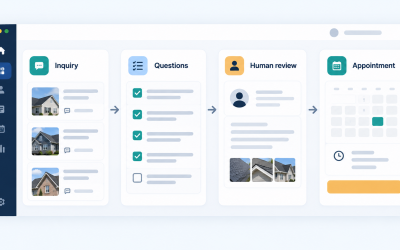
This is the point where a lot of business owners realize they were using the wrong keyword. If what you actually want is AI that chats naturally 和 captures leads, answers FAQs, routes messages, and updates customer records, you do not need another personal assistant app. You need a business conversation platform.
MessengerBot Is the Better Fit if the Goal Is Messenger Conversations That Turn Into Leads
MessengerBot belongs in this conversation because plenty of teams do not need a smarter solo chatbot tab. They need automated Messenger conversations, persistent follow-up, lead capture, and business workflows. That is where a platform like MessengerBot beats a pure consumer AI app. If you want to compare the business side directly, 查看MessengerBot定价 and judge it against the manual work you are currently doing in Messenger, Instagram, or live chat.
Intercom Is Strong if You Need AI Replies Inside a Support Stack
Intercom’s current pricing pages start at $39 per seat per month for the Essential plan, with Fin AI Copilot from $29 per agent per month. That is a different purchase from Claude or Gemini. You are paying for support workflows, inboxes, routing, team handoff, and customer context, not just a clever answer box. If your team already lives in a support desk, Intercom makes more sense than trying to duct-tape a consumer AI app into your help queue.
Manychat Still Matters if Your Real Channels Are Instagram, WhatsApp, and Messenger
Manychat is still one of the first names businesses test for conversational automation, especially for creators and ecommerce brands. The company introduced a new pricing model on March 2, 2026, and its own help docs note that plan availability can vary by region and account age. That is annoying for simple price-shopping, but it also tells you Manychat is selling channel automation and contact management, not just a generic AI chat screen.
The practical rule is simple: if you want a personal AI app, stay in the consumer list. If you want conversational AI tied to lead capture, follow-up, or CRM history, stop trying to force Claude, Gemini, or ChatGPT into a customer-service role they were not designed to own alone.
Honest Comparison Table: 15 Apps Ranked by How ChatGPT-Like They Feel
This ranking is about product feel, not raw model IQ. A lower-ranked app may still be the smarter choice for your exact workload. Prices and availability were checked against public product pages, help docs, and app listings as of April 11, 2026.
| 排名 | App | How ChatGPT-like it feels | Public pricing | Where it runs best | Best reason to pick it | 主要问题 |
|---|---|---|---|---|---|---|
| 1 | Claude | 9.8/10 | Free; Pro $20/mo or $17/mo billed annually; Max $100/$200 source | Web, iPhone, Android, desktop | Closest all-around replacement for the ChatGPT habit | Heavy users hit limits faster than they expect |
| 2 | 双子星 | 9.5/10 | Free; Google AI Pro $19.99/mo source | Android, iPhone, web | Best mobile multimodal experience with Google integration | Packaging and feature names change a lot |
| 3 | 微软Copilot | 9.1/10 | Free; Pro $20/user/mo source | Windows, web, iPhone, Android, Mac | Feels familiar and fits naturally into Microsoft workflows | Best value shows up only if you already use Microsoft heavily |
| 4 | Mistral Le Chat | 8.9/10 | Free; Pro $14.99/mo | Web, iPhone, Android | Cheaper polished assistant with very fast responses | Smaller ecosystem and lower mainstream visibility |
| 5 | Poe | 8.7/10 | Free daily points; paid plans from $4.99/mo source | Web, iPhone, Android | One app for many frontier models | Feels less like one consistent assistant |
| 6 | Perplexity | 8.4/10 | Free; Pro $20/mo or $200/yr; Max $200/mo or $2,000/yr source | Web, iPhone, Android | Best research app with visible citations | Feels more like research software than a relaxed chat app |
| 7 | DeepSeek | 8.1/10 | Free app and web access | Web, iPhone, Android | Best pure $0 value for everyday chat and coding | Polish and trust still trail the top tier |
| 8 | You.com | 7.9/10 | Free; Pro from $15/mo billed annually; Max from $175/mo billed annually source | Web, iPhone, Android | Useful mix of live web answers and agent-style tools | Feels more like a workspace than a pure chat clone |
| 9 | Grok | 7.6/10 | Free app; premium tiers from $10 via in-app purchase and higher X Premium tiers | iPhone, Android, web | Fast, current, internet-native answers | Tone is looser and less steady than ChatGPT |
| 10 | Qwen Chat | 7.4/10 | Free to use; API pricing varies by model | Web, iPhone, Android, macOS, Windows | Strong free multimodal app with open-model upside | Consumer polish still lags the mainstream leaders |
| 11 | Pi | 7.0/10 | 免费 | iPhone, Android, web | Best voice-first companion feel | Weak for research, files, and serious work |
| 12 | Character.AI | 6.8/10 | Free; c.ai+ $9.99/mo or $94.99/yr source | iPhone, Android, web | Great for roleplay, long casual chats, and personality | Not reliable enough for work-heavy use |
| 13 | Jan | 6.5/10 | Free and open source | Windows, macOS, Linux | Best local desktop app that still feels approachable | No seamless phone-first experience |
| 14 | LM Studio | 6.2/10 | Local desktop app | Windows, macOS, Linux | Best offline-first setup without heavy self-hosting work | Not built around cross-device cloud sync |
| 15 | Open WebUI | 6.0/10 | Self-hosted platform | Browser, local server, private cloud | Best self-hosted browser clone with real team potential | Requires setup and depends heavily on model choice |
The pattern in that table is straightforward. The closer an app stays to the mainstream consumer assistant formula, the higher it ranks. The more it turns into a research engine, model router, local tool, or entertainment app, the less ChatGPT-like it feels even if it is excellent on its own terms.
Which App to Pick Based on What You Actually Want to Do
If you do not want to overthink this, use the shortlist below.
- Pick Claude if you want the closest all-around replacement for ChatGPT.
- Pick Gemini if you want the best phone-native experience and you already live in Google’s ecosystem.
- Pick Copilot if Windows and Microsoft 365 already run your day.
- Pick Mistral Le Chat if you want a cheaper polished assistant that still feels mainstream.
- Pick Poe if you want one app that can switch between many model families.
- Pick Perplexity if the real job is research, citations, and current information.
- 选择 DeepSeek if you want the strongest zero-dollar value.
- Pick Jan or LM Studio if offline use matters more than cloud sync.
- Pick Open WebUI if privacy and self-hosting matter more than zero setup.
- Pick MessengerBot if what you actually need is business conversation automation, not another personal AI assistant.
Before you install or pay for anything, run this five-step filter:
- Decide whether you want a clone, a specialist, or a self-hosted app. Those are different purchases.
- Decide whether the phone matters more than the browser. If yes, Claude, Gemini, Perplexity, and DeepSeek move up.
- Run one real task through three apps. Use your actual document, actual coding problem, or actual research question, not a toy prompt.
- Check whether privacy is a preference or a hard requirement. If it is hard, move straight to Jan, LM Studio, or Open WebUI.
- Check whether your real job is customer conversations. If yes, stop shopping consumer assistant apps and compare business platforms instead.
The biggest mistake in this market is using the wrong category for the job. ChatGPT-like consumer apps are great for thinking, writing, search, and everyday help. They are not automatically the best answer for customer support, lead qualification, or CRM-linked automation.
If your real goal is AI-powered customer conversations on channels you already own, compare app-like assistants against actual automation software and 查看MessengerBot定价. That is the faster route to deciding whether you need another chat app or a platform that can capture, qualify, and follow up with leads.
常见问题
2026年有什么免费的类似ChatGPT的最佳应用程序?
对于大多数人来说,Claude 是 2026 年最好的类似 ChatGPT 的免费应用,因为它仍然为您提供了最接近的干净聊天流、强大的写作和有用的日常答案,而无需先付费。如果您的优先事项是在 $0 保持较少的订阅压力,DeepSeek 是最具价值的选择。.
哪款移动应用在 iPhone 上最像 ChatGPT?
Claude 在 iPhone 上最像 ChatGPT,因为界面保持简单,谈话流程立即让人感到熟悉。只有在语音、相机输入和 Google 集成比纯粹的相似性更重要时,Gemini 才是更好的 iPhone 选择。.
有没有像 ChatGPT 一样可以离线使用的应用程序?
是的。Jan 和 LM Studio 是最简单的桌面应用程序,可以让您离线运行本地模型,而 Open WebUI 如果连接到本地后端也可以做到这一点。权衡之下,离线应用程序通常放弃了您从云助手那里获得的轻松同步和移动便利性。.
我需要为像 ChatGPT 这样的应用付费吗?
不,Claude、Gemini、Copilot、DeepSeek、Qwen、Pi、Character.AI、Poe 和 Perplexity 都以某种形式提供可用的免费访问。付费通常会让你获得更高的限制、更强的模型、更长的上下文窗口或像研究工具和更好的记忆这样的高级功能。.
哪些类似 ChatGPT 的应用程序最适合商业使用?
如果您指的是与潜在客户或支持工作流程相关的客户对话,MessengerBot、Intercom 和 Manychat 比消费者 AI 应用程序更适合商业选择。如果您指的是员工的个人助理,Claude、Gemini 和 Copilot 是更好的起点。.


 简体中文
简体中文  English
  Tagalog
  العربية
  हिन्दी
  Português do Brasil
  Español de México
  Français
  বাংলা
বাংলা  香港中文
香港中文  繁體中文
繁體中文  Nederlands
  Deutsch
  Bahasa Indonesia
  日本語
日本語  한국어
한국어  Polski
  Русский
  Español
  Tiếng Việt