
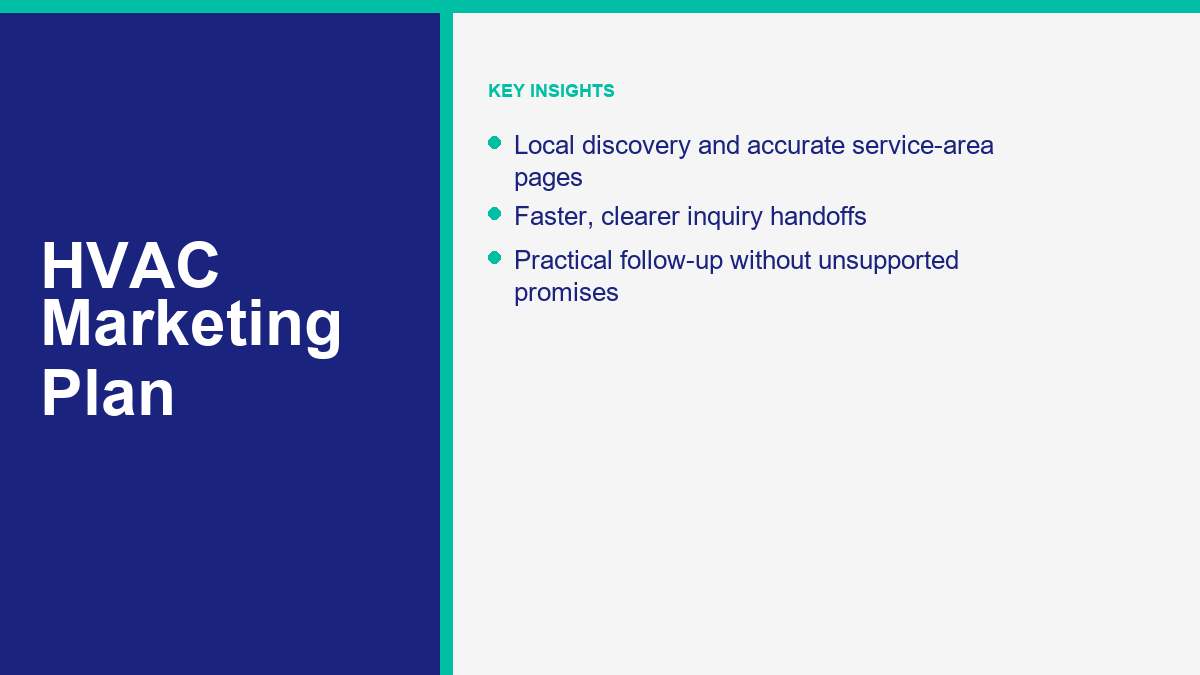
An HVAC inquiry needs a clear next step: can your team serve this location, who will review the request, and how will the customer know an appointment is confirmed? A practical HVAC marketing plan connects local discovery with that response process. It should help a homeowner request service without implying that a message has reserved a technician or that an advertised response time applies outside your actual coverage hours.
這個 American Marketing Association’s marketing definition treats marketing as creating and communicating valuable offerings, not simply advertising. For a local heating and cooling contractor, the useful question is what happens between someone discovering your business and your team agreeing on the next step. This plan covers service-area information, intake questions, human booking handoffs and a measurement loop. Use it to review one inquiry path first, then extend the parts your team can reliably support.
Make Lead Response Part of Your HVAC Marketing Plan
Search visibility, advertising and social posts can introduce a homeowner to your business. They do not establish that someone has read an inquiry or that a service appointment is available. Review discovery and response separately: which pages attract relevant visitors, which contact options they use, and whether each request reaches a named team member. A traffic increase and a completed booking are different outcomes.
Start with a sample of recent inquiries from the channels your office actually uses. Note when the inquiry arrived, whether an acknowledgement was delivered, when a person reviewed it and what happened next. Our guide to speed to lead response time helps distinguish these stages. Do not combine automated acknowledgement time with human response time in one average. Compare business hours and after-hours requests separately so a shorter reported response time does not hide a long wait for review.
A prompt acknowledgement can make the next step clearer, but it is not a booking confirmation or a technician arrival promise. An after-hours reply should state when the team normally reviews requests, ask only for information needed to route the inquiry, and explain how the customer can reach the appropriate urgent contact. Use the hours and service boundaries your team actually supports. Do not assume that an acknowledgement prevents someone from contacting another contractor, and do not ask a customer to wait for an online response when they need urgent help.
Assign an owner for unanswered requests before increasing promotion. That person needs a review schedule and a fallback when the usual reviewer is absent. Test a sample enquiry through each channel, including outside normal hours, and check what the customer sees. If the response says the office will reply tomorrow, the team must be able to meet that expectation or revise the wording. A reliable next step is more useful than an unsupported claim of instant service.
Keep Local Discovery and Service-Area Information Accurate
Tell people where you can actually provide service. In its service-area guidance, Google recommends specific, accurate areas and generally limits the overall boundary to about two hours of driving from the business base. This is guidance for the business profile, not evidence that a particular drive time causes a ranking penalty. Your own dispatch coverage may be narrower. Check both before advertising a town as covered.
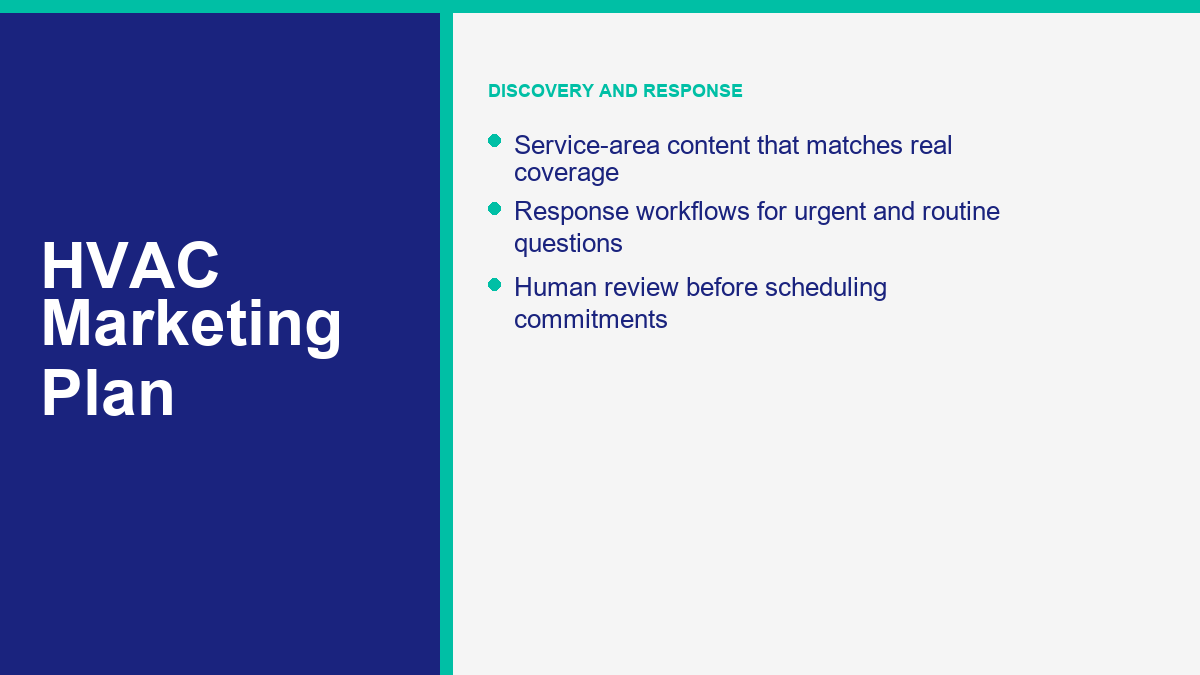
A useful service-area page explains the work you offer in that location, the coverage boundary and how to request a review. Avoid making multiple town pages by swapping place names into identical copy. Include local details only when your operation can substantiate them. For example, a contractor with documented boiler-maintenance work in a town could explain that service; the example does not establish that older homes everywhere use boilers or that your team supports every system.
Keep business hours, phone numbers and service descriptions consistent across the channels you maintain. A visitor should not have to guess whether a form, phone call or message is the correct route. The SBA’s marketing-plan guidance recommends defining the audience, sales process, channels, budget and measurement. Apply that structure to one real service and location rather than promising broad coverage your dispatcher cannot confirm.
Read your page from the customer’s perspective. Can they find the service area without opening several menus? Does the contact option explain what happens after submission? Is urgent-contact guidance distinct from a routine estimate request? Use your current operating information to answer these questions. A service-area page is not permission to promise a diagnosis, final price or arrival window before the appropriate person has reviewed the request.
Use Structured Intake Without Assuming Unverified Integrations
A small HVAC office may manage phone calls, estimate requests and technician questions at the same time. Structured intake gives the reviewer a consistent starting point. Decide which details are necessary for the next decision, which can wait, and who handles an incomplete answer. Do not ask a customer for a long equipment history merely to acknowledge a request. The first exchange should make it easier to reach the right person.
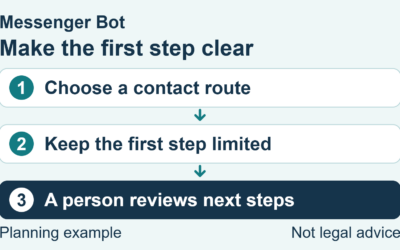
A structured intake workflow can help your front desk organize inquiries. Our lead generation chatbot guide explains how to separate initial questions from a human-reviewed next step. Before relying on any tool, test the questions, opening hours, escalation route and fallback with your team. Automation does not establish continuous availability, correct answers in every case, dispatch approval or a confirmed appointment. A named team member should remain responsible for reviewing requests and resolving exceptions.
Consider this illustrative workflow: a homeowner messages the business through a connected channel, receives a greeting with review hours and provides the location and service requested. Your reviewer checks that information and decides how to respond. Configure and test each part before relying on it. This example does not assume a connection to text messaging, a calendar, ticket creation or dispatch software. The business keeps its own approved contact routes, scheduling records and service information authoritative.
Test the exceptions as carefully as the complete inquiry. Try a missing location, an unsupported service, a repeated message and a request received when the office is closed. Check that the customer is not told a booking exists and that the reviewer has a way to follow up. Record the result using redacted examples rather than putting customer addresses, access codes or private conversations into a general marketing worksheet.
Ask Qualification Questions That Support Human Review
Routine maintenance, a replacement estimate and a request for urgent help need different next steps. Your intake should identify the requested service without trying to diagnose an unsafe condition. Our guide to prioritizing better-fit opportunities is useful for organizing commercial follow-up, but a commercial score must not decide whether someone receives safety guidance. Keep urgent-contact instructions separate from sales prioritization.
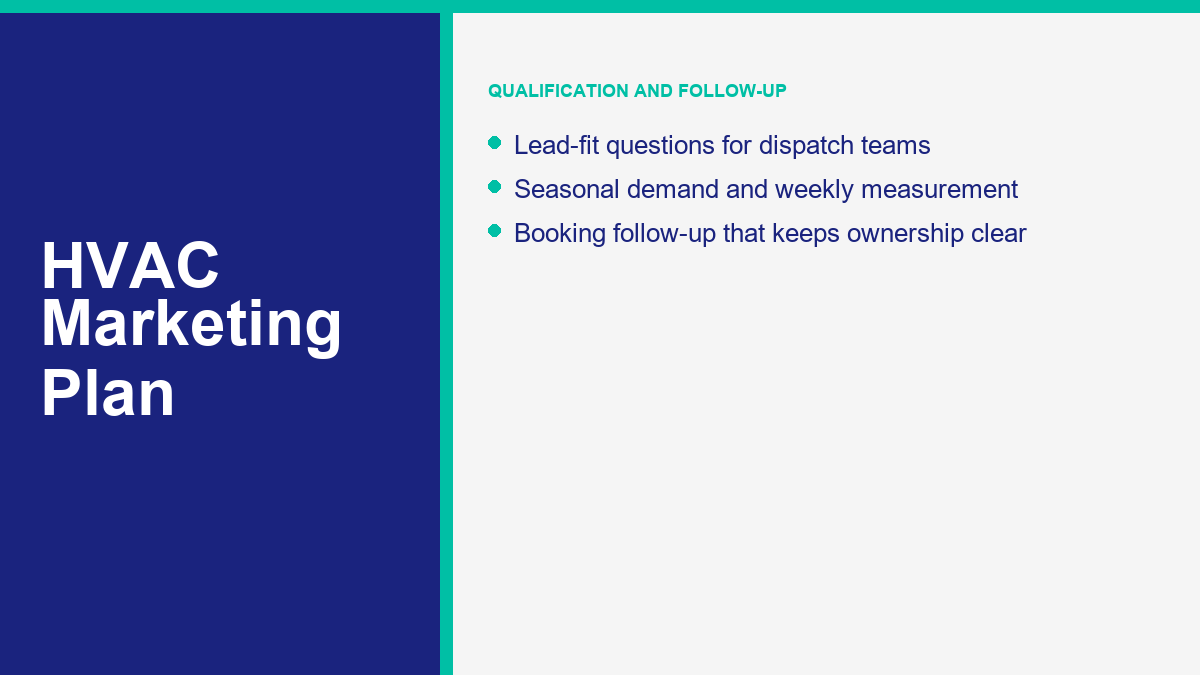
Choose a short set of questions that your reviewer can actually use. These are suggested intake questions, not a tested product configuration or instructions to diagnose equipment:
- Are you requesting maintenance, a repair review or a replacement estimate?
- Which town or postal code needs service?
- Is there an existing appointment your team needs to look up?
- What is the customer’s preferred approved contact method for the next step?
If you propose an automated coverage check, test it against the locations your dispatcher currently supports. An ambiguous postal code should go to review, not silently disappear. If the request is outside coverage, give a respectful explanation of the boundary. Do not promise an immediate urgent-response flag unless the route, recipient and hours have been configured and tested. A message workflow must not replace emergency assistance or ask someone to wait when they need urgent help.
Keep the qualification record modest. Record the service category, coverage decision, review status and contact permission needed for follow-up. Let the dispatcher decide what additional information is necessary. A homeowner who cannot identify the system model still needs a clear response path. Review incomplete inquiries as a separate group so your metrics do not incorrectly treat missing details as proof that someone was not interested.
Separate Booking Requests, Confirmations and Reminders
The handoff should tell the reviewer what has been collected and what still requires confirmation. A request for Tuesday afternoon is a preference, not a reserved appointment. The dispatcher needs to check the service location, the work requested and actual availability before confirming a time. Agree on where the authoritative booking record lives and how the customer is told that the appointment is confirmed. Do not let a friendly acknowledgement obscure this distinction.
Give your team a short handoff note: requested service, coverage checked or unresolved, customer preference, review owner and next action. If a price depends on inspection or additional information, say so rather than inventing a final quote. Check the handoff with a sample request before using it for customer conversations. The person confirming the appointment must have authority to make that commitment in your actual business process.
After confirmation, use appointment reminder templates to communicate the agreed details consistently. Templates alone do not establish fewer no-shows or that a message was sent. Check eligibility, the confirmed time, the permitted contact channel and your stop or rescheduling rules before any follow-up. Keep a changed appointment from receiving an old reminder. A customer’s cancellation or contact preference should reach the responsible team member.
Review reminder failures separately from booking failures. A message may not reach someone even when the appointment record is correct. Your team needs an approved fallback and a way to record what was actually confirmed. Do not interpret a scheduled reminder as a delivered message or a delivered message as customer acknowledgement. This separation helps the office explain the next step without overstating what its records prove.
Match Seasonal Messages to Your Location and Capacity
Choose seasonal messages from your own climate, service mix and current capacity. Summer cooling requests and autumn heating maintenance may be useful examples for some northern locations; they are not a July or October rule for every contractor. Check the services customers are requesting and the work your team can accept. Avoid advertising an emergency response window merely because a seasonal promotion would attract attention.
A short weekly review can connect marketing decisions with the office’s ability to handle inquiries. Use the same questions each week, then record one action and its owner:
- Unanswered inquiries: Which requests are still waiting for review, and who will handle them?
- Seasonal wording: Does the greeting reflect the services and hours currently offered?
- Human response: How long did relevant requests wait during supported review hours?
- Coverage: Are locations being advertised that dispatch cannot currently serve?
- Capacity: Are confirmed appointments, estimates and available technician time being counted separately?
The review can reveal a mismatch between promoted services and available capacity; it does not automatically prevent overspending or prove what caused demand to change. Check the underlying inquiries before adjusting targeting or budget. A quiet week may reflect weather, holidays, a tracking gap or several factors together. Preserve those observations so the next decision does not depend on a single traffic number.
Build a Measurement Loop With Separate Outcomes
Agree on what each stage means before comparing channels. A visit, an acknowledgement, a reviewed inquiry, an appointment and a completed job should not be counted as the same conversion. The following working table is a planning aid. Adapt the record and responsible role to your office; it is not a claim that a particular tool supplies these records automatically.
| Stage | Responsible role | Evidence to check | 這並不證明 |
|---|---|---|---|
| Acknowledged request | Intake reviewer | Request received and acknowledgement status | Human review or availability |
| Reviewed inquiry | Office or dispatcher | Coverage, service category and next action checked | Confirmed appointment |
| Confirmed appointment | Authorized scheduler | Current booking record and confirmation | Completed work or payment |
| Completed job | Service team | Verified completion record | A particular marketing channel caused the sale |
Record the inquiry source consistently, allowing an unknown value when it cannot be established. A customer may discover you in search and later call directly. Do not force that call into a channel merely to complete a report. Use aggregate counts and redacted examples for marketing review; keep private customer details in the approved operational record. Pair source information with review time and the handoff outcome, while noting missing data.
For each reporting window, count unanswered requests and incomplete inquiries as well as confirmed appointments. Compare the same definitions across similar periods. Longer seasonal comparisons can be more useful than treating a one-day movement as a trend. A pattern can suggest where to investigate, but it does not establish a cause on its own. Read the relevant requests and capacity notes before deciding whether visibility, response or booking availability needs attention.
A useful weekly decision names the evidence and the smallest next test. For example, if several covered-location requests have no review owner, fix that handoff and check the next comparable sample. Do not buy more traffic as a substitute for understanding the missing step. If tracking is incomplete, label the outcome unknown instead of reporting zero bookings or a failed channel. Keep the same reporting definition while testing a change.
Write Service Messages That Set Clear Expectations
Good HVAC marketing answers the customer’s immediate question without pretending to know what has not been inspected. A message can acknowledge the discomfort, ask for the basic details needed for review, and explain when a human will look at the conversation. It should not diagnose a dangerous condition, promise an arrival time that has not been confirmed, or quote a final price before the team has the information required to do so.
Use plain language that works for a stressed homeowner. A routine request could say: “Tell us the service you need and the town where the property is located. Our office reviews these requests during the hours shown here. An appointment is confirmed only after our team checks availability.” Replace the example’s hours and contact instructions with your actual process. Do not use routine intake as the route for someone who needs urgent assistance.
Use the same booking boundary wherever the customer contacts you. The FTC’s advertising guidance emphasizes truthful, evidence-supported claims. Check your own support for emergency language, savings, guarantees and response times before publishing them. A disclaimer elsewhere on the page does not make an unsupported service promise useful to a homeowner.
Before publishing a promotion, ask a team member to read it without your explanation. Can they identify the service, coverage, contact route and next step? Then test the actual inquiry path. If the wording and the operational result differ, correct the message or the process before using that claim. Keep the approved example and a review date so seasonal updates do not accidentally restore a promise your team removed.
Choose One Defined Test and Review What Changed
Choose tests that answer one business question. You might test a clearer contact instruction on one service page, or a named review owner for after-hours requests. Write down the intended change, observation period and outcome before starting. When several elements must change together, treat them as one combined workflow test; do not claim that a specific element caused the result. Compare similar periods and note weather, staffing and tracking differences.
Keep a small test record: audience, page or channel, previous wording, changed wording, review owner, success measure and stop condition. A rise in impressions is not enough to claim better bookings. Equally, a quiet week does not establish that an otherwise useful page should be removed. Check qualified inquiries and confirmed work where those records are available, and label missing evidence rather than filling the gap with an estimate.
For an illustrative review exercise, take a redacted routine-maintenance request from a location you serve. Follow its path from the contact option to the reviewer and booking record. Identify the first step with no accountable owner or unclear customer message. Correct that step, then repeat the check with an incomplete request and an after-hours request. This exercise tests the handoff; it does not establish a sales uplift or prove that every future request will be handled correctly.
Keep useful language consistent without copying town pages wholesale. Each location page should reflect real coverage and relevant services. Review proposed changes against the same definitions and approval process, then keep the previous wording so the team can explain what changed. A practical HVAC marketing plan gives you a clearer discovery-to-review path and an honest record of outcomes, not a promise of a particular ranking, income or booking rate.
Managing incoming customer questions for an HVAC business? Start by defining your intake questions, review hours and human booking handoff. Then evaluate whether Messenger Bot fits that conversation process. Check Current Pricing and confirm the channels and features you need before choosing a plan. Keep your dispatcher responsible for availability and final appointment confirmation.
常見問題
How do I promote my HVAC business?
Start with accurate business hours, contact details and service-area information. Make the next step easy to find, then test whether an inquiry reaches the right person. Compare completed inquiries, response times, qualified requests and confirmed appointments separately. Marketing spending does not guarantee a captured lead or a sale. Review which channels produce useful inquiries before changing your budget, and keep message intake distinct from the dispatch team’s decision.
Is HVAC becoming oversaturated?
Competition varies by location, service category, season and customer need. This guide does not establish a national or local saturation level. For your own service area, review the businesses customers actually compare, the requests your team can fulfill and the response experience you currently provide. Use those observations to decide where clearer service information or follow-up could help; do not assume that faster messaging alone will create a competitive advantage.
Why can an HVAC office struggle to handle inquiries?
A particular office may have difficulty when inquiry volume exceeds the people or appointment capacity available to handle it. Check your own records before assigning a cause: missed calls, incomplete forms, duplicate conversations and unconfirmed requests require different responses. Structured intake can support review, but it does not create technician capacity or resolve every scheduling problem. Let the dispatcher decide availability and urgency, and measure whether the changed process improves the handoff.
Does an automated reply confirm an HVAC appointment?
No. An acknowledgement or captured request is not evidence that a dispatcher has approved a time or assigned a technician. State the review step clearly, and tell the customer how an appointment is confirmed in your actual process.
What should an after-hours HVAC reply say?
Give the team’s actual review hours, a clear next step and the appropriate urgent-contact instructions for your service. Do not promise immediate attendance or ask someone to wait for an online reply when they need urgent help. Test the message and fallback before relying on them.


 香港中文
香港中文  English
  Tagalog
  简体中文
简体中文  العربية
  हिन्दी
  Português do Brasil
  Español de México
  Français
  বাংলা
বাংলা  繁體中文
繁體中文  Nederlands
  Deutsch
  Bahasa Indonesia
  日本語
日本語  한국어
한국어  Polski
  Русский
  Español
  Tiếng Việt