
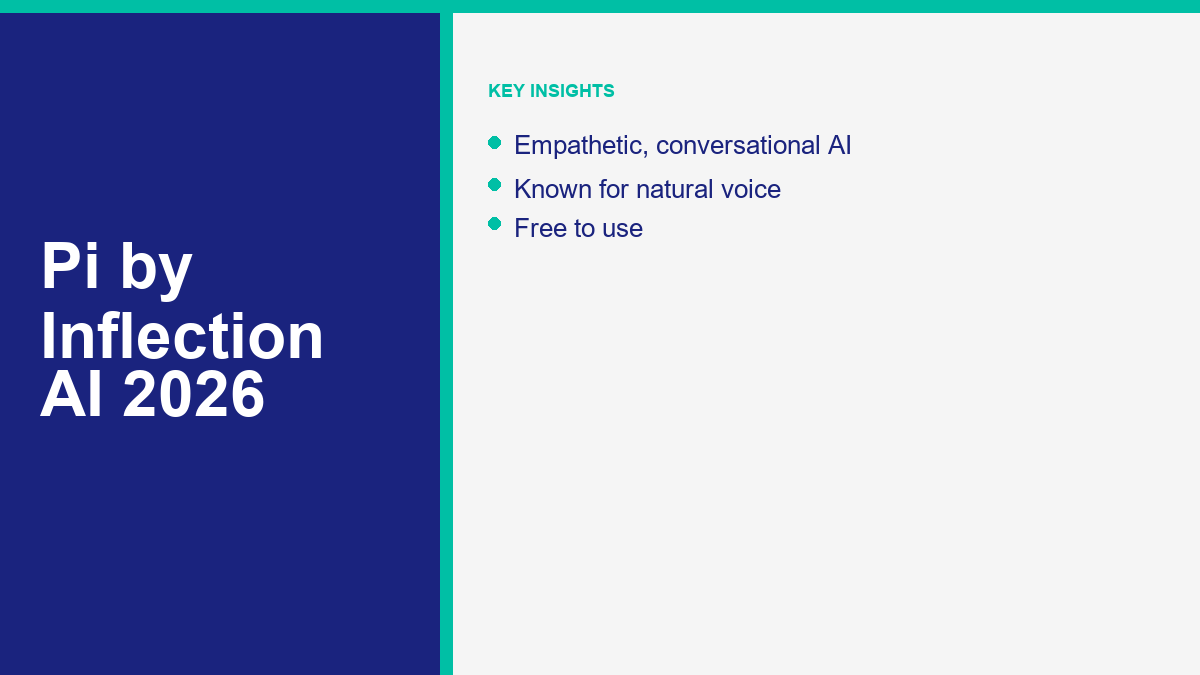
Conversational artificial intelligence has moved beyond simple command-and-response mechanisms. Many developers focus on building systems that serve as virtual search engines, code generation assistants, or corporate document analysis utilities. However, a different philosophy exists in this space: the creation of a supportive, conversational companion designed to listen, discuss, and offer thoughtful dialogue. To address this need, Inflection AI developed Pi, a personal intelligence bot designed for supportive, ongoing dialogue.
Since its public debut, Pi has attracted attention for its realistic voice output, empathetic styling, and refusal to format responses in cold, structured lists. Unlike tools optimized for office work, this assistant prioritizes human-like communication.
As the AI space shifts rapidly, understanding what this application offers, how its development has pivoted, and where it fits in the current software ecosystem of 2026 is essential. This review covers its features, safety protocols, and how it performs compared to other popular tools.
What is Pi by Inflection AI? Empathetic Conversational Assistant
Pi stands for personal intelligence. It is a chatbot designed to be a supportive, kind, and collaborative partner. Inflection AI, a startup co-founded in 2022 by prominent tech figures Mustafa Suleyman, Karén Simonyan, and Reid Hoffman, created Pi. The company aimed to design a technology that did not just retrieve information, but acted as a sounding board for daily thoughts, decisions, and conversations.
The foundation of Pi rests on custom large language models. Inflection AI developed its own proprietary models, including Inflection-1 and Inflection-2, which were trained on massive datasets to prioritize conversational flow and emotional intelligence. Instead of trying to write programming scripts or draft complex legal documents, the developers optimized these models to sound like a supportive friend. This design choice results in replies that feel warm, interactive, and conversational.
Unlike typical virtual assistants, Pi does not default to bulleted summaries or academic explanations. It replies in brief, natural paragraphs and frequently closes its messages with open-ended questions. This keeps the dialogue moving forward, simulating the natural rhythm of text messaging. It is built to help you talk through ideas, practice discussions, organize schedules, or vent about a stressful day.
When Pi was first released, it was positioned as a consumer-centric companion that stood apart from enterprise productivity suites. The company wanted users to build a personal relationship with the AI, using it as an everyday confidant. This early vision shaped the unique user interface, which features warm colors, clean typography, and conversational card structures.
Key Features of Pi: Natural Voice and Empathetic Dialogue
Pi’s feature set focuses heavily on spoken interaction and emotional resonance. The software emphasizes conversational accessibility, making it popular for users who want to talk rather than type.
One of the most notable features of Pi is its natural voice capabilities. Users can choose from six distinct voices, labeled Pi 1 through Pi 6. These voices possess realistic inflections, natural pauses, and emotional nuances, which contrast with typical robotic synthesizers. The voice output is so lifelike that it sounds like you are on a phone call with a human friend. When using the mobile interface, you can enable hands-free voice mode, letting you speak and listen without having to press a button for each exchange.
Another key feature is its supportive, empathetic dialogue style. If you tell Pi that you had a difficult day at work, it does not just list productivity tips. It responds by validating your feelings, asking how you are holding up, and offering gentle encouragement. The underlying model is programmed to avoid cold, analytical jargon, choosing phrases that convey warmth and active listening.
Pi also uses a visual card interface for organizing discussions. Users can create distinct conversational paths, represented as cards on the dashboard. This allows you to keep your creative writing brainstorming, daily reflection, and travel planning in separate threads, preventing the model from confusing different topics. Additionally, Pi offers translation capabilities and basic brainstorming assistance. While it does not excel at complex technical tasks, it can help you write letters, prepare for job interviews through roleplay, or practice a second language. The simple layout makes it easy to interact with, showing only your chat history and a few clean settings.
The Inflection Corporate Pivot and Pi’s Status in 2026
In March 2024, the corporate structure behind this empathetic chatbot underwent a significant transition. Microsoft hired Inflection AI’s co-founders, Mustafa Suleyman and Karén Simonyan, along with a substantial number of their top researchers and software engineers. This team became the foundation of Microsoft AI, a new consumer-focused division within the tech giant. Along with the talent transition, Microsoft paid licensing fees to Inflection AI to utilize its model technology.
Following this shift, Inflection AI pivoted its core business model. The company moved away from active consumer product development to focus on enterprise software solutions, licensing its models, and providing customized conversational AI tools for corporate clients. This corporate redirection directly affected the trajectory of Pi as a consumer product.
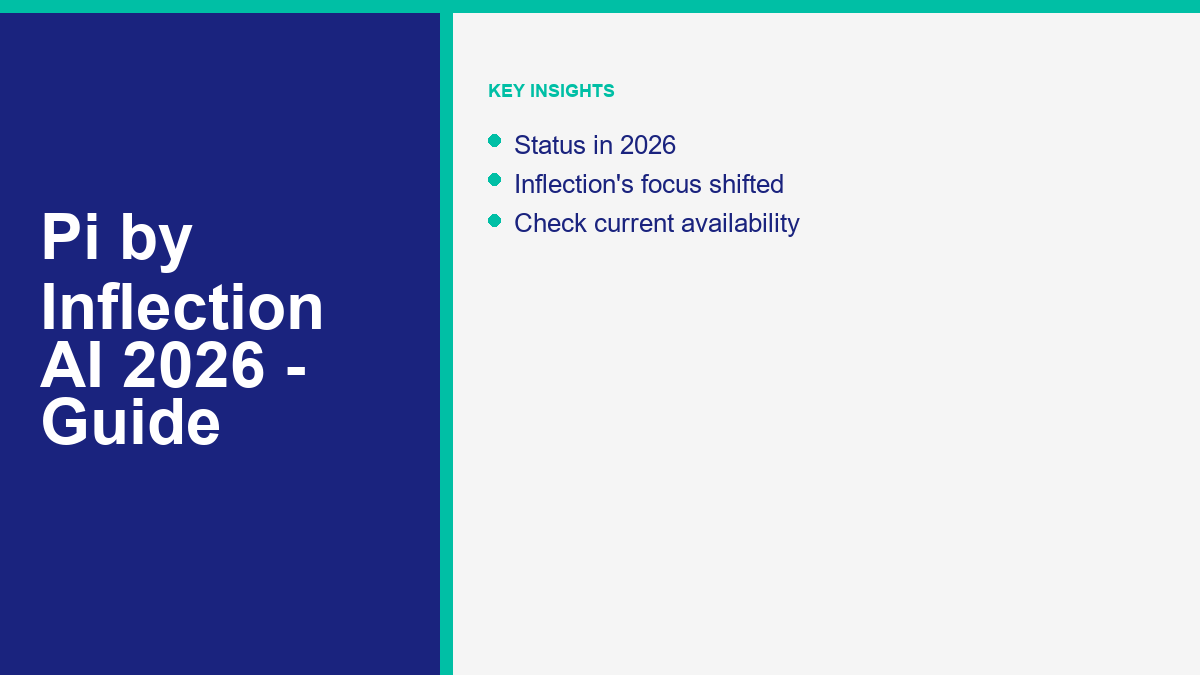
As of 2026, Pi remains online, but its active development has slowed significantly. The consumer-facing platform is largely in a maintenance phase. While you can still access the chatbot and interact with it, you should check its current availability, as long-term support for the free public interface could change. There are no major feature updates expected for the consumer app, and the models power licensing agreements rather than new public features. When you chat with Pi, you are interacting with a legacy showcase of Inflection’s early consumer vision. Keep this in mind when evaluating its capabilities against platforms that receive weekly upgrades.
This corporate pivot highlights the challenge of relying on standalone consumer AI models. Hosting large language models requires massive compute infrastructure and financial resources. Without a clear path to consumer monetization, independent AI startups often struggle to maintain free services. While the partnership with Microsoft kept the underlying technology alive, it redirected the intellectual talent toward enterprise software and proprietary licensing, leaving consumer products like Pi frozen in their current states.
How to Access and Use Pi AI: Web, Mobile, and Interfaces
Accessing Pi is straightforward, though the available channels have shifted over time. The primary way to interact with the assistant is through a standard web browser. By visiting the official web portal at pi.ai, you can start chatting immediately. The browser version is optimized for both desktop and mobile screens, providing a clean, uncluttered interface. To save your chat history and preserve your conversation cards across sessions, you must create a free account using your phone number or email address.
Initially, Inflection AI developed dedicated mobile applications for iOS and Android devices. These apps provided a streamlined interface optimized for voice interactions, allowing users to converse hands-free. However, following the 2024 corporate pivot, the availability of these applications in official app stores has changed. You should check the iOS App Store or Google Play Store to verify if the official Pi app is still downloadable in your region. If the native mobile apps are unavailable, using the responsive web browser version on your phone is the recommended fallback.
Another unique access route was Pi’s integration with popular messaging channels. The service supported text messaging via SMS, WhatsApp, Facebook Messenger, and Apple Messages. Users could save Pi’s designated phone number to their contacts and send text messages directly to the bot. The assistant would reply in the same chat thread, providing access to an empathetic chatbot without requiring a web browser or a dedicated app.
While this multi-channel approach made Pi highly accessible, you must check current availability for these integrations. As the service is maintained as a legacy platform, third-party messaging integrations may experience outages or be discontinued entirely. When planning to use Pi regularly, the official website at pi.ai is your most reliable access point. For those looking for broader automation options across messaging channels, exploring alternative platforms is advisable.
Is Pi Free? Pricing, Access, and the Enterprise Pivot
One of the most appealing aspects of Pi is its accessibility. Since its launch, the chatbot has been entirely free for individual consumers. There are no monthly subscription fees, paywalls for advanced features, or message limits on the free tier.
This pricing structure stands in stark contrast to many modern conversational tools. Many platforms require premium subscriptions, such as ChatGPT Plus or Claude Pro, to access their most advanced models, voice features, or fast response speeds. You can read more about these options in our guide to the 今天可用的最佳免費 AI 聊天機器人:. Pi, however, provides its high-quality voice synthesis and empathetic chatting features without charging a cent.
The business model supporting this free access is linked to Inflection AI’s enterprise pivot. Rather than monetizing individual consumers through monthly fees, the company focuses on business-to-business services. Inflection AI licenses its custom model technology, conversational architecture, and natural language processing capabilities to large corporations, financial institutions, and enterprise partners. The public consumer interface on pi.ai serves as a live demonstration of their technological capability, allowing the public to use it for free while the company generates revenue through commercial licensing.
While this setup means you can use the assistant without a credit card, you must remain aware of the potential risks of relying on a free, pivot-affected platform. Because consumer development is frozen, the service could be restricted or retired if hosting costs exceed the marketing value of the showcase. For critical daily workflows, relying on a platform with active developer support and clear commercial terms is often a safer long-term strategy.
Safety, Privacy, and Limitations: The Therapy Caveat
Understanding the safety rules and data processing practices of any artificial intelligence tool is crucial, especially when discussing personal matters. Pi is designed to be a safe, clean space for conversation, which influences how it handles privacy and interactions.
Inflection AI collects conversational data to maintain your account history and improve its service. The system logs your messages, voice inputs, and feedback to train and refine its language models. If you discuss personal feelings or private life events, this data is stored on the company’s servers. Users should explore the account settings to adjust privacy controls and opt out of data sharing where possible. As with any cloud-based conversational assistant, you should avoid sharing sensitive personal identifiers, financial data, or passwords during your sessions.
A primary limitation of Pi is its styling and model constraints. The assistant is not designed for heavy analytical work. If you ask it to debug a complex script, write software, or perform mathematical calculations, it may struggle or refuse the task. It is also prone to hallucinations when asked for obscure facts or recent news. The platform is not a search engine, and its knowledge base is static, meaning it can fabricate details when pressed for specific data or dates.
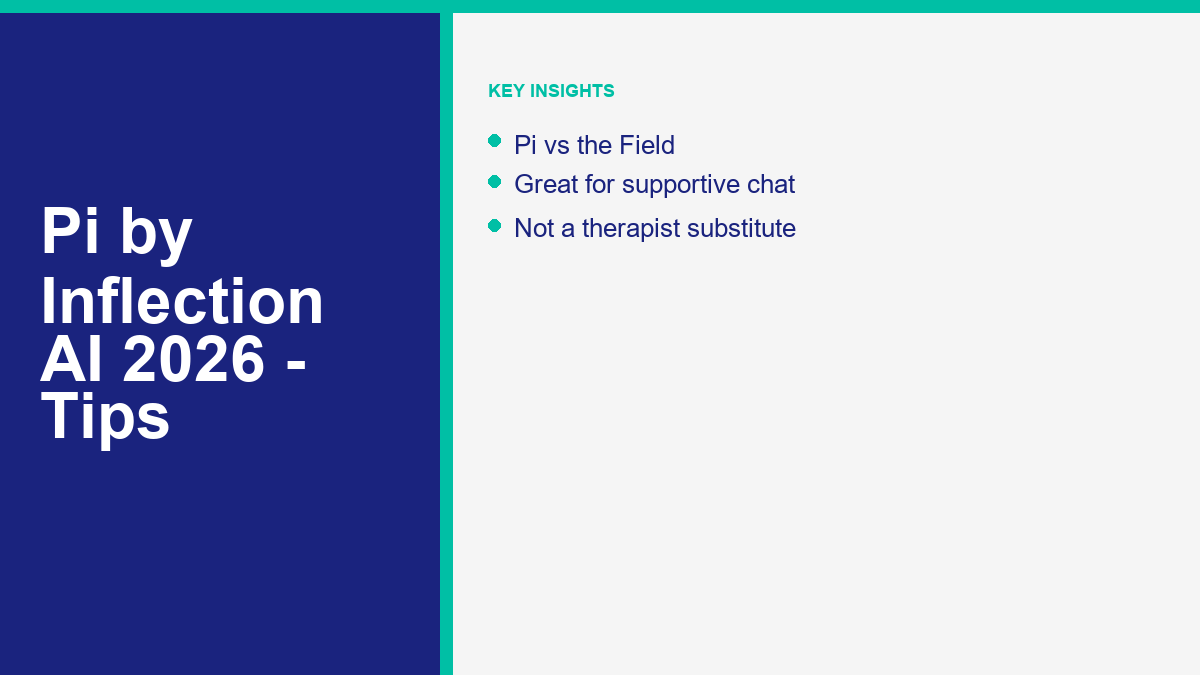
The most critical safety concern is the therapy caveat. Because Pi sounds incredibly empathetic, warm, and supportive, users can easily begin to treat the chatbot as a mental health professional. It is essential to understand that Pi is not a licensed therapist, counselor, or medical professional. It does not possess clinical training, human empathy, or the ability to handle psychological crises.
Talking to Pi can be a helpful way to organize your thoughts, vent about temporary stress, or practice difficult conversations. However, it is not a replacement for real mental health treatment. If you are experiencing anxiety, depression, or emotional distress, you should seek guidance from qualified human professionals. Over-relying on an artificial companion for emotional support can lead to isolation and prevent you from seeking the actual care you need. Ensure you maintain healthy-use boundaries when interacting with any conversational bot.
Pi vs ChatGPT, Claude, Grok, and Character AI
Comparing Pi to other leading systems highlights its unique position in the artificial intelligence landscape. While other assistants focus on productivity, factual retrieval, or open-ended roleplay, Pi prioritizes friendly conversational flow.
To understand where Pi fits, we must examine how it compares to the major players in 2026. The table below outlines the primary differences in focus, voice capabilities, content policies, and pricing.
| AI Platform | Primary Use Case | Voice Realism | Content Filters | 定價模式 |
|---|---|---|---|---|
| Pi by Inflection | Empathetic companionship & active listening | Excellent (6 natural voices) | Strict safety filters | Completely free |
| ChatGPT | General productivity, coding, & search | Advanced (interactive voice mode) | Standard SFW filters | Freemium ($20/mo Plus tier) |
| Claude AI | Complex analysis, writing, & coding | None (text-focused) | Strict alignment filters | Freemium ($20/mo Pro tier) |
| Grok AI | Real-time news commentary & research | Basic text-to-speech | Relaxed (humor/fun mode) | Paid subscription (X Premium) |
| 角色 AI | Fictional roleplay & custom personas | Moderate (user-uploaded voices) | Strict SFW filters | Freemium ($10/mo c.ai+ tier) |
When comparing capabilities, ChatGPT excels at general tasks, coding, and real-time information retrieval. Claude, developed by Anthropic, is widely regarded as a superior tool for writing, analytical reasoning, and coding projects due to its massive context window. You can read more about Anthropic’s tool in our detailed guide on the Claude AI chatbot. Grok AI, developed by xAI, focuses on real-time data access through the social platform X, making it ideal for tracking current trends and news events. You can learn more about its features and access points by reading our review of Grok AI in 2026. Finally, Character AI targets entertainment and roleplay, allowing users to chat with community-created bots representing fictional characters. If you want to explore other platforms in that space, check out our guide on the best Character AI alternatives.
Pi differs from these tools by rejecting list formats and complex programming options. It does not try to write code like Claude, search the web like Grok, or roleplay like Character AI. It focuses entirely on providing a supportive, spoken dialogue experience. This makes it a great choice for vocal brainstorming or emotional venting, but a poor choice for office productivity or creative writing.
Empathy-First Chatbots vs Business Automation
Personal companions like Pi are built for individual conversations and support. However, this technology operates differently from what a business requires to scale its customer interactions and increase efficiency.
If you run an online business, you do not need a chatbot that vents with your customers or spends hours discussing their feelings. You need a system that answers product questions, solves support issues, and guides users toward a purchase. For this reason, business-oriented tools are necessary. While Pi is a personal assistant, marketing platforms are designed to handle high-volume commercial messaging.
例如, Upgrade to MessengerBot Pro to access advanced customer support features on your social channels. A commercial bot platform lets you build structured messaging flows, automate replies on Facebook and Instagram, and connect to CRM tools. This allows you to collect email addresses, deliver digital downloads, and process transactions automatically, which is essential for scaling sales and reducing customer service workloads. To understand how to build these automations, you can 瀏覽我們的教程 for step-by-step guidance on setting up messaging workflows. By utilizing structured replies, you can ensure your customers receive fast, accurate answers while keeping your team focused on growth. If you are ready to implement business automation, you can 查看 MessengerBot 價格 to choose a plan that matches your company’s needs. You can also 加入我們的聯盟計畫 to earn recurring commissions by referring other businesses to these marketing tools.
Understanding the difference between consumer companions and commercial automation is key. Use Pi for personal brainstorming and empathetic dialogue, but build your business operations on a dedicated, marketing-focused automation platform.
Frequently Asked Questions About Pi AI
Here are answers to common questions about the Pi chatbot and its features.
Who created the Pi chatbot?
Reid Hoffman, Mustafa Suleyman, and Karén Simonyan founded Inflection AI in 2022. The company developed the proprietary Inflection models and launched Pi in May 2023. In 2024, the co-founders and key staff moved to Microsoft, prompting the startup to pivot toward business solutions and licensing.
Is the Pi AI app still available on mobile?
As of 2026, the status of the native mobile apps in the iOS App Store and Google Play Store has changed due to the company’s enterprise pivot. You should check the official stores in your region to see if the legacy apps are still available, or use the mobile web browser version at pi.ai.
Can Pi AI write code or solve complex math?
No. Pi is optimized for supportive conversation, voice synthesis, and brainstorming. It is not designed for coding, programming, or analytical calculations, and will struggle or hallucinate if used for these tasks.
How does Pi protect my conversation privacy?
Inflection AI logs conversation data to manage accounts and train its models. To protect your privacy, avoid sharing passwords, credit card numbers, or sensitive personal data. You can adjust your account settings to manage data sharing options.
Is Pi really free to use?
Yes. Pi has been free for consumers since its initial launch. It does not require a subscription, premium upgrades, or account verification fees, and is funded by the company’s enterprise model licensing business.


 香港中文
香港中文  English
  Tagalog
  简体中文
简体中文  العربية
  हिन्दी
  Português do Brasil
  Español de México
  Français
  বাংলা
বাংলা  繁體中文
繁體中文  Nederlands
  Deutsch
  Bahasa Indonesia
  日本語
日本語  한국어
한국어  Polski
  Русский
  Español
  Tiếng Việt