
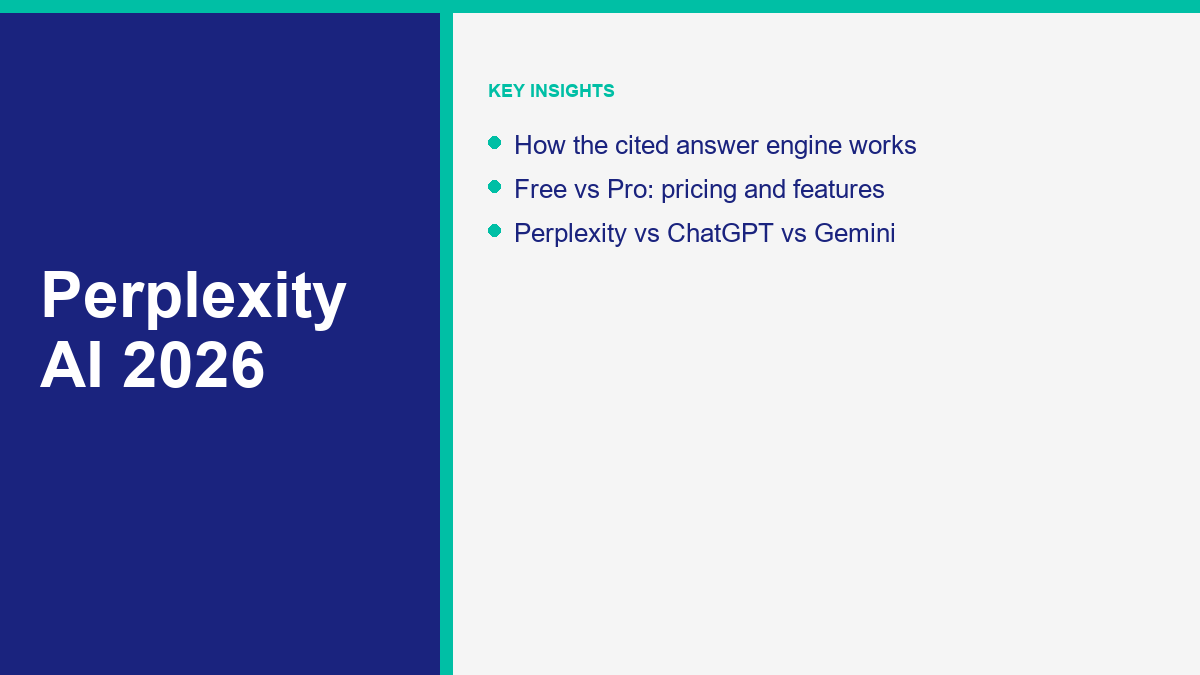
Understanding Perplexity AI and Its Founding Principles
The online search landscape is undergoing its most significant evolution in decades. For over a generation, the default method for finding information online involved typing keywords into a search bar, scanning a list of blue links, and clicking through multiple websites to piece together an answer. This traditional model is being challenged by conversational answer engines that synthesize information on behalf of the user. Perplexity AI has established itself at the forefront of this shift, offering a conversational search platform that reads the live web, summarizes the findings, and presents a single, cohesive answer backed by direct citations.
Founded in 2022, Perplexity AI was created by a team of artificial intelligence researchers and engineers, including Aravind Srinivas, who serves as the CEO. The founders shared a vision of building a cleaner, more direct interface for accessing knowledge. By combining advanced large language models with real-time web retrieval systems, they aimed to bypass the ad-heavy and search-engine-optimized layouts that often make traditional search engines frustrating to use. Instead of indexing keywords and leaving the extraction of information to the searcher, the platform acts as an automated researcher that retrieves relevant documents and synthesizes them into readable paragraphs.
In 2026, the technology has matured, and conversational search has become a mainstream expectation for internet users. The core philosophy of Perplexity AI centers on truth and verification. Rather than asking users to trust the AI’s generations blindly, the system links every claim to a specific web source. This design directly addresses the problem of hallucination, which occurs when a language model invents plausible-sounding but entirely false facts. By grounding every response in live retrieval-augmented generation, the platform allows users to click on citations to verify the source material, check its authority, and read deeper into the subject.
This approach has attracted a diverse user base, including students, academics, financial analysts, software developers, and content writers who need to gather facts quickly. The interface is designed to feel like a conversation rather than a transactional search query. By allowing users to ask natural questions and receive synthesized replies, it reduces the time spent sorting through irrelevant search results and helps users arrive at the core facts faster.
How the Conversational Answer Engine Searches and Cites the Web
To appreciate the utility of this platform, it is helpful to look at how the conversational answer engine works under the hood. When a user submits a query, the platform does not rely solely on pre-trained knowledge. Instead, it initiates a real-time retrieval-augmented generation pipeline. This process blends search engine crawlers with generative language models to produce dynamic, updated answers.
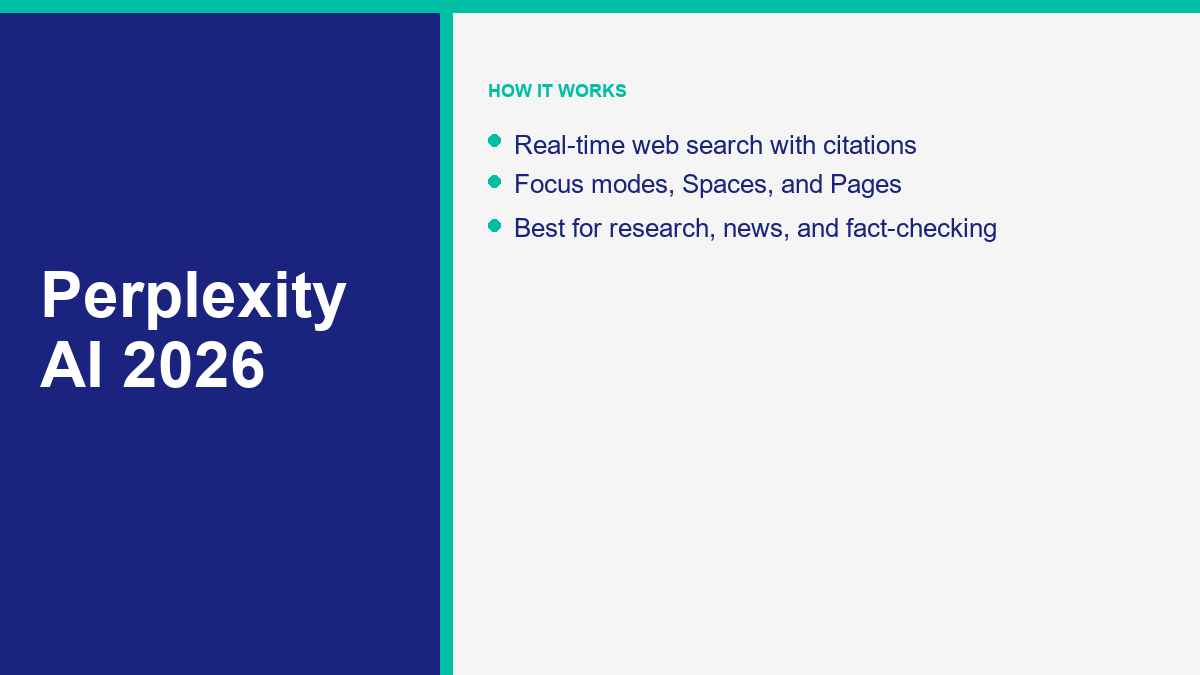
The workflow begins when the user enters a natural language prompt. The system analyzes the query, identifies the core entities and search intent, and translates it into search terms. These search terms are then sent to web indexes to identify the most relevant web pages. The engine crawls the live web, retrieving content from news articles, blog posts, community forums, academic journals, and official company documentation. This ensures that the search results reflect current events in 2026 rather than static historical training data.
Once the relevant text snippets are retrieved from the web, they are fed into a large language model along with the user’s original query. The model acts as a reader and synthesizer, extracting the exact facts needed to answer the question. As the model writes the response, it assigns inline numbered footnote citations to the statements it makes. These citations correlate directly with the source URLs retrieved during the search phase. The user can hover over these footnotes to preview the source website or click them to open the original page in a new tab.
By relying on a retrieval-augmented generation architecture, the platform minimizes the risk of generating outdated or incorrect details. Traditional chatbots often give incorrect answers when asked about recent events because their training data is static. The live search component solves this by pulling the latest information first, and then using the language model to organize and explain that information. This separation of knowledge retrieval from text generation provides a more reliable and auditable way to search the internet.
Crucial Features of the Perplexity AI Platform
The platform offers several features designed to organize, refine, and customize research workflows. These capabilities separate it from standard chatbots and help users manage complex research projects.
Focus Modes for Tailored Search Retrieval
Before submitting a query, users can restrict the scope of the search engine to specific types of websites using Focus modes. This helps filter out noise and target high-quality sources depending on the task:
- All: Searches the entire web for a broad, comprehensive overview of the topic.
- Academic: Restricts searches to peer-reviewed scientific papers, academic journals, and research databases. This is highly useful for literature reviews and scientific writing.
- Writing: Disables web search entirely. The underlying model operates purely as a text generator, helping with creative writing, brainstorming, and code generation without pulling external web facts.
- YouTube: Limits the search to video transcripts, allowing users to find specific clips, video tutorials, or reviews without watching hours of footage.
- Reddit: Focuses the search on community discussions, user opinions, and forum threads. This is useful for looking up real-world product experiences, reviews, and community advice.
- Wolfram|Alpha: Connects to a computational knowledge engine, enabling the platform to solve complex mathematical formulas, perform scientific calculations, and output precise structured data.
Conversational Follow-Up and Context Retention
Search threads are designed to be conversational. After receiving an answer, the user can enter a follow-up question in the text box. The platform retains the context of the entire conversation, so users do not need to repeat themselves or re-explain the background of their query. Additionally, the interface dynamically suggests follow-up questions based on the retrieved sources, prompting users to discover new angles of research they might have missed.
Spaces and Collections for Collaboration
To organize ongoing projects, the platform allows users to create Collections, often referred to as Spaces. A Collection functions as a shared folder where users can group related research threads. For example, a business team can create a Space dedicated to competitor analysis. Users can also write custom instructions for each Space, specifying the writing style, language, target audience, or formatting rules that every thread in that Space must follow. Team members can be invited to collaborate, add new searches, and view shared research.
Converting Research Threads into Pages
The Pages feature allows users to transform a detailed research thread into a clean, structured article. With a single click, the platform organizes the query history, facts, and citations into a readable page layout complete with subheadings, summary paragraphs, and structured bullet points. Users can edit the text, add sections, and publish the page to a unique URL. This makes it simple to generate research briefs, study guides, and product comparisons that can be shared with clients, colleagues, or public audiences.
Comparing Perplexity Free vs Perplexity Pro Tiers
The platform operates on a freemium business model, providing a robust free tier alongside a premium subscription known as Perplexity Pro. This setup allows general searchers to use the tool without cost while giving power users access to advanced computational features.
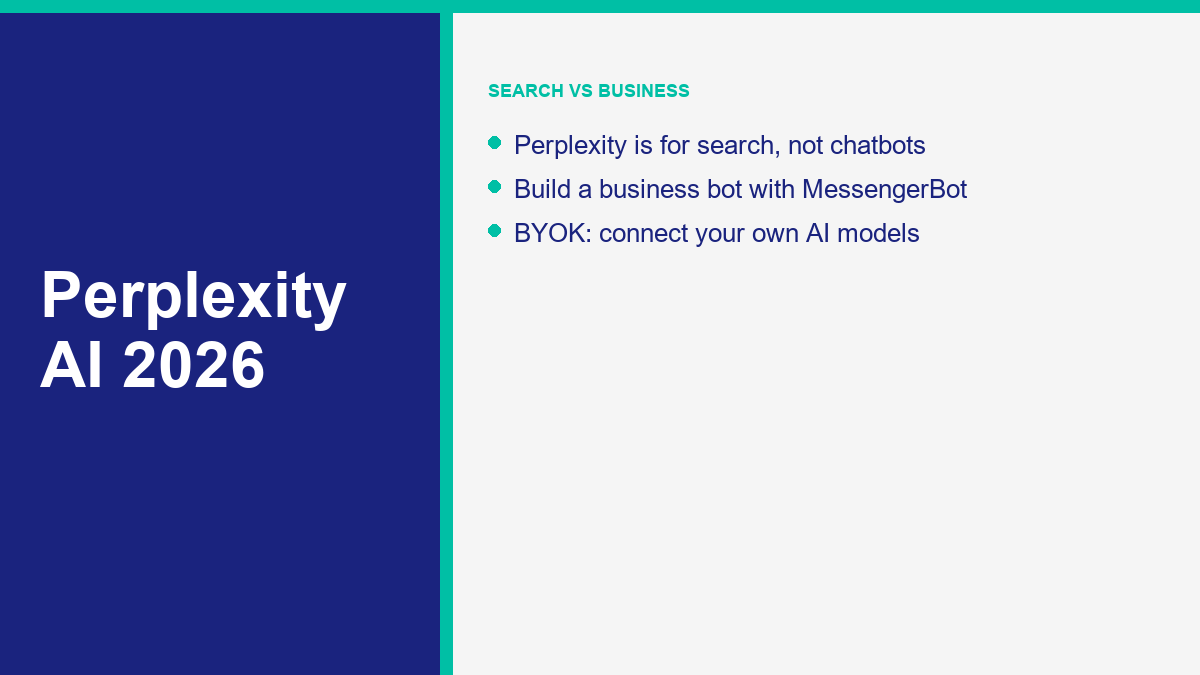
The free tier is designed for quick, everyday lookups. It provides unlimited standard searches using an optimized default model. These searches pull live web pages and provide inline citations, which is ideal for finding definitions, summaries of news articles, and simple explanations. However, the free tier restricts the number of multi-step Pro searches a user can run per day and limits the size and type of files that can be uploaded for analysis.
Perplexity Pro is designed for advanced research, data analysis, and professional workflows. Pro search mode operates as an autonomous agent; it analyzes the query, asks clarifying questions if the intent is ambiguous, runs multiple search queries in sequence, and reads deeper into sources to build a highly comprehensive report. Pro subscribers can also choose which underlying model powers their searches, upload large documents like PDFs and CSV spreadsheets for data analysis, and access advanced image generation tools.
The table below summarizes the differences between the Free and Pro tiers in 2026:
| Feature Details | Nivel Gratuito | Nivel Pro |
|---|---|---|
| Daily Pro Searches | Limited (typically 5 queries per day) | High allowance (typically 300+ queries per day) |
| Model Selection Options | Default optimized Perplexity model only | Selectable top models from OpenAI, Anthropic, and Google |
| File Analysis & Uploads | Basic text documents with size limitations | Advanced analysis of large PDFs, CSVs, images, and code files |
| Generación de Imágenes | Not supported | Access to DALL-E, Stable Diffusion, and other visual engines |
| Research Spaces & sharing | Basic thread grouping | Collaborative Spaces with custom instructions and team members |
| Search Reasoning Depth | Single-step search synthesis | Multi-step agentic search and query refinement |
Pricing Structure and Value Assessment of Perplexity Pro
To evaluate if upgrading to the premium tier makes sense, it is important to analyze the cost relative to the features provided. The subscription price for Perplexity Pro is typically structured around a monthly fee of $20, with a discounted annual subscription option available for users who commit to a full year. These figures are illustrative examples based on current rates in 2026 and are subject to change over time as the platform updates its subscription tiers.
For general web searchers, the free tier is usually more than sufficient. If your daily search needs consist of checking facts, translating short sentences, looking up quick instructions, or summarizing news articles, the standard search mode delivers fast, cited answers without requiring a paid subscription. The quick search mode is fast, accurate, and provides reliable citations that make Google searches feel slow by comparison.
For professionals, researchers, software developers, and students, the value proposition of the Pro tier is much stronger. The ability to upload a 50-page PDF report and ask the model to extract data points, cross-reference them with live web data, and compile a summary saves hours of manual work. Furthermore, the option to switch between leading models for logical analysis or creative synthesis allows users to tailor the AI’s output to their specific task. For these users, the time saved easily offsets the monthly subscription cost.
Additionally, the Pro tier offers credit integrations with partners, API developer options, and expanded limits for image generation tools. For teams and businesses, there is also an Enterprise Pro option that provides centralized billing, user management, and enhanced data privacy controls, ensuring that internal research threads are not used to train future public models.
Perplexity vs ChatGPT vs Gemini vs Messenger Bot
Choosing the right AI assistant requires understanding the primary focus of each platform. Each tool is built with a different core objective, and selecting the correct one depends on the nature of the task at hand.
Comparing Answer Engines with Conversational Assistants
ChatGPT, developed by OpenAI, is a general-purpose AI assistant. While it can browse the web, its interface and underlying architecture are optimized for text generation, coding, and creative tasks. ChatGPT is a generative partner, whereas Perplexity is a retrieval partner. If you need to write a story or write clean code from scratch, ChatGPT is often the preferred choice. If you need to verify historical facts, read current news, or research a market trend, Perplexity’s citation-first design is superior.
Google Gemini is another major competitor. Gemini benefits from Google’s vast search infrastructure, making its web retrieval capabilities highly competitive. Gemini also integrates deeply with Google Workspace tools like Docs, Gmail, and Sheets. However, Perplexity remains popular because it allows users to choose their preferred AI model, providing a level of customization that Google does not offer.
The Difference Between Research Tools and Customer Automation
It is critical to distinguish research assistants from customer-facing conversational systems. Perplexity, ChatGPT, and Gemini are search and personal productivity tools. They are designed for a user to query and receive answers for their own use.
Conversely, Messenger Bot is an automation platform built for businesses. It does not exist to help a researcher write a paper; it exists to help a brand automate client conversations on Facebook, Instagram, and web chat. Messenger Bot handles lead capture, runs customer support scripts, and automates marketing campaigns. Rather than replacing search, it replaces manual customer service tasks.
The table below highlights these distinctions across key platforms:
| Comparison Metric | Perplexity AI | OpenAI ChatGPT | Google Gemini | Bot de Messenger |
|---|---|---|---|---|
| Primary Function | Cited search and real-time research synthesis | Generative assistance, coding, and conversation | Ecosystem assistant and multimodal generation | Facebook, Instagram, and web chat customer automation |
| Web Source Citations | Excellent; primary focus of every search answer | Good; available via web search but secondary to text generation | Good; integrated with Google Search results | Not applicable; responses are configured by the business owner |
| Interactive Chat Flows | No; threads are private or shared static documents | Yes; via custom GPTs for workspace members | Yes; via custom Gems for individual users | Yes; full marketing, support, and sales chat pipelines |
| Integración de API | Available for developers to build search tools | Available for general application developers | Available via Google Cloud and Vertex AI | Pre-built SaaS integrations with Bring Your Own Key (BYOK) setup |
| Primary User Base | Researchers, analysts, students, searchers | Writers, developers, creators, general users | Workspace users, developers, mobile users | E-commerce brands, marketing agencies, service businesses |
Best Use Cases and Current Limitations of Perplexity AI
To get the most out of the platform, it is helpful to match your tasks with its strengths and understand where it may not be the optimal tool.
Where Perplexity AI Excels
The platform is exceptionally strong in the following areas:
- Investigación de Mercado: Quickly compiling statistics, industry trends, and competitor offerings with direct links to source reports.
- Academic Review: Using the Academic focus mode to search databases like Semantic Scholar and locate peer-reviewed papers on complex scientific topics.
- Solución Técnica: Finding solutions to programming errors by retrieving discussions from forums like Stack Overflow and official documentation pages.
- News Aggregation: Summarizing breaking news stories without having to click through cookie consent banners, ads, and subscription pop-ups on news websites.
Where Perplexity AI Falls Short
Despite its advanced technology, the platform has notable limitations:
- Contextual Creativity: Because the model is optimized to stick closely to retrieved sources, it can sometimes produce stiff or dry writing. It is less suited for creative writing than models optimized for text generation.
- Dependency on Search Results: The quality of the AI’s answer is directly tied to the quality of the search results it retrieves. If the top-ranking web pages contain inaccurate data, the model may synthesize those errors into its final response.
- Speed in Deep Mode: Running a Pro search takes longer than a standard search because the agent is performing multiple queries, reading documents, and refining its path.
- No Direct Business Automation: The tool cannot be deployed on a Facebook page or e-commerce site to answer customer questions automatically.
Building Interactive Chatbots for Business: Why Messenger Bot is the Best Alternative
If your goal is to build an interactive chatbot that talks to your customers, captures leads, and drives sales, a search engine like Perplexity is not the correct tool. Instead, you need a dedicated business automation platform designed to handle customer communications.
Messenger Bot provides the necessary infrastructure to automate your business’s customer-facing channels. While Perplexity helps you search the web, Messenger Bot helps you engage the users who land on your social media pages and website. The platform integrates directly with Facebook Messenger and Instagram, allowing you to create automated reply sequences, qualify leads, and answer support queries instantly.
A key feature of Messenger Bot is its flexibility. Rather than locking you into a single proprietary AI model, it supports a Bring Your Own Key (BYOK) approach. This means you can connect your own API keys from leading AI providers to power your automated responses. This setup gives you complete control over the conversational logic, costs, and quality of your business chatbot.
Before deciding on a conversational search tool, you can also view our plans if you are looking to build a customer-facing assistant. Learn more and Ver precios de MessengerBot.
For advanced developers and companies seeking custom integrations, discover how to leverage Funciones de MessengerBot Pro to create automated chat workflows.
If you need step-by-step guidance on setting up your marketing automations, feel free to Explora Nuestros Tutoriales.
Getting Started with Modern Conversational Search and Automation
Adopting AI tools in 2026 is about choosing the right software for the right task. You can combine search tools and automation platforms to optimize your business operations.
For research, begin by creating a free account on Perplexity. Familiarize yourself with the Focus modes. Before typing a query, ask yourself if you need general web info, academic papers, or forum opinions, and select the corresponding mode. Use simple, conversational language, and do not hesitate to ask follow-up questions to refine the results. If you find yourself using the tool for hours every day, analyze if the PDF upload and advanced model selection of the Pro tier would improve your workflow.
For customer engagement, sign up for Messenger Bot. Connect your Facebook business page and Instagram profile. Begin by sketching out a simple greeting and lead qualification flow. Decide what common questions your customers ask—such as pricing, shipping times, or booking slots—and configure automated rules to handle them. As you get comfortable, connect your AI API keys using the BYOK framework to handle more complex, open-ended customer inquiries.
By using Perplexity for backend market research and Messenger Bot for customer-facing communication, you create a highly efficient workflow that leverages the strengths of both search and automation technologies.
Frequently Asked Questions About Perplexity AI
Here are detailed answers to common questions about Perplexity AI, its capabilities, and its applications.
What is Perplexity AI?
Perplexity AI is a conversational search engine, also known as an answer engine, that searches the web in real time to answer user questions. Unlike traditional search tools that return a list of links, it synthesizes a direct, written response with numbered citations linking to the source websites.
Is Perplexity AI free to use?
Yes, the basic version of Perplexity AI is free. It provides unlimited quick searches and basic model access. For advanced features like unlimited Pro searches, model selection, document uploads, and image generation, users can purchase a Perplexity Pro subscription.
How does Perplexity AI compare to ChatGPT?
Perplexity AI is optimized for search and source citation, making it ideal for research and fact-checking. ChatGPT is a general-purpose assistant optimized for text generation, coding, and creative conversation. Perplexity focuses on finding info, while ChatGPT focuses on creating content.
What features does Perplexity Pro offer?
Perplexity Pro offers unlimited Pro searches that use multi-step reasoning, options to choose the underlying AI model from leading providers like Anthropic, OpenAI, and Google, large file uploads for analysis, image generation, and advanced collaborative Spaces.
Can I use Perplexity AI to build a chatbot for my business website or Facebook page?
No, Perplexity AI is a tool for search and personal research. To build interactive, customer-facing chatbots that automate support, lead capture, and messaging on Facebook, Instagram, or websites, you should use a platform like Messenger Bot.
 Español de México
  English
  Tagalog
  简体中文
简体中文  العربية
  हिन्दी
  Português do Brasil
  Français
  বাংলা
বাংলা  香港中文
香港中文  繁體中文
繁體中文  Nederlands
  Deutsch
  Bahasa Indonesia
  日本語
日本語  한국어
한국어  Polski
  Русский
  Español
  Tiếng Việt