
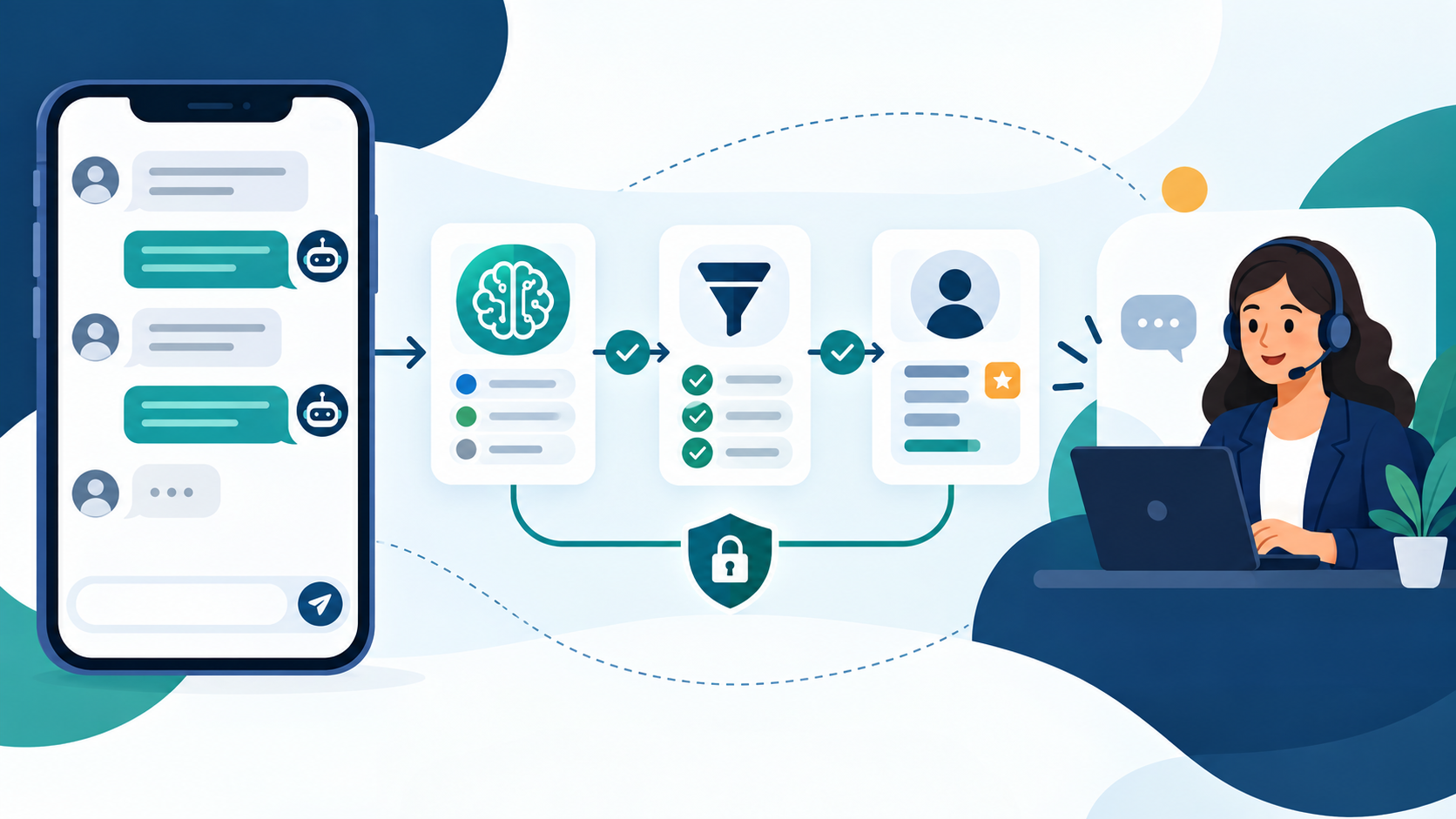
Connecting conversational intelligence to WhatsApp allows growing businesses to qualify prospective buyers, answer urgent support questions around the clock, and reduce front-desk bottlenecks without losing personal touch.
Conversational AI Meets WhatsApp Messaging
Messaging apps have transformed the way prospective buyers and returning clients interact with small service firms, ecommerce stores, and professional practices. Rather than waiting on hold or checking an email inbox hours later, customers expect direct, conversational exchanges on their preferred messaging channel. For millions of organizations worldwide, that primary channel is WhatsApp. However, managing high-volume inbound chats manually can quickly overwhelm customer service staff, resulting in delayed replies, lost leads, and inconsistent answers during peak business hours.
This operational friction is where a modern chatbot de IA de whatsapp creates tangible leverage. Unlike traditional rigid auto-responders that force users through frustrating numeric menus, conversational artificial intelligence uses natural language processing to interpret user intent, extract key details, and deliver context-aware answers in real time. When someone texts your business asking about appointment availability, delivery timelines, or custom package pricing, the system evaluates their query against your verified business data and responds accurately within seconds.
While basic automation tools have existed for years, integrating generative intelligence directly into WhatsApp conversations elevates the experience from simple keyword triggering to authentic customer dialogue. For teams that previously relied on basic auto-replies or no-code WhatsApp message automation, adopting an AI-assisted model means your messaging channel can handle unstructured questions, understand colloquial phrasing, and adapt tone without requiring an engineer to script every possible interaction path.
Still, implementing an automated assistant on WhatsApp requires a grounded understanding of the underlying platform boundaries, official messaging rules, operational expenses, and technical prerequisites. Choosing the best whatsapp ai chatbot strategy for your organization is not about chasing speculative tech trends; it is about building a reliable, privacy-compliant communication pipeline that delivers measurable business value while preserving clear handoffs to human staff.
Core Business Use Cases for WhatsApp Automation
Small businesses and mid-sized enterprises deploy conversational assistants on WhatsApp across three core operational areas: lead qualification, frontline customer service, and appointment coordination. Understanding how these workflows function in practice helps business owners prioritize their setup roadmap and measure real operational returns.
Automated Lead Qualification and Intake
Inbound inquiries often arrive with missing context. A prospective client might simply text asking about pricing or project availability without sharing their specific requirements. Answering these messages manually requires multiple back-and-forth exchanges just to establish project scope, budget range, and timeline before determining whether the lead is a good fit for your company.
A conversational assistant on WhatsApp automates this initial triage gracefully. By engaging the prospect in an interactive dialogue, the assistant gathers essential details in a friendly, conversational manner:
- Identifying the specific service or product category the prospect needs.
- Confirming geographic service areas or delivery requirements.
- Collecting budget parameters and desired project start dates.
- Recording preferred contact methods and verified contact details.
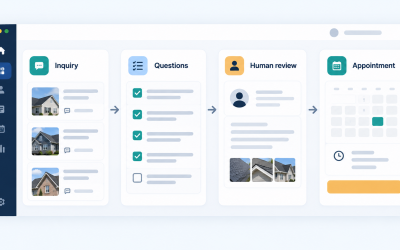
Once qualification criteria are satisfied, the assistant can tag the conversation, log the intake summary in your team records, and notify a sales representative to step in and finalize the agreement. For broader insights on designing conversational intake flows across multiple touchpoints, explore our small business AI chatbot services guide.
Frontline Customer Support and FAQ Resolution
Repetitive support inquiries consume hours of staff time each week. Routine questions regarding business hours, parking directions, return policies, order tracking, and invoice copies do not require human creativity, yet leaving them unanswered damages customer satisfaction. Deploying a dedicated workflow for whatsapp business ai customer service deflects these routine inquiries instantly.
By connecting the assistant to your verified documentation—such as product catalogs, warranty guidelines, and standard operating policies—the system resolves frequent questions immediately. Customers receive accurate, consistent information 24 hours a day, 7 days a week, regardless of time zones or public holidays. This continuous availability helps prevent customer churn and ensures that human support specialists spend their working hours resolving complex, high-value customer challenges.
Appointment Scheduling and Consultation Routing
For service professionals, medical clinics, home contractors, and consultancies, booking appointments over chat frequently involves prolonged scheduling delays. A client suggests a time, the receptionist checks the calendar hours later, finds a conflict, and suggests another time, by which point the client has explored competitor options.
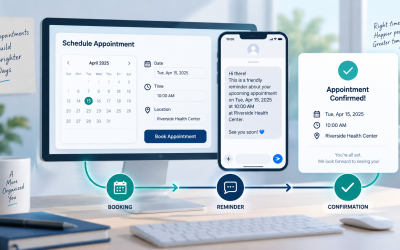
An intelligent WhatsApp assistant streamlines this workflow by presenting real-time availability, confirming booking prerequisites, gathering appointment intake notes, and locking in the calendar slot directly within the chat window. If a customer needs to reschedule or review cancellation policies, the assistant handles the request systematically while updating team schedules automatically.
Rule-Based Automation vs. Conversational AI
When evaluating messaging automation, business leaders often ask whether they need a generative conversational model or if a structured rule-based system is sufficient. Both approaches offer distinct advantages, and many successful businesses deploy a hybrid setup that combines the predictability of structured buttons with the flexibility of conversational language understanding.
| Operational Dimension | Chatbots Basados en Reglas | Chatbots de IA Conversacional |
|---|---|---|
| User Input Handling | Strictly follows predefined button clicks, numerical choices, and exact keyword matches. | Interprets open-ended natural language, typos, colloquial phrases, and mixed intents. |
| Setup Complexity | Requires manual mapping of every decision tree, branch, and failure message. | Requires feeding verified knowledge bases, setting system boundaries, and testing prompt behaviors. |
| Conversation Adaptability | Stops abruptly when a user types an unexpected phrase or question outside the tree. | Extracts context from multi-turn dialogues and synthesizes relevant answers dynamically. |
| Maintenance Burden | Decision trees grow complex and cumbersome as service offerings expand. | Updating documentation or policy text updates the assistant’s knowledge base automatically. |
| Execution Risk | Low risk of unexpected wording; responses are static and predictable. | Requires strict guardrails to prevent ungrounded claims or unauthorized commitments. |
In practice, the most effective deployment often pairs conversational understanding with quick-reply buttons. For example, a customer can freely type an inquiry like “Do you offer weekend appointments for consultation calls?”, and the assistant answers conversationally while providing tappable buttons for “Book Saturday Slot” or “Speak to Team.” This hybrid approach provides the speed of direct actions alongside the intelligence of an ai chatbot whatsapp integración.
Technical Prerequisites for WhatsApp Chatbot Integration
Before launching an automated assistant on WhatsApp, organizations must navigate Meta’s ecosystem requirements. Deploying automated conversational systems cannot be done through a personal smartphone app; it requires dedicated technical foundations.
WhatsApp Business App vs. WhatsApp Cloud API
Meta provides two distinct business messaging environments, and distinguishing between them is critical for growing companies:
- Aplicación de WhatsApp Business: A free mobile application intended for sole proprietors and micro-businesses. It supports basic quick replies, automated greeting messages, and away notices. However, it operates on a single primary device (with limited web sessions), does not support third-party webhook integrations, and cannot connect to generative AI engines.
- WhatsApp Cloud API: Meta’s enterprise messaging infrastructure hosted on Meta’s servers. It enables multi-user access, CRM connectivity, custom webhook handlers, and programmatic integration with conversational AI platforms like Messenger Bot. The API has no physical phone interface; interactions are managed through software dashboards and automated endpoints.
To implement seamless integracion chatbot whatsapp, your organization must connect through the WhatsApp Cloud API or an authorized Business Solution Provider. This integration allows automated systems to receive incoming message webhooks, pass inquiries to conversational models, and deliver responses back to the customer instantly.
Account Verification and Messaging Window Boundaries
Operating on the Cloud API requires completing several setup steps within Meta Business Manager:
- Dedicated Phone Number: You must supply a clean phone number that is not currently registered on personal WhatsApp or the WhatsApp Business App. If you want to use an existing office line, you must first delete the existing consumer account associated with that number.
- Meta Business Verification: While unverified businesses can test with restricted messaging tiers, scaling conversation volume requires submitting official business documentation (such as business licenses or utility bills) to Meta for official verification.
- The 24-Hour Customer Service Window: When a user sends your business a message, Meta opens a 24-hour service window. During this window, your automated assistant can exchange free-form messages and answers without restriction. Once 24 hours have elapsed since the user’s last message, your system cannot send open-ended promotional or follow-up texts. Any communication initiated outside this window requires pre-approved message templates, as detailed in our WhatsApp Business template messages guide.
For exact specifications on API endpoints, webhook payloads, and developer guidelines, consult the official Meta developer documentation.
Designing Your Knowledge Base and Guardrails
An intelligent assistant is only as dependable as the reference data that powers it. Feeding raw, uncurated documents or allowing an assistant to improvise answers inevitably leads to customer confusion and inaccurate commitments. To maintain professional quality, your implementation must rest upon structured knowledge bases and firm operational guardrails.
Start by compiling clean, authoritative source materials that directly address your primary customer interactions:
- Service and Product Catalogs: Clear descriptions of offerings, tier names, standard deliverables, and inclusions.
- Pricing Schedules and Cost Boundaries: Documented starting rates, estimate procedures, and factors that influence final quotes.
- Operational Policies: Business hours, turnaround expectations, return guidelines, refund conditions, and geographic coverage zones.
- Escalation Contacts: Departmental contact addresses, urgent escalation phone lines, and physical office locations.
Equally critical is defining boundary conditions. Your system instructions must explicitly state what the assistant is forbidden from doing. For instance, instruct the model never to make binding legal guarantees, never to invent custom discounts outside published promotions, and never to diagnose technical or medical issues beyond standard advisory disclaimers. When confronted with ambiguous questions, the system should gracefully state its boundaries and offer a human escalation path.
If your organization also maintains social engagement channels on Facebook or Instagram, evaluating cross-channel customer preferences is essential. For an in-depth operational comparison of these platforms, review our WhatsApp Business vs Facebook Messenger channel comparison to align your communication policies across channels.
Human Handoff Protocols and Escalation Paths
Automated assistants should augment your human workforce, not isolate your business from its customers. No matter how advanced conversational AI becomes, complex negotiations, frustrated patrons, and sensitive account questions will always require human empathy and experienced judgment. A robust human handoff protocol prevents customer frustration and preserves trust.
Effective handoff workflows rely on three primary operational triggers:
- Explicit User Request: When a user types phrases like “talk to a person,” “agent,” “human representative,” or “customer support,” the bot must acknowledge the request immediately and pause automated responses.
- Sentiment and Frustration Indicators: If customer messages exhibit signs of severe dissatisfaction, urgency, or repeated confusion, the system should flag the conversation for prioritized human review.
- Confidence Threshold Failures: When the assistant cannot find verified answers within its knowledge base after consecutive attempts, it should halt automated guessing and route the inquiry to the appropriate team.
When an escalation occurs, the platform should notify your on-duty team through a unified inbox or team messaging notification. Crucially, the system must display the conversation summary and collected intake data so your staff member can step in seamlessly without asking the customer to repeat their question from the beginning. If the escalation occurs outside regular working hours, the assistant should clearly communicate your operating schedule, log the user’s preferred callback time, and assure them that an agent will follow up promptly the next business morning.
Understanding WhatsApp AI Chatbot Costs in 2026
Budgeting for a WhatsApp conversational assistant requires distinguishing between Meta’s message charges and third-party software platform subscriptions. Understanding both components protects growing businesses from unexpected billing surprises.
Meta Message-Based Pricing Categories
Meta does not charge a flat monthly fee for access to the WhatsApp Business Platform. Current platform pricing is based on messages that are delivered to users, with the amount determined by the recipient market and the message category. The four categories are:
- Service Messages: Replies to incoming customer inquiries. Meta’s current pricing page says service messages are not charged while the 24-hour customer service window is open; that window resets when the user messages again.
- Utility Messages: Non-promotional updates tied to a user action, such as an order, payment, delivery or appointment. Utility messages sent in response to users may be free, while other utility traffic can be subject to market-specific rates and volume tiers.
- Authentication Messages: One-time passcodes used for identity verification during sign-in or a transaction, with rates that vary by market and tier.
- Marketing Messages: Promotions, recommendations, abandoned-cart reminders and other business-initiated growth messages, priced by the applicable market and rate card.
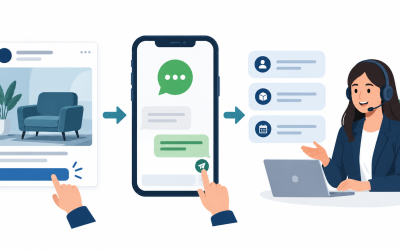
Meta also lists free entry points: messages sent after a customer starts a chat from an ad that clicks to WhatsApp or a Facebook Page call-to-action can be free for a limited 72-hour window. For a practical campaign-to-conversation example, see our guide to qualifying leads after a WhatsApp ad click. Because rates, free-entry rules and volume tiers can change by market, currency and policy date, confirm the current figures in the official WhatsApp Business Platform pricing guide before publishing a cost estimate or setting a budget.
Software Platform Subscriptions and Operational Fees
In addition to Meta’s message fees, running a functional assistant requires an automation platform that hosts your conversation builder, manages knowledge bases, interfaces with language models, and provides a multi-agent team inbox. Platform costs typically vary based on several factors:
- Active contact volume or monthly conversation allowances.
- The depth of conversational AI processing, knowledge base vector storage, and response generation.
- The number of human agent seats and connected messaging channels (such as WhatsApp, Facebook Messenger, and Instagram).
To evaluate predictable platform investment tiers that suit your team’s size and messaging volume, Verificar precios actuales for Messenger Bot to compare scalable plans without long-term lock-in.
Privacy, Consent, and Compliance Safeguards
Because WhatsApp is an intimate personal messaging channel, spamming customers or mishandling sensitive data will lead to swift account penalties and phone number bans. Building an automated system requires adherence to strict privacy safeguards and consent protocols.
First and foremost, your organization must secure verifiable opt-in consent before initiating any automated messaging. When customers initiate contact through a website chat link, QR code, or social ad, their inbound message permits you to converse within that active 24-hour service window. However, proactively messaging a user outside that window—such as sending follow-up promotions or automated reminders—requires that the customer explicitly opted in to receive ongoing WhatsApp updates.
Data privacy is equally paramount. When configuring your conversational model and team inboxes, ensure that sensitive information is handled with care:
- Never prompt customers to share full credit card numbers, security codes, or account passwords inside a WhatsApp chat.
- Implement automated redaction or masking for sensitive personal identifiers, health records, or confidential client documents.
- Ensure that data transferred between your messaging platform, knowledge bases, and language models complies with regional privacy standards such as GDPR, CCPA, and local consumer protection statutes.
Violating platform rules risks having your WhatsApp phone number downgraded or permanently suspended. Review the official platform messaging policy guidelines regularly to maintain full compliance as messaging features evolve.
Implementation Checklist for Small Businesses
Transitioning from manual messaging to an automated conversational assistant is most manageable when approached in structured phases. Use this practical launch checklist to guide your team through deployment:
- Channel and Number Preparation: Select a dedicated, unassigned phone number for your WhatsApp Business API profile. Ensure the number can receive verification codes during initial setup.
- Meta Business Manager Setup: Verify your Meta Business Manager account, associate your payment method for API conversation billing, and establish your official business profile details including name, address, category, website, and operating hours.
- Platform Connection and Webhook Verification: Connect your WhatsApp Cloud API account to Messenger Bot. Test incoming and outgoing webhook delivery to ensure messages send and receive reliably without latency.
- Knowledge Base and Guardrail Configuration: Upload verified FAQs, operational policies, and product documentation. Configure strict conversation rules to prevent off-topic speculation and define clear fallback triggers.
- Human Escalation and Routing Setup: Set up team inbox notifications, define business-hours escalation rules, and establish out-of-office messaging for inquiries received during off-hours.
- Internal Staging and Edge-Case Testing: Conduct thorough internal tests with staff members asking complex, colloquial, and edge-case questions. Verify that the assistant handles typos gracefully and routes escalations correctly.
- Soft Launch and Conversation Monitoring: Deploy the assistant to a segment of inbound web traffic or existing clients. Review live conversation logs daily during the first two weeks to identify knowledge gaps, refine response tone, and optimize intake fields.
To view detailed technical walkthroughs covering workflow builders, CRM connections, and multi-channel configurations, Explora nuestros tutoriales. For broader industry context on how conversational tools fit into enterprise software stacks, review our evaluation of modern AI chatbot applications.
Preguntas Frecuentes
What is the primary difference between the WhatsApp Business App and the WhatsApp Cloud API for AI chatbots?
The free WhatsApp Business App is designed for manual communication by single operators or very small teams, offering basic quick replies and away messages without native support for third-party conversational AI models. The WhatsApp Cloud API is built for programmatic integration, enabling multi-agent access, automated database lookups, and conversational AI processing through an automation platform.
Can a WhatsApp AI chatbot handle complex customer inquiries without human intervention?
A WhatsApp AI chatbot can reliably resolve routine, repetitive inquiries such as operating hours, order lookups, and initial qualification questions when supported by a well-structured knowledge base. However, nuanced disputes, custom contract negotiations, and sensitive account issues still require clear escalation paths to human team members.
How much does running an AI chatbot on WhatsApp cost?
Costs generally combine two components: Meta’s delivered-message fees and your chosen software platform subscription. Meta prices messages by category and recipient market, while service replies in the open 24-hour customer service window may be free. Software platform fees vary by features and active contact tiers, so confirm the current rate card and plan details before committing to a budget.
What happens when the AI chatbot encounters an inquiry outside its knowledge base?
When a user query falls outside documented guardrails or confidence thresholds, a properly configured chatbot acknowledges the limitation and triggers a human handoff. The conversation is routed to a shared team inbox with full chat history, or prompts the user for contact details if the inquiry occurs outside standard operating hours.
Do businesses need customer consent before sending messages through a WhatsApp chatbot?
Yes. Meta messaging policies strictly require explicit user opt-in before businesses can initiate conversations or send automated notifications. Inbound customer-initiated chats open a 24-hour customer service window, but proactive follow-ups outside that window must use pre-approved message templates and respect customer communication preferences.
 Español
  English
  Tagalog
  简体中文
简体中文  العربية
  हिन्दी
  Português do Brasil
  Español de México
  Français
  বাংলা
বাংলা  香港中文
香港中文  繁體中文
繁體中文  Nederlands
  Deutsch
  Bahasa Indonesia
  日本語
日本語  한국어
한국어  Polski
  Русский
  Tiếng Việt