
If you have ever logged into your Facebook account only to find a bright red warning banner telling you that your ability to post, comment, or message has been suspended, you have experienced what is colloquially known as Facebook Jail. Although the name sounds like a joke, the impact on your personal communication, social networking, and business operations is very real. Meta does not use the term Facebook Jail in its official documentation; instead, the platform refers to these events as feature blocks, account restrictions, or account suspensions.
Understanding how the system works in 2026 is critical if you want to protect your digital presence. Meta’s automated moderation algorithms have become faster and more aggressive. Action thresholds that once triggered simple warnings now result in multi-day restrictions. This guide breaks down the mechanics of these restrictions, why they happen, how long they last, how to appeal a block, and the steps you must take to keep your account safe from future enforcement actions.
What ‘Facebook Jail’ Actually Means in 2026
At its core, Facebook Jail represents a spectrum of enforcement actions that Meta takes when its automated systems or human moderation teams detect a violation of the platform’s Community Standards or Terms of Service. These actions restrict specific capabilities on your profile, page, or group, preventing you from interacting with the platform in normal ways. Because the enforcement is handled by complex algorithms, you might be restricted without any prior human review, and sometimes without a clear understanding of what rule you broke.
It is helpful to categorize the restrictions into four distinct tiers of severity:
- Restrictions de fonctionnalités : This is the most common form of a temporary block. Your profile remains active, and you can scroll through your feed, but you cannot perform specific actions. Common examples include being blocked from posting in Facebook Groups, commenting on friends’ posts, sending direct messages on Messenger, liking content, or using the Live streaming tool.
- Temporary Account Lockouts: If the platform detects unusual login locations, suspicious device configurations, or potential hacking attempts, your account will be locked. To regain access, you must complete security checks, upload a photograph of your face, or input verification codes sent to your registered contact methods.
- Page or Group Reductions: For business owners and content creators, Meta applies page-level restrictions. These include reducing your organic reach, disabling your page’s ability to send automated messages, or blocking your ability to run paid advertising campaigns.
- Permanent Account Disabling: This is the final and most severe tier. If you repeatedly violate community policies or commit a single severe infraction, your account is deactivated. If your appeal is unsuccessful, your entire profile history, photo library, associated business pages, and ad accounts are permanently deleted from the database.
Meta enforces these rules through a dual-pipeline system. The automated moderation pipeline scans millions of posts, comments, and messages every second using machine learning models trained to flag policy violations. The manual review pipeline consists of human moderation teams that assess appealed decisions and handle complex reports that the algorithms cannot resolve with high confidence. Knowing which tier of restriction you are facing helps you determine the best path forward to restore your access.
Why People Get Put in Facebook Jail: Common Triggers
Automated filters flag account behaviors that deviate from normal human usage patterns. Most temporary restrictions are not triggered by a human reviewer reading your posts, but by programmatic tripwires that detect rapid-fire actions, suspicious link distributions, or flagged content patterns.
Here are the primary triggers that result in account restrictions:
High-Frequency Action Spikes
If you perform actions at a speed that exceeds normal human capabilities, Meta’s spam filters will assume you are using an unauthorized browser extension or a malicious bot script. Examples of this include joining twenty Facebook Groups in a ten-minute window, pasting the same comment on multiple posts within seconds, sending friend requests to dozens of people you do not know, or bulk-liking hundreds of images. The platform uses rate limits to prevent automated tools from flooding the network, and breaching these limits leads to an automatic feature block.
Global Domain Blocklists
Meta maintains a massive list of restricted domains that are banned from being shared on its platforms. If you attempt to share a URL that has been flagged for phishing, malware, spammy redirects, or deceptive advertising, the post will be blocked immediately. Repeatedly attempting to bypass this block by using URL shorteners or altering the text will result in your account being flagged for malicious activity. If you find that your Facebook Marketplace is missing or unavailable, it is possible that your account has been flagged for violating specific commerce guidelines or posting too many ads.
Violations des normes de la communauté
This includes sharing content that violates the explicit rules outlined in the Meta Community Standards. The primary categories of violations are hate speech, harassment, graphic violence, explicit nudity, intellectual property theft, and the promotion of illegal goods. The automated image recognition models are highly sensitive, and posting historical photos, artistic representations, or satirical memes can sometimes trigger false positives that land you in Facebook Jail. For instance, sharing a family photo that contains a toddler running on a beach can sometimes be misclassified by nudity detection filters. Satirical discussions on political affairs that include quotation blocks of policy-violating text can also trigger hate speech filters because the algorithms struggle with sarcasm and historical context.
Intellectual Property Infringements
Sharing content that contains media you do not own is another common trigger. If you upload a video featuring copyrighted background music, or use brand logos on a business page without permission, rights holders can file a Digital Millennium Copyright Act (DMCA) report. Meta takes intellectual property rights seriously to maintain its legal protections. A single IP violation will result in the immediate removal of the content and a strike on your account. Repeat reports of this nature will lead directly to severe, long-term feature blocks or permanent account termination.
Coordinated Reporting Campaigns
If multiple accounts report your profile, page, or posts within a short period, Meta’s system will apply a preventative restriction while the content is queued for review. This mechanism is designed to stop viral abuse, but it is frequently weaponized by coordinated groups to silence competitors or dissenting voices in online discussions. This is a frequent occurrence for public pages and active group members who post in controversial niches. When a group of users decides to report every post on your page for harassment or hate speech, Meta’s system automatically flags the sudden spike in reports. As a safeguard, the automated system restricts the page’s posting capabilities until a human review can determine whether the reports are valid or part of a malicious brigading campaign.
How Long Facebook Jail Lasts: Durations and Levels
The duration of a restriction depends on your account’s violation history and the severity of the policy breach. Meta uses a strike-based system to track violations. As you accumulate strikes, the penalties increase in duration and scope. Strikes typically expire after a designated period, usually 90 days, provided you do not commit further violations during that time.
Here is a detailed breakdown of the standard timeline levels for restrictions:
| Enforcement Level | Typical Duration | Affected Features | Account Impact |
|---|---|---|---|
| First Strike (Warning) | No lockout | Aucun | A warning notification is sent; the violation is logged in your account history. |
| Second Strike | 24 Hours | Posting, Commenting | You cannot create new posts or write comments. Read access is unaffected. |
| Third Strike | 3 Days | Posting, Commenting, Group Access | You are blocked from posting in groups, creating new content, and writing comments. |
| Fourth Strike | 7 Days | Posting, Commenting, Live Streaming, Page Creation | Creation features are blocked. You cannot run live streams or create new pages. |
| Fifth Strike | 30 Days | All Interactive Features | Your account is placed in read-only mode. You cannot post, comment, like, or message. |
| Severe Violation or Repeat Offender | Permanent | All Access | The profile is disabled. The owner has 180 days to appeal before permanent deletion. |
Similar to feature lockouts, some accounts notice that features like Facebook Dating not showing up can occur if their profile is under review or restricted due to region issues or minor policy flags.
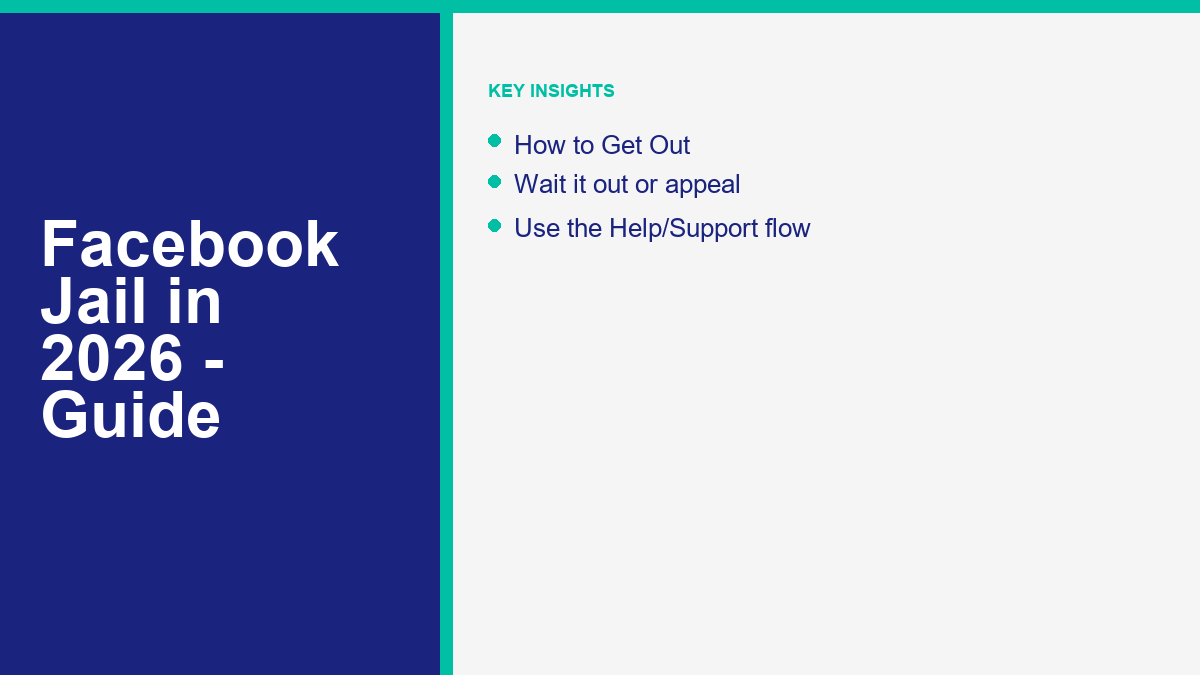
For minor infractions, such as a rate-limit trigger for commenting too quickly, the restriction might last only a few hours. However, if the system flags you for spreading misinformation, using hate speech, or sharing copyrighted material without authorization, the minimum penalty starts at a three-day block. The strike count is applied globally across your profile; a violation in a private group carries the same weight as a violation on a public page.
How to Appeal a Facebook Jail Restriction and Get Out
If you believe you have been restricted in error, you have the right to request a review of the decision. Because many blocks are applied by automated filters, a significant number of restrictions are overturned when a human moderator examines the context. However, you must follow the correct channels to submit your request, as there is no phone number or direct support email you can use.
Follow these steps to submit a formal appeal:
- Access your Support Inbox: On your desktop or mobile app, navigate to Settings & Privacy, select Help & Support, and open the Support Inbox. This section contains a record of all policy violations and active restrictions applied to your profile.
- Review the Violation Notice: Locate the specific notification detailing the violation. Click or tap on the notice to view the exact post, comment, or action that triggered the restriction, along with the specific policy you are accused of breaking.
- Request a Review: If the option is available, select the “Disagree with Decision” or “Request Review” button. This actions sends your case back into the moderation queue for secondary analysis. For some minor or temporary rate-limit blocks, this button may not appear, indicating that the restriction must be served in full.
- Fournissez du contexte : If the system allows you to submit text, explain clearly and politely why the content does not violate the rules. Keep your explanation concise and reference specific facts. Avoid emotional language, as reviews are evaluated against strict policy checklists.
It is important to protect your personal security during this process. A common scam online involves individuals or services claiming they can bypass Meta’s security database to get you out of Facebook Jail for a fee. These operators advertise on platforms like Instagram, Telegram, and online forums, targeting users who are frustrated by account lockouts. Remember that there are no third-party tools, API bypasses, or external hackers who can modify Meta’s database. Anyone who promises to restore your account for payment is trying to steal your funds, your login credentials, or your personal identification documents. Only Meta’s official support channels can remove or alter an account restriction.
If you want to protect your account security, understanding features like locking your Facebook profile is critical to limiting who can view your activity or report your public posts.
Best Practices to Avoid Facebook Jail and Keep Your Account Safe
Preventing a restriction is far easier than trying to appeal one. To keep your account in good standing and ensure your business communications remain uninterrupted, you should adopt a set of habits that align with Meta’s technical boundaries and policy standards.
Here are the best practices to keep your account safe:
Respect Platform Rate Limits
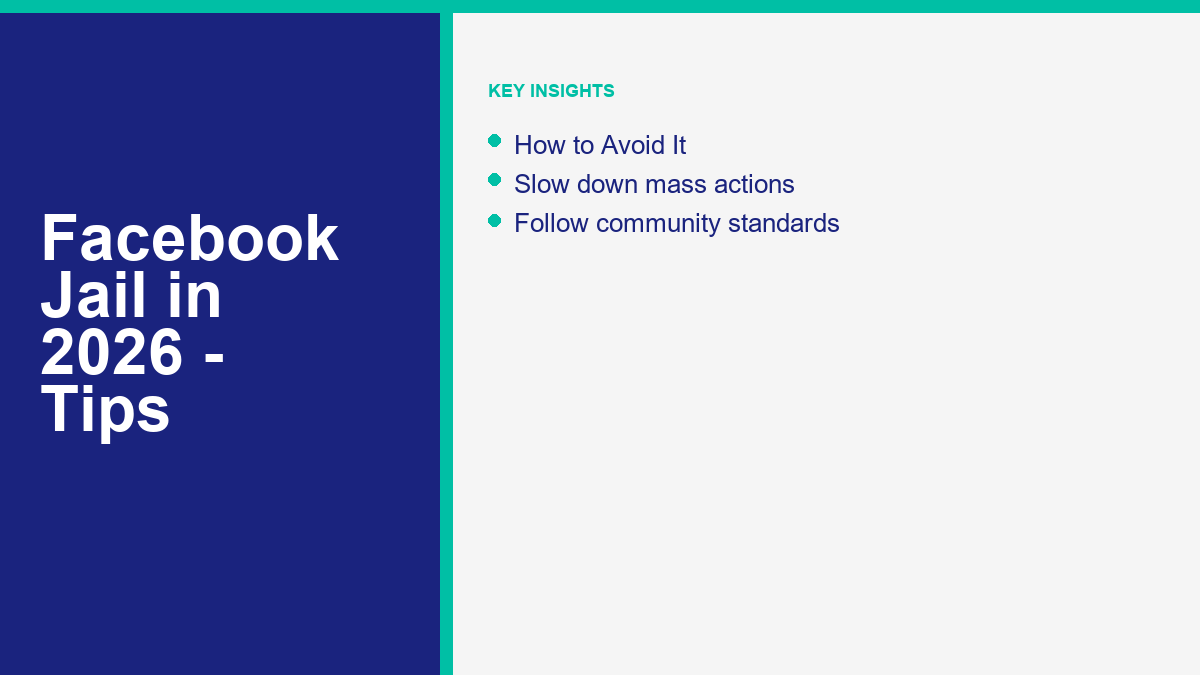
Avoid performing repetitive tasks in rapid succession. If you need to send messages, write comments, or share posts, space these actions out naturally over time. If your profile behaves like an automated script, the system will treat you like one. If you run a business page, avoid manual spam by using automated chat solutions. You can Voir les tarifs de MessengerBot to find a plan that safely automates customer engagement. For advanced features and rate-limit safety, consider reading about Upgrade to MessengerBot Pro to keep your business communications compliant.
Do Not Copy and Paste the Same Text
Sending the exact same message to twenty different customers, or pasting the identical comment on multiple group posts, is a guaranteed spam trigger. Always customize your messages, vary your vocabulary, and personalize the content. If you must send generic updates, use personalization tags or template systems that modify the text structure for each recipient.
Verify All Shared Links
Before sharing a link on your profile, page, or inside groups, verify that the destination website is clean and does not redirect users to deceptive landing pages. If you are sharing affiliate links, check whether the merchant’s domain has been flagged by Meta. You can use free URL checking tools or developer diagnostic interfaces to verify how Facebook views your links before you publish them.
Verify Your Account Identity
Ensure your account is fully verified by adding a phone number, confirming your email address, and enabling two-factor authentication. Verified accounts are granted higher trust scores by the automated risk models, making them less likely to be restricted for minor rate-limit spikes.
Manage Group Moderation Roles Wisely
If you are an administrator or moderator of a Facebook Group, you should know that Meta holds group managers responsible for the content posted within their communities. If members of your group post spam, hate speech, or copyrighted materials, and you do not moderate or delete those posts quickly, Meta’s systems can place restrictions on your personal profile. To prevent group-related restrictions, set up moderation rules, utilize automated filters to flag keywords, and review your group’s activity queue regularly to remove policy-violating content before it triggers automated platform enforcement.
If you are messaging users, it is helpful to know how delivery statuses work, such as checking read receipts on Facebook Messenger, so you do not send repetitive messages that look like automated spam to the system.
By implementing these safety measures, you can interact with the platform confidently. Keeping your account metrics clean and avoiding minor policy violations ensures your page maintains its reach and your profile remains in good standing with Meta’s automated defenses.
Questions fréquemment posées
What is the difference between a warning and Facebook Jail?
A warning is a notification that your content has violated Community Standards, but it does not restrict your account access. Facebook Jail is an informal term for when your ability to post, comment, or message is actively suspended or restricted for a set duration.
Can I bypass a Facebook Jail restriction using a VPN?
No. A Virtual Private Network changes your IP address, but it does not alter your account status in Meta’s database. Feature blocks are applied to your specific profile identity, meaning the restriction remains active regardless of your location or network configuration.
Can third-party services unlock my restricted Facebook account?
No. There are no external tools, software programs, or hacker services that can access Meta’s database to remove an account restriction. Anyone claiming they can unlock your account for a fee is a scammer. All appeals must go through official Facebook channels.
Why did Facebook put my page in jail for sending messages to customers?
Meta enforces strict rate limits and quality standards on page communications to prevent spam. Sending identical messages to many users, messaging people who have not opted in, or messaging too quickly can trigger automated blocks. Using official tools like Messenger Bot helps you automate interactions safely within platform guidelines.
How do I check if my Facebook account is currently restricted?
You can check your status by navigating to Settings & Privacy, selecting Help & Support, and opening your Support Inbox. You can also view your profile status by going to your profile page, tapping the three dots menu, and selecting Account Status.
 Français
  English
  Tagalog
  简体中文
简体中文  العربية
  हिन्दी
  Português do Brasil
  Español de México
  বাংলা
বাংলা  香港中文
香港中文  繁體中文
繁體中文  Nederlands
  Deutsch
  Bahasa Indonesia
  日本語
日本語  한국어
한국어  Polski
  Русский
  Español
  Tiếng Việt