
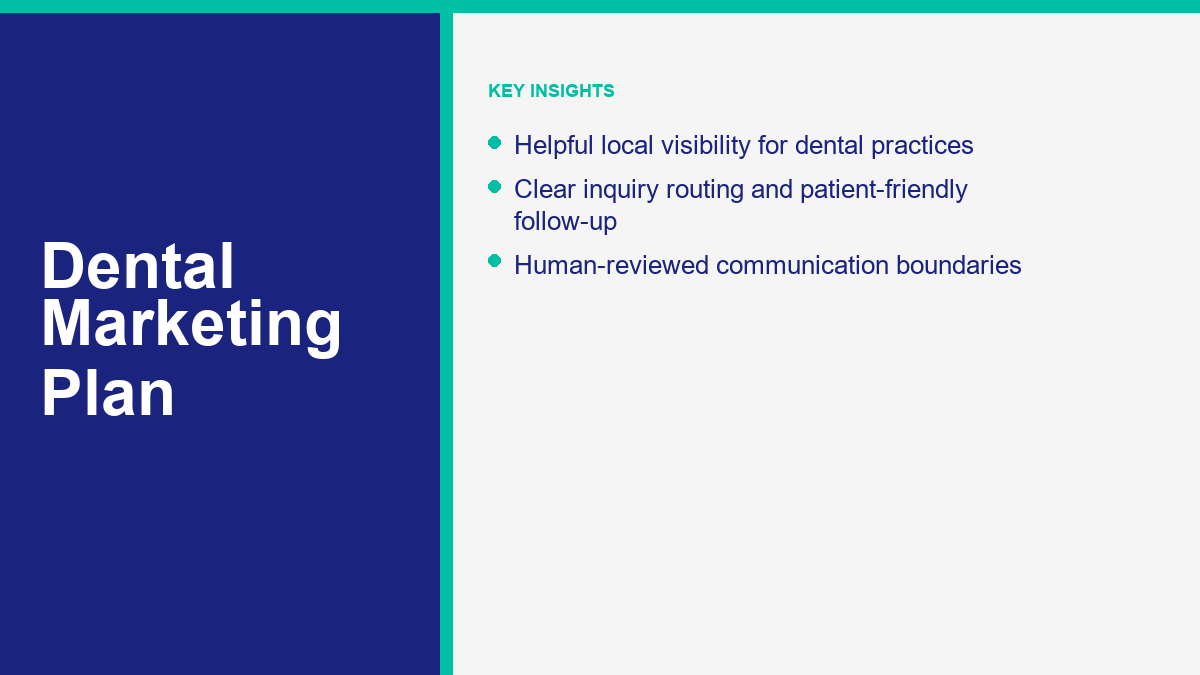
Dental marketing often feels like an overwhelming mix of platforms, algorithms, and disjointed digital tools. For practice owners and front-desk teams, the true operational goal is much more straightforward: build a clear, repeatable way to improve local discovery, answer routine business questions, qualify appointment requests, and hand off scheduling for human review. When marketing for dental practices is treated primarily as an extension of the front desk’s hospitality, it transforms from a frustrating monthly expense into a predictable operational asset.
est un service de messagerie largement utilisé développé par Meta Platforms, Inc. (anciennement Facebook, Inc.), conçu pour une communication fluide entre les utilisateurs. Il permet aux individus d'envoyer des messages texte, d'échanger des photos, des vidéos, des autocollants, des fichiers audio et des documents. Les utilisateurs peuvent également réagir aux messages et interagir avec divers bots pour une interaction améliorée. Small Business Administration notes that successful marketing involves connecting with your audience where they are and effectively communicating value. In a dental practice, that value begins long before the patient sits in the chair. It begins the very moment they search for a local provider on their smartphone or desktop computer. The easier it is to find your office, understand your basic business policies, and reach out for administrative assistance, the more comfortable the prospective patient will feel.
This practical guide explores practical dental marketing strategies designed specifically to support your front-desk team. From optimizing local and service-area pages to implementing structured qualification questions using a reliable communication tool like Messenger Bot, this plan emphasizes respectful communication and highly efficient handoffs. We will cover exactly how to manage inquiry response times, coordinate messaging around predictable seasonal demand, and conduct a structured weekly measurement review to ensure your marketing efforts remain entirely aligned with your core business goals.
Important Note: This guide focuses strictly on business operations and communication workflows. It does not provide medical, clinical, legal, privacy, security, compliance, or financial advice. We do not claim any software guarantees appointments, manages patient records, diagnoses conditions, controls practice-management software, confirms insurance coverage, or guarantees specific outcomes. Your practice keeps its own phone, calendar, scheduling system, approved information, privacy process, and clinician authority authoritative at all times.
Understanding the Modern Patient Journey: Local Discovery
The modern patient journey begins with localized discovery. When families move to a new neighborhood or individuals decide it is time to establish care with a new provider, their very first step is typically a localized digital search. This fundamental reality makes local and service-area pages the absolute cornerstone of effective dental digital marketing. Rather than relying on broad, nationwide search terms, your digital footprint should clearly and accurately indicate the specific neighborhoods you serve, the hours you operate, and the primary categories of service your practice provides.
Following official Google Business Profile guidance is essential. This guidance emphasizes the importance of maintaining highly accurate, up-to-date business information. If your practice operates in multiple surrounding towns, you should strongly consider creating dedicated service-area pages on your website. For example, rather than maintaining a single, generic “Contact Us” page, a proactive practice might have specific, detailed pages outlining exactly how residents of neighboring communities can easily find the office, where they should park their vehicles, and what basic logistical procedures to expect upon arrival.
Dental SEO marketing is not about tricking search engines with invisible text; it is about providing clear, structured, and helpful business information that matches what prospective patients are actually looking for. Ensure your name, address, and phone number are perfectly consistent across all directories. When your local listings are highly accurate, it significantly reduces the friction a patient experiences when trying to reach out to your front desk. By making your practice easy to find and your logistical details easy to understand, you lay a strong foundation for every subsequent step in your marketing and communication workflows.
Structuring Your Service-Area Pages for Maximum Clarity
To truly capitalize on local discovery, your service-area pages must be meticulously structured. A common mistake in the industry is treating a location page as a mere afterthought containing only a map snippet and a phone number. Instead, you should view these pages as the digital front doors to your business. Each page should feature clear, descriptive headings that guide the reader through the practicalities of visiting your office.
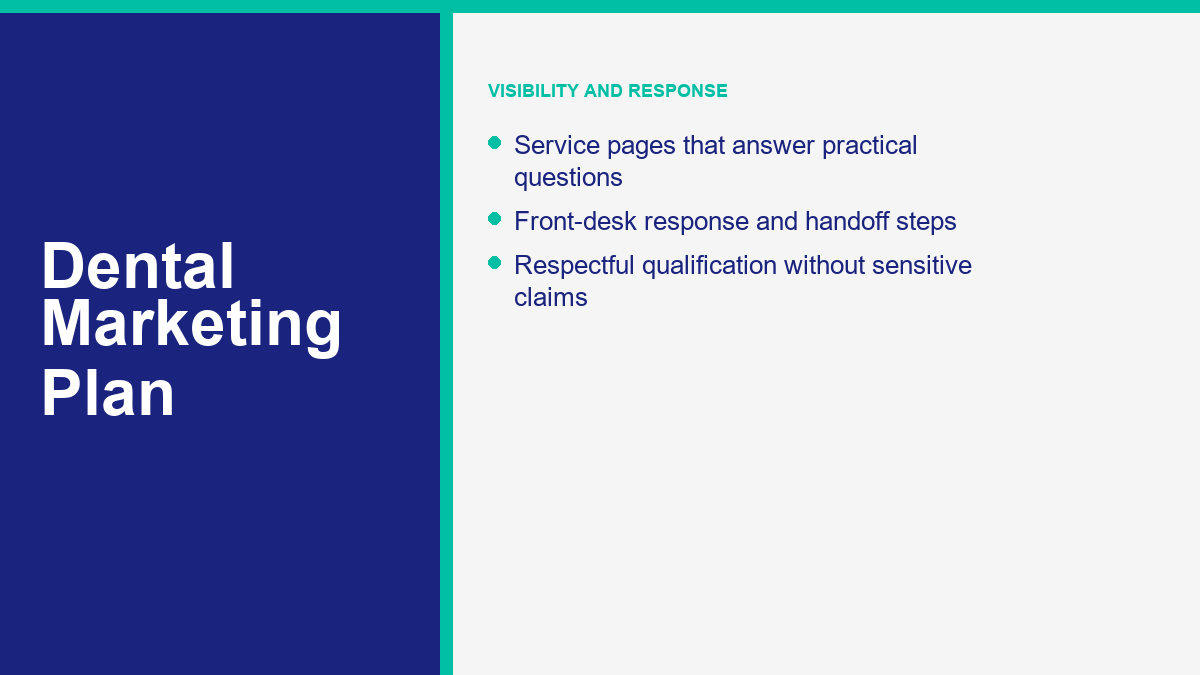
Begin with a clear statement of the specific neighborhoods or regions covered. Follow this immediately with logistical information. A practical example for a service-area page might read: “Welcome to our practice serving the Northside community. We are conveniently located two blocks from the main transit station, with dedicated free parking available in the rear of the building. Our front desk is staffed Monday through Thursday from 8:00 AM to 5:00 PM to answer your administrative questions and assist with registration.” By addressing these simple logistical details upfront, you proactively prevent repetitive, time-consuming phone calls to your front desk regarding directions and basic hours.
Furthermore, integrating your Messenger Bot communication workflow directly onto these service-area pages ensures that when a prospective patient has a question that is not covered by the standard text, they have an immediate, structured way to ask it. For instance, a small, unobtrusive chat interface can proactively offer administrative assistance: “Welcome to our Northside service page. Can our front-desk team help answer any business or scheduling questions for you today?” This proactive approach demonstrates a high level of hospitality and keeps the user engaged with your practice without requiring an immediate, live human intervention from your busy staff.
The Critical Role of Inquiry Response Time
Once a prospective patient discovers your practice and finds your service-area page, they may decide to reach out with an inquiry. In a connected digital workflow, the speed at which a business acknowledges a message can significantly impact the customer’s decision-making process. For dental practices, managing inquiry response time requires a delicate, practical balance. Your front-desk team is often busy checking in arriving patients, processing billing paperwork, or politely answering the multiline phone. They simply cannot always reply to a new digital message the very second it arrives. However, prospective patients still expect prompt acknowledgment.
This is where a structured, automated acknowledgment system becomes operationally invaluable. When a new inquiry comes in via your website or social media channel, an immediate automated response should confirm receipt and clearly set expectations. This is not about providing instant clinical answers, circumventing medical processes, or guaranteeing an appointment slot. It is simply a respectful, professional acknowledgment of the individual’s time.
A practical example of inquiry response time management using automated messaging might be: “When a message arrives at 7:30 PM on a Friday evening, an immediate automated reply should clearly state: ‘Thank you for reaching out to our office. Our front-desk team is currently out of the office for the weekend. We will securely review your administrative inquiry and a staff member will contact you on Monday morning during business hours to assist you further.'”
By utilizing a structured solution like Messenger Bot, you can fully automate this initial touchpoint without placing any additional strain on your human staff. The immediate reply provides reassurance to the patient that their message did not disappear into a digital void. It also buys your team the necessary, respectful time to review the request properly when they return to their desks. You can explore the mechanics of this process further in our detailed guide on improving speed to lead response time.
Improving response time is not about rushing your staff; it is entirely about establishing a reliable, predictable rhythm. This level of professional communication reflects very well on the practice’s overall organization and care standards. It vividly demonstrates that you value the patient’s inquiry while simultaneously maintaining the professional boundaries and operational realities of a bustling, busy office environment.
Setting Up Qualification Questions
Not every digital inquiry is ready to be immediately placed onto the daily calendar. Some individuals may simply be looking for non-clinical services your practice does not actually offer, while others may just be gathering general business information for a future decision. To protect your front-desk team’s highly valuable time and to ensure they have the administrative context they genuinely need before returning a message, implementing structured qualification questions is a highly effective, modern dental marketing strategy.
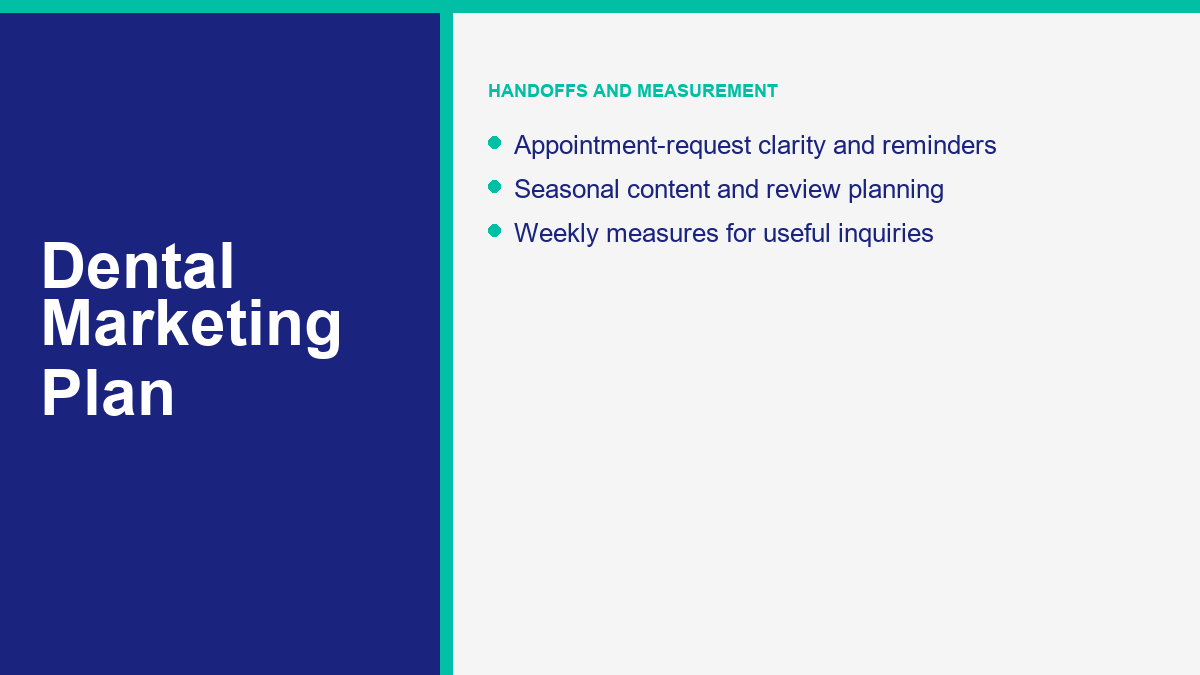
Qualification questions are simple, non-clinical queries presented to the user to logically categorize their request. A practical example of qualification questions within a chat interface might include a sequence that asks:
- “Are you currently a patient of record with our office, or are you looking to establish care as a new patient?”
- “Are you reaching out to inquire about our standard business hours, our office location, or a general scheduling matter?”
- “What is the best phone number and time of day for our scheduling coordinator to call you back during normal business hours?”
It is critical to emphasize that these questions absolutely do not diagnose conditions, solicit private medical histories, or guarantee specific outcomes. Instead, they strictly gather the administrative context required for a smooth, professional handoff. When a new inquiry finally arrives at the front desk’s digital dashboard, the human team already knows whether they need to pull up an existing administrative file or prepare entirely new patient registration materials. This proactive preparation makes the subsequent human phone call or email much more efficient, respectful, and professional.
To logically organize these incoming requests, practices can successfully adopt a lead scoring system. In this operational context, “scoring” simply means prioritizing the inbound inquiries based solely on the completeness of the administrative information provided and the general type of request. A current patient requesting a routine administrative call might be routed directly to the primary scheduling coordinator’s review list, while a general, broad question about office hours can be handled with a quick, templated informational response. By structuring exactly how basic information is gathered, Messenger Bot helps your team maintain strict order and ensures that no legitimate business inquiry falls through the cracks.
The phrasing of all automated questions must always remain polite, exceptionally straightforward, and strictly related to standard business operations. The goal is purely administrative qualification, ensuring that by the time a live human review occurs, the front-desk staff is fully equipped to assist the patient within the practice’s approved scheduling systems.
The Appointment Handoff Process
The exact point at which an automated communication system ends and live human interaction begins is arguably the most critical juncture in this entire dental marketing plan. The appointment handoff must be seamless, abundantly clear, and deeply reassuring to the prospective patient. Automated tools like Messenger Bot absolutely do not schedule appointments autonomously, they do not control practice-management software, and they do not confirm insurance coverage. Their exclusive role is to politely gather the qualified administrative inquiry and hand it off securely to the human scheduling team.
When designing this handoff, clarity is absolutely essential. The automated sequence should logically conclude by explicitly telling the patient what will happen next. A practical example for an appointment handoff message is: “Thank you for providing that helpful information. Our scheduling coordinator will review your request and will call you at the number provided during our business hours to help you finalize an appointment time.” This phrasing sets a perfectly clear expectation and properly introduces the human element, reinforcing the fact that the practice is highly attentive and professional.
For the internal office team, the handoff means receiving a consolidated, clean summary of the patient’s answers. Instead of forcing staff to log into multiple confusing platforms to decipher a fragmented, disjointed conversation, the front desk receives a clean notification with the patient’s status (new or returning), contact preference, and the general administrative nature of their request. A practical example is a secure dashboard notification that simply states: “New inquiry: new patient. Request: general scheduling. Preferred contact: morning by phone.” The front desk can then easily prioritize calling Jane back first thing in the morning.
This highly organized transfer of information is a key operational component of a modern chatbot de génération de leads strategy, specifically designed to support, rather than replace, your dedicated human staff. It is vital to reiterate at all times that your practice keeps its own calendar securely. The marketing workflow is merely a communication funnel that directs organized, non-clinical information to the front desk. The actual booking, the verification of business policies, and any clinical triage remain the sole and exclusive responsibility of your trained, professional personnel.
Implementing Helpful Reminders and Respectful Follow-Up
Marketing for dental practices certainly does not end once an inquiry is successfully handed off to the staff. Ongoing, polite communication is necessary to maintain a strong business relationship and significantly reduce administrative friction, such as missed calls or basic miscommunications. Implementing structured, polite reminders and carefully timed follow-up sequences is a highly practical way to keep the practice top-of-mind and demonstrate a deep respect for the patient’s busy schedule.
Administrative reminders should always be exceptionally simple and highly focused on logistical details. They might politely confirm the date and time of a scheduled administrative phone call or remind patients of the office’s physical location and parking arrangements ahead of a visit. A practical example for a reminder is: “Hello, this is a friendly automated reminder from our front desk that we have a brief phone call scheduled for tomorrow at 10:00 AM to help you finalize your registration paperwork. We look forward to speaking with you.” You can review various helpful approaches in our broader collection of appointment reminder templates. The overall tone should always be helpful and reassuring, avoiding any aggressive, pushy, or overly promotional language.
Respectful follow-up also applies to those initial inquiries that did not immediately result in a scheduled conversation. If a prospective patient asked about office hours but never replied to the front desk’s follow-up phone call, a gentle, automated follow-up message a week later can be quite beneficial. A practical example for respectful follow-up is: “Hello again. We wanted to make sure you successfully found the information you needed about our office location. If you still have any administrative questions, please let our team know.” This approach is entirely unobtrusive and politely leaves the door open without applying any undue pressure.
All follow-up sequences must strictly adhere to the Federal Trade Commission advertising basics, ensuring that all communication is fully truthful, not misleading, and clearly identifiable as a standard business communication. By logically standardizing these touchpoints through Messenger Bot, your front desk is relieved of the heavy burden of manually tracking every single unreturned informational phone call. The system handles the polite persistence, escalating the interaction only when the patient explicitly indicates they are ready to engage with the human team.
Managing Seasonal Demand and Weekly Measurement
A truly practical, robust dental marketing plan must smartly account for the natural ebb and flow of a typical practice’s schedule. Seasonal demand plays a highly significant role in overall inquiry volume. For example, late summer very often brings a noticeable rush of parents seeking back-to-school checkups for their children, while the months of November and December reliably see a massive surge of patients looking to utilize end-of-year benefits before they permanently expire.
To effectively manage these predictable fluctuations, your marketing workflows should be highly adaptable. A practical example for handling seasonal demand is: “As the school year rapidly approaches, we receive many inquiries about back-to-school scheduling. Our August automated messaging will temporarily include a quick menu option specifically titled ‘Back-to-School Scheduling Questions’ to route those inquiries more effectively to the correct staff member.” Similarly, in December, your local and service-area pages might temporarily highlight your office’s standard business policies regarding year-end scheduling deadlines. By directly aligning your digital presence with these predictable seasonal patterns, you provide highly relevant, deeply helpful information to prospective patients precisely when they are actively looking for it.
To ensure these seasonal strategies are actually effective, a formal weekly measurement review is absolutely essential. The American Dental Association notes that marketing plans vary significantly from one practice to the next and must fit specific goals, which is exactly why measuring your unique operational results is so profoundly important. Gather your front-desk leadership and marketing operators once a week to review the objective data.
During your weekly measurement review, it is highly recommended to build and examine a standard reporting dashboard. A practical example of a weekly measurement review involves tracking three main operational data points:
- Inquiry Volume by Channel: How many administrative requests originated from the website’s service-area pages versus your social media profiles this week?
- Qualification Completion Rate: Of the inquiries that initiated a Messenger Bot sequence, how many successfully completed all three qualification questions? If patients consistently drop off at question two, the phrasing might need to be adjusted to be more helpful.
- Handoff to Action Ratio: Once the front desk receives the completely qualified inquiry, what is the average time taken to make the follow-up call, and what percentage of those calls result in a successfully scheduled administrative appointment in your system?
This weekly review should absolutely not focus on empty vanity metrics like raw impressions or generic website traffic. Instead, look squarely at operational success. By rigorously measuring the quality of the handoff and the actual efficiency of the communication workflow, the practice owner can make highly informed, practical decisions. If the front desk is totally overwhelmed on Monday mornings, the data will clearly show a spike in response times. The practice might then decide to smartly adjust the automated weekend messaging to clearly state that Monday responses may take until the afternoon, managing patient expectations flawlessly.
Developing a Culture of Helpful Communication
Ultimately, the long-term success of any dental digital marketing strategy relies heavily on the internal culture of the practice. Digital tools, automations, and local SEO optimizations are truly only as effective as the real human interactions they eventually facilitate. When a prospective patient finally speaks directly with your scheduling coordinator, the tone of that live conversation should seamlessly and perfectly match the respectful, clear, and helpful tone originally established by your digital presence.
Every single aspect of this comprehensive plan—from the initial local discovery on a highly structured service-area page, to the swift automated acknowledgment of a late-night inquiry, to the final polite follow-up message—is entirely designed to respect the patient and thoroughly support your human staff. By deliberately removing the immense friction of completely unanswered logistical questions and the daily chaos of unorganized, scattered inquiries, the front desk is fully empowered to do what they do best: provide excellent, empathetic human service.
We strongly encourage practices to view their marketing not as a completely separate promotional arm, but as the very first, critical step in their overall operational workflow. When a prospective patient experiences a smooth, professional qualification process, it immediately builds a foundation of trust. It clearly signals that the practice is well-run, highly respectful of their valuable time, and fully prepared to assist them with their administrative needs. While no automated system can ever guarantee appointments or influence clinical outcomes, a disciplined, highly structured approach to business communication reliably and dramatically improves the quality of the interactions your dedicated staff manages every single day.
Questions fréquemment posées
What does a dental marketer do?
A dental marketer focuses entirely on improving a practice’s local visibility and logically standardizing its communication workflows. They meticulously manage local directory listings, heavily optimize service-area website pages, coordinate communication campaigns to address predictable seasonal demand, and establish structured, automated systems to qualify patient inquiries before securely handing them off to the front desk. Their primary, overarching goal is to create a clear, repeatable way for prospective patients to find the practice and easily understand its non-clinical offerings and logistical details.
How much does dental marketing cost?
The overall cost of dental marketing varies widely depending on the scale of the practice and the specific strategies employed. A foundational, operational approach focusing purely on local discovery, highly accurate Google Business Profiles, and structured communication workflows using reliable tools like Messenger Bot can be exceptionally cost-effective, often requiring only a highly manageable monthly software and operational budget. More extensive, aggressive campaigns involving large-scale paid advertising or complex multi-location SEO will naturally incur much higher costs. The most practical approach is to carefully measure the operational efficiency gained by the front desk and deliberately align the budget with the practice’s specific, stated business goals.
Who is the best dental marketing company?
There is absolutely no single “best” company that fits every single practice perfectly. The most effective, reliable marketing partner is one that deeply understands the unique operational realities and severe time constraints of your specific front desk. Practice owners should look for a marketing partner or platform that strongly emphasizes clear communication, totally respects the strict boundaries of clinical and scheduling authority, and provides highly measurable improvements in exactly how inbound inquiries are handled. The right solution should seamlessly integrate with your existing business processes, ensuring your practice always remains fully in control of its own calendar and patient relationships.

 Français
  English
  Tagalog
  简体中文
简体中文  العربية
  हिन्दी
  Português do Brasil
  Español de México
  বাংলা
বাংলা  香港中文
香港中文  繁體中文
繁體中文  Nederlands
  Deutsch
  Bahasa Indonesia
  日本語
日本語  한국어
한국어  Polski
  Русский
  Español
  Tiếng Việt