
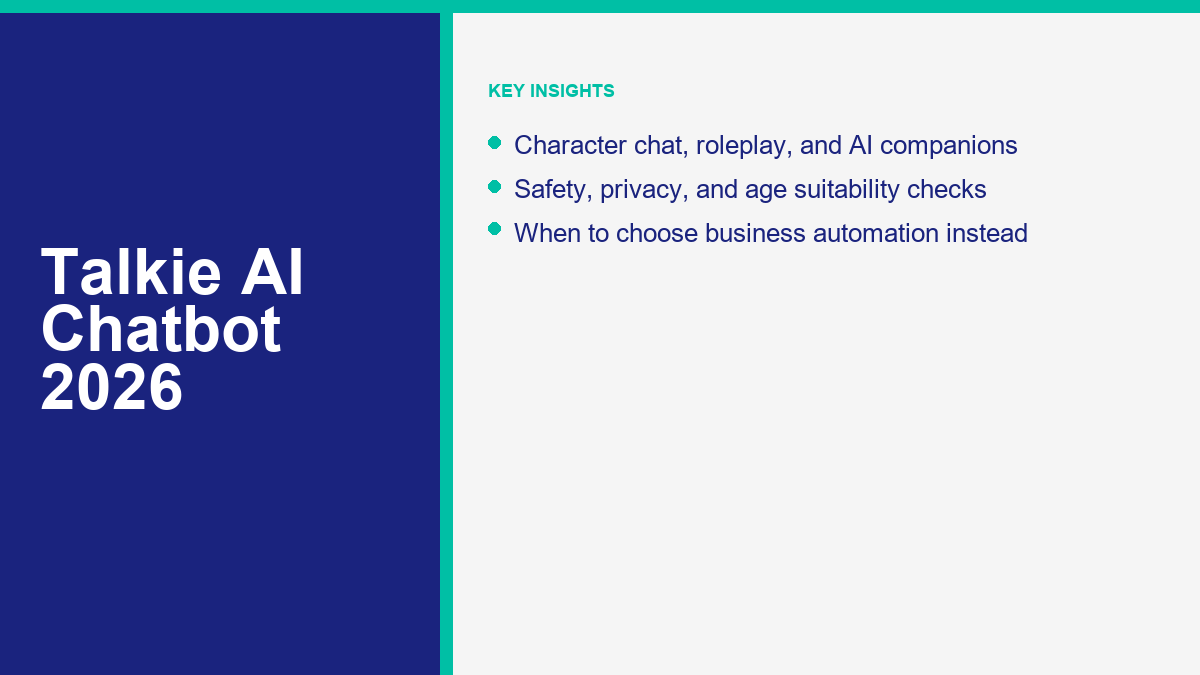
The Talkie AI chatbot is one of the better-known character chat options in 2026, offering users an interactive space for creative roleplay, character discovery, and virtual companionship. The Talkie AI app is currently listed on Google Play as “Talkie: Creative AI Community” by publisher SUBSUP, and its official site positions the product around character creation, memory, community, roleplay, and practical helper experiences. Choosing the right platform requires looking past store-page marketing and evaluating safety policies, actual costs, and technical limits.
For users who want to explore this space, understanding how the Talkie chatbot operates is the first step toward a satisfying experience. The official Talkie site positions the product around AI character discovery, creation, memory, community, roleplay, and practical helper experiences. This multi-layered positioning means the software attempts to be many things to different audiences: a writing assistant for creative authors, a gaming-like interface for roleplayers, and a supportive listening tool for those seeking conversational interaction. Evaluating these claims against independent reviews and current app store policies helps separate product marketing from the day-to-day user experience.
It is also essential to draw a clear line between entertainment-focused companion tools and utility-driven systems. If your primary objective is not creative roleplay or meeting virtual companions, but rather setting up automated customer service, capturing leads, or deploying business flows on social media, you are looking at the wrong category of software. For business-driven integrations, the first step should be to チュートリアルを閲覧する to see how dedicated automation platforms manage user intents and route conversations. Creative character applications are built for entertainment, while professional platforms are built for measurable outcomes.
Understanding the Talkie AI Chatbot Experience in 2026
A Creative AI Community Online
The core identity of the Talkie chatbot is centered on community creation and public sharing. Unlike typical productivity tools that offer a single, unified assistant personality, this application serves as a directory for user-created characters. Each character may include a creator-provided backstory, personality prompts, avatar styling, and voice settings. The result is a broad catalog where users can find fictional archetypes, original characters, and practical helper personas designed for specific narrative or learning scenarios.
This community-driven model changes how users interact with the underlying language models. Instead of focusing on factual accuracy or logical reasoning, the system prioritizes conversational style, emotional tone, and narrative consistency. A user interacting with a character designed as a medieval knight expects old-fashioned language, dramatic dialogue, and action-oriented replies. The system is designed to sustain these roleplay scenarios, relying on the user’s input to drive the plot forward. This cooperative storytelling approach makes the application feel more like a text-based game or an interactive novel than a traditional search engine or workspace tool.
The Appeal of AI Character Chat
The sustained demand for AI character chat reveals a growing user interest in interactive storytelling and companionship. Many individuals turn to these platforms to explore creative writing prompts, test fictional scenarios, or practice conversational skills in a low-pressure environment. A writer might use the Talkie chatbot to prototype dialogue between two original characters, while a language learner might chat with a bot programmed to speak a foreign language in a casual conversational style. Because the interactions are virtual, users feel free to experiment with different personas and narrative directions without judgment.
This creative freedom is supported by visual and audio features that increase immersion. In 2026, character chat tools are no longer limited to basic text blocks. The integration of high-quality voice synthesis allows bots to read their replies aloud, matching the text to a specific accent, gender, or tone. Additionally, the app’s focus on character cards and collectible digital artwork gives the experience a gaming feel, appealing to users who enjoy collecting items and customizing their profiles. This combination of text, voice, and visuals creates an engaging environment for entertainment-oriented users, though it requires a significant amount of user data and processing power to run smoothly.
Talkie AI App Core Features and Interactive Options
AI Character Discovery and Interaction
Discovery is the main entry point for the Talkie chatbot experience. Upon opening the app, users are presented with a dynamic feed of popular, trending, and recommended characters based on their browsing history and stated interests. The search interface allows individuals to look up specific tags, genres, or names, making it easy to find bots tailored to particular themes. Each character card displays the creator’s username, the character’s name, and a brief description of their role, helping users choose whom to interact with. The transition from discovery to conversation is designed to be seamless, requiring only a single tap to open the chat window.
Once a conversation starts, users can choose between multiple interaction modes. In addition to standard typing, the application supports voice calls, letting users speak directly to the bot and listen to spoken replies in real time. The chat interface also features option sweeps, which allow users to swipe left or right to generate alternative replies from the AI if the initial response does not fit the narrative flow. This feature is particularly useful during complex roleplay scenes, giving the user greater control over the direction of the conversation. The AI’s responses are also influenced by the character’s stated memory settings, which attempt to retain key details across a session, though long-term memory remains a technical challenge for the system.
Mobile Platform Dynamics and Store Listings
The distribution of the Talkie chatbot is split across the major mobile platforms, and the user experience can vary depending on the device and region. On Android devices, the application is listed under the official title “Talkie: Creative AI Community” and is published by SUBSUP. The Google Play listing, which received a major update on May 30, 2026, indicates that the app is rated PEGI 12, features in-app purchases, and contains third-party advertisements. The PEGI 12 rating reflects the presence of user-generated content and interactive chat features, which require parental supervision for younger audiences. The listing also warns that the app includes user interactions, meaning the platform allows public communication and sharing among its members.
Apple users should be more careful with naming and regional availability. During the May 31, 2026 source check, the related App Store result surfaced as “Talkie Lab – AI Playground,” so readers should verify the current listing, developer name, age rating, and version details in their own region before downloading. Rather than assuming the application behaves identically on every mobile operating system, users should review permissions, in-app purchase options, and data collection disclosures on their device.
Safety Guidelines and Privacy Risks on Talkie AI
Official Age Restrictions and eSafety Cautions
Safety is a critical topic in the character chat sector, especially given the open-ended nature of generative AI. The official eSafety guide describes Talkie as an AI chatbot for creating, sharing, and interacting with characters. The guide notes Talkie’s stated minimum age requirement of 16 years, which is higher than the standard 13-year minimum found on many social networks. This age restriction is designed to protect younger users from encountering mature themes, suggestive dialogue, or inappropriate user-generated content that may bypass the app’s automated filters. Parents should be aware that despite the PEGI 12 rating on Android, the official terms of service demand that users be at least 16 years old to register an account.
The eSafety guide also issues specific cautions regarding the accuracy and safety of chatbot outputs. Like all generative models, the Talkie chatbot is prone to hallucinations, meaning it can generate inaccurate, misleading, or entirely fabricated information. More importantly, the guide cautions about the risk of age-inappropriate content and inaccurate or harmful chatbot output. Because the AI is trained on vast datasets and generates text dynamically, it can occasionally produce biased, offensive, or emotionally distressing replies. Users, particularly teens, should avoid relying on the AI for factual research or emotional support, treating the interactions strictly as a form of fictional entertainment.
Data Privacy and Content Boundaries
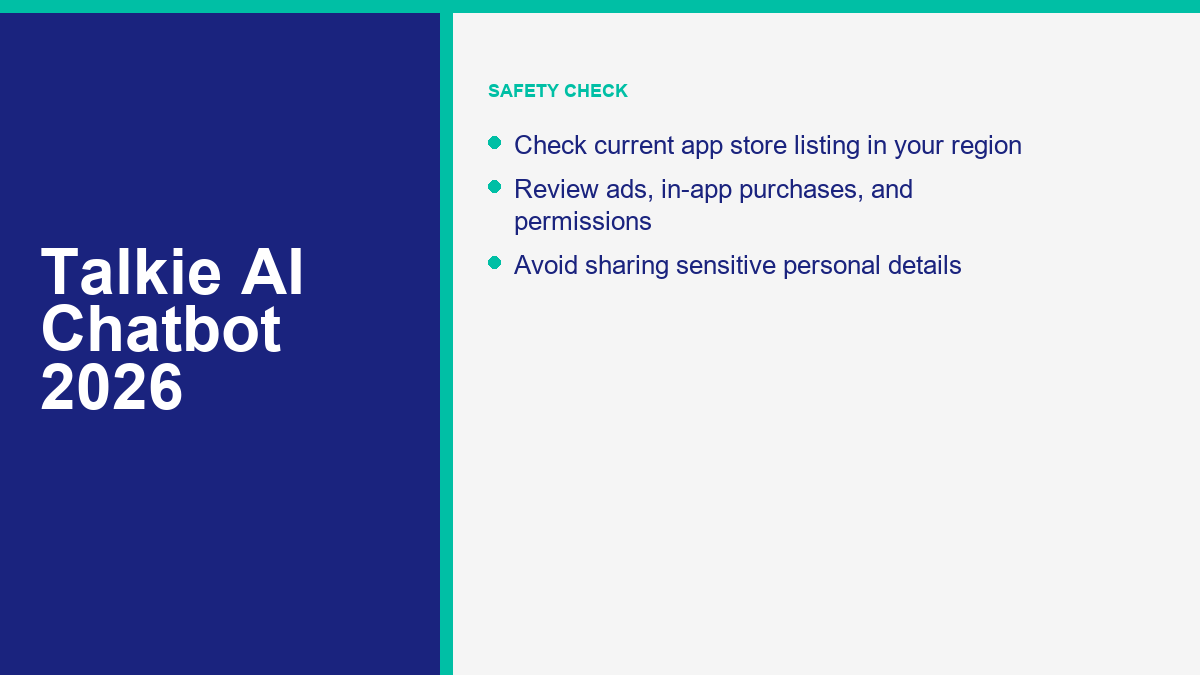
Privacy is another area where users need to exercise caution. Character chat tools commonly process conversation text, device details, usage patterns, and voice input when voice features are used. That creates potential risks if sensitive personal details are shared within the chat. Users should assume that conversation history may be stored on external servers and may be reviewed for moderation or service-improvement purposes. Avoid sharing real names, locations, financial data, or sensitive personal secrets with any character bot.
The boundaries of acceptable content are defined by the platform’s moderation guidelines and automated filters. The Talkie chatbot employs systems to block explicit content, violence, and hate speech, but these filters are not infallible. The community nature of the app means that new characters are constantly being uploaded, and some creators active in the space design scenarios that push the limits of the platform’s rules. If a user encounters a character that violates the community standards, they should use the built-in reporting tools to alert the moderation team. Relying on automated filters is not enough; active community moderation and user vigilance are necessary to maintain a safe environment.
Free Access and Paid Upgrades on the Talkie Chatbot
The Free Tier and Monetization Structures
The Talkie chatbot uses a freemium model: users can usually begin exploring characters without paying, while ads, in-app purchases, subscriptions, or virtual currency support premium access. Exact limits can change by platform, country, and app version, so readers should check the current store listing and in-app purchase screen before assuming which features are free.
Monetization is integrated directly into the core gameplay loops of the app. The system uses a virtual currency, often referred to as diamonds or coins, which can be purchased with real money through in-app billing. This currency is used to buy character cards, unlock premium voice styles, or bypass daily message limits. The introduction of card draws and gacha-style mechanics adds a speculative element to the app, appealing to users who enjoy collecting rare digital assets. While these mechanics can be engaging, they can also lead to unexpected expenses if users are not careful with their purchasing habits.
Evaluating Paid Subscriptions and In-App Purchases
For frequent users, a paid upgrade may seem like a reasonable way to reduce friction, remove ads, or unlock more convenience features. Price and subscription terms can change, and they often vary by platform and country. Users should check the active in-app purchase list on Google Play or the App Store to see current local rates before subscribing.
Before purchasing, evaluate whether the paid upgrade solves your specific complaint. If the problem is ads or usage friction, paid access may help. If the frustration is related to AI memory limits, factual inaccuracy, or moderation boundaries, paying may not change those foundational characteristics.
Optimal Use Cases for Creative AI Character Chat
Creative Writing and Roleplay Prototyping
The Talkie chatbot is highly effective as a creative tool for writers and storytellers. Designing a character card requires defining a name, backstory, appearance, and specific speech patterns. This process is very similar to writing a character profile for a novel or a tabletop roleplaying game. By interacting with the bot, a writer can test how a character might react to different scenarios, experiment with dialogue styles, and generate ideas for plot developments. The AI acts as an active brainstorming partner, offering unexpected responses that can spark new creative directions.
This collaborative writing experience is enhanced by the option sweep feature. If a writer is unsatisfied with the direction of a scene, they can swipe to view alternative responses, selecting the one that best fits the narrative arc. This allows for a structured approach to storytelling, where the user guides the plot while the AI provides the character’s reactions and dialogue. This setup is ideal for writers who struggle with writer’s block or need a low-pressure environment to practice their craft, though they should remember that the generated text is owned and hosted by the platform.
Interactive Learning and Practical Helper Experiments
Beyond creative roleplay, the platform can be used for light educational purposes and practical experiments. Many characters in the directory are programmed as tutors, mentors, historical figures, or language partners. A user studying French can search for a character designed as a native speaker and practice conversational writing in a supportive, risk-free setting. Similarly, a student studying history might interact with a bot programmed to roleplay as an ancient philosopher, using the conversation to explore historical perspectives and philosophical arguments.
These practical helper experiences offer a dynamic alternative to traditional reading, but they must be approached with caution. Because the AI model can hallucinate, any factual claims made by a historical or educational bot should be verified using reliable academic sources. The helper experience is useful for engagement, motivation, and conversational practice, but it cannot replace formal instruction or fact-based reference materials. Using the tool as a starting point for exploration, rather than an authoritative source of knowledge, ensures a safe and productive learning experience.
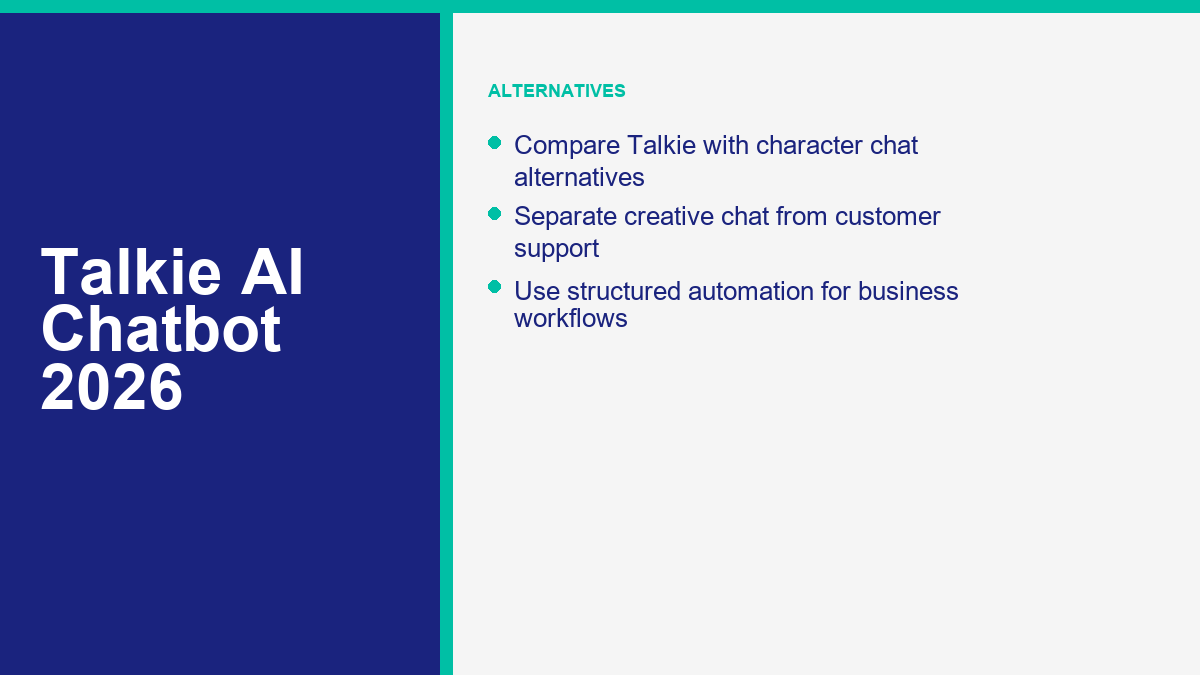
Talkie Alternatives: How the App Compares to Other AI Chat Tools
Feature and Platform Comparison Matrix
To help users choose the right tool for their needs, it is useful to compare the Talkie chatbot with other leading options in the AI character chat market. The table below outlines broad positioning, platform style, and pricing model, but store availability and paid features should always be checked before installing.
| Platform Name | 主な焦点 | Platform Availability | Monetization Model | Main Technical Strength |
|---|---|---|---|---|
| Talkie AI | Community discovery, voice roleplay, card collections | Android (Google Play), iOS (check local store listings) | Free with ads; in-app currency and subscriptions | Large catalog of user-generated characters and voice calls |
| Character.AI | Fandom chat, rapid discovery, custom voices | Web browser, iOS, Android applications | Free basic plan; optional c.ai+ monthly subscription | High-speed interactions and massive public library |
| Replika | Virtual companionship, emotional support | Web, iOS, Android, Virtual Reality (VR) | Free limited chat; Pro/Ultra subscriptions for advanced features | Persistent, long-term relationship memory and 3D avatars |
| Nomi | High-memory companion chat, group conversations | Web browser, iOS and Android mobile apps | Free trial; premium subscriptions for full memory access | Advanced context retention and realistic self-image generation |
| Kindroid | Customization, low-filter creative freedom | Web interface, iOS, Android mobile tools | Free Lite plan; premium subscriptions and memory add-ons | Transparent moderation guidelines and deep prompt control |
| CHAI | Fast-paced social chat, mobile-first feed | Mobile applications for iOS and Android only | Free with ads; Premium and Ultra billing tiers | Quick setup and highly active mobile-first character pool |
| SillyTavern | Self-hosted interface, advanced power-user setup | Local installation (PC, macOS, Linux) | Free open-source software (requires external API keys) | Complete control over backend models, prompts, and memory |
Safety and Moderation Comparison Matrix
In addition to features, safety policies and age restrictions are critical factors when choosing a character chatbot. The table below compares the moderation styles, stated minimum age requirements, and typical safety cautions for the same seven platforms, providing a clear overview of the safety landscape in 2026.
| Platform Name | Stated Minimum Age | Moderation Style | Primary Safety Cautions |
|---|---|---|---|
| Talkie AI | 16 years (official terms) | Automated content filters and user reporting | Inaccurate or harmful chatbot output, mature content bypasses |
| Character.AI | 13 years (16 in Europe) | Separate experiences for adults and under-18 users | Strict filtering system, potential age-assurance checks |
| Replika | 18 years (store rating) | Moderated companion chat, subscription-locked roleplay | Emotional dependency risks, virtual mod security issues |
| Nomi | 18 years (store rating) | Self-regulated companion space, anonymized accounts | Lack of public catalog safety, reliance on user boundary setting |
| Kindroid | 18 years (store rating) | Flexible companion style with published harm restrictions | Boundary-setting and age-suitability concerns |
| CHAI | 18 years (store rating) | Commercial-style filtering, focus on mobile safety | Aggressive data collection, variable model response quality |
| SillyTavern | Depends on backend model | No built-in moderation (controlled by the user) | Requires manual setup, safety depends entirely on selected API |
Why Business Teams Need Different Automation
The Limitations of Roleplay-First Systems
The popularity of creative platforms like the Talkie chatbot often leads business owners to wonder if similar technologies can be used to automate customer service or marketing. In 2026, the answer is a clear no. Creative character bots are designed for open-ended, imaginative, and unpredictable conversations. While this is ideal for roleplay, it is highly problematic for business applications. A customer asking about shipping costs or return policies expects a precise, factual, and consistent answer. A roleplay bot, trained to prioritize conversational flow over factual accuracy, may hallucinate pricing details or make promises that the company cannot fulfill.
Furthermore, entertainment bots lack the technical integrations necessary to run business workflows. They cannot connect to inventory databases, process credit card payments, or update shipping records in real time. They do not feature CRM integrations, automated tagging, or human-agent handoff logic. Using an entertainment bot for business is a mismatch of technology and intent, resulting in customer frustration, data privacy risks, and inaccurate communications that can damage a brand’s reputation.
Deploying Outcome-Driven Automation
To build reliable customer relationships, business and marketing teams must use automation platforms designed specifically for utility, security, and measurable outcomes. These systems allow businesses to create structured, rule-based, or AI-assisted conversational flows that guide users toward specific goals: booking a demo, resolving a support ticket, or qualifying a sales lead. Instead of relying on open-ended creative models, professional automation uses specific intents, entities, and api integrations to ensure every customer receives accurate, compliant, and timely information.
If you are ready to implement professional automation for your company, the first step is to evaluate plans and options that fit your message volume. You can MessengerBotの料金を見る to find a tier that matches your operational needs. To understand how these features integrate with your existing marketing stack, explore the MessengerBot Proの機能 to see how conditional logic, broadcast tools, and visual flow builders can scale your customer communications safely and efficiently.
Frequently Asked Questions About Talkie AI
Is the Talkie AI chatbot free to use in 2026?
Yes. The basic version of the Talkie chatbot is free to download and use on compatible mobile devices. However, the free tier is supported by advertisements and includes limits on daily message volume, voice calls, and option sweeps. Users can purchase in-app currency or sign up for premium subscriptions to remove ads, bypass limits, and unlock customization features.
What is the minimum age to use the Talkie AI app?
According to the official terms of service and eSafety guide, the stated minimum age for registering an account on Talkie AI is 16 years. While the Android Google Play listing shows a PEGI 12 rating due to its interactive features, parental supervision is strongly recommended, as the app relies heavily on user-generated content and open-ended AI generation.
How does Talkie AI compare to Character.AI?
Talkie AI and Character.AI both focus on public directories of user-made characters, but they emphasize different features. Talkie AI includes visual card collections, gacha mechanics, and built-in voice calls. Character.AI focuses on high-speed text interactions, a larger public database, and distinct safety experiences for adult and teen users, making it more text-focused.
What are the best Talkie alternatives for creative character chat?
Character.AI is the most obvious alternative for text-first public characters, Replika and Nomi lean more toward companion-style chat, CHAI is mobile-first, and SillyTavern is better for technical users who want to manage their own model setup.
Can I use Talkie AI for business marketing or customer support?
No. Talkie AI is designed for creative roleplay, entertainment, and virtual companionship. Its language models are optimized for narrative styling rather than factual consistency, making them unsuitable for customer service. Business teams should use professional platforms and should check our resources, where they can MessengerBotの料金を見る, explore MessengerBot Proの機能, または チュートリアルを閲覧する to build structured, integration-friendly automation.
 日本語
日本語  English
  Tagalog
  简体中文
简体中文  العربية
  हिन्दी
  Português do Brasil
  Español de México
  Français
  বাংলা
বাংলা  香港中文
香港中文  繁體中文
繁體中文  Nederlands
  Deutsch
  Bahasa Indonesia
  한국어
한국어  Polski
  Русский
  Español
  Tiếng Việt