
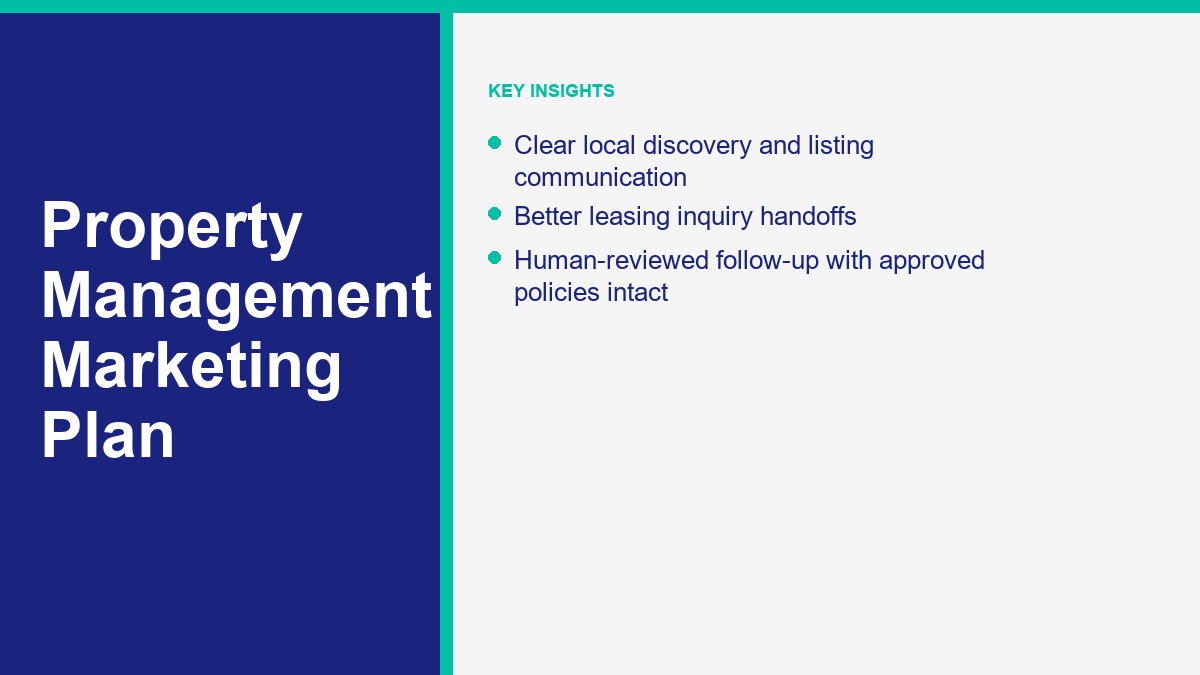
For small property managers and dedicated leasing teams, maintaining a steady flow of qualified inquiries is a core operational challenge. The reality of modern real estate is that prospective renters have countless options at their fingertips, and their attention spans are shorter than ever. A scattered approach to outreach and communication often leads to missed opportunities, frustrated team members, and empty units. By implementing a structured approach to property management marketing, local businesses can improve how they are discovered online, answer business questions, and follow up with prospects.
This guide is designed for property-management owners, front-desk staff, and leasing managers who need a clear, repeatable way to handle inbound interest. We will explore how to build a strong local foundation, establish respectful fit checks for incoming inquiries, coordinate showing handoffs seamlessly, and measure success on a weekly basis. Throughout this process, the business keeps its own phone, calendar, leasing system, approved policies, privacy process, and human authority authoritative.
Understanding the Foundation of Property Management Marketing
At its core, marketing is about creating value and communicating it effectively to your intended audience. The American Marketing Association defines marketing as the activity, set of institutions, and processes for creating, communicating, delivering, and exchanging offerings that have value. In the context of property management, this translates to presenting your available units clearly, setting accurate expectations, and being readily available to assist when a prospective renter raises their hand.
Many small teams mistakenly believe that effective property management marketing requires a large advertising budget or complex, enterprise-level software. In reality, the most impactful strategies focus on getting the fundamentals right: local visibility, clear communication, and prompt follow-up. When your foundation is solid, every piece of content you create and every listing you publish works harder for your business.
Building Your Local Discovery Engine
Before implementing advanced apartment marketing ideas, your primary objective must be to ensure that local searchers can actually find you. When someone searches for a place to live in your service area, your business needs to appear as a credible, responsive option.
Optimizing Your Local Business Profile
A well-maintained local listing is often the first touchpoint a prospective renter has with your company. According to official Google Business Profile guidance, keeping your business information accurate and up-to-date helps customers find and connect with you more easily. For property managers, this means ensuring your physical office address, operating hours, and contact methods are strictly accurate.
Take the time to upload clear, professional photos of your leasing office and the exterior of your primary properties. Ensure that your phone number routes directly to a staffed leasing desk during business hours, and provide a clear link to your main website. If your office closes for a holiday or training day, update your hours proactively to respect the time of prospects who might otherwise attempt a walk-in visit.
Service Area Pages and Listing Clarity
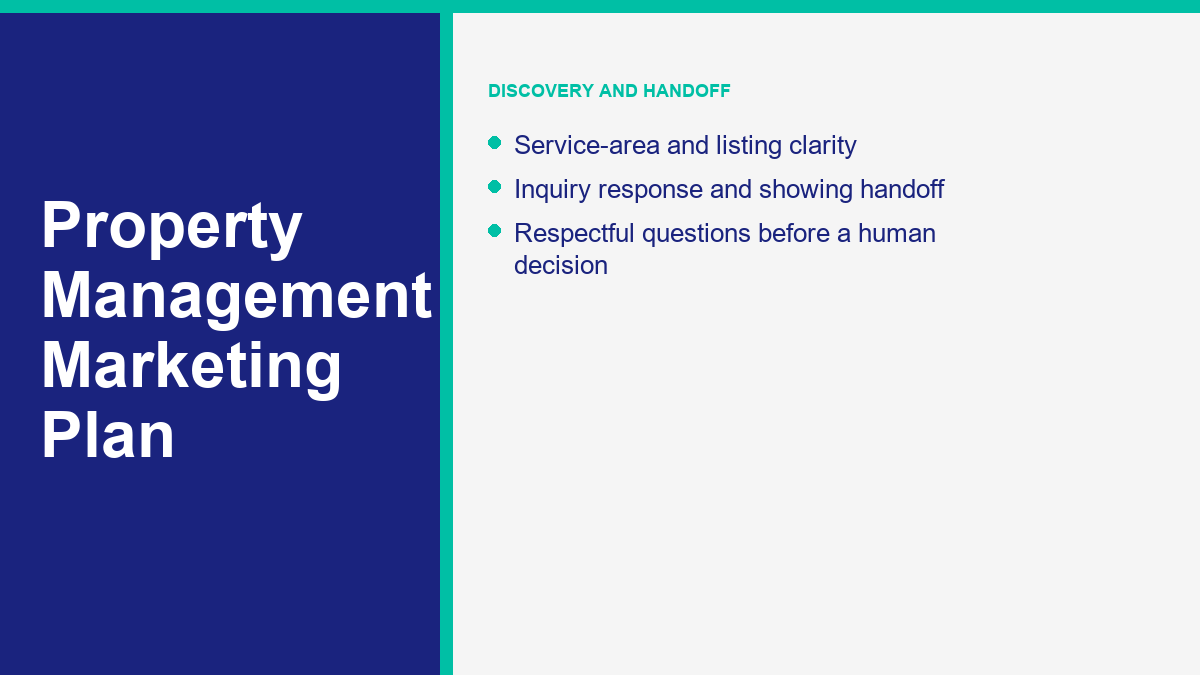
Your website should feature dedicated service-area pages that outline the specific neighborhoods and regions you serve. These pages help search engines understand your local relevance while providing prospects with immediate confirmation that you operate in their desired location.
Equally important is listing clarity. When presenting available units, transparency is your best asset. The FTC provides clear guidance on truth in advertising, emphasizing that claims must be truthful, cannot be deceptive or unfair, and must be evidence-based. Apply this standard to your property descriptions. Instead of relying on hyperbole, focus on objective facts: square footage, the number of bedrooms, specific included amenities, proximity to public transit, and exact rental rates. Clear, factual listings naturally pre-qualify readers by allowing them to determine if the property meets their baseline criteria before they ever make contact.
Apartment Marketing Ideas to Drive Consistent Demand
Once your local discovery engine is active, you can begin deploying specific apartment marketing ideas to generate consistent interest. The goal here is not to trick anyone into inquiring, but rather to highlight the genuine benefits of your properties to the right audience.
Leveraging Seasonal Moving Trends
Property management is inherently seasonal. In many markets, the summer months see a surge in moving activity, while winter months are significantly slower. Your property management marketing strategies should adapt to these natural rhythms. During high-demand seasons, focus your efforts on streamlining the inquiry process and managing volume efficiently. Ensure your listings are refreshed weekly and that your front-desk team is prepared for a higher frequency of calls and messages.
During slower seasons, shift your focus to community engagement and long-term awareness. Highlight unique indoor amenities, showcase community events, or provide helpful resources for winterizing homes. By remaining active and visible year-round, you build a pipeline of interested prospects who will remember your brand when their current lease eventually expires.
Creating Practical Community Resources
One of the most effective ways to establish trust is by acting as a helpful resource for the broader community. Consider publishing neighborhood guides that highlight local parks, schools, grocery stores, and transit hubs. When a prospective renter reads a comprehensive guide about a neighborhood they are considering, they naturally associate your property management company with local expertise. This educational approach aligns with SBA marketing guidance, which encourages businesses to understand their target market and provide value that addresses their specific needs.
Property Management Marketing Strategies for Inquiry Qualification
Generating interest is only the first half of the equation; effectively handling the resulting inquiries is where deals are actually made. When multiple messages arrive simultaneously, a disorganized leasing team can quickly become overwhelmed. Implementing a structured process for qualifying leads is essential.
Establishing a Respectful Fit Check Process
Not every inquiry will be the right fit for a specific property, and that is perfectly normal. A respectful fit check helps both the prospect and the leasing team save time. This involves asking standard, objective questions upfront to ensure the prospect’s needs align with the property’s realities. For a deeper look at organizing this workflow, read our guide on prioritizing better-fit opportunities.
Remember that you should not provide legal, housing-discrimination, privacy, security, or financial advice during this process. Always refer complex policy questions directly to the property’s officially approved process. A respectful fit check simply verifies basic, public-facing criteria, such as the desired move-in date, the number of bedrooms required, and whether the prospect is comfortable with the stated rental rate and pet policy.
Asking the Right Preliminary Questions
To streamline the conversation, standardizing the questions your team asks is highly recommended. Whether a prospect calls, emails, or messages you on social media, the initial intake should gather the same foundational information:
- What is your target move-in date?
- What size apartment are you looking for?
- Do you have any pets that will be moving with you?
- Are you familiar with the neighborhood where the property is located?
By asking these questions consistently, your leasing team can quickly determine if an available unit matches the prospect’s timeline and needs, allowing them to route the conversation to the appropriate next step.
Coordinating Showing Handoffs and Managing the Schedule
Once a prospect has confirmed that a property meets their basic requirements, the next critical phase in property management digital marketing is the transition from an online inquiry to an in-person or virtual showing.
The Importance of Response Time
In modern marketing, speed is a massive competitive advantage. When a prospect submits an inquiry, they are often contacting multiple properties simultaneously. A prompt response with helpful, clear information can give the team a better chance of reaching a scheduled showing. Improving your speed-to-lead response time is one of the highest-leverage improvements a small property management team can make.
To improve response times without burning out your staff, implement a triage system. Ensure that incoming emails and messages are routed to a centralized inbox monitored by multiple team members. Establish a standard operating procedure requiring all new inquiries to receive at least an initial acknowledgment within a specific timeframe during business hours.
Appointment Reminders and Follow-Up
Scheduling a showing is a great milestone, but no-shows remain a common frustration for property managers. A proactive follow-up process mitigates this risk. Sending a polite confirmation immediately after booking, followed by a reminder the day before the showing, demonstrates professionalism and respect for the prospect’s time.
사용하기 appointment reminder templates ensures your team sends consistent, error-free messages. A strong reminder should include the exact address, parking instructions, the name of the leasing agent they will meet, and a simple way to reschedule or cancel if their plans change. Clear communication at this stage can reduce avoidable trips for your leasing staff.
How Messenger Bot Supports Your Leasing Desk
As inquiry volume grows, keeping up with initial questions and scheduling can strain a small team. This is where automation can step in to handle repetitive tasks, freeing up human agents for high-value conversations. Implementing a communication tool like Messenger Bot can transform how your front desk operates.
Automating Initial FAQs
Many inquiries consist of the same basic questions: “What are your office hours?” “Is unit 4B still available?” “Do you allow dogs?” Messenger Bot can be configured to instantly answer these routine questions 24/7. When a prospect reaches out via social media or web chat, the bot provides immediate, accurate information based on your pre-approved answers. This instantaneous response satisfies the prospect’s curiosity and keeps them engaged with your brand, rather than moving on to a competitor.
Seamless Human Handoffs
While automation is powerful, it is crucial to recognize its limits. Messenger Bot does not verify applicants, make housing decisions, handle private tenant records, collect sensitive screening data, or guarantee occupancy. Its role is strictly to facilitate communication.
When a conversation moves beyond basic FAQs—such as when a prospect is ready to schedule a showing or asks a nuanced question about lease terms—Messenger Bot seamlessly transfers the chat to a human leasing agent. This ensures that the prospect always receives the appropriate level of personalized care, while helping your business capture more inquiries without adding headcount. The business retains complete control over the actual leasing process, utilizing human authority where it matters most.
Property Management Digital Marketing: Measuring What Matters
A marketing plan is only as good as its execution, and execution requires measurement. To ensure your property management marketing strategies are effective, you must track specific, actionable metrics on a regular basis.
Weekly KPIs for the Leasing Team
Instead of getting bogged down in complex analytics, small property managers should focus on a few core Key Performance Indicators (KPIs) reviewed weekly:
- Total Inbound Inquiries: How many new calls, emails, and messages were received?
- 평균 응답 시간: How quickly is the team responding to new leads during business hours?
- Showing Conversion Rate: What percentage of qualified inquiries actually schedule a showing?
- Show-Up Rate: Of the scheduled appointments, how many prospects actually attended?
By reviewing these numbers consistently, you can identify bottlenecks in your process. If inbound inquiries are high but showings are low, your listings may lack clarity, or your response time might be too slow. If showings are booked but prospects aren’t showing up, your reminder process likely needs strengthening. Continuous, measured adjustments lead to a more consistent leasing operation.
Design Listing Content That Answers Real Questions
Listing copy should help a prospect decide whether the property deserves a closer look before they spend time contacting the leasing team. Put the essential facts near the top: the neighborhood, unit type, availability window, rent, included utilities, parking expectations, pet policy, and the next approved step. If a detail can change, show the date it was checked and give the team a simple way to update it. Clear facts make the page useful to a ready prospect and reduce repetitive questions for the front desk.
Use one consistent structure across properties so a visitor can compare options without hunting for the same detail in a different place. A short “what happens next” section can explain whether the team will answer questions, confirm a showing window, or direct the prospect to the property’s established application process. Keep the language welcoming and neutral. The goal is to help people choose the information that matches their needs, not to pressure anyone into an inquiry.
Pair each listing with an internal content path. A neighborhood guide can explain transit and nearby services, while a showing page can explain arrival instructions and rescheduling. Link those pages intentionally so a visitor can move from discovery to a useful answer and then to a human-reviewed request. This creates a better experience than publishing many thin pages that repeat the same claims.
Build a Weekly Leasing Review
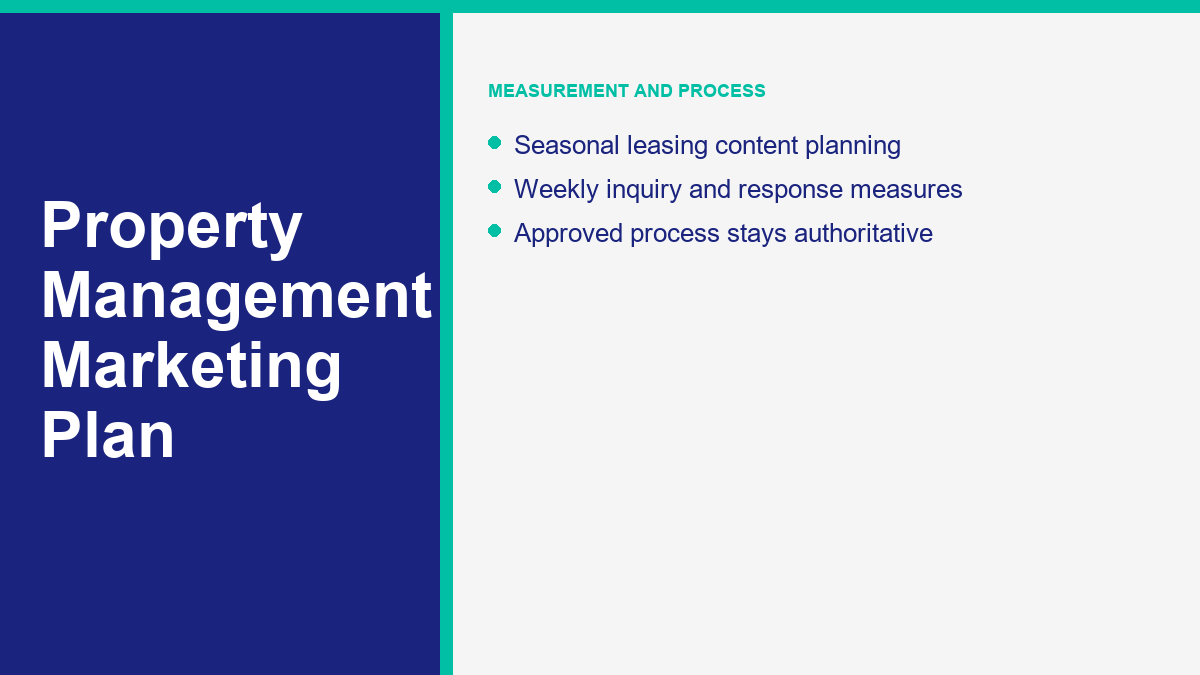
A weekly review turns a collection of marketing activities into a manageable operating rhythm. Choose the same day and the same short report each week. Start with the number of new inquiries, the sources those inquiries came from, the average business-hours response time, and the number of showings requested, scheduled, completed, rescheduled, or cancelled. Keep the labels stable so one week can be compared with the next.
Then read a small sample of conversations. Look for unanswered questions, unclear property details, a handoff that lacked a next step, or a reminder that arrived too late to be useful. Record one change for the next week, such as updating a listing field, simplifying a fit-check question, or adding a parking explanation to a showing reminder. Do not change several parts of the workflow at once; a narrow test makes it easier to learn what helped.
Seasonality should be part of the review rather than a surprise. A spring move-in period, a school-calendar shift, a weather event, or a local employer change can affect inquiry volume without proving that a page or campaign failed. Write down those conditions beside the weekly numbers. When a month is quieter, the team can decide whether to improve clarity and follow-up or simply continue measuring until a comparable period is available.
- Keep a single source of truth for listing facts, hours, availability windows, and approved next steps.
- Review response and handoff quality, not only impressions or clicks.
- Choose one bounded improvement and record its observation window before making another change.
Keep Automation Helpful and Human-Reviewed
Automation should remove repetitive friction while leaving decisions with the people who are authorized to make them. A Messenger Bot workflow can acknowledge an inquiry, present approved public answers, collect a simple request category, and prepare a summary for a leasing team. It should not evaluate a person, decide who qualifies for housing, interpret a lease, or make a commitment the business has not confirmed.
Give the prospect a clear handoff message: explain that a human will review the request, state the normal business-hours window, and offer a respectful way to update or withdraw the inquiry. The leasing team should be able to see the same approved facts the visitor saw and correct any listing change before responding. This keeps the experience useful without turning a marketing workflow into an unapproved screening or decision system.
자주 묻는 질문
How to market your property management company?
Marketing a property management company involves optimizing your local presence, such as your Google Business Profile, ensuring listing clarity, and establishing a consistent follow-up process for inquiries. Small property managers should focus on answering common questions early and guiding prospects toward scheduled showings efficiently.
What does the 80/20 rule mean in property management?
In general business terms, the 80/20 rule often suggests that 80 percent of your results come from 20 percent of your efforts. For property management marketing, this might mean that a few core marketing channels, like a well-maintained local listing and responsive communication, generate the vast majority of your qualified leasing inquiries.
What is the 3-3-3 rule for marketing?
The 3-3-3 rule is a general marketing framework that encourages businesses to focus on three distinct phases of customer interaction: capturing attention, maintaining engagement, and ensuring smooth follow-up. In a property management context, this translates to clear initial listings, prompt responses to inquiries, and respectful, consistent communication throughout the leasing process.

 한국어
한국어  English
  Tagalog
  简体中文
简体中文  العربية
  हिन्दी
  Português do Brasil
  Español de México
  Français
  বাংলা
বাংলা  香港中文
香港中文  繁體中文
繁體中文  Nederlands
  Deutsch
  Bahasa Indonesia
  日本語
日本語  Polski
  Русский
  Español
  Tiếng Việt