
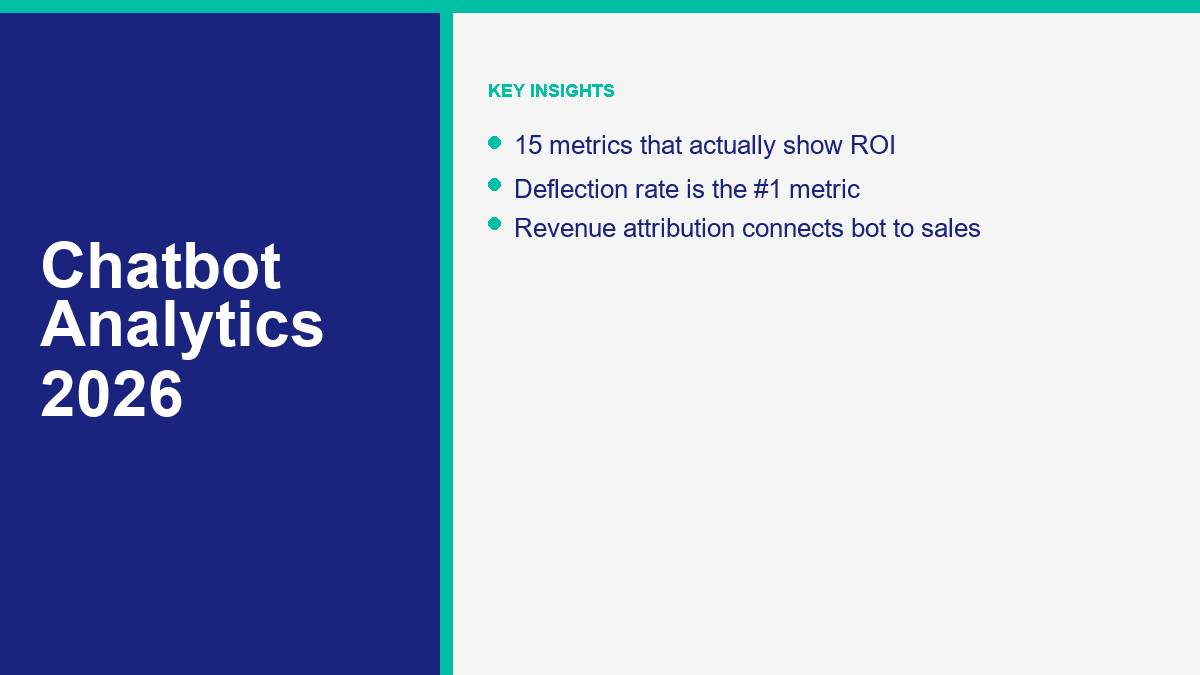
Большинство панелей управления чат-ботами полны цифр, которые делают бота занятым, но не полезным. Начатые чаты. Отправленные сообщения. Открытые сессии. Может быть, большой зеленый круг с названием коэффициент автоматизации. Эти цифры подходят для демонстрации. Они слабы, если вы пытаетесь ответить на единственный вопрос, который имеет значение, когда бот запущен: экономит ли это деньги, захватывает ли лучшие лиды или создает ли доход?
Метрики, которые действительно имеют значение, связывают один разговор с одним бизнес-результатом. Обычно это означает сэкономленное время, отклоненные заявки, захваченные квалифицированные лиды, запланированные встречи или влияние на доход. Эталонные показатели и данные, предоставленные поставщиками, упомянутые здесь, были проверены на публичных страницах, в справочных документах и в кейсах 10 апреля 2026 года. Если ваша главная цель - снижение затрат на поддержку, прочитайте наш гид по ИИ в обслуживании клиентов. Если ваша главная цель - рост воронки, прочитайте наш гид по генерации лидов. Эта статья сосредоточена на измерениях.
Еще одна проверка реальности, прежде чем мы перейдем к цифрам: ни одна серьезная аналитика чат-ботов не является действительно “без необходимости регистрации”. Вы можете абсолютно использовать бесплатные инструменты в стеке, особенно GA4 и Looker Studio, но для производственной отчетности все равно требуется отслеживание событий, ID CRM, правила атрибуции и место для хранения результатов разговоров.
Почему большинство панелей аналитики чат-ботов бесполезны
Средняя панель управления неэффективна, потому что отвечает на неправильный вопрос. Она сообщает, что произошло внутри интерфейса чата, а не что произошло с бизнесом из-за существования интерфейса чата. Это не одно и то же. Бот может генерировать много сообщений, потому что он путает людей. Он может показывать длинные сессии, потому что пользователи застревают в петлях. Он может показывать высокий уровень удержания, потому что человеческий выход скрыт.
Вот почему я не доверяю панелям управления, которые ориентируются на объем. Объем имеет значение только после того, как вы знаете качество. Лучший способ думать о аналитике чат-ботов таков: каждая метрика должна либо подтверждать качество спроса, либо подтверждать эффективность обслуживания, либо подтверждать клиентский опыт, либо подтверждать коммерческое воздействие. Если число не выполняет ни одной из этих задач, это, вероятно, тщеславие.
| Метрика тщеславия | Почему она вводит в заблуждение | Метрика, которую следует использовать вместо этого |
|---|---|---|
| Всего начатых чатов | Считает любопытство, случайные открытия и безвыходные сессии одинаково | Уровень вовлеченности и уровень завершения целей |
| Всего отправленных сообщений | Вознаграждает длинные, запутанные разговоры, которые могут никогда не разрешиться | Коэффициент разрешения, коэффициент резервного копирования и продолжительность сессии по результату |
| Коэффициент автоматизации | Часто скрывает пользователей, которые должны были быть переданы на более высокий уровень | Коэффициент отклонения плюс CSAT и коэффициент передачи на человека |
| Рост объема чата | Большее количество разговоров не полезно, если качество лидов или качество поддержки падает | Коэффициент конверсии, коэффициент качества лидов и атрибуция дохода |
| Средняя продолжительность сессии | Средние значения сглаживают хорошие и плохие сессии в одно число | Медианная продолжительность сессии и коэффициент разрыва в знаниях |
Практическое решение простое. Перестаньте спрашивать, активен ли бот. Спросите, выполнил ли он работу, на которую его наняли. Поддерживающий бот должен снижать объем помощи, не ухудшая удовлетворенность. Бот для генерации лидов должен увеличивать поток квалифицированных лидов, не надувая мусор. Торговый бот должен увеличивать доход от помощи или сокращать время до воронки. Все остальное вторично.
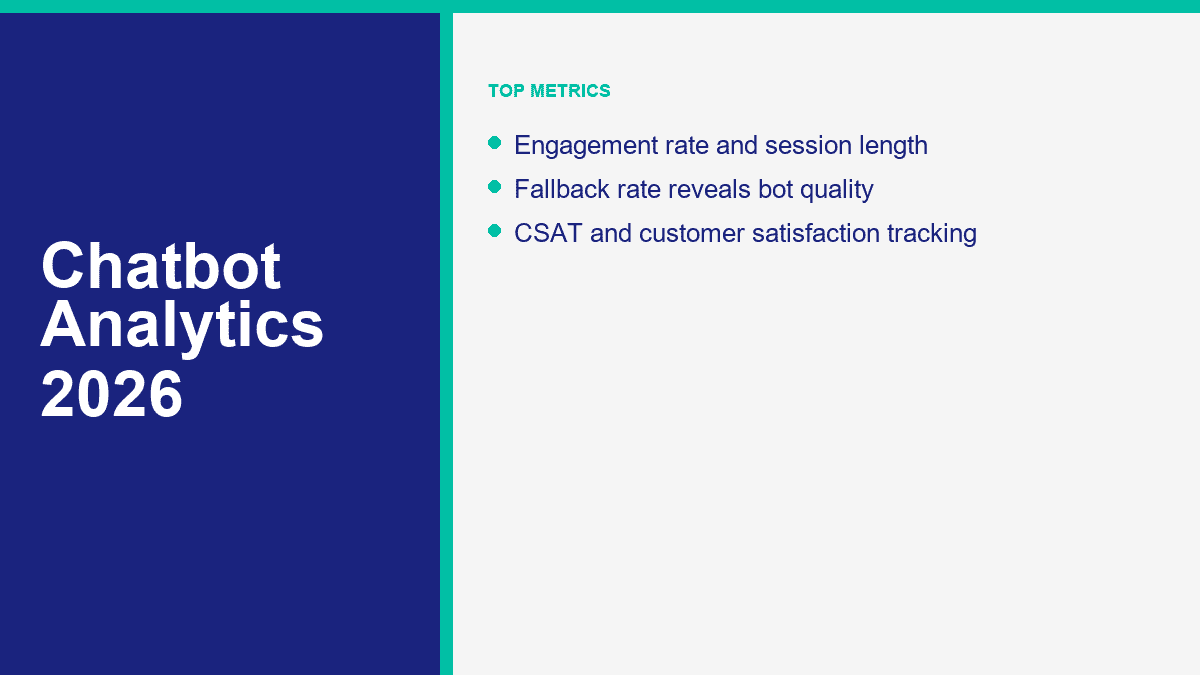
15 метрик, которые действительно показывают ROI чат-бота
Таблица ниже — это краткий список, который я действительно использовал бы в 2026 году. Не каждому чат-боту нужны все 15 с первого дня, но каждая серьезная программа в конечном итоге должна охватывать большинство из них. Столбец с эталонами смешивает публичные показатели производительности поставщиков с практическими операционными целями. Другими словами, это не теоретическая лучшая практика. Это диапазон, в котором математика обычно начинает иметь смысл.
| Метрика | Простая формула | Практический эталон | Почему это важно |
|---|---|---|---|
| Коэффициент вовлеченности | Сессии с вовлеченным ботом / показы бота или подходящие посетители | 5% до 10% по всему сайту полезно; 10%+ на страницах с высоким намерением — это сильно | Сообщает вам, является ли точка входа достаточно актуальной, чтобы заслужить взаимодействие |
| Коэффициент завершения целей | Завершенные запланированные результаты / начатые разговоры | 20% до 40% для широких потоков; 40%+ для узких однопurpose потоков | Показывает, завершает ли бот фактически задачу |
| Коэффициент отклонения | Решенные подходящие разговоры без помощи человека / подходящие разговоры | 25% имеет значение; 40% до 60% сильно для поддержки с частыми вопросами | Непосредственно связывает бота с экономией труда |
| Коэффициент разрешения | Разрешенные разговоры / разговоры, обработанные ботом | 50% до 70% является сильным для обученных поддерживающих ботов | Измеряет, решил ли бот проблему, а не просто коснулся её |
| Коэффициент возврата | События возврата / повороты бота или сессии бота | Ниже 15% после запуска; ниже 10% после настройки | Выявляет отсутствующие намерения, слабый контент и плохую маршрутизацию |
| Коэффициент передачи человеку | Эскалированные сессии / сессии бота | 20% до 40% является нормальным для смешанной поддержки; контекст решает, является ли высокий уровень плохим | Показывает, где заканчивается автоматизация и начинается человеческое усилие |
| Длительность сессии | Медиана обращений или медианная продолжительность завершенной сессии | От 4 до 8 обращений для поддержки; от 6 до 12 для квалификации лидов | Помогает выявить трения, петли и слишком длинные потоки |
| Время до первого полезного ответа | Медиана секунд до первого релевантного ответа | Менее 10 секунд в веб-чате; почти мгновенно в Messenger | Скорость является частью ценностного предложения |
| Стоимость за взаимодействие | Общая стоимость программы бота / взаимодействия, обрабатываемые ботом | Копейки до низких центов для автоматизированных взаимодействий; гораздо ниже, чем поддержка человека | Превращает активность в экономику единиц |
| Коэффициент конверсии | Целевые конверсии / сессии с участием чат-бота или подходящие сессии | Двузначная конверсия возможна на настроенных потоках с высоким намерением | Доказывает, создает ли бот коммерческие результаты |
| Качество лидов | MQL или SQL / лиды, захваченные ботом | Должен соответствовать или превышать лиды из форм на том же трафике | Отделяет полезный захват лидов от шумного захвата лидов |
| Коэффициент квалифицированных бронирований | Квалифицированные встречи или демонстрации, забронированные / бот-лиды | Цель - выше базового уровня вашей формы | Хорошо для B2B-ботов, где доход начинается с встречи |
| CSAT | Положительные ответы на удовлетворенность / общее количество ответов | 80%+ положительных или в пределах 5 пунктов от базового уровня только для людей | Подтверждает, что автоматизация не ухудшает опыт |
| Атрибуция дохода | Доход, влияющийся или получаемый через точки взаимодействия с чат-ботом | Нужен определенный временной промежуток, например, 7, 30 или 90 дней | Связывает бота с закрытым бизнесом, а не только с действиями на верхнем уровне воронки |
| Knowledge gap rate | Sessions tagged missing answer / total bot sessions | Under 10% to 15% after the first month of tuning | Shows where content, FAQs, or routing are incomplete |
Engagement and Intent Metrics Tell You Whether the Bot Earned Attention
Коэффициент вовлеченности is the first sanity check. It tells you whether people actually interact with the bot when they see it. This matters more than raw chat starts because impressions or eligible visitors give you context. Tidio published a Praktiker Hellas case study showing an 8.99% bot engagement rate while handling more than 9,400 customer interactions a month. That is a useful anchor because it shows a real retail deployment can get meaningful usage without turning every page into a popup circus. On a broad sitewide widget, 5% to 10% is already workable. On pricing pages, demo pages, checkout help, or contact pages, I want higher.
Коэффициент завершения целей is the metric I would promote above chat starts on almost every dashboard. The goal could be issue answered, quote requested, appointment booked, order status delivered, or contact details captured. If users start the chat but never complete the intended action, the bot is not doing useful work. This is also the cleanest way to compare flows against each other. A narrow order-tracking flow can complete at a much higher rate than a general support assistant. That is normal. The point is to compare like with like.
Коэффициент конверсии belongs on the list even if your bot is not a pure lead-gen bot. A support chat can convert to fewer tickets. A sales chat can convert to meetings. A service-business bot can convert to bookings. The key is defining the denominator correctly. For high-intent lead pages, conversational flows regularly outperform static forms when they are short, relevant, and well-routed. Intercom has published a Copper customer story showing a 13% higher website conversion rate than traditional lead forms. Landbot case studies also show 30% to 35% conversion lifts in conversational lead capture. Those are not default numbers. They are proof that well-measured chat conversion can be materially better than passive forms.
Качество лидов is what keeps conversion rate honest. If a chatbot doubles lead volume but sales says the extra leads are junk, the bot did not improve marketing efficiency. It just lowered standards. The cleanest formula is MQLs or SQLs divided by chatbot-sourced leads. Landbot has public case studies showing more than 50% improvement in lead quality in selected deployments, and Tidio has published qualified-lead lifts such as Integratec’s 25% increase. The operational rule is simple: if bot leads are converting to qualified pipeline worse than form leads from the same traffic source, your qualification logic is too soft.
Коэффициент квалифицированных бронирований is the metric B2B teams skip when they are too focused on leads. A demo booked by the wrong account is not pipeline. A lead that turns into a same-week qualified meeting often is. This metric matters most when the chatbot is supposed to qualify traffic before a salesperson gets involved. I care less about absolute benchmark numbers here and more about delta against baseline. If the bot books meetings at a lower qualification rate than your old form or SDR triage process, the script needs work.
Support Efficiency Metrics Are Where Chatbot ROI Usually Becomes Obvious
Коэффициент отклонения is the most important support metric because it ties directly to avoided human work. I define it narrowly: only count conversations that were genuinely eligible for automation in the first place. Store hours, return policy, booking rules, order tracking, shipping windows, and pricing basics belong in the denominator. Refund exceptions, legal complaints, angry customers, and edge-case account issues do not. Zendesk’s public ROI material says self-service and automation can deflect up to 25% of agent contacts. In practice, a tuned SMB bot handling repetitive support can do better than that. I treat 25% as worth keeping, 40% to 60% as strong, and anything above that as very good if CSAT stays healthy.
Коэффициент разрешения is related but different. Deflection asks whether the human was avoided. Resolution asks whether the customer problem was solved. Intercom says Fin resolves an average of 67% of customer queries. HubSpot markets Breeze Customer Agent at about 65% of conversations resolved. Tidio says Lyro can resolve 67% of requests and publishes narrower case studies with higher outcomes in constrained environments. Those are useful reference points because they show mature AI support layers now live in the mid-60s, not the fantasy-land 95% some vendors imply. For most businesses, 50% to 70% resolution on repetitive support is a strong operating band.
Коэффициент возврата is the alarm bell. This is the share of sessions or turns where the bot says some version of “I didn’t get that” or dumps the user into a generic branch. If fallback rate is high, the bot is not learning the real inbox. It is showing you where your content, intent mapping, or flow logic is thin. I want this below 15% shortly after launch and below 10% once the flow has been tuned for a month or two. If it stays high, the bot is being asked to solve problems it was never prepared to solve.
Коэффициент передачи человеку is not a vanity number and it is not automatically bad. A handoff rate of 30% can be perfectly healthy if the bot is escalating the right 30%. A handoff rate of 5% with a weak CSAT score often means the bot is trapping users. A handoff rate of 70% can mean either the bot is overly cautious or your content is too weak for the use case. The right way to read this metric is by segment. Break it out by intent: billing, shipping, order status, technical support, appointment change, quote request, and complaint. Then the pattern becomes useful.
Длительность сессии matters only when you look at the median and pair it with outcomes. Long sessions can mean a healthy qualification flow. They can also mean friction. For support bots, 4 to 8 turns is often enough to answer a known issue or route cleanly. Lead-gen bots can run longer because they collect information by design. The mistake is reading a longer session as automatically better. If the median session length rises while goal completion falls, the bot is probably meandering.
Время до первого полезного ответа is one of the easiest wins in chatbot analytics. Customers tolerate a lot if the first answer lands immediately and is relevant. They tolerate almost nothing if the first five seconds feel like dead air or a generic greeting. On website chat, I want the first useful response in under 10 seconds. On Messenger, it should feel instant. This metric matters especially when you are comparing bot coverage against forms, email, or off-hours human support. Speed is one of the few advantages automation gets by default. Do not waste it.
Стоимость за взаимодействие is where reporting stops being abstract. The formula should include the platform subscription, AI usage, integration or maintenance time, and any review labor you want to be honest about. Divide that by bot-handled interactions or bot-resolved interactions, depending on how strict you want to be. The number does not need to be perfect to be useful. It just needs to be consistent. The goal is not to brag that an AI response cost fractions of a cent. The goal is to compare that cost against what the same interaction would have cost handled manually.
Customer Experience and Revenue Metrics Keep the Bot From Looking Better Than It Is
CSAT is the discipline metric. It stops teams from optimizing purely for labor reduction and forgetting the customer. I would rather see a bot deflect 42% of tickets with strong CSAT than 58% with obvious frustration. The cleanest benchmark is your own human baseline. If the chatbot stays within about five points of human-only CSAT on repetitive intents, you are in reasonable shape. If it drops ten points below baseline, the content or escalation logic is not ready.
Атрибуция дохода is the bridge from conversational activity to actual business value. This is the metric that tells you whether the bot influenced closed-won deals, booked appointments that showed up, or ecommerce orders that happened after the conversation. Attribution never works if you leave it vague. Pick a model and write it down. Last touch, first touch, linear, or position-based can all work if the team is consistent. Tidio’s help documentation is a good reminder of how operational this gets: its conversion reporting credits orders that happen within seven days of a qualifying interaction. That kind of window changes the numbers dramatically, so set the rule up front.
Knowledge gap rate is one of the most underrated metrics in chatbot operations. It tells you how often the bot hits a genuine content hole. Not a model miss. A business-content miss. The user asked something important and the bot had no approved answer, no accurate retrieval, and no clean route. That is gold for optimization because it tells you exactly where the knowledge base, FAQ, or policy documentation is weak. A good bot program turns this metric into a monthly content roadmap.
How to Set Up Chatbot Analytics the Right Way
The clean setup is not complicated, but it does require discipline. You need four layers working together: the chatbot platform, a web or product analytics layer, a CRM or ticketing system, and a reporting layer that turns the data into something the team will actually look at. Native chatbot analytics tell you what happened inside the conversation. GA4 or Mixpanel tells you what happened before and after the conversation. Your CRM or help desk tells you whether the chat produced a lead, a ticket outcome, or revenue. Looker Studio or another BI layer turns that mess into one weekly scoreboard.
| Tracking layer | Best use | What to capture | Notes |
|---|---|---|---|
| Native chatbot analytics | Conversation-level behavior | Intents, fallback events, handoffs, resolutions, path completion | Start here, but do not stop here |
| GA4 or Mixpanel | On-site behavior and funnel impact | Chat opened, chat engaged, lead captured, purchase or booking after chat | GA4 is the easiest free starting point for most teams |
| CRM or help desk | Lead quality and support outcomes | MQLs, SQLs, tickets avoided, tickets resolved, revenue, closed-won deals | This is where ROI becomes provable |
| Dashboard layer | Weekly decision-making | One scorecard with trend lines by intent, channel, and outcome | Looker Studio works well if you want a free reporting layer |
The event naming should be boring on purpose. Use names a future teammate can understand without calling you. Good examples are chat_impression, chat_engaged, bot_goal_completed, bot_handoff_human, bot_fallback, lead_captured_chat, ticket_deflected, и purchase_after_chat. The biggest analytics mistakes usually start with inconsistent event names and missing IDs.
My default build order looks like this:
- Define one primary goal per flow. FAQ resolution, booking, quote request, demo booking, order tracking, or lead capture.
- Track every major conversation state. Opened, engaged, completed, fallback, escalated, abandoned.
- Pass a conversation ID into your CRM or ticketing layer. That one field makes revenue and support attribution much easier later.
- Store intent as structured data. You want to filter by order status, pricing, returns, booking, demo request, and complaint later.
- Separate channel from outcome. Messenger, website chat, Instagram, and embedded widgets may perform very differently.
- Build one weekly dashboard, not five. If the team has to check six tools to know whether the bot works, nobody will check anything consistently.
If your build is already expanding across Messenger, website widgets, forms, routing rules, and multi-step automations, that is where reporting structure matters more than one clever AI prompt. This is also the stage where it is worth reviewing Функции MessengerBot Pro, because once a chatbot is touching multiple channels and business outcomes, analytics quality depends on how cleanly the flows, forms, and integrations are organized.
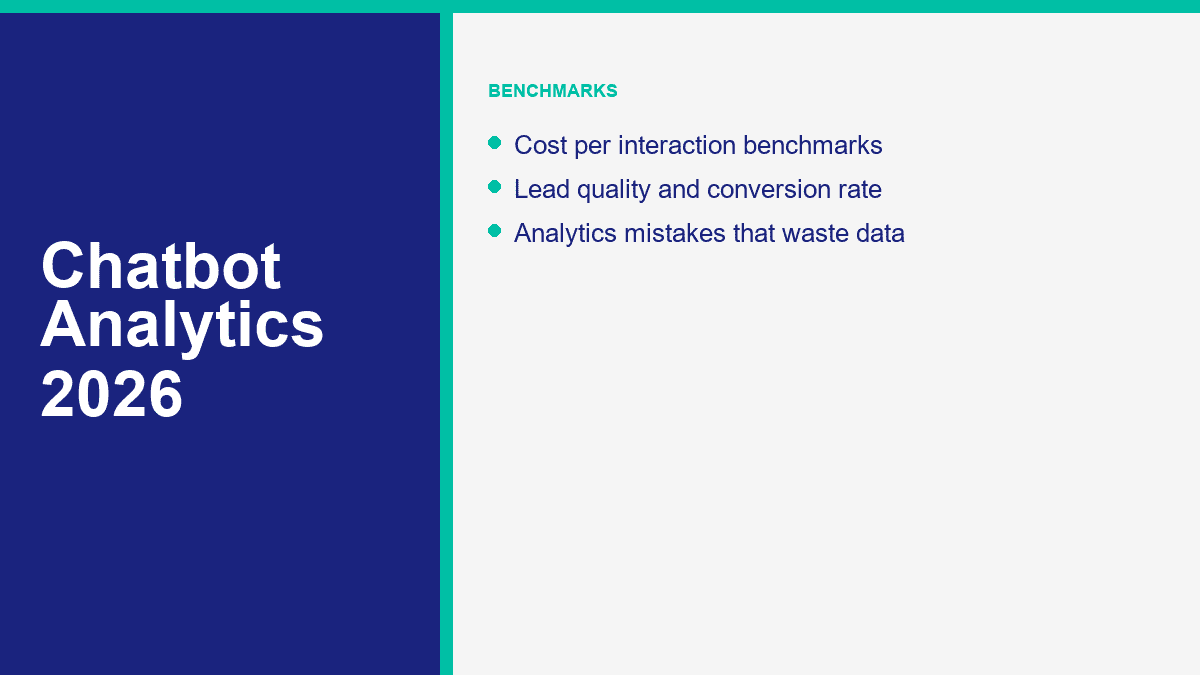
How to Measure Deflection Rate Without Lying to Yourself
Deflection rate gets abused because it sounds simple. It is not. Most inflated deflection numbers come from a bad denominator. If you count every single inbound conversation, including the ones that obviously needed a human, the metric becomes theater. The right method is to start with eligible support volume only.
Use this formula:
Deflection rate = bot-resolved eligible support conversations / total eligible support conversations
Now make eligible concrete. If a retailer gets 2,000 support conversations a month and 1,200 of them are questions about order status, delivery windows, return policy, business hours, and store location, those 1,200 conversations are eligible. If the bot fully resolves 540 of them without agent help, deflection rate is 45%. That is a real number. If you divide 540 by the full 2,000, you get 27%, which understates the bot. If you let the vendor define every greeting as automated, you might get a fake number above 60%, which overstates the bot.
The savings model then becomes straightforward:
Monthly deflection savings =
(deflected conversations x manual cost per conversation)
- (deflected conversations x bot cost per conversation)
- bot platform cost
Example: 540 deflected conversations x $4.50 manual support cost = $2,430 in avoided human cost. If bot cost per conversation is $0.15, those same conversations cost $81 on the bot side. Add a $99 monthly tool cost and net savings land at about $2,250. That is the kind of math executives understand immediately because it is tied to work avoided, not AI momentum.
A good deflection dashboard also breaks the metric by intent. Shipping questions may deflect at 70%. Billing issues may deflect at 15%. Both can be fine. The insight is not that the bot needs a higher overall rate. The insight is that one content area is bot-friendly and another still needs stronger documentation or faster handoff.
How to Measure Conversion Rate for Lead Generation Bots
Lead-gen chatbots fail in reporting for the opposite reason support bots do: teams collapse three different funnel stages into one number and call it conversion rate. You need at least three layers if you want the data to be useful. First, how many eligible visitors engaged with the bot. Second, how many engaged visitors became leads. Third, how many of those leads became qualified opportunities.
The cleanest reporting view is this:
- Page-to-chat engagement rate: how many visitors actually started a meaningful conversation.
- Chat-to-lead rate: how many engaged sessions turned into captured leads.
- Lead-to-qualified rate: how many chatbot leads became MQLs, SQLs, or booked demos.
That breakdown stops you from celebrating a lead volume increase that sales hates. It also stops you from killing a bot that captures the same number of leads as a form but produces much better qualification. If you want the playbook for building those qualification flows, read наш гид по генерации лидов. For analytics, the most important thing is matching the chatbot lead to the downstream outcome.
Here is a simple example. A pricing page gets 4,000 visits a month. The bot is shown to everyone. 480 visitors engage, so engagement rate is 12%. Of those 480, 144 leave contact details, so chat-to-lead rate is 30%. Of those 144 leads, 43 become sales-qualified, so lead quality rate is just under 30%. If 9 of those qualified leads close at an average first-year gross profit of $2,000, the bot influenced $18,000 in gross profit. That is the number worth comparing against the cost of the software and the time spent tuning the flow.
The reason conversational capture often beats static forms is not magic. It is sequencing. Intercom’s Copper story shows a 13% higher website conversion rate than forms. Tidio has published results such as Pearl Lemon’s 30% increase in website-to-lead conversions and Integratec’s 25% improvement in qualified leads. Landbot case studies show 30% to 35% conversion lifts in several campaigns. The lesson is not that every chatbot creates those gains. The lesson is that the benchmark ceiling is real if the conversation earns the ask before requesting contact details.
How to Track CSAT Without Surveying the Wrong Users
CSAT gets distorted easily because most teams either survey too few people or survey the wrong people. If you only ask for feedback after easy FAQ answers, CSAT looks great. If you survey mostly angry escalations, CSAT looks terrible. The goal is not perfect sampling. The goal is consistent sampling across the same intent types over time.
The simple formula is:
CSAT = positive responses / total CSAT responses
What matters more is segmentation. Split CSAT by intent, by automation outcome, and by handoff outcome. A bot may score very well on order status and business hours, average on quote requests, and badly on refund requests. That does not mean the whole program is bad. It means one use case should stay automated, one needs refinement, and one should probably hand off faster.
I also recommend pairing CSAT with fallback rate and handoff rate. If CSAT drops while fallback rises, the problem is usually bot understanding or content coverage. If CSAT drops while handoff falls, the bot may be blocking users from reaching people. If CSAT stays flat while deflection rises, that is usually the healthiest possible sign.
For most teams, a good target is either 80% positive feedback or a score within about five points of the human-only baseline on repetitive intents. Any bigger gap is a warning sign. It usually means one of three things: the bot is overconfident, the knowledge base is thin, or the survey is being shown only after bad moments.
How to Connect Chatbot Touchpoints to Revenue Attribution
Revenue attribution is where chatbot analytics either becomes credible or falls apart. The hard part is not creating a revenue number. The hard part is creating one that the finance team, sales team, or founder will believe. That means defining the attribution window, the touch model, and the ID structure before the dashboard goes live.
At minimum, I want these fields attached to every meaningful chatbot conversion:
- Conversation ID: one unique thread identifier.
- User or lead ID: email, CRM contact ID, or a persistent anonymous ID that later resolves.
- Цель: what the visitor wanted, not just where they clicked.
- Channel: website chat, Messenger, Instagram, embedded widget, or paid landing page.
- Source and campaign: UTM data, referrer, or ad campaign details.
- Результат: lead captured, meeting booked, purchase, resolved support issue, or handoff.
Then choose an attribution model and stick to it long enough to compare periods honestly. A short window works well for ecommerce and quote requests. A longer window makes more sense for B2B deals. Tidio’s own help documentation uses a seven-day conversion lookback for order attribution inside its reporting. That is a good reminder that the window is not a technical footnote. It changes what bot revenue even means.
A practical ROI formula for revenue attribution looks like this:
Chatbot ROI =
(attributed gross profit - chatbot program cost) / chatbot program cost x 100
Example: a lead-gen chatbot influences $18,000 in gross profit in a month. The tool, AI usage, and maintenance time cost $1,200. ROI is 1,400%. That sounds huge because software leverage often is huge when the funnel works. The more conservative version is to count only sourced revenue or only a portion of assisted revenue. Either approach is fine as long as the rule is explicit and stable.
Common Chatbot Analytics Mistakes That Inflate Performance and Hide Churn
The fastest way to ruin chatbot reporting is to make the bot look good at all costs. That instinct creates dashboards nobody trusts. These are the mistakes I see most often.
Counting every chat as a win. A chat started is not a value event. If the user bounced, fell into fallback, or reached a dead end, the bot created activity, not ROI.
Using one blended dashboard for every use case. Support, sales, lead capture, booking, and FAQ flows should not share the same success definition. Segment by job to be done or the averages become meaningless.
Rewarding containment instead of good escalation. A bot should not keep users inside the flow just to defend an automation target. That is how you get fake efficiency and real churn.
Skipping attribution IDs. If the conversation cannot be tied back to the CRM, help desk, or commerce layer, you will end up arguing from screenshots instead of data.
Tracking leads but not lead quality. This is the most common sales-and-marketing reporting failure. The bot looks great to marketing and terrible to sales because nobody tied the conversation to qualification or revenue.
Reading averages instead of distributions. Average session time, average CSAT, and average fallback rate all flatten the story. Use medians and intent-level cuts whenever possible.
Ignoring the knowledge gap list. Missing-answer logs are not boring maintenance. They are the roadmap for higher deflection, better CSAT, and cleaner revenue capture next month.
Measuring the bot only inside the bot. A chatbot is part of a funnel, not a separate universe. Track what users did before they opened the chat and what happened after the chat ended.
What to Track First if You Want a Chatbot ROI Dashboard That Anyone Will Trust
Start with a short scoreboard, not a giant analytics project. For support bots, track deflection rate, resolution rate, fallback rate, handoff rate, CSAT, and cost per interaction. For lead-gen bots, track engagement rate, chat-to-lead rate, lead quality rate, qualified booking rate, and revenue attribution. Then tie those numbers back to one clean operating rhythm: review the dashboard every week, review missing-answer logs every month, and keep the attribution rules fixed long enough to compare real periods. If you want the current platform options before you build that reporting stack, Посмотреть цены на MessengerBot and choose the smallest setup that can track one business goal clearly before you expand.
Часто задаваемые вопросы
Какие метрики чат-бота мне следует отслеживать?
Track the metrics that tie conversation activity to business outcomes: engagement rate, goal completion rate, deflection rate, resolution rate, fallback rate, handoff rate, cost per interaction, conversion rate, lead quality rate, CSAT, revenue attribution, and knowledge gap rate. If the bot is support-first, prioritize deflection, resolution, CSAT, and cost per interaction. If it is lead-gen-first, prioritize engagement, conversion, lead quality, qualified bookings, and attributed revenue.
Как мне измерить ROI чат-бота?
Measure chatbot ROI by comparing the value created or cost avoided against the total chatbot program cost. For support, use labor avoided from deflected or shortened conversations minus bot cost. For sales and lead gen, use attributed gross profit or pipeline value minus software, AI usage, and maintenance cost. The clean formula is: ROI = (value created – total chatbot cost) / total chatbot cost x 100.
Каков хороший уровень отклонения чат-бота?
A good chatbot deflection rate depends on the use case, but 25% of eligible support conversations deflected is already meaningful. For FAQ-heavy SMB support, 40% to 60% is a strong target after tuning. Narrow flows such as order status or store hours can go higher. The key is using the right denominator: only conversations that were actually eligible for automation.
Как мне отслеживать конверсии чат-бота?
Track chatbot conversions in stages. Measure how many eligible visitors engage with the bot, how many engaged users complete the goal, and how many of those conversions become qualified leads, booked meetings, purchases, or resolved support outcomes. Pass conversation IDs and source data into GA4, your CRM, or your help desk so the conversion can be tied back to revenue or support savings later.
Какие инструменты аналитики чат-ботов лучшие?
The best stack is usually a combination, not one tool. Native chatbot analytics are best for intents, fallbacks, and handoffs. GA4 or Mixpanel are best for funnel impact. Your CRM or help desk is best for lead quality, ticket outcomes, and revenue. Looker Studio is a strong free dashboard layer for weekly reporting. The winning setup is the one that keeps those systems tied together with shared IDs and consistent event names.



 Русский
  English
  Tagalog
  简体中文
简体中文  العربية
  हिन्दी
  Português do Brasil
  Español de México
  Français
  বাংলা
বাংলা  香港中文
香港中文  繁體中文
繁體中文  Nederlands
  Deutsch
  Bahasa Indonesia
  日本語
日本語  한국어
한국어  Polski
  Español
  Tiếng Việt