
ChatGPT против Gemini — это сравнение ИИ, которое действительно имеет значение в 2026 году, потому что это два продукта, которые обычные люди держат открытыми весь день. Claude по-прежнему отличен, Copilot по-прежнему важен, а наш полное сравнение чат-ботов охватывает более широкий рынок, но если вам нужен короткий список для личного AI-ассистента, он почти всегда сводится к OpenAI или Google.
Я проверил публичные страницы с ценами, справочные документы и материалы поддержки продуктов от OpenAI и Google 12 апреля 2026 года перед написанием этого черновика. Эта дата важна. Обе компании часто меняют упаковку планов, названия моделей и лимиты функций, так что хорошее сравнение, сделанное шесть месяцев назад, уже может быть неверным по ценам, размеру контекста или тому, что вы получаете на мобильном.
Вот практическая рамка, которую я использую после тестирования обоих. ChatGPT — это более мощная чистая AI-рабочая станция. Она больше похожа на слой общего интеллекта, который вы можете адаптировать для написания, программирования, исследований, пользовательских GPT, задач и работы в стиле агента. Gemini — это более сильный экосистемный ассистент. Он лучше всего работает, когда ваша цифровая жизнь уже проходит через Gmail, Docs, Drive, Search, Android и Chrome.
Это различие и есть причина, по которой так много сравнений упускают суть. Люди говорят так, будто выбирают между двумя идентичными чат-ботами, но это не так. Они выбирают между лучшим автономным AI-рабочим пространством и лучшим AI-ассистентом, встроенным в Google. Если ваша работа связана с сообщениями для клиентов, а не с личной продуктивностью, вам также стоит прочитать наше руководство по лучшим чат-ботам для малого бизнеса, потому что потребительские ИИ-ассистенты и автоматизированные платформы, ориентированные на клиентов, не являются взаимозаменяемыми покупками.
Почему ChatGPT и Gemini доминируют в разговоре о потребительском ИИ в 2026 году
Интересно, что google gemini и chatgpt в 2026 году пытаются выйти за рамки простого чата. Они суммируют файлы, ищут в интернете, запоминают предпочтения, общаются голосом, генерируют изображения и все чаще выполняют действия вместо того, чтобы только производить текст. На первый взгляд это делает их более похожими, чем когда-либо. На практике центр тяжести все еще различен.
ChatGPT лидирует благодаря глубине продукта в одном приложении. OpenAI продолжает превращать ChatGPT в более плотное рабочее пространство. Вы можете перейти от быстрого вопроса к долгосрочному проекту, переключиться на поиск, создать или использовать пользовательский GPT, запустить глубокое исследование, открыть голосовой разговор, генерировать изображения и передать работу инструменту в стиле агента, не покидая продукт. Это делает сравнение gpt и gemini менее о сырых ответах и больше о непрерывности рабочего процесса. ChatGPT обычно лучше, когда вам нужно одно место для размышлений, черновиков, тестирования, доработки и повторения.
Gemini лидирует благодаря охвату платформы. У Google есть преимущество в том, что большинство людей уже живут в его экосистеме. Gemini не нужно убеждать вас принимать новую рабочую поверхность с нуля. Он может извлекать ценность из Gmail, Docs, Drive, Tasks, Calendar, YouTube и поведения Android, которые многие люди уже используют каждый день. Лучшие моменты Gemini не всегда яркие. Это маленькие моменты, когда вы понимаете, что ассистент уже имеет нужную цепочку писем, нужный документ или нужный контекст, потому что он подключен к остальной части вашей учетной записи.
Этот разрыв быстро проявляется в покупательском поведении. Если кто-то говорит: “Мне нужен лучший ИИ-ассистент для написания, программирования и глубокой работы”, я начинаю с ChatGPT. Если они говорят: “Я уже плачу Google, я живу в Docs, и я хочу, чтобы ИИ остановил меня от постоянного переключения вкладок”, я начинаю с Gemini. Одна и та же категория. Разная исходная сила.
Это также объясняет, почему только цена — плохой краткий путь. ChatGPT Plus и Google AI Pro по сути на одном уровне по стартовой стоимости, но ценность пакета различна. ChatGPT предлагает более высокие лимиты и более мощное автономное рабочее пространство ИИ. Google предлагает более высокие лимиты плюс более широкий пакет, который включает в себя хранилище, интеграции с приложениями Google, функции поиска, обновления NotebookLM и преимущества генерации медиа. На бумаге они могут выглядеть похоже. В реальном использовании они ощущаются очень по-разному.
Еще одна вещь, которую большинство обзорных постов игнорирует: ни одна из платформ не является чат-ботом для обслуживания клиентов. Они могут помочь вам составить ответы на запросы поддержки, проанализировать журналы клиентов или ускорить внутренние операции, но если вы пытаетесь автоматизировать входящие разговоры в больших масштабах, вы находитесь в другой категории. Вот где наш гид к ИИ обслуживания клиентов становится более полезным, чем другая сравнительная таблица потребительских помощников.
Как ChatGPT завоевывает людей в 2026 году: модели, функции и экосистема OpenAI
ChatGPT в 2026 году ощущается меньше как чат-бот и больше как набор инструментов ИИ, которые случайно имеют один интерфейс для общения. Текущие страницы цен OpenAI сосредоточены на продукте семейства GPT-5, с бесплатным уровнем, уровнем $20 Plus и уровнем $200 Pro. Точные незначительные обозначения моделей на сайте изменялись в течение года, но практическая история оставалась неизменной: бесплатный доступ дает вам полезный флагманский доступ с ограничениями, Plus открывает серьезное повседневное рабочее пространство, а Pro нацелен на людей, которые хотят наилучшего рассуждения, самых высоких лимитов и наименьших трений.
The biggest reason people stick with ChatGPT is still simple: it does a lot of jobs well without making you think about which mode you should be in. Ask it to analyze a document, then rewrite the findings, then brainstorm a launch plan, then search the web to update the argument, then turn the answer into a checklist. That flow feels natural. You are not constantly moving between products or wondering which Google property owns the feature you need.
OpenAI’s official pricing materials currently position ChatGPT Free at $0, ChatGPT Plus at $20 per month, and ChatGPT Pro at $200 per month on the ChatGPT pricing page. Free users get limited access to the flagship model, search, uploads, image creation, memory, and deep research. Plus expands messaging, uploads, image creation, memory, custom GPTs, tasks, projects, agent mode, and Codex usage. Pro removes most of the everyday friction by unlocking the strongest reasoning tier, much higher or unlimited usage for core tools, faster image generation, higher-end voice, and more room for serious research and coding work.
That plan structure matters because ChatGPT’s ecosystem is now one of its biggest competitive advantages.
Custom GPTs Still Give ChatGPT the Best Consumer AI Surface for Specialized Work
Google has Gems, and they are useful. ChatGPT still has the stronger custom-assistant culture. The reason is not just the feature itself. It is the whole behavior around it. People build custom GPTs for niche research, repetitive writing tasks, coding help, tutoring flows, travel planning, and internal company knowledge. Even if you never build one yourself, the product trains you to think in reusable AI workflows, not only one-off chats.
That matters for power users. If you keep returning to the same kind of work, ChatGPT is better at becoming вашему version of an assistant. Gemini is improving here, but it still feels more like an extension of Google’s world than a moldable AI platform of its own.
Projects, Tasks, Deep Research, and Codex Make ChatGPT Feel Like a Workbench
OpenAI has quietly built one of the strongest “one subscription replaces three other tools” stories in consumer AI. Projects help organize longer-running work. Tasks make recurring or delayed prompts more useful. Deep research helps when you need synthesis instead of a quick answer. Codex adds a more execution-oriented layer for people who write or review code. On paid plans, those pieces start to connect into a workflow that feels much closer to an AI operating environment than a normal chatbot tab.
This is also why ChatGPT keeps winning among freelancers, consultants, marketers, and solo founders. It is rarely the absolute best at every single specialized task. It is the best at combining enough specialized tools inside one coherent workspace that you stop reaching for other apps as often.
ChatGPT Search Is Better Than It Used to Be, But It Is Not Just “ChatGPT Plus Bing” Anymore
Текущий OpenAI ChatGPT Search help article says ChatGPT Search can automatically search the web, cite sources inline, and use third-party search providers when needed. That same help article explicitly references Bing and Shopify privacy policies, which tells you Bing is still part of the picture. The important nuance is that OpenAI now presents ChatGPT Search as a multi-provider search layer, not a simple Bing wrapper with a chat box attached.
That is good news for users because ChatGPT Search now feels much more native to the product than it did in the early browsing days. You ask a current-events question or a “what changed this week?” question and the handoff into web-aware answers is cleaner. The weak spot is that ChatGPT still feels like an assistant that can search, while Gemini often feels like search itself is part of the product’s DNA.
Where ChatGPT Still Feels Best
After months of side-by-side use, ChatGPT still feels strongest in five situations:
- Long writing sessions: fewer context-switches, better draft refinement, better “turn this into something publishable” flow.
- Coding and structured problem-solving: Codex and the broader OpenAI tool stack matter here.
- Reusable workflows: custom GPTs, tasks, and projects make repeat work easier to systematize.
- Cross-platform consistency: web, iPhone, iPad, Android, and desktop all feel like the same product family.
- Power-user depth: the top plan is expensive, but it is one of the few consumer AI subscriptions that actually feels built for people who hit limits every day.
The weak spots are just as real. ChatGPT is not as tightly fused with email, docs, calendars, and phone-level Android behaviors as Gemini. Its $200 Pro tier is also a huge jump from Plus. And if your workflow already lives in Google services, ChatGPT can feel like an extra layer you keep feeding context into manually instead of a system that already knows where the work is.
How Gemini Competes in 2026: Models, Features, and Google’s Integration Advantage
Gemini’s big strength in 2026 is that Google finally has a clearer consumer AI package than it did a year ago. It is still not as tidy as OpenAI’s lineup, but it is much more understandable. There is free Gemini access, Google AI Pro at $19.99 per month, and Google AI Ultra at $249.99 per month on the current Google AI plans page, with the US page also advertising an introductory $124.99 per month for the first three months on Ultra. In some markets, Google now also sells Google AI Plus, which sits below Pro and makes Google’s lineup more regional than ChatGPT’s.
The current Google help docs and plan pages show one of Gemini’s defining traits: Google is shipping fast enough that the model labels do not always look perfectly synchronized across surfaces. Some help pages still explain limits in terms of 2.5 Flash and 2.5 Pro. Some Google One plan pages market Gemini 3 Pro and Veo 3.1. That sounds messy, and honestly it is. But the practical buyer takeaway is straightforward: free users get basic access to the faster model and very limited access to the stronger reasoning model, while paid users get far more reasoning capacity, a much larger context window, better research limits, more media generation, and more connected-app value.
Google’s own Gemini limits and upgrades documentation currently says free Gemini users get a 32K context window and limited daily access to the higher-end thinking model, while Google AI Pro and Ultra get a 1 million token context window. The same support page says free users can create up to five Deep Research reports per month, while AI Pro users can create up to 20 per day and AI Ultra users up to 200 per day. That is a serious jump. Google is not just selling higher message caps. It is selling a much bigger research and media-creation envelope.
Gemini’s Best Feature Is Still the Google Account Around It
This is the part many ChatGPT-first users underestimate. Gemini does not have to win every benchmark to be the better assistant for certain people. If you already work in Gmail, Docs, Drive, Calendar, Keep, and Tasks, the product can be useful sooner because less setup is required. Google’s own support docs on connected apps say Gemini can summarize and find information in Gmail, Docs, and Drive, retrieve or create tasks, create notes in Keep, and manage events in Calendar. That sounds obvious until you actually use it on a busy workday and realize how much context you were retyping into other assistants before.
That is why google gemini vs chatgpt often comes down to friction, not only answer quality. Gemini saves time by already being near your information. ChatGPT saves time by giving you a denser AI workspace once you are inside it. Both are valid forms of productivity. They just show up at different points in the workflow.
Gemini Live, Deep Research, and Veo Make Gemini the Broader Multimodal Bundle
Google has gone hard on the “one subscription, many AI surfaces” strategy. The Gemini mobile app supports text, voice, images, camera input, and Gemini Live, according to Google’s Gemini mobile app help documentation. The Live experience adds real-time conversation plus camera and screen-sharing help, and Google’s support articles also show how Gemini Live can work with files, images, YouTube videos, and screen actions. On the paid tiers, that expands into video generation with Veo 3.1, more NotebookLM capacity, and Search AI Mode perks that OpenAI simply cannot match because Google owns the underlying search and productivity stack.
Free Gemini is also stronger than some people realize. Google’s help docs currently list free access to Audio Overviews, image generation, slide generation, limited Deep Research, and a 32K context window. That is not a toy plan. It is one of the more generous serious-use free tiers in mainstream AI, especially if you care about research, long files, and phone-native multimodal use more than custom workflow features.
Gemini on Android Feels More Native Than Any Other Assistant
This is where Gemini pulls ahead of ChatGPT in a way benchmark charts barely capture. Google’s mobile help docs describe Gemini on Android as both the Gemini app and, when enabled, your mobile assistant. That system-level role changes the experience. Gemini can sit closer to your phone’s actual behavior, use screen actions, respond through “Hey Google” pathways, and feel less like an app you launch and more like a layer over the device.
If you are an Android-first user, that matters a lot. ChatGPT may still produce the answer you like better. Gemini often gets to the useful answer with less setup because it starts with better access to your phone’s context.
Where Gemini Still Frustrates People
Gemini’s weakness is not a lack of capability. It is packaging volatility. Google changes names, surfaces, rollout states, and regional availability often enough that casual users can lose track of what is included where. The other weakness is product identity. ChatGPT feels like one strong AI workspace. Gemini sometimes feels like the front door to a wider collection of Google AI perks. That is powerful when you want the bundle. It is less elegant when you just want a brutally clear answer to, “What exactly am I paying for?”
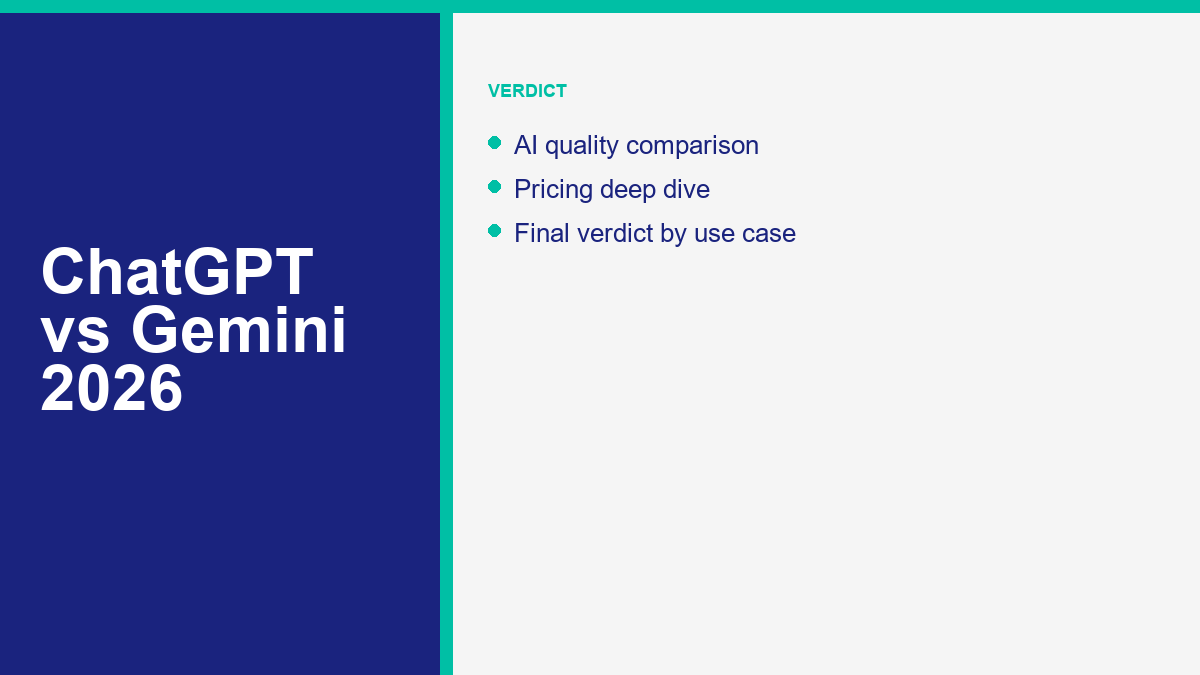
The ChatGPT vs Gemini Feature Comparison Table That Shows the Real Tradeoffs
This table focuses on everyday consumer use in the US and UK, with pricing and feature access checked against official public pages on April 12, 2026.
| Способность | ChatGPT | Гемини | Winner |
|---|---|---|---|
| Free entry price | $0 | $0 | Ничья |
| Starter paid plan | Plus at $20/month | Google AI Pro at $19.99/month | Ничья |
| Top consumer plan | Pro at $200/month | Google AI Ultra at $249.99/month in the US, with a current intro offer | ChatGPT |
| Free-tier reasoning access | Useful, but more tightly capped for serious work | Better free context window and more visible research limits | Гемини |
| Maximum context window for consumers | Smaller than Gemini on public consumer tiers | 1 million tokens on paid plans | Гемини |
| Custom assistants | Custom GPTs are still the stronger consumer system | Gems are improving but less central to the product | ChatGPT |
| Projects and workflow organization | Projects, tasks, and repeatable workflow behavior are more mature | Useful, but less cohesive as a workspace | ChatGPT |
| Deep research | Strong synthesis and agent-style workflow | Higher published limits on paid tiers and stronger search DNA | Гемини |
| Search integration | Good web search with citations and outside search partners | Tighter Google Search and AI Mode integration | Гемини |
| Source citations | Usually cleaner citation display inside chat | Good citations, stronger Google grounding | ChatGPT |
| Google Workspace integration | Works through apps and external connections, but not natively first-party | Native advantage with Gmail, Docs, Drive, Calendar, Keep, and Tasks | Гемини |
| Third-party tool ecosystem | Broader feeling around custom GPTs, apps, and OpenAI tools | Stronger inside Google, thinner outside it | ChatGPT |
| Image generation and editing | Excellent prompt following and editing workflow | High limits and fast integration, but less consistent creative output | ChatGPT |
| Native video generation | Limited Sora access on consumer plans | Veo 3.1 access is clearer and more central on paid plans | Гемини |
| Voice conversation quality | More polished overall conversational feel | Very strong, especially inside Gemini Live | ChatGPT |
| Camera and screen-sharing help on phones | Subscriber-only video and screenshare in voice | Gemini Live feels more native and more central on mobile | Гемини |
| Android integration | Good app, but still an app | Can act as the mobile assistant and use screen actions | Гемини |
| iPhone and iPad experience | More consistent cross-platform product feel | Good iOS app, but less system-level leverage than on Android | ChatGPT |
| Coding workflow | Codex and the broader OpenAI tooling still matter | Improving quickly, especially with Google developer tools around it | ChatGPT |
| Privacy controls for personal use | Simpler opt-out and Temporary Chat model | More settings depth, but more retention caveats to track | ChatGPT |
| Best value for Google-heavy users | Strong, but requires more manual context | Better if your work already lives in Google | Гемини |
| Best overall for power users | The stronger all-purpose AI workbench | The stronger integrated ecosystem assistant | ChatGPT |
The pattern in that table is not subtle. ChatGPT wins when the question is, “Which platform gives me the strongest self-contained AI workspace?” Gemini wins when the question is, “Which platform gets more useful once my email, docs, phone, and search habits are already inside the same company?”
Multimodal in 2026: Which One Handles Images, Voice, and Video Better?
This is the section where the old “text chatbot” framing completely breaks down. Both platforms are now multimodal enough that your answer depends on which modality you actually use, not which one looks better in a keynote demo.
For Image Creation and Editing, ChatGPT Is Still the Better Everyday Tool
ChatGPT has become the easier image tool for normal work. The core advantage is not only quality. It is instruction following and editing flow. You can ask for a visual, then refine it in plain language, then make small changes without the whole result collapsing. That is exactly what marketers, students, freelancers, and small teams need from AI images. It feels less like “generate something cool” and more like “help me get to the version I actually want.”
Gemini has very generous published image limits on paid tiers and good image editing capacity, especially as Google expands Nano Banana and related tooling. But if I had to hand one platform to a non-designer who wants reliable image iteration today, ChatGPT is the safer recommendation.
For Live Voice and Visual Assistance on Your Phone, Gemini Is Better
Google’s Gemini Live documentation shows camera support, screen sharing, file-aware Live chats, YouTube-aware Live prompts, and background usage patterns that feel much closer to a phone-native assistant than a normal AI app. ChatGPT’s voice mode is genuinely strong, and OpenAI’s own Voice Mode FAQ confirms subscribers can use video and screensharing on mobile. But Gemini’s mobile multimodal experience is more central to the product, especially on Android.
If your ideal assistant is “show it what is on my screen, point the camera at something, keep talking, and help me finish the task,” Gemini wins that round.
For Video Generation, Gemini Has the Clearer Consumer Story
OpenAI still has the more iconic video brand with Sora, but Gemini has the clearer mainstream packaging right now. Google’s current AI plans explicitly tie paid Gemini access to Veo 3.1 Fast on Pro and Veo 3.1 on Ultra, while ChatGPT frames Sora access on consumer tiers as limited or extended depending on the plan. If video creation is central to your purchase, Gemini is easier to buy for because Google makes it a visible part of the subscription value instead of a side perk.
Multimodal winner: Гемини for breadth and phone-native utility. ChatGPT still wins the narrower image-generation category, but the broader image + voice + video package now belongs to Google.
Gemini + Google Search vs ChatGPT Search and Bing-Backed Providers
Search integration is where gemini vs chatgpt becomes less philosophical and more technical. Who has the cleaner relationship with the live web? In 2026, the answer is still Google.
Gemini’s paid plans are now linked directly to Google Search benefits, including access to stronger Gemini model behavior in AI Mode and Deep Search on Google’s own plan pages. That means the search layer is not bolted on. It is part of the larger Google information stack. Search, web grounding, browsing habits, and Google account context all reinforce each other.
ChatGPT Search has improved a lot and deserves credit for that. OpenAI’s documentation says ChatGPT can automatically search the web, cite sources inline, and work with third-party search providers. For enterprise and education search, OpenAI even explicitly says Bing is currently the only third-party search provider in that workspace context. That matters because a lot of users still think ChatGPT Search is simply “Bing inside ChatGPT.” That description is too narrow now, but it is not completely detached from reality either.
In practical use, the difference feels like this:
- Gemini search answers feel more tightly grounded in Google’s search machinery. That helps with current events, local intent, shopping context, and general “what changed?” questions.
- ChatGPT search answers often feel better synthesized. The product is strong at turning search-backed findings into a cleaner explanation without feeling like a dressed-up search-results page.
If you want the assistant that feels most natively fused to web search, Gemini wins. If you want the assistant that often explains the search results more cleanly once it has them, ChatGPT is still excellent. For this section, though, the verdict has to go to Гемини because Google owns the search layer outright and uses that advantage aggressively.
ChatGPT App vs Gemini App: Which Mobile Experience Is Better in Daily Use?
Mobile is where a lot of users make the wrong decision because they compare screenshots instead of habits. The right question is not, “Which app looks better?” It is, “Which app removes more friction on the device I actually use?”
On iPhone and iPad, ChatGPT is the better all-around app. OpenAI’s help docs confirm ChatGPT is available on iPhone, iPad, and Android, and its voice mode documentation shows video and screen sharing on mobile for subscribers. The app feels consistent with the web version, which matters more than people admit. If you move between laptop and phone all day, that continuity is part of the product value.
On Android, Gemini is the better app. Google’s mobile help docs explicitly position Gemini on Android as both an app and, when enabled, your mobile assistant. That makes a huge difference. Gemini can sit closer to your device behavior, use live screen actions, and feel integrated instead of launched. For Android users, Gemini is not merely competing with ChatGPT. It is competing from the home-field position.
For voice-first use, Gemini has the edge on phones. Gemini Live’s screen-sharing and camera-based help feels more like a real-time assistant. For long-form work that happens to continue on a phone, ChatGPT has the edge. It handles the transition from desktop task to mobile follow-up better.
The honest recommendation is platform-specific:
- Best mobile app for iPhone and iPad: ChatGPT
- Best mobile app for Android: Гемини
- Best mobile app if you switch between phone and desktop constantly: ChatGPT
- Best mobile app if your phone itself is the workflow: Гемини
ChatGPT vs Gemini Pricing in 2026: Free Tiers, Plus, Pro, and Ultra
Pricing is where a lot of people expect a knockout punch, but the real story is closer to value shape than raw dollar difference. Entry pricing is almost identical. The expensive tiers diverge sharply.
| План | Public price | What you are really paying for |
|---|---|---|
| Бесплатный ChatGPT | $0 | A useful everyday assistant with search, limited flagship access, limited uploads, limited images, and limited deep research |
| ChatGPT Плюс | $20/месяц | The serious consumer tier for custom GPTs, projects, tasks, stronger reasoning, better image creation, deeper research, and more overall headroom |
| ChatGPT Pro | $200/month | The high-limit tier for power users who want the best reasoning, more or unlimited usage, stronger voice, and maximum research and workflow capacity |
| Gemini Free | $0 | A strong no-cost assistant with 32K context, limited access to the stronger reasoning model, image generation, Audio Overviews, and limited Deep Research |
| Google AI Pro | $19.99/month | Higher Gemini limits plus 1M context, more Deep Research, Veo access, Google app integration perks, NotebookLM upgrades, and 2 TB storage |
| Google AI Ultra | $249.99/month in the US, currently $124.99/month for the first 3 months | Highest Gemini limits, Veo 3.1, agent features, top research capacity, 30 TB storage, and bundled perks like YouTube Premium in supported markets |
The first thing I would tell anyone shopping this market is not to stare at the $20 tier and assume the two platforms offer the same type of value. ChatGPT Plus is a better pure-AI buy. Google AI Pro is a better bundle buy. If you want the cleanest assistant workspace, the $20 ChatGPT tier is still the easiest recommendation. If you want AI plus Google storage plus NotebookLM gains plus Google app leverage, Google’s plan can feel like a better package.
The second thing I would tell people is to take the top plans seriously before you buy them. ChatGPT Pro at $200 per month is only worth it if you slam into Plus limits constantly or truly need the top reasoning tier and usage headroom every day. Google AI Ultra at $249.99 per month is a similarly niche purchase. It makes sense for creators, researchers, and heavy Google-native power users who will actually use the model limits, Veo access, and bundle perks. It is overkill for most people.
If you are budgeting across more than one chatbot or assistant subscription, use our broader гид по ценам на чат-боты after this. The expensive mistake in AI is rarely buying a single wrong plan. It is stacking three overlapping subscriptions that each solve 70 percent of the same problem.
Privacy and Data Use: Which One Gives You More Control Over Your Conversations?
This is one of the few rounds where the answer is not mostly about ecosystem preference. The privacy behavior is meaningfully different, and you should care.
Текущий OpenAI Data Controls FAQ и model training policy article say ChatGPT may use content from individual users to improve models unless you opt out. The good part is that the control is easy to understand. Turn off “Improve the model for everyone” and future conversations are not used to train ChatGPT. Use Temporary Chat and those chats are not saved in history, do not create memories, are not used for training, and are kept for up to 30 days for safety purposes.
Google’s current Gemini Apps Privacy Hub is more layered. If Keep Activity is on, your chats and shared content can be saved to Gemini Apps Activity and used to provide, develop, and improve Google services, including training generative AI models, with help from human reviewers. Google says activity auto-deletes after 18 months by default, though you can change that. If Keep Activity is off, future chats are not used to train Google’s AI models unless you choose to send feedback, but they are still stored for up to 72 hours so Google can provide the service and process feedback. Google also says personal content pulled from connected Google services is not reviewed by human reviewers and is not used to improve the generative machine learning technologies that power Gemini Apps.
The nuance there matters. Gemini has good protections around connected-app content, but the overall activity model is harder for an average consumer to hold in their head. ChatGPT’s consumer privacy controls are simpler and easier to explain to a normal person in one sentence.
Privacy winner for individual users: ChatGPT. Not because OpenAI is magically private by default, but because the user-facing controls are easier to understand and Temporary Chat is a genuinely useful mode when you want a cleaner privacy boundary on demand.
Final Verdict: Which One Should You Pick by User Type?
Here is the short version without the usual “they are both great” dodge.
Best Overall for Most People: ChatGPT Plus
If you want one paid AI assistant and do not already have a strong reason to stay inside Google, ChatGPT Plus is still the best overall buy. It gives you the better standalone AI workspace, better custom workflow behavior, better image work, and better cross-device consistency for basically the same entry price as Google AI Pro.
Best for Google Workspace Users and Android Owners: Gemini
If your workday lives in Gmail, Docs, Drive, Calendar, Search, Chrome, and Android, Gemini is the better fit. You will get more value from the integration than you will from ChatGPT’s cleaner standalone workspace. This is the clearest use case where google gemini vs chatgpt has an easy answer: pick Gemini.
Best Free Plan: Gemini
ChatGPT Free is good. Gemini Free is the better serious-work free tier right now because the published limits are clearer, the 32K context window is meaningful, and Google gives you surprisingly usable research and multimodal capability before you pay. If you want the strongest no-cost answer to gemini vs chatgpt, the free round goes to Гемини.
Best for Writing, Coding, and Power-User Workflows: ChatGPT
Writers, marketers, researchers, consultants, and developers who want an AI assistant they can shape around recurring work should choose ChatGPT. Custom GPTs, tasks, projects, Codex, and the broader OpenAI tool stack still give it the stronger power-user identity.
Best for Live Phone Help, Google Search, and Video-Creation Bundles: Gemini
If the job is camera-based assistance, Android-native help, Google Search integration, or video generation value, Гемини is the better pick. That is where the Google bundle really starts to justify itself.
Best for the Highest-End Consumer Tier: ChatGPT Pro for Pure AI Work, Gemini Ultra for Google-Native Media Work
The expensive plans are not meant for the same buyer. ChatGPT Pro is the better top-tier purchase if you want maximum reasoning, coding, and AI workspace depth. Google AI Ultra is the better top-tier purchase if you want the biggest Google AI bundle, the highest Gemini limits, and Veo-centered media creation. If I had to choose only one expensive plan for general professional use, I would still pick ChatGPT Pro.
Best Choice for Small Businesses
If you mean an internal assistant for owners, operators, or staff, ChatGPT is the better default business pick because it is stronger for writing, planning, analysis, and ad hoc problem-solving across lots of roles. If you mean a customer-facing chatbot on Messenger, Instagram, or your website, neither ChatGPT nor Gemini should be your primary software purchase. That is a different stack entirely. Start with the лучшим чат-ботам для малого бизнеса guide, then compare channel-specific automation against your support volume, CRM needs, and response goals.
Run This 15-Minute Test Before You Subscribe
If you are still torn, do not use benchmark prompts from social media. Run this exact test with your real work:
- Give both tools the same messy input. Use a real email thread, a real PDF, a real campaign draft, or a real spreadsheet question.
- Ask for one research task. Make each assistant find current sources and summarize what changed recently.
- Ask for one transformation task. Turn that research into a plan, message, slide outline, or checklist.
- Try the mobile app. Do one phone-native task you actually care about, such as voice follow-up, camera help, or checking a file on the go.
- Notice where you lost time. The better assistant is the one that needed less setup and less fixing, not the one that sounded smartest in a single answer.
The final scorecard is simple enough to remember:
- Pick ChatGPT if you want the best all-purpose AI workspace.
- Pick Gemini if you want the best Google-native assistant.
- Pick neither as your main software purchase if your real goal is customer-facing bot automation rather than personal AI help.
If your next step is moving from personal AI assistants to customer messaging automation, compare channel-specific tools instead of forcing ChatGPT or Gemini into a support role they were not built to own alone. Read our guide to ИИ обслуживания клиентов и Посмотреть цены на MessengerBot if Facebook Messenger, Instagram replies, or website chat are part of the buying decision.
Frequently Asked Questions About ChatGPT vs Gemini in 2026
Что лучше, chatgpt или gemini в 2026 году?
For most people, ChatGPT is better in 2026 because it is the stronger all-purpose AI workspace for writing, coding, research, and repeatable workflows. Gemini is better if you already live in Google’s ecosystem and want tighter Gmail, Docs, Search, and Android integration.
Сколько стоит chatgpt по сравнению с gemini?
По состоянию на 12 апреля 2026 года, ChatGPT Free стоит $0, ChatGPT Plus стоит $20 в месяц, а ChatGPT Pro стоит $200 в месяц. Gemini Free стоит $0, Google AI Pro стоит $19.99 в месяц, а Google AI Ultra стоит $249.99 в месяц в США, с текущей вводной ценой $124.99 в месяц в течение первых трех месяцев на публичной странице США.
Какая платформа имеет лучшие функции ИИ в 2026 году?
ChatGPT имеет лучший набор функций чистого ИИ для большинства профессионалов, потому что настраиваемые GPT, проекты, задачи, Codex, редактирование изображений и глубина рабочего процесса сильнее. Gemini имеет лучший интегрированный набор функций, если вы хотите, чтобы Google Search, Gmail, Docs, Drive, Android, Gemini Live и генерация видео в стиле Veo работали вместе.
Могу ли я легко переключаться между двумя платформами?
You can switch easily as a casual user because both have free tiers and mobile apps. You cannot switch perfectly once your workflow gets deeper. ChatGPT users often build habits around custom GPTs, projects, and tasks, while Gemini users build habits around Gmail, Docs, Drive, and Android integration. The tools are easy to test side by side, but harder to replace once they become part of your daily process.
Что лучше для малого бизнеса?
Для внутренней продуктивности команды ChatGPT является лучшим выбором по умолчанию для малого бизнеса, так как он лучше справляется с написанием, планированием, подготовкой поддержки и общим решением проблем в одном рабочем пространстве. Для автоматизации взаимодействия с клиентами в Messenger, Instagram или чате на сайте ни ChatGPT, ни Gemini не являются подходящей основной платформой. Платформа чат-ботов для бизнеса является более выгодным вариантом.



 Русский
  English
  Tagalog
  简体中文
简体中文  العربية
  हिन्दी
  Português do Brasil
  Español de México
  Français
  বাংলা
বাংলা  香港中文
香港中文  繁體中文
繁體中文  Nederlands
  Deutsch
  Bahasa Indonesia
  日本語
日本語  한국어
한국어  Polski
  Español
  Tiếng Việt