ManyChat 替代方案 2026:8 個與 ManyChat 相匹配或超越的 Messenger 機器人平台

If ManyChat still fits your business, there is no reason to switch just because another vendor is louder on social. But in 2026, a lot more teams are shopping around because the math changed. ManyChat rolled out a new plan structure on March 2, 2026, active-contact billing matters more than it used to, and businesses that were comfortable at a few hundred contacts are starting to notice how quickly a “cheap” automation stack stops feeling cheap once campaigns begin to work.

I checked the public pricing pages and help documentation for every platform in this roundup on April 10, 2026. That matters because this category changes fast. Free tiers get tightened, WhatsApp fees move, AI add-ons get repackaged, and some products that started as simple bot builders are now trying to become full customer messaging platforms. If you want the bigger market view after this, read 我們的完整聊天機器人比較.

One quick reality check before the rankings: there is no serious ManyChat replacement with “no sign up required.” Production bot platforms need channel permissions, stored flows, inbox routing, and user roles. The real questions are simpler. Which tools are fully free to start? Which ones only give you a trial? Which one is still affordable after your audience starts replying every day? That is what this guide is built to answer.

Why Businesses Start Looking for ManyChat Alternatives in 2026

ManyChat 仍然是市場上設計最好的社交自動化工具之一。它易於學習,在 Instagram 上表現出色,對於生活在 DM 中的創作者、教練、本地企業和電子商務品牌來說,實際上非常有用。人們並不是因為產品突然變壞而離開。大多數人離開的原因有三個:隨著規模擴大而上漲的價格、業務成熟後的功能缺口,以及當社交 DM 不再是唯一重要的對話渠道時的平臺限制。.

價格問題是最大的問題。在 ManyChat 2026 年 3 月 2 日的新模型下,免費計劃包括 25 個活躍聯絡人。Essential 每月起價為 $17,適用於 250 個活躍聯絡人。Pro 每月起價為 $39,適用於 2,500 個活躍聯絡人。Business 每月起價為 $99,適用於 7,500 個活躍聯絡人。Advanced 每月起價為 $199,適用於 25,000 個活躍聯絡人。這比舊的動態定價表更清晰,但「活躍聯絡人」仍然意味著在計費月份內實際與您互動的人。如果您的活動變得更健康,您的帳單也可能隨之上升。.

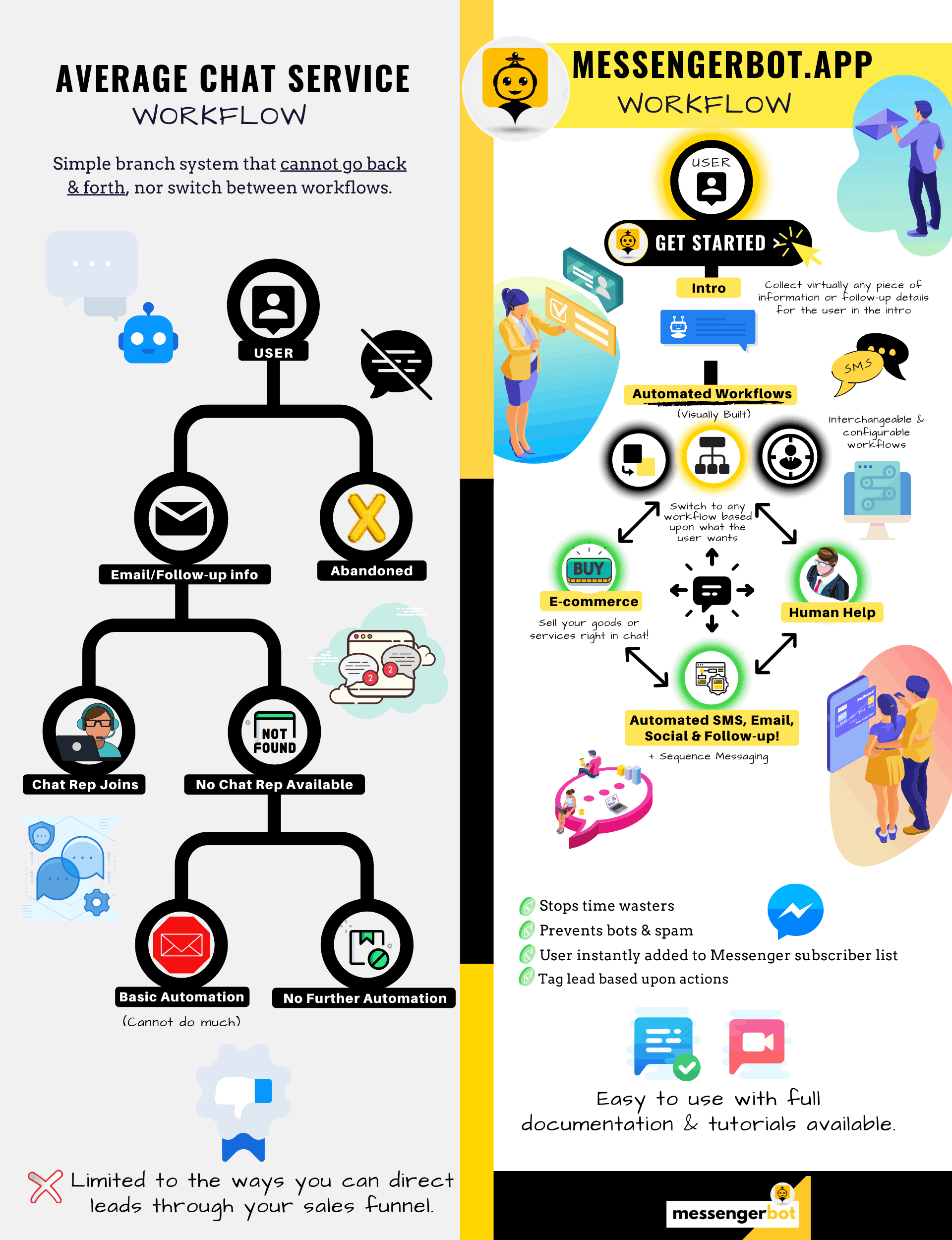
The second pressure point is feature fit. ManyChat is strongest when the job is social growth and DM selling: comment-to-DM, story replies, lead magnets, promos, broadcasts, and light team inbox work. Once you need deeper website support, stronger AI help-desk behavior, more open APIs, or a flatter pricing model that is easier for finance to budget, other tools start to look better. That is why Tidio, Respond.io, and MessengerBot keep showing up in serious shortlists.

The third issue is confusion. ManyChat now has a split reality in the market. New accounts created on or after March 2, 2026 can see the new plan structure, while older accounts may still be dealing with legacy pricing and older docs. That makes comparison shopping harder than it should be. A lot of buyers do not trust pricing when it feels like there are two versions of the same product floating around. Competitors with flatter public plans benefit from that.

So the smart way to read this article is not “Which platform destroys ManyChat?” That is the wrong question. The right question is, “Which platform fits my main channel, my real budget, and my next 12 months of growth better than ManyChat does?”

The 8 Best ManyChat Alternatives Ranked

The ranking below weights three things more heavily than most vendor comparisons do: total cost after the honeymoon period, channel fit, and how usable the product feels once you move beyond a single welcome flow. Pricing reflects public product pages reviewed on April 10, 2026.

ManyChat alternative comparison
平台 定價 免費層 頻道 AI 最佳用途
MessengerBot.app Premium $19.99/30 days, Pro $49.99/30 days 免費試用 Facebook Messenger, website chat, email, SMS, Instagram on Pro Visual flows plus API, Zapier, and automation-friendly integrations Messenger-first businesses that want flat pricing
Chatfuel Business from $23.99/mo plus $0.02 per extra conversation 7 天免費試用 Facebook, Instagram, WhatsApp, TikTok, website ChatGPT-powered AI agents and no-code flows Instagram and social DM funnels
Tidio Free, Starter $24.17/mo, Growth from $49.17/mo 是的 Website chat, ticketing, email, social inbox Lyro AI Agent Ecommerce stores and website support
Landbot Sandbox free forever, Starter EUR40/mo, WhatsApp Starter $85/mo 是的 Website, Facebook Messenger, WhatsApp Landbot AI agents and AI assistants Conversational landing pages and lead capture
Respond.io Starter $79/mo, Growth $159/mo, Advanced $279/mo 7 天免費試用 WhatsApp, Instagram, Messenger, TikTok, email, voice, chat, more AI agents, AI assist, AI prompts Multi-channel sales and support teams
SendPulse Free, Pro $12/mo or $9.60/mo annual at 500 subscribers 是的 Facebook, Instagram, WhatsApp, Telegram, TikTok, Viber, web chat ChatGPT and Google Sheets integrations Low-cost omnichannel automation
Botsify Personal $49/mo No public free tier listed Messenger, SMS, website, WhatsApp, Instagram, Telegram, Slack AI agents with document and web search Agencies and AI-agent-first workflows
MobileMonkey / Customers.ai Current Customers.ai plans start around $99/mo Trial or legacy-plan dependent Legacy MobileMonkey and InstaChamp flows, plus current ad and remarketing stack Automation plus audience and remarketing tools Marketers tied to the Customers.ai ecosystem

Fully free to start: ManyChat itself, Tidio, Landbot, and SendPulse. Trial only: MessengerBot, Chatfuel, and Respond.io. No clean forever-free entry on the public pricing page: Botsify and the current Customers.ai stack. That distinction matters more than the headline price.

MessengerBot.app Wins on Flat Pricing and Messenger Depth

If Facebook Messenger is still the core channel for your business, MessengerBot is the cleanest ManyChat alternative in this list. Public pricing starts at $19.99 every 30 days for Premium and $49.99 every 30 days for Pro, with unlimited subscribers on both plans. That one detail matters more than it looks. ManyChat’s new 2026 pricing is cleaner than its older contact tables, but it still ties cost to monthly engagement. MessengerBot is easier to budget when your audience is actually active.

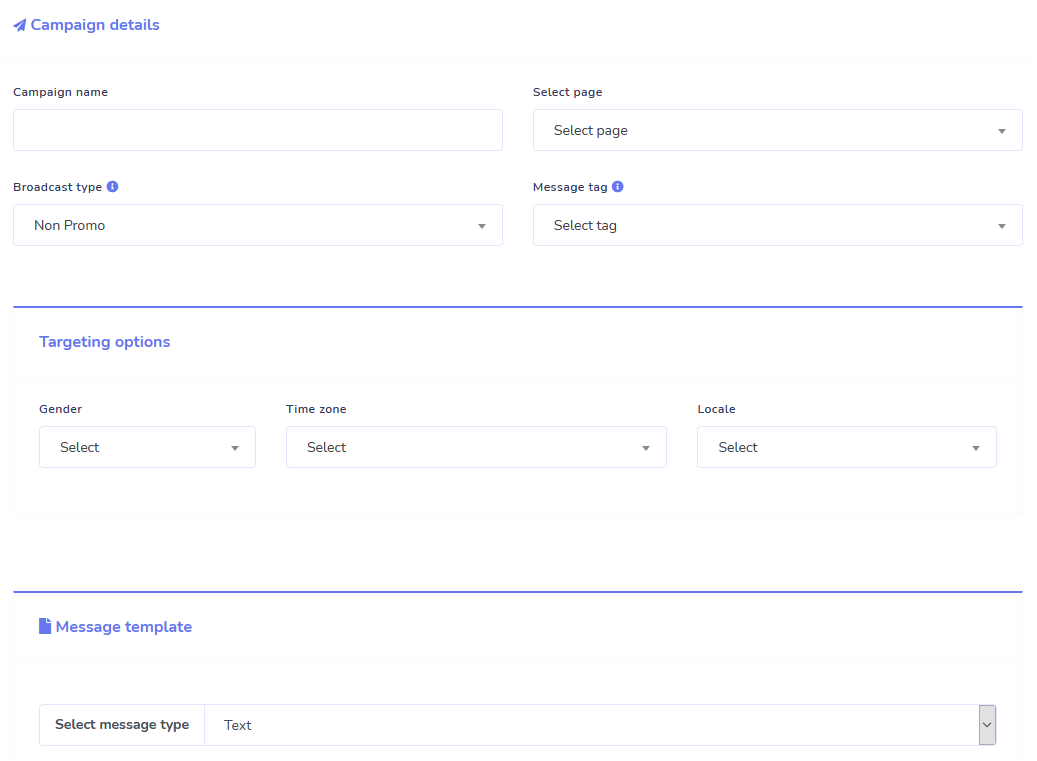
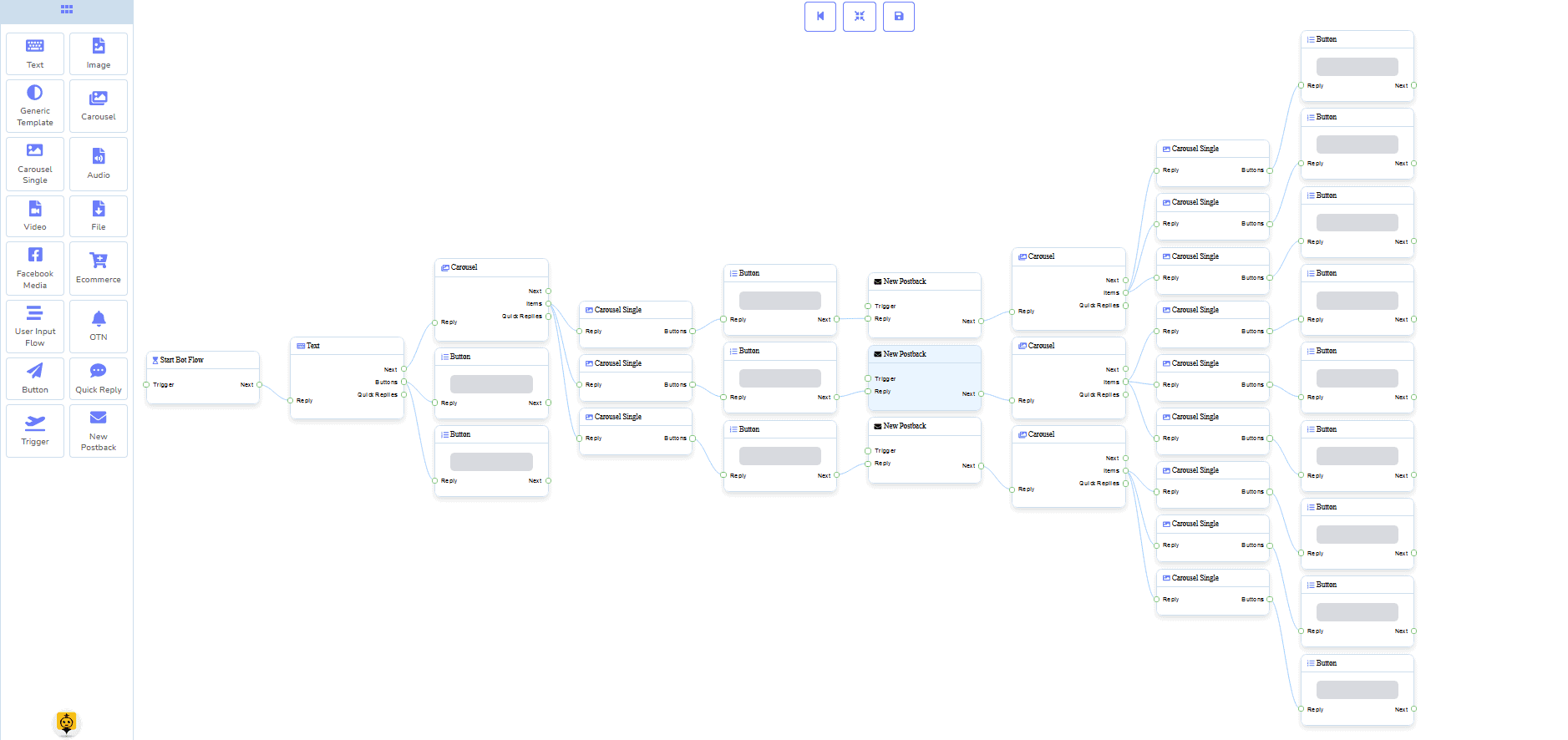
The feature stack is also broader than most people expect: Visual Flow Builder, bulk messages, sequences, website chat, forms, Google Sheets sync, JSON API, Zapier, Messenger ecommerce, WooCommerce sync, abandoned cart recovery, and team features. Pro unlocks Instagram automation too. If you already know you want a Messenger-first platform and you want to inspect the current plans directly, 查看 MessengerBot 價格. The tradeoff is simple: this is not a forever-free tool. You are choosing predictable business pricing over a permanent zero-dollar plan.

Chatfuel Is the Best ManyChat Alternative for Instagram-Heavy DM Funnels

Chatfuel is the first platform I would test if your business depends on Instagram comments, story replies, click-to-chat campaigns, and lead qualification in DMs. The public pricing page currently starts at $23.99 a month on the Business plan, with extra conversations billed at $0.02 each, and a 7-day free trial. That pricing model is easier for some teams to understand than active-contact billing because it follows usage more directly.

Feature-wise, Chatfuel is close enough to ManyChat that the learning curve is not painful. It supports Facebook, Instagram, WhatsApp, TikTok, website chat via Messenger, shared inbox, audience segmentation, Google Sheets, Stripe, Zapier, API access, and ChatGPT-powered automations. The weak spot is that it is still more of a sales and lead-capture tool than a full support stack. If your need is deeper ticketing or complex customer service operations, Tidio or Respond.io will feel more mature.

Tidio Beats ManyChat When Your Website Matters as Much as Your Social Inbox

Tidio is the tool I recommend when the store, help desk, and chat widget matter at least as much as Instagram or Messenger. The free plan is a real starter option. Paid service plans begin at $24.17 a month for Starter, while Growth starts at $49.17 a month. Its Lyro AI agent can also be layered in for AI-first support automation, which is where Tidio starts to separate itself from social-first tools.

The reason Tidio ranks high is not that it out-ManyChats ManyChat. It does not. The reason it ranks high is that it solves a different business problem better. Email, live chat, ticketing, basic AI resolution, and website support sit closer to the center of the product. For ecommerce brands that get traffic from ads, SEO, and email as much as DMs, that makes Tidio a stronger operational fit than ManyChat.

Landbot Is Better for Conversational Landing Pages Than Social-First Growth

Landbot is one of the easiest tools to underrate because people assume it is just a pretty website bot. It is more useful than that. The free Sandbox plan gives you 100 chats a month, while paid plans start at EUR40 a month for Starter. If you want WhatsApp included, the public page lists WhatsApp Starter at $85 a month. That mixed pricing presentation is not ideal, but the product itself is strong.

Where Landbot wins is conversational lead capture. If you want interactive forms, qualification flows, website chat, Messenger support, or WhatsApp journeys that feel more like guided experiences than static forms, Landbot is excellent. It is not the first thing I would buy for a creator selling through Instagram DMs. It is one of the first things I would test for B2B lead gen, service businesses, or brands that want their website to convert harder.

Respond.io Is the Strongest Multi-Channel Step Up from ManyChat

Respond.io is what you shortlist when the business has already outgrown “one social inbox plus a few automations.” Starter is $79 a month, Growth is $159, and Advanced is $279. There is a 7-day free trial with no credit card required. That is a much higher entry point than ManyChat, which is exactly why I would not recommend it to hobby creators or tiny teams. But for a business running serious conversations across WhatsApp, Messenger, Instagram, TikTok, email, voice, and ads, it starts to make sense quickly.

The product is built around team inboxes, routing, broadcasts, workflows, AI agents, reporting, developer API access, and cross-channel conversion operations. In plain English, it is much closer to a revenue and support operations platform than a creator automation tool. If you are switching away from ManyChat because your team keeps saying “we need everything in one place,” Respond.io is probably the most credible answer in this list.

SendPulse Is the Cheapest Serious Alternative That Is Still Worth Using

SendPulse is where budget-conscious buyers should start. Its free plan lets you run up to three chatbots, support up to 500 subscribers, and send up to 10,000 messages a month across all bots. Paid Pro pricing starts at $12 a month monthly, or $9.60 a month when billed annually, at the 500-subscriber level. That is one of the most generous low-cost entries in the category right now.

It also supports more channels than many small businesses expect: Facebook, Instagram, WhatsApp, Telegram, TikTok, Viber, and live chat, with ChatGPT and Google Sheets integrations on paid plans. The downside is polish. SendPulse is powerful, but it does not feel as refined as ManyChat or Chatfuel for social growth. If price is the first filter and you are comfortable with a more utilitarian interface, it is a very smart alternative.

Botsify Fits Teams That Want AI Agents More Than Creator Automation

Botsify’s current public pricing is centered around AI agents rather than classic Messenger growth funnels. The Personal plan is listed at $49 a month and includes two AI agents, 6,000 credits, document and web search, scheduling, and channels such as Messenger, SMS, website, WhatsApp, Instagram, Telegram, and Slack. That is a different pitch from ManyChat’s creator and social-sales framing.

The product makes the most sense for agencies, service teams, or businesses that want an AI-agent layer that can search documents and websites across several channels. If your main goal is comment-to-DM growth and influencer-style funnels, Botsify is not the best fit. If your main goal is “build an agent that can answer, route, and pull from knowledge sources,” it becomes more interesting.

MobileMonkey Still Gets Searched, but the Product Story Changed

I am keeping MobileMonkey on the list because buyers still search for it by name, not because it is the cleanest ManyChat alternative in 2026. The honest version is this: the old MobileMonkey story is mostly a legacy story now. Customers.ai and InstaChamp are the brands you are more likely to run into. Their help docs still reference InstaChamp Platinum and legacy MobileMonkey plans, but the current public Customers.ai positioning is much more about lead capture, audience identification, remarketing, and campaign enrichment than a straightforward drop-in ManyChat clone.

Pricing on the current Customers.ai side starts around $99 a month on public comparison pages. That can make sense if you specifically want the broader Customers.ai ecosystem and its Meta-focused marketing tools. If what you want is a clean social chatbot replacement, this should be one of the last platforms you test, not the first.

MessengerBot Is the Best Budget ManyChat Alternative Once Engagement Starts Scaling

If you define “budget” as the lowest first invoice, SendPulse wins because it is fully free to start and only $12 a month at its Pro entry point. If you define “budget” the way most real businesses eventually do, meaning the cheapest platform to run once your audience is actually responding every month, MessengerBot is the stronger ManyChat alternative.

That is because flat pricing beats active-contact math once you move beyond a small test. ManyChat is still perfectly reasonable on the free tier and still competitive at the $17 Essential level if you are staying under 250 active contacts. But when your content, ads, or seasonal promos keep the same people re-engaging month after month, the meter keeps running. MessengerBot Premium at $19.99 every 30 days or Pro at $49.99 every 30 days is easier to forecast, especially for Messenger-first teams that want unlimited subscribers and do not want a billing surprise after a campaign goes well.

  • Cheapest free start: SendPulse.
  • Best flat-price value for Messenger-first teams: MessengerBot.
  • Best if you want to stay very close to ManyChat’s social style: Chatfuel.

Chatfuel Is the Best ManyChat Alternative for Instagram

If Instagram DMs are the growth engine, Chatfuel is the best ManyChat alternative to test first. Its public product page is still built around the exact mechanics Instagram-heavy brands care about: comments autoresponders, story replies, mentions, direct messages, click-to-chat ads, lead capture, segmentation, and shared inbox support. That is why Chatfuel sits ahead of broader tools here even when some of those broader tools have more enterprise depth.

ManyChat migration guide

ManyChat is still excellent on Instagram. That is worth saying clearly. If you are leaving ManyChat, you are not replacing a weak product. You are usually replacing a billing model or a feature mix. Chatfuel is the most natural replacement when you want the same kind of Instagram-first motion without moving into a help-desk-first product. MobileMonkey’s old Instagram story still has search demand, but in 2026 it is more legacy and less cleanly productized than Chatfuel.

Respond.io Is the Best ManyChat Alternative for Multi-Channel Teams

When your team says “we need Instagram, WhatsApp, Messenger, email, voice, and ad-driven lead capture in one place,” stop evaluating creator tools like they are operations software. That is the lane where Respond.io becomes the best ManyChat alternative. It is more expensive, and for many small businesses it will be overkill. But for a real sales or support operation, it is far more coherent than trying to force a social-first platform into a job it was not built to own.

Broadcasts, workflows, AI agents, reports, developer API access, and team inbox controls are native parts of the product. That matters because multi-channel complexity is rarely about writing one clever reply. It is about routing the right person to the right workflow on the right channel, logging what happened, and not losing context in the handoff. ManyChat can stretch into some of that. Respond.io is built around it.

Tidio Is the Best ManyChat Alternative for Ecommerce

For ecommerce brands, the question is rarely “Which chatbot is coolest?” The question is “Which tool reduces abandoned carts, answers repetitive questions, helps support move faster, and still converts traffic after store hours?” Tidio is the best ManyChat alternative in that environment because it combines live chat, ticketing, help-desk behavior, and AI support into one product that already makes sense on a website.

If most of your store conversations happen on Instagram or Messenger, ManyChat, Chatfuel, or MessengerBot can still be stronger. But most stores do not live in one channel forever. They have product questions on site, returns questions by email, abandoned carts at night, and support overload after campaigns. Tidio handles that mess better than a social-first bot builder does.

How to Move From ManyChat to Another Platform Without Breaking Live Automations

Most teams underestimate the migration work because they think in flows, not in triggers. The flows are only half the problem. The real migration job is mapping all the entry points, tags, custom fields, inbox rules, ad triggers, and channel permissions that make the flows fire in the first place. Treat the move like a systems migration, not a copy-paste exercise.

  1. Freeze new build work for 24 to 48 hours. Do not keep editing ManyChat while you are mapping the move. Rename every live automation clearly, note what channel triggers it, and mark which ones are revenue-critical.
  2. Audit everything that triggers a conversation. Export or document comment keywords, story triggers, welcome messages, landing page widgets, QR codes, growth tools, ad entry points, webhook actions, and human handoff rules.
  3. Export contacts, tags, and custom fields where your new platform allows it. In most cases you can move contact data and labels more easily than you can move flows. Do not assume flow logic will import cleanly. In this category, rebuild is the normal path.
  4. Rebuild the highest-value flows first. Start with welcome DM, lead magnet delivery, FAQ, comment-to-DM, abandoned cart, booking flow, and any handoff sequence that touches revenue or support SLAs.
  5. Reconnect every outside system one by one. That means Facebook pages, Instagram business accounts, WhatsApp numbers, Shopify or WooCommerce, Google Sheets, Zapier, APIs, pixels, and website widgets.
  6. Run both systems in parallel for 7 to 14 days when possible. Send a controlled slice of traffic to the new platform, test every top trigger manually, and make sure duplicate replies are not firing.
  7. Cut over only after a checklist pass. Test contact capture, tag application, bot-to-human handoff, notification delivery, keyword handling, promo sequences, and analytics before you shut ManyChat down.

If you are rebuilding around Facebook pages, entry points, and handoff flows, keep our Messenger automation guide open during the cutover. It is the easiest way to avoid missing the boring setup details that usually break launches.

  • Screenshot every live ManyChat automation before rebuilding it.
  • Keep a spreadsheet with old trigger, new trigger, owner, and test status.
  • Pause ads or comment triggers if both platforms might answer the same user.
  • Test with real accounts on mobile, not just desktop previews.
  • Wait until reporting looks normal before canceling ManyChat.

ManyChat Pricing vs Alternatives: Real Cost Comparison

This is where most comparison posts go soft. They say one platform is “more affordable” without showing the bill shape. ManyChat’s current pricing is actually pretty fair at the low end. The catch is what happens once your audience is active often enough to count every month. That is why you need to compare billing models, not just starting prices.

Scenario ManyChat Cost Closest Alternative Benchmarks What Changes the Math
Testing a new funnel Free up to 25 active contacts SendPulse Free, Tidio Free, Landbot Sandbox, MessengerBot trial ManyChat is still competitive if you are only validating the idea
Small live campaign Essential $17/mo for 250 active contacts SendPulse Pro $12/mo, MessengerBot Premium $19.99/30 days, Chatfuel from $23.99/mo ManyChat still looks fine if your engagement stays controlled
Growing social funnel Pro $39/mo for 2,500 active contacts MessengerBot Pro $49.99/30 days, Tidio Growth from $49.17/mo, Chatfuel from $23.99 plus usage Contact spikes and seat needs start to matter
Busy SMB or creator brand Business $99/mo for 7,500 active contacts MessengerBot Pro $49.99/30 days, Respond.io Starter $79/mo, Landbot Starter EUR40/mo This is usually where flat pricing starts looking more attractive
High-engagement month About $161.50/mo at 10,000 active contacts on ManyChat Business MessengerBot stays flat, Chatfuel depends on conversations, SendPulse depends on subscribers, Tidio depends on conversations and AI quotas This is the point where ManyChat often stops feeling cheap

There are two fair caveats here. First, not every competitor measures usage the same way, so some comparisons are never perfectly apples to apples. Chatfuel cares about conversations. ManyChat cares about active contacts. SendPulse leans on subscribers. Tidio layers in conversations and AI quotas. Respond.io mixes team and contact logic. That sounds annoying, but it is also the whole point of comparison shopping. The billing unit tells you what the vendor thinks your business should pay for.

Second, ManyChat can still be a sensible deal if your audience is large but only lightly active. The bill gets rough when the same audience engages all month long. Under the new March 2, 2026 structure, ManyChat Business includes 7,500 active contacts and charges $0.025 per additional contact on monthly billing. That is how you arrive at roughly $161.50 when 10,000 people are active. If your growth engine depends on constant re-engagement, that is exactly the scenario you need to price before you renew.

Where MessengerBot Makes More Sense Than ManyChat

If your team is mainly automating Facebook Messenger, wants flat pricing, and would rather pay for a broad feature set than watch an active-contact meter, MessengerBot is the cleaner switch. Start with MessengerBot Pro 功能 if Instagram automation, website chat, ecommerce tools, JSON API, or advanced flows are part of your shortlist. Then 查看 MessengerBot 價格 and decide quickly whether Premium or Pro matches your workflow.

常見問題

有什麼好的免費替代品可以取代 ManyChat?

If you want the best true free starting point, SendPulse is the strongest ManyChat alternative right now. Its free plan supports up to three chatbots, 500 subscribers, and 10,000 messages a month across all bots. Tidio and Landbot also have real free plans, but they are better for website chat and conversational forms than social-first DM marketing. If your business is heavily tied to Messenger or Instagram, ManyChat’s own free plan is still good for testing, but SendPulse gives you more room before you have to pay.

MessengerBot 比 ManyChat 便宜嗎?

通常是的,一旦您超越非常小的聯絡人數量。ManyChat 在最低端可能更便宜,因為它的免費層和 $17 基本計劃是很好的入門點。當參與度開始增長時,MessengerBot 對於許多以 Messenger 為主的企業變得更便宜,因為高級和專業計劃使用固定定價,無限訂閱者,而不是每月按活躍聯絡人收費。.

我可以將我的 ManyChat 流程遷移到另一個平台嗎?

是的,但在大多數情況下,您是在遷移邏輯,而不是進行完美的一鍵式流程導入。聯絡資料、標籤和一些資產通常可以移動或重新創建,但大多數企業最終會在新系統中手動重建他們最佳的流程。最安全的方法是先遷移您收入關鍵的自動化,讓兩個系統並行運行一段短時間,只有在新設置通過實時測試後才取消 ManyChat。.

哪個 ManyChat 替代品最適合 Instagram?

Chatfuel 是 Instagram 最強大的替代方案,如果您希望產品仍然感覺原生於社交 DM 銷售。它支持評論自動回覆、故事回覆、提及、點擊聊天行為以及 AI 輔助的潛在客戶捕獲。如果您希望在同一堆疊中擁有 Instagram 以及更深入的 Messenger 和電子商務功能,MessengerBot Pro 也值得一看。MobileMonkey 仍然通過 InstaChamp 擁有舊版 Instagram 的關聯,但它不是最乾淨的現代選擇。.

為什麼人們會從 ManyChat 轉換到競爭對手?

最常見的原因是規模成本、渠道適配和運營成熟度。有些團隊在活動開始運作後不想要主動聯繫計費。其他團隊則需要更強的網站支持、更好的多渠道路由、更深入的人工智慧客服功能,或是更容易預算的平價模型。ManyChat 在社交自動化方面仍然強大。問題通常不是質量,而是另一個平台更好地匹配業務的下一階段。.

相關文章

zh_HK香港中文