
Real estate is one of the few industries where a missed reply has a visible dollar value. A buyer asks about a property at 9:47 p.m., a renter wants to book a viewing before work, or a seller lands on your valuation page and leaves because nobody answers the first obvious question. By the time a human gets back to them the next day, the emotional peak is gone.
That is exactly where a real estate chatbot earns its keep in 2026. Not by pretending to be your best closer. Not by replacing a skilled agent. It works because so much of the early conversation is repetitive, time-sensitive, and easy to route: Is this listing still available? Can I see it this week? Do you have anything similar under this budget? Are you taking rental applications? Can you send new listings in this area?
Zillow’s 2025 Consumer Housing Trends Report says contacting an agent was the most common first step for buyers at 52%, and 80% of buyers contacted an agent within their first three homebuying activities. The same report says 94% of buyers had an agent or brokerage help them access and tour for-sale properties at least once, while 79% installed a real estate app during the process. Zillow’s 2023 buyer report also found that 95% of buyers used at least one online shopping resource while searching. The practical takeaway is simple: buyers want digital speed and agent-level guidance at the same time.
That combination is why chatbots fit real estate better than many other service categories. The buyer starts online, the intent spikes around a specific listing, the questions are predictable, and the next action is usually clear. A bot does not need to negotiate inspection credits to be valuable. It just needs to answer fast, qualify cleanly, and move the lead to the right next step before attention fades.
Pricing and case-study details below were checked against public product pages, help centers, and official customer stories on April 10, 2026. One quick reality check before the platform comparison: none of the serious real estate chatbot stacks here are truly no sign up required. The moment you connect website chat, CRM routing, calendar sync, MLS data, or lead alerts, you are inside a real system. If your lead flow leans heavily on Facebook Page messages, Instagram DMs, or comment-to-message campaigns, the best companion read after this is the business Messenger automation guide.
Why Real Estate Is a Perfect Fit for Chatbots in 2026
The strongest chatbot categories all share one trait: the first questions are predictable, but the buyer still wants the experience to feel personal. Real estate fits that pattern almost perfectly. A buyer may be emotionally invested in one property, but the information path is usually familiar. Price, area, timing, financing, and similar-home questions all show up early.
There is also a stress problem. Zillow’s 2025 buyer report says 60% of buyers described the homebuying experience as at least somewhat stressful, and 25% called it very or extremely stressful. That matters because stressed buyers do not want to chase agents for basic answers. They want quick clarity. A good chatbot reduces uncertainty at the exact point where uncertainty usually kills momentum.
Automation is not only about lead volume. It is about coverage. Website visitors, portal leads, open-house QR scans, PPC traffic, and social DM inquiries do not arrive neatly between 9 a.m. and 5 p.m. Structurely treats the problem like what it is: a speed-to-lead and qualification problem, not just a website widget problem. Roof AI makes the same point from a different angle by focusing on MLS-aware conversations and showing requests directly on brokerage sites.
| Real estate reality | What the chatbot handles | Pourquoi c'est important |
|---|---|---|
| Most inquiries happen before or after agent availability | Instant first response, contact capture, and next-step routing | You stop losing after-hours intent to a slower competitor |
| Listing questions repeat constantly | Availability, budget, area, financing, and similar-home qualification | Agents stop retyping the same answers all day |
| Showing requests create admin drag | Scheduling logic, slot confirmation, reminder messages, and reschedule paths | You book more tours without playing inbox ping-pong |
| Buyers and renters go cold fast | Automated alerts, follow-up drips, and reactivation prompts | Your database works longer than one human shift |
| Teams need context before handoff | Transcript capture, tags, priority scoring, and CRM notes | Human follow-up starts warm instead of blind |
That is why I would not frame a real estate chatbot as a novelty feature. It is much closer to a digital ISA, a triage layer, and a scheduling assistant rolled into one. The more listing-driven and inbound-heavy your business is, the easier the ROI case becomes.
The 5 Most Common Chatbot Use Cases for Real Estate Agents
Most teams do not need a giant AI build on day one. They need five boring workflows done well. These are the use cases I would prioritize because they move the most money with the least operational drama.
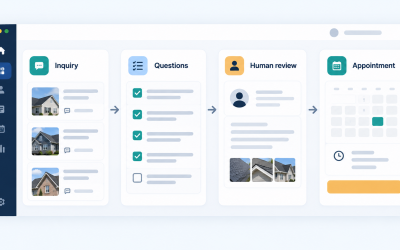
Property Inquiry Qualification That Separates Curiosity From Intent
This is the highest-value starting point for most agents. The bot should not open by asking for name, email, and phone like a stale lead form. It should open by helping with the listing or search intent first. That usually means answering one question, confirming whether the lead is buying, renting, or investing, then narrowing by budget, location, timeline, and financing status.
A qualification bot for real estate should tag at least these fields automatically: inquiry type, property or area of interest, budget band, move timeline, financing or pre-approval status, and preferred contact method. When that data is waiting in the CRM before an agent even replies, follow-up quality improves fast.
Showing Booking That Feels Instant Instead of Administrative
Booking a showing is the real estate version of converting a warm cart. The lead is already telling you the next step. The mistake is forcing them into email back-and-forth just to land on a time slot. A good bot can offer real availability, confirm the property, ask one or two practical questions, then lock the appointment and notify the right agent.
This matters even more on teams where one agent takes sign calls, another handles buyers, and an admin or ISA coordinates calendars. The chatbot removes the dead air between interest and confirmation. For UK agencies, just translate the same workflow into viewing language. The logic does not change.
Listing Alerts That Keep Buyers Warm Without Sounding Like Spam
Most listing alert systems fail because they are just RSS feeds with a nicer subject line. The version that works uses conversation and behavior. If a buyer clicked two properties in one school district and ignored everything downtown, the bot should narrow future alerts. If the lead keeps opening price-drop notices but never books a tour, the next prompt should ask if they want similar homes or financing help, not blast another random digest.
Behavior-based listing alerts are one of the easiest ways to turn a chatbot from a FAQ layer into a real nurture asset. They also help newer agents stay top of mind without manually building every follow-up sequence from scratch.
Buyer Lead Capture From Website, Ads, Portals, and Open Houses
Lead capture is broader than website chat. The same qualification logic can sit behind Facebook ads, landing pages, listing pages, comment-to-message campaigns, and open-house QR codes. Instead of dumping every source into a generic CRM bucket, the bot can identify what the person actually wants and tag urgency before the team sees the lead.
This is where general lead-gen best practices still matter. If you want the broader conversion math behind conversational capture, nurture, and routing beyond just real estate, the lead generation chatbot guide is the next read. Here I am staying focused on the workflows agents and brokers actually need in property businesses.
Rental Screening Intake Without Turning the Bot Into a Legal Risk
Rental chatbots can save a lot of admin time, but this is the one category where sloppy automation can create compliance problems fast. The safe job for the bot is intake: move-in timing, property interest, pet count, occupancy basics, income band, preferred viewing time, and document checklist reminders. The unsafe job is making or implying protected-class decisions, steering, or automated exclusion without human review.
In the US, the Fair Housing Act protects against discrimination because of race, color, national origin, religion, sex, familial status, and disability. In the UK, agents and landlords also need to avoid discriminatory filtering under the Equality Act 2010, and updated rental discrimination guidance has tightened expectations around discouraging applicants with children or benefits. So yes, use the chatbot for intake and scheduling. No, do not let it become your unreviewed gatekeeper.
The 6 Best Chatbot Platforms for Real Estate
The best real estate chatbot is not one universal product. Some tools are Meta-first. Some are website-first. Some are really AI ISAs. Some are full brokerage operating systems with a chatbot layer inside them. That is why platform fit matters more than hype.
| Plateforme | Public entry price or access | Free or trial | Meilleur ajustement | Main caution |
|---|---|---|---|---|
| MessengerBot.app | Premium $19.99 per 30 days; Pro $49.99 | Essai gratuit | Agents and brokers using Facebook Messenger plus website chat | Not a full MLS-native brokerage CRM |
| Tidio | Free; Starter $24.17 per month; Growth from $49.17 | Free plan, 7-day trial, first 50 AI conversations free lifetime | Website-first teams, rental operators, proptech sites | Not built specifically for real estate data or MLS logic |
| Structurely | Standard $499 per month; Pro $949; Enterprise $1799 | No real free entry point | Teams that want AI ISA-style text and call qualification | Too expensive for many solo agents |
| Lofty | Request pricing | Demo-led | Teams and brokerages that want CRM, website, appointments, and AI in one stack | Opaque pricing and a heavier rollout than a simple chatbot |
| Chime | Legacy brand; now Lofty | No separate standalone pricing | Buyers still evaluating old Chime reviews or installed base | It is effectively the same evaluation as Lofty now |
| Roof AI | Custom pricing via demo | No public free tier | Brokerage websites that want MLS-aware conversations and showing capture | More enterprise-leaning and no live human chat takeover |
If you specifically want a true free entry point, Tidio is the cleanest answer in this group. If you want a true no-sign-up-required production tool, none of these qualify. Serious real estate automation needs account setup, routing rules, and data sources.
MessengerBot.app Is the Best Low-Friction Pick for Meta-Led Real Estate Lead Capture
MessengerBot is the best fit when Facebook Messenger is a real part of how you win business. That includes Page messages, ad-driven Messenger conversations, comment-to-message flows, website chat, and structured follow-up sequences for people who are not ready to book a showing immediately. The public pricing is unusually straightforward for this category: Premium at $19.99 per 30 days and Pro at $49.99 per 30 days on the current public offer.
What I like here is the practicality. You get visual flows, forms, website chat, Google Sheets sync, JSON API and Zapier connectivity, comment automation, and enough structure to build lead capture without having to buy a bloated brokerage stack. If your real estate business runs heavily through Facebook and you want a bot that can qualify inquiries before a human steps in, MessengerBot is easy to justify.
The honest limitation is data depth. MessengerBot is strong at channel automation and structured workflows, but it is not pretending to be an MLS-native website engine or a full brokerage operating system. If your highest-leverage problem is Meta messaging plus simple website capture, that is fine. If your core need is deep IDX search, MLS-powered property answers, and brokerage-wide routing rules, you may outgrow it into a more real-estate-native stack.
Tidio Is the Best Website-First Chatbot for Smaller Real Estate Teams
Tidio is the strongest generalist option if your lead flow starts on your website, not inside Facebook. The current public pricing is clear: a free plan, Starter at $24.17 per month, Growth starting at $49.17, and the first 50 Lyro AI conversations free for life. That makes it one of the only serious platforms here with a genuine free on-ramp instead of just a sales demo.
For real estate, Tidio works best on brokerage websites, rental sites, and proptech experiences where the first job is answering FAQs, capturing contact details, routing by intent, and handing the lead to a person. Its own real estate case studies are credible for website environments. Endeksa, a real estate analytics platform, reported a 138% increase in lead generation and a 59% reduction in waiting times after using pre-chat surveys and chat automation.
The tradeoff is specialization. Tidio is not built around MLS structure, real estate appointments, or brokerage workflows by default. You can absolutely make it work, especially for lead capture and rental intake, but you will be building more of the industry logic yourself.
Structurely Is the Strongest Choice When Your Real Problem Is Speed-to-Lead
Structurely is closer to an AI ISA than a standard chatbot. Public pricing starts at $499 per month for 250 leads, then $949 for 500 leads, and $1799 for 1,000 leads. All plans include AI appointment setting, live transfer phone calls, local presence numbers, three-month drip campaigns, scripts, and onboarding. That pricing immediately tells you who this is for: not casual bot testers, but teams that know delayed follow-up is already costing them deals.
This is the platform I would look at when the complaint sounds like, “We are generating leads, but nobody is consistently reaching them first.” Structurely’s public customer stories reinforce that positioning. RE/MAX Plus team leader Chris Flores said the AI assistant scheduled real appointments from about 50% of the leads it established contact with, increased lead volume by 50%, and had 15 contracts in the pipeline because of the assistant. Premier Group New Jersey reported its engagement rate jumping from 10% to 47%, with the platform saving more than 70 days in under a year.
The weakness is obvious: price and process discipline. Structurely only makes sense if your CRM, routing, and human handoff are already organized enough to capitalize on the conversations it starts. If your agents do not follow up well once the lead is warm, the software will expose that problem fast.
Lofty Is the Best All-in-One Real Estate Operating System With a Chatbot Layer
Lofty is the right answer for teams and brokerages that do not want a separate chatbot tool. They want one environment for website, CRM, lead gen, appointments, smart plans, and AI. Public pricing is still request-only for the core platform, which is annoying, but the public site makes the target market clear: agent, team, broker, and enterprise plans plus paid lead-generation packages that reference delivery bands like 20 to 30 buyer leads or 10 to 20 seller leads.
The product depth is real. Lofty’s help center shows its AI Sales Agent powers the website chat box, texts new leads as they enter the CRM, and can also work existing leads based on rules. The appointment system also supports integrated calendars and lead-linked appointments, which matters for showing coordination. In other words, the chatbot is not an isolated widget. It is part of a broader lead-conversion system.
The ROI stories are strong. Lofty customer Robert Lucido Jr. says his business growth increased by 42% after migrating. Adam Gillespie says a fully automated Lofty CRM generated 10 deals in a year and six figures in income. Lofty’s own 2025 AI announcement also claims average gains of 114% in appointment setting, 108% in lead capture, and 109% in lead engagement. Those are vendor-reported numbers, not guarantees, but they show what the platform is optimized to do.
Chime Still Matters in Search, But the Product Is Now Lofty
Chime deserves its own mention because agents still search for it, compare against it, and ask peers about it. But the honest 2026 answer is that Chime is now Lofty. The company officially rebranded, and the current product direction, pricing path, and AI roadmap all live under the Lofty name.
So if you are evaluating “Chime vs Lofty,” you are mostly evaluating older market reputation against the current brand. Treat legacy Chime reviews as historical context, not a separate buying decision. For operational purposes today, this is one ecosystem.
Roof AI Is the Best Enterprise-Leaning Pick for MLS-Aware Brokerage Websites
Roof AI is the most real-estate-native website assistant in this comparison. Its product pages focus on natural-language MLS search, property-specific Q&A, brokerage-aware routing, showing capture, and behavior-driven follow-up. The official site claims 30% to 100% more leads, 5% to 7% lead-to-close rates, 3.5x more showings booked, and 1.3 million leads generated across 90 million visitors served.
This is the tool I would shortlist if I ran a serious brokerage website and wanted the digital experience to feel closer to Zillow than to a generic chat bubble. Roof AI is clearly designed around listing questions, search behavior, and brokerage data rather than generic customer-service flows.
The constraints are just as clear. Public pricing is not disclosed, implementation is demo-led, and the product does not support human live chat takeover. If you want a broker-grade AI assistant that handles listing and showing conversations directly on the site, those tradeoffs may be worth it. If you want a cheaper, more flexible SMB chat layer, probably not.
How to Set Up a Lead Qualification Flow for Real Estate
The best qualification flow in real estate is short, listing-aware, and obvious about the next step. You are not trying to recreate a full buyer consultation in chat. You are trying to find out whether this person should get a showing slot, a list of similar homes, a rental viewing, or a human callback.
This is the framework I would launch first for almost any agent or broker website:
- Start with intent, not identity. Ask whether they are asking about this property, similar homes, a rental, or selling their current place.
- Use one property-specific question early. That proves the bot is helping, not just harvesting data.
- Capture only the fields that change routing: budget, location, move timeline, financing status, and urgency.
- Ask for contact details only after the lead sees a useful next step.
- Offer one concrete action: book a showing, get similar listings, speak to an agent, or start rental intake.
- Write tags, transcript, and lead score back to CRM immediately.
Here is a practical script pattern that works well for buyer inquiries:
- Bot: “Are you asking about 18 Oak Ridge Lane, or would you like similar homes nearby?”
- Lead options: “This home”, “Similar homes”, “I need an agent”, “Just browsing”
- Bot: “Got it. Are you buying for yourself, investing, or looking for a rental?”
- Bot: “What budget or monthly payment range should I stay within?”
- Bot: “Have you already been pre-approved, or are you still exploring financing?”
- Bot: “Do you want to see this place this week, next week, or are you still comparing options?”
- Bot: “I can hold a showing slot or send similar listings. What is the best mobile number or email for confirmations?”
The order matters. If you ask for phone and email before the bot has done anything useful, the conversation feels like a trap. If you help first and capture second, completion rates are better and the agent receives stronger context.
I would also keep the first flow intentionally narrow. One buyer path. One rental path if you need it. One seller path if valuation leads matter. Teams get into trouble when they launch a maze instead of a funnel.
Automating Showing Bookings Without Double-Booking
Showing automation sounds easy until calendars collide. This is where a lot of agents lose trust in the bot. The chatbot books a slot, the agent has already blocked it somewhere else, the seller has restrictions, or the property is tenant-occupied and not actually available. Fix that logic before you ever turn on automated confirmations.
My rule is simple: one calendar system must be the source of truth. Everything else reads from it.
| Booking rule | Why it prevents double-booking |
|---|---|
| Use one calendar authority | The bot should read from the same calendar the agent actually lives in |
| Add travel and prep buffers | Back-to-back showings often look free on paper but fail in real life |
| Only offer confirmed showing windows | Occupied and seller-approved properties need different logic than vacant listings |
| Place temporary holds before final confirmation | You avoid two people grabbing the same time slot at once |
| Send instant reminders and reschedule links | You reduce no-shows and protect the agent’s day when plans shift |
| Escalate edge cases to a human immediately | Luxury, tenant-occupied, multi-agent, and offer-stage properties often need manual control |
If you are automating showings on a team, add one more rule: the bot should know whether it is booking the listing agent, a buyer agent, an ISA handoff, or a tour assistant. Many scheduling failures happen because the chatbot knows the time slot but not the owner.
For UK agencies, I would also be explicit about whether the bot is booking an in-person viewing, virtual viewing, valuation visit, or letting appointment. Those are different resources and should not share the same booking rules by default.
Listing Alerts via Chatbot: The Drip Campaign That Works
The listing alert drip that works in 2026 is not the one with the most messages. It is the one with the clearest trigger logic. Buyers ignore generic blasts. They respond to relevance, timing, and a message that feels like it noticed what they care about.
I like to build listing alert drips around behavior, not calendar dates alone:
| Déclencheur | Message type | Objectif |
|---|---|---|
| Saved search created | Instant welcome plus 3 best-match listings | Prove relevance immediately |
| Same listing viewed twice | “Want to see this one or get similar homes?” | Move from browsing to action |
| Price drop or back-on-market event | Short urgency alert with one tap to request a showing | Catch hot intent while it is fresh |
| No clicks for 7 days | Ask whether to tighten budget, area, or property type | Refresh stale search criteria |
| Multiple alerts clicked but no booking | Offer agent help, financing intro, or shortlist review | Create human handoff before the lead drifts away |
The best-performing alert message is usually short enough to read in one glance. Something like: “Three new 3-bed homes in West Hartford under $650k. Want the shortlist or a showing on the one with the updated kitchen?” That works better than a newsletter voice and better than a generic “new listings available” ping.
The other thing that works is memory. If the buyer keeps rejecting condos, stop sending condos. If the renter keeps asking about pet policies, prioritize listings where that answer is clear. That kind of adaptive behavior is what separates a real chatbot nurture system from a basic email drip with a chat bubble attached. If your team wants the broader nurture and capture math outside the property context, revisit the lead generation chatbot guide.
Common Real Estate Chatbot Mistakes That Kill Conversion
I see the same mistakes over and over in this category. None of them are glamorous, but they explain why some agents swear by automation while others say it “doesn’t work.”
- Asking for contact details before offering any value. If the bot behaves like a cold form, leads bail like they always did.
- Treating every lead like they are ready to book now. Some need similar listings, some need financing clarity, some need a rental checklist. One path does not fit all.
- Using stale listing data. Nothing destroys trust faster than a bot confidently discussing a property that is already gone or already under contract.
- Forgetting the handoff SLA. A bot that warms the lead but hands it to a slow human still loses the deal.
- Automating calendars without resource logic. The bot may know a slot is open but not know that the property needs seller approval, lockbox access, or a different agent.
- Letting the bot drift into compliance-risk territory. Rental and housing workflows need review so the chatbot does not steer, exclude, or ask for protected-trait information in ways that create fair housing or discrimination problems.
The sixth point matters more than most teams admit. In the US, HUD has already issued AI-related housing guidance focused on advertising and tenant screening risk. In the UK, rental discrimination rules have also tightened. My practical recommendation is to keep the bot on safe ground: information, intake, scheduling, follow-up, and routing. Leave final approvals, exceptions, and sensitive screening decisions to reviewed human workflows.
Real ROI Numbers From Top-Producing Agents
Here is the honest way to read ROI data in this category: most of the strongest numbers are vendor-published case studies, not neutral academic research. I still use them because they show what happens when a team with real lead flow, actual routing, and disciplined follow-up puts automation in the right place. Just do not treat them as guaranteed outcomes.
| Team or brokerage | Reported result | What it suggests |
|---|---|---|
| RE/MAX Plus with Structurely | About 50% of contacted leads turned into appointments, lead volume increased 50%, and 15 contracts were in the pipeline | Fast qualification can materially increase appointment volume when lead flow already exists |
| Premier Group New Jersey with Structurely | Engagement rate rose from 10% to 47%, with over 70 days saved in under a year | Response consistency can be worth more than fancy AI wording |
| Robert Lucido Jr. team with Lofty | 42% increase in business growth after migrating to Lofty | An all-in-one system can pay off when adoption is strong across the team |
| Adam Gillespie with Lofty | 10 deals in one year and six figures from a fully automated CRM flow | Automation can create real production, not just nicer admin |
| Briggs Freeman Sotheby’s International Realty with Roof AI | 7.5% lead-to-closed deal rate, hundreds of buyer leads converted through showing requests, and 946% ROI based on gross commission income | Website conversations tied directly to showings can produce brokerage-level ROI |
| Endeksa with Tidio | 138% increase in lead generation and 59% faster response times | Even a generalist chatbot can move real estate lead capture when the website flow is tuned well |
The pattern behind those wins is more important than any single number. The top performers did not ask the bot to do everything. They gave it a narrow, expensive job: answer first, qualify intent, book the next step, and keep follow-up moving. That is where the economics work.
If you want a simple ROI model for a typical mid-sized agent team, start here:
- Monthly inbound inquiries: 200
- Share arriving after hours: 30%
- Average manual first-touch and admin time per lead: 7 minutes
- Team labor cost loaded: $35 per hour
- Time saved if the bot handles first touch on all 200 leads: about 23 hours
- Direct labor value: about $805 per month before any extra showings close
That labor math alone can justify a lower-cost platform. The real upside starts when the bot captures one or two extra showings that would have been missed, or revives leads that otherwise would have died in the queue. In real estate, you do not need dozens of extra closings for the software to pay for itself. You need one meaningful conversion lift from an already expensive lead source.
Start With One Real Estate Flow That Pays for Itself
Do not begin by automating your whole brokerage. Start with one high-intent workflow, usually property inquiry qualification or showing booking, and track whether response speed, booked showings, and lead quality improve over the next 30 days. If your funnel includes Facebook Messenger, website chat, forms, and structured follow-up, Voir les tarifs de MessengerBot and map the smallest setup that can prove ROI before you add complexity.
Questions fréquemment posées
Les chatbots immobiliers fonctionnent-ils réellement ?
Yes, when they are used for the jobs chatbots are actually good at: instant first response, qualification, showing or viewing booking, listing alerts, and follow-up. They work best when the bot is tied to clear routing rules and a human still handles negotiation, exceptions, and late-stage conversion.
Quel est le meilleur chatbot pour les agents immobiliers ?
The best chatbot depends on where your leads start. MessengerBot is the best fit if Facebook Messenger and website chat are central to your funnel. Tidio is the strongest low-cost website-first option. Structurely is best when speed-to-lead and AI ISA behavior are the priority. Lofty is strongest for teams wanting an all-in-one real estate stack, while Roof AI is the sharper choice for brokerage websites that need MLS-aware conversations and showing capture.
Combien coûte un chatbot immobilier ?
Entry-level generalist tools start around $20 to $50 per month, with Tidio offering a free plan and MessengerBot starting at $19.99 per 30 days on current public pricing. Specialized real estate AI tools cost much more. Structurely starts at $499 per month, while Lofty and Roof AI are quote-based. The right budget depends on whether you need simple lead capture, AI ISA automation, or a brokerage-wide website and CRM system.
Un chatbot peut-il remplacer un assistant immobilier ?
It can replace a lot of repetitive assistant work, but not the whole role. A chatbot can handle first-touch replies, qualification, scheduling, reminders, and basic follow-up at scale. It cannot replace relationship judgment, negotiation, exception handling, or the trust-building that closes complex deals.
Comment puis-je configurer un chatbot immobilier pour mon site web ?
Start by choosing one use case, usually buyer qualification or showing booking. Then connect the chat widget to your website, define the flow, sync it to one calendar or CRM destination, tag the key fields you want to capture, and test it against real lead scenarios before launch. Keep version one narrow and measurable rather than trying to automate every buyer, seller, renter, and support conversation at once.


 Français
  English
  Tagalog
  简体中文
简体中文  العربية
  हिन्दी
  Português do Brasil
  Español de México
  বাংলা
বাংলা  香港中文
香港中文  繁體中文
繁體中文  Nederlands
  Deutsch
  Bahasa Indonesia
  日本語
日本語  한국어
한국어  Polski
  Русский
  Español
  Tiếng Việt