
Résultats de recherche pour , en comparant les fonctionnalités gratuites et payantes, et fournirons un guide complet sur la façon de télécharger et de s'inscrire à la plateforme Messenger. À la fin de cet article, vous aurez une compréhension approfondie du sont confus car les gens utilisent l'expression pour signifier au moins trois choses différentes : Facebook Messenger en tant qu'application autonome, l'onglet de messages à l'intérieur de Facebook, et des applications de messagerie génériques qui ne font pas du tout partie de Meta. Si vous êtes ici pour essayer de comprendre ce qu'est réellement l'application Messenger, comment la télécharger, si elle est toujours gratuite et ce qui a changé en 2026, voici la version pratique.
J'ai vérifié les pages d'aide et de produits actuelles de Messenger, ainsi que la documentation de Meta Business, pour vérifier les détails ici au 11 avril 2026. Cela compte car Messenger continue de changer aux marges. Les règles de cryptage se sont durcies, l'accès sur bureau est encore en évolution, les fonctionnalités de chat communautaire évoluent, et l'IA de Meta apparaît désormais dans plus de parties du produit que la plupart des anciens guides ne le mentionnent.
Cet article concerne l'application elle-même, pas la création de tunnels marketing dessus. Si votre vraie question est comment créer des flux, des messages de bienvenue ou des séquences de capture de leads, le tutoriel complet sur les bots Messenger est la meilleure lecture suivante après celui-ci.
Qu'est-ce que l'application Messenger en 2026 : Une définition claire pour les nouveaux utilisateurs
The Messenger app is Meta’s standalone messaging product for one-to-one chats, group chats, voice calls, video calls, and messaging with businesses across Facebook’s ecosystem. In plain English, it is the dedicated app you use when you want Facebook messaging without living inside the Facebook feed all day. If you are coordinating several participants, follow this guide to how to create a group chat in Messenger while keeping member roles and privacy expectations clear.
Cette définition semble simple, mais elle est importante car Messenger n'est plus simplement un panneau latéral attaché à Facebook. En 2026, il fonctionne davantage comme une plateforme de messagerie complète. Vous pouvez envoyer des textes, des notes vocales, des photos, des vidéos, des fichiers, des GIFs, des autocollants et des liens. Vous pouvez réagir aux messages, modifier certains messages après les avoir envoyés, annuler l'envoi de messages, commencer des fils de groupe, créer des sondages dans les discussions de groupe prises en charge, partager votre position en direct dans des contextes pris en charge et passer des appels audio ou vidéo.
Messenger se trouve également maintenant au milieu d'une pile de messagerie Meta plus large. Certaines personnes l'utilisent uniquement pour des discussions personnelles. D'autres l'utilisent pour contacter des vendeurs, des créateurs ou des entreprises locales. D'autres l'utilisent comme porte d'entrée pour le service client via une page Facebook. C'est pourquoi la même requête de recherche peut attirer des étudiants, des familles, des spécialistes du marketing et des propriétaires de petites entreprises.
La manière la plus claire d'y penser est la suivante :
| Si vous voulez… | Le rôle de Messenger | Ce qu'il n'est pas |
|---|---|---|
| Discuter avec des amis Facebook sans faire défiler le fil | Cas d'utilisation principal | Pas une application de fil social |
| Appeler quelqu'un en voix ou en vidéo via Internet | Intégré | Pas un remplacement de l'opérateur mobile |
| Envoyer un message à une entreprise via sa présence sur Facebook | Cas d'utilisation courant | Ce n'est pas la même chose que Meta Business Suite |
| Utiliser Meta AI ou des fonctionnalités de chat assistées par IA | De plus en plus intégré dans l'application | Pas une plateforme de chatbot généraliste complète à elle seule |
| Exécuter une automatisation structurée du service client | Possible grâce aux Pages et outils autour de Messenger | Pas un constructeur sans code en soi |
La première distinction pratique pour un nouvel utilisateur est que Messenger est une application de messagerie, pas l'application Facebook avec un onglet de chat ajouté. Oui, Facebook vous donne toujours des points d'entrée pour les messages. Non, cela ne rend pas l'expérience identique. Si vous envoyez souvent des messages, Messenger reste l'endroit le plus propre pour le faire.
La deuxième distinction est la configuration du compte. Messenger est gratuit à télécharger, mais ce n'est pas vraiment un produit sans inscription requise. Dans la plupart des cas, vous avez toujours besoin d'un accès au compte Meta lié à Facebook. Meta documente également un chemin spécial pour un compte désactivé qui continue d'utiliser Messenger, et dans certains scénarios EEE, il fait référence à une expérience Messenger-sans-Facebook distincte. Pour la plupart des lecteurs aux États-Unis, au Royaume-Uni et dans une grande partie de l'UE, l'hypothèse sûre est que vous devez vous attendre à vous connecter, pas à l'utiliser comme une application invitée.
Application Messenger vs Application Facebook : Pourquoi elles sont devenues séparées (et ce qui a changé en 2026)
Messenger s'est séparé de l'application principale Facebook pour la même raison que la plupart des produits matures finissent par séparer leurs fonctions : la messagerie se comporte différemment de la navigation. Le fil d'actualité, les groupes, le Marketplace, les Reels et les notifications rivalisent tous pour attirer l'attention. La messagerie a besoin de rapidité, de moins de distractions, de meilleurs outils d'appel et d'une gestion des conversations plus claire. Meta a finalement traité cela comme une décision produit plutôt qu'un petit choix d'interface utilisateur.
Cette séparation est toujours visible en 2026. L'application Facebook reste l'endroit pour la découverte de contenu, les groupes, les profils, les Pages, les événements, le Marketplace et les paramètres de compte. L'application Messenger est l'endroit pour les conversations actives, le chat personnel chiffré, les appels et de nombreux outils de messagerie et d'IA plus récents.
| Zone | application Facebook | Messenger. |
|---|---|---|
| Tâche principale | Fil, découverte, groupes, Pages, Marketplace | Messagerie directe et appels |
| Meilleur pour | Défilement, publication, navigation communautaire | Conversations rapides, discussions de groupe, voix et vidéo |
| Accent sur le chiffrement | Surfaces de produits mixtes | La messagerie personnelle est la principale priorité |
| Gestion des messages d'entreprise | Points d'entrée de page et notifications | Côté consommateur des discussions commerciales |
| Outils de messagerie IA | Présent dans certaines parties de Facebook | Plus visible dans les flux de discussion |
Le point le plus utile sur “ce qui a changé” pour 2026 n'est pas que Messenger est soudainement devenu une nouvelle application. C'est que les lignes sont maintenant plus nettes. Les pages d'aide de Meta continuent de traiter Messenger comme le foyer dédié aux tâches de messagerie, tandis que certaines anciennes fonctionnalités croisées ont été réduites ou supprimées.
L'exemple le plus clair est le SMS. Si vous vous souvenez des anciennes configurations Android où Messenger pouvait agir comme une application SMS par défaut, cette époque est révolue. Le centre d'aide de Meta indique que le SMS a cessé d'être disponible dans Messenger après les mises à jour déployées à partir du 28 septembre 2023. En d'autres termes, Messenger en 2026 est beaucoup plus clairement une application de messagerie Internet, et non un remplacement de l'application de texte intégrée de votre téléphone.
Un autre changement concerne la messagerie communautaire. La documentation actuelle de Meta indique que les discussions communautaires des groupes Facebook vont bientôt disparaître, tout en encourageant également les administrateurs à créer des communautés Messenger séparées avec un chat principal, des annonces et des événements. Cela vous dit quelque chose d'important sur la direction que prend le produit : moins de couches intermédiaires déroutantes étroitement liées aux groupes Facebook, et plus d'espaces de conversation autonomes axés sur Messenger.
Il y a aussi une raison pratique liée au comportement des utilisateurs pour laquelle la séparation est toujours importante. L'application Facebook est optimisée pour vous faire naviguer entre les surfaces. Messenger est optimisé pour garder une conversation lisible, recherchable et active. Si vous devez résoudre une question d'un client tard dans la nuit, planifier un événement dans un fil de groupe ou passer un appel vidéo, l'application dédiée a encore plus de sens.
Donc, si vous vous demandez si vous pouvez simplement utiliser Facebook et ignorer complètement Messenger, la réponse est techniquement “ parfois ” et pratiquement “ pas si la messagerie fait vraiment partie de votre journée. ”
Comment télécharger l'application Messenger sur iPhone, Android, Desktop et Web
Si votre recherche concernait vraiment le téléchargement de messenger ou le téléchargement de l'application messenger, les voies officielles sont simples. Les utilisateurs d'iPhone et d'iPad téléchargent depuis l'App Store d'Apple. Les utilisateurs d'Android téléchargent depuis Google Play. Les utilisateurs de bureau peuvent utiliser des applications natives lorsque disponibles, mais Meta maintient également la version navigateur à messenger.com, qui reste la solution de repli la plus propre lorsque l'installation de bureau agit de manière étrange.
Comment télécharger Messenger sur iPhone et iPad
Ouvrez l'App Store, recherchez Messager, confirm the publisher is Meta, and install it like any other iOS app. After installation, sign in with the account you use for Messenger access and allow notifications if you actually want the app to behave like a messaging app rather than a quiet archive.
The mistake I see most often on iPhone is not the install. It is notification setup. People install Messenger, skip alerts, then assume the app is broken when new chats do not surface on time. If you want real-time use, let it send notifications, allow microphone and camera access for calls, and make sure Focus settings are not muting it.
How to Download Messenger on Android
On Android, the clean route is Google Play. Install Messenger, sign in, then check permissions for notifications, microphone, camera, photos, and files depending on how you plan to use it. If you are coming from a very old Android habit, remember that Messenger is no longer an SMS app. You will use it for internet-based messaging, not for carrier text messages.
If Messenger refuses to download or update, the fast checklist is simple:
- Confirm you have enough storage space.
- Update Android system services and Google Play.
- Make sure Play Store restrictions, family settings, or work-profile controls are not blocking the app.
- Restart the device and try again.
- If you still need access immediately, use
messenger.comin a mobile browser while you sort the install problem.
How to Use Messenger on Desktop and Web
Desktop access is where older guides age badly. Messenger absolutely still works on computers, but the most stable answer is no longer “just install the desktop app and forget it.” Meta’s help pages indicate there have been desktop app changes and deprecations on Windows and Mac, and the company keeps pointing people to the web experience when the native app path fails.
That means your safest desktop options in 2026 are:
- Web : Allez à
messenger.comand sign in. - Facebook on desktop: Use the Messenger panel from
facebook.comif you are already there. - Native desktop app: Use it if supported on your device and it behaves correctly, but do not treat it as the only official path.
For a lot of users, the browser version is simply better. It is easier to recover, easier to access on locked-down work machines, and more resistant to the native-app shuffle Meta has been doing on desktop.
Desktop vs Mobile Messenger Features in 2026
| Fonctionnalité | Application mobile | Desktop app / web |
|---|---|---|
| Text chat, photos, files, stickers, voice notes | Fully supported | Supported |
| Audio and video calls | Fully supported | Supported on computer |
| Meta AI image features | Some tools documented for mobile only | Not every AI feature is available |
| Secure storage and encrypted-chat management | Supported | Some management steps are desktop-first |
| Polls in supported group chats | Supported | Supported in Messenger.com where enabled |
| Meilleur cas d'utilisation | Daily messaging, calls, on-the-go replies | Typing longer replies, work use, multitasking |
If you live inside Messenger all day, the practical setup is simple: mobile for alerts and calls, desktop web for long replies. That combination is still the least frustrating way to use the product.
Every Feature the Messenger App Has in 2026 (End-to-End Encryption, Communities, AI, Business Inbox)
This is the section most “what is Messenger” articles get wrong. They list a few obvious chat features and stop there. Messenger in 2026 is broader than that, but not every feature behaves the same on every device or in every conversation type. The right way to understand it is to separate everyday chat tools, group and community tools, AI features, and business messaging.
Core Chat Features Most People Actually Use
The basics are still the reason Messenger keeps its place. You can send text, photos, videos, stickers, GIFs, files, and voice messages. You can react to messages with emoji, customize reactions, reply to specific messages, unsend messages, and in supported situations edit messages shortly after sending. You can also set disappearing messages for some chats, which is the modern practical replacement for the older “I need this to vanish later” use case.
Voice and video calling remain central. Messenger supports one-to-one calls and group calling, and Meta also supports call-link behavior in some contexts. That said, not every call surface carries the same privacy guarantees, which is why the privacy section later in this guide matters more than the feature checklist alone.
Other everyday utilities are easy to miss until you need them: shared media browsing inside a thread, search inside chats, message requests, pinned or priority conversations depending on device behavior, custom chat themes, custom emoji, polls in supported group chats, and screen sharing on supported calling surfaces.
Group Chats, Communities, Announcements, and Events
Messenger still works well for private groups: family threads, project groups, event planning, school parent chats, team side channels, and friend groups. Polls, reactions, reply threads, and call support make it more functional than plain SMS-style group chat.
Where things got more complicated is Communities. As of current Meta help documentation, community chats tied directly to Facebook Groups are being phased out. Meta says those community chats will be going away soon, lets admins download community-chat data, and encourages them to create a similar Messenger community that is separate from the Facebook Group. Meta’s description of the replacement focuses on three things: a main chat, announcements, and events.
That means “Communities” is still part of the Messenger story in 2026, but it is a transition feature, not a totally stable one. If you manage a group or club, do not build your whole communication strategy around old Facebook Group community chat assumptions. Read the current prompts in the app and treat Messenger communities and announcement-style channels as the newer direction.
Meta AI Inside Messenger
Messenger is also more AI-heavy now than older Facebook Messenger guides suggest. Meta’s help center documents features such as asking Meta AI in Messenger, writing or rephrasing messages with Meta AI, summarizing chats with Meta AI, generating images with Meta AI in chats, and interacting with custom AIs created through AI Studio.
The important practical detail is that not every AI feature is on every platform. Meta’s own help pages for some AI tools explicitly say they are not available on computers and are available only on mobile devices. So when people say “Messenger has AI now,” the answer is yes, but with platform caveats.
The second practical detail is that AI inside Messenger is not the same thing as using Messenger to contact a business with an automated flow. Meta documents both. You can have personal AI assistance inside the app, and you can also encounter automated or AI chats with Facebook Pages. Those are different experiences and should not be confused.
Business Inbox and Business Messaging
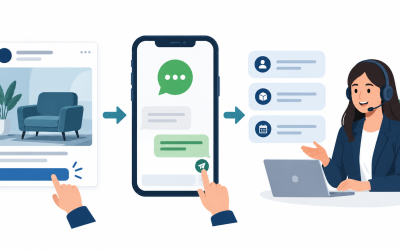
For small businesses, this is where Messenger turns from “chat app” into “customer contact channel.” Customers use Messenger to contact Pages. Businesses often answer through Meta Business Suite, where Inbox can combine Facebook Page messages with Instagram and, in supported setups, other Meta-managed message streams.
That business inbox is not the same thing as the consumer Messenger app, but the two connect. A customer sends a message in Messenger. The business may read it in Meta Business Suite, route it to a teammate, trigger an automated response, or connect it to a broader support workflow.
If you are evaluating the app as a channel rather than just as a personal messenger, that distinction matters more than any sticker pack or theme setting. Businesses are not just “using Messenger”; they are using Messenger plus Page tools, inbox tools, automation, and sometimes developer webhooks.
That is why there are really two Messenger feature stacks in 2026:
| Feature layer | What it includes | Who cares most |
|---|---|---|
| Personal Messenger | Chat, calling, reactions, editing, disappearing messages, AI help, group threads | Everyday users |
| Community Messenger | Main chats, announcements, event planning, evolving community structures | Clubs, organizers, admins |
| Business Messenger | Page inbox, automated replies, AI chats with Pages, handoff to support teams | Marketers and small businesses |
If your interest is the third layer, not the consumer app itself, start with the guide to Messenger automation for business. That article is better for the operational side.
What Happened to Secret Conversations?
Les gens recherchent encore Conversations secrètes because that was Meta’s old plain-English label for encrypted chats in Messenger. The better way to say it in 2026 is this: Messenger’s current privacy model is centered on end-to-end encrypted personal chats and the secure-storage tools around them. Some help pages still reference Secret Conversations language, but the product documentation now focuses more heavily on end-to-end encrypted chats, disappearing messages, PINs or recovery codes, and secure storage across devices.
If you have not used Messenger in a few years, that is the update you need. The old feature name still exists in people’s memory, but the live system is broader and more integrated than the classic Secret Conversations toggle era.
Is Messenger App Free? What You Pay For, What Stays Free
Yes. The Messenger app is free to download and free to use in the normal sense most people mean. There is no separate subscription fee to send messages, make internet-based voice or video calls, react to messages, join group chats, or use the basic app on phone and web.
That is the simple answer for searches like messenger app free, messenger app for free, et messenger apps free. If you are asking whether Messenger costs money at the point of download, it does not. If you are asking whether using it can still create costs around the edges, the honest answer is yes.
| What stays free | What can still cost you money |
|---|---|
| App download on supported devices | Mobile data usage if you are not on Wi-Fi |
| Messaging, reactions, group chat, message editing | Roaming charges when traveling |
| Voice and video calls over the internet | Paid carrier plan needed for internet access away from Wi-Fi |
| Using Messenger on web at messenger.com | Potential business-tool costs if you automate or advertise around Messenger |
| Basic personal account use | Hardware, app-store ecosystem, and related platform purchases outside Messenger itself |
The other thing worth saying clearly is that Messenger is free, but it is pas a no-sign-up-required utility. You still need to log in. That seems obvious until you look at search behavior. A lot of people searching for “messenger free” are really asking two separate questions at once: “Do I have to pay?” and “Can I use it without making an account?” The first answer is yes, it is free. The second answer is generally no, not in the guest-app sense.
For businesses, the cost question changes. A business can answer Page messages in Meta’s native tools for free, but the moment you want structured automation, flows, CRM sync, or broad support routing, you move out of “free app” territory and into software territory. That is a different decision from the ordinary consumer question of whether Facebook Messenger itself costs anything.
Messenger App Alternatives: WhatsApp, Telegram, Signal, iMessage Compared
If you are not looking for Facebook Messenger specifically, the real comparison is not “which messenger app is free?” because all the major consumer apps are free to download. The real comparison is network, privacy model, platform lock-in, and how much control you want over your conversations.
For most people in the US, UK, and EU, the short list is Messenger, WhatsApp, Telegram, Signal, and iMessage. Each one is good at something different.
| Application | Free to use | End-to-end encryption by default | Desktop / web | Meilleur ajustement | Main limitation |
|---|---|---|---|---|---|
| Messager | Oui | Personal chats and calls are the focus, but not every conversation surface is covered | Oui | People already inside Facebook’s ecosystem, business messaging, mixed casual and commercial use | Privacy rules vary by chat type, and Meta’s product layers can get confusing |
| Oui | Yes, by default | Oui | Phone-number-based messaging with huge global reach | Still tied closely to phone identity and Meta’s ecosystem | |
| Telegram | Oui | No for regular cloud chats; secret chats are end-to-end encrypted | Oui | Large groups, channels, public communities, power users | Its strongest privacy mode is not the default and is device-specific |
| Signal | Oui | Yes, by default | Oui | Privacy-first users and smaller trusted circles | Smaller mainstream network than Messenger or WhatsApp |
| iMessage | Yes on Apple devices | Yes inside Apple’s ecosystem | Apple ecosystem only | iPhone, iPad, and Mac households | Weak cross-platform story if half your contacts are outside Apple |
When WhatsApp Is the Better Alternative
WhatsApp is the strongest alternative when your priority is simple, global messaging with end-to-end encryption by default. Its download page and security materials make the value proposition obvious: private messaging and calling across devices with a cleaner privacy story than Messenger. If most of your contacts already live there, Messenger usually loses on convenience rather than on features.
For EU and UK users especially, WhatsApp often wins because it has become the default contact method for family, local businesses, clubs, and travel coordination. Messenger still matters, but it is less universally assumed than it was a decade ago.
When Telegram Is Better
Telegram is stronger than Messenger when you care about giant groups, channels, public discoverability, and power-user community features. It is weaker if your reason for leaving Messenger is privacy. Telegram’s own FAQ still makes a crucial distinction: secret chats are end-to-end encrypted, device-specific, and separate from ordinary cloud chats. That is not a small footnote. It changes how you should think about the app.
If you want a hybrid between social distribution and messaging, Telegram is worth considering. If you want a simple “everything is private by default” replacement, it is not the cleanest answer.
When Signal Is Better
Signal is the answer for people who want the shortest possible privacy pitch: private by default, minimal data collection, and communication that stays end-to-end encrypted across the service. Signal’s own support materials emphasize that linked devices stay private and that the service does not have access to message contents. If Messenger’s mixed surfaces make you uneasy, Signal is usually the most straightforward alternative.
The tradeoff is social gravity. Signal is excellent, but the network is smaller. For a privacy-first circle, that is fine. For school groups, casual local-business messaging, or a family split across multiple habits, it can be a harder switch.
When iMessage Is Better
iMessage is best when your life already happens on Apple hardware. It is integrated, polished, and secure inside that ecosystem. The problem is obvious too: it is not a true cross-platform alternative. If you want one messaging home for a mixed iPhone and Android group, Messenger, WhatsApp, Signal, or Telegram all have a clearer story.
If you want the bigger business-software picture beyond consumer messaging apps, the article on top chatbot platforms compared covers where messaging apps stop and automation tools begin.
Privacy and Security on the Messenger App: What’s Encrypted, What’s Not
This is where you should ignore lazy one-line answers. Messenger is much more secure than it used to be, but “Messenger is end-to-end encrypted now” is still too broad to be useful. The better statement is: personal Messenger chats and calls are now centered on end-to-end encryption, but not every conversation type or product surface follows the same rule.
That difference matters because users hear “encrypted by default” and assume every business chat, call link, browser session, AI interaction, and community conversation works identically. Meta’s own help pages say otherwise.
What Is End-to-End Encrypted on Messenger
For ordinary personal messaging, Meta has moved Messenger toward end-to-end encrypted chats and secure storage. The practical result is that the company now documents PINs, 40-character recovery codes, device restoration, and secure-storage management as normal parts of the product. That is a completely different security posture from the older Messenger era where encryption felt like a separate advanced mode.
If you log in on multiple devices, this matters even more. Meta’s documentation explains that secure storage methods help you access your encrypted chats across devices or browsers. That means encryption on Messenger in 2026 is not just a thread setting. It is a system that includes identity recovery and local access controls.
What Is Not Always Encrypted the Same Way
Meta’s help documentation also makes clear that some surfaces have different rules. Business conversations can behave differently, especially when a business uses messaging tools. Call links can have different protection behavior than standard personal calls. Community-related surfaces have their own rules. AI-related interactions may also carry different expectations than a normal private encrypted thread.
So if you are asking whether Messenger is private enough for ordinary personal use, the answer is far better than it used to be. If you are asking whether every single conversation type on Messenger follows one uniform encryption rule, the answer is no.
Practical Privacy Rules for Real Users
- Assume personal one-to-one chat is the strongest case. That is where Messenger’s current security model is most clearly aimed.
- Treat business chats more carefully. A Facebook Page using automation or business tools is not the same thing as a private friend-to-friend thread.
- Be careful with shared devices and browsers. Meta notes that browser access to encrypted chats depends on stored local data, which can disappear if you clear cookies or use private browsing.
- Set up secure storage properly. If you skip PINs or recovery steps, you make cross-device recovery harder later.
- Use disappearing messages when the conversation really should expire. They are more relevant now than the old vanish-mode mindset.
There is also an old-feature translation worth making. If you still think in terms of Secret Conversations, update your mental model. Secret Conversations was the label. End-to-end encrypted chats plus secure storage is the system. That is the better way to understand Messenger now au 11 avril 2026.
The Fastest Privacy Checklist Before You Use Messenger for Sensitive Chat
- Check whether the chat is a normal personal thread or a business/Page thread.
- Enable secure storage and keep your PIN or recovery method somewhere safe.
- Avoid depending on a private browser window for important chat history.
- Use disappearing messages when the content should not sit around forever.
- If privacy is the main reason you are choosing an app, compare Messenger against Signal and WhatsApp before you commit.
Messenger is no longer the easy punchline in privacy debates. It improved substantially. But it is still a product where you need to understand the chat type, not just the brand name on the icon.
Messenger App for Business: Page Inbox, Customer Service, and Automation
For businesses, Messenger is less interesting as a chat app and more interesting as an inbound channel. A customer taps “Message” on a Facebook Page, starts a conversation in Messenger, and expects an answer that is faster than email and less formal than a ticket form. That is why so many small businesses still care about Messenger even if younger audiences are splitting time across WhatsApp, Instagram, and TikTok.
The consumer side happens in Messenger. The business side often happens in Meta Business Suite. Meta’s business documentation describes Inbox as the place where businesses can manage and respond to messages, including Page-based conversations and connected Instagram threads. Once a team is inside that workflow, Messenger becomes customer-service infrastructure, not just chat software.
Where Messenger Still Works Well for Business
- Answering common questions about hours, pricing, availability, and delivery
- Handling pre-sale questions from Facebook Page visitors
- Routing support requests to the right teammate
- Capturing leads after hours when a human is offline
- Following up with structured automation instead of manual copy-paste replies
The sweet spot is businesses that already get real message volume from Facebook. If customers keep asking the same ten questions in Messenger, the app stops being a convenience and starts becoming operational load. That is when automation makes sense.
If that is your situation, start with the practical pieces in this order:
- Set up native instant replies and away messaging.
- Organize the Page inbox so a human can still take over quickly.
- Map the five most common questions customers send.
- Decide whether native tools are enough or whether you need full automation.
The build path depends on how far you want to go. For simple after-hours answers, the guide to Messenger auto reply setup is the practical next step. For broader operational use, the main guide to Messenger automation for business is better.
If you are technical and want to receive and respond to messages through the developer stack instead of a visual builder, read the configuration de webhook Messenger guide. And if you are comparing tool choices rather than coding directly, MessengerBot.app is the brand-level reference point for the site’s own Messenger-first software, while Check Current Pricing is the place to compare plan tiers without turning this article into a sales page.
Common Messenger App Problems and the Fastest Fixes
Most Messenger problems are boring, which is good news because boring problems are usually fixable fast. The pattern is almost always one of five things: sign-in confusion, app-update issues, notification misconfiguration, device sync problems, or people assuming a feature still exists because it existed in an older version.
Problem 1: “I Cannot Log In to Messenger”
Start with the basics. Are you using the correct Facebook-linked account? Did you recently change your password? Are you trying to use Messenger as if it were independent of Facebook account identity when your setup does not allow that? Login issues are usually account issues, not message issues.
The fastest fix is to sign in on desktop web at messenger.com first. If that works, your account is fine and the issue is probably app-side. If that fails too, recover the account before doing anything else.
Problem 2: “Messenger Will Not Download or Update”
On phones, this is almost always storage, OS compatibility, regional app-store weirdness, or a stale store session. On desktop, it can also be Meta’s shifting native-app support. That is why the official fallback matters: if the install path is fighting you, use the browser version and keep moving.
Fastest fix:
- Update your operating system.
- Free local storage.
- Sign out and back into the app store if needed.
- Restart the device.
- Utilisez
messenger.comuntil the install problem is resolved.
Problem 3: “I Am Not Getting Notifications”
This is the most common real-world complaint and the least glamorous one. Usually the issue is device settings, not Messenger itself. Check in-app notification settings, system notification permissions, battery optimization, Focus or Do Not Disturb rules, and whether you muted the specific thread weeks ago and forgot.
On iPhone, Focus modes are frequent culprits. On Android, aggressive battery management is the usual problem. On desktop, browser notification permissions can block alerts even when the chat itself works fine.
Problem 4: “My Messages or Encrypted History Are Missing on Web”
If you use Messenger in a browser, especially in private browsing or on work machines that clear cookies, remember that encrypted chat access relies on local browser state plus secure storage methods. Clear the wrong thing and the local view can disappear. That does not always mean the messages are gone forever, but it does mean browser usage is less forgiving than mobile-app usage.
The fix is to restore access with the correct secure-storage method, then avoid treating disposable browser sessions as your main Messenger home.
Problem 5: “A Feature I Remember Is Gone”
This one is common because Messenger has been around long enough to build false memory. People remember SMS inside Messenger, different desktop apps, older vanity features, legacy privacy labels, or Facebook Group community-chat behavior and assume the current app still works the same way. It often does not.
The fix is not technical. It is conceptual: stop searching old forum threads and check the current help pages. Messenger in 2026 is still familiar, but the details matter now.
The 60-Second Troubleshooting Checklist
- Try the same account on
messenger.com. - Update the app and the operating system.
- Check notification permissions and battery restrictions.
- Confirm whether the feature you expect still exists in current Messenger.
- If encrypted chats are involved, verify your secure-storage method before panicking.
The Future of the Messenger App (Meta’s 2026 Roadmap)
Meta is not publishing a neat public “here is every Messenger feature we will launch this year” roadmap. But if you line up the company’s 2026 releases and current help-center emphasis, the direction is clear.
First, Messenger is becoming more AI-heavy. Meta keeps shipping AI tools across its apps, and Messenger is one of the most natural places for that to show up because conversation is already the interface. Message rephrasing, chat summaries, image generation, custom AIs, and AI-assisted business interactions all point in the same direction: more conversational utility inside threads, not just beside them.
Second, Messenger is becoming more security-structured. End-to-end encrypted personal messaging is no longer a niche setting; it is part of the product’s normal architecture. Recovery methods, secure storage, and more explicit privacy guidance are the signs of a platform that expects encryption to be standard, not optional decoration.
Third, Meta appears to be simplifying some of the older product sprawl. Community chats tied directly to Facebook Groups are being retired. Desktop support keeps getting rationalized. The app is still broad, but the direction looks less like “put every communication experiment in one place” and more like “keep the core messaging app strong, then layer AI, business messaging, and newer community structures on top.”
Fourth, business messaging remains a strategic priority. Meta’s own business materials continue to emphasize inbox management, cross-surface communication, and tools that help businesses handle conversations at scale. That means Messenger is unlikely to fade into a pure personal-chat utility. It remains part of a commercial messaging system, which is one reason the app still matters so much to marketers and small businesses.
The short version is that Messenger in late 2026 will probably feel more private, more AI-assisted, and more intentionally segmented than the Messenger many people remember from the mid-2010s.
If You Use Messenger as a Channel, Not Just an App
If your main goal was understanding the app itself, you should now have the answer: Messenger is still free, still widely used, still worth downloading, and much more nuanced on privacy and feature behavior than old guides suggest. If your real use case is business messaging, not casual chat, the next move is different. Start with the Messenger automation for business guide, review the tutoriel complet sur les bots Messenger, and use MessengerBot.app only as the brand reference when you are ready to compare tools rather than app basics.
That keeps the intent clean. This article is the informational pillar. The build-and-operate side starts after that.
Questions fréquemment posées
Qu'est-ce que l'application Messenger et en quoi est-elle différente de Facebook ?
The Messenger app is Meta’s standalone messaging app for chats, group conversations, voice calls, video calls, and messaging businesses through Facebook’s ecosystem. Facebook is the broader social app for feed browsing, groups, profiles, Pages, and Marketplace. You can enter messages from Facebook, but Messenger is still the dedicated app built for active conversation rather than social browsing.
L'application Messenger est-elle gratuite à utiliser en 2026 ?
Oui. Messenger est gratuit à télécharger et gratuit à utiliser pour la messagerie normale et les appels basés sur Internet en 2026. Ce qui peut encore vous coûter de l'argent, ce sont les données mobiles, l'itinérance ou les logiciels que vous ajoutez autour de Messenger pour l'automatisation des entreprises. L'application elle-même ne nécessite pas d'abonnement consommateur.
Puis-je utiliser Messenger sans un compte Facebook ?
Généralement pas dans le sens simple de l'application pour invités. La plupart des utilisateurs ont toujours besoin d'un accès à un compte lié à Facebook pour configurer et utiliser Messenger. Meta documente également des cas particuliers tels qu'un compte désactivé qui conserve toujours l'accès à Messenger, et certains utilisateurs de l'EEE peuvent voir un chemin Messenger-sans-Facebook. Pour la plupart des lecteurs, l'attente pratique est que Messenger nécessite toujours une connexion.
L'application Messenger sera-t-elle chiffrée de bout en bout par défaut en 2026 ?
Pour les discussions et appels personnels, Messenger est désormais construit autour de la messagerie chiffrée de bout en bout. Mais toutes les surfaces de produits ne suivent pas les mêmes règles. Les discussions professionnelles, certaines surfaces de communauté ou de lien d'appel, le comportement du navigateur et les interactions liées à l'IA peuvent différer. La réponse sûre est que la messagerie personnelle est beaucoup plus privée qu'auparavant, mais vous devriez toujours faire attention au type de discussion.
Quelle est la meilleure alternative à l'application Messenger ?
The best alternative depends on what you care about most. WhatsApp is usually the cleanest all-around replacement if you want broad adoption and default end-to-end encryption. Signal is the best privacy-first alternative. Telegram is stronger for giant groups and channels. iMessage is great inside Apple’s ecosystem but weaker as a true cross-platform replacement.

 Français
  English
  Tagalog
  简体中文
简体中文  العربية
  हिन्दी
  Português do Brasil
  Español de México
  বাংলা
বাংলা  香港中文
香港中文  繁體中文
繁體中文  Nederlands
  Deutsch
  Bahasa Indonesia
  日本語
日本語  한국어
한국어  Polski
  Русский
  Español
  Tiếng Việt