
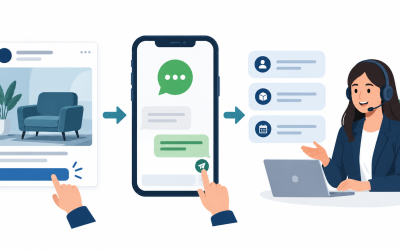
대부분의 마케터는 여전히 챗봇을 꾸며진 FAQ 위젯처럼 사용합니다. 이는 새로운 리드를 환영하고, 장바구니를 회수하며, 구매자를 자격을 부여하고, 약속을 예약하고, 피드백을 수집하고, 의도가 아직 신선할 때 중단된 대화를 재개할 수 있는 채널에서 성과를 저조하게 만드는 가장 빠른 방법입니다.
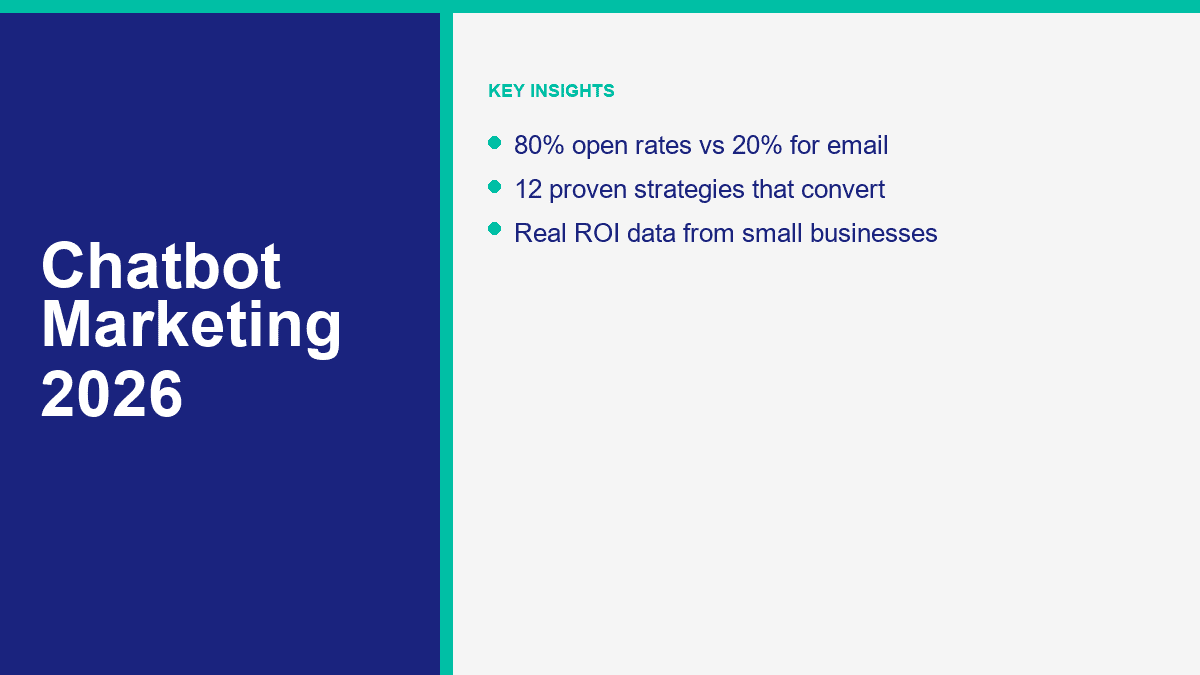
모두가 반복하는 헤드라인 통계는 간단합니다: 챗봇 마케팅은 80%의 오픈율을 기록하는 반면, 이메일은 20%입니다. 이 간단한 수치는 방향성을 제공하지만, 더 중요한 점을 숨깁니다. Mailchimp의 공개 벤치마크는 여전히 모든 사용자에 대해 평균 이메일 오픈율이 약 35.63%, 전자상거래에 대해서는 29.81%에 이른다고 합니다. 평균 클릭률은 각각 2.62%와 1.74%입니다. 메시징 채널은 상호작용이 즉각적으로 느껴지고, 응답 경로가 한 번의 탭으로 연결되며, 구독자가 혼잡한 받은 편지함이 아닌 대화 중에 이미 들어와 있기 때문에 계속해서 승리하고 있습니다.
그렇기 때문에 오픈율이 더 이상 유일하게 주목할 숫자가 아닙니다. Mailchimp 자체는 Apple Mail Privacy Protection이 이메일 오픈 데이터를 왜곡한다고 경고하며, CM.com과 같은 대화형 마케팅 공급업체는 옵트인 메시징 캠페인에서 클릭률이 45%에서 60% 범위에 있다고 계속 보고하고 있습니다. 간단히 말해: 챗봇은 단순히 보이는 것이 아니라, 더 빠르게 행동으로 이어집니다.
이 가이드의 가격, 정책 및 사례 연구 세부정보는 2026년 4월 10일에 공개 페이지 및 도움말 문서와 대조하여 확인되었습니다. 여기서의 초점은 채팅을 측정 가능한 파이프라인, 예약 및 수익으로 전환하고자 하는 미국 및 영국의 마케터, 에이전시 및 메신저 우선 브랜드를 위한 실용적인 실행입니다.
2026년 첫 번째 주목을 차지하는 챗봇 마케팅의 이유
이메일은 여전히 중요합니다. 유료 광고도 여전히 중요합니다. 그러나 구매자의 첫 번째 응답이 지연될 때 두 채널 모두 손실을 봅니다. 이메일은 대기열입니다. 광고는 베팅입니다. 챗봇은 고객 여정의 실시간 지점입니다. 방문자는 클릭하고, 질문하고, 탭하고, 확인하고, 예약하거나 구매하며, 나중에 후속 조치를 취하기 위해 다른 캠페인을 기다리지 않습니다.
챗봇 마케팅이 방송 전용 채널보다 더 나은 성과를 내는 진짜 이유입니다. 메시지 전달, 세분화, 자격 부여 및 전환을 하나의 흐름으로 결합합니다. 모든 사람에게 동일한 캠페인을 보내고 랜딩 페이지가 이를 정리하기를 바라는 대신, 봇이 대화 자체에서 정리를 수행합니다.
| 채널 | 일반적인 주목 기준 | 다음에 일어나는 일 | 주요 약점 |
|---|---|---|---|
| 이메일 | Mailchimp는 모든 사용자에 대해 평균 35.63% 오픈 및 2.62% 클릭을 보고합니다. | 독자가 받은 편지함을 떠나 클릭한 후 별도의 페이지나 양식에 도달합니다. | Delay, inbox competition, and noisy open-rate tracking |
| Paid social ads | Often low-single-digit click-through on cold traffic | User leaves feed and must still decide what to do next | You pay for attention before you know intent |
| 챗봇 마케팅 | Opt-in conversational campaigns commonly show 45% to 60% CTR, with much higher open and read behavior than email | User responds inside the same thread with one-tap choices, data capture, and next-step routing | Bad flows feel spammy fast and platform policy matters |
Here is what most teams miss: chatbot marketing is not “email, but in Messenger.” It is closer to a mini funnel that can ask, answer, qualify, and convert in the same session. That is why Intercom’s Copper customer story still stands out years later: compared with traditional forms, Intercom delivered a 13% higher website conversion rate, 19 new sales opportunities, and $36,000 in annual recurring revenue added to pipeline in a single month. The format changes what happens between interest and action.
There is one more practical reason chat wins in 2026. Serious chatbot marketing is permission-based by design. The best flows start after a click-to-message ad, website widget interaction, comment trigger, existing customer touchpoint, or explicit opt-in. That means the audience is smaller than a bloated email list, but also warmer. The bot is talking to people who just did something, not people who maybe remember subscribing fourteen months ago.
The 12 Chatbot Marketing Strategies That Actually Work
You do not need twelve flows live on day one. You need the right one for the bottleneck that is already costing you money. Use the table below as a decision shortcut, then build the narrowest sequence that maps to a real campaign, not a fantasy customer journey.
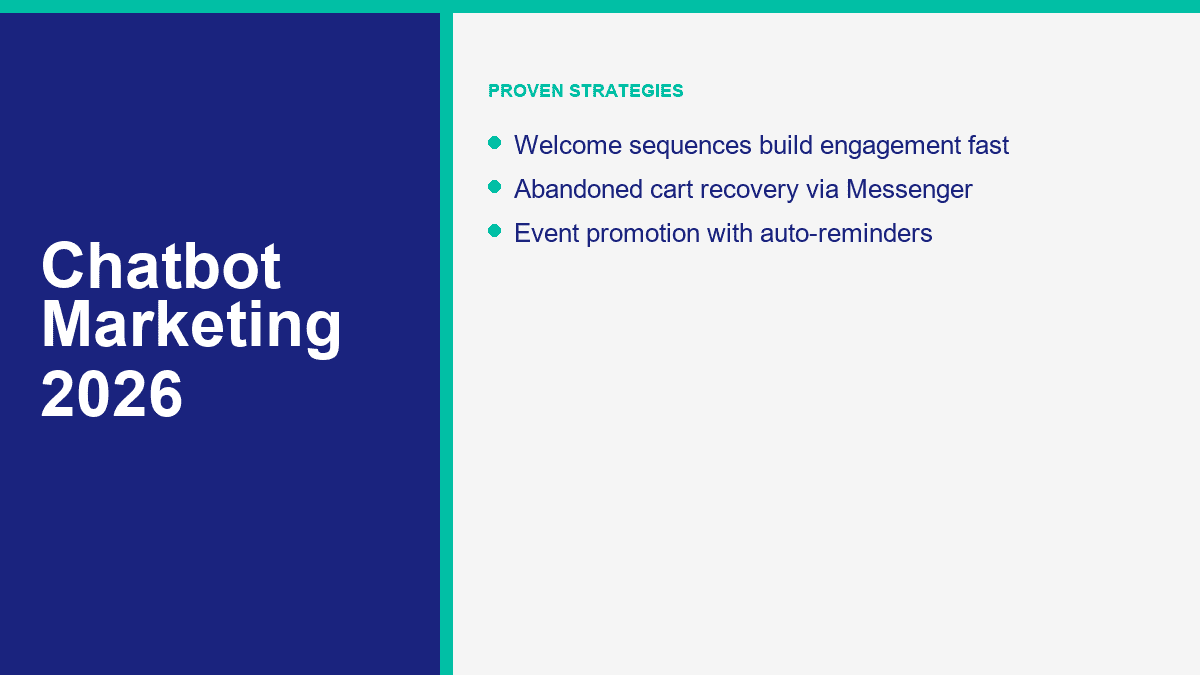
| Strategy | Best trigger | Main KPI | What it should do |
|---|---|---|---|
| Welcome sequences | First click, ad reply, or Page message | Next-step click or reply rate | Segment new contacts before they drift |
| 장바구니 포기 복구 | Checkout drop-off | Recovered revenue | Bring back buyers who already showed purchase intent |
| 리드 자격 확인 | Pricing, demo, or service inquiry | Qualified lead rate | Replace weak forms with guided capture |
| Content delivery | Lead magnet or resource request | Content consumption and follow-up clicks | Turn passive downloads into tagged subscribers |
| Event promotion | Upcoming event or local activation | RSVP and attendance rate | Move contacts from awareness into confirmed attendance |
| Webinar registration | Educational campaign or demo webinar | Registration-to-attendance rate | Capture context before the calendar invite lands |
| Product launches | Waitlist or release announcement | Launch click rate and sales from engaged segments | Show the right offer to the right buyer group |
| Customer re-engagement | Inactivity or repeat-purchase window | Reactivated users or orders | Wake up warm contacts before they churn permanently |
| Survey collection | After support, purchase, or feature use | Response and completion rate | Collect feedback while the experience is still recent |
| Appointment booking | Service inquiry or scheduling request | Booked meetings and show rate | Turn interest into calendar commitments |
| Upsell and cross-sell | Purchase, reorder, or support interaction | Average order value and repeat revenue | Use context to recommend the next logical product |
| Review requests | Confirmed delivery or resolved support case | Review submission rate | Ask at the moment satisfaction is easiest to prove |
Welcome Sequences That Segment New Subscribers Before They Go Cold
Your welcome flow should do three jobs in under a minute: confirm why the person started the conversation, sort them into the right path, and offer one clear next action. Most welcome messages fail because they try to be a brochure. A better opening sounds more like, “What brought you here today?” followed by three or four choices that map to real intent: pricing, demo, product help, event info, or support.
This is where chatbot marketing starts beating email in a practical way. Instead of sending a welcome email and hoping the reader clicks, the bot can collect one high-value signal immediately. On opt-in conversational campaigns, CM.com notes that 45% to 60% CTR is common. That kind of one-tap engagement is exactly why a welcome flow should branch fast instead of telling your brand story first. The more quickly the bot reveals a useful next step, the more likely the subscriber becomes a tagged lead instead of a silent contact.
Abandoned Cart Recovery That Feels Helpful Instead of Desperate
Cart recovery remains the cleanest revenue use case in chatbot marketing because the intent already exists. Baymard’s current cart abandonment benchmark sits at 70.22%, which means most stores are paying to create buying intent and then watching it disappear. A chatbot cannot fix bad pricing or ugly shipping surprises, but it can pull shoppers back while the cart is still mentally active.
The best sequence is still short. Send the first reminder roughly an hour after abandonment, the second around twenty-four hours later with friction-reducing context, and the third around seventy-two hours later with either a clear incentive or a support path. Use the product image, checkout link, and one useful reassurance. Do not dump three paragraphs of promo copy into the thread. If ecommerce is your main priority, steal the full playbook from our ecommerce chatbot guide and launch this before you touch anything fancier.
Lead Qualification Flows That Outperform Static Forms
Lead forms are still common because they are easy to deploy, not because they are the best way to capture intent. A qualification bot can answer a question, ask one or two fit checks, and collect the minimum contact detail needed to keep the conversation moving. That difference sounds small until you look at the conversion math. Intercom’s Copper case study reported a 13% higher website conversion rate than forms, 19 new sales opportunities, and $36,000 in ARR added to pipeline in one month.
The core rule is simple: ask only the questions that change routing. Company size, service type, urgency, budget band, location, or preferred demo time can all be useful. A seven-question quiz that does not change the next step is just a prettier form. If your agency or marketing team wants the detailed playbook for branching, CRM sync, and handoff rules, keep our lead generation chatbot guide close while you build the first version.
Content Delivery Flows That Turn Downloads Into Real Segments
Most lead magnets still end with the same weak pattern: thank-you page, email follow-up, then silence. A chatbot gives you a better sequence. Deliver the requested checklist, template, or guide inside the conversation, then immediately ask what the reader wants next. That could be a case study, a pricing explainer, a product comparison, or a short consultation path. The content becomes the start of segmentation, not the end of it.
This strategy works especially well for agencies, SaaS marketers, and education-led brands because the asset and the follow-up live in one session. Someone who asks for a paid-social checklist is not the same subscriber as someone who asks for an onboarding template. Chat lets you tag the difference instantly and route future campaigns with a lot less guesswork. The biggest mistake here is over-automating. Deliver one asset, ask one useful question, and stop while the conversation still feels lightweight.
Event Promotion Flows That Improve Attendance, Not Just RSVPs
Events do not fail because marketers forget to promote them. They fail because promotion and attendance are treated like the same job. The chatbot should handle the second job. Once somebody taps interest, the flow needs to confirm attendance intent, capture reminders permission, answer the obvious logistical question, and give the user a dead-simple way to save the event.
The format matters because event friction is usually tiny and boring: wrong time, unclear location, no reminder, no easy handoff to calendar, or one unresolved question that keeps the person from committing. A bot can handle all of that faster than email. For Messenger specifically, 2026 utility messaging options are increasingly aimed at approved reminders and updates, which makes event reminder logic more useful than ever as long as you keep promotional pushes and utility reminders separate.
Webinar Registration Flows That Qualify Before the Calendar Invite
Webinar signups look healthy in dashboards even when half the list never belonged there. A chatbot improves webinar marketing by collecting intent before registration is finalized. Ask what role the person is in, what problem they want solved, and whether they want the live session or the replay. That gives you cleaner attendance segments and much better follow-up after the event.
For B2B teams, the upside is not just more registrations. It is better sales context. A founder who wants pricing and integration details should not receive the same post-webinar sequence as a student researching the topic. Chatbot registration lets you shape the follow-up based on declared interest instead of forcing sales or nurture to guess from one generic form field. This is also one of the easiest places to insert a booking option for high-intent registrants without making the main webinar path feel sales-heavy.
Product Launch Sequences That Ask for Intent Before They Push the Offer
Most product launches underperform because the audience is treated as one blob. Chatbots are useful here because they can ask what the contact cares about before the sales message lands. That can mean feature interest, budget level, use case, industry, team size, or readiness to buy. The launch stops being a blast and becomes a controlled reveal.
This matters even more now that Messenger promotional messaging has changed. Recurring Notifications started sunsetting on January 12, 2026, and Meta’s newer Marketing Messages on Messenger workflow is paid and still rolling out by country. That makes segmentation even more valuable, because wasted promotional sends are not just annoying now. They are expensive. If you pay to reach a launch audience, the offer should fit the subscriber segment on the first attempt.
Customer Re-Engagement Flows That Start With Behavior Instead of Discounts
Re-engagement campaigns usually fail when they begin with “We miss you” and end with a coupon. A chatbot gives you a better re-entry point: ask what changed. Still interested? Need help choosing? Want the new version? Want updates only when prices drop? That one branching question often tells you more than another discount ever will.
This is especially useful for SaaS trials, service businesses with long buying cycles, and ecommerce brands with repeat-purchase windows. Instead of sending the whole inactive audience one generic message, trigger the flow from a behavior signal such as trial expiry, ninety days since purchase, or cart abandonment without return. The bot can then split the audience into reactivation, support, education, or no-longer-interested paths. That keeps list hygiene cleaner and protects deliverability and Page reputation at the same time.
Survey Collection Flows That Get Better Response Quality With Fewer Questions
Survey fatigue is real, and chatbot marketers usually create it themselves by trying to collect everything in one sitting. Survicate’s own survey guidance says mobile surveys tend to hit the highest response rates at around 30%, and its response data shows 1 to 3 questions is the sweet spot before completion drops. Chat surveys should follow the same rule. Start with the one question that tells you what to do next.
That might be NPS, CSAT, “What almost stopped you from buying?”, or “Which feature mattered most?” Once you get the answer, branch only if the response creates a concrete action. Promoters can be sent toward review requests. Detractors can go into a rescue path. Neutral answers can be tagged for product education. The point is not to build a research study in Messenger. The point is to collect actionable feedback while the context is still warm enough to use.
Appointment Booking Flows That Turn Inquiries Into Show-Ups
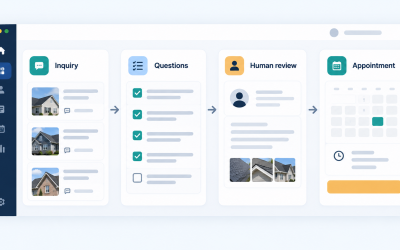
Booking flows work best when the chatbot handles the tedious part that people hate doing over forms or phone calls: choosing the right service, location, time, and prep instructions. A good booking bot qualifies lightly, surfaces only relevant time slots, confirms the appointment, and then handles reminder logic and reschedule paths without forcing the user to start over.
The financial upside is bigger than many teams assume because no-shows are a revenue leak, not just an operations annoyance. Twilio’s Commure customer story reported a 54% reduction in no-show rates for preventive care screenings after improving omnichannel reminders and communications. Your business may not match healthcare numbers exactly, but the operational lesson is transferable: if reminders are clear, timely, and interactive, more booked customers actually show up. That is why booking automation deserves marketing budget, not just ops budget.
Upsell and Cross-Sell Flows That Use Purchase Context Instead of Guesswork
The best upsell bot does not ask, “Want more stuff?” It reacts to what the buyer just proved they want. If somebody buys a primary product, the bot can offer the setup add-on, the refill, the matching accessory, or the premium service tier at the point where relevance is obvious. That is a much stronger use of chatbot marketing than randomly blasting the whole customer list with a monthly promotion.
This strategy is strongest when your catalog or service ladder has a natural next step. Think skincare plus replenishment, SaaS starter plan plus onboarding package, consultation booking plus audit upgrade, or core product plus extended warranty. The conversation should sound like guided assistance, not a cashier script. If the next offer needs heavy logic, multiple branches, or integrations tied to product and customer data, that is the point where reviewing MessengerBot Pro 기능 becomes more relevant than trying to force advanced upsell behavior through a bare-bones flow.
Review Request Flows That Ask Right After Trust Has Been Earned
Review requests are simple until timing ruins them. Ask too early and you get silence. Ask after a bad support exchange and you create public proof of failure. The winning pattern is to trigger the request after confirmed delivery, successful onboarding, or resolved support, then branch by sentiment. Happy customers get the review path. Unhappy customers get a service recovery path.
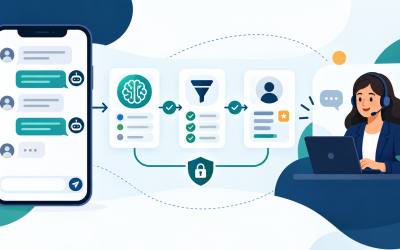
This is where chatbot marketing feels more human than email because the handoff can happen instantly. The bot can ask one quick satisfaction question, then either send the review link or route the issue back to a person. That protects your public rating and gives frustrated customers a private place to explain what went wrong. For agencies handling multiple brands, this single branch often saves more reputation damage than any fancy AI copywriting feature ever will.
How to Build Your First Chatbot Marketing Funnel Without Overengineering It
The fastest path to a working funnel is not building a giant bot. It is building one conversation around one offer for one audience on one channel. If you cannot explain the funnel in one sentence, the first version is probably too broad.
- Pick one money moment. Start with the bottleneck already tied to revenue: abandoned carts, demo requests, booked calls, or review generation.
- Choose one traffic source. Use a pricing page widget, click-to-message ad, comment trigger, post-purchase sequence, or support follow-up. Do not try to wire every entry point at once.
- Define one primary conversion. That could be recovered checkout, qualified lead, booked appointment, or confirmed attendance. If you track five goals on day one, you will learn nothing.
- Write the shortest useful script. Opening line, one branching question, one data capture moment, one conversion ask, one fallback human path. That is enough for a first launch.
- Tag every branch. Channel source, intent, offer, and outcome should all be visible later in reporting. Untagged chatbot traffic turns into anecdotal marketing fast.
- Connect the destination before launch. CRM, calendar, checkout link, spreadsheet, or help desk should already be wired. A bot that captures interest and drops it on the floor is worse than no bot.
- Test on a phone like a real customer. Check button order, copy length, page handoff, notification timing, and error handling. Desktop-only testing hides bad chatbot UX.
For most teams, there is no serious “no sign up required” version of this once the bot is touching saved audiences, CRM fields, or transaction data. That is fine. Production chatbot marketing needs identity, permissions, and reporting. What you should avoid is paying for enterprise complexity before the first narrow funnel proves itself. If you want the cleanest starting point for Messenger-first campaigns with website chat, forms, flows, ecommerce support, and a free trial path before heavier commitment, compare the current plan split on 메신저봇 가격 보기 before you build too much on the wrong tier.
Facebook Messenger Marketing Rules You Must Follow in 2026
Messenger policy details change more often than most blog posts admit, so the safest approach is to design around the rules that keep surviving every update: explicit user intent, clean opt-ins, narrow message purpose, and respect for Meta’s messaging windows. If you try to squeeze broadcast-email behavior into Messenger, the platform will eventually punish you for it.
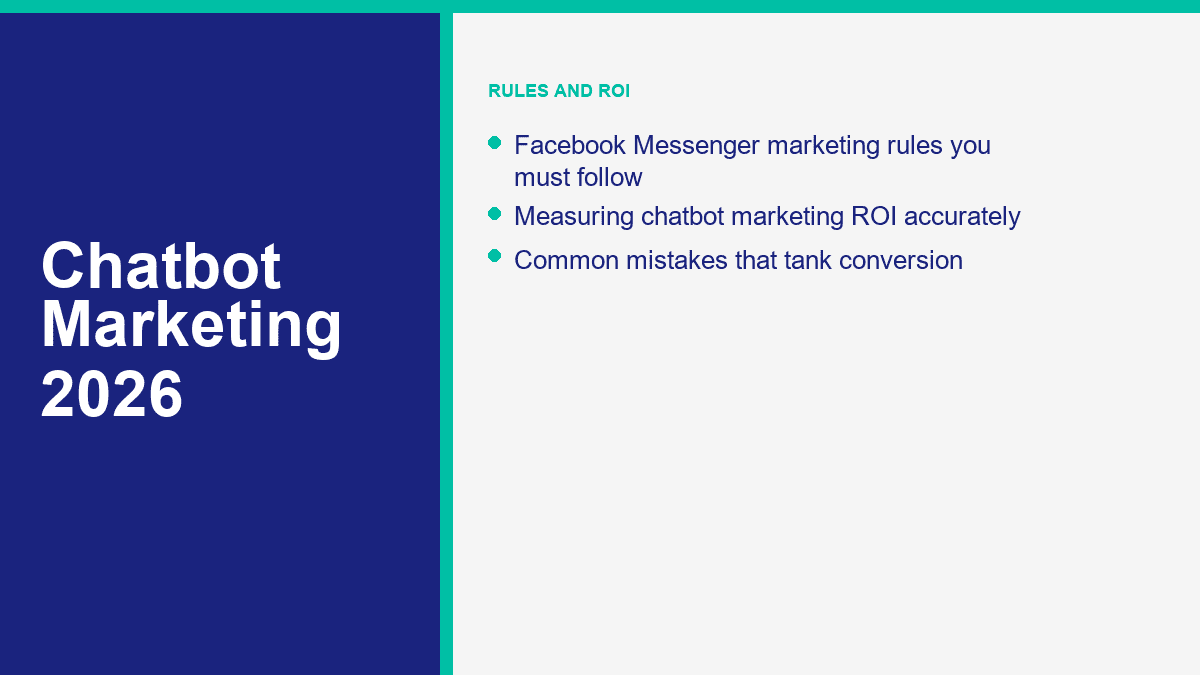
As of the current 2026 help documentation used by major Messenger automation vendors, the operating model is clear enough for marketers:
- Only message people who started or explicitly opted into the conversation. Messenger is not a cold outreach channel.
- Respect the 24-hour automation window. Automated follow-up is tied to the user’s most recent interaction.
- Understand the post-window split. Current guidance reflects a 7-day manual human-agent window for Messenger and Instagram after the core 24-hour period, while fully automated promos need approved paths.
- Keep promotional and utility messages separate. Appointment reminders, order updates, and account notices belong in utility-style flows. Discounts, launches, and sales pushes belong in approved marketing flows.
- Assume promotional outreach outside the standard window is now a paid, controlled layer. Marketing Messages on Messenger replaced the old loose recurring-notification mindset and is being rolled out country by country through 2026.
- Give people an easy stop path. Respect unsubscribes immediately and never hide the exit.
The short version is this: utility messages are not a loophole for promotions, and reminders should not quietly become sales campaigns halfway through the sequence. That is the kind of misuse that gets Pages warned, throttled, or blocked. If your team needs more complex routing, multi-step approval logic, and broader channel coordination around these rules, compare MessengerBot Pro 기능 before you improvise your way into a messy compliance setup.
How to Measure Chatbot Marketing ROI Without Lying to Yourself
Chatbot marketing dashboards get noisy fast because they are full of vanity signals. Open rate is useful. Reply rate is better. Revenue, qualified pipeline, recovered orders, and reduced no-shows are what matter. The cleanest ROI model is to attach every chatbot to one business job and then calculate lift against the process it replaced.
| 사용 사례 | Core math | What to track weekly |
|---|---|---|
| 리드 생성 | (Qualified leads x close rate x average deal value) – software and labor cost | Conversation starts, lead capture rate, qualified rate, booked meetings |
| Ecommerce recovery | Recovered orders x average order value – incentives and software cost | Reachable abandoners, recovered checkout revenue, unsubscribe rate |
| Appointment booking | Recovered show-ups x appointment value – message and tooling cost | Bookings, reminder confirmation rate, no-show rate, reschedules |
| Re-engagement | Reactivated customers x repeat-purchase value – campaign cost | Reactivation rate, repeat orders, support escalations, opt-outs |
Here is a realistic example. Say a service business gets 400 chatbot-started conversations per month from ads and website traffic. If 30% become captured leads, 20% of those leads become booked calls, and 25% of booked calls close into a $2,000 service, the math looks like this: 400 x 0.30 x 0.20 x 0.25 x $2,000 = $12,000 in closed revenue attributed to the funnel before software and ad cost. That is the level where a $19.99 or $49.99 monthly tool cost stops mattering.
The same logic applies to ecommerce. Recover just 20 abandoned orders at an $85 average order value and you have generated $1,700. Reduce no-shows by 10 appointments at $150 each and you have protected $1,500 in otherwise lost revenue. Those are not giant enterprise wins. They are ordinary mid-funnel improvements. That is why chatbot ROI can show up so quickly when the bot is tied to a real leak instead of a vague “engagement” goal.
If you are still in the validation phase, do the simplest comparison possible: measure the existing baseline for two weeks, launch one chatbot flow, then compare the same metric for the next two weeks with traffic quality held as steady as possible. Do not judge the bot on opens. Judge it on the business action it was hired to improve. When you are ready to compare monthly cost against likely lift, 메신저봇 가격 보기 and stack that against one recovered sale, one booked client, or one week of saved follow-up labor. The math usually gets obvious very quickly.
Common Chatbot Marketing Mistakes That Make Good Traffic Convert Like Bad Traffic
The first mistake is leading with a pitch instead of a question. New contacts do not need your full product tour in message one. They need a fast route to the thing they were trying to do when they clicked.
The second mistake is asking for too much information before earning it. Every extra field or question is a tax on intent. Collect only what changes routing, handoff, or deal quality. Everything else can wait.
The third mistake is building one generic flow for every traffic source. A pricing-page visitor, a post-purchase customer, a webinar registrant, and a support user are not the same conversation. If the opening message ignores source and intent, conversion drops fast.
The fourth mistake is treating the chatbot like a human replacement instead of a conversion tool. The bot should handle repetition, qualification, routing, reminders, and simple decisions. It should not bluff its way through edge cases just to avoid a human handoff.
The fifth mistake is measuring the wrong success signal. High starts with weak completion can mean curiosity, not revenue. High opens with low clicks can mean subject-line strength, not funnel strength. Track the next action that makes money.
The sixth mistake is ignoring Messenger policy until campaigns scale. That worked better a few years ago than it does now. The platform has become more structured around message windows, paid promotional paths, and approved utility use cases. If your workflow depends on a loophole, assume it has an expiration date.
The seventh mistake is never tightening the copy after launch. The first version of a bot is a draft. Remove dead-end buttons, shorten verbose messages, collapse duplicate steps, and review transcript drop-off weekly. Landbot’s Lead Laundry case study is still one of the cleaner reminders of why this matters: a tuned conversational approach helped lift conversion rates by 35% and improve lead quality by more than 50%. The lift did not come from having a bot. It came from having a better conversation design.
Where Chatbot Marketing Starts Paying for Itself Fastest
If you want the shortest decision rule possible, start where the conversation is already closest to money. For agencies and B2B teams, that is usually lead qualification or booking. For ecommerce, it is cart recovery, post-purchase upsell, and review generation. For local and service businesses, it is appointment booking and reminders. The common pattern is simple: the bot works best when it removes delay at a point where intent already exists.
Build one narrow flow, track it honestly for two weeks, then expand only after the numbers justify it. If Facebook Messenger is one of your core marketing channels and you want to see the live entry point before you map the funnel, 메신저봇 가격 보기. If you already know you will need heavier automation, additional routing depth, and broader campaign logic, compare MessengerBot Pro 기능 다음.
자주 묻는 질문
챗봇 마케팅이 이메일 마케팅보다 더 효과적일까요?
첫 응답 단계에서는 즉각적이고 상호작용이 가능한 채팅이 더 효과적입니다. 이메일은 여전히 뉴스레터, 장문의 육성, 소유한 청중 유지에 잘 작동하지만, 챗봇은 의도를 포착하고, 빠르게 자격을 부여하며, 잃어버린 수익을 회복하거나 사용자가 지금 바로 다음 행동을 취하도록 유도하는 목표일 때 보통 승리합니다. 가장 강력한 설정은 두 가지를 모두 사용합니다: 실시간 상호작용을 위한 채팅과 긴 생애 주기 후속 조치를 위한 이메일.
챗봇 마케팅을 어떻게 시작하나요?
하나의 비즈니스 결과에 연결된 하나의 퍼널로 시작하세요. 장바구니 포기 복구, 리드 자격 부여, 웨비나 등록, 약속 예약 또는 리뷰 요청 중에서 선택하세요. 짧은 스크립트를 작성하고, 출시 전에 목적지 시스템을 연결하며, 모든 분기를 태그하고, 수익에 중요한 KPI 하나를 측정하세요. 전체 고객 여정을 자동화하려고 하지 마세요.
페이스북 메신저 마케팅의 규칙은 무엇인가요?
안전한 운영 모델은 간단합니다: 시작했거나 명시적으로 동의한 사람에게만 메시지를 보내고, 24시간 자동화 창을 존중하며, 프로모션 메시지를 유틸리티 알림이나 계정 업데이트와 분리하고, 창 이후 프로모션 아울리치를 위해 승인된 마케팅 경로를 사용하세요. 메신저 정책 세부사항은 계속 변경되므로, 팀은 대규모 캠페인을 시작하기 전에 실시간 메타 가이드를 확인해야 합니다.
챗봇 마케팅 비용은 얼마인가요?
For most small teams, the software cost is usually modest compared with the value of one recovered sale or one booked client. MessengerBot’s current public pricing starts at the lower SMB end, with a free trial and more advanced tiers for larger routing and automation needs. The bigger cost mistake is not usually the monthly tool fee. It is spending on traffic without a follow-up system that can convert the attention you already paid for.
챗봇이 정말 이메일 마케팅을 대체할 수 있을까요?
No, and that is the wrong goal anyway. Chatbots should replace the parts of email that email handles badly: delayed replies, weak qualification, low-friction booking, cart rescue, fast reminders, and conversational follow-up. Email is still better for longer updates, broader nurture, and content that people want to read on their own schedule. The best marketing stack uses the chatbot where speed and interaction matter, then hands off to email where depth and cadence matter more.
 한국어
한국어  English
  Tagalog
  简体中文
简体中文  العربية
  हिन्दी
  Português do Brasil
  Español de México
  Français
  বাংলা
বাংলা  香港中文
香港中文  繁體中文
繁體中文  Nederlands
  Deutsch
  Bahasa Indonesia
  日本語
日本語  Polski
  Русский
  Español
  Tiếng Việt