
AI聊天机器人开发 在2026年,主要不是写一个更好的系统提示。真正的工作是决定消息如何进入你的堆栈,机器人如何选择下一个动作,知识来自哪里,允许哪些工具调用,状态如何被持久化,记录什么,以及何时应该由人类接管。如果这些部分很薄弱,机器人在演示中看起来仍然聪明,但在生产中仍然会失败。.
我查看了本文中提到的官方文档和定价页面,位于 2026 年 4 月 12 日. 当前的格局比一年前更具主观性。OpenAI 现在将生产聊天机器人集中在 响应API 上,并将模型令牌与工具使用分开收费;GPT-4.1 的输入费用为 $2.00 和 $8.00 输出 每百万个令牌,而 GPT-4.1 mini 的输入费用为 $0.40 和 $1.60 输出. LangSmith 仍然从 $0 每个座位开始 包括 5k 追踪,Plus 是 $39 每个座位. Botpress 从 $0 加上 AI 支出, Plus 价格为 $79 每月按年计费开始. MessengerBot Premium 是 每 30 天 $19.99, Pro 是 每 30 天 $49.99, Agency 是 $299.99 每 30 天. Azure AI Bot Service 仍然显示 无限标准通道消息 在免费和 S1 上,但旧的 Bot Framework SDK 在 2025 年 12 月 31 日之后停止接受支持票 ,微软现在将新的代理构建者指向 Microsoft 365 Agents SDK。.[1][2][3][4][9][13][15][16][18]
这很重要,因为现在有两个非常不同的意图隐藏在同一个关键字下。如果你想要拖放构建器、模板和最小的代码所有权,请阅读 我们的无代码 AI 聊天生成器指南. 这篇文章是为了另一个工作: 构建 AI 聊天机器人 系统作为开发者,选择正确的 聊天机器人开发框架, 并在不将后端变成提示意大利面的情况下让机器人上线。如果您的主要交付目标是 Facebook Messenger、Instagram 和网站聊天,并且您不想自己拥有每个 webhook 和部署边缘案例,请先检查 查看MessengerBot定价.
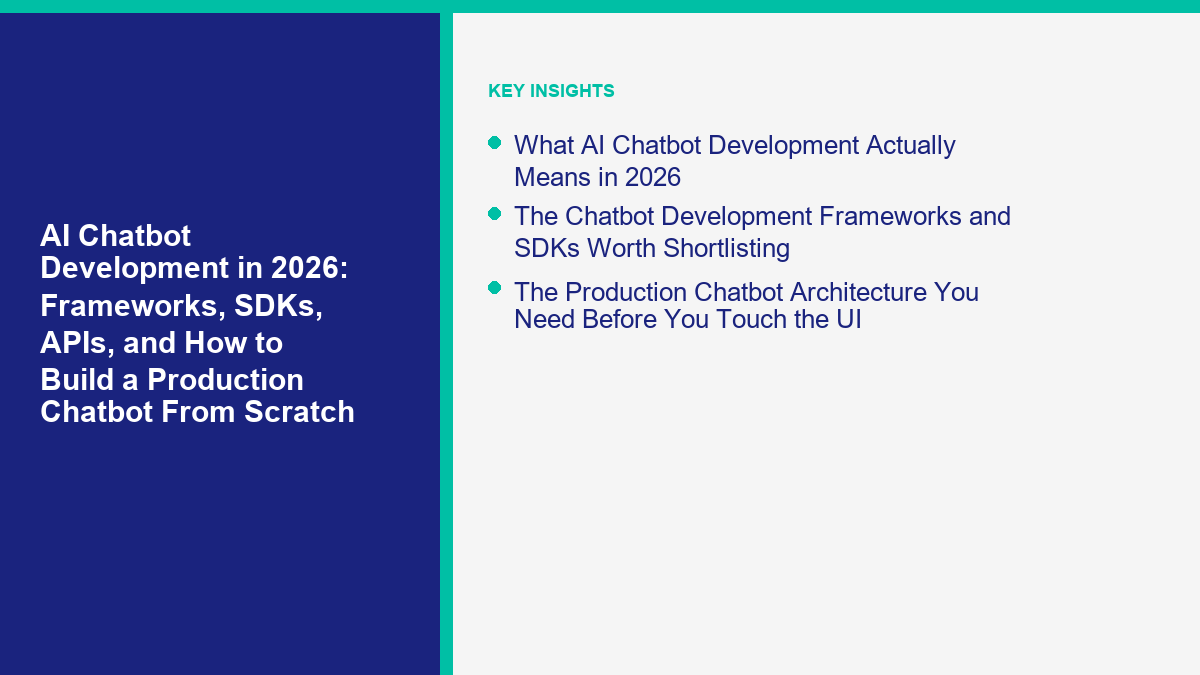
2026 年 AI 聊天机器人开发的实际含义
这个短语 AI 聊天机器人开发 曾经意味着两件事之一:构建一个带有训练短语的意图机器人,或者将 LLM 附加到聊天框上并希望它表现良好。现在这两个定义都不够好。在生产中,聊天机器人是一个对话服务。它必须路由、获取、验证、执行、解释、恢复和交接。这是软件架构,而不仅仅是提示设计。.
一个生产聊天机器人通常至少有七个层次:
- 入口: 网站小部件事件、Facebook Messenger webhook、Instagram 消息、CRM 触发器或内部应用事件。.
- 会话和身份: 对话 ID、用户 ID、身份验证状态、页面上下文和租户边界。.
- 路由: 规则、意图、LLM 分类或决定下一步行动的图形转换.
- 知识和工具: 检索、API、数据库查询、订单状态工具、预订工具或政策文件.
- 响应生成: 最终的自然语言答案、按钮集或升级消息.
- 可观察性: 跟踪、模型成本、工具延迟、幻觉审查、失败步骤和交接率.
- 安全与控制: 架构验证、速率限制、白名单、拒绝规则和人工接管.
这就是为什么 2026 年最佳开发者技术栈是混合的原因。你仍然使用确定性逻辑处理已知工作流程,如退款请求、潜在客户资格、预约预订、选择加入和账户查询。在语言混乱的地方使用 LLM:重写、总结、从自然表述中提取槽位、回答有根据的问题或在工具之间进行选择。纯规则对于开放式支持来说太脆弱。纯生成对于交易来说太冒险.
这也有助于区分你实际选择的 SDK 类型。A 聊天机器人 SDK 可以指一个模型 SDK,例如 OpenAI 的 Python 或 JavaScript 库,一个编排 SDK,例如 LangGraph 或 Semantic Kernel,或者一个渠道 SDK,比如您需要在 Messenger、Instagram 或网站小部件上发布的内容。当团队将这些类别进行比较时,常常会感到困惑,仿佛它们解决的是同一个问题。实际上并不是。一个决定模型的思维方式,一个决定工作流程的运行方式,另一个决定消息如何到达用户。.
最佳的思维模型很简单: 您的模型不是您的架构. 架构决定模型是否有成功的机会。.
值得列入候选名单的聊天机器人开发框架和 SDK
您不需要一个包含三十个徽标的电子表格。您需要一个与您实际构建的聊天机器人类型相匹配的候选名单。提示中的五个名称在 2026 年仍然相关,但原因与许多购买指南所建议的不同。.
| 堆栈 | 在 2026 年的情况 | 公共起点 | 最佳契合 | 主要警告 |
|---|---|---|---|---|
| OpenAI API | 模型 API 加上响应、结构化输出、工具调用和评估 | GPT-4.1 mini 在每百万个令牌的 $0.40 输入和 $1.60 输出 | 希望获得最大控制的自定义后端 | 您拥有编排、存储、交接和渠道管道 |
| LangChain + LangGraph | 基于较低级状态图运行时的高级代理抽象 | 开源核心,LangSmith 每个席位 $0 | 需要图形、中间件、追踪和持久执行的团队 | 如果您的工作流程实际上只是表单逻辑加检索,容易过度构建 |
| 拉萨 | 具有 LLM 支持和对行为强控制的确定性流引擎 | 产品页面上未列出公共企业定价 | 合规性或流程密集型助手 | 比托管构建器更高的设置和运营开销 |
| 博特普莱斯 | 带有网页聊天、渠道、API/SDK选项和AI支出传递的托管构建器 | $0加上AI支出,Plus在$79按年计费 | 希望拥有托管速度并具备技术逃生通道的团队 | 仍然需要产品所有权,而不仅仅是视觉流程设计 |
| Microsoft Bot 框架 | 用于现有机器人的遗留SDK堆栈,现在已归档且不再维护 | Azure AI Bot Service免费层加上Azure基础设施成本 | 维护较旧的Microsoft机器人资产 | 这不是我会开始新的2026构建的地方 |
| MessengerBot | 管理跨渠道平台,包括 Facebook Messenger、Instagram 和网站 | 高级 $19.99 每30天 | 希望比拥有基础设施更快进行渠道部署的团队 | 比为专有代理逻辑提供完整自定义后端的灵活性差 |
公共定价和定位于 2026 年 4 月 12 日从官方页面检查过。.[2][4][7][8][9][10][13][15][16][18]
为什么 OpenAI API 是自定义构建的默认起点
OpenAI 当前的平台故事比旧的聊天、助手和临时包装的混合更清晰。官方文档描述了 响应API 作为生成响应、处理状态交互和使用内置工具和函数调用扩展模型行为的主要接口。这使其成为一个实用的基础层,如果你想将机器人作为软件拥有,而不是购买完整的构建平台。.[1]
在这里开始的关键原因不是炒作,而是合同质量。OpenAI 现在为你提供工具调用、结构化输出、评估,以及一个透明到足以进行预测的定价模型。这并不意味着每个团队都应该止步于此。这意味着原始 API 层现在足够可用,你可以在第一天就构建严肃的工作流程,而不需要五个额外的抽象层。.
当 LangChain 和 LangGraph 增加真正价值时
当你的机器人不再是单个提示加上几个 API 调用时,LangChain 会提供帮助。当前文档清楚地阐明了这一点: create_agent gives you a production-ready agent implementation, and that implementation runs on LangGraph under the hood. LangGraph is the lower-level orchestration runtime for durable execution, streaming, human-in-the-loop review, and other stateful workflow needs.[7][8]
That means you should not reach for LangGraph just because the word “graph” sounds advanced. Use it when the bot has long-running tasks, retries, checkpoints, approval states, or multiple tool paths that need to be inspectable. If your chatbot is basically a router, a knowledge retriever, and a form collector, plain application code may still be simpler.
Why Rasa Still Matters for High-Control Chatbots
Rasa’s strongest 2026 argument is not old-school intent classification. It is control. The product page now leans hard into CALM, structured flows, recovery patterns, and deterministic logic around LLMs. The Flow Policy docs are even more explicit: Flow Policy is a state machine that deterministically executes the business logic defined in flows and manages conversation state through a dialogue stack.[10][11]
If your assistant touches compliance rules, policy exceptions, approvals, internal tools, or workflows that auditors will eventually inspect, that matters more than marketing gloss. The tradeoff is speed. Rasa is rarely the fastest way to get a friendly FAQ bot live. It is often the right way to ship a workflow bot that needs to stay on rails.
Where Botpress Fits Best
Botpress sits in a useful middle lane. It is hosted, its pricing is public, its AI spend is billed at provider cost without markup, and it exposes both a visual studio and enough API/SDK surface to stay relevant after the first prototype. The pricing page also makes clear that human handoff, insights, proactive webchat prompts, and code-first agent development all live in the same product story.[13]
That makes Botpress attractive for startups and internal product teams that want to move faster than a fully custom stack but do not want to get trapped in a rigid SMB-only builder.
How to Read Microsoft’s Bot Story in 2026
The most important Microsoft fact is a date, not a feature: the Bot Framework SDK is archived and support tickets stopped being serviced on 2025 年 12 月 31 日之后停止接受支持票. Microsoft now points developers toward the Microsoft 365 Agents SDK for new agent work. That SDK handles conversation management, channel/client management, and authentication, while letting you orchestrate with Semantic Kernel or Agent Framework. When I checked on April 12, 2026, Microsoft’s Agent Framework guidance described C# and Python support in public preview for that orchestration layer.[16][17]
The practical reading is simple. Keep Bot Framework only if you already have it. Do not choose it for a greenfield chatbot unless a migration path or Microsoft-specific constraint makes that unavoidable.
The Production Chatbot Architecture You Need Before You Touch the UI
The interface is the last thing I would design. A chatbot that looks polished but has no internal contract usually turns into a maintenance sink. Before buttons, personas, or typing indicators, decide what a single turn of conversation is allowed to do.
A solid production architecture usually looks like this:
- Channel receiver: webhook or widget event endpoint normalizes inbound messages into one internal event format.
- Conversation state store: session data, customer identity, active goal, slots, and last safe action live outside the model.
- Router: rule engine, classifier, or graph node decides whether the turn is informational, transactional, or escalation-worthy.
- Retrieval and tool layer: documents, FAQs, search indexes, and backend actions are exposed through narrow interfaces.
- 响应层: the model or template generates the next answer under a clear schema.
- Audit layer: logs, traces, tool latency, token cost, and failure reasons are captured for review.
The most common mistake is letting the model directly decide all of that in free text. A better pattern is to force the model to emit structured state changes. OpenAI’s structured outputs docs are useful here because they explicitly promise JSON-schema adherence, which is exactly what you want for routers, slot fillers, and action selectors.[5]
{
  "channel": "website",
  "goal": "refund_request",
  "slots": {
    "order_id": null,
    "reason": null
  },
  "next_action": "ask_order_id",
  "handoff_required": false,
  "risk_flags": []
}
That kind of schema does three useful things. It makes the bot testable, because you can assert against actions instead of vibes. It makes the bot safer, because backend code can reject impossible transitions. And it makes channel rendering simpler, because your website widget, Facebook Messenger layer, and Instagram layer can all map from the same internal decision object.
If you are building with LangGraph, that state object naturally becomes part of the graph state. If you are building with Rasa, it becomes the conversation’s deterministic flow context. If you are building directly on the OpenAI API, it becomes the contract between your router, tools, and responder. Same principle, different stack.
The UI should sit on top of that architecture, not substitute for it.
How to Choose Models, APIs, and Tools Without Burning Budget
A lot of teams overspend because they use one large model for every task in every turn. That is lazy architecture. Not every chatbot step needs the same level of reasoning.
OpenAI’s current model pages make a practical split easy. GPT-4.1 is positioned as the strongest non-reasoning model with a 1M-token context window and tool support, at $2.00 和 $8.00 输出 per 1M tokens. GPT-4.1 mini keeps the same 1M-token context window, stays strong at instruction following and tool calling, and drops to $0.40 和 $1.60 输出 per 1M tokens.[3][4]
For most production bots, that suggests a tiered design:
- Small or medium model for routing: classify the turn, extract slots, decide tool eligibility, or detect escalation.
- Larger model for synthesis only when needed: complex support explanations, policy summaries, or multi-tool answer composition.
- No model at all for deterministic turns: known commands, menu choices, authenticated account actions, and button-led flows.
The tool layer matters just as much as the model layer. OpenAI’s pricing page shows that built-in tools have their own economics: web search is $10 per 1,000 calls, file search tool calls are $2.50 per 1,000 calls 加上 $0.10 per GB per day for storage after the free tier, and Code Interpreter or Hosted Shell containers are billed per 20-minute session based on container size.[2] That means a chatbot can stay cheap on token spend and still become expensive if you allow tool calls on every turn.
The practical rule is this: tool calls should be earned, not assumed. Do not run retrieval when the question is already covered by structured state. Do not call web search when your internal knowledge base is the source of truth. Do not let the model trigger order lookup, refund initiation, or CRM writes without schema validation and permission checks.
If you need orchestration help here, LangChain’s agent stack and LangGraph’s runtime can help you inject context, middleware, memory stores, and tool wrappers in a way that stays inspectable. If you do not need that yet, plain application code plus the OpenAI SDK is often cleaner.[7][8]
How to Build an AI Chatbot From Scratch Without Creating a Prompt Spaghetti Mess
If I had to build a production chatbot from zero this week, this is the order I would use. Not because it is academically pure, but because it minimizes rework.
- Pick one business job. Start with one narrow goal like lead qualification, appointment booking, order tracking, or support deflection. A chatbot that tries to sell, support, onboard, and upsell on day one usually does all of them badly.
- Define the state schema before the prompt. Write down the fields you need to finish the job: user ID, goal, required slots, last action, allowed tools, escalation flag, and completion status.
- Build a router that outputs actions, not prose. Use rules, buttons, or structured model outputs to decide
ask_question,call_tool,search_docs,handoff, 或final_answer. - Wrap every backend action in an idempotent tool. Checking inventory, logging a lead, fetching an order, or opening a ticket should be independently testable and safe to retry.
- Add retrieval only where grounding matters. Product policies, support articles, pricing FAQs, and procedural content belong in retrieval. Account balances and live order status do not.
- Separate channel rendering from bot logic. The internal action should be the same whether the user came from website chat, Facebook Messenger, or Instagram. Only the presentation layer should differ.
- Create fallback routes on purpose. You need at least a clarification path, a safe refusal path, and a human handoff path.
- Log everything from the first day. Prompt changes are not manageable if you do not have traces, tool payloads, and user-visible outputs stored in one place.
This is where frameworks either help or get in the way. OpenAI gives you the raw primitives. LangGraph helps once your steps need to persist, branch, retry, or pause. Rasa helps if the flow itself is the product and reliability matters more than improvisation. Botpress helps if you want that stack mostly hosted. MessengerBot helps if your real bottleneck is shipping the channel experience itself, not designing the entire orchestration layer.[1][8][11][13][18]
The thing most teams underestimate is how early the maintenance cost appears. The first version feels fast. The second week is where the real work starts: prompt regressions, unexpected user phrasings, tool timeouts, duplicate webhook deliveries, stale knowledge, and support staff asking why the bot sounds confident when it is wrong. Build for that week, not just the first demo.
NLU, Routing, and Grounding That Keep a Production Chatbot Reliable
Natural language understanding is not dead. It just moved up a layer. In 2026, the question is not “intent classifier or LLM?” The question is “which parts of understanding should stay deterministic, and which parts benefit from flexible language parsing?”
Rasa’s current design is a good example of the modern answer. Flow Policy deterministically runs the business logic, while LLM-driven dialogue understanding can translate messy user language into commands that move the conversation forward. That is the right split for any chatbot that handles money, sensitive requests, policy constraints, or multi-step forms.[11]
You can reproduce the same pattern on other stacks:
- Deterministic entry points: buttons, menus, slash commands, and known intents for common high-confidence routes.
- Structured extraction: use a model to pull slot values, route labels, or action plans under a schema.
- Grounded answering: retrieve trusted documents and require the final answer to stay within them.
- 升级规则: low confidence, high-risk topic, angry customer language, repeated repair loops, or missing data should trigger handoff.
OpenAI’s structured outputs feature is especially useful here because it gives you reliable type-safety and explicit refusals. That is not just a developer convenience. It is what lets you distinguish “I could not parse this safely” from “the model invented an answer that happens to look valid.”[5]
Grounding needs equal discipline. Retrieval is not magic. If your knowledge base is outdated, poorly chunked, or filled with duplicative marketing copy, the bot will still answer badly. A good support or sales bot usually has separate corpora for policy, product facts, troubleshooting steps, and internal operating instructions. It should also log which document chunks were used, so reviewers can see whether the bad answer came from retrieval, reasoning, or the underlying source content.
The fastest way to improve answer quality is usually not another prompt tweak. It is cleaning the source material, narrowing the allowed tools, and adding better router outputs.
How to Deploy One Bot Across Facebook Messenger, Instagram, and Website Chat
Channel work is where a lot of otherwise solid chatbot builds become messy. The backend might be fine, but the message transport, formatting differences, and identity mapping start leaking into business logic. That is a design mistake.
The cleaner pattern is to normalize every inbound event into one internal envelope:
{
  "channel": "instagram",
  "external_user_id": "1789...",
  "conversation_id": "ig:1789...",
  "message_type": "text",
  "text": "I need help with my order",
  "attachments": [],
  "timestamp": "2026-04-12T18:34:21Z"
}
Once you do that, the router and tool layer no longer need to care whether the turn came from Meta or from your site. They only care about the internal contract.
Website chat is usually the easiest place to start. You control the widget, the pace of deployment, and the surrounding page context. Botpress leans into that with a customizable webchat and a React library that requires React 18 or higher. MessengerBot also gives you website chat inside the same platform that handles Meta channels, which is useful if your goal is unified lead capture and support rather than custom frontend engineering.[14][18]
Facebook Messenger and Instagram are different. The conversational surface looks simple to end users, but the implementation burden is higher: channel events, permission scopes, webhook reliability, message format constraints, and account or page mapping all matter. That is why a lot of teams build the conversation core themselves and then use a managed platform or channel-specific product for the last mile.
If you would rather spend your time on flows, offers, and support logic than on cross-channel setup details, 浏览我们的教程. That is the more practical next step once you know the architecture and want help getting the channel layer live.
The big rule is to keep channel formatting separate from intent and action logic. Quick replies, carousels, button limits, and attachment types belong in adapters. Order lookup, lead capture, and support flows belong in the core bot.
Testing and Evals That Catch Problems Before Users Do
A chatbot without an eval set is still a prototype. You need an automated way to tell whether a prompt tweak, retrieval change, model switch, or tool refactor made the system better or worse.
OpenAI’s platform now includes Evals as a first-class API surface for creating, managing, and running evaluations. That matters because chatbot quality problems are rarely visible from unit tests alone. You need scored conversations, expected outcomes, and repeatable runs against real examples.[6]
LangSmith is relevant here too because its public pricing page explicitly bundles tracing, online and offline evals, annotation queues, monitoring, and alerting into the developer workflow. That combination is why LangChain stacks often feel easier to debug than hand-rolled agent loops that only log final text.[9]
Rasa is also worth studying on testing discipline. The current test conversion docs recommend running the conversion command against 30 to 50 sample conversations per skill or use case, then reviewing and augmenting the generated end-to-end tests with human judgment. That is a good baseline even if you are not using Rasa. Real conversations should shape your tests.[12]
My minimum production eval pack for a customer-facing chatbot looks like this:
- Happy-path tasks: the bot completes the top 10 workflows end to end.
- Ambiguous phrasing: users ask the same thing in sloppy or indirect language.
- Tool failure drills: API timeout, malformed tool payload, auth error, missing database row.
- Grounding checks: the answer stays inside approved source content.
- Escalation checks: the bot knows when to stop and hand off.
- Safety checks: it refuses unsupported, risky, or policy-breaking requests.
Do not skip transcript review. Evals catch regression. Humans catch weirdness. You need both.
Monitoring, Rollbacks, and Cost Controls for Live Chatbot Systems
Going live is not the finish line. It is the start of the operational phase. This is where a lot of chatbot projects quietly die, because nobody budgeted for monitoring, redaction, or rollback discipline.
Your monitoring stack should answer five questions fast:
- Did the bot answer correctly?
- Did the bot use the right tool?
- How much did the turn cost?
- How long did the turn take?
- Should the conversation have gone to a human?
That sounds obvious, but a lot of teams only log the final answer. That is not enough. You need prompt version, model, retrieved chunks, tool inputs and outputs, error objects, latency, and handoff flags. If a conversation went wrong, a reviewer should be able to replay the decision path without guessing.
Rollbacks also need discipline. Do not change the prompt, the tool schema, and the retrieval index on the same deploy if you want to know what caused a regression. Ship one class of change at a time. Keep prompt and graph versions explicit. Shadow test major changes against a replay set before they touch real users.
On cost control, the important metric is rarely raw token spend. It is usually cost per resolved conversation 或者 cost per successful task. A more expensive model can still be cheaper overall if it reduces retries, handoffs, or wasted tool calls. The opposite is also true: a cheap model becomes expensive when it creates two extra follow-up turns and then sends the user to an agent anyway.
If your custom build has already proven demand and the next bottleneck is broader page coverage, more widgets, or deeper Instagram support rather than bespoke orchestration, Upgrade to MessengerBot Pro only when that operational load is real. That is the right reason to move up-market: because the current deployment is working, not because the feature list looks impressive.
2026 Pricing Comparison for OpenAI, LangChain, Rasa, Botpress, Microsoft, and MessengerBot
The list-price view below is useful, but only if you read it correctly. List price tells you entry cost. It does not tell you ownership cost. A cheap API can still be expensive once you add engineering time, eval tooling, hosting, monitoring, and support review.
| 平台 | 当前公共起点 | 主要计费逻辑 | What that price does not include |
|---|---|---|---|
| OpenAI API | GPT-4.1 mini 在每百万个令牌的 $0.40 输入和 $1.60 输出 | Per-token model billing plus tool charges | Your app hosting, state store, observability stack, channel adapters, and support ops |
| OpenAI built-in tools | Web search $10 per 1k calls, file search tool calls $2.50 per 1k, file storage $0.10 per GB-day | Usage based | Model tokens are billed separately from tool usage |
| LangSmith | Developer $0 per seat, Plus $39 per seat | Seat plus trace volume | Your actual model spend and deployment environment |
| 拉萨 | No self-serve public list price on the product page | Enterprise sales motion plus your infra choice | Implementation and operations ownership are the real budget line |
| 博特普莱斯 | $0 plus AI spend, Plus $79 billed annually | Platform fee plus provider-cost AI spend | Conversation design, knowledge maintenance, and human support processes |
| Azure AI Bot 服务 | Free tier with unlimited standard channels and 10k premium messages per month on Free | Azure service plus App Service and related Azure resources | Actual premium-channel cost is region-calculated, plus app hosting and telemetry |
| MessengerBot | 高级 $19.99 每30天 | Flat feature tiers | Deeply custom orchestration beyond what the platform is built to manage |
Pricing references checked April 12, 2026.[2][4][9][10][13][15][18]
The useful takeaway is this: custom stacks often look cheap at low volume because raw token costs can be tiny. Then the real cost shows up in engineering time, prompt QA, trace review, and channel maintenance. Managed platforms often look more expensive up front, but they remove a lot of hidden operational work. Neither path is universally better. It depends on whether your constraint is budget, control, speed, or compliance.
When Building Custom Is Worth It and When MessengerBot Is the Faster Move
Build custom when one of these is true:
- You need proprietary business logic across multiple internal systems.
- You need strict control over tool access, hosting, redaction, and auditability.
- You are building the chatbot as a product, not just using it as a channel.
- You expect the workflow graph to evolve into something closer to an application than a support widget.
Use a managed platform first when one of these is true:
- Your main channels are Facebook Messenger, Instagram, and website chat.
- Your team needs leads, replies, and basic support flows faster than it needs a custom agent runtime.
- You do not want to maintain every channel adapter, deployment edge case, and user-management detail yourself.
- You want predictable flat pricing more than low-level orchestration control.
MessengerBot is strongest in that second category. The current pricing page lists Premium with one Facebook account, five pages, one chat widget, one eCommerce store, website chat, Visual Flow Builder, JSON API plus Zapier, forms, persistent menus, and subscriber tooling. Pro expands page count, chat widgets, stores, and Instagram chatbot access. That is not the same thing as a full developer framework, and it should not be judged as one. It is a deployment platform for businesses that mainly need conversational automation across Meta channels and the web.[18]
That is also why this article and the no-code guide should not compete. If your job is owning the entire architecture, stay here. If your job is shipping business conversations fast with less code ownership, the builder route is usually smarter.
The Version-One Launch Checklist for AI Chatbot Development
The fastest way to miss a launch is to keep improving a bot that has never been forced into a narrow production shape. Version one should be boring in the right places.
- One core job: pick the single workflow that matters most.
- One state contract: write the schema before the prompt.
- One safe retrieval corpus: do not dump your entire website into the first index.
- One human handoff path: make escalation obvious and test it.
- One replayable eval set: keep a golden dataset of real conversations.
- One observability layer: traces, tool logs, cost, latency, and prompt versions in one place.
- One rollback plan: prompt version, tool version, and retrieval version should be separable.
- One cost alarm: watch tool calls and long conversations, not just token totals.
- One channel at a time: prove the core logic before multiplying adapters.
If you want the shortest route from idea to cross-channel launch, 查看MessengerBot定价 and compare it honestly against the engineering ownership described above. If the first live build works and you outgrow the base tier, Upgrade to MessengerBot Pro when the added widgets, channel capacity, or Instagram features are actually needed. If you build chatbot systems for clients, agencies, or consulting projects, 加入我们的联盟计划 once you have a repeatable deployment process. That should be an upside, not the reason you chose the platform.
常见问题
2026年最好的AI聊天机器人开发框架是什么?
最佳框架取决于具体工作。OpenAI API 是自定义构建的最干净的原始起点,当工作流程变得有状态和多步骤时,LangChain 和 LangGraph 会提供帮助;当控制和确定性流程很重要时,Rasa 是最强大的选择;而 Botpress 在您需要托管速度和开发者逃生通道时非常有用。.
我需要 LangChain 来使用 OpenAI API 构建 AI 聊天机器人吗?
不。许多生产机器人更简单,更容易维护,使用直接的应用程序代码加上 OpenAI SDK。当您需要图形编排、中间件、持久执行、跟踪或更复杂的工具工作流程时,请添加 LangChain 或 LangGraph。.
在2026年,微软Bot框架仍然值得开始使用吗?
不适用于大多数新建项目。微软已归档 Bot Framework SDK,并于 2025 年 12 月 31 日停止处理支持请求。对于新工作,微软正在引导开发人员使用 Microsoft 365 Agents SDK。.
从头开始构建一个人工智能聊天机器人需要多少钱?
原始模型成本可能出乎意料地低,尤其是在像 GPT-4.1 mini 这样的较小模型上,但这只是一个项目。真正的成本来自工程时间、托管、追踪、测试、检索维护、人为审核和渠道部署。隐藏成本通常是所有权,而不是令牌。.
我什么时候应该使用 MessengerBot 而不是自定义聊天机器人堆栈?
当您的主要目标是在 Facebook Messenger、Instagram 和网站上快速发送有效对话时,请使用 MessengerBot,减少渠道和基础设施的拥有。 当您的聊天机器人是产品,需要专有编排或有更严格的后端和合规要求时,请构建自定义。.
Sources and Pricing References
All references below were checked on April 12, 2026. Where a Microsoft or vendor page includes a cutoff date or future-facing note, that exact date is stated in the article.
- OpenAI Responses API Reference
- OpenAI API Pricing
- OpenAI GPT-4.1 Model Page
- OpenAI GPT-4.1 Mini Model Page
- OpenAI Structured Outputs Guide
- OpenAI Evals API Reference
- LangChain Agents Documentation
- LangGraph Overview
- LangSmith Plans and Pricing
- Rasa Platform Product Page
- Rasa Flow Policy Documentation
- Rasa Test Case Conversion Documentation
- Botpress Pricing
- Botpress Webchat React Library
- Azure AI Bot Service Pricing
- Microsoft Bot Framework SDK Overview and Archive Notice
- Microsoft 365 Agents SDK with Semantic Kernel and Agent Framework
- 查看MessengerBot定价



 简体中文
简体中文  English
  Tagalog
  العربية
  हिन्दी
  Português do Brasil
  Español de México
  Français
  বাংলা
বাংলা  香港中文
香港中文  繁體中文
繁體中文  Nederlands
  Deutsch
  Bahasa Indonesia
  日本語
日本語  한국어
한국어  Polski
  Русский
  Español
  Tiếng Việt