

Key Takeaways
- Choose the best facebook messenger chatbot by matching your goal — ManyChat/MobileMonkey for marketing & e‑commerce, Chatfuel for quick non‑technical launches, Dialogflow or Botpress for advanced NLU and data control.
- Yes — you can add a ChatBot to Facebook Messenger via no‑code builders or a custom Messenger Platform integration; follow OAuth, webhook (HTTPS) and App Review steps to stay compliant.
- Legitimacy hinges on implementation: verify Page/App, inspect permissions, confirm HTTPS webhooks and clear privacy/opt‑out flows before trusting any bot or “earn money” claim.
- Meta offers Meta AI inside Facebook and Messenger, but the most unrestricted AI chat is a self‑hosted/open‑model deployment you control — weigh freedom against safety, legal and operational responsibility.
- Monetize with high‑ROI flows: abandoned‑cart recovery, lead‑to‑paid funnels, subscriptions and affiliate routing — instrument conversions and A/B test messaging to maximize ROI.
- Costs range from $0 (proof‑of‑concept on free tiers) to $10–$250+/mo for SaaS builders and $500–$50,000+ for custom builds; estimate by message volume, integrations, NLU complexity and compliance needs.
- When evaluating free options, watch freemium traps: hidden message caps, paywalled critical features, limited exports and weak support — compare the best free chatbot for facebook messenger before scaling.
- Use a checklist before launch: core integrations (Shopify/CRM), analytics, webhook security, App Review status, multilingual/AI support, clear pricing, and community validation (search Best facebook messenger chatbot reddit for real‑world feedback).
If you’re searching for the best facebook messenger chatbot, you’re in the right place—this guide cuts through hype to show how to pick a free, legit platform, add a ChatBot to Facebook Messenger, compare AI capabilities, and budget for the right solution. Whether you want the best free chatbot for facebook messenger to handle customer support, drive sales, or test monetization strategies, we’ll walk through what is the best Messenger bot platform, answer whether the Messenger chat bot is legit, explore if Facebook has an AI ChatBot and what is the most unrestricted AI chat, and break down how much a Messenger bot costs. Read on for practical comparisons, Reddit-vetted recommendations, setup steps for Facebook Messenger bot free options, and a clear checklist to choose the Facebook chatbot that fits your business and growth goals.
Choosing the Right Platform for Your Needs
What is the best Messenger bot platform?
When businesses ask “what is the best Messenger bot platform?” the answer depends on goals, technical capacity, and budget. I recommend evaluating platforms across five axes: marketing automation, conversational AI, ease of setup, omnichannel reach, and data ownership. For quick comparisons, ManyChat and MobileMonkey lead for conversion-focused marketing and omnichannel campaigns, Chatfuel is excellent for fast, non-technical deployments, Dialogflow (Google) is best for advanced NLP and custom intent handling, and Botpress or other open-source frameworks are ideal when you need full customization and data control.
- ManyChat — Best for marketing funnels and e-commerce: visual flow builder, SMS/email sequences, CRM tags, Shopify & WooCommerce integrations, Instagram DM support, and strong funnel templates. Generous free tier for growth; paid plans unlock multichannel automation and A/B testing. (Ideal for businesses focused on conversions and cart recovery.)
- Chatfuel — Best for fast setup and non-technical teams: drag-and-drop builder, AI keyword matching, broadcasts, and Zapier/CRM integrations. Free tier available; good for rapid FAQ and lead-capture deployments.
- Dialogflow (with Messenger integration) — Best for conversational AI: advanced intent/entity modeling, contexts, multilingual support, and deep NLU control. Use this when accuracy and complex flows matter.
- MobileMonkey — Best for omnichannel marketing: unified inbox across Messenger, web chat, SMS and Instagram; strong segmentation and lead qualification templates for marketers wanting consistent logic across channels.
- Botpress / Open-source alternatives — Best for customization & compliance: self-hosted options, modular NLU, and full access to code/data—choose this for regulatory or data-residency requirements.
I build bots with the mindset that the “best” platform aligns to your primary use case: marketing funnels and e‑commerce call for ManyChat or MobileMonkey; support and FAQs benefit from Chatfuel; enterprise-grade NLU favors Dialogflow or a custom framework. To preview free, hands-on builders and compare features, consult our free Messenger bot comparisons and no-code builder guides for implementation tips and demo flows.
Quick checklist to choose:
- Define the primary goal (lead gen, e‑commerce, support, NLU research).
- Decide on channel scope (Messenger-only vs omnichannel: SMS, web chat, Instagram).
- Balance ease vs control (drag-and-drop builders vs custom NLU frameworks).
- Review free tiers and real message limits—many builders offer a free plan but lock critical features behind paid tiers.
- Consider compliance and data ownership—self-hosted solutions provide maximum control.
For a curated list of free and freemium options and a direct comparison of “best free chatbot for facebook messenger,” see the comprehensive free bot guide.
Best facebook messenger chatbot reddit: community recommendations and real-world feedback
Reddit threads and community forums are invaluable for real-world feedback on platform reliability, feature gaps, and hidden costs. Searching for “Best facebook messenger chatbot reddit” surfaces first-hand experiences around deliverability issues, platform stability during high traffic, and which builders actually convert in the wild.
What I look for in Reddit and community feedback:
- Real deployment stories: community posts that describe the bot’s use case, message volume, and whether the platform handled spikes without dropping messages.
- Support quality: reports on vendor support responsiveness—critical when bots are customer-facing.
- Hidden costs: notes about message caps, API add-ons, or required paid integrations that inflate pricing beyond the advertised tier.
- Deliverability & policy compliance: conversations about Facebook policy enforcement, rejected broadcasts, and tips for keeping your page in good standing.
Community favorites typically spotlight ManyChat, Chatfuel, and MobileMonkey for ease and features, while developers recommend Dialogflow or Botpress when accuracy and customization are prioritized. I recommend pairing Reddit research with product demos—take advantage of free trials and our step-by-step builder tutorials to validate claims against your specific workflows.
For legally-savvy guidance on free bots and features to watch for, review our legal and free-solutions analysis. If you want a tested no-code experience, explore the Facebook chatbot builder walkthrough to spin up a proof-of-concept in minutes and validate what the community is saying in practice.
Note: Brain Pod AI offers strong multilingual AI chat capabilities and can supplement Messenger deployments when advanced assistant features or multi-language support is required—review their multilingual AI chat assistant details for complementary capabilities.

Adding and Integrating Bots with Messenger
Can you add a ChatBot to Facebook Messenger?
Yes — you can add a ChatBot to Facebook Messenger. I walk customers through a clear, actionable process that covers prerequisites, integration options, common pitfalls, and authoritative references so you can connect a bot to Messenger reliably.
Prerequisites I check before integration:
- A published Facebook Page (bots connect to Pages, not personal profiles).
- A Facebook Developer account if you plan a custom webhook integration.
- Admin or Editor access to the Facebook Page that will receive messages.
- A secure HTTPS endpoint for webhooks or use of a hosted builder so you don’t need to host webhooks yourself.
- Compliance with Meta messaging policies (important for broadcasts and subscription messaging).
Two reliable ways I connect a bot to Messenger:
1) Use a bot builder (no-code/low-code) — fastest for most businesses.
- Choose a builder with Messenger support such as ManyChat or Chatfuel and start the OAuth flow to grant page permissions.
- The builder handles tokens and webhook setup; I then configure flows (welcome message, persistent menu, quick replies) and test inside the page inbox or builder simulator.
- Benefits: no hosting required, visual flow builders, templates for lead gen and abandoned-cart recovery, and faster time-to-value.
2) Custom integration using the Messenger Platform (developer approach).
- Create a Facebook App in Meta for Developers, add the Messenger product, and generate a Page Access Token.
- Deploy an HTTPS webhook that handles message events, verify the callback token, and subscribe the app to your Page events.
- This route gives full control over NLU, custom backend logic, and enterprise-grade integrations—but it requires development resources and App Review for extended permissions.
Step-by-step checklist I recommend:
- Publish your Facebook Page and confirm admin access.
- If using a no-code builder, sign up with ManyChat or Chatfuel and follow their “Connect to Facebook” flow; if custom, create an app at the Facebook Developer portal.
- Create or confirm a webhook URL (HTTPS) and implement verification for custom integrations.
- Generate and securely store the Page Access Token.
- Subscribe the webhook to the Page and test message receipts and postbacks.
- Test quick replies, persistent menu, attachments and live agent handoffs in the Page Inbox.
- Plan for App Review if you need advanced messaging capabilities (broadcasts, message tags, recurring notifications).
Common pitfalls I help clients avoid: Meta Business Suite permission conflicts during auth, insufficient webhook security (always validate X-Hub-Signature), underestimating App Review timing, and hidden message caps on “free” plans. For developer details, consult the official Messenger Platform docs on the Facebook Developers site.
For builders and documentation I frequently reference: ManyChat, Chatfuel, and the Facebook Messenger Platform docs at developers.facebook.com.
Step-by-step setup: Facebook Messenger bot free options and connecting to your page
I use a pragmatic step-by-step setup that favors proof-of-concept speed while keeping long-term scalability in mind. Below are the exact steps I take when launching a free proof-of-concept, followed by tips to scale from a free plan to a production-ready Messenger chatbot.
Quick launch (free proof-of-concept)
- Create and publish a Facebook Page (if you don’t already have one).
- Sign up for a free plan with a no-code builder—start with options known for generous free tiers and Messenger support.
- Follow the builder’s “Connect to Facebook” flow to grant page permissions (pages_messaging, pages_manage_metadata, pages_read_engagement as required).
- Import or create a simple flow: welcome message, FAQ nodes, and a lead capture block (email or phone collection).
- Test as a user in Messenger, iterate based on conversation logs, and set up a fallback to a human agent for edge cases.
To evaluate the best free options, I compare feature sets against the mandatory question of “best free chatbot for facebook messenger” and recommend the free-bot comparison guide for deeper research. See the free Messenger bot comparison page for side-by-side features and limits.
From free POC to production: scaling checklist
- Audit message limits and upgrade only when needed—many free plans restrict broadcast or API calls.
- Add analytics and A/B test conversational paths to improve conversion (lead gen or cart recovery).
- Implement handoff rules to live agents and integrate with your CRM for lead routing.
- Secure App Review early if you plan to use message tags, recurring notifications, or large-scale broadcasts.
- Monitor policy changes and deliverability issues discussed in community threads like Best facebook messenger chatbot reddit to surface real-world caveats.
If you want a step-by-step builder walkthrough, I recommend the quick setup tutorial that shows how to set up your first AI chat bot in less than 10 minutes. For legal considerations and free-solution pitfalls, review the legal guide to free Messenger bots before you scale.
Tip: Brain Pod AI offers strong multilingual assistant capabilities—teams that need advanced language support often combine a Messenger front-end with Brain Pod AI’s multilingual chat assistant to serve global audiences more effectively.
Legitimacy, Safety and Trust Signals
Is the Messenger chat bot legit?
Short answer: Yes — Messenger chat bots are legitimate tools when built and used correctly, but legitimacy depends on platform choice, implementation, compliance with Meta policies, and responsible usage. I treat legitimacy as a combination of technical correctness (proper API/webhook use), transparent user experience, and legal/privacy compliance. When those elements are in place, a Messenger chatbot becomes a reliable customer-facing channel for support, lead generation, e‑commerce, appointment booking and multilingual engagement.
Why I consider well-built Messenger chat bots legitimate:
- Platform-backed integration: Legitimate bots use the official Facebook Messenger Platform APIs and follow developer guidance—see the Messenger Platform docs for required webhook, token and permission steps (developers.facebook.com/docs/messenger-platform).
- Proven business value: Companies use Messenger bots to automate FAQs, recover abandoned carts, qualify leads and scale customer service. These are valid, measurable use cases when the bot is transparent about intent and data use.
- Monetization with guardrails: Monetization (commerce integrations, affiliate links, paid services) is legitimate if it adheres to Meta messaging rules and consumer protection laws—no deceptive or undisclosed monetization.
When a bot can be illegitimate or risky:
- It promises guaranteed income with opaque terms or requires upfront fees without deliverables.
- It violates Meta policies (spammy broadcasts, unauthorized data collection) or bypasses messenger user consent.
- It mishandles personal data (no consent, insecure token storage, or non-compliance with GDPR/CCPA).
I recommend combining technical validation (token/webhook checks) with reputation research (case studies, community feedback such as Best facebook messenger chatbot reddit) before trusting a bot vendor or an “earn money” claim.
How to spot scams and verify a Facebook chatbot for business
Verifying a Messenger chatbot requires both technical checks and trust signals. I follow a practical verification routine that uncovers scams, hidden costs, and policy risks while confirming the bot is safe to deploy at scale.
Technical & policy verification checklist
- Page & App verification: Confirm the bot is tied to a published Facebook Page and (for custom integrations) a legitimate Facebook App. Pages without visible admin info or apps without developer transparency are red flags.
- Permissions audit: Verify the app only requests necessary permissions (pages_messaging, pages_manage_metadata, pages_read_engagement). Excessive scopes without explanation are suspicious.
- Webhook security: Ensure webhooks use HTTPS and validate incoming requests (X-Hub-Signature). Ask the vendor how they secure Page Access Tokens and where data is stored.
- App Review status: If the bot sends broadcasts, recurring notifications, or uses special message tags, confirm the app has completed Facebook App Review for those features.
- Policy compliance: Check messaging templates and broadcast logic against Meta policies; non-compliant messaging is a common cause of page penalties.
Trust & operational signals I check
- Transparent onboarding: Legitimate bots display clear welcome messages, privacy notices and an easy opt‑out flow. If the first interaction is a hard sell or a sign-up that hides terms, be cautious.
- Support & contact channels: Real vendors provide verifiable contact info, SLAs and responsive support. Ghost vendors with no support contact are high risk.
- Community validation: Look for independent reviews and forum discussions (including Best facebook messenger chatbot reddit) describing real deployments, uptime, and hidden costs.
- Trial & demo transparency: Legitimate services let you test core flows (welcome, FAQ, handoff) and review message logs. Use free trials and compare them via our free bot comparison guide to validate feature claims (best free Facebook Messenger chatbot).
Red flags that indicate potential scams or poor vendors:
- Pressure to pay before you can test the bot live.
- No privacy policy, or a policy that allows selling user data without consent.
- Unclear pricing—many “free” bots lock critical features behind costly tiers.
- Claims of bypassing Facebook restrictions or guaranteed deliverability for mass messaging.
If you need a neutral second opinion, consult the legal and free-solutions analysis to understand compliance risks and free-plan limitations (free chatbot solutions for Messenger).
Note: For teams that require advanced multilingual support or a sophisticated AI assistant layered into Messenger, Brain Pod AI provides multilingual chat assistant capabilities that can complement Messenger deployments; evaluate their demo and pricing pages for additional options (Brain Pod AI chat assistant).
Summary: treat legitimacy as a three-legged stool—technical correctness (secure webhooks and proper API use), transparent UX (clear privacy and opt-out), and vendor reputation (reviews, demos, community feedback). Follow the checklist above before scaling any Messenger chatbot and always validate claims against the official Messenger Platform documentation.

AI Capabilities and Limits on Messenger
Does Facebook have an AI ChatBot?
Short answer: Yes — Meta (Facebook) offers an AI chatbot experience branded as Meta AI and has integrated AI chat features into Facebook and Messenger, but capabilities, availability, and privacy controls vary by region, account, and product rollout. I rely on Meta’s official guidance and the Messenger Platform docs when designing AI-driven flows to ensure compliance and correct integration.
What exists today: Meta AI functions as a conversational assistant across Facebook, Instagram and Messenger in different forms — from in-app “AI” chat assistants to contextual suggestions, summarization features, and creative tools powered by Meta’s generative models.
How you access it: AI features can appear inside Messenger as an “AI” or “Meta AI” assistant, in Facebook’s compose/search surfaces, or via experimental product surfaces that require opt-in or updated app versions. Availability is controlled by Meta and may be gradually rolled out to accounts and regions.
Common capabilities: natural-language Q&A, short-form content generation (post ideas, captions), conversational summarization of links/threads, drafting assistance, and — in certain rollouts — image-generation or editing features. When I add AI to Messenger flows, I map expected capabilities and guardrails to user intent to reduce hallucination and improve reliability.
Limitations and governance: AI responses can hallucinate, and Meta applies safety filters, moderation layers and rate limits. Any AI that interacts with user data or sends messages on behalf of a Page must adhere to Messenger Platform policies and App Review requirements — see the official Messenger Platform documentation for developer requirements and webhook/authentication details (Messenger Platform docs).
Privacy and compliance: Meta’s AI features operate under Meta’s privacy policy; businesses and builders must still follow developer policies, secure tokens/webhooks, and disclose data handling in bot welcome messages and privacy notices. I always include clear opt-out and data-use language in greeting flows when enabling AI features.
What is the most unrestricted AI chat? Comparing open AI options and on-platform limits
When people ask “what is the most unrestricted AI chat?” they’re usually weighing open, self-hosted models against platform-hosted assistants like Meta AI or managed bot platforms. I evaluate “unrestricted” across three dimensions: model control, data ownership, and platform policy constraints.
Open / self-hosted models (highest control): Self-hosted or open-source solutions (custom deployments of open LLMs or frameworks) offer the most freedom because you control model weights, prompts, retention, and data residency. That freedom comes with responsibility: you must manage moderation, privacy, hosting costs, and prompt-safety. For organizations needing maximum customization or strict data governance, a self-hosted approach is the most unrestricted option.
Managed platforms and marketplace models (balanced control): Builders like ManyChat and Chatfuel integrate third-party AI or custom NLU while enforcing platform policies. They simplify deployment on Messenger but inherit limits: message templates, broadcast rules, and Meta’s App Review constraints. If you want to deliver AI-powered experiences quickly on Messenger while staying policy-compliant, managed platforms strike the right balance between control and convenience (ManyChat, Chatfuel).
Platform-hosted assistants (least unrestricted): Native assistants (Meta AI) are tightly governed by Meta’s safety and policy systems. They may offer powerful generative capabilities but are constrained by content policies, regional availability, and integration boundaries — especially for automations that message users on behalf of Pages. I treat Meta AI as a complementary surface: strong for conversational features that live inside Facebook’s ecosystem but not a substitute for custom, business-owned logic where data control matters.
Practical guidance I use when choosing an AI approach for Messenger:
- Choose self-hosted/open models when you require full data control, custom safety layers, or regulatory compliance (e.g., healthcare, finance).
- Use managed builders for rapid deployment, templates and marketing automation while remaining within Messenger’s messaging policies; consult free bot comparisons when evaluating no-cost options (best free Facebook Messenger chatbot).
- Leverage Meta AI for consumer-facing, in-app conversational features where availability and platform constraints are acceptable.
Combining approaches: Many successful implementations use hybrids: a platform-hosted front-end on Messenger for UX and handoffs, with a controlled AI service or model backend for NLU and data processing. For advanced multilingual NLU or assistant capabilities, teams sometimes augment Messenger with specialized providers; for example, Brain Pod AI offers multilingual assistant services that can complement Messenger deployments — review their multilingual assistant for integration ideas (Brain Pod AI chat assistant).
In short: the “most unrestricted” AI chat is your self-managed deployment of open models, but practical constraints (cost, moderation, maintenance) make managed platforms and Meta’s native assistants more appropriate for many Messenger use cases. I design AI in Messenger so that policy compliance, secure data handling, and user trust are non-negotiable — regardless of which approach you pick.
Use Cases, Monetization and ROI
Messenger bot earn money: proven strategies for monetizing your bot
I design Messenger bots to generate measurable revenue by focusing on high-ROI use cases and conversion-ready flows. Common monetization strategies I implement include:
- Lead capture to paid funnels: use conversational qualification (quick replies, conditional logic) to route qualified leads into email/SMS funnels or paid demos—this reduces CAC and improves LTV.
- Direct commerce in Messenger: integrate cart recovery and product discovery flows to recover abandoned carts and drive impulse purchases; connect to WooCommerce or Shopify via platform integrations for seamless transactions.
- Subscription & premium content: gate exclusive content, courses, or communities behind paid subscriptions handled via secure payment links or third-party processors while maintaining clear opt-in and billing transparency.
- Affiliate & lead-sale models: qualify and route buyer-intent leads to partners; disclose affiliate relationships and track conversions to ensure compliance and sustainable earnings.
- Sponsorships and sponsored messages: when allowed, use sponsored content carefully and transparently—always follow Meta messaging rules to avoid policy violations.
Implementation tips I follow to maximize ROI:
- Start with a narrow revenue experiment (abandoned-cart flow or a lead-gen quiz) and measure conversion rates before expanding.
- Instrument everything: track message-to-conversion funnels, average order value, and cost per acquisition within your analytics stack.
- Use A/B tests on copy, CTA sequencing, and timing to increase conversion—small lift tests compound quickly in Messenger funnels.
- Respect user consent and Meta policies—failed compliance can destroy revenue streams faster than poor conversion rates.
For a practical blueprint on building and monetizing a Messenger experience, see the Messenger bot creator guide that walks through build-to-earn workflows and optimization tactics (Messenger bot creator (build & monetize)).
Facebook Messenger chatbot for business: use cases, sales funnels, and customer support workflows
I structure Messenger chatbot deployments around three core business functions—acquisition, conversion, and support—so each implementation contributes directly to revenue or retention.
Acquisition: conversational lead magnets, quiz funnels, and comment-to-message campaigns capture prospects at scale. When testing channels, I cross-reference community insights like Best facebook messenger chatbot reddit to surface real-world tactics that convert.
Conversion & sales funnels: I build multi-step funnels inside Messenger: welcome → qualify → product recommendation → cart recovery → checkout reminder. Integrating with commerce platforms and CRM ensures leads become customers and that revenue attribution is clean. For no-code builders and templates, the Facebook chatbot builder guide is a fast way to prototype these funnels (Facebook chatbot builder (no-code)).
Customer support & retention: automate tier-1 support with FAQ trees and AI-assisted NLU, then escalate to human agents when needed. I prioritize multilingual flows and analytics so support bots reduce ticket volume while improving response times. For enterprises requiring complex integrations, review the integration guide to connect your bot to backend systems and CRMs (Facebook chatbot integration guide).
Operational best practices I enforce:
- Define KPIs up front: conversion rate, revenue per conversation, response time reduction, and customer satisfaction.
- Use persistent menus and message templates to standardize UX across funnels.
- Monitor policy changes and platform limits—broadcast and messaging rules impact campaign tactics and profitability.
- Compare free options early to reduce cost and risk—if you need to validate quickly, consult the free Messenger bot comparison for options labeled as the best free chatbot for facebook messenger (best free Facebook Messenger chatbot).
When executed with clear measurement and compliance, Messenger chatbots become durable revenue channels—my approach is always testable, measurable, and aligned to business outcomes so each bot contributes to acquisition, conversion, or retention KPIs.

Cost, Plans and Free Options
How much does a Messenger bot cost?
Short answer: Messenger bot costs vary widely — from free entry-level builders to subscription plans and custom development. I price projects based on platform choice, features, message volume, and whether you use a no-code builder or need custom engineering. Below is a practical breakdown to help you estimate budgets and choose the right path for your goals.
- Free tier — $0: Many builders offer free plans for testing: basic flows, limited subscribers, and branded messages. Ideal for proof-of-concept and early pilots.
- Entry SaaS plans — ~$10–$50/month: Removes branding, increases subscriber/message caps, and unlocks basic automations and limited integrations. Good for small businesses running simple lead gen or support flows.
- Mid-tier SaaS — ~$50–$250/month: Adds omnichannel support (SMS, Instagram), commerce integrations (Shopify/WooCommerce), analytics, and A/B testing—recommended for active marketing funnels and scaling campaigns.
- Advanced SaaS / Agency — ~$250–$1,000+/month: Multi-page management, team seats, advanced APIs/CRM integrations, priority support and onboarding for agencies and multi-brand setups.
- Custom development & self-hosting — $500–$50,000+ one-time: Full Messenger Platform integrations (webhooks, custom NLU/LLM, CRM/ERP connections). Ongoing hosting and maintenance can range from $20/month for small servers to $2,000+/month for enterprise-grade SLAs.
- Enterprise & compliance builds — $5,000–$100,000+ initial: For regulated industries requiring audits, data residency, encryption and SSO, expect higher implementation and recurring support costs.
Key cost drivers I evaluate for every project:
- Message volume and subscriber caps — many vendors bill or throttle after free limits.
- Channel scope — Messenger-only is cheaper than omnichannel (SMS, Instagram, web chat).
- NLU complexity — simple keyword trees vs advanced LLM/NLU integrations change both development and compute costs.
- Commerce & payment integrations — payment flows and cart recovery require secure connectors and often paid add-ons.
- Compliance, hosting and data residency — self-hosted solutions cost more but give control.
- Support level — onboarding, dedicated success managers, and SLAs add recurring costs.
How I recommend budgeting: start with a free or low-cost POC to validate the core use case. Once you have conversion metrics, forecast monthly message volume and map that to vendor tiers or custom infra. If you need side-by-side comparisons of free builders, consult the free Messenger bot comparison to find the best free chatbot for facebook messenger and understand limits before upgrading (best free Facebook Messenger chatbot).
best free chatbot for facebook messenger: top no-cost builders, freemium traps, and value-for-money comparisons
If your priority is to minimize upfront cost while validating an idea, I always start with proven free builders and a clear checklist to avoid freemium traps. Here are practical steps and my recommended builders to evaluate first.
Top no-cost builders I recommend evaluating
- ManyChat — strong templates for e‑commerce and marketing funnels; generous free tier for list building and simple flows. Review ManyChat’s capabilities for Messenger automation when weighing free options (ManyChat).
- Chatfuel — fast setup for FAQ and lead capture; free tier suitable for low-volume pages and pilot support bots (Chatfuel).
- Open no-code builders and community demos — use our Facebook chatbot builder walkthrough to spin up a no-code proof-of-concept quickly and test core UX (Facebook chatbot builder (no-code)).
Common freemium traps and how I avoid them
- Hidden message caps: A free plan may appear unlimited but reduce functionality or inject branding once you reach a threshold. Always inspect subscriber and broadcast limits.
- Critical features behind paywalls: Commerce integrations, A/B testing, or API access are often premium. List essential features for launch and confirm they’re available on free tiers.
- Support limitations: Free plans typically lack SLAs or rapid support—plan for slower resolution times or pay for a short-term onboarding package if needed.
- Data portability & lock-in: Some platforms make exports difficult. If ownership matters, confirm export formats and API access before committing.
Value-for-money comparison approach I use
- Define minimum viable feature set: welcome flow, lead capture, basic FAQs, and human handoff.
- Run a 2–4 week pilot on free tiers of 2–3 builders and measure conversion, retention, and message volume.
- Compare upgrade costs based on projected monthly active users and expected broadcasts; include one-time setup and expected maintenance.
- Factor in time-to-launch: faster launches reduce opportunity cost and often favor no-code builders for initial validation.
For legal and free-solution caveats, read the legal guide to free Messenger bots before scaling (free chatbot solutions for Messenger). If you need hands-on tutorials to set up quickly, I recommend the step-by-step setup walkthrough to connect a free Messenger bot to your page (how to set up your first AI chat bot in less than 10 minutes).
Final tip: validate with the smallest viable bot that captures business value. Use free builders to prove ROI, then scale to paid plans or custom development only when metrics justify the investment. Community feedback (including threads like Best facebook messenger chatbot reddit) often surfaces real-world limits and upgrade triggers—pair that intel with measured pilot results before committing to long-term costs.
Final Selection Checklist and Next Steps
Facebook chatbot feature checklist: must-have integrations, analytics, and compliance items
I use a single checklist to validate any candidate for the best facebook messenger chatbot before I commit budget or launch. If a platform misses one of these items, it’s a risk to performance, compliance, or scale.
- Core integrations: native Shopify/WooCommerce connectors for commerce funnels, CRM integration for lead routing (Salesforce, HubSpot), and API/webhook support for custom backends. For no-code builds that include commerce templates, review the Facebook chatbot builder walkthrough to confirm connectors and payment flow support (Facebook chatbot builder (no-code)).
- Analytics & reporting: conversation funnels (messages → qualified leads → conversions), retention metrics, and per-flow A/B testing. Ensure event-level exports for attribution and GA/UTM integration so you can measure CAC and LTV properly.
- Security & compliance: HTTPS webhook support, secure Page Access Token handling, data residency options if required, and clear privacy disclosures in the welcome flow. If you operate in regulated verticals, prefer platforms that support self-hosting or enterprise compliance features—see the integration guide for enterprise considerations (Facebook chatbot integration guide).
- Messaging controls: persistent menu, quick replies, fallback intents, human handoff (Live Chat Handover Protocol), and broadcast management that respects Meta messaging policies.
- Multilingual & AI capabilities: built-in multilingual support or easy integration with AI/NLU providers. For teams that need advanced multilingual assistants, Brain Pod AI offers specialized multilingual chat assistant services that can complement Messenger deployments (Brain Pod AI chat assistant).
- Operational features: role-based access, audit logs, test/sandbox environments, and exportable conversation logs for QA and legal review.
- Cost transparency: clear message caps, upgrade triggers, and API pricing. Compare free vs paid tiers in the free bot comparison to understand limits for the best free chatbot for facebook messenger (best free Facebook Messenger chatbot).
- Community & real-world validation: check Reddit discussions and case studies (search Best facebook messenger chatbot reddit) to surface delivery issues, hidden costs, and real conversion rates.
I validate every vendor against this checklist and score them. If a builder fails on security, analytics, or integrations, it’s not the right choice—even if the UI is great.
Choosing the best facebook messenger chatbot free vs paid: decision framework and launch roadmap
Answer: Choose free for rapid validation and low-risk pilots; choose paid when you have proven product-market fit, measurable conversion metrics, and clear scale requirements. Below is the decision framework and a step-by-step launch roadmap I follow to move from proof-of-concept to production.
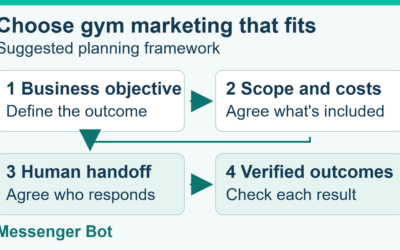
Decision framework (clear criteria)
- Validation stage (choose free): If your goal is to validate messaging UX or demand, start with the best free chatbot for facebook messenger options and a 2–4 week pilot. Measure conversation conversion rate and qualified leads per thousand impressions.
- Growth stage (consider paid SaaS): Move to a paid plan when message volume or required features (CRM sync, broadcasts, analytics) exceed free limits. Evaluate mid-tier builders for omnichannel capabilities and commerce integrations.
- Scale/enterprise stage (custom or enterprise plans): Opt for advanced SaaS or custom development when you need data residency, compliance, heavy NLU, or deep backend integrations. Budget for App Review, monitoring, and support SLAs.
- Hybrid approach: Use a no-code front-end on Messenger for UX and a controlled backend (custom NLU or self-hosted model) for sensitive processing—this balances speed-to-market with data control.
Launch roadmap I execute
- Week 0–2: Prototype — Build a minimal flow (welcome → qualify → CTA) on a free builder and measure baseline conversion. Use the quick setup tutorial to reduce time-to-first-test (set up your first AI chat bot in less than 10 minutes).
- Week 2–6: Validate — Run paid ads or organic campaigns to drive traffic; instrument analytics and A/B test messaging. Monitor message volume and policy compliance.
- Month 2–3: Scale — Move to a paid SaaS tier if conversion metrics justify cost. Integrate CRM, payments, and analytics. Use the messenger bot creator guide for monetization patterns (Messenger bot creator (build & monetize)).
- Month 3+: Optimize & govern — Implement SLAs, support routing, and compliance audits. Archive and document flows; create a rollback plan for policy or deliverability issues. Maintain a community-sourced watchlist (Best facebook messenger chatbot reddit) for live issues reported by practitioners.
Final action: run a scored vendor selection using the checklist above, pilot on a free plan to collect real metrics, then choose paid or custom based on measured ROI and compliance needs. I use this exact framework to avoid overspending early and to ensure the chosen platform truly meets the functional and legal requirements for a long-term Messenger strategy.
 English
  Tagalog
  简体中文
简体中文  العربية
  हिन्दी
  Português do Brasil
  Español de México
  Français
  বাংলা
বাংলা  香港中文
香港中文  繁體中文
繁體中文  Nederlands
  Deutsch
  Bahasa Indonesia
  日本語
日本語  한국어
한국어  Polski
  Русский
  Español
  Tiếng Việt