
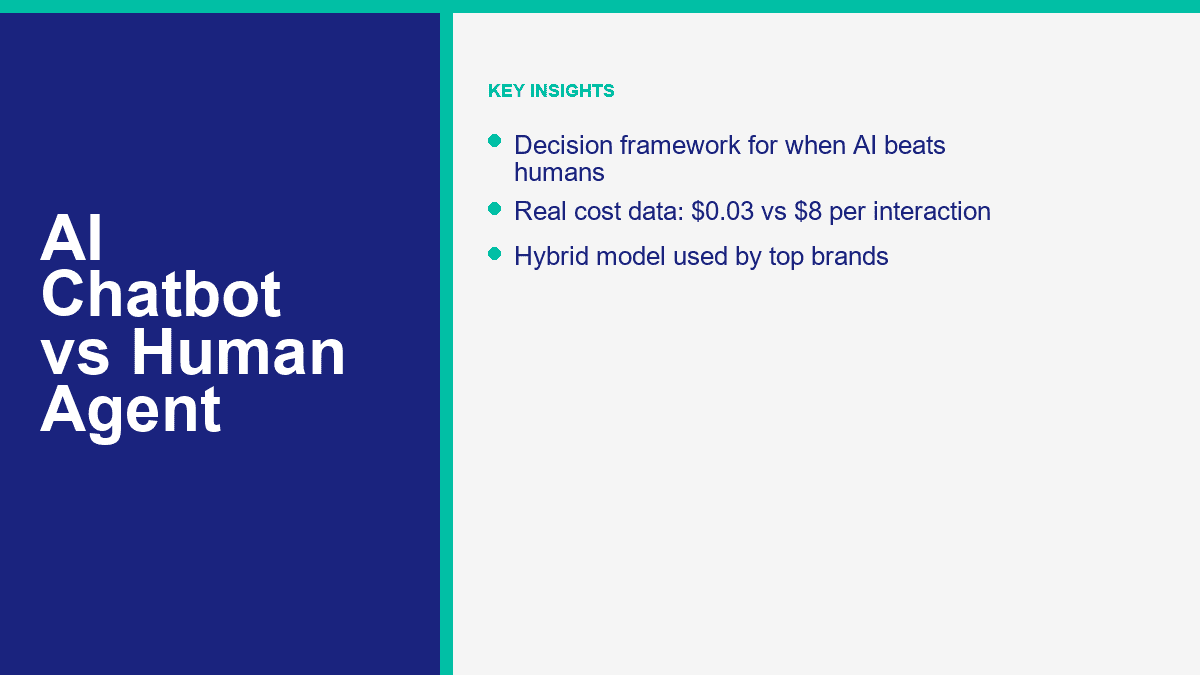
La mayoría de los líderes de soporte todavía están siendo empujados al debate equivocado. La verdadera pregunta en 2026 no es si la IA es mejor que los humanos. Es cuáles conversaciones merecen tiempo humano, cuáles deben ser automatizadas de inmediato y dónde tiene que ocurrir la transferencia antes de que el cliente se moleste.
Esa distinción importa porque la IA cambió la línea base del servicio. Los clientes ahora esperan una respuesta instantánea porque saben que existe la automatización. Aún esperan juicio, tranquilidad y responsabilidad cuando el problema es complicado, costoso o emocional. Si envías todo a humanos, gastas de más. Si envías todo a IA, ahorras dinero hasta que la lealtad disminuye.
Verifiqué las páginas de precios públicos y los informes de referencia el 10 de abril de 2026 para los números en este artículo. Donde una cifra proviene de un proveedor como HubSpot, Intercom o Zendesk, trátala como un punto de referencia para la planificación, no como una garantía. Donde los números provienen de referencias más amplias como BLS o LiveChat, son mejores para la modelación básica. Si aún necesitas la parte de construcción de este proyecto, comienza con este configuración del chatbot de servicio al cliente guía después de que termines aquí. Esta pieza trata sobre la decisión operativa, no sobre el tutorial de clics.
Mi regla es simple. La IA debe encargarse de la velocidad, la consistencia y la repetición. Los humanos deben encargarse del juicio, el manejo de excepciones y la reparación de la confianza. Todo lo demás en este artículo es solo la hoja de cálculo y la lógica de enrutamiento detrás de esa idea.
Por qué el soporte humano cuesta más que la línea salarial en 2026
El error de presupuesto más fácil en el soporte es tratar el salario como el costo total. No lo es. Una interacción humana también conlleva costos de nómina, costos de herramientas, brechas de programación, trabajo de cierre, gestión de colas y el hecho básico de que el soporte en vivo crea una promesa de servicio que debes cumplir.
La Oficina de Estadísticas Laborales de EE. UU. actualmente lista el salario medio para representantes de servicio al cliente en $20.59 por hora. Para los cálculos de planificación, eso sigue siendo demasiado bajo porque el negocio no paga solo el salario. Agrega un conservador 30% para impuestos, software, supervisión y costos operativos, y el costo horario total se convierte en aproximadamente $26.77. Ese es un punto de referencia razonable en EE. UU. y una fórmula útil para los equipos del Reino Unido una vez que intercambies tu propio salario local cargado. Si tu equipo es más senior, multilingüe, regulado o trabaja las 24 horas, tu número real será más alto.
El benchmark actual de servicio al cliente de LiveChat ayuda a traducir ese número horario en costo de interacción. El informe muestra un promedio de 84.1 chats por día por agente, un promedio de 8 minutos y 25 segundos por chat, tiempo promedio de espera en la cola de 4 minutos y 18 segundos, y una tasa de abandono de la cola de 27.4%. Son útiles porque muestran dos formas diferentes de calcular el costo humano, y ambos importan.
| Modelo de costo de soporte humano | Cómo funciona la matemática | Costo estimado por chat | Lo que captura |
|---|---|---|---|
| Piso basado en volumen | $26.77 costo cargado por hora x turno de 8 horas / 84.1 chats | $2.55 de trabajo, aproximadamente $2.58 con un asiento de equipo $49 asignado | Un agente ocupado manejando muchos chats con concurrencia normal |
| Modelo más estricto basado en la duración | 8 minutos 25 segundos x costo horario cargado, más 20% de tiempo de cierre | Aproximadamente $4.54 con asignación de software | Más realista para chats más difíciles, trabajo posterior al chat y menor concurrencia |
| Caso humano complejo | Problema de 15 minutos x costo horario cargado, más 20% de tiempo de cierre | Aproximadamente $8.06 antes de cualquier recontacto o revisión del gerente | Disputas de facturación, problemas de cuenta, escalaciones o resolución de problemas personalizada |
Esa es la verdadera historia de costos. Incluso una conversación sencilla por chat en vivo generalmente se sitúa en algún lugar entre el medio-$2s y medio-$4s antes de que el caso se vuelva difícil. Una vez que te enfrentas a una excepción de reembolso, un cliente enojado o una anulación de política, el costo humano aumenta rápidamente. El problema no es que los humanos sean caros de manera abstracta. El problema es que demasiados equipos están pagando tarifas humanas por trabajos que no necesitan juicio humano.
También hay una segunda factura oculta detrás de la línea de salario: cobertura. En el momento en que ofreces soporte en vivo, los clientes esperan que alguien esté allí. Si tu sitio, bandeja de entrada de Messenger o chat de la aplicación promete ayuda pero deja a las personas esperando, la cola se convierte en parte de la experiencia del producto. Por eso el costo de soporte humano no es solo un costo laboral. Es un costo de gestión de expectativas.
Dónde los Chatbots de IA Superan a los Agentes Humanos Justamente
No creo que los bots superen a los humanos en todas partes. Absolutamente superan a los humanos en algunas categorías, y pretender lo contrario solo empeora la planificación.
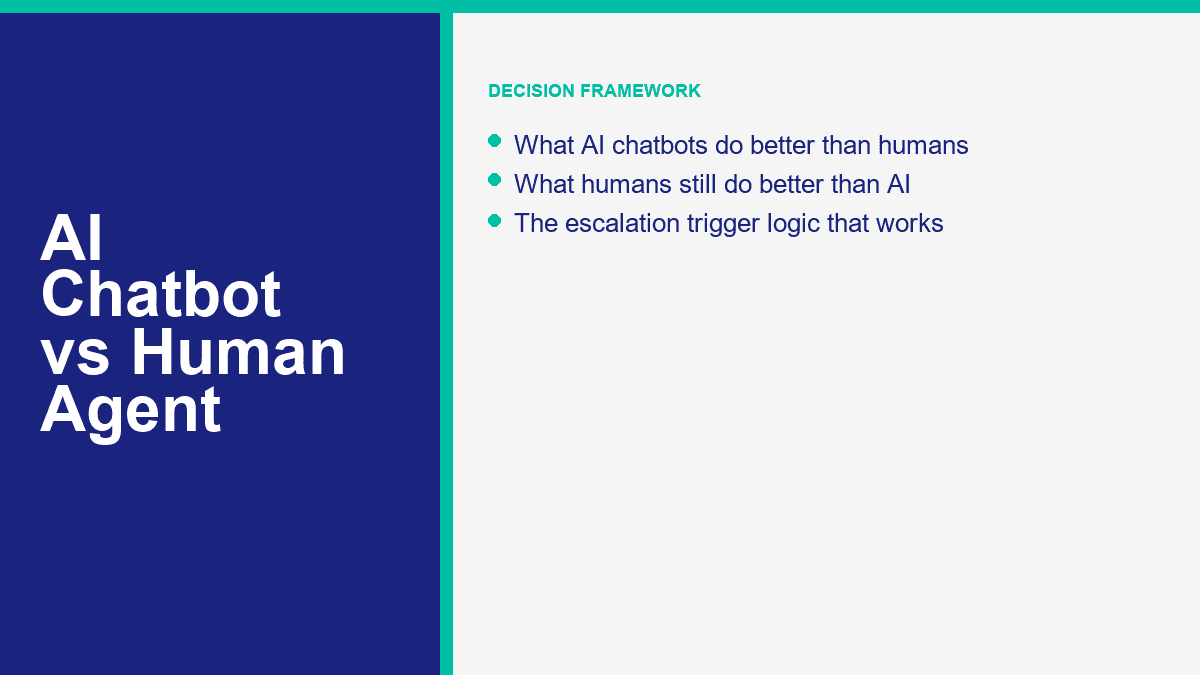
La IA Gana en Respuesta Instantánea y Cobertura 24/7
Un bot responde a las 2 p.m., 2 a.m., fines de semana, días festivos y durante los descansos para el almuerzo. Un agente humano responde cuando hay alguien disponible, disponible y no está manejando ya dos otros hilos. El informe de Tendencias CX 2026 de Zendesk dice El 74% de los consumidores ahora espera servicio 24/7 porque existe la IA. Ese número cambia todo el problema del diseño del servicio. Los clientes ya no te comparan solo con otras empresas de tu categoría. Te comparan con el hecho de que las máquinas pueden responder de inmediato.
La IA gana en repetición, consistencia y recuerdo de políticas
Las horas, ventanas de envío, enlaces de reserva, ubicaciones de tiendas, políticas de devolución, fechas de facturación, instrucciones para restablecer contraseñas y preguntas estándar de elegibilidad son exactamente el tipo de trabajo que los bots deberían manejar. Un bot entrenado no se cansa, no olvida la política ni improvisa una respuesta arriesgada porque la cola es larga. Si tu base de conocimientos está limpia, el bot generalmente será más consistente que un agente humano estresado en la misma pregunta.
La IA gana en manejo de picos
Los humanos son lineales. Los picos de volumen los rompen. Los bots son mucho mejores absorbiendo aumentos repentinos de una promoción, interrupción, vacaciones o campaña porque el costo marginal de una conversación rutinaria más es mínimo en comparación con la contratación de otro turno. Eso importa más de lo que la mayoría de los líderes admiten porque la demanda de soporte no llega de manera uniforme. Llega en ráfagas.
La IA gana en costo por resolución rutinaria
Los modelos de precios públicos actuales hacen que la brecha sea bastante visible. MessengerBot Pro cuesta $49.99 por 30 días con los precios públicos actuales. En 1,200 conversaciones manejadas por bot al mes, el costo del software solo equivale a aproximadamente $0.04 por conversación. Agrega cuatro horas al mes para revisión y ajuste al mismo costo humano cargado, y el costo efectivo aún se sitúa alrededor de $0.20 por conversación resuelta por IA en una configuración de tarifa fija para PYMEs.
La IA basada en resultados es más cara, pero aún suele ser más barata que un humano en trabajos repetitivos. HubSpot anunció el 2 de abril de 2026 que el Agente de Clientes se traslada a $0.50 por conversación resuelta en 14 de abril de 2026. Intercom fija el precio de Fin en $0.99 por resultado exitoso. Esos no son números microscópicos, pero aún se comparan bien con el soporte humano una vez que tu costo humano por interacción está en el $2.58 a $4.54 rango.
La IA gana solo cuando el material de origen es bueno
Esta es la verdad honesta. La IA no es mágica. Gana cuando la pregunta es común, la respuesta existe en contenido aprobado, el tono es predecible y el negocio puede definir una regla de escalación clara. Si esas condiciones no son ciertas, el bot deja de parecer inteligente muy rápidamente.
| Tipo de consulta | Por qué la IA suele ganar | Principal advertencia |
|---|---|---|
| Preguntas sobre el estado del pedido y la entrega | Rápido, repetitivo, basado en reglas, a menudo fuera de horario | Necesita datos precisos del backend, no suposiciones |
| Preguntas sobre reservas, citas y programación | Flujos estructurados reducen el ir y venir | Escalar excepciones y reprogramaciones rápidamente |
| Conceptos básicos de precios y planes | Respuestas instantáneas mantienen la intención de compra activa | No dejes que el bot invente descuentos o términos personalizados |
| Recuperación de preguntas frecuentes y políticas | La consistencia suele ser mejor que la memoria humana | Contenido de origen deficiente crea respuestas deficientes |
| Enrutamiento de intenciones y captura de datos | AI can collect order numbers, emails, screenshots, or issue type before handoff | Do not ask customers to repeat the same information later |
One more thing worth saying clearly: serious support automation is not a sin necesidad de registrarse category. That language belongs to consumer AI demos, not production customer service. Real support bots need saved context, permissions, routing rules, and reporting. The products that offer real business value also require real setup.
Where Human Agents Still Outperform AI in Ways That Matter
Humans still earn their keep where the answer is not just factual, but situational.
Humans Handle Ambiguity Better
A person can spot that the customer is really asking two questions at once, or that the visible issue is not the real issue. Bots are improving, but they still struggle when context is incomplete, contradictory, or buried inside a long explanation. Humans are better at sorting that out without sounding mechanical.
Humans Repair Trust Better
When an order is late, a payment failed twice, a subscription renewed unexpectedly, or a customer is angry in a very human way, the goal is no longer only resolution. The goal is recovery. That is where empathy, accountability, and discretion matter. Customers do not want a bot telling them it understands their frustration when the business just caused the frustration.
Humans Own Exceptions and Judgment Calls
Refund exceptions, goodwill credits, policy overrides, account-security decisions, fraud concerns, medical or legal edge cases, and high-ticket consultative sales still belong with people. AI can tee up those cases, collect the facts, and route them correctly. It should not be the final authority unless the business is genuinely comfortable with the downside risk.
Humans Close Revenue-Critical Conversations Better
If the issue is really a pre-sale objection, product fit conversation, or retention save attempt, a strong human agent still has an edge. The difference is not just empathy. It is adaptive judgment. A person can hear hesitation, reframe value, adjust tone, or decide when silence is better than another message. That is not where I would chase maximum automation.
- Send to a human first when the conversation is high-risk, high-value, emotionally loaded, or policy-sensitive.
- Send to AI first when the issue is common, low-risk, reversible, and answerable from approved content.
- Use AI plus human handoff when the customer needs speed first and judgment second.
That middle category is where most teams live now. The mistake is forcing yourself to choose one side for every ticket.
A Practical Routing Framework for Sending the Right Queries to AI or Humans
The cleanest decision framework I know uses four filters: frequency, risk, emotion, y revenue impact. If a query is frequent, low-risk, low-emotion, and low-revenue-risk, AI should own it. As soon as risk, emotion, or revenue stakes rise, the case should move toward a human.
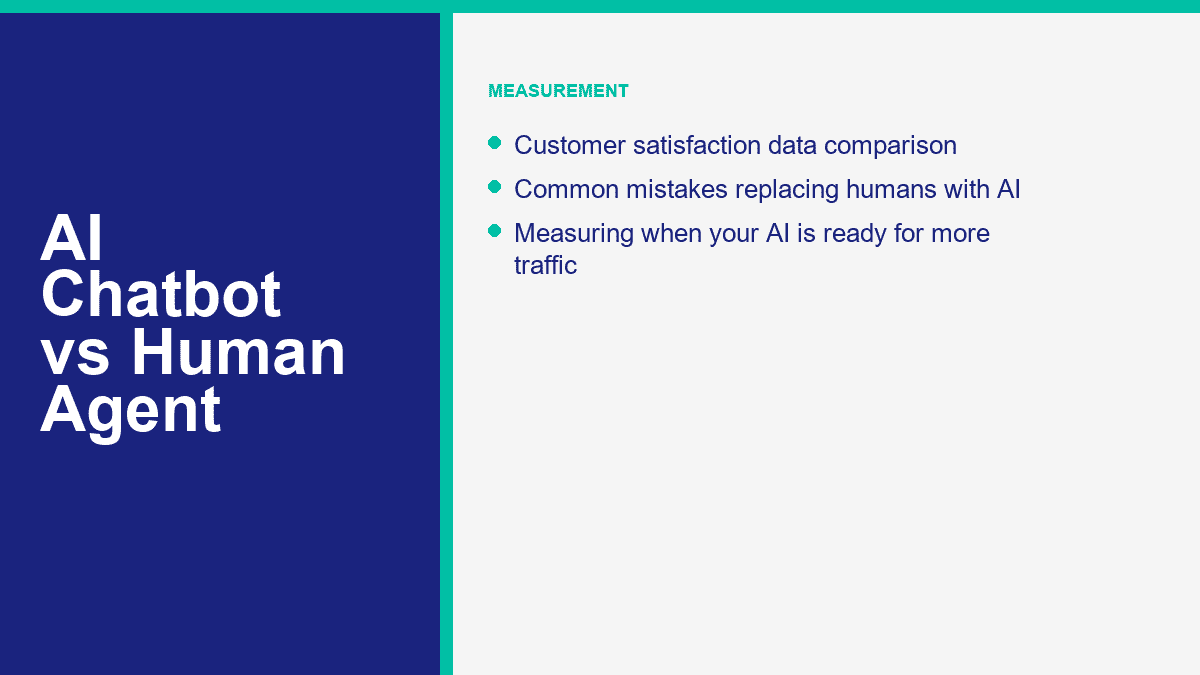
| Conversation type | Best owner | ¿Por qué? | Escalate when |
|---|---|---|---|
| Store hours, service areas, policy lookups, shipping basics | modelos de IA | High frequency and low risk | The customer asks for an exception or the answer is missing |
| Order status, appointment confirmation, subscription date checks | modelos de IA | Fast retrieval matters more than human tone | Backend data is unclear, delayed, or disputed |
| Quote requests, lead qualification, product-fit questions | AI first, human second | AI can gather context and keep response time near zero | Budget, urgency, or product complexity rises |
| Refund requests, billing disputes, cancellations, complaints | Human | Emotion and discretion matter more than speed | Immediately if sentiment is negative or repeat contact is detected |
| Security, fraud, regulated advice, medical or legal edge cases | Human | Risk is too high for generic automation | Immediately, with AI limited to intake only |
| Outage updates or incident messaging | AI first, human on edge cases | AI can broadcast the known status quickly | The customer needs compensation, exception handling, or case review |
If you want the short version, here it is: AI should own the front door, not the entire building. Let it classify intent, answer what is known, and collect what the human needs next. Then let the person take over when the conversation becomes expensive, risky, or emotionally charged.
This is also where a lot of teams confuse two separate questions. One question is who should answer first. The other is which channel should the customer use. Those are not the same. If you are still sorting out the channel side, this chatbot vs live chat comparison goes deeper on website chat, labor economics, and channel fit.
Per-Interaction Cost Math for Human-Only, AI-First, and Hybrid Support
Support leaders do not need more vague ROI language. They need per-interaction math they can defend in a budget meeting. Here is a simple model using public benchmark data and current public pricing.
Escenario: a team handles 1,200 inbound support conversations per month. We will use the lower human live-chat benchmark of $2.58 per interaction as the busy-queue floor, and the stricter benchmark of $4.54 per interaction as the more conservative planning number. For the bot model, we will use MessengerBot Pro at $49.99 per 30 days and add 4 hours per month of human review and tuning at the same loaded rate.
Loaded human hourly cost = median wage x overhead multiplier
Human cost per chat = loaded hourly cost x handling time or shift economics
AI cost per resolved conversation = platform cost + review labor
Hybrid monthly cost = AI layer cost + human escalations cost
| Model | Monthly cost using $2.58 human benchmark | Monthly cost using $4.54 human benchmark | What the model assumes |
|---|---|---|---|
| Human-only support | $3,096.00 | $5,448.00 | All 1,200 conversations handled by people |
| AI layer only | $157.07 | $157.07 | $49.99 plan plus about 4 review hours at $26.77 per hour |
| Hybrid at 65% AI resolution | $1,240.67 | $2,063.87 | 780 conversations resolved by AI, 420 escalated to humans |
That hybrid model is the important one. At a 65% AI resolution rate, monthly cost falls by about 59.9% against the lower human benchmark and about 62.1% against the stricter benchmark. That is the kind of saving that gets attention because it does not require replacing the whole team. It only requires sending the wrong work away from the team.
The bot-side economics get even clearer when you isolate the AI-resolved conversations. In this model, the bot layer costs about $157.07 per month. If it fully resolves 780 conversations, that is about $0.20 por conversación resuelta por IA. Put that next to $2.58, $4.54, o $8.06 for the human models and the budget argument becomes straightforward.
Now layer in enterprise-style outcome pricing. If you ran those same 780 AI resolutions through HubSpot at $0.50 each, the variable AI bill would be $390. Through Intercom Fin at $0.99 por resultado exitoso, it would be $772.20. Those numbers are higher than a fixed-fee SMB stack, but they still compare well against a human agent handling the same routine traffic.
The caution is just as important as the savings. Do not count a partial handoff as a full automation win. If AI collects the order number but the human still does all the work, you saved time, not a full interaction. That is still worth money, but it is not the same line item.
What Customer Satisfaction Data Really Says About Bots and Humans
This is the part where lazy articles pick a side. Real data is more nuanced.
LiveChat’s benchmark page shows average human-chat satisfaction at 64.2% and chatbot satisfaction at 64.7%. That does no prove bots are universally better. It does prove something useful: on the right kind of question, customers do not automatically resent automation. Speed and clarity can matter more than whether a human typed the answer.
Now look at consumer preference research. Pega’s 2026 consumer study found that 66% of respondents prefer human-led support, 77% say they often or always achieve better outcomes with humans, and only 2% want to interact exclusively with generative AI chatbots. Gladly’s 2026 research makes the gap even sharper. It reported that 59% prefer AI as a first stop for support, but 57% expect a clear path to a human within five AI exchanges and 54% will walk away after 10 minutes of getting nowhere.
Put those findings next to Zendesk’s number that 86% of consumers say responsiveness and accurate resolution strongly influence whether they buy, and the pattern is hard to miss. Customers want AI for speed. They still want humans for confidence. What they hate is the trapped middle state where the bot is slow, vague, repetitive, or blocks escalation.
| Data point | What it actually means |
|---|---|
| LiveChat: chatbot CSAT slightly above human CSAT | Routine conversations can score well when the bot is fast and accurate |
| Pega: 66% prefer human-led support | People still want a person involved when the stakes rise |
| Gladly: 59% prefer AI as a first stop | Customers accept automation when it reduces waiting |
| Gladly: 57% want a human path within five exchanges | Escalation speed matters almost as much as first-response speed |
| Zendesk: 74% expect 24/7 service because AI exists | AI raised the baseline, even for teams that still rely on humans |
If you want the honest summary, here it is. Customers do not prefer chatbots or humans in the abstract. They prefer the right mode for the job. They like bots for simple, time-sensitive, repetitive work. They like humans for complex, emotional, or expensive conversations. The best service design accepts that instead of trying to prove one side morally superior.
Why the Strongest Support Teams Run a Hybrid Model Instead of Going All-In on AI
The hybrid model is not a compromise. It is the mature operating model.
Look at the public resolution claims from the companies shipping serious support AI. HubSpot says Customer Agent resolves about 65% of conversations across more than 8,000 activated customers. Intercom says Fin resolves an average of 67% of customer queries across more than 7,000 paying customers. Zendesk markets 80%+ automation potential for AI agents in the right conditions. Even in the most optimistic framing, none of those numbers say humans disappear. They say humans stop doing the wrong work.
The best hybrid support systems usually follow the same pattern:
- AI handles the first 30 seconds. It greets, identifies intent, and gives the customer a clear starting path instead of a blank text box.
- AI resolves the known lane. It answers from approved content, retrieves simple account details, and handles repetitive tasks fast.
- AI captures context before handoff. Order number, email, plan, device, screenshot, timeline, and issue type are collected once.
- Humans take the expensive lane. Complaints, exceptions, save attempts, high-value leads, and risky cases move to an agent.
- Humans inherit the full thread. The customer does not restart the story, which protects both CSAT and handle time.
That is the model top brands and mature support teams keep converging on because it aligns with both the cost math and the customer data. AI owns speed. Humans own outcomes that need judgment. The handoff is the product.
Another reason hybrid wins is that it protects you from hype-driven overreach. AI capability is rising fast, but support quality still depends on governance, content, routing, and escalation discipline. A hybrid model lets you expand safely. An AI-only model encourages you to chase deflection before you have earned it.
The Mistakes That Make Replacing Humans With AI Backfire
Most failed AI support rollouts are not caused by bad models. They are caused by bad operating decisions.
Replacing the Human Escape Hatch
If the customer cannot reach a person when the issue goes off-script, the bot starts feeling like a barricade. That is exactly what the Gladly data warns about. People will tolerate AI. They will not tolerate being trapped by it.
Measuring Deflection Instead of Resolution
A deflected conversation is not automatically a solved conversation. If the customer comes back two hours later, opens email after failing in chat, or calls because the bot stalled them out, your savings were imaginary. Track repeat contact and reopen rate, not just how many conversations the bot touched.
Training the Bot on Weak Content
If your FAQ is vague, outdated, or contradictory, the AI layer will reflect that. Most bad bot experiences are knowledge problems wearing an AI costume. Before you buy more automation, clean up the answers you are automating.
Believing the Vendor Best Case Is Your Day-One Reality
When a vendor says 65%, 67%, or 80% automation potential, that is not your forecast until your own data proves it. Treat those figures as planning ceilings, not guaranteed launch numbers. A realistic first target for most teams is not perfection. It is getting the obvious repetitive traffic off the human queue cleanly.
Forgetting That Cost Cutting Can Damage Perception
Klarna is the cautionary example everyone in this space noticed. On February 27, 2024, the company said its AI assistant was handling about two-thirds of customer service chats and doing the work of roughly 700 full-time agents. En May 8, 2025, Bloomberg reported CEO Sebastian Siemiatkowski was shifting back toward giving customers the option to speak with a real person, saying the company had gone too far on cost focus. The lesson is not that AI failed. The lesson is that efficiency and customer preference are not the same KPI.
My pre-launch checklist is boring on purpose, and that is why it works:
- Give customers an obvious human option before they need to beg for it.
- Use real historical questions, not imagined ones, to train the first version.
- Write hard escalation rules for refunds, complaints, repeat failures, and risk-sensitive topics.
- Test the handoff on mobile and after hours, not just during a perfect desktop demo.
- Review failed bot conversations every week for the first month.
- Expand automation one intent family at a time instead of trying to automate the whole desk at once.
The Metrics That Tell You When Your AI Can Safely Take More Traffic
The wrong expansion signal is conversation volume. The right signal is trustworthy resolution at acceptable satisfaction.
If your AI is answering more messages but causing more repeat contact, more transfer complaints, or more silent abandonment, it is not ready for more traffic. It is just busy. What you want is evidence that the bot can own a given intent category with stable quality.
| Métrica | What good looks like | Por qué es importante |
|---|---|---|
| Resolution rate by intent | Stable and rising on a specific query family | Shows where AI is genuinely solving, not just replying |
| Repeat-contact rate within 7 days | Flat or falling after automation expands | Catches fake deflection |
| Bot CSAT vs human baseline | Within a few points on routine intents | Protects customer experience while scaling AI share |
| Escalation speed | Fast handoff when sentiment or risk turns negative | Prevents AI from becoming a dead end |
| Human assist rate | Low on routine issues, intentionally high on sensitive ones | Keeps routing honest |
| No-answer or fallback rate | Falling over time as content improves | Shows where the knowledge base is still weak |
My practical rule for expansion is straightforward:
- Pick one intent family, such as order status or appointment changes.
- Let AI take first response and full resolution on that one family only.
- Review every failed conversation weekly until fallback patterns are clear.
- Expand only after repeat contact stays controlled and CSAT holds close to the human baseline.
- Move the next repetitive intent over, not the hardest one.
That is slower than the grand AI replacement story, but it is how real support operations avoid self-inflicted churn.
How to Start the Hybrid Model Without Building a Giant Support Program
If you want the fastest practical win, do not start by trying to automate every edge case. Start with the top 10 repetitive questions, one clean human handoff path, and one dashboard that shows resolution rate, repeat contact, and transfer reasons. That is enough to learn whether AI should take 20%, 40%, or 65% of your queue. If Messenger or web chat is part of that rollout, Ver precios de MessengerBot and start with the smallest tier that gives you real routing, forms, and escalation control. Good support AI is not the bot with the biggest claim. It is the bot that knows when to stop and hand the conversation to the right person.
Preguntas frecuentes
¿Son los chatbots de IA mejores que los agentes humanos?
They are better for different jobs. AI chatbots are better at instant replies, repetitive FAQs, after-hours coverage, and low-cost triage. Human agents are still better at exceptions, complaints, emotional conversations, policy judgment, and high-value sales or retention work. The strongest setup is usually hybrid, not one or the other.
¿Qué porcentaje del servicio al cliente puede manejar realmente la IA?
For most teams, a realistic mature range is around 40% to 70% of routine support traffic, depending on content quality, channel mix, and how repetitive the queue really is. Public vendor benchmarks in 2026 cluster around the mid-60% range for strong deployments. That is a useful planning benchmark, not a launch guarantee.
¿Prefieren los clientes los chatbots de IA o a los humanos?
Customers usually prefer AI for speed on simple tasks and humans for complex or sensitive issues. The best reading of current data is that people accept bots as a first stop, but still want a fast, obvious path to a human when the issue becomes difficult or emotional.
¿Cuánto puedo ahorrar reemplazando humanos con chatbots de IA?
It depends on your true human cost per interaction and how much of the queue is genuinely repetitive. In the model used in this article, moving to a hybrid system with 65% AI resolution reduced monthly support cost by about 60% while keeping humans on the remaining 35% of traffic. The exact number changes by wage level, software stack, and handle time, but the labor savings can be substantial very quickly.
¿Cuándo debería un chatbot escalar a un humano?
A chatbot should escalate when the customer is upset, the answer is unclear, the issue involves a refund or billing dispute, the case is high-risk or regulated, the customer explicitly asks for a person, or the bot has already failed once. Escalation should happen early enough that the customer sees AI as useful triage, not a barrier.



 Español de México
  English
  Tagalog
  简体中文
简体中文  العربية
  हिन्दी
  Português do Brasil
  Français
  বাংলা
বাংলা  香港中文
香港中文  繁體中文
繁體中文  Nederlands
  Deutsch
  Bahasa Indonesia
  日本語
日本語  한국어
한국어  Polski
  Русский
  Español
  Tiếng Việt