
El servicio al cliente se volvió más caro nuevamente en 2026, pero la mayoría de las pequeñas empresas todavía tratan el soporte como un problema de personal en lugar de un problema de sistemas. Por eso, muchos equipos terminan pagando tarifas humanas por preguntas que un bot podría responder en segundos.
Si tu bandeja de entrada está llena de verificaciones de estado de pedidos, solicitudes de reservas, preguntas sobre políticas de reembolso, horarios de tienda, ventanas de entrega, preguntas frecuentes sobre precios y mensajes de “¿hay alguien ahí?” después de las 6 p.m., no tienes un misterio de servicio al cliente. Tienes un problema de repetición. Y la repetición es exactamente donde los bots de soporte de IA ganan su lugar.
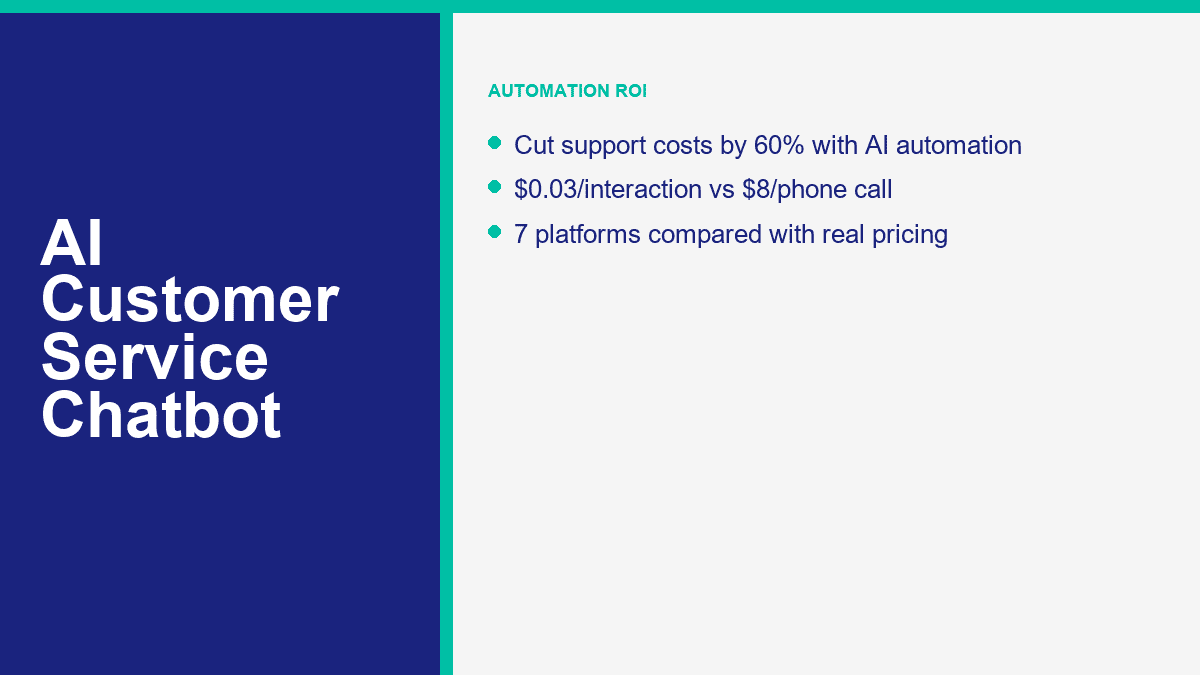
La brecha de costos es difícil de ignorar una vez que haces los números. Una interacción telefónica en vivo suele costar entre $8 y $12 cuando incluyes mano de obra y gastos generales. El soporte por correo electrónico generalmente se sitúa más cerca de $3 a $5 por mensaje manejado. Una interacción con un bot que responde a una pregunta conocida de tu contenido puede caer en el rango de $0.01 a $0.05. Eso no significa que cada conversación deba ser automatizada. Significa que la primera capa absolutamente debería serlo.
Los detalles de precios y planes en esta guía fueron verificados contra páginas de productos públicos el 9 de abril de 2026. Si aún estás decidiendo entre herramientas de IA más amplias y plataformas centradas en el soporte, lee nuestra comparación completa de chatbots después de esto. Este artículo se centra en un trabajo: usar chatbots de IA para reducir los costos de soporte sin hacer que tus clientes se sientan atrapados en un mal guion.
Por qué el servicio al cliente sin IA está silenciosamente drenando tiempo y dinero de las pequeñas empresas
El error más fácil que cometen los dueños de negocios es mirar solo la nómina. Una cola de soporte cuesta más que un salario. También cuesta el cambio de contexto, tiempos de respuesta inicial más lentos, oportunidades perdidas fuera del horario laboral, explicaciones repetidas y la carga que afecta a tu equipo cuando pasan la mitad del día copiando la misma respuesta en cinco canales diferentes.
Para un pequeño negocio, es normal gastar de 15 a 25 horas a la semana solo en soporte repetitivo. No porque las preguntas sean difíciles, sino porque siguen llegando a través de diferentes lugares: chat del sitio web, Facebook Messenger, correo electrónico, Instagram, formularios de contacto y teléfono. Un cliente pregunta dónde está el pedido. Otro quiere saber tu ventana de reembolso. Otro necesita el enlace de reserva. Otro pregunta si atiendes su código postal. Nada de eso requiere un juicio humano de alto nivel, pero aún consume tiempo humano.
Por eso la matemática de los canales importa más que el bombo de las herramientas. Si estás respondiendo a 500 solicitudes de soporte al mes, incluso una tasa de automatización modesta cambia rápidamente la economía.
| Canal de soporte | Costo típico por interacción | Costo mensual a 500 interacciones | Lo que generalmente impulsa el costo |
|---|---|---|---|
| Soporte telefónico | $8 a $12 | $4,000 a $6,000 | Tiempo de agente, manejo de llamadas, tiempo en espera, gastos generales y verificación repetida |
| Soporte por correo electrónico | $3 a $5 | $1,500 a $2,500 | Respuestas de ida y vuelta, tiempo de búsqueda y enrutamiento manual |
| Soporte de chatbot de IA | $0.01 a $0.05 | $5 a $25 | Costo de inferencia, uso de la plataforma y recuperación de la base de conocimientos |
Esa tabla está planificando matemáticas, no es una promesa de que un bot pueda reemplazar todo tu escritorio de soporte. Pero muestra por qué los equipos pequeños pueden justificar la IA tan rápidamente. Si un bot maneja completamente incluso 200 de esas 500 conversaciones mensuales, los ahorros ya son significativos. Si maneja los primeros 70% de la conversación antes de que un humano intervenga, aún acortas el tiempo de manejo y reduces costos.
There is also the revenue leak most owners miss. Support is not just a cost center for SMBs. A lot of “support” conversations are really buying-intent conversations in disguise. The customer asking, “Do you deliver to Bristol?” or “Can I book for Saturday?” or “Which plan includes setup?” is very close to a decision. If nobody replies until tomorrow, you did not just miss a ticket. You may have lost a sale.
That is why support automation works best when it handles service and sales-adjacent questions together. The same system that answers refund rules can also route quote requests, surface booking links, and pass a warm lead to a human with the context already collected.
How AI Customer Service Chatbots Actually Answer People Instead of Just Guessing
A customer-service chatbot is not useful because it is “AI.” It is useful because it does three jobs reliably: it figures out what the customer wants, it pulls the right answer from approved business content, and it knows when to stop and hand the conversation to a person.
The Three Parts That Matter Most Are Intent, Knowledge, and Escalation
Intent recognition is the first layer. The bot has to figure out whether the message is about shipping, billing, order status, booking, pricing, cancellation, technical support, or something else. Modern systems do this with natural language understanding instead of rigid keyword matching, which is why customers can type “where is my package?” and still land in the same flow as “track my order.”
Recuperación de conocimiento es la segunda capa. Aquí es donde muchas empresas ganan o se avergüenzan. El bot necesita una fuente de verdad aprobada: páginas de preguntas frecuentes, documentos de ayuda, páginas de políticas, información del menú, reglas de citas, áreas de servicio, política de devoluciones, artículos de la base de conocimiento o notas de soporte interno. Si el bot no tiene material de origen limpio, responderá de manera vaga, alucinará o recurrirá a contenido genérico. La mayoría de los malos bots de soporte no están fallando porque el modelo sea débil. Están fallando porque la empresa les proporcionó contenido débil.
Reglas de escalación son la tercera capa, y son innegociables. Un buen bot de soporte debe saber cuándo dejar de pretender. Si el cliente suena enojado, hace una pregunta novedosa, necesita una excepción, solicita un reembolso, utiliza lenguaje regulado o ya ha fallado en obtener una respuesta útil una vez, el bot debe dirigirlo a un humano sin fricciones.
Esa dirección puede ser simple o avanzada. A nivel básico, significa “hablar con soporte” o “dejar su número de teléfono y responderemos en horario laboral.” A nivel avanzado, significa etiquetas, enrutamiento basado en intenciones, sincronización de CRM, búsqueda de pedidos, creación de tickets y pasar la transcripción completa al agente adecuado para que el cliente no tenga que repetir la historia.
Los bots preentrenados te conectan rápidamente, pero los bots personalizados ahorran más dinero
Los bots de atención al cliente preentrenados son el punto de partida más rápido. Ya entienden el lenguaje de soporte común, por lo que puedes conectar un centro de ayuda o subir contenido de preguntas frecuentes y obtener resultados útiles rápidamente. Por eso herramientas como Tidio, Intercom, Zendesk, Freshchat y HubSpot pueden estar en funcionamiento sin una construcción de seis semanas.
Los bots personalizados son donde se muestran los mayores ahorros. Eso no siempre significa entrenar un modelo desde cero. Para la mayoría de las pequeñas y medianas empresas, “personalizado” significa alimentar a la plataforma con tus políticas reales, tus productos reales, tus reglas de envío, tu lógica de citas, tus reglas de escalamiento y tu tono preferido. El bot sigue utilizando un modelo base preentrenado, pero las respuestas se vuelven específicas para tu negocio.
Aquí está la distinción práctica:
- Bot de soporte preentrenado: lanzamiento más rápido, menos configuración, bueno para preguntas frecuentes genéricas y triage básico.
- Bot de soporte personalizado: respuestas más precisas, mejor desvío, enrutamiento más fuerte, menor trabajo humano.
Una cosa más que vale la pena decir claramente: los chatbots de atención al cliente serios no son herramientas de “sin registro requerido”. Esa frase pertenece a las aplicaciones de chat de IA para consumidores, no a los sistemas de soporte de producción. Los bots de negocios necesitan cuentas, permisos de canal, contexto de cliente guardado, informes y enrutamiento humano. Si una plataforma promete automatización de soporte sin ninguna configuración, te está mostrando una demostración, no una pila de soporte real.
If Facebook Messenger is one of your main support channels, this matters even more because the setup is channel-specific. For the Messenger-first workflow, branching, forms, tags, and handoff logic, read our complete Messenger automation guide once you finish this article.
The 7 AI Customer Service Chatbots Worth Comparing Before You Buy Anything
Small businesses usually do not need fifteen vendor tabs open. They need a short list that reflects how support actually works: website chat, email, social messaging, help-center content, after-hours coverage, and an easy handoff to a human. The table below focuses on the seven platforms that keep coming up in real SMB buying decisions.
The pricing column reflects public entry pricing or the first meaningful paid tier I could confirm on April 9, 2026. The AI-quality column is my practical read based on public capabilities, setup friction, and how well each tool fits SMB support, not a vendor-issued score.
| Plataforma | Precio inicial público | AI quality | Canales | Nivel gratuito | Mejor ajuste |
|---|---|---|---|---|---|
| MessengerBot.app | Premium $19.99 por 30 días | Good for structured SMB support and Messenger-first automation | Facebook Messenger, website chat, email, SMS, Instagram on higher tiers | Prueba gratuita | Businesses that handle support and lead capture inside Facebook |
| Tidio | Starter $24.17 per month; Lyro AI from $32.50 per month | Very good for website support; vendor says Lyro can solve up to 67% of customer problems | Website chat, Messenger, Instagram, WhatsApp, email | Free plan plus 50 free Lyro conversations | SMBs that need website chat and AI support in one inbox |
| Intercom | From $29 per seat per month plus $0.99 per Fin outcome | Excellent; Intercom says Fin resolves an average of 67% of customer queries | Chat, email, phone, WhatsApp, in-app | 14-day trial | Higher-volume support teams that want clear AI outcome pricing |
| Zendesk | Suite + Copilot Professional $155 per agent per month billed annually; advanced AI agents custom | Excellent at scale; Zendesk markets 80%+ automation potential | Web, email, voice, social, messaging | Prueba gratuita | Mature support operations with ticketing discipline already in place |
| Freshchat | Free; Growth $19 per agent per month; Freddy AI Agent first 500 sessions included then $49 per 100 sessions | Good to very good for budget omnichannel support | Website, mobile app, email, Facebook, Instagram, WhatsApp, SMS | Sí | Price-sensitive teams that want omnichannel support without enterprise pricing |
| HubSpot | Free tools; Starter from $15 per seat per month; Professional from $100 per seat with Breeze customer agent | Very good if you already live in HubSpot; Breeze resolves about 65% of conversations | Website chat, email, Facebook Messenger, WhatsApp, calling beta | Yes, plus 28-day free access for Customer Agent | CRM-centered businesses that want support, sales, and marketing in one system |
| Deriva | Custom pricing | Good for revenue conversations, weaker for support-first SMBs | Website chat and sales conversations | No meaningful free tier | B2B sites where the chatbot’s main job is qualification and meeting booking |
MessengerBot.app Makes the Most Sense When Facebook Is a Real Support Channel
If most of your customer questions come through Facebook Page messages, MessengerBot is the most direct fit in this group. The pricing is easier to understand than contact-based billing, the Visual Flow Builder is practical, and the platform already covers the extras SMBs usually ask for next: forms, website chat, comment automation, tags, broadcasts, ecommerce tools, and Google Sheets or API connectivity.
The honest limitation is channel focus. If your business lives more on website chat or email than Messenger, a broader support platform may fit better. But for Messenger-first businesses, it removes a lot of setup friction.
Tidio Is the Best All-Around Pick for Website Support Plus AI
Tidio is the cleanest answer for businesses whose website is the main support front door. Lyro is a real AI layer, not just a scripted menu, and the free plan plus 50 free Lyro conversations gives you a low-risk way to test it. I like Tidio most for ecommerce brands, service businesses, and online stores that want one place for live chat, tickets, and AI answers.
The tradeoff is pricing complexity once you stack plan fees and AI usage. It is still fair, but you need to model both the support workspace and the AI layer, not just the sticker on the first plan.
Intercom Is Expensive, but It Gives You the Cleanest AI Cost Model
Intercom’s biggest strength is not that it is cheap. It is that the math is visible. Fin AI Agent costs $0.99 per successful outcome, and Intercom publishes that openly. For a support leader, that is useful because you can compare AI cost per resolved conversation against human cost per resolved conversation instead of guessing where the overages are hiding.
The catch is obvious. If you are a small business with low volume, per-outcome pricing can still work. If you are a very high-volume team, the bill gets real fast. Intercom is strongest when AI resolution quality matters enough that you are willing to pay for it.
Zendesk Is Powerful, but Many Small Businesses Buy Too Much Too Early
Zendesk is excellent if your support team already works like a support team: tickets, macros, SLAs, queues, reporting, QA, and admin controls. It is not the first tool I would recommend to a five-person business answering the same booking questions every day. It is the tool I would recommend to a scaling operation that needs governance and serious workflow depth.
Zendesk’s AI story is strong, but its packaging is enterprise-shaped. For a local clinic, SaaS startup, or small ecommerce brand, that can be more system than you need.
Freshchat Is the Budget-Friendly Omnichannel Option That Still Feels Modern
Freshchat deserves more attention from SMBs than it usually gets. The free tier is usable, the Growth plan starts lower than most enterprise-style platforms, and the Freddy AI pricing is straightforward enough to forecast. It is a good fit if you want website chat, email, and messaging channels without immediately jumping into Intercom or Zendesk spend.
Where Freshchat usually loses is not price. It is mindshare. Buyers shortlist Tidio or Intercom first, even when Freshchat fits the budget better.
HubSpot Is Best When Customer Service Is Tied Closely to Your CRM
HubSpot becomes compelling when support, sales, and marketing all need the same conversation history. Breeze Customer Agent can answer questions, qualify leads, and hand off with CRM context intact. If your support team already lives in HubSpot, it is one of the easiest AI decisions to justify because the customer data is already there.
If you are not already on HubSpot, the value case changes. Then you are not buying only a chatbot. You are buying into a broader platform decision.
Drift Is Still Strong for Pipeline, Not for Everyday Support Deflection
Drift belongs in this comparison because many B2B companies still look at “chatbot” and really mean lead qualification, meeting booking, and account-based website conversations. That is where Drift still works. If your website exists to start sales conversations, Drift stays relevant.
If your main problem is repetitive customer support, though, Drift is usually the wrong starting point. It is not built around the same service-first use case as Tidio, Intercom, Zendesk, Freshchat, or HubSpot.
How to Set Up an AI Customer Service Chatbot in About 30 Minutes With MessengerBot
The fastest successful chatbot launch is never the fanciest one. The first version that saves money usually handles the top five repetitive questions, offers one clean human handoff path, and captures the minimum context your team needs when they take over.
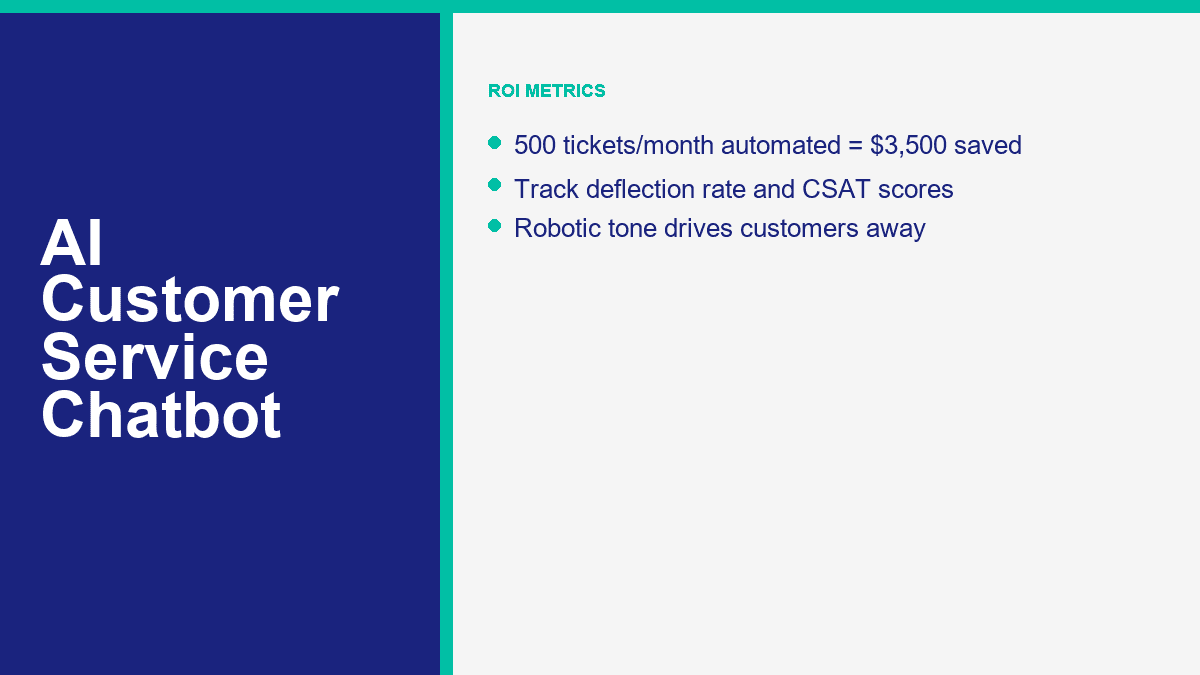
If Facebook Messenger is one of your busiest support channels, MessengerBot is one of the quickest ways to get there because the setup is already aligned to Page-based messaging rather than generic website chat. A realistic 30-minute rollout looks like this:
- Connect the right Facebook Page first. Use the business account that actually has Page permissions. Most failed first-time setups come down to the wrong login or skipped permissions.
- List the 10 questions your team answers every week. Do not brainstorm imaginary use cases. Pull the real questions from Messenger, email, and comments.
- Build a welcome menu with 3 to 5 useful options. Good examples are order help, business hours, booking, pricing, and talk to a person.
- Create one short branch per question. Each branch should end in an answer, an action, or a handoff. Avoid long walls of text.
- Add one lead or support form. Ask only for the details needed to move the case forward, such as order number, phone, email, or preferred appointment date.
- Set the human handoff rule. Route refund requests, billing problems, second-failed answers, and emotionally charged messages to a person.
- Test the full flow on a phone. Desktop previews are not enough. Messenger is a mobile-first experience.
- Launch narrow, then review live conversations after one week. The first 50 to 100 chats will show you what to fix faster than any pre-launch guesswork.
A lot of businesses overbuild the opening flow. They try to create a clever AI concierge that can handle every possible edge case. That is the wrong goal. The right goal is to stop human time from being wasted on repetitive, solvable requests. Start with the boring stuff. That is where the savings are.
For a small business, the first bot should usually cover these four buckets:
- FAQ support: hours, location, pricing ranges, shipping rules, service areas, return policy.
- Order or booking status: collect order number, booking date, or email, then route or respond.
- Calificación de leads: capture name, contact details, product interest, and timeline.
- Human routing: give customers an obvious path to a person when the issue needs judgment.
If you are deciding whether the starter tier is enough or you need more pages, widgets, or automation depth, Ver precios de MessengerBot before you build too much on the wrong plan. That is also the point where you should compare whether your business is still Messenger-first or whether you really need a broader omnichannel stack.
What AI Chatbots Handle Well, What They Still Miss, and Why Human Handoff Is Mandatory
The strongest customer-service bots in 2026 are good, not magical. They can remove a lot of repetitive work. They cannot replace judgment, empathy, exceptions, or accountability.
What AI Chatbots Are Already Good At
These are the jobs I would automate first because the success rate is usually high and the customer expectation is clear:
- Frequently asked questions: pricing ranges, opening hours, shipping rules, returns, warranty basics, service coverage, and onboarding steps.
- Order status and appointment lookup: if your systems are clean, bots can ask for the right identifier and route or return the next step fast.
- Reserva de citas: especially for clinics, salons, gyms, consultants, and home-service businesses.
- Calificación de leads: product interest, budget range, timeline, location, or service type.
- After-hours first response: even when a human will reply tomorrow, the bot can set expectations and collect context now.
Those use cases work because the business rules are stable. The bot is not being asked to improvise policy. It is being asked to recognize a known intent and apply a known answer or workflow.
Where AI Still Breaks Down Fast
This is where small businesses get into trouble when they overtrust automation:
- Complex complaints: damaged orders, repeated failures, or service breakdowns that need discretionary action.
- Emotional situations: angry customers, bereavement cases, cancellation disputes, or anything involving trust repair.
- Novel problems: if the issue has no documented answer, the bot should not guess.
- High-risk requests: refunds, chargebacks, legal claims, regulated advice, privacy requests, or account security problems.
- Multi-step exceptions: anything that requires policy override or manager approval.
That is why the human handoff is not a “nice to have.” It is the difference between automation that saves money and automation that creates churn.
A simple handoff rule set usually covers most of the risk:
- If the customer asks for a human, hand off.
- If the bot fails twice, hand off.
- If the issue mentions billing, refund, legal, safety, or account access, hand off.
- If sentiment is clearly negative or frustrated, hand off.
If you need more advanced routing, multi-step support logic, additional channels, or stronger automation controls around those handoffs, Funciones de MessengerBot Pro are the part to compare next. That is where a lot of growing businesses move from a simple FAQ bot into a real support workflow.
How to Measure ROI So You Know the Bot Is Saving Money Instead of Just Looking Busy
AI chatbot ROI is easy to fake if you only look at conversation volume. A bot that replies to everything is not automatically saving money. The only numbers that matter are the ones tied to deflection, resolution, speed, customer satisfaction, and real labor avoided.
The five metrics I watch first are:
| Métrica | Lo que te dice | What good looks like for an SMB |
|---|---|---|
| Tasa de desvío | How many conversations never need a human | 40% to 60% in the first month; 60% to 70% once content is tuned |
| Tasa de resolución | How often the bot actually solves the issue it touched | Higher than 50% on repetitive FAQs; lower on complex support |
| CSAT | Whether customers feel the automated experience was acceptable | Flat or improving compared to human-only baseline |
| Costo por interacción | The real expense of automated versus human support | Pennies for AI, dollars for human support |
| Human assist rate | How often the bot still needs staff intervention | Low for repetitive issues, intentionally higher for sensitive issues |
The simplest ROI formula is still the best one:
Monthly savings = (Manual interactions avoided x manual cost per interaction)
                - (Automated interactions x bot cost per interaction)
                - platform subscription
                - maintenance time
Now use the example most owners can relate to.
Say your business handles 500 support tickets per month. If 70% of them are repetitive enough for automation, that is 350 tickets the bot can absorb or fully resolve. If your blended manual cost is $10 per support interaction, those 350 tickets would have cost about $3,500 handled by humans.
If the bot handles those same 350 conversations at about $0.03 each, that interaction cost is only $10.50. Add a $49.99 plan cost, and the total bot-side monthly spend is about $60.49.
| Escenario | Cantidad |
|---|---|
| Total monthly tickets | 500 |
| Automated tickets at 70% | 350 |
| Manual cost avoided at $10 each | $3,500.00 |
| Bot interaction cost at $0.03 each | $10.50 |
| Platform cost example | $49.99 |
| Estimated monthly net savings | $3,439.51 |
Round that down for real life and you still land in the same place: roughly $3,500 a month saved from one modest support queue. That is why business owners who think chatbot plans are “another software expense” usually change their mind as soon as the spreadsheet is honest.
Here is a second scenario for email-heavy teams where the manual cost is lower:
- 800 email and chat tickets per month
- 55% automated = 440 tickets
- Manual cost = $4 each
- Automation cost = $0.02 each
- Platform cost = $24.17
The manual work avoided there is $1,760. The bot interaction cost is $8.80. After the plan cost, your net monthly savings are about $1,727.03. That is not “enterprise AI transformation.” That is one small support process finally being priced correctly.
The important caution is this: do not count partial automation as full savings. If the bot collects the order number but still hands the case to a human, you saved time, not a full interaction. That is still valuable, but track it honestly. Otherwise the ROI model turns into sales-deck math.
The AI Customer Service Mistakes That Push Customers Straight to Your Competitor
I keep seeing the same support-bot failures, and they are almost never model failures. They are setup failures.
No Human Option Is the Fastest Way to Make Automation Feel Hostile
If the customer cannot reach a person when the issue goes off script, the bot stops feeling efficient and starts feeling defensive. This is especially destructive in billing, delivery failures, appointment changes, and complaints.
Robotic Responses Usually Mean Your Knowledge Base Is Weak
Businesses blame the model when the answers sound stiff or generic. The real problem is often bad source material. If your FAQ says almost nothing, the bot will say almost nothing too. Good support bots are trained on policy, process, tone, and concrete examples. Weak content produces weak conversations.
Ignoring Context Makes Customers Repeat Themselves
If a customer already gave the order number, the issue type, and the delivery date, the handoff should preserve that. Making them restate everything is one of the quickest ways to kill CSAT. This is why integrations and routing matter more than flashy demos.
No Escalation Path Turns Minor Issues Into Public Complaints
A support bot should reduce pressure, not trap it. When escalation is missing, customers do what customers always do: they go to reviews, social comments, or a competitor that answers faster.
Trying to Automate Every Edge Case on Day One Usually Backfires
The right first bot is boring on purpose. It answers the questions you already know, routes the issues you should not automate, and lets you improve the knowledge base from real conversations. Teams that try to launch an all-knowing AI assistant on day one usually end up rewriting everything after the first week.
A quick pre-launch checklist catches most of the expensive mistakes:
- Give the customer an obvious human option.
- Write answers in your brand’s actual tone, not generic help-center language.
- Use real FAQs pulled from live conversations.
- Define hard handoff rules for risk, sentiment, and failed answers.
- Test the full flow on mobile before launch.
- Review bot conversations weekly for the first month.
Where Most Small Businesses Should Start Right Now
If your team is still answering the same support questions by hand every day, do not start by shopping for the most advanced AI on the market. Start by automating the most repetitive 20% of your queue, because that is where the fastest savings usually live. If Facebook Messenger is part of that workflow, compare Ver precios de MessengerBot con Funciones de MessengerBot Pro and pick the smallest setup that gives you solid FAQ coverage, one human handoff path, and one lead or support form. That is enough to prove ROI before you expand.
Preguntas frecuentes
¿Cuánto cuesta un chatbot de atención al cliente basado en IA?
For most small businesses, a serious starter setup costs somewhere between about $20 and $100 per month, depending on channels, agent seats, and AI usage. MessengerBot starts at $19.99 per 30 days on its current public pricing, Tidio starts at $24.17 per month with Lyro sold separately from $32.50, Freshchat has a free tier and Growth from $19 per agent, and enterprise tools such as Intercom and Zendesk climb much faster once seat pricing and AI usage kick in.
¿Puede un chatbot de IA reemplazar completamente a los agentes de servicio al cliente humanos?
No. AI can replace a large share of repetitive support work, but it should not replace humans in complex complaints, emotional situations, policy exceptions, refunds, account security, or novel problems. The best support setup is hybrid: AI handles the repetitive layer, and humans step in when judgment or empathy matters.
¿Qué porcentaje de tickets de soporte pueden manejar los chatbots de IA?
Para la mayoría de las pequeñas empresas, un objetivo realista es de 40% a 60% de tickets repetitivos en el primer mes, luego de 60% a 70% una vez que la base de conocimientos y las reglas de enrutamiento mejoren. Las reclamaciones de los proveedores pueden ser más altas en casos de uso específicos. HubSpot dice que Breeze resuelve alrededor de 65% de conversaciones, Intercom dice que Fin resuelve un promedio de 67% de consultas de clientes, y Zendesk comercializa un potencial de automatización de 80%+ para agentes de IA.
¿Cuánto tiempo se tarda en configurar un chatbot de servicio al cliente con IA?
A basic version can go live in about 30 minutes if your content is ready and the use case is narrow. A stronger first rollout, with clean FAQ branches, forms, escalation rules, and mobile testing, usually takes one to three hours. The biggest time saver is using real support questions instead of trying to invent every possible scenario.
¿Qué plataforma de chatbot de IA es la mejor para el servicio al cliente de pequeñas empresas?
La mejor plataforma depende del canal que más importa. MessengerBot es la opción más adecuada para negocios que priorizan Facebook Messenger. Tidio es la mejor opción en general para chat en sitios web más IA. Freshchat es fuerte para soporte omnicanal con presupuesto limitado. HubSpot tiene sentido si tu CRM ya funciona allí. Intercom y Zendesk son más fuertes para equipos de soporte más grandes o más maduros operativamente que para un negocio pequeño típico que solo intenta desviar tickets repetitivos.



 Español de México
  English
  Tagalog
  简体中文
简体中文  العربية
  हिन्दी
  Português do Brasil
  Français
  বাংলা
বাংলা  香港中文
香港中文  繁體中文
繁體中文  Nederlands
  Deutsch
  Bahasa Indonesia
  日本語
日本語  한국어
한국어  Polski
  Русский
  Español
  Tiếng Việt