

Key Takeaways
- How to set up facebook bot: Start with a single use case, create a verified Facebook Page and Business Manager, then connect via a builder or a custom webhook with a Page Access Token.
- How to set up facebook messenger: Configure Greeting, Get Started, persistent menu and quick replies to reduce friction and improve engagement for your facebook chat bot.
- How to set up facebook messenger auto reply & auto response facebook messenger: Use keyword triggers, business‑hours auto replies and default fallback messages to handle common intents and reduce fallbacks.
- How to make a facebook bot / how to make FB bot free: Validate with freemium builders (ManyChat/Chatfuel) or use the Messenger Platform + free hosting to prototype with minimal cost.
- How do Facebook bots work: Bots receive webhook events, apply business logic or NLP, then send responses via the Send API—integrate CRM, analytics and optional NLP for personalization.
- How much does it cost to create a bot / facebook checkout: Costs range from $0 (DIY) to $25k+ (enterprise); checkout and fb messenger pay integrations add implementation and compliance overhead.
- Are Facebook bots illegal: Bots are legal when compliant—avoid bot farms, fake followers, scraping, spam and always follow Meta policies, GDPR/CCPA and advertising rules.
- How to set up facebook bot on android & testing: Test m.me deep links, webviews and media on multiple Android devices; include staging Pages and Facebook Test Users before launch.
- Growth & safety: Use targeted discovery (m.me links, comment‑to‑message), measure follower quality (bot checker routines) and avoid spammy tactics like buying likes or bot farm schemes.
- Resources to act: Follow Messenger Platform docs and practical guides (chatbot setup, auto‑reply tutorials, bot maker reviews) to implement, test and scale safely and efficiently.
If you’ve been wondering how to set up facebook bot for your page or business, this guide walks through every practical step—from registering a facebook bot account and learning how to set up facebook messenger to configuring a facebook chat bot and enabling how to set up facebook messenger bot features like auto replies and fb messenger pay. We’ll answer core questions such as How much does it cost to create a bot? and How to set up a Facebook bot?, explain whether Are Facebook bots illegal?, and show how to make a facebook bot or how to make FB bot free while covering related tasks like how to set up facebook checkout, how to set up auto response facebook messenger, and how to set up messenger bot on facebook page. Expect clear instructions for beginners on how to set up facebook bot on android, practical notes about how to set up facebook messenger without facebook, and pointers for advanced work—how to set up facebook bot marketing, how to set up facebook bot followers, how to set up facebook bot detector and checker, plus tips on managing bot reviews, bot spammer risks, botreact and bot chat integrations, and free vs paid paths so you can decide whether creating a bot is truly free or worth the investment.
Getting Started with Messenger Bots
How to set up a Facebook bot?
When I build a Facebook bot I start with a plan. Define one clear use case—customer support FAQ, lead capture, e‑commerce checkout, appointment booking, or marketing automation—and map the main user journeys: entry points (page message button, comment reply, ads), key states (greeting → qualification → action), and failure paths (fallback to a human agent). Good planning reduces rework and improves conversion metrics.
Next I prepare accounts and permissions: create or use a Facebook Business Manager account and a Facebook Page (bots must be attached to a Page), grant admin access, and enable the Page’s messaging settings. If I need custom code I register an app at Facebook for Developers and request Messenger Platform permissions like pages_messaging, pages_manage_metadata, and pages_read_engagement. For developer details I reference the Messenger Platform docs.
Choosing a builder or development approach is the next step. No-code/low-code platforms speed launch and include templates for welcome messages, auto replies, and flows—helpful for how to set up facebook messenger auto reply and common automations. For full control I use custom development (Node/Python + webhook): implement the webhook, verify tokens, and handle message events per the Messenger Platform contract.
To connect the bot to your Page I either follow the provider’s Page-connect flow (OAuth) or, for custom builds, generate a Page Access Token in the Facebook App dashboard, set a webhook endpoint, verify tokens, and subscribe the app to the Page and message events. Then I set core messages: persistent Greeting, Get Started button, and a Default Reply to handle unexpected inputs and provide a clear human handoff option.
Build conversation flows using quick replies, persistent menu, buttons, and structured messages (generic templates, cards). Keep messages short, use one CTA per message, and log user attributes (name, email, intent) to personalize follow-ups. Configure auto response facebook messenger for triggers like business hours and away messages, and plan payment flows if you need fb messenger pay or facebook checkout (follow Commerce and Payments policies).
Before going live I test thoroughly on desktop and mobile (include tests for how to set up facebook bot on android deep links like m.me). Review Meta’s Platform Policies, ensure privacy policy URLs and opt‑out mechanisms are in place, then deploy and monitor analytics—messages sent, completion rates, fallbacks, and conversions—and iterate.
For practical how‑to guides and templates I use resources like the Facebook chatbot setup guide and the messenger auto‑reply setup guide to speed the process and avoid common mistakes.
how to set up facebook messenger
Setting up Facebook Messenger for your bot means turning messaging into a polished channel that integrates with your Page and systems. I start by enabling messaging on the Page, configuring the Get Started button, and setting a clear greeting. Then I wire up the persistent menu and quick replies to make navigation predictable—this directly improves engagement and reduces drop-offs when users interact with your facebook chat bot.
To handle common user intents I add keyword triggers and an auto‑reply system so that how to set up facebook messenger auto reply and how to set up auto response facebook messenger are solved up front. If you need age‑gated interactions I configure flows for how to set up facebook messenger kids and ensure parental consent or restrictions are respected. For commerce, I map how to set up fb messenger pay and how to set up facebook checkout, or provide secure links to web checkout if full integration isn’t feasible.
Integration points I typically include: CRM capture for lead generation, analytics hooks for performance tracking, and optional NLP for intent detection to reduce rigid keyword matching. If you plan cross‑platform reach, I outline bridges to how to set up facebook bot discord and how to set up facebook bot for other channels—but always check platform policies first to avoid spammy behavior (bot spammer, bot farm, bot likes, and bot followers shortcuts are risky and often violate terms).
Finally, I enable monitoring and moderation: set up a bot checker and detector workflow to catch abusive or suspicious activity (how to set up facebook bot detector, how to set up facebook bot checker), and prepare escalation paths for reviews and human interventions so your messenger bot remains compliant, safe, and effective.

Accounts, Permissions and Platform Setup
Are Facebook bots illegal?
Short answer: No—bots themselves are not inherently illegal, but how you use them can violate Facebook’s platform rules and national laws. I build and run Messenger bots every day for support, commerce and marketing, but I avoid practices that impersonate users, scrape data without consent, spread spam or malware, or commit fraud—because those actions can breach Meta’s policies and trigger civil or criminal liability.
- Platform rules matter: Meta requires developers and Pages to follow the Facebook/Meta Platform Policies and Messenger Platform rules; abusive automation (scraping, circumvention of rate limits, or spammy behavior) can result in API bans or Page suspension. See the Messenger Platform docs for requirements: developers.facebook.com/docs/messenger-platform.
- Fraud and impersonation: Creating fake accounts, running bot farms to inflate likes/followers, or using bots for click‑fraud is illegal or actionable in many jurisdictions and violates platform terms—don’t buy engagement or run bot farm operations.
- Privacy and data protection: Any data your bot collects must comply with GDPR, CCPA/CPRA and local law; implement consent flows, a clear privacy policy, and secure storage.
- Advertising and disclosures: Promotional messaging, reviews or endorsements sent by bots must follow advertising rules (FTC guidance in the U.S.) and Meta’s messaging windows and template rules.
- Spam and communications rules: Unsolicited bulk messaging, bypassing opt‑outs, or repeatedly messaging users outside permitted windows violates Meta policy and can contravene local anti‑spam laws.
Practical compliance checklist I use before launching any bot:
- Attach the bot only to an official Facebook Page (avoid fake personal accounts).
- Follow Messenger Platform requirements (webhooks, Page Access Token, message templates): Messenger Platform docs.
- Implement explicit user consent, a visible privacy policy, and easy opt‑out for messages.
- Avoid buying followers, likes, or engagement (these are common bot farm red flags).
- Limit data collection to essentials and set retention rules for GDPR/CCPA compliance.
- Use approved templates and respect the 24‑hour messaging window for promotional content.
- Monitor for abuse, set up a human escalation path, and keep logs for audits.
For further reading on safe, policy‑compliant bot practices I consult Meta’s policy pages and practical setup guides like the Facebook chatbot setup guide and messenger auto‑reply tutorials to avoid common pitfalls.
how to set up facebook bot account
Before I write a single response or flow, I prepare accounts and permissions so the bot can operate reliably and legally. You need a Facebook Business Manager, a verified Facebook Page, and correct developer settings if you plan a custom integration or webhook.
- Create and verify accounts: Set up or use an existing Facebook Business Manager and create a Business Page to attach the bot. Verify business info where required to unlock advanced features (payment/checkout, ads integrations).
- Assign roles and Page access: Grant admin or developer roles only to trusted team members. Use least privilege—separate marketing, dev and analytics roles to reduce risk of accidental policy breaches.
- Register a Facebook App (if custom): In Facebook for Developers create an App, add the Messenger product, and request required permissions (pages_messaging, pages_manage_metadata, pages_read_engagement). Keep your App in Development mode until you finish testing.
- Generate Page Access Token & set webhooks: For custom bots generate a Page Access Token in the App dashboard and configure a secure webhook endpoint that handles the verification challenge and message events per the Messenger Platform contract.
- Connect via a builder (no‑code) if preferred: If you want speed, connect your Page with a builder—this solves oauth linking and simplifies how to set up facebook messenger, how to set up facebook messenger auto reply, and basic automations. Compare options in the Facebook bot maker guide to pick a tool that meets your compliance needs.
- Configure messaging settings on the Page: Enable the Get Started button, persistent menu, and messaging templates; add your privacy policy URL and contact info so users can review data practices.
- Test with staging users: Use Facebook Test Users or a staging Page to validate flows, permissions, and edge cases (including mobile/Android deep links for how to set up facebook bot on android) before going live.
When I need step‑by‑step references, I use the official Messenger Platform docs and practical guides like the Facebook chatbot setup guide and messenger bot maker tutorial to ensure tokens, webhooks and Page subscriptions are configured correctly.
Building and Configuring Your Bot
How to make FB bot free?
I often recommend starting with free options to validate your use case before committing to paid tooling. Use the free tier of a bot builder—many no‑code platforms offer usable free plans that let you create a Messenger bot without upfront cost. Free plans typically include core features (welcome message, quick replies, basic automation) but limit subscribers, broadcasts, or advanced integrations—check each provider’s limits before building. Evaluate ManyChat and Chatfuel for robust free plans and templates.
- Go freemium first: I use freemium products to test lead capture, FAQ flows and appointment booking. Free plans from vendors let me validate conversion paths without cost and avoid premature spending.
- Build directly on the Messenger Platform: For a zero‑monthly‑fee route I can deploy a lightweight webhook (Node/Python) and use free hosting tiers or serverless functions. Facebook’s Messenger Platform itself is free to use; follow the developer docs for Page Access Tokens and webhooks (Messenger Platform docs).
- Use open source and community templates: I search GitHub templates and pair them with low‑cost hosting to keep the project effectively free apart from incidental hosting costs. Practical how‑to guides that list free options and legal considerations speed the process—see the create‑a‑bot guide for comparisons.
- Design to minimize costs: Keep message volume low by using quick replies and persistent menus instead of frequent broadcasts, request only essential user data, and use web checkout links instead of integrated payments to avoid Commerce setup costs (how to set up facebook checkout).
- Leverage Messenger Bot tutorials: I use curated tutorials and templates to set up auto replies and comment moderation quickly—this reduces dev time and keeps early costs low (see the messenger auto‑reply guide for examples).
- Know the limits: “Free” plans often carry subscriber caps, message throttling, or branding. Monitor limits and upgrade only when growth requires it; avoid shortcuts like buying followers or running bot farms which risk account suspension and legal issues.
Quick checklist to get a free FB bot live:
- Pick a single use case (support, lead gen, FAQ).
- Choose a free builder or set up a custom webhook on the Messenger Platform.
- Create Business Manager, Page and (if custom) a Facebook App with Page Access Token.
- Configure Greeting, Get Started and Default Reply; add privacy policy URL.
- Test on desktop and mobile (include Android deep links for how to set up facebook bot on android).
- Monitor usage and upgrade when limits constrain growth.
References: ManyChat and the Messenger Platform docs, plus practical free‑option guides like the create‑a‑bot overview.
how to make a facebook bot
Making a Facebook bot is a mix of planning, configuration and iteration. I break it into repeatable steps so the build is predictable and SEO‑friendly for topics like how to set up facebook bot, how to set up facebook messenger bot and how to set up messenger bot on facebook page.
Plan and scope:
- Define the bot’s purpose (customer support, cart recovery, marketing automation) and map the core journeys—entry points (page message button, comment reply, ad click) and outcomes (lead captured, sale completed).
- Decide on features up front: do you need how to set up facebook messenger auto reply, fb messenger pay, multilingual support, or integrations with CRM/Shopify?
Build and configure:
- Choose tooling: No‑code builders accelerate setup for typical needs (welcome flows, auto replies, comment moderation). For granular control choose custom development with webhooks and the Messenger Platform SDK.
- Connect the Page: Attach the bot to a verified Facebook Page, generate a Page Access Token, and subscribe the app to message events. If you prefer a faster path, follow a builder’s Page‑connect OAuth flow.
- Create core UX elements: Set the Greeting, Get Started payload, persistent menu, quick replies and a clear Default Reply. These items solve common questions like how to set up facebook chat bot and reduce user confusion.
- Implement automations: Add auto‑reply rules for business hours, keyword triggers, and comment‑to‑message conversion. Configure commerce touchpoints only after verifying payment permissions for fb messenger pay or facebook checkout.
Test and iterate:
- Test flows with staging users and Facebook Test Users; validate error paths and fallback messages to human agents.
- Measure fallbacks, completion rates and conversions; log attributes (email, intent) and integrate with CRM to close the loop.
Operational and safety notes:
- Avoid black‑hat tactics (bot farm, fake likes/followers, spammy comment automation). These harm deliverability and violate policies.
- Set up a bot detector and checker routine to flag suspicious behavior, maintain a privacy policy, and ensure opt‑out mechanisms work.
For detailed maker options and tutorials I reference the Facebook bot maker roundup and step‑by‑step chatbot setup guide to choose the right balance of speed, control and compliance.

How Bots Work and Integration
How do Facebook bots work?
Overview — core concept
I treat a Facebook bot (Messenger bot) as a server‑side application that listens for events from the Messenger Platform, applies business logic or NLP, and returns structured responses through the Messenger API. In practice this means the bot receives incoming messages, comment‑to‑message events, postbacks or clicks, processes them via rule engines or intent classifiers, and then sends text, templates, media or webviews back to the user. Bots act as intermediaries between users and backend systems (CRM, ecommerce, analytics), enabling automated customer support, lead capture, checkout flows and conversational marketing. For the platform contract and message formats I follow the Messenger Platform docs.
Key components and how they interact
- Facebook Page and App: the Page is the bot’s public face; the App holds credentials and permissions.
- Page Access Token & App Secret: tokens authenticate Send API calls and verify webhook signatures to secure communication.
- Webhook endpoint (your server): Facebook posts events (messages, message_reactions, postbacks, comment replies) to your webhook URL; your server verifies the signature, parses the payload, and decides the response.
- Business logic / flow engine: simple keyword rules, state machines, or advanced NLP (intent + entity extraction) determine conversational paths and fallbacks.
- Send API responses: the bot delivers text, quick replies, generic templates, buttons, media, sender actions (typing indicators) and webviews via the Send API.
- Persistent UX elements: Greeting, Get Started button and persistent menu reduce friction and guide users through flows.
- Integrations: common integrations include CRMs, analytics, payment/checkout APIs (facebook checkout), and external NLP/AI services for richer responses.
Typical runtime flow (step‑by‑step)
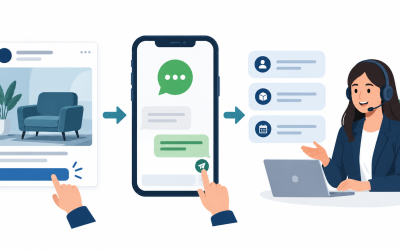
- User interacts (message button, m.me link, comment on a post, or an ad).
- Facebook forwards the event payload to your webhook (App must be subscribed to Page events).
- Your server verifies the webhook using App Secret, looks up session state or user profile, and applies business logic or NLP to determine the response.
- The bot calls the Send API with the Page Access Token to deliver messages, templates or open a webview for checkout.
- Interactions are logged, analytics recorded, and external systems (CRM, ecommerce) are notified if needed.
- Fallbacks trigger human handoff, re‑prompts, or menu suggestions when the bot can’t handle an input.
Message types, automation and intelligence
Bots use text and quick replies for short interactions, structured templates for product carousels, media attachments for richer content, and webviews for multi‑step forms or checkout. Automation covers auto replies (how to set up facebook messenger auto reply / how to set up auto response facebook messenger), comment moderation that converts public comments into private messages, and event‑driven workflows (abandoned cart, order updates). Advanced bots add intent classification and entity extraction (Dialogflow, Rasa, or custom models) to move beyond brittle keyword matching.
Security and compliance
I always secure tokens, validate webhook signatures, respect the 24‑hour messaging window, and implement clear privacy, consent and opt‑out flows to comply with Meta’s policies and data laws (GDPR/CCPA). For technical reference I use the official Messenger Platform documentation: developers.facebook.com/docs/messenger-platform.
how to set up facebook messenger bot
When I set up a Facebook Messenger bot I follow a repeatable integration checklist so the bot is functional, compliant and connected to the systems I need (CRM, ecommerce, analytics). The high‑level tasks cover Page attachment, tokens/webhooks, core UX elements, flows and testing for mobile including how to set up facebook bot on android deep links.
- Prepare accounts: create/verify a Facebook Business Manager and a Facebook Page to attach the bot; grant admin roles and add business verification if you intend to enable fb messenger pay or facebook checkout.
- Choose tooling: pick a no‑code builder for speed (ManyChat, Chatfuel) or build custom with a webhook (Node/Python) if you need full control. No‑code builders simplify how to set up messenger bot on facebook page and provide templates for welcome messages and persistent menus.
- Register an App (if custom): create a Facebook App, add the Messenger product, request permissions (pages_messaging, pages_manage_metadata), and keep the App in development while testing.
- Generate Page Access Token & set webhook: create a Page Access Token, deploy a secure webhook endpoint that handles verification and events, and subscribe your App to the Page’s message events.
- Configure UX: set Greeting, Get Started, persistent menu, quick replies, and a Default Reply to capture unexpected inputs; configure how to set up facebook messenger kids flows if you require age gating or parental consent.
- Automations & payments: add auto‑reply rules (how to set up facebook messenger auto reply / how to set up auto response facebook messenger) and plan payment flows—use facebook checkout or link to web checkout depending on your compliance needs.
- Integrate systems: connect CRM for lead capture, analytics for conversion tracking, and optionally external NLP providers to improve intent detection. If bridging channels, consider how to set up facebook bot discord or other cross‑platform links while checking policy constraints.
- Test end‑to‑end: use Facebook Test Users and staging Pages, validate messages on Android and iOS, test m.me deep links and comment‑to‑message flows, and verify fallback/human handoff paths.
- Launch and monitor: publish the bot, monitor metrics (open/response rates, fallbacks, conversions), and iterate on flows. Keep a bot checker and detector routine to flag spammy behavior, bot spammer activity or suspicious follower increases (how to set up facebook bot checker / how to set up facebook bot detector).
For step‑by‑step tutorials and templates I reference practical guides like the Facebook chatbot setup guide and the messenger auto‑reply setup guide to avoid common misconfigurations and to implement reliable automations: Facebook chatbot setup guide and messenger auto‑reply setup.
Costs, Pricing and Monetization
How much does it cost to create a bot?
I break bot costs into clear bands so you can decide the right path for your needs. Costs vary by scope, integrations, intelligence and scale—here are practical ranges and what drives them.
- DIY / Free options: $0–$200 setup. Use the Messenger Platform directly with free hosting tiers or the free plan of a builder. This covers minimal developer time, a basic webhook, and simple flows. See the Messenger Platform docs for developer guidance.
- No‑code / freemium builders: $0–$100/month on entry plans; $50–$500/month for business tiers that scale by subscriber counts and broadcasts. ManyChat and Chatfuel are typical examples for marketing and support bots.
- Mid‑range (agency or advanced no‑code + integrations): $2,000–$25,000 one‑time build plus $50–$500/month for hosting, analytics and support—appropriate for multi‑step funnels, CRM integration and moderate automation.
- Enterprise / custom builds: $25,000–$150,000+ initial, depending on custom NLP, multilingual support, payment integrations (fb messenger pay / facebook checkout), SLAs and compliance. Ongoing model inference, hosting and maintenance add recurring costs.
Primary cost drivers I evaluate before quoting:
- Scope & use case: a simple FAQ or welcome flow costs far less than omnichannel commerce or appointment booking. How to set up facebook bot for e‑commerce (checkout, cart recovery) raises complexity.
- Integrations: CRM, analytics, payment processors (how to set up facebook checkout), Shopify/WooCommerce or custom APIs increase development time and cost.
- AI/NLP level: rule‑based flows are cheaper; intent classification, entity extraction and custom models increase cost materially.
- Compliance & verification: business verification, GDPR/CCPA readiness, and payments compliance add scope and budget.
- Scale & channels: supporting Instagram, WhatsApp or bridges like how to set up facebook bot discord multiplies infrastructure requirements.
Typical mid‑range line items (example):
- Planning & UX flows: $500–$3,000
- No‑code setup or webhook + Send API dev: $1,000–$15,000
- Integrations (CRM, email, analytics): $500–$5,000
- Payments/checkout integration: $500–$7,500
- QA & mobile tests (including how to set up facebook bot on android checks): $300–$2,000
- Hosting & monitoring: $20–$1,000+/month
- Maintenance & optimization: $200–$3,000+/month
Ways I reduce cost while validating product‑market fit:
- Start on a free/freemium builder to test lead capture or FAQ flows.
- Limit the initial scope to one use case, then iterate.
- Use templates and open‑source starters; pair with low‑cost serverless hosting for webhooks.
- Optimize flows to minimize broadcast volume and avoid hitting higher subscription tiers.
For comparisons and practical guides I reference builder pricing and practical setup guides like the messenger bot maker overview to choose the right path between free, freemium and custom builds: messenger bot maker tutorial and the general create‑a‑bot guide.
how to set up facebook checkout
If you plan to monetize with Messenger commerce, how to set up facebook checkout is a major technical and compliance step that affects cost and user experience. I treat checkout as a feature with design, security and policy requirements.
High‑level steps I follow:
- Confirm eligibility: ensure your Business Manager and Page meet Meta’s commerce eligibility and verification requirements (business verification is often required for checkout and payments).
- Choose checkout method: use Facebook’s native Checkout/Commerce options where available, or implement a secure webview that links to your hosted checkout (useful when you want full control or must support complex payment processors).
- Integrate APIs: connect order creation and confirmation flows from Messenger to your backend or ecommerce platform (Shopify/WooCommerce). This often requires webhook endpoints, secure API keys and order‑status callbacks.
- Handle payments securely: follow payment provider requirements, PCI rules if you process card data, or rely on Meta’s payment stack to reduce scope. Decide whether to use fb messenger pay or external processors and plan for refunds, receipts and tax handling.
- Design UX in Messenger: use webviews, product cards (generic templates) and clear CTAs; keep one CTA per message and confirm shipping, tax and totals before charging the customer.
- Test compliance and flow: validate flows with test users, simulate failed payments, test Android/iOS webview behaviors (how to set up facebook bot on android deep links), and ensure fallback to human support for payment issues.
- Policy & legal: include privacy policy and terms, collect consent for payment and data processing, and follow Meta’s commerce policies to avoid suspension.
Costs tied to checkout:
- Implementation time (API integration, webviews): moderate to high depending on complexity.
- Payment provider fees and potential PCI scope if you handle card data.
- Ongoing reconciliation, refunds handling and customer support staffing.
For step‑by‑step implementation patterns and to avoid common misconfigurations, I consult practical setup guides and the Messenger Platform docs, and I use builder templates when possible to speed checkout integration while remaining compliant: Messenger Platform docs and the Facebook chatbot setup guide.

Free Options, Testing and Safety
Is creating a bot free?
Short answer: Yes — you can create a functioning Facebook Messenger bot for free, but “free” usually means tradeoffs (feature limits, subscriber caps, branding) and potential hidden costs (hosting, integrations, maintenance). I recommend using the free path to validate your use case on a no‑cost plan, then scaling to paid tiers as needed.
How “free” bot options work
- Platform developer route (effectively free): Facebook’s Messenger Platform is free for developers to use — you can build a bot with a webhook (Node/Python), deploy on a free hosting tier or serverless plan, and connect to a Page using a Page Access Token. This minimizes platform fees but requires developer time and maintenance. See the official Messenger Platform docs for developer steps: Messenger Platform docs.
- Freemium/no‑code builders: Many no‑code tools provide usable free plans that include welcome messages, quick replies and basic automations—ideal for testing how to set up facebook messenger auto reply and simple lead capture. Evaluate free plan limits (subscriber caps, broadcasts) before you commit; ManyChat is a common example for freemium builds.
- Open source and community templates: Deploying GitHub starter bots plus free hosting keeps direct costs near zero but requires technical setup and ongoing maintenance. Practical guides that compare free options help pick the fastest validation path: create a bot online guide.
Common hidden and recurring costs to plan for
- Hosting and uptime — free tiers have limits and may force paid hosting as traffic grows.
- Developer time and maintenance — building, testing and updating flows consumes hours even with free software.
- Integrations — CRM, analytics, SMS or payment connectors (fb messenger pay / facebook checkout) can require paid plans or development work.
- Subscriber or message‑based billing — many builders charge by active subscribers or monthly message volume as your audience scales.
- Compliance and legal — GDPR/CCPA readiness, business verification and payment compliance add cost for production use.
When to stay free vs when to pay: stay free for rapid validation (FAQ, lead capture, simple auto replies). Budget for paid tiers once you need CRM integrations, high‑volume messaging, payments, guaranteed uptime or advanced AI/NLP.
how to set up facebook bot free
I set up free bots by combining low‑friction tooling, tight scope and thorough testing so the project stays low cost while producing measurable outcomes. Below is the practical, repeatable path I use when building a free Messenger bot.
- Pick one use case: limit scope to one outcome (lead capture, FAQ, appointment booking) to reduce development and messaging volume.
- Choose tooling: pick a free builder for speed (freemium) or the Messenger Platform + free hosting for a developer route. Builders simplify how to set up facebook messenger bot, comment moderation and auto replies—see the messenger auto‑reply setup guide for templates: messenger auto‑reply setup.
- Create accounts and Page: set up Business Manager and a Facebook Page (bots must be attached to a Page). Add a privacy policy URL to the Page and enable messaging settings.
- Configure core UX: add Greeting, Get Started, persistent menu and Default Reply. These reduce fallbacks and improve completion for flows like how to set up facebook chat bot and how to set up messenger bot on facebook page.
- Implement low‑cost automations: use quick replies, keyword triggers and away messages (how to set up auto response facebook messenger / how to set up facebook messenger auto reply) rather than heavy broadcast usage to stay within free limits.
- Test thoroughly (include Android): validate on desktop and mobile, ensure m.me deep links work, and test behavior for how to set up facebook bot on android. Use Test Users or a staging Page before going live.
- Monitor and scale selectively: track message volume and subscriber counts; upgrade only when limits block growth or when you need features like fb messenger pay, facebook checkout or advanced analytics.
Safety and policy checks I always run
- Confirm compliance with Meta’s Messenger Platform policies and avoid tactics that look like a bot farm, buying followers, or spammy comment automation (these risk suspension).
- Implement consent flows and easy opt‑out; provide a visible privacy policy and data retention rules for GDPR/CCPA compliance.
- Set up a basic bot checker routine to detect spammy inputs, abusive behavior or sudden follower spikes (how to set up facebook bot detector / how to set up facebook bot checker).
For a quick how‑to with free options and legal notes I reference the create‑a‑bot guide and the auto‑reply tutorial to avoid common pitfalls and keep early costs minimal: create a bot online guide and messenger auto‑reply setup.
Advanced Features, Growth and Troubleshooting
how to set up facebook bot followers
I grow follower engagement by treating followers as a conversion funnel: attract, qualify, and re‑engage. To set up facebook bot followers I focus on discovery mechanisms, conversion triggers, and measurement.
- Discovery and entry points: add clear message call‑to‑actions across channels—m.me links, page CTA buttons, comment‑to‑message automation on organic posts, and ads. Use comment moderation that converts comments to messages so passive viewers become followers.
- Get Started flow and qualification: set a Get Started button and short qualification sequence to capture intent and opt‑in consent. Record attributes (email, interest) so you can segment followers for re‑engagement.
- Incentives and content hooks: offer immediate value (discount code, checklist, mini‑course) delivered via Messenger to convert visitors into followers. Use persistent menu entries like “Subscribe” or “Deals” to let users opt in to ongoing messages.
- Automation rules: schedule welcome drips, birthday messages, and behavior‑driven flows (clicked link, abandoned cart). Keep broadcasts minimal and targeted to avoid hitting platform flags for spam or bot spammer behavior.
- Measurement and quality checks: track follower growth, active subscriber rate, message open/response rates and conversion to leads or sales. Run periodic bot checker routines to spot suspicious spikes in followers (which can indicate fake followers or bot farm activity) and clean the audience.
Practical tools and references I use: the messenger bot maker tutorial to choose the right builder and integration approach, the messenger auto‑reply setup guide for comment‑to‑message automation, and the Facebook chatbot setup guide for Page‑level optimizations. For competitor options I evaluate ManyChat and Chatfuel for their growth features and compare them against custom flows I build with a webhook.
How to set up facebook bot on android
Yes—you must test and optimize for Android. Setting up a Facebook bot on Android is about ensuring deep links, webviews and message flows behave correctly on Android devices and within the Messenger app. Here’s a concise checklist I follow.
- Deep links and m.me links: generate m.me or messenger links and test them on Android devices to confirm they open the Messenger app directly and trigger the intended Get Started payload.
- Webview behavior: if your bot uses webviews (checkout, forms), test Android webviews for viewport scaling, keyboard behavior and back button handling. Use Messenger Extensions when available, but provide graceful fallbacks to external web pages for older Android versions.
- Media and attachments: verify image/video sizes and upload flow on Android (camera vs gallery) and ensure quick replies and buttons render correctly in the native Messenger client.
- Notifications and permissions: check that Messenger notifications are enabled and that deep links work from ads and posts; validate that any SMS fallbacks or fb messenger pay flows function across Android devices.
- Testing and QA: use multiple Android versions and devices, include Facebook Test Users, and simulate poor network conditions. Confirm comment‑to‑message conversions initiated on Android browsers and test how to set up facebook bot on android flows end‑to‑end.
For implementation patterns I reference practical how‑to guides that walk through adding a bot to Messenger and configuring Page settings. See the create‑a‑bot online guide and the step‑by‑step Facebook chatbot setup guide for detailed Android checks and deployment tips. If you need a builder that simplifies Android testing and instant deploys, compare options in the Facebook bot maker roundup and consider professional tools when you scale.
Internal resources: messenger bot maker tutorial, messenger auto‑reply setup, Facebook chatbot setup guide, create a bot online guide.
External tools to evaluate: ManyChat for rapid growth features (ManyChat), and Brain Pod AI for multilingual AI chat assistant options (Brain Pod AI).

 English
  Tagalog
  简体中文
简体中文  العربية
  हिन्दी
  Português do Brasil
  Español de México
  Français
  বাংলা
বাংলা  香港中文
香港中文  繁體中文
繁體中文  Nederlands
  Deutsch
  Bahasa Indonesia
  日本語
日本語  한국어
한국어  Polski
  Русский
  Español
  Tiếng Việt