
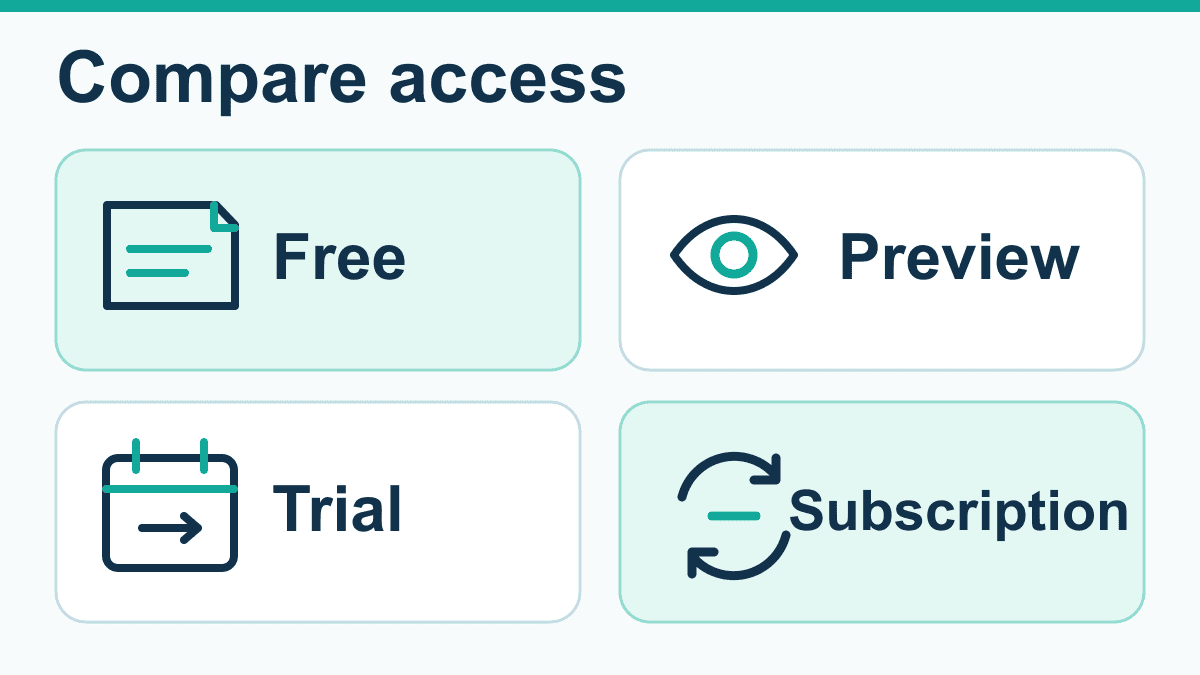
Character AI free access can help you try an invented conversation before deciding whether a tool suits your writing. Start with one small scene, a few story facts, and a clear stopping point. Then check what the replies actually do. A fluent character voice is not proof of accurate information, dependable memory, private storage, or access that will stay free.
This guide is for adults exploring fictional dialogue and character ideas. It separates advertised access terms from suggested writing exercises; the exercises are not reports of product tests. The practical goal is a useful decision: continue with a small creative experiment, change the scene brief, check a missing term, or leave a tool unused. You do not need to subscribe, upload personal documents, or supply real people’s details to plan that decision.
If your immediate task is answering business customers rather than writing fiction, Browse Our Tutorials for a separate starting point. Customer conversations need approved information and clear responsibility for replies. The fictional exercises below do not establish that any tool is ready for customer use.
What free Character.AI access does and does not tell you
The official help article, dated May 2, 2023, describes Character.AI as free to use and warns that characters can invent facts and evidence. Those two statements belong together. Free access is an invitation to check suitability, not a reason to trust a character’s assertions. An answer that sounds confident still needs checking when it describes the real world.
The current advertised package comparison distinguishes Free, lite, and c.ai+ options. Read its current feature and renewal terms rather than relying on an old monthly price. The comparison viewed for this guide was in an annual-billing presentation; it was not a completed checkout or a check of every country’s offer. No fixed subscription price or particular account entitlement is assumed here.
Before a first session, write down what free means for your decision. Does it mean no payment method, no automatic renewal, a limited allowance, or ongoing access subject to the service’s terms? Those are different conditions. If the screen does not answer your question, mark the condition unknown instead of borrowing an answer from another app. A free download, for example, does not establish the terms for every conversation inside it.
Keep the first creative task narrow enough to inspect. Ask whether a character can maintain a particular tone during one invented exchange, not whether it can help write an entire novel. Decide what you will record: the brief, any contradiction, and whether the response gives you an idea worth developing yourself. You can make that assessment without treating the tool as a reference source or judging every feature it advertises.
Separate what you observe from what you infer. A character remembering a name in a short exchange establishes only that the name appeared correctly there. It does not reveal how memory is implemented or what will happen after reopening a conversation. A delayed reply does not identify a server problem or prove a rival is faster. Record the narrow observation and leave the explanation open.
A useful first-session note has three lines: what you wanted to try, what happened in that scene, and what still needs checking. Avoid turning that note into an overall rating. If the access limit interrupts the exercise, record the limit shown and stop; do not open extra accounts or look for ways around the restriction. The remaining sections show how to make a small experiment informative even when the platform’s wider capabilities are unknown.
How to prepare a fictional character before opening a chat
Prepare a scene card before typing. Use four fields: role, scene, known story facts, and boundary. The card gives you something concrete to compare with a reply. Without one, it can be difficult to tell an interesting surprise from a contradiction you did not intend. This is a writing method to try, not a promise that a character will follow every instruction.
Here is an original fictional exercise involving two adult museum archivists, Elena Vance and Marcus Thorne. They are planning a display for an imaginary maritime instrument. Treat every detail as invented story material, not conservation advice. There is no real museum, customer, artifact, deadline, or technical specification behind the example.
- Role: Marcus is a cautious archivist. He speaks politely and prefers a short explanation to a dramatic speech. Elena is an adult colleague who wants to agree on the next planning step.
- Scene: The colleagues are at a worktable with a sketch of an imaginary harbor exhibition. They need to choose whether to request a different display case.
- Known story facts: The fictional instrument has a blue label. Its case is not ready. The opening date has not been agreed. Neither colleague can approve the display alone.
- Boundary: Keep the exchange fictional and focused on the planning disagreement. Do not add real identities, actual treatment instructions, or an invented claim that approval has already happened.
A proposed opening prompt might ask the character to take Marcus’s role, use those four facts, and ask Elena one question about the case. You can write your side as: Elena places the sketch on the table and asks what they should check before choosing a case. This is an example input, not a transcript or an observed character response. Use it only where the platform’s current rules permit the activity.
Make the disagreement useful rather than elaborate. The first decision is about a display case, not the entire exhibition. You are looking for a response that recognizes the unfinished case, leaves the opening date undecided, and gives Elena room to answer. A new idea for the fictional case may be welcome; a claim that the museum director has approved it changes a fact you explicitly left open.
If the result is hard to assess, simplify the card. Remove decorative background before adding more instructions. Keep the known facts in a short list and choose one boundary you can inspect. When changing the brief, keep a separate copy of the previous version so you can tell which wording you tried. Do not describe a difference between two exchanges as a general product improvement.
Our Perchance character setup and evaluation guide offers another way to think about fictional inputs and review questions. Use the same small task when comparing approaches, while checking each tool’s own access terms. The worksheet below is a generic planning aid: its role and harbor imagery represent invented story material, not a product interface or a record of a completed test.

How to review a character reply without trusting invented facts
Read a character reply twice for different purposes. First ask whether it gives you useful fictional dialogue. Then ask whether it introduces anything that should not be treated as established. The warning about invented facts in the official help article applies even when a reply sounds natural. A plausible historical date, quotation, or technical explanation is not a source.
In the museum exercise, check the blue label, unfinished case, undecided opening date, and shared approval boundary. If a reply changes the label to red, that is a story-fact mismatch. If it gives Marcus a shorter speaking style than you expected, that may be a preference rather than an error. Distinguish those cases before deciding what to change. Otherwise you risk discarding an interesting voice while overlooking a contradiction.
- Check the assigned voice. Compare the response with your short description of Marcus. Identify the particular phrase that feels too formal, too casual, or too dramatic rather than labeling the whole response bad.
- Check the established facts. Underline any reference to the case, label, date, or approval. Compare it with the scene card, including facts that were intentionally left unknown.
- Separate additions from evidence. An invented visitor or an imagined delivery problem may be a story suggestion. A statement about a real museum practice needs an independent source before use outside the exercise.
- Check room for your next turn. Does Elena still have a meaningful decision to make, or has the response resolved the disagreement without her? Choose which approach serves your scene.
When a reply conflicts with your brief, note the exact conflict before trying a correction. You could restate that the opening date is undecided and ask the character to continue from that point. If the current interface offers an editing or alternative-response option, inspect its behavior before relying on it. This guide does not assume that every account has the same controls or that a correction will be retained later.
Do not use the conversation itself to verify a disputed real-world claim. Asking the same character whether its statement is true does not provide an independent reference. For a fictional scene, you can instead remove the unnecessary claim and keep the dramatic purpose: Marcus is cautious about the case. If a real fact matters to your manuscript, check an appropriate primary source outside the chat before including it.
Keep your assessment small and specific. For example, your note might record that one reply preserved the blue label but incorrectly settled the date. That is more useful than declaring perfect memory or total failure. It tells you what to inspect next and prevents a creative exercise from becoming an unsupported review of the platform’s overall intelligence.
What to check before saving or sharing a character conversation
Before saving or sharing, decide what you need to keep and who should see it. You may need only your own scene card and a note about an idea, not a complete transcript. Using less material can make review simpler, but it is not proof of how a platform stores or deletes a conversation. Read the current privacy and sharing terms for the exact option you are considering.
Inspect the material you intend to share, not just the visible last reply. Look for account names, profile images, real names in your prompts, contact details, location clues, links, and any surrounding interface information. A fictional character name is different from a real collaborator’s identifying details. If the exercise accidentally includes someone else’s information, leave that material out of the shared version.
Check the destination separately. A private note, a message to a collaborator, and a public post have different audiences. Do not assume that a share link is private, temporary, or available only to the person you send it to. If the current screen and terms do not make the audience clear, leave that sharing option unused. This is a precaution for your decision, not a claim about the behavior of a particular platform.
- Purpose: Write down why you want the excerpt. If a short summary of your own idea does the job, consider using that instead of a full conversation.
- Identifiers: Remove real-person and account details from the copy you plan to circulate. Review image edges and headings as well as dialogue.
- Context: Label the piece as an AI-assisted fictional exercise. Do not present generated dialogue as something a real person said or as a verified description of an event.
- Permission and audience: Check the relevant terms and any collaborator’s permission before sharing their material. Leave questions about rights unresolved until you have an appropriate answer; this guide does not determine ownership.
- Final choice: If you cannot establish who can access the destination, do not use that option. Continue the exercise without sharing it.
Keep the fictional scene card separate from any personal planning notes. For the archivist example, the useful material is the invented case disagreement and your observations about dialogue. It does not need your address, employer, real schedule, or a collaborator’s private manuscript. Removing those details from your planned excerpt does not erase any earlier entry or establish a deletion outcome on the service.
The diagram below summarizes the decision: remove identifiers from the material you intend to use, check its destination, and leave an unclear option unused. These are reader review tasks, not a privacy seal or a guarantee that a platform will keep information confidential. If the exercise does not need saving or sharing, there is no requirement to use either feature.

How free access, previews and trials differ across character chat tools
Compare access conditions before comparing personalities. A limited preview may let you inspect a service without establishing ongoing chat access. A trial may require payment information and convert into a subscription. A free app download describes the download, not every feature or future message. A locally installed interface still needs a way to generate responses. Record the condition advertised and the question you need answered.
Kindroid illustrates why older free-access advice needs checking. Its subscription documentation, updated October 13, 2026, describes a limited new-account preview followed by read-only access when exhausted. It also describes a three-day trial requiring a payment method that converts unless cancelled. The official change log records the October 1 retirement of the earlier Lite/unlimited free-messaging arrangement. Do not treat that retired arrangement as a current entitlement.
The table separates observed advertising from suggested evaluation tasks. It does not rank performance, verify account eligibility, or establish which paid features a particular reader will receive. The task column is a way to organize your own small experiment, not a report that these products passed it.
| Tool | Advertised access | Paid signal | Question still to check | Suggested task |
|---|---|---|---|---|
| Character.AI | The dated help article describes free use. | The current comparison advertises different packages. | Which terms and features apply to your account? | Review one short fictional exchange. |
| Replika | Its free-access help describes chatting plus optional paid features. | Some features are offered separately. | What is included before selecting an upgrade? | Compare a reply’s tone with a brief. |
| Nomi | The vendor overview advertises starting without a credit card. | Do not infer all-feature access from that statement. | What limits and paid options are shown now? | Record whether your story facts recur correctly. |
| Kindroid | The current documentation describes a limited preview. | A converting trial and subscriptions are distinct from it. | What are the checkout and cancellation conditions? | Check an invented scene boundary. |
| CHAI | The US developer store listing shows a free download. | In-app purchases are listed. | What conversation access is actually included? | Inspect one character’s response to your brief. |
| PolyBuzz | Its membership details advertise different tiers. | The displayed offer is locale-sensitive. | Which limits, currency and renewal terms apply? | Compare available access with one writing task. |
| SillyTavern | The project documentation describes a locally installed interface. | Model access and computing are separate considerations. | What setup and costs would your chosen arrangement require? | Decide whether configuration fits your project. |
Do not convert the table into a promise of unlimited free use. For example, Nomi’s no-card starting statement does not establish a particular message allowance, while the CHAI listing does not establish every account’s eligibility. Its US 18+ store rating is a store classification, not a complete service-account rule. Developer privacy disclosures are not an independent privacy audit.
Keep an unknown column in your own notes. If you have not checked an allowance, a renewal rule, or an account requirement, leave it unknown. This avoids the common mistake of filling a gap with a remembered price or a feature from a different service. Choose a next check that matters to your task; there is no need to investigate every advertised tier before trying one permitted fictional exchange.
How to compare memory and continuity without declaring a winner
Continuity is a writing requirement you can describe, not a single score to assume from marketing. You may want the blue label to remain blue, the undecided date to stay undecided, and Marcus’s cautious voice to remain recognizable. Those are separate observations. A response can preserve a name while changing a constraint, or preserve facts while giving Elena no useful next turn.
Use the same invented card when comparing permitted tools or sessions. Keep your own questions similar, and record any edits you make. If you change the setting, character description, and requested length at once, the resulting exchange will not tell you which change mattered. This method is intended to make your notes more interpretable; it does not establish a scientific benchmark or reveal an internal memory system.
- Start with a fact check. After introducing the scene, ask what remains to be decided. Compare the response with the unfinished case and undecided opening date. Do not suggest the expected answer inside the question.
- Change the topic within the scene. Ask Elena and Marcus to discuss an invented label design, then return to the case. Record whether the earlier facts are still represented. Choose the number of exchanges yourself and write it down.
- Try one correction. If a detail changes, restate the intended story fact and observe the next reply. Record whether that particular correction appears, without assuming permanent retention.
- Check a return only if it matters. If your task involves reopening a conversation, use the service’s permitted option and note what is visible on return. Do not infer a database, deletion policy, or privacy guarantee from a familiar reply.
Use concrete labels in your notes: fact retained, fact changed, not mentioned, or not checked. Not mentioned is not the same as forgotten; you may not have asked a question that required the detail. Similarly, a correct answer after you repeat the fact does not prove that the earlier conversation was remembered. Keeping these distinctions makes the exercise useful without overstating the result.
Compare the burden on your own writing process. Did you need to restate the same boundary repeatedly? Did correcting a detail interrupt the scene you wanted to develop? Was the resulting idea worth keeping in your own draft? These are questions about your experience with that task. They do not justify claims that one product always has better memory or that a paid package will remove every contradiction.
End the comparison when you have enough information for the next decision. You might continue with a short scene, shorten the character brief, or decide the task is easier to write directly. More exchanges are not automatically more informative. Preserve your scene card and narrow observations rather than turning a single conversation into a recommendation for every writer.
What dated age and safety documents can tell you
Dated safety documents need their dates and limits kept attached. Character.AI’s teen-policy announcement, published October 29, 2025, announced removal of open-ended chat for under-18 users beginning November 24, 2025, with regional rollout. That is an announcement about a transition. It is not proof of the present features on every account in every country.
The separate Safety Center and age-assurance documents also describe dated safeguards and conditional verification. They should not be collapsed into a statement that everyone must complete the same check or that a particular reader qualifies. The exercises in this guide are for adults; that audience choice does not replace the service’s current eligibility conditions. Check the current terms and account notices directly.
Keep three questions separate when reading a policy: who it addresses, what it describes, and when it says the change applies. A document about teens does not describe all adult account behavior. A store rating does not explain every web-service rule. A rollout date does not establish that an interface shown in an old screenshot is the one you will see now.
- Account eligibility: Read the current requirements for your location and account. Do not rely on a remembered minimum age from a social post or a different app.
- Activity rules: Check whether your intended fictional scene is permitted. Being an adult does not mean every kind of content is allowed.
- Verification uncertainty: If a verification request appears, use the official process and review the relevant information before providing anything. Do not follow bypass instructions or send identity documents to a character.
- Privacy questions: A description of safeguards is not an independent guarantee about retention, confidentiality, or deletion. Leave those questions open until the exact terms answer them.
For the archivist exercise, there is no reason to supply a real person’s age, face, identity document, or workplace details inside the fictional conversation. An account-level verification process, if required by a service, is a separate matter from the scene. Do not confuse a character asking a question with an official account instruction.
When a condition remains unclear, pause that activity rather than guessing. You can still develop the invented scene card in your own notes or choose a different permitted writing task. The useful outcome of reading a safety document may be a decision not to proceed. This guide does not certify a service’s safety, interpret the law for a reader, or promise that an announced safeguard will prevent every problem.
How to choose a creative alternative for a specific task
Choose the task before choosing an alternative. If you want to explore a character’s speaking style, your review should focus on voice. If you want to revisit an ongoing scene, continuity matters more. If you mainly want a quick story idea, setup may be the deciding consideration. These are selection questions, not evidence that a particular brand wins them.
For a voice exercise, keep the scene facts constant and change only your requested tone. You might ask for a more restrained version of Marcus, then assess whether the new response still leaves Elena room to participate. Record which wording helped your draft rather than which reply felt most human. A more emotional answer is not automatically a better fit for a quiet planning scene.
For an ongoing fictional conversation, inspect the return-to-scene task described earlier. Companion positioning can explain what a service advertises, but it does not prove dependable recall. Replika’s assistant guidance describes a companion rather than a dependable task or real-time-information assistant. Do not turn that positioning into a promise of emotional benefit or reliable factual answers.
For a configurable writing setup, first decide whether configuring an interface is part of the project you want. SillyTavern’s documentation distinguishes the interface from access to a language model. That distinction matters before comparing costs or convenience. Local installation alone does not establish where every part of an arrangement runs, who receives information, or whether generation is free. Avoid sending confidential material while those questions remain unresolved.
For a lightweight scene experiment, compare the brief and review questions in our guide to reviewing a fictional scene with Perchance. Keep access and component-specific behavior separate. A useful result from one selected generator does not establish identical behavior across a discovery site or every page using the same name.
Make a shortlist based on questions you can actually answer. One candidate might fit the permitted activity but have unclear access limits; another might require more configuration than you want. Neither observation proves a general quality ranking. Your next step could be checking a term, trying a small allowed task, or removing the candidate from this particular project without making a claim about every user.
Use a stopping rule for the shortlist. When one permitted option gives you enough useful material to continue your own writing, you can stop comparing. Keep the alternative notes so you know why you chose it, including any unknowns. This is more practical than chasing an unsupported best-character-chatbot label that tries to combine cost, voice, privacy, continuity, and convenience into one verdict.
How to check costs and access before you subscribe
Do not subscribe just to complete a comparison. First identify the exact limitation that interrupts your writing and whether the offered package addresses it. A feature list is not proof that a payment will solve the problem you observed. If a short fictional scene already meets your purpose, you may not need an upgrade. If the offer is unclear, leave the paid option undecided.
- Identify the offer. Record the service, purchase channel, displayed currency, billing interval, and package name shown to you. Do not substitute a search snippet or an old article’s monthly amount for the current screen.
- Separate preview from trial. Check whether payment information is requested and whether the offer converts into a subscription. Kindroid’s documented three-day converting trial is different from its limited preview; do not assume another service follows the same arrangement.
- Check the total and renewal. Read the full amount, renewal wording, and any charges disclosed before confirmation. An annual presentation is not a monthly checkout. If you need a particular currency, confirm what is actually billed rather than calculating from a marketing example.
- Find cancellation information. Identify the applicable cancellation channel and deadline before deciding. Do not assume closing a chat, deleting a shortcut, or leaving an app cancels a paid arrangement.
- Check what remains afterward. Look for current information about access to your own material when a preview ends or a subscription changes. Leave retention or deletion unknown if the terms do not answer it.
Compare an offered feature with a specific observation. If your scene needed repeated reminders about an undecided date, ask what the advertised memory option actually says; do not read it as a guarantee of perfect continuity. If the problem was an unsuitable voice, a larger allowance may not address it. The right outcome may be a revised prompt or a different writing method, not a purchase.
Keep any decision note free of payment details. You can record that an offer requires a payment method without copying card information, billing addresses, or account screenshots into a creative chat. If you are reviewing a tool with someone else, share the non-sensitive terms you need to discuss rather than their private account or purchase screen.
No purchase or trial was started for this guide. Current offers can vary, so its comparison is deliberately not a price list. Treat the exact checkout terms as a separate decision at the time you consider paying. If an important condition is missing or contradictory, do not fill the gap with an assumption merely to finish selecting a tool.
When a business conversation needs a different workflow
A customer asking about an order, price, appointment, or return is not participating in your fictional scene. The response needs approved information and a responsible next step. Even a character that followed the archivist brief perfectly has not been shown to handle those business needs. Keep entertainment experiments separate from customer conversations and assess a business workflow on its actual behavior.
Begin with the customer question you want to handle. Identify the current source of the answer, who can approve it, what the conversation is allowed to do, and when a person should take over. A product brochure or a polished demonstration is not proof that your own account has those controls configured. Test a proposed workflow with non-sensitive examples before considering any customer use.
- Approved answers: Who maintains the price, availability, or policy being discussed? Decide what happens when it is missing, outdated, or disputed.
- Clear boundaries: Distinguish answering a question from making a booking, changing an order, or promising a refund. Do not let an invented response stand in for an authorized business action.
- Human responsibility: Define which questions need a person and how that person receives enough context. Check the actual process rather than assuming a handoff exists.
- Customer information: Decide what is genuinely needed and how it should be handled. A successful fictional conversation does not establish suitable handling of customer details.
- Account fit: Verify the specific capabilities included in the account and setup you are evaluating. Do not assume an advertised AI feature guarantees factual answers or compliance.
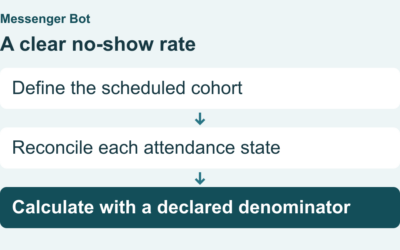
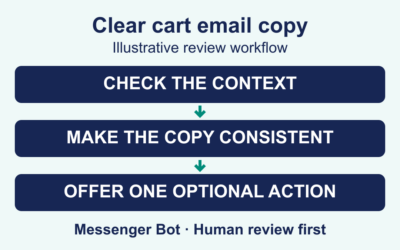
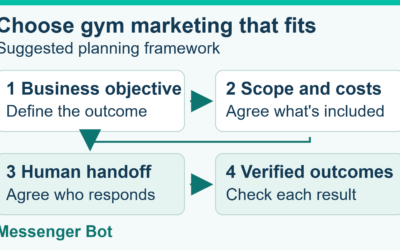
For Messenger Bot, Check Current Pricing is the starting point for comparing current plans. This is a comparison path, not a claim that every feature discussed here is active in your account. Our business chatbot evaluation guide provides a separate checklist for the commercial decision.
If you are still developing fiction, you can leave that business decision for another time. There is no need to turn a character exercise into lead capture or customer automation. Conversely, if a real customer is waiting, use your established approved response process rather than experimenting with the fictional scene. The distinction is about matching the task and responsibility, not dismissing either audience.
A practical review checklist for your next fictional scene
Use this checklist as a working sheet, not a score that certifies a platform. Keep the scene small enough to inspect and note anything you did not check. For the museum example, a useful outcome is deciding whether the case disagreement gives you material for a scene you want to write. You are not testing conservation procedures or approving an actual exhibition.
Prepare the card and your decision
- Choose one adult fictional role and one immediate disagreement. Remove real-person background that the scene does not need.
- Write the known facts separately from open questions. In the example, the blue label is known within the story; the opening date is not.
- Choose a voice description you can inspect, such as brief and courteous, rather than asking for a perfect or human-like personality.
- Define what would make you continue, revise, or stop. A useful idea may be enough; you do not need a long transcript.
Inspect the exchange before extending it
- Compare the actual reply with the card. Mark a particular fact changed, retained, not mentioned, or not checked.
- Separate an interesting fictional addition from a real-world assertion needing independent evidence.
- Check whether the other character still has something meaningful to decide. Revise the brief if the exchange resolves too much at once.
- Try one correction at a time and record its wording. Do not describe one successful correction as permanent memory.
Review access and any material you keep
- Check the current access screen before assuming that free use, a preview, and a converting trial mean the same thing.
- Leave unclear paid terms undecided. Record only non-sensitive offer details, never payment or identity information.
- Decide whether you need an excerpt at all. Inspect identifiers and destination access before choosing a save or share option.
- Label any circulated material as an AI-assisted fictional exercise. Do not present generated statements as verified events or real-person quotations.
At the end, write a short next-action note. You might keep the card and draft the scene yourself, try a narrower disagreement, check a missing access condition, or stop using the tool for this task. Include the limitation that influenced your choice. A clear next action is more useful than a sweeping verdict about which character AI is best.
Frequently asked questions about free Character.AI chat
Is Character.AI free to use for character chat?
Its official help article dated May 2, 2023 describes free use, while the current advertised comparison distinguishes Free, lite, and c.ai+ packages. Check the current terms and eligibility for your account. Neither statement establishes unlimited access, permanent availability, or accurate answers.
How do free previews and free trials differ?
A preview can have a limited allowance without establishing ongoing chat access. A trial can require a payment method and convert into a subscription. Kindroid’s current documentation describes both a limited preview and a separate three-day converting trial. Read each service’s own terms rather than assuming they match.
How can I review a fictional character reply?
Compare it with a short card containing the role, scene, known story facts, and boundary. Check voice, contradictions, and room for the next turn. Treat new real-world assertions as unverified until independently checked. The exercise is a suggested writing method, not a performed product test.
Do dated safety announcements establish my current account access?
No. An announcement can describe a planned change and regional rollout without proving the present behavior of every account. Check current official requirements and account notices. This guide’s fictional exercises are for adults and do not replace eligibility, verification, or content rules.
When should I assess a business messaging workflow instead?
Assess it separately when the task involves actual customers, approved prices or policies, appointments, or support. Identify the answer owner, permitted actions, and human escalation process. A successful character-chat exercise does not establish business readiness or guarantee that any platform will give accurate customer answers.
 English
 Tagalog
 简体中文
 العربية
 हिन्दी
 Português do Brasil
 Español de México
 Français
 বাংলা
 香港中文
 繁體中文
 Nederlands
 Deutsch
 Bahasa Indonesia
 日本語
 한국어
 Polski
 Русский
 Español
 Tiếng Việt