
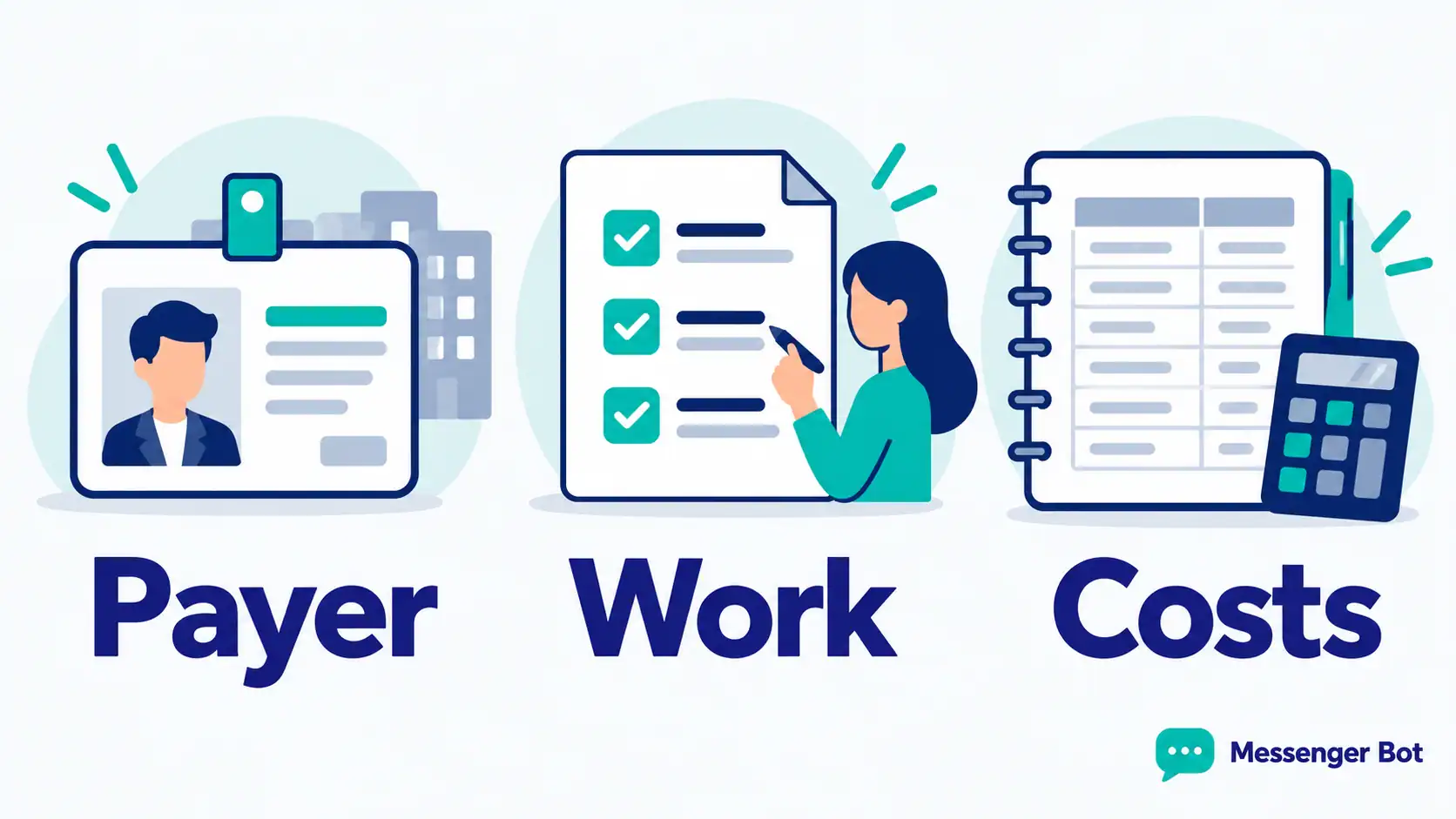
Who pays when a chat bot is part of an earning offer?
If you’re considering a messenger chat bot to earn money, start with the paying party—not the balance on a screen. What work or sale pays you, when is payment due, and what will it cost to deliver? Answering those questions gives you a practical way to compare a task offer with a small business idea.
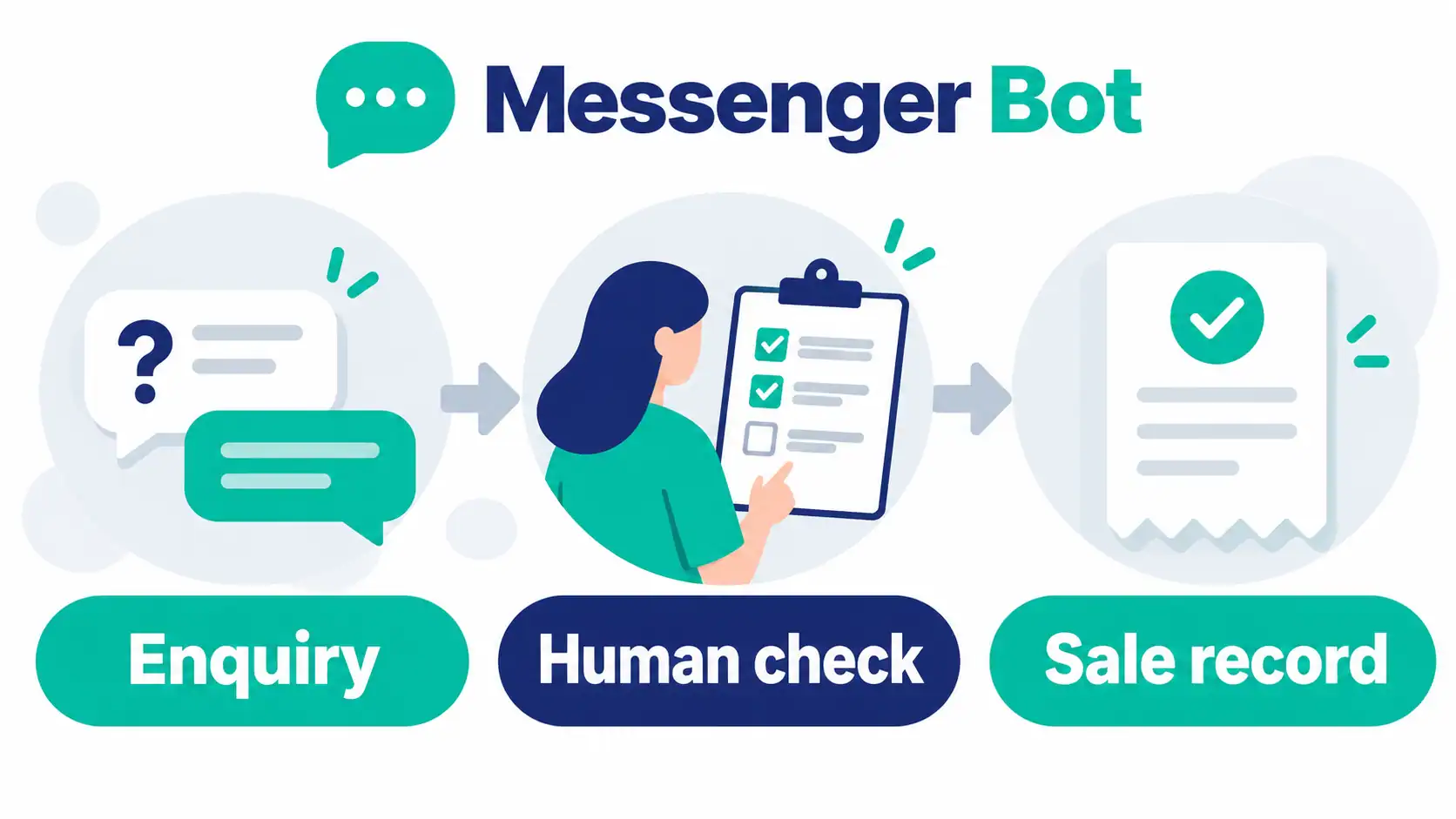
A conversation might help arrange a customer order, a paid service, a referral or a job. The important question is what creates the right to payment. A message saying “earned” does not explain who owes you money, the work they accepted or the conditions for receiving it. You need those details before counting a displayed balance as income. The same distinction matters for a business: an inquiry, a promised order and a completed paid sale are different events.
Describe the proposed exchange in one sentence: “This payer will pay this amount for this work, subject to these conditions.” If you cannot fill in those blanks, record what is missing instead of guessing. An unclear offer is unverified; that is not the same as proof that its operator is fraudulent or that nobody has been paid.
- Who is responsible for the payment, and how can you check that identity?
- What work, product or other agreed exchange earns the payment?
- Which costs, conditions and records determine what you actually receive?
Use the related guide to check the operator and offer evidence before judging a named program. This article focuses on a different decision: whether the proposed work and its numbers make sense for you. It does not certify an employer, earning app or payout.
Compare task offers with customer-funded work
A task offer might describe typing, answering questions or completing another assignment. A customer-funded idea might involve selling a product or providing a service. Neither description establishes that you will be paid. For a task offer, ask who commissions the work, how accepted work is recorded and what payment terms apply. For a customer sale, ask who buys, what you must deliver and which costs come with fulfilling the order.
Keep a promoter’s claims separate from your evidence. A screenshot can show what somebody chose to display without establishing your own payment rights. A story about someone else’s earnings does not establish your likely income, available work or costs. Do not insert a daily earning rate into your budget merely because an advertisement supplies one.
The FTC task-scam guidance describes a general pattern: fabricated task balances, sometimes a small initial payment to build trust, followed by demands for personal deposits to unlock more tasks or withdrawals. This warning is not a finding about every task offer or a named operator. Do not pay to test an unknown payout claim.
For a business idea, consider these conditional examples—not verified capabilities of Messenger Bot or evidence of existing customer results:
- A seller’s inquiry path: If a seller can answer product questions through an approved channel, a conversation could lead to an order. The seller still needs a buyer, fulfillment and payment records.
- A paid client assignment: If a business commissions help organizing customer conversations, the agreed deliverables and payment terms determine the fee. A chat tool does not make the client’s payment predictable.
- A referral arrangement: If an identifiable merchant offers a commission, check the qualifying action and payment conditions. Do not count a click or an inquiry as a paid referral.
These examples explain where you would look for value and a payer. They are not recommendations to join a program, install an app or buy software. Compare each proposal on its own terms, and leave uncertain payment or availability facts marked as uncertain.
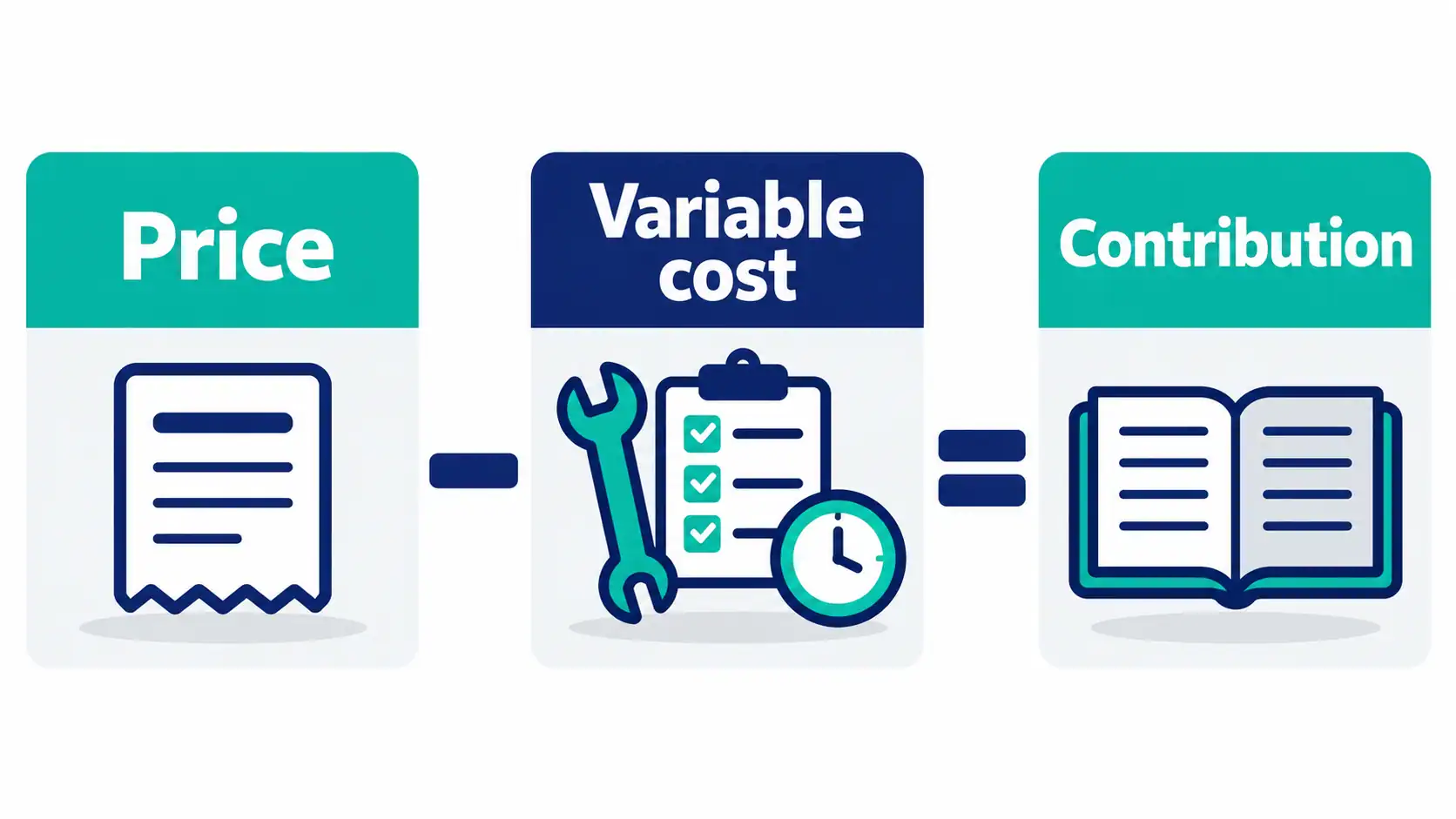
Price less variable cost gives contribution, not net profit. Other costs and actual business records still matter.
Free registration is only one part of the cost
“Free registration” answers a narrow question about an advertised entry charge. It does not tell you whether an account provides a demonstration, useful access, paid assignments or a working withdrawal route. It also does not establish what you will spend after registration. This guide does not ask you to create an account to find out.
Write down the costs that apply to your particular activity. Leave an amount unknown until you have a relevant price, agreement or bill. Do not replace an unknown fee with a percentage borrowed from another wallet, store or software plan.
- Connectivity and equipment: Record any additional data, internet or equipment expense you would actually incur. Do not charge the entire household bill to a small experiment unless that is the cost you intend to assess.
- Payment charges: Check the actual terms for the payment route you would use. Keep fees, who pays them and any refund treatment separate; this article supplies no standard percentage.
- Goods and fulfillment: For a sale, include relevant materials, packaging, delivery and other costs. An inquiry alone does not tell you what fulfilling an order will cost.
- Software: Check the chosen plan’s actual price, included actions and allowances. A free account does not prove unlimited access, and no generic contact or message cap applies to every tool.
- Your time: Record the tasks you would need to perform and the time available for them. Decide how to value that time rather than quietly treating it as free.
Separate a new expense from one you already incur. Both may matter to your wider business, but a worksheet about an additional tool should show which costs the new decision changes. Equally, do not omit an expense merely because it is inconvenient to estimate. Write a separate “not yet priced” line so a tidy total does not hide the gap.
Keep payment timing visible too. Buying supplies before collecting customer money creates a different cash requirement from receiving payment first. A monthly planning total does not show every cash shortfall within the month. The calculations below cover a deliberately limited set of costs; they do not replace that payment schedule.
Calculate a small break-even example in Philippine pesos
Break-even planning can help you test the arithmetic of a specific idea. It cannot establish demand, verify a payer or prove that a tool will create sales.
The SBA break-even formula uses fixed costs divided by selling price minus variable cost per unit for a single product or service with positive unit contribution. Break-even is where revenue equals the costs being considered. Use the formula as a planning estimate, not a guarantee of profit or complete accounting advice.
All figures below are invented, illustrative assumptions in Philippine pesos (₱). They are not typical earnings, observed sales, software prices or forecasts. The model assumes completed, paid, nonrefunded sales at a consistent price and variable cost. It includes only the listed additional fixed costs.
Positive contribution: five completed sales cover the selected fixed cost
Imagine a seller considering a single product. No particular bot, store feature or payment integration is assumed.
- Assumed selling price per completed unit: ₱1,000.
- Assumed variable cost per completed unit: ₱700.
- Contribution per unit: ₱1,000 − ₱700 = ₱300.
- Assumed additional fixed cost for the month: ₱1,500.
Units to cover that selected fixed cost = ₱1,500 ÷ ₱300 = 5 completed sales.
At five units, the model contains ₱5,000 of sales and ₱3,500 of variable costs. The remaining ₱1,500 covers the assumed fixed cost. At ten units, ₱10,000 minus ₱7,000 minus ₱1,500 leaves ₱1,500 after these selected costs. That balance is not a net-profit claim: other overhead, taxes, your time and unlisted expenses may still need to be accounted for.
Zero contribution: more units do not cover the same fixed cost
Keep the same assumed variable cost and additional fixed cost, but change the selling price:
- Assumed selling price per completed unit: ₱700.
- Assumed variable cost per completed unit: ₱700.
- Contribution per unit: ₱700 − ₱700 = ₱0.
- Assumed additional fixed cost for the month: ₱1,500.
There is no finite positive unit count that covers the ₱1,500 fixed cost from zero contribution under these inputs. Ten completed units contribute ₱0 toward it, just as a larger number would. This does not describe every earning route. It tells this hypothetical seller to change the price, costs or business model rather than expect volume alone to solve the gap.
Negative contribution: each extra unit worsens this limited model
For the third hypothetical scenario, reduce the assumed selling price again while keeping the other two inputs:
- Assumed selling price per completed unit: ₱600.
- Assumed variable cost per completed unit: ₱700.
- Contribution per unit: ₱600 − ₱700 = −₱100.
- Assumed additional fixed cost for the month: ₱1,500.
Ten completed units give a modeled balance of 10 × (−₱100) − ₱1,500 = −₱2,500 after the selected costs. Each additional unit worsens that balance by ₱100 while the assumptions remain unchanged. This is arithmetic about the example, not a conclusion that a real business is insolvent.
Before using your own figures, check whether costs behave the way this model assumes. A different product mix, changing unit costs or an additional expense can require a different calculation. Keep the worksheet’s purpose narrow and have incomplete figures checked before making a commitment.
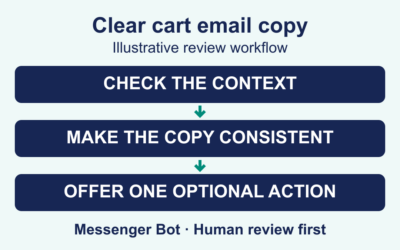
A sale record requires an actual confirmed outcome. This conceptual sequence does not promise that an enquiry becomes a sale.
Check time, cancellations and where sales came from
A positive unit contribution does not mean you can complete enough work. Your own tasks, schedule and customer demand need a separate check.
Use assumed time as a worksheet input, not a promised workload
For a simple illustration, assume 15 hours are available in a month and each completed order takes 30 minutes. Then 15 × 60 ÷ 30 = 30 orders before accounting for any work omitted from that assumption. This is an assumed upper bound for the worksheet, not an absolute operational ceiling, typical workload or a claim about software speed.
List the work included in your time figure: answering inquiries, preparing the product, checking details, arranging fulfillment and maintaining records. Questions that do not lead to a sale also take time. Replace the assumption with your measured total if you have one, and allow for work that happens outside the completed orders.
Compare that workload with the five-sale threshold in the positive example, but do not treat available time as customer demand. Having room to fulfill an order is different from having someone ready to buy it.
Recalculate cancellations from actual costs, not a convenient percentage
A shipped parcel is not automatically a completed, paid, nonrefunded sale. A cancellation may leave costs that cannot be recovered; a returned item may include reusable inventory. Record the payment retained or returned, fulfillment charges, materials recovered and other costs that remain.
Do not simply reduce a shipment count and multiply the remainder by ₱300 to announce profit. The positive example excludes cancellation costs; adding them requires a revised calculation. The previous order’s work and expenses do not disappear because you stopped calling it a sale. Keep completed units, cancellations, refunds and recoverable inventory separate in your records.
Distinguish a chat route from evidence of additional sales
An order recorded through chat does not, by itself, show that a bot caused the order. Suppose a bakery’s existing customers switch from phone orders to messages. That would be a channel change; it would not automatically demonstrate additional demand. It might still change staff time or convenience, which should be measured separately.
Likewise, an after-hours inquiry or faster reply is a possible route to a useful conversation—not proof that an order would otherwise have been permanently lost. This guide does not promise instant replies, reservation links, catalogs or any other particular product capability.
Compare your own order ledger across comparable periods. Note existing and new customers, other sales channels, promotions, advertising and the hours your team was available. Record time saved separately from additional sales. These checks can make the comparison more informative, but a simple before-and-after total still does not isolate every cause.
Use the related guide to compare payment obligations and records when you need a closer look at who owes a payment and what evidence accompanies it. Do not substitute a chat screenshot for the buyer and fulfillment records in your own ledger.
If your separate goal is managing customer conversations for an existing business, Check Current Pricing and confirm the exact actions available to your account before buying software. A business plan is not a task-payout offer or a promise of free income.
Use a payer, work and cost worksheet before committing
Compare the question you need answered, not a promised earning rate. These conditional examples describe different feasibility checks; none certifies a platform or guarantees payment.
| Possible route | Work to describe | Your feasibility question |
|---|---|---|
| A customer sale | A defined product and fulfillment | Does the price cover the actual costs, and can you fulfill the demand? |
| A client service | A client’s agreed assignment | Are the deliverables, time, acceptance and payment terms clear? |
| A paid task offer | The task and who commissions it | Can you establish the payer and conditions without depositing money to test a payout? |
Fill in the missing facts before using a total
- Payer: Who owes the payment? Write the identity and what evidence you have, or mark it unknown.
- Work: What must be delivered or accepted? Separate the task description from an advertisement’s promised result.
- Amount and timing: What amount is agreed, when is it due, and which conditions could change it?
- Variable costs: List the costs attached to one completed unit. Mark missing prices rather than entering zero.
- Additional fixed costs: Identify the expenses this decision introduces for the period you are examining.
- Contribution: For the single-product example, subtract unit variable cost from selling price. Reconsider the model if this contribution is not positive.
- Time and demand: Compare the work required with your available time and actual evidence of customers or assignments.
- Payment records: Identify what confirms completion, payment, refunds and costs—not just an interface balance.
A useful worksheet can end with “not enough information.” For example, a clear product price with an unknown delivery fee is not a completed margin calculation. An identified client with no accepted payment terms is not a predictable service income figure. Record the next fact you need, who can supply it and whether obtaining it requires a risk you are unwilling to take.
For named-platform navigation, consult the selected earning-guide directory. Read the evidence limits for the individual guide; inclusion in a directory is not a certification of future payouts.
Know the limits of GCash reporting and BSP assistance
A claimed GCash payout does not answer the worksheet’s payer, work or cost questions. This article has not verified a named earning app’s payment arrangement. Keep any personal payment records private when comparing what an offer says with what actually occurred.
The GCash scam-reporting instructions direct users with a scam transfer to report to authorities and to GCash through the affected Transactions record, using “Get Help” and “Report as scam.” The guidance says returning scammed funds is not guaranteed. It does not certify an earning app or promise recovery.
The BSP consumer-assistance scope concerns BSP-supervised financial institutions and asks consumers to raise formal concerns with the institution first. That scope is not certification of every chat operator or a promise to recover a task payment.
Keep a dated account of the offer, the payment and the steps you have already taken. Use the relevant official reporting route for the transaction involved. Do not send another payment to demonstrate that a disputed payout or account is genuine.
Choose a safe next step without paying to verify
Your next step can be checking an agreement, completing a cost estimate or deciding not to commit yet. It does not have to be registering, installing an app or sending money.
- Pause a payout test that needs a deposit. Do not pay to unlock or prove an unknown earning claim.
- Keep missing identity or terms marked unknown. Seek evidence without treating uncertainty as either approval or a fraud finding.
- Reconsider an incomplete calculation. Unknown costs are not zero, and a positive balance after selected costs is not complete net profit.
- Check a download’s origin before acting. If an APK’s publisher or source is unknown, do not treat the file’s name or a payout advertisement as verification.
- Keep sensitive account information out of the test. Do not enter private codes or take a wallet action merely to establish whether an unfamiliar offer pays.
A proposal with clearer evidence still needs its own decision. Written terms, a defined payer and positive illustrative numbers do not guarantee future work, sales or payment. Choose a commitment you can assess from actual records, and keep your original assumptions visible so you can revise them when facts change.
Frequently asked questions about Messenger bots and earning money
Can a Messenger chat bot be part of earning money without selling products?
It may be part of a paid service, contracted task, referral or another agreed exchange. Identify who pays, what work is accepted and which costs and conditions apply. This article does not verify a named opportunity. Do not conclude that chatting alone creates payment rights, or that every non-product route is fraudulent.
How can I assess an earning app that advertises GCash payments?
Ask who owes the payment, what earns it and which charges or conditions apply. Compare the terms with evidence available without paying to verify a payout. This guide does not confirm any named app’s future payments. A receipt from one transaction is not proof of what you will earn.
What does setting up a Messenger bot mean for a business idea?
Start by deciding which customer questions and follow-up steps need attention. Then check the chosen tool’s actual actions, account permissions, plan and review options. Keep fulfillment and payment responsibilities separate from the conversation. This is a planning approach, not a confirmed setup tutorial or a claim that any particular software includes every action.
What should I check before downloading a Messenger APK that advertises earnings?
Check who publishes the file and where it comes from. An unknown source remains unverified; an earning promise does not establish safety or a payout. This guide has not authenticated a download. Do not verify the offer by paying, entering private account codes or taking an unfamiliar wallet action.
How can I compare chat bot costs with a small earning idea?
For a single product or service with positive unit contribution, divide fixed costs by selling price minus variable cost per unit. Treat this as a planning estimate. Separately check demand, available time and omitted costs; covering the selected costs does not establish net profit.
 English
 Tagalog
 简体中文
 العربية
 हिन्दी
 Português do Brasil
 Español de México
 Français
 বাংলা
 香港中文
 繁體中文
 Nederlands
 Deutsch
 Bahasa Indonesia
 日本語
 한국어
 Polski
 Русский
 Español
 Tiếng Việt