
De klantenservice is in 2026 weer duurder geworden, maar de meeste kleine bedrijven beschouwen ondersteuning nog steeds als een personeelsprobleem in plaats van een systeemprobleem. Daarom betalen zoveel teams menselijke tarieven voor vragen die een bot in enkele seconden zou kunnen beantwoorden.
Als je inbox vol zit met vragen over de status van bestellingen, boekingsverzoeken, vragen over het terugbetalingsbeleid, openingstijden, levertijden, prijs-FAQ's en “is er iemand daar?”-berichten na 18.00 uur, heb je geen mysterie rond klantenservice. Je hebt een herhalingsprobleem. En herhaling is precies waar AI-ondersteuningsbots hun waarde bewijzen.
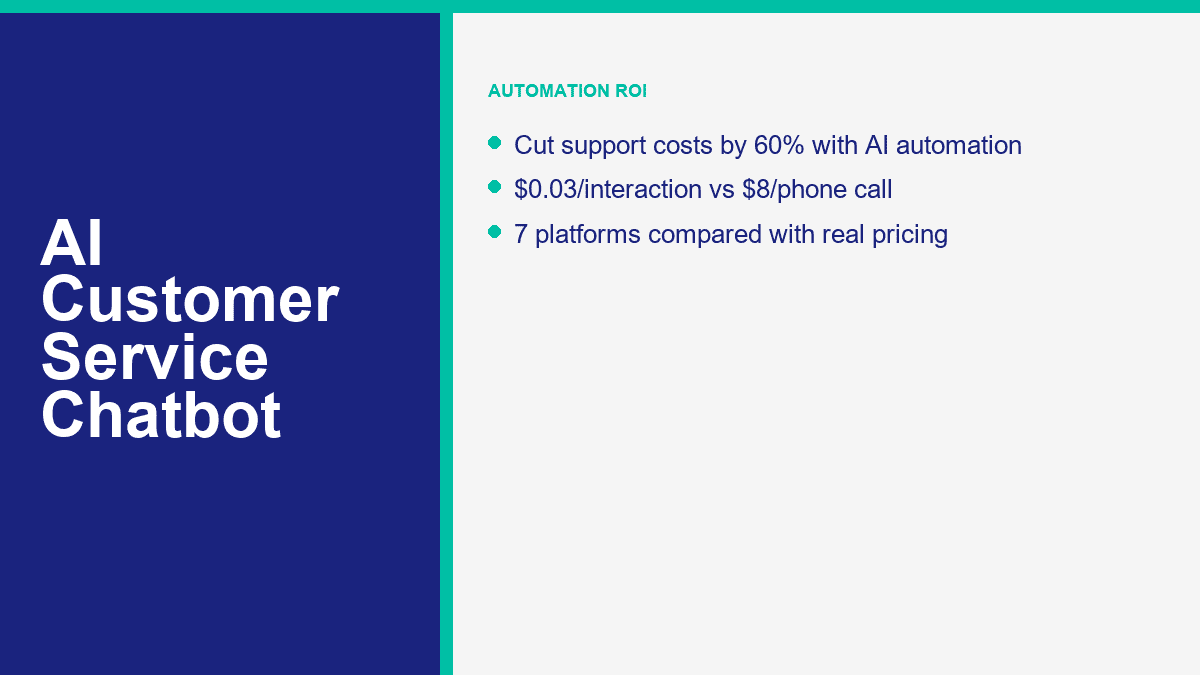
De kostenverschillen zijn moeilijk te negeren zodra je de cijfers bekijkt. Een live telefoongesprek kost vaak tussen de $8 en $12 als je arbeid en overhead meerekent. E-mailondersteuning ligt meestal dichter bij $3 tot $5 per afgehandeld bericht. Een botinteractie die een bekende vraag uit jouw content beantwoordt, kan dalen naar de $0.01 tot $0.05 range. Dat betekent niet dat elk gesprek geautomatiseerd moet worden. Het betekent dat de eerste laag dat absoluut zou moeten zijn.
De prijs- en plandetails in deze gids zijn gecontroleerd tegen openbare productpagina's op 9 april 2026. Als je nog steeds twijfelt tussen bredere AI-tools en ondersteuningsgerichte platforms, lees onze volledige chatbotvergelijking hierna. Dit artikel richt zich op één taak: het gebruik van AI-chatbots om de ondersteuningskosten te verlagen zonder dat je klanten zich gevangen voelen in een slecht script.
Waarom klantenservice zonder AI stilletjes tijd en geld van kleine bedrijven kost
De gemakkelijkste fout die ondernemers maken, is alleen naar de loonlijst te kijken. Een ondersteuningsqueue kost meer dan salaris. Het kost ook contextwisseling, tragere eerste-reactietijden, gemiste leads buiten kantooruren, herhaalde uitleg en de belasting die je team ervaart wanneer ze de helft van de dag dezelfde antwoorden in vijf verschillende kanalen moeten kopiëren.
Voor een klein bedrijf is het normaal om 15 tot 25 uur per week te besteden aan repetitieve ondersteuning alleen. Niet omdat de vragen moeilijk zijn, maar omdat ze uit verschillende hoeken binnenkomen: websitechat, Facebook Messenger, e-mail, Instagram, contactformulieren en telefoon. De ene klant vraagt waar de bestelling is. Een ander wil weten wat je retourtermijn is. Weer een ander heeft de boekingslink nodig. Een ander vraagt of je hun postcode bedient. Dat vereist geen hoogwaardig menselijk oordeel, maar het kost nog steeds menselijke tijd.
Daarom is de kanaalwiskunde belangrijker dan de hype rond tools. Als je 500 ondersteuningsverzoeken per maand beantwoordt, verandert zelfs een bescheiden automatiseringspercentage de economie snel.
| Ondersteuningskanaal | Typische kosten per interactie | Maandelijkse kosten bij 500 interacties | Wat meestal de kosten aandrijft |
|---|---|---|---|
| Telefoonondersteuning | $8 tot $12 | $4.000 tot $6.000 | Agenttijd, oproepafhandeling, wachttijd, overhead en herhaalde verificatie |
| E-mailondersteuning | $3 naar $5 | $1.500 naar $2.500 | Tussenliggende antwoorden, opzoektijd en handmatige routering |
| AI chatbot ondersteuning | $0.01 naar $0.05 | $5 naar $25 | Inferencekosten, platformgebruik en kennisbankopvraging |
Die tabel is planningswiskunde, geen belofte dat een bot je hele ondersteuningsdesk kan vervangen. Maar het laat wel zien waarom kleine teams AI zo snel kunnen rechtvaardigen. Als een bot zelfs maar 200 van die 500 maandelijkse gesprekken volledig afhandelt, zijn de besparingen al aanzienlijk. Als het de eerste 70% van het gesprek afhandelt voordat een mens ingrijpt, verkort je nog steeds de afhandelingstijd en verlaag je de kosten.
There is also the revenue leak most owners miss. Support is not just a cost center for SMBs. A lot of “support” conversations are really buying-intent conversations in disguise. The customer asking, “Do you deliver to Bristol?” or “Can I book for Saturday?” or “Which plan includes setup?” is very close to a decision. If nobody replies until tomorrow, you did not just miss a ticket. You may have lost a sale.
That is why support automation works best when it handles service and sales-adjacent questions together. The same system that answers refund rules can also route quote requests, surface booking links, and pass a warm lead to a human with the context already collected.
How AI Customer Service Chatbots Actually Answer People Instead of Just Guessing
A customer-service chatbot is not useful because it is “AI.” It is useful because it does three jobs reliably: it figures out what the customer wants, it pulls the right answer from approved business content, and it knows when to stop and hand the conversation to a person.
The Three Parts That Matter Most Are Intent, Knowledge, and Escalation
Intent recognition is the first layer. The bot has to figure out whether the message is about shipping, billing, order status, booking, pricing, cancellation, technical support, or something else. Modern systems do this with natural language understanding instead of rigid keyword matching, which is why customers can type “where is my package?” and still land in the same flow as “track my order.”
Kennisretrieval is de tweede laag. Dit is waar veel bedrijven ofwel winnen of zich in verlegenheid brengen. De bot heeft een goedgekeurde bron van waarheid nodig: FAQ-pagina's, helpdocumenten, beleidspagina's, menu-informatie, afsprakenregels, servicegebieden, retourbeleid, artikelen in de kennisbank of interne ondersteuningsnotities. Als de bot geen schone bronmaterialen heeft, zal hij vaag antwoorden, hallucineren of terugvallen op generieke invullingen. De meeste slechte ondersteuningsbots falen niet omdat het model zwak is. Ze falen omdat het bedrijf hen zwakke inhoud heeft gegeven.
Escalatieregels zijn de derde laag en zijn niet onderhandelbaar. Een goede ondersteuningsbot moet weten wanneer hij moet stoppen met doen alsof. Als de klant boos klinkt, een nieuw vraag stelt, een uitzondering nodig heeft, om een terugbetaling vraagt, gereguleerde taal gebruikt of al eens niet in staat is geweest om een nuttig antwoord te krijgen, moet de bot hen zonder wrijving naar een mens doorverwijzen.
Die doorverwijzing kan eenvoudig of geavanceerd zijn. Op basisniveau betekent het “praat met ondersteuning” of “laat je telefoonnummer achter en we reageren tijdens kantooruren.” Op geavanceerd niveau betekent het tags, op intentie gebaseerde doorverwijzing, CRM-synchronisatie, orderopzoeking, ticketcreatie en het doorgeven van het volledige transcript aan de juiste agent zodat de klant het verhaal niet opnieuw hoeft te vertellen.
Vooraf getrainde bots zorgen ervoor dat je snel live gaat, maar op maat gemaakte bots besparen meer geld
Pre-trained customer-service bots are the fastest starting point. They already understand common support language, so you can connect a help center or upload FAQ content and get useful results quickly. That is why tools like Tidio, Intercom, Zendesk, Freshchat, and HubSpot can go live without a six-week build.
Custom-tuned bots are where the bigger savings show up. That does not always mean training a model from scratch. For most SMBs, “custom” means feeding the platform your real policies, your real products, your shipping rules, your appointment logic, your escalation rules, and your preferred tone. The bot still uses a pre-trained foundation model underneath, but the answers become specific to your business.
Here is the practical distinction:
- Pre-trained support bot: faster launch, less setup, good for generic FAQs and basic triage.
- Custom-tuned support bot: more accurate answers, better deflection, stronger routing, lower human rework.
One more thing worth saying clearly: serious customer-service chatbots are not “no sign up required” tools. That phrase belongs to consumer AI chat apps, not production support systems. Business bots need accounts, channel permissions, saved customer context, reporting, and human routing. If a platform is promising support automation without any setup, it is showing you a demo, not a real support stack.
If Facebook Messenger is one of your main support channels, this matters even more because the setup is channel-specific. For the Messenger-first workflow, branching, forms, tags, and handoff logic, read our complete Messenger automation guide once you finish this article.
The 7 AI Customer Service Chatbots Worth Comparing Before You Buy Anything
Small businesses usually do not need fifteen vendor tabs open. They need a short list that reflects how support actually works: website chat, email, social messaging, help-center content, after-hours coverage, and an easy handoff to a human. The table below focuses on the seven platforms that keep coming up in real SMB buying decisions.
The pricing column reflects public entry pricing or the first meaningful paid tier I could confirm on April 9, 2026. The AI-quality column is my practical read based on public capabilities, setup friction, and how well each tool fits SMB support, not a vendor-issued score.
| Platform | Openbare startprijs | AI quality | Kanalen | Gratis abonnement | Beste pasvorm |
|---|---|---|---|---|---|
| MessengerBot.app | Premium $19,99 per 30 dagen | Good for structured SMB support and Messenger-first automation | Facebook Messenger, website chat, e-mail, SMS, Instagram op hogere niveaus | Gratis proefperiode | Businesses that handle support and lead capture inside Facebook |
| Tidio | Starter $24.17 per month; Lyro AI from $32.50 per month | Very good for website support; vendor says Lyro can solve up to 67% of customer problems | Website chat, Messenger, Instagram, WhatsApp, e-mail | Free plan plus 50 free Lyro conversations | SMBs that need website chat and AI support in one inbox |
| Intercom | From $29 per seat per month plus $0.99 per Fin outcome | Excellent; Intercom says Fin resolves an average of 67% of customer queries | Chat, email, phone, WhatsApp, in-app | 14-daagse proefperiode | Higher-volume support teams that want clear AI outcome pricing |
| Zendesk | Suite + Copilot Professional $155 per agent per month billed annually; advanced AI agents custom | Excellent at scale; Zendesk markets 80%+ automation potential | Web, email, voice, social, messaging | Gratis proefperiode | Mature support operations with ticketing discipline already in place |
| Freshchat | Free; Growth $19 per agent per month; Freddy AI Agent first 500 sessions included then $49 per 100 sessions | Good to very good for budget omnichannel support | Website, mobile app, email, Facebook, Instagram, WhatsApp, SMS | Ja | Price-sensitive teams that want omnichannel support without enterprise pricing |
| HubSpot | Free tools; Starter from $15 per seat per month; Professional from $100 per seat with Breeze customer agent | Very good if you already live in HubSpot; Breeze resolves about 65% of conversations | Website chat, email, Facebook Messenger, WhatsApp, calling beta | Yes, plus 28-day free access for Customer Agent | CRM-centered businesses that want support, sales, and marketing in one system |
| Drift | Aangepaste prijzen | Good for revenue conversations, weaker for support-first SMBs | Website chat and sales conversations | Geen betekenisvolle gratis laag | B2B sites where the chatbot’s main job is qualification and meeting booking |
MessengerBot.app Makes the Most Sense When Facebook Is a Real Support Channel
If most of your customer questions come through Facebook Page messages, MessengerBot is the most direct fit in this group. The pricing is easier to understand than contact-based billing, the Visual Flow Builder is practical, and the platform already covers the extras SMBs usually ask for next: forms, website chat, comment automation, tags, broadcasts, ecommerce tools, and Google Sheets or API connectivity.
The honest limitation is channel focus. If your business lives more on website chat or email than Messenger, a broader support platform may fit better. But for Messenger-first businesses, it removes a lot of setup friction.
Tidio Is the Best All-Around Pick for Website Support Plus AI
Tidio is the cleanest answer for businesses whose website is the main support front door. Lyro is a real AI layer, not just a scripted menu, and the free plan plus 50 free Lyro conversations gives you a low-risk way to test it. I like Tidio most for ecommerce brands, service businesses, and online stores that want one place for live chat, tickets, and AI answers.
The tradeoff is pricing complexity once you stack plan fees and AI usage. It is still fair, but you need to model both the support workspace and the AI layer, not just the sticker on the first plan.
Intercom Is Expensive, but It Gives You the Cleanest AI Cost Model
Intercom’s biggest strength is not that it is cheap. It is that the math is visible. Fin AI Agent costs $0.99 per successful outcome, and Intercom publishes that openly. For a support leader, that is useful because you can compare AI cost per resolved conversation against human cost per resolved conversation instead of guessing where the overages are hiding.
The catch is obvious. If you are a small business with low volume, per-outcome pricing can still work. If you are a very high-volume team, the bill gets real fast. Intercom is strongest when AI resolution quality matters enough that you are willing to pay for it.
Zendesk Is Powerful, but Many Small Businesses Buy Too Much Too Early
Zendesk is excellent if your support team already works like a support team: tickets, macros, SLAs, queues, reporting, QA, and admin controls. It is not the first tool I would recommend to a five-person business answering the same booking questions every day. It is the tool I would recommend to a scaling operation that needs governance and serious workflow depth.
Zendesk’s AI story is strong, but its packaging is enterprise-shaped. For a local clinic, SaaS startup, or small ecommerce brand, that can be more system than you need.
Freshchat Is the Budget-Friendly Omnichannel Option That Still Feels Modern
Freshchat deserves more attention from SMBs than it usually gets. The free tier is usable, the Growth plan starts lower than most enterprise-style platforms, and the Freddy AI pricing is straightforward enough to forecast. It is a good fit if you want website chat, email, and messaging channels without immediately jumping into Intercom or Zendesk spend.
Where Freshchat usually loses is not price. It is mindshare. Buyers shortlist Tidio or Intercom first, even when Freshchat fits the budget better.
HubSpot Is Best When Customer Service Is Tied Closely to Your CRM
HubSpot becomes compelling when support, sales, and marketing all need the same conversation history. Breeze Customer Agent can answer questions, qualify leads, and hand off with CRM context intact. If your support team already lives in HubSpot, it is one of the easiest AI decisions to justify because the customer data is already there.
If you are not already on HubSpot, the value case changes. Then you are not buying only a chatbot. You are buying into a broader platform decision.
Drift Is Still Strong for Pipeline, Not for Everyday Support Deflection
Drift belongs in this comparison because many B2B companies still look at “chatbot” and really mean lead qualification, meeting booking, and account-based website conversations. That is where Drift still works. If your website exists to start sales conversations, Drift stays relevant.
If your main problem is repetitive customer support, though, Drift is usually the wrong starting point. It is not built around the same service-first use case as Tidio, Intercom, Zendesk, Freshchat, or HubSpot.
How to Set Up an AI Customer Service Chatbot in About 30 Minutes With MessengerBot
The fastest successful chatbot launch is never the fanciest one. The first version that saves money usually handles the top five repetitive questions, offers one clean human handoff path, and captures the minimum context your team needs when they take over.
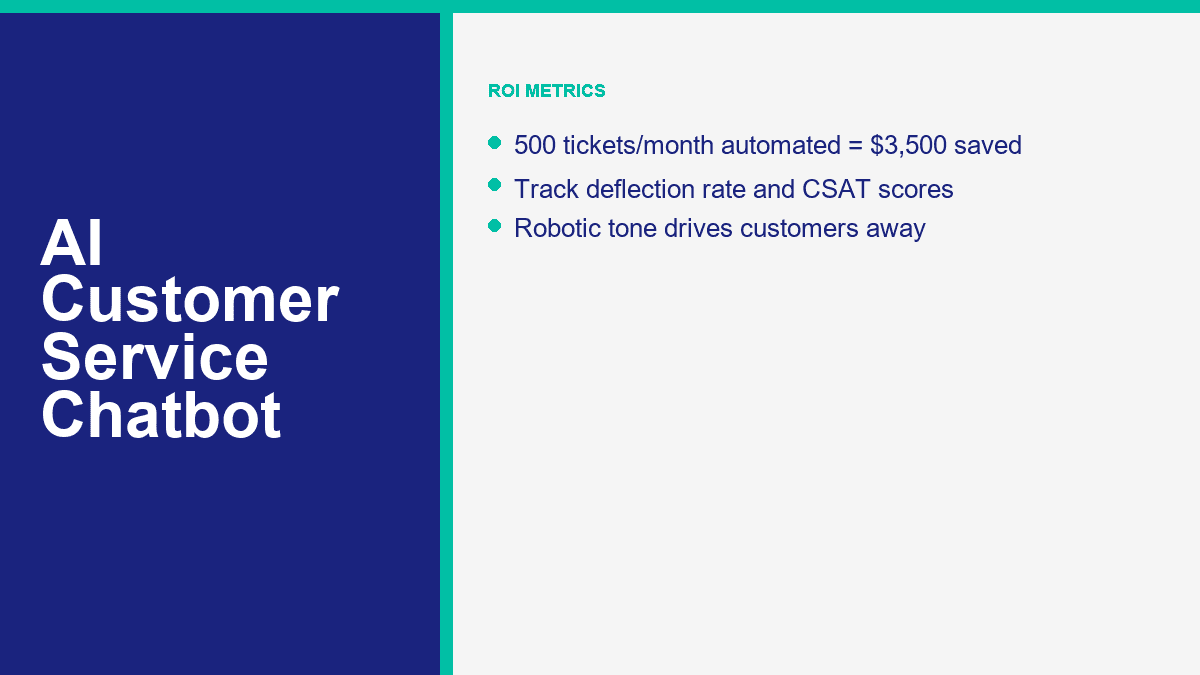
If Facebook Messenger is one of your busiest support channels, MessengerBot is one of the quickest ways to get there because the setup is already aligned to Page-based messaging rather than generic website chat. A realistic 30-minute rollout looks like this:
- Connect the right Facebook Page first. Use the business account that actually has Page permissions. Most failed first-time setups come down to the wrong login or skipped permissions.
- List the 10 questions your team answers every week. Do not brainstorm imaginary use cases. Pull the real questions from Messenger, email, and comments.
- Build a welcome menu with 3 to 5 useful options. Good examples are order help, business hours, booking, pricing, and talk to a person.
- Create one short branch per question. Each branch should end in an answer, an action, or a handoff. Avoid long walls of text.
- Add one lead or support form. Ask only for the details needed to move the case forward, such as order number, phone, email, or preferred appointment date.
- Set the human handoff rule. Route refund requests, billing problems, second-failed answers, and emotionally charged messages to a person.
- Test the full flow on a phone. Desktop previews are not enough. Messenger is a mobile-first experience.
- Launch narrow, then review live conversations after one week. The first 50 to 100 chats will show you what to fix faster than any pre-launch guesswork.
A lot of businesses overbuild the opening flow. They try to create a clever AI concierge that can handle every possible edge case. That is the wrong goal. The right goal is to stop human time from being wasted on repetitive, solvable requests. Start with the boring stuff. That is where the savings are.
For a small business, the first bot should usually cover these four buckets:
- FAQ support: hours, location, pricing ranges, shipping rules, service areas, return policy.
- Order or booking status: collect order number, booking date, or email, then route or respond.
- Leadkwalificatie: capture name, contact details, product interest, and timeline.
- Human routing: give customers an obvious path to a person when the issue needs judgment.
If you are deciding whether the starter tier is enough or you need more pages, widgets, or automation depth, Bekijk de prijzen van MessengerBot before you build too much on the wrong plan. That is also the point where you should compare whether your business is still Messenger-first or whether you really need a broader omnichannel stack.
What AI Chatbots Handle Well, What They Still Miss, and Why Human Handoff Is Mandatory
The strongest customer-service bots in 2026 are good, not magical. They can remove a lot of repetitive work. They cannot replace judgment, empathy, exceptions, or accountability.
What AI Chatbots Are Already Good At
These are the jobs I would automate first because the success rate is usually high and the customer expectation is clear:
- Frequently asked questions: pricing ranges, opening hours, shipping rules, returns, warranty basics, service coverage, and onboarding steps.
- Order status and appointment lookup: if your systems are clean, bots can ask for the right identifier and route or return the next step fast.
- Afspraak boeken: especially for clinics, salons, gyms, consultants, and home-service businesses.
- Leadkwalificatie: product interest, budget range, timeline, location, or service type.
- After-hours first response: even when a human will reply tomorrow, the bot can set expectations and collect context now.
Those use cases work because the business rules are stable. The bot is not being asked to improvise policy. It is being asked to recognize a known intent and apply a known answer or workflow.
Where AI Still Breaks Down Fast
This is where small businesses get into trouble when they overtrust automation:
- Complex complaints: damaged orders, repeated failures, or service breakdowns that need discretionary action.
- Emotional situations: angry customers, bereavement cases, cancellation disputes, or anything involving trust repair.
- Novel problems: if the issue has no documented answer, the bot should not guess.
- High-risk requests: refunds, chargebacks, legal claims, regulated advice, privacy requests, or account security problems.
- Multi-step exceptions: anything that requires policy override or manager approval.
That is why the human handoff is not a “nice to have.” It is the difference between automation that saves money and automation that creates churn.
A simple handoff rule set usually covers most of the risk:
- If the customer asks for a human, hand off.
- If the bot fails twice, hand off.
- If the issue mentions billing, refund, legal, safety, or account access, hand off.
- If sentiment is clearly negative or frustrated, hand off.
If you need more advanced routing, multi-step support logic, additional channels, or stronger automation controls around those handoffs, MessengerBot Pro Kenmerken are the part to compare next. That is where a lot of growing businesses move from a simple FAQ bot into a real support workflow.
How to Measure ROI So You Know the Bot Is Saving Money Instead of Just Looking Busy
AI chatbot ROI is easy to fake if you only look at conversation volume. A bot that replies to everything is not automatically saving money. The only numbers that matter are the ones tied to deflection, resolution, speed, customer satisfaction, and real labor avoided.
The five metrics I watch first are:
| Statistiek | What it tells you | What good looks like for an SMB |
|---|---|---|
| Deflection rate | How many conversations never need a human | 40% to 60% in the first month; 60% to 70% once content is tuned |
| Resolution rate | How often the bot actually solves the issue it touched | Higher than 50% on repetitive FAQs; lower on complex support |
| CSAT | Whether customers feel the automated experience was acceptable | Flat or improving compared to human-only baseline |
| Cost per interaction | The real expense of automated versus human support | Pennies for AI, dollars for human support |
| Human assist rate | How often the bot still needs staff intervention | Low for repetitive issues, intentionally higher for sensitive issues |
The simplest ROI formula is still the best one:
Monthly savings = (Manual interactions avoided x manual cost per interaction)
                - (Automated interactions x bot cost per interaction)
                - platform subscription
                - maintenance time
Now use the example most owners can relate to.
Say your business handles 500 support tickets per month. If 70% of them are repetitive enough for automation, that is 350 tickets the bot can absorb or fully resolve. If your blended manual cost is $10 per support interaction, those 350 tickets would have cost about $3,500 handled by humans.
If the bot handles those same 350 conversations at about $0.03 each, that interaction cost is only $10.50. Add a $49.99 plan cost, and the total bot-side monthly spend is about $60.49.
| Scenario | Bedrag |
|---|---|
| Total monthly tickets | 500 |
| Automated tickets at 70% | 350 |
| Manual cost avoided at $10 each | $3,500.00 |
| Bot interaction cost at $0.03 each | $10.50 |
| Platform cost example | $49.99 |
| Estimated monthly net savings | $3,439.51 |
Round that down for real life and you still land in the same place: roughly $3,500 a month saved from one modest support queue. That is why business owners who think chatbot plans are “another software expense” usually change their mind as soon as the spreadsheet is honest.
Here is a second scenario for email-heavy teams where the manual cost is lower:
- 800 email and chat tickets per month
- 55% automated = 440 tickets
- Manual cost = $4 each
- Automation cost = $0.02 each
- Platform cost = $24.17
The manual work avoided there is $1,760. The bot interaction cost is $8.80. After the plan cost, your net monthly savings are about $1,727.03. That is not “enterprise AI transformation.” That is one small support process finally being priced correctly.
The important caution is this: do not count partial automation as full savings. If the bot collects the order number but still hands the case to a human, you saved time, not a full interaction. That is still valuable, but track it honestly. Otherwise the ROI model turns into sales-deck math.
The AI Customer Service Mistakes That Push Customers Straight to Your Competitor
I keep seeing the same support-bot failures, and they are almost never model failures. They are setup failures.
No Human Option Is the Fastest Way to Make Automation Feel Hostile
If the customer cannot reach a person when the issue goes off script, the bot stops feeling efficient and starts feeling defensive. This is especially destructive in billing, delivery failures, appointment changes, and complaints.
Robotic Responses Usually Mean Your Knowledge Base Is Weak
Businesses blame the model when the answers sound stiff or generic. The real problem is often bad source material. If your FAQ says almost nothing, the bot will say almost nothing too. Good support bots are trained on policy, process, tone, and concrete examples. Weak content produces weak conversations.
Ignoring Context Makes Customers Repeat Themselves
If a customer already gave the order number, the issue type, and the delivery date, the handoff should preserve that. Making them restate everything is one of the quickest ways to kill CSAT. This is why integrations and routing matter more than flashy demos.
No Escalation Path Turns Minor Issues Into Public Complaints
A support bot should reduce pressure, not trap it. When escalation is missing, customers do what customers always do: they go to reviews, social comments, or a competitor that answers faster.
Trying to Automate Every Edge Case on Day One Usually Backfires
The right first bot is boring on purpose. It answers the questions you already know, routes the issues you should not automate, and lets you improve the knowledge base from real conversations. Teams that try to launch an all-knowing AI assistant on day one usually end up rewriting everything after the first week.
A quick pre-launch checklist catches most of the expensive mistakes:
- Give the customer an obvious human option.
- Write answers in your brand’s actual tone, not generic help-center language.
- Use real FAQs pulled from live conversations.
- Define hard handoff rules for risk, sentiment, and failed answers.
- Test the full flow on mobile before launch.
- Review bot conversations weekly for the first month.
Where Most Small Businesses Should Start Right Now
If your team is still answering the same support questions by hand every day, do not start by shopping for the most advanced AI on the market. Start by automating the most repetitive 20% of your queue, because that is where the fastest savings usually live. If Facebook Messenger is part of that workflow, compare Bekijk de prijzen van MessengerBot met MessengerBot Pro Kenmerken and pick the smallest setup that gives you solid FAQ coverage, one human handoff path, and one lead or support form. That is enough to prove ROI before you expand.
Veelgestelde Vragen
Hoeveel kost een AI klantenservice chatbot?
For most small businesses, a serious starter setup costs somewhere between about $20 and $100 per month, depending on channels, agent seats, and AI usage. MessengerBot starts at $19.99 per 30 days on its current public pricing, Tidio starts at $24.17 per month with Lyro sold separately from $32.50, Freshchat has a free tier and Growth from $19 per agent, and enterprise tools such as Intercom and Zendesk climb much faster once seat pricing and AI usage kick in.
Kan een AI-chatbot volledig menselijke klantenservicemedewerkers vervangen?
No. AI can replace a large share of repetitive support work, but it should not replace humans in complex complaints, emotional situations, policy exceptions, refunds, account security, or novel problems. The best support setup is hybrid: AI handles the repetitive layer, and humans step in when judgment or empathy matters.
Welk percentage van de ondersteuningsverzoeken kunnen AI-chatbots afhandelen?
Voor de meeste kleine bedrijven is een realistisch doel 40% tot 60% aan repetitieve tickets in de eerste maand, en daarna 60% tot 70% zodra de kennisbank en routeringsregels verbeteren. Leverancierclaims kunnen hoger zijn in specifieke gebruikssituaties. HubSpot zegt dat Breeze ongeveer 65% aan gesprekken oplost, Intercom zegt dat Fin gemiddeld 67% aan klantvragen oplost, en Zendesk adverteert met een automatiseringspotentieel van 80%+ voor AI-agenten.
Hoe lang duurt het om een AI-klantenservice chatbot in te stellen?
A basic version can go live in about 30 minutes if your content is ready and the use case is narrow. A stronger first rollout, with clean FAQ branches, forms, escalation rules, and mobile testing, usually takes one to three hours. The biggest time saver is using real support questions instead of trying to invent every possible scenario.
Welke AI-chatbotplatform is het beste voor klantenservice van kleine bedrijven?
Het beste platform hangt af van het kanaal dat het belangrijkst is. MessengerBot is de beste keuze voor bedrijven die zich primair op Facebook Messenger richten. Tidio is de beste allround keuze voor websitechat plus AI. Freshchat is sterk voor budgetbewuste omnichannel ondersteuning. HubSpot is logisch als je CRM daar al draait. Intercom en Zendesk zijn sterker voor grotere of operationeel volwassen supportteams dan voor een typische kleine onderneming die gewoon probeert repetitieve tickets te vermijden.



 Nederlands
  English
  Tagalog
  简体中文
简体中文  العربية
  हिन्दी
  Português do Brasil
  Español de México
  Français
  বাংলা
বাংলা  香港中文
香港中文  繁體中文
繁體中文  Deutsch
  Bahasa Indonesia
  日本語
日本語  한국어
한국어  Polski
  Русский
  Español
  Tiếng Việt